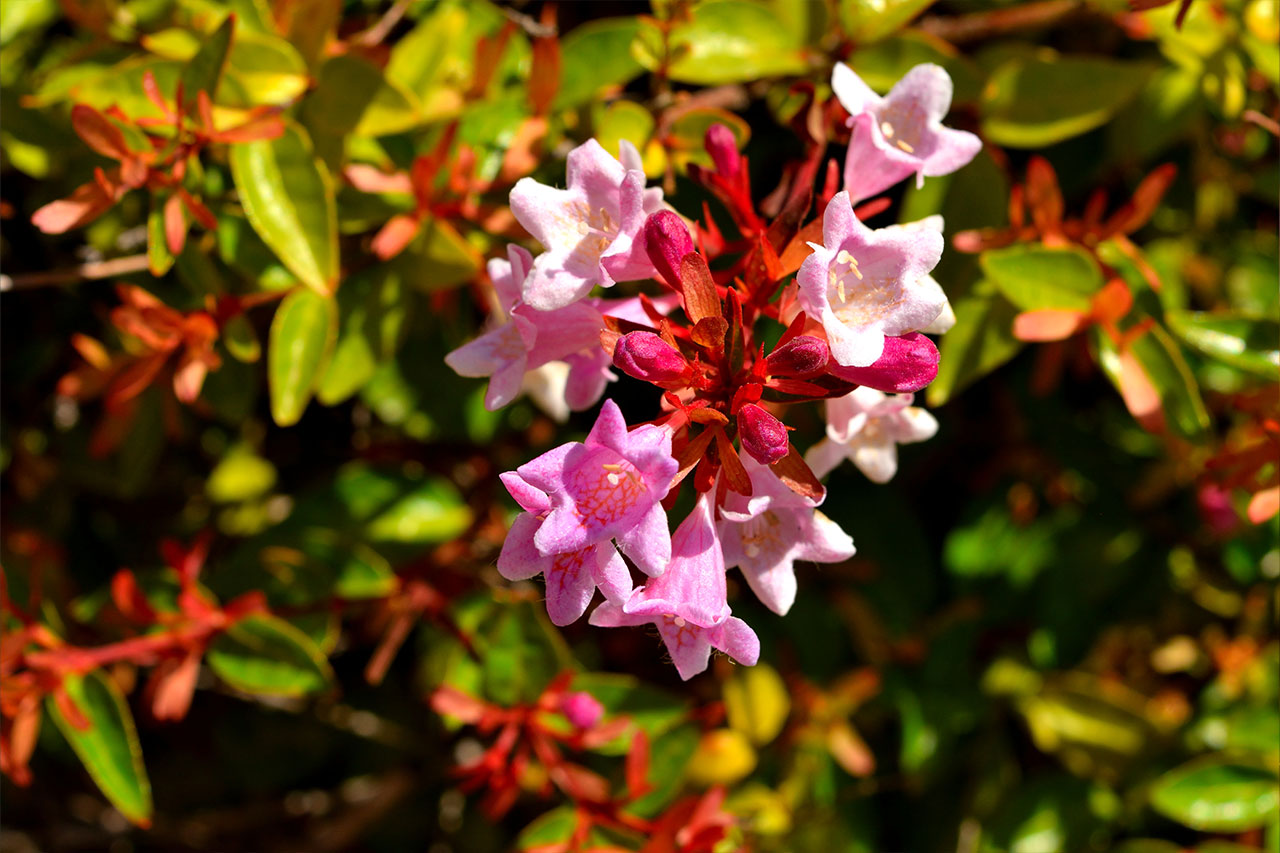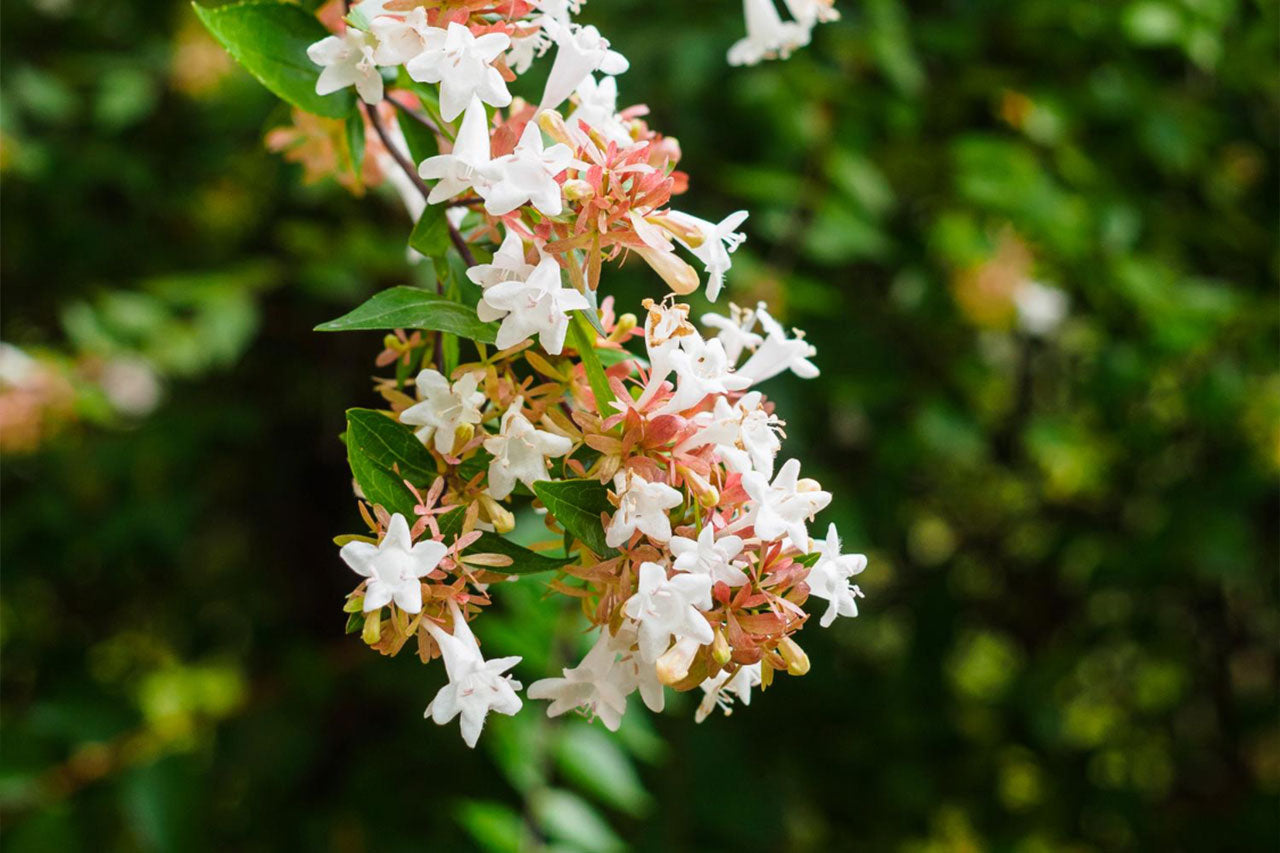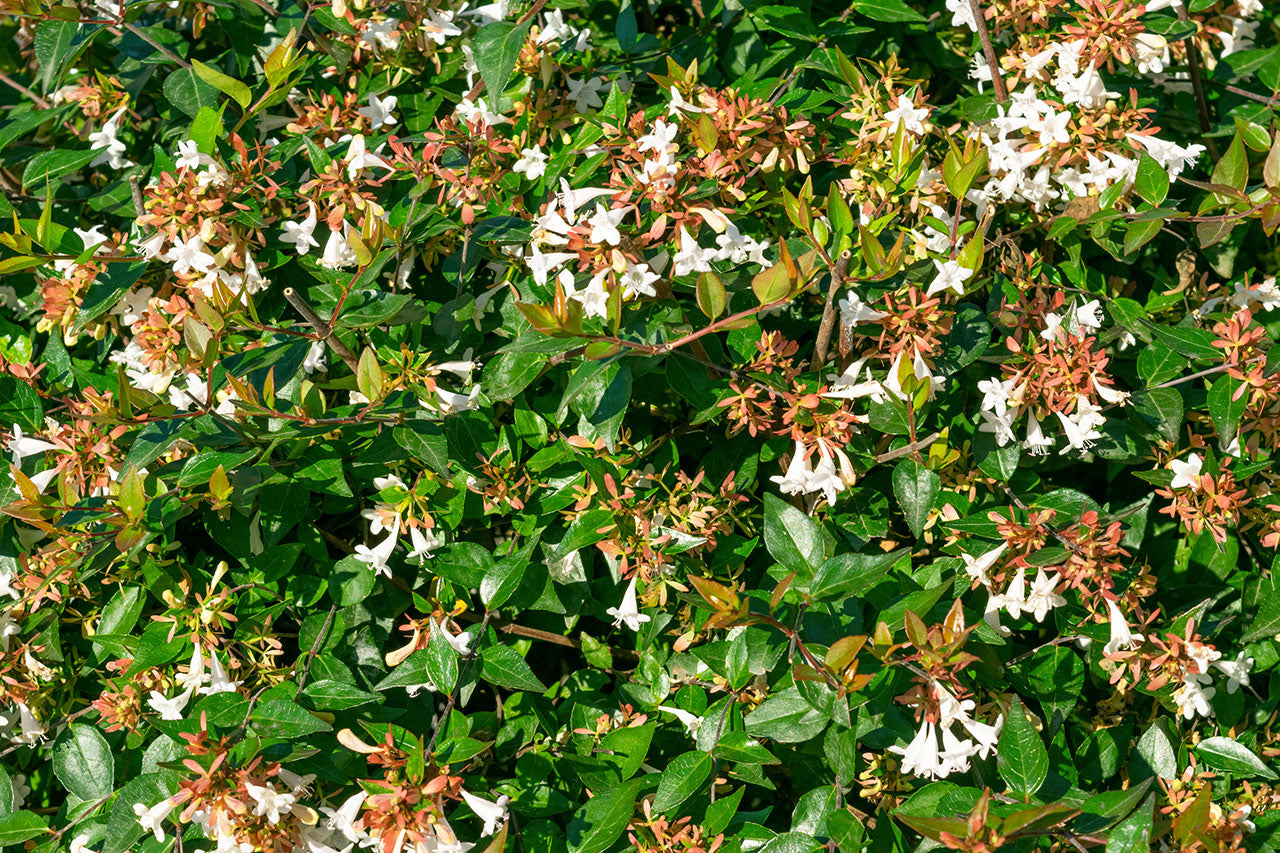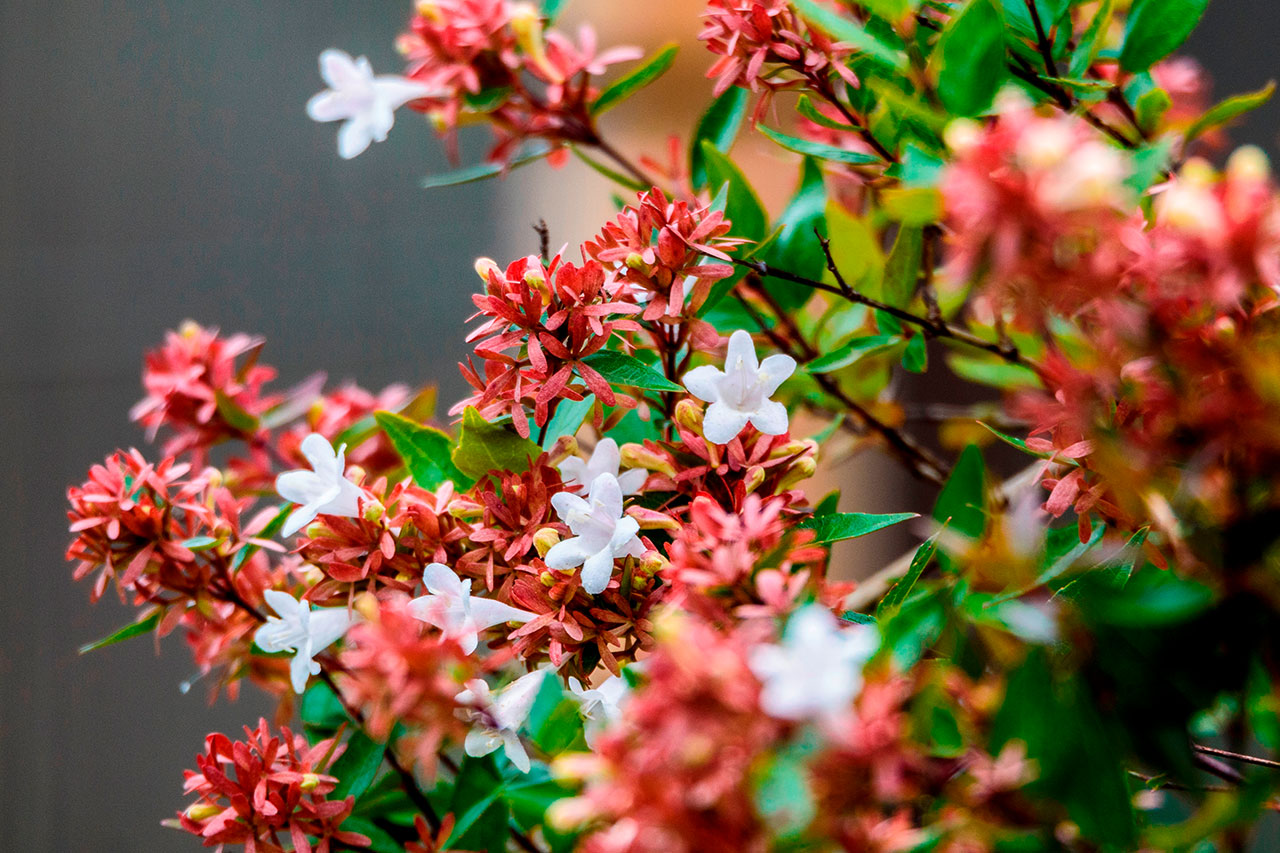

One of Abelia’s greatest charms is how long it stays in flower. While many shrubs give you a few weeks of colour and then retire, Abelia quietly carries on from early summer right into autumn, peppering its arching stems with dainty, bell-shaped blooms. It’s the sort of plant that “earns its keep” in the border, always offering something to catch the eye when other things are between seasons.
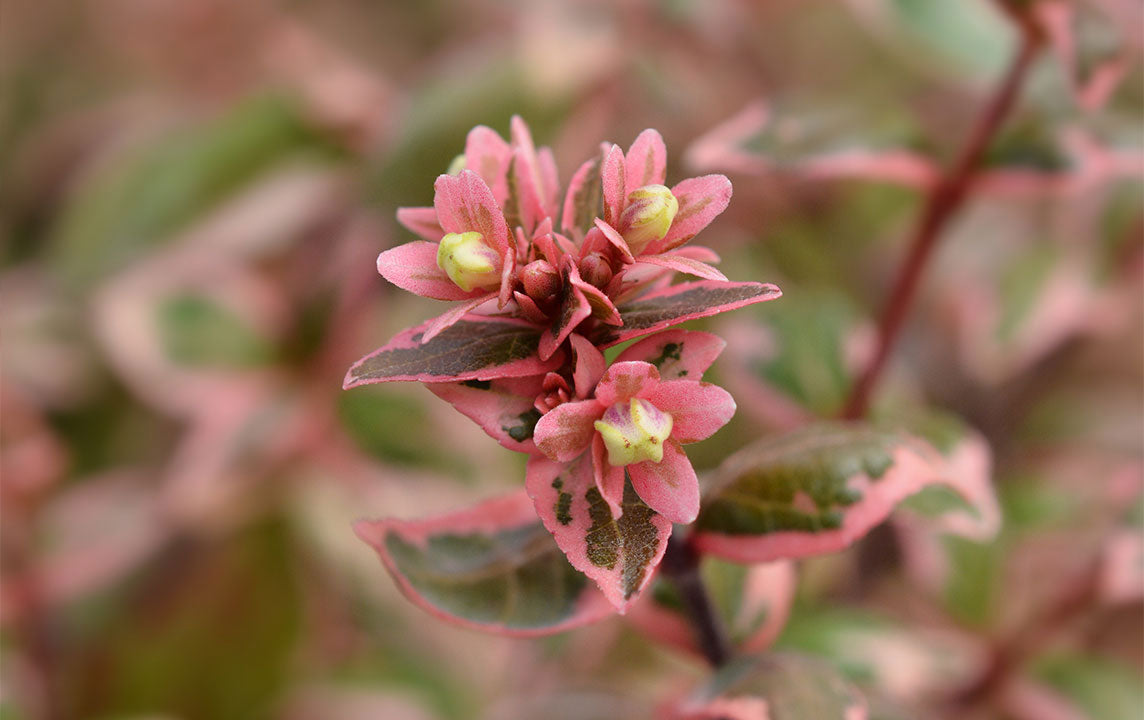
Common name: Abelia
Latin name: Abelia × grandiflora
Size in UK gardens: Typically 1–2m tall × 1–2m wide over time. Suits most gardens.
Best position: Full sun or light dappled shade, in a warm, sheltered spot (ideal against a wall, in a mixed border or near a path).
Soil: Moist but free-draining garden soil – not heavy, waterlogged clay. Happy in most soils as long as it drains reasonably well.
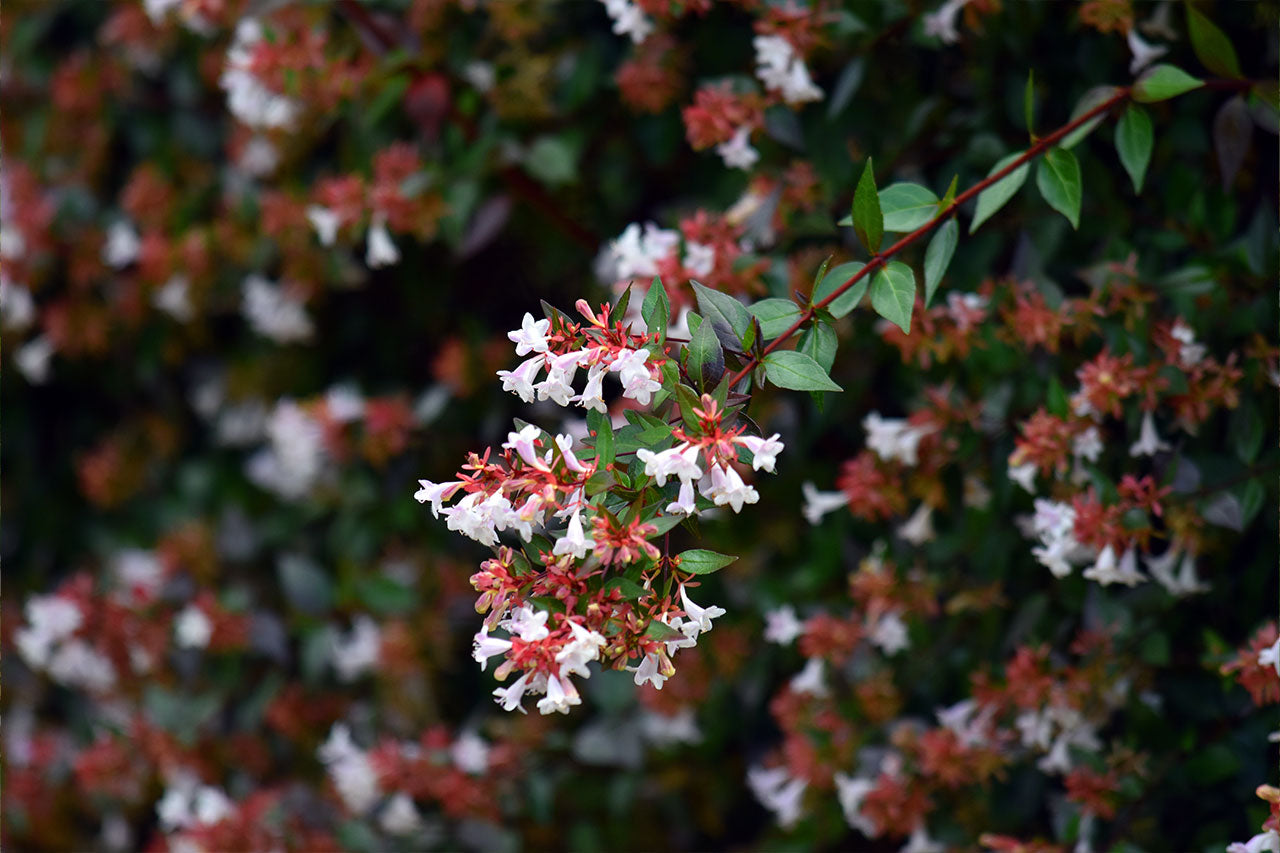
Flowering time: Long flowering season from summer into autumn (usually June–October) with clusters of small, tubular, pink-white flowers.
Fragrance: Many forms have a light, sweet scent, especially noticeable on warm, still days and in sheltered corners.
Hardiness: Generally hardy in most parts of the UK (to around –10 °C or lower) – may need a little shelter in very cold, exposed gardens.
Care level: Easy and forgiving – enjoys sun or light shade, appreciates regular watering in dry spells, and responds well to a light trim after flowering.

The Simpson’s team raises the majority of our trees here at the nursery. For varieties outside our own production, we work with independent local growers we trust - all chosen for UK climate suitability.
Planting time: Best in spring or early autumn so roots can establish in moist, warming or still-warm soil. Container-grown plants can be planted at most times, as long as the ground isn’t frozen or waterlogged.
Watering: Keep well watered in the first growing season, especially in dry spells, so roots can knit into the soil. Once established, water during prolonged dry periods, particularly if grown in a pot.
Feeding: Give a light feed in spring with a balanced shrub fertiliser or a top-dress of garden compost to support fresh growth and flowering. No need for heavy feeding.
Pruning: Light – tidy and shape just after the main flush of flowers, removing any dead or crossing stems. Every few years you can take out one or two of the oldest stems at the base in late winter to keep the shrub young and bushy.
Winter: Generally hardy, but in colder or very exposed gardens a mulch around the base will help protect roots. Young plants benefit from a little shelter from cold, drying winds; some leaf drop in winter is normal and new growth follows in spring.
Availability is always changing, so please check with us if you have a particular variety in mind.
Think of this as one of the most obliging shrubs for long-season interest: neat, glossy foliage, a softly rounded shape, and a steady run of small tubular flowers that feel light and summery rather than showy. Brilliant for front-of-border structure, low informal edging, and gentle “knitting together” between bolder shrubs and perennials.
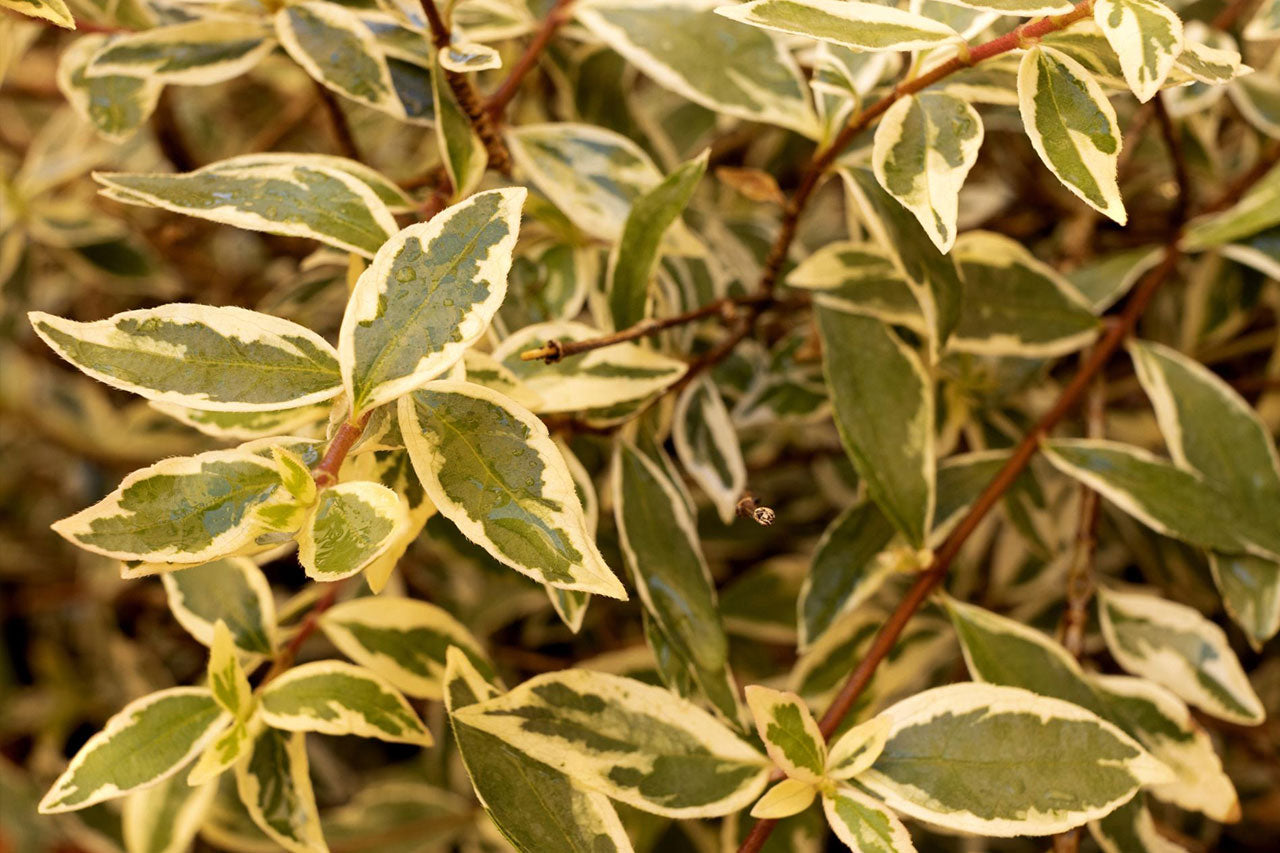
Cream-edged foliage gives this one instant brightness, so it reads as lifted and polished even before the flowers arrive. It’s particularly effective at the front of a border, along a path, or repeated in small groups to create a tidy rhythm, with the flowers adding a soft finishing touch later on.
Colour does a lot of the talking here, with foliage that shifts through warm tones so the plant stays interesting even when the border is between peaks. Perfect for small gardens, patio pots, and the front edge of mixed planting, where you want a compact shrub that feels cheerful and contemporary.
Neatness comes naturally to this abelia, giving borders that “well-kept” look without anything stiff or formal. It’s a very handy shrub for soft structure in mixed beds, for low informal hedging, or for steady green support behind perennials, with flowers that keep the mood gentle and relaxed.
Variegation is the star: leaves look splashed with cream and green, adding a bright, decorative note that makes neighbouring plants look more deliberate. Excellent near paths and seating where you’ll notice the detail, and very useful for repeating through a scheme to keep everything looking fresh and modern.
Richer pink flowers give this a warmer, more romantic feel than many abelias, while the overall habit stays pleasingly easy and generous. Lovely in mixed shrub borders, cottage-style planting, or as a soft, informal hedge, bringing a long run of colour that never feels shouty.
Golden foliage brings a little sunshine to borders, especially when set against deeper greens, purples, and dark fencing. Use it as a highlight plant near the front of a bed, as a colour thread repeated through planting, or as a bright foil to evergreens that can otherwise feel a touch heavy.
Softly patterned foliage gives a calm, designed look, with flowers that add a light, airy flourish rather than a big “look at me” moment. It sits beautifully among grasses and perennials, works well in smaller borders, and is particularly good where you want subtle sophistication rather than bold colour blocks.
Delicate pink, bell-like flowers bring real charm, especially when planted where you’ll pass close by and catch the detail. Very at home in cottage borders and mixed shrub beds, and a lovely companion to roses, salvias and ornamental grasses where the whole look is relaxed and long-flowering.
Foliage with bright golden splashes keeps borders lively and adds that “sparkle” effect in mixed planting. Useful for lifting darker corners, punctuating evergreen structure, and adding contrast without relying on flowers—ideal when you want colour that holds its own across the season.
Seasonal foliage shifts are what make this one special, so the plant feels active and changing rather than just “green and there.” Brilliant as a small focal shrub in a border or pot, and especially effective in modern schemes where foliage colour is part of the design, not just a background.
Compact size and a tidy, garden-ready look make this an easy fit where space is limited but you still want a proper shrub presence. Great for front borders, patio planting, and repeating in small groups to create soft structure, with flowers that keep things friendly and summery.
Clean, bright variegation gives a luminous look that freshens borders instantly and pairs beautifully with dark evergreens. Use it to guide the eye along a path, to brighten a patio corner, or to bring a more polished feel to mixed planting, with flowers adding a gentle extra layer later on.