
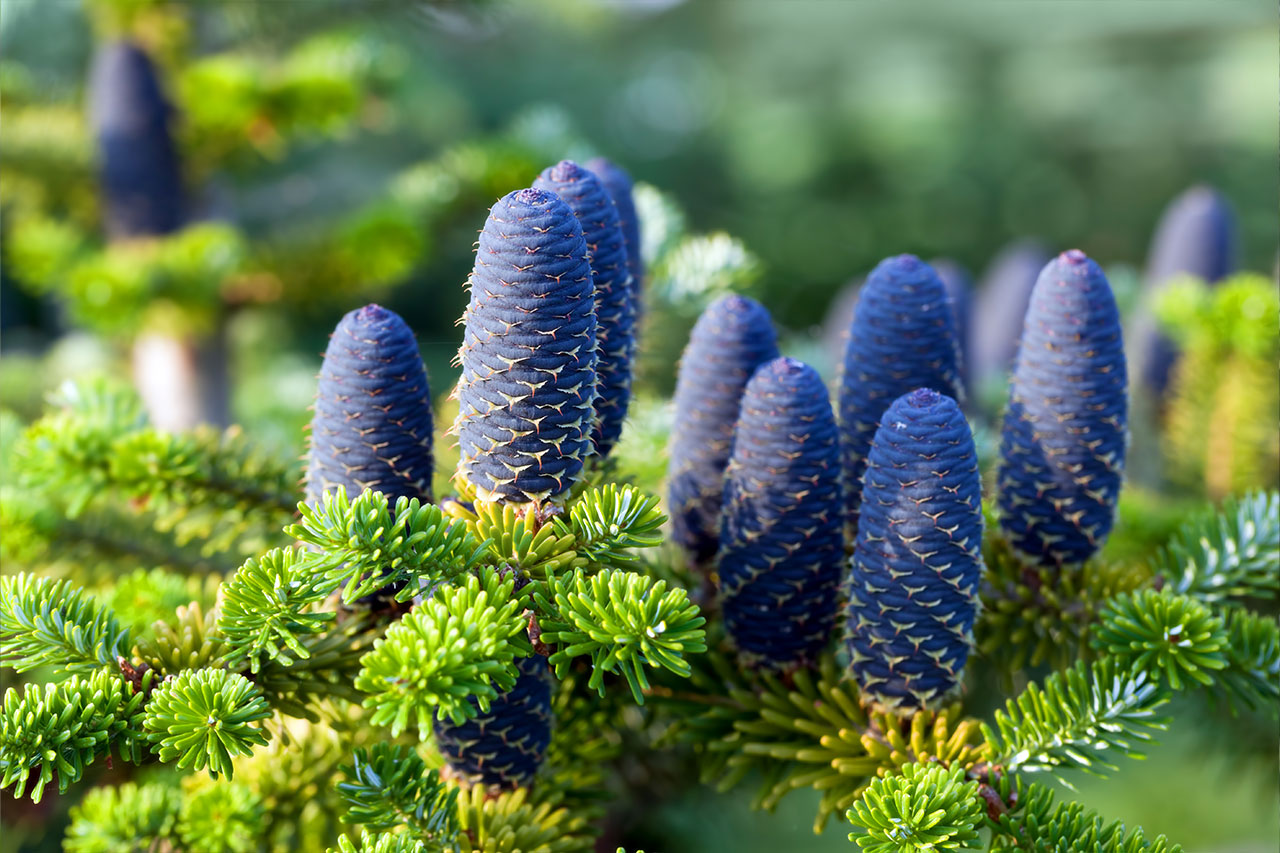
Rather than big, blousy flowers, firs offer quieter but long‑lasting beauty. Many have needles that gleam blue‑green or silver in low light, or show two‑toned bands beneath when the wind ruffles the branches. As the tree matures, upright cones – sometimes purple, sometimes steely blue or soft brown – appear along the branches, adding a wonderfully natural, woodland character.
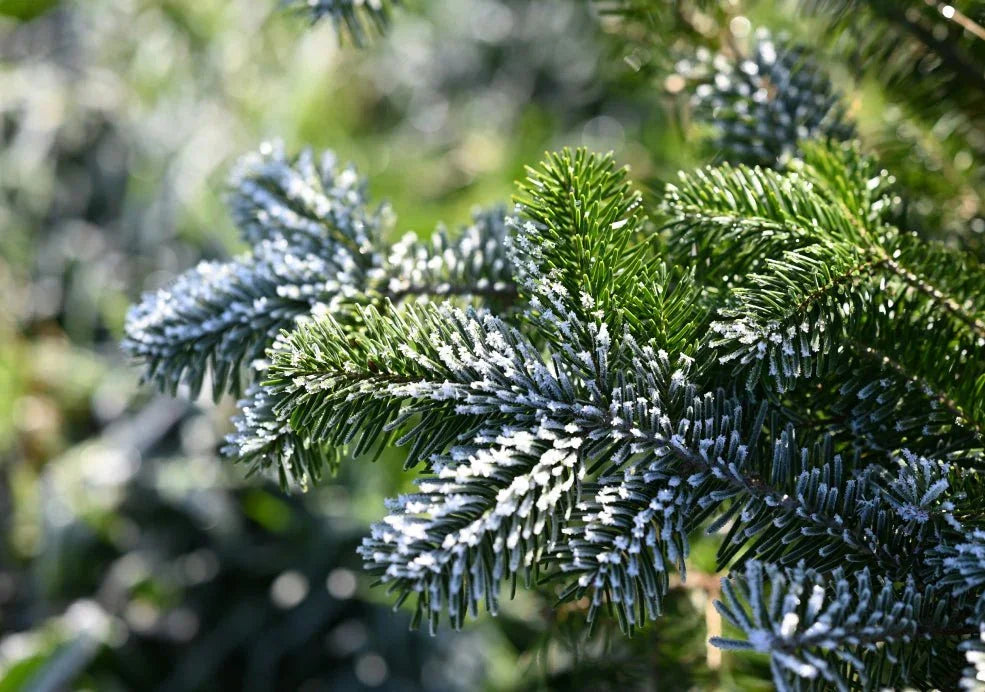
Common name: Fir tree
Latin name: Abies
Size in UK gardens: Typically 4–12m tall × 2–6m wide over time, depending on variety. Compact and dwarf forms (around 1–3m) are also available for smaller gardens and large pots.
Best position: Full sun or very light dappled shade, in an open but not extremely exposed spot.
Soil: Deep, moist but free‑draining garden soil – ideally neutral to slightly acidic. Firs dislike very dry, shallow or chalky, lime‑rich soils, and will struggle where water sits around the roots.
Flowering time: Male flowers appear in spring; ornamental cones develop on mature trees and often stand upright along the branches, colouring from green to purple, grey‑blue or brown through late summer into autumn, depending on species.
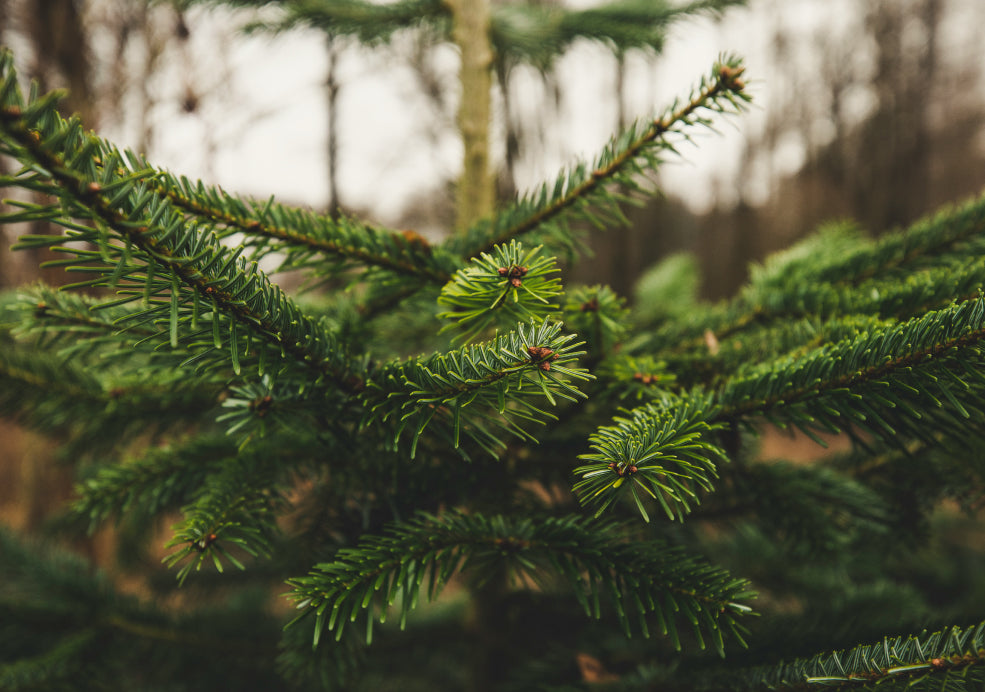
Fragrance: Foliage and young shoots have a fresh, resinous, often citrus‑ or balsam‑scented aroma when brushed or cut – one reason firs are so loved as Christmas trees.
Hardiness: Generally very hardy in most parts of the UK (many Abies species tolerate –15 °C or lower) – young plants appreciate shelter from cold, drying winds while they establish.
Care level: Low once established – needs a good planting, regular watering in the first couple of years, then mostly just an annual mulch and very little pruning.

The Simpson’s team raises the majority of our trees here at the nursery. For varieties outside our own production, we work with independent local growers we trust - all chosen for UK climate suitability.
Planting time: Best in autumn or spring, when the soil is workable and moist but not waterlogged. Container‑grown firs can technically be planted at most times, but avoid frozen or very dry conditions.
Watering: Keep well watered during the first couple of growing seasons, especially in dry spells, so roots can reach out and establish. Once established, water during prolonged drought, particularly on light soils or in containers.
Feeding: Usually only needs a light feed in spring with a general tree or shrub fertiliser, or a top‑dress of garden compost. Heavy feeding is rarely necessary.
Pruning: Minimal – firs are naturally well‑shaped. Restrict pruning to removing dead, damaged or wayward branches. Avoid cutting into bare old wood or removing the central leader if you want to keep the classic conical shape.
Winter: Generally hardy. Young or newly planted trees benefit from a mulch around the base to protect roots and help maintain even soil moisture. Container‑grown firs may need some root protection in very hard frost.
Availability is always changing, so please check with us if you have a particular variety in mind.
A neat, characterful fir with glossy needles and those irresistible purple cones that can appear while it’s still young. It makes a superb evergreen focal point in a border or lawn, giving the garden a calm, ‘well-set’ look through winter, and a little extra intrigue in season.
A true collector’s conifer, with curled needles that flash silver beneath, as if dusted with frost. Perfect for a small front garden, gravel bed, or statement pot, where its sculptural texture reads like living jewellery and gives crisp winter interest at eye level. Nearby.
The classic fir silhouette—full, even, and richly green—bringing instant ‘Christmas tree’ romance to the garden. Best used as a long-term specimen where you want dependable evergreen structure, sheltering backdrop, and that comforting, traditional woodland mood in winter.!