

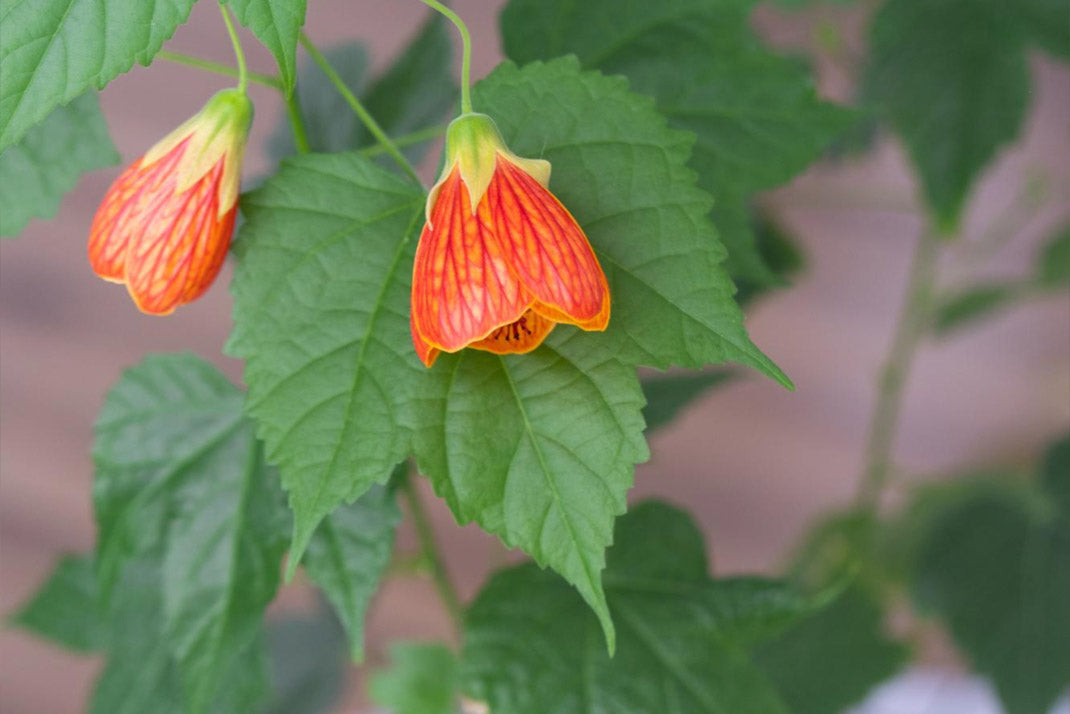
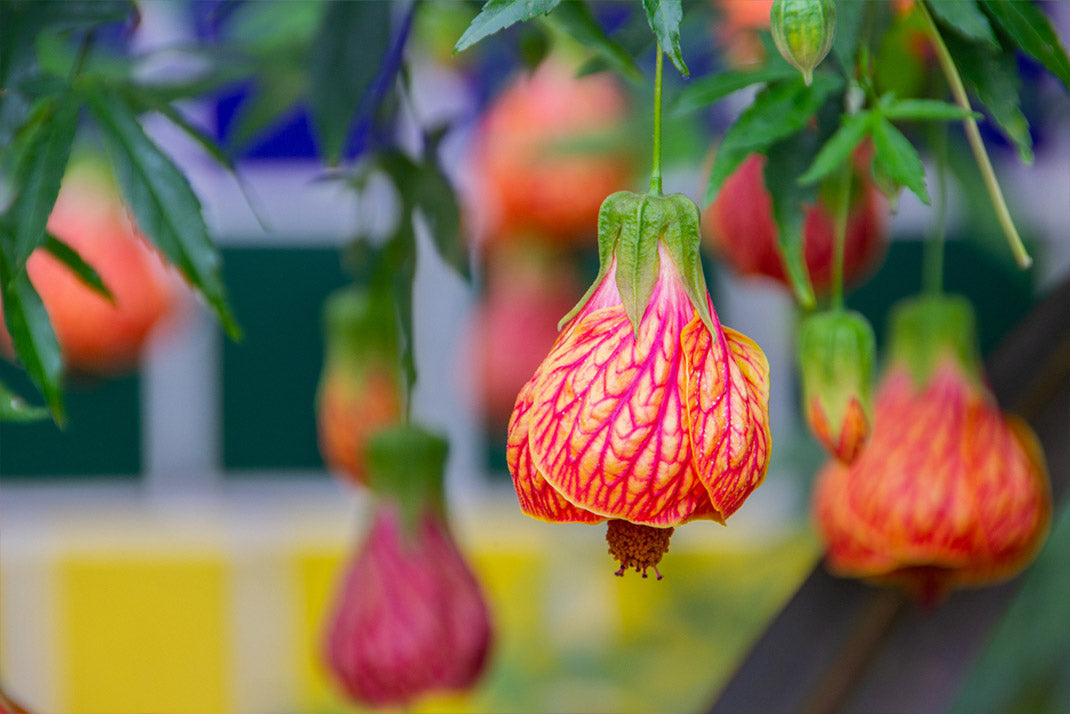
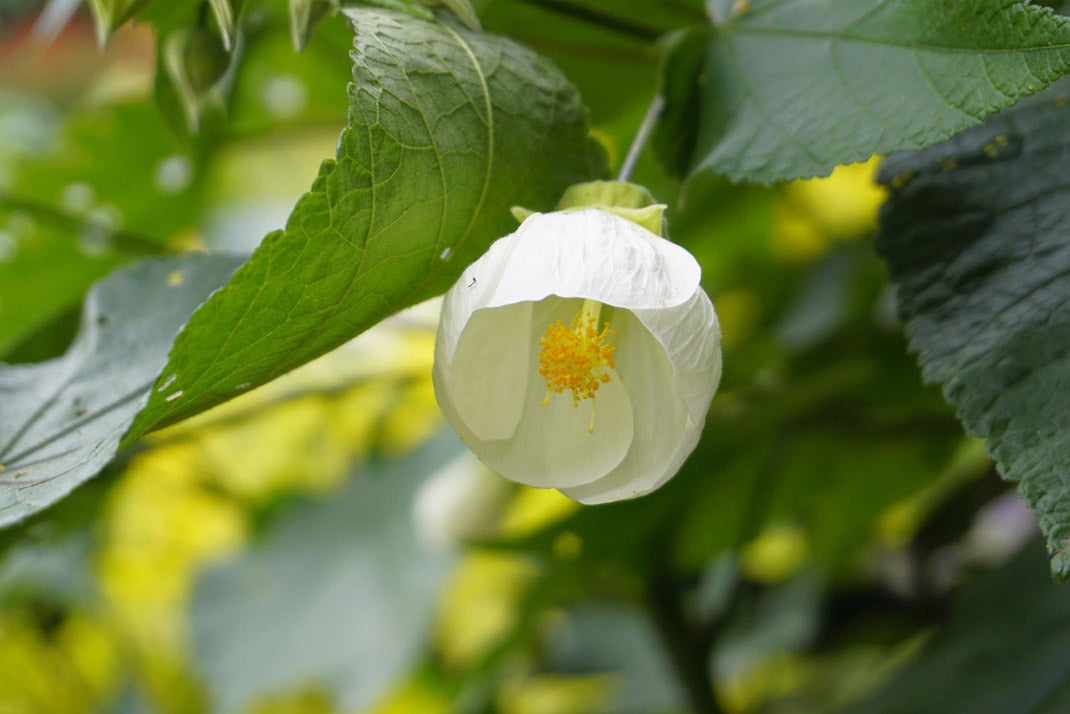
Abutilon is one of those plants that quietly works away for months, rather than giving you just a brief firework display. On a happy plant, the lantern‑ or bell‑shaped flowers start in late spring and just keep coming through summer and into autumn, sometimes almost non‑stop in very sheltered spots or under glass. Because the flowers are scattered all along the stems, the shrub always looks as if someone has decorated it, and even on dull days those soft oranges, reds, yellows and pinks really lift the mood.
Common name: Flowering Maple or Chinese Lantern.
Latin name: Abutilon
Size in UK gardens: Typically 1.5–3m tall and 1–2m wide when grown against a warm wall or in a large pot; some trailing types stay nearer 1.5–2m.
Best position: A bright, sheltered spot in full sun or dappled shade, ideally against a south‑ or west‑facing wall or in a warm courtyard, out of cold winds.
Soil: Fertile, moisture‑retentive but well‑drained soil – not heavy, waterlogged clay. In pots, a good loam‑based compost with added grit works well.
Flowering time: Depending on variety, from late spring right through summer and often well into autumn, especially in sheltered or conservatory conditions.
Hardiness: Half‑hardy: many forms cope with brief dips to around –5°C in very sheltered, free‑draining sites.
Care level: Moderate – not difficult if you can give warmth, shelter and regular watering and feeding, but less forgiving in very cold, exposed sites.

The Simpson’s team raises the majority of our trees here at the nursery. For varieties outside our own production, we work with independent local growers we trust - all chosen for UK climate suitability.
Planting time: As container‑grown plants, abutilons can be planted at almost any time of year when the soil is workable and not frozen or waterlogged; spring and early autumn are usually the easiest for new roots. In colder areas, avoid planting outdoors right before hard winter.
Watering: Water regularly in the first season so the rootball and surrounding soil never dry out completely, especially in pots and in sunny, sheltered spots where plants can be surprisingly thirsty. Once established, keep the soil just moist, allowing the top of the compost to dry slightly between waterings.
Feeding: Because abutilons flower for such a long time, they respond very well to regular feeding. A balanced slow‑release feed or a mulch of garden compost in spring, backed up with a liquid feed every 2–4 weeks through the main growing season, will keep flowers coming.
Pruning: Pruning is mostly about keeping the plant within bounds and encouraging fresh, flower‑bearing shoots. Lightly prune in late winter or early spring to shape, then trim back straggly growth after flushes of flowers through the season if needed.
Winter: In mild, sheltered gardens, established wall‑grown plants may overwinter outside with mulch and a little fleece in cold snaps; in colder areas, it’s best to grow abutilon in a pot and move it into a frost‑free but bright place before hard frosts arrive.
Availability is always changing, so please check with us if you have a particular variety in mind.


A wonderfully floriferous, lantern-flowered climber/trailer for a warm, sheltered spot—more “courtyard and conservatory mood” than hardy wall climber. It scrambles best when tied into wires or a trellis, then drapes beautifully from pots and raised beds, flowering for months in mild weather. Treat it like a tender wall shrub: sun, shelter, regular watering in growth, and a light trim to keep it bushy and blooming.
A richer-toned take on the trailing abutilon, with the same long season of dangling, lantern-like flowers and a relaxed, elegant way of spilling and scrambling. It’s happiest trained up a small trellis or allowed to cascade from a pot, where you can enjoy the flowers up close. Give it warmth and protection, then pinch and trim lightly to encourage more side shoots and more flowers.
A deeper, more dramatic abutilon with a slightly bolder presence—ideal when you want that lantern-flower look but with extra intensity in colour. It isn’t a “grab-and-cling” climber, so it behaves best when you guide and tie it in, letting it form a loose, flowering framework. Keep it sheltered and bright, then cut back gently to shape after a flush to keep it compact and productive.
A vivid, sunny abutilon that brings instant warmth—perfect for brightening a sheltered wall, pergola post, or large pot with a small support. It climbs by being trained rather than by clinging, so it suits tidy trellis work and gentle tying-in. With warmth, steady moisture, and occasional trimming, it becomes a long-flowering, “holiday-feel” feature plant.

A graceful, free-flowering abutilon with that soft, trailing habit that looks brilliant in pots and against a warm wall. It’s at its best when you give it something to weave through and then let it drape, creating a light, airy curtain of foliage and bloom. Think shelter, sun, and light pruning to keep it branching and full rather than leggy.