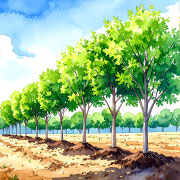

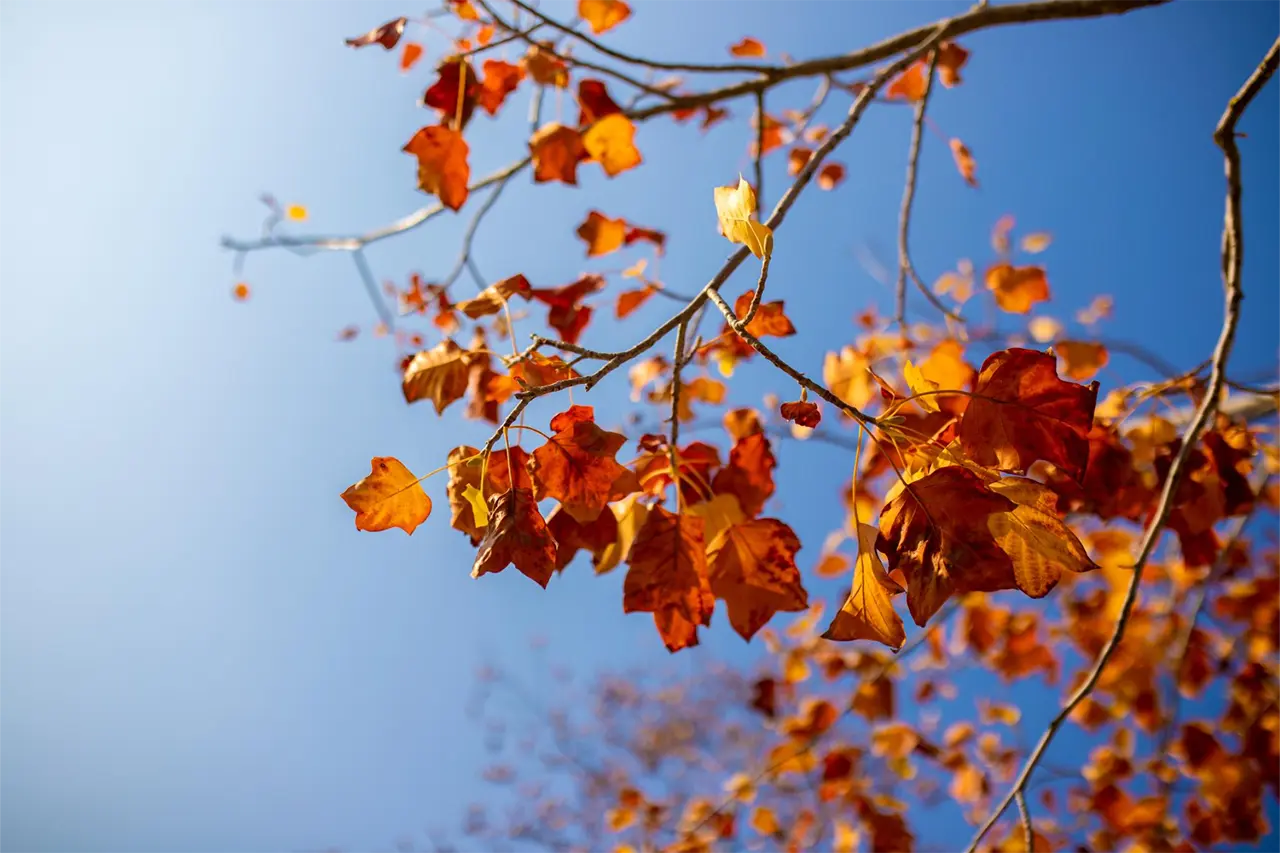
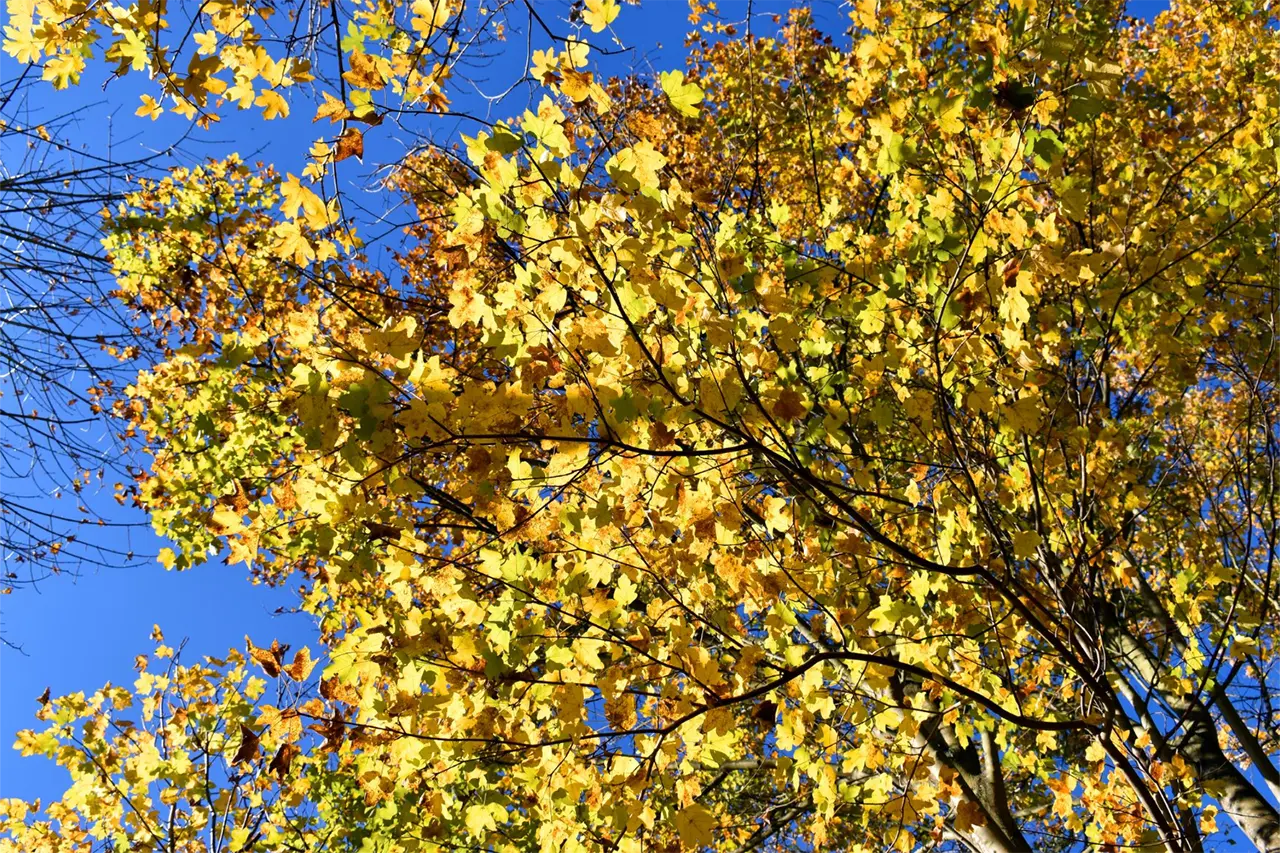
Field maple is one of those trees that doesn’t demand attention, yet quietly rewards you every year. Through summer it’s a calm, fresh green, and then as days shorten it shifts into warm yellow and gold — a glow that suits almost any garden style, from modern gravel to a more cottagey border. In full sun the colour is often richer, but even in light shade it still gives a gentle autumn lift. If you want seasonal interest that feels natural rather than dramatic, field maple is a wonderfully steady choice.
Common name: Field maple.
Latin name: Acer campestre.
Size in UK gardens: Commonly 6–12m as a tree over time, depending on conditions; can be kept much smaller as a hedge or clipped screen.
Best position: Sun or light shade; autumn colour is best with plenty of sun and a bit of shelter.
Soil: Adaptable; prefers well-drained soil but tolerates clay and chalk if not waterlogged.
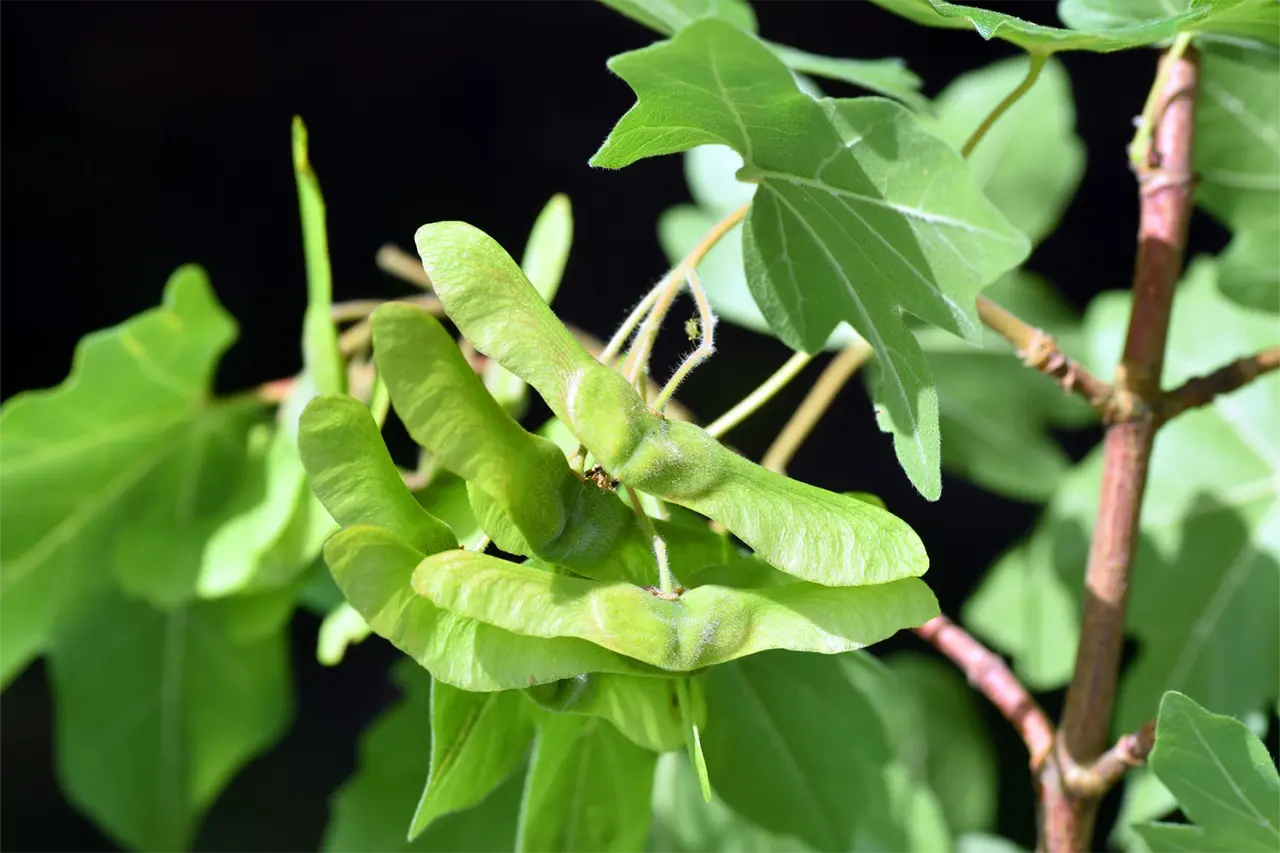
Main interest: Fresh spring foliage, neat summer canopy, and reliable golden autumn colour; winged seeds later in the season.
Fragrance: Usually not noticeably scented.
Hardiness: Very hardy in the UK.
Care level: Low to moderate – generally easy, with light pruning and sensible watering while establishing.

The Simpson’s team raises the majority of our trees here at the nursery. For varieties outside our own production, we work with independent local growers we trust - all chosen for UK climate suitability.
Planting time: As container-grown plants, field maples can be planted in most months when the ground isn’t frozen or waterlogged; spring and autumn are usually easiest.
Watering: Water well in the first 1–2 seasons, especially in dry spells; after that it’s fairly resilient but appreciates a deep soak in prolonged drought.
Feeding: A spring mulch of compost or well-rotted manure is usually enough; feed lightly in spring if growth is weak.
Pruning: Light shaping as needed; clip hedges in late summer, and do heavier pruning in mid to late summer to avoid sap “bleeding”.
Winter: Fully hardy; young plants in pots benefit from a little root protection in severe cold.
Availability is always changing, so please check with us if you have a particular variety in mind.


A tough, native field maple with fresh green leaves and a naturally rounded crown. It copes well with wind, clay and urban conditions, and turns buttery yellow in autumn. Excellent for screening, avenues, or as a dependable shade tree that also supports wildlife in UK gardens every year.
A compact, very reliable field maple with a dense, neat crown that stays uniform without constant pruning. It’s widely used as a street tree because it tolerates pollution and wind, and gives clear yellow autumn colour. Ideal for smaller gardens where you want structure and calm shade.
A refined field maple forming a broad, well-balanced crown with glossy green leaves and clear seasonal colour. It feels slightly more ornamental than the species, yet remains hardy and easy-going. A good choice for lawns and larger borders where you want a shapely tree and gentle shade.
A bright variegated field maple with green leaves splashed cream, often flushed pink on new growth. Slower and smaller than the plain species, it’s perfect for adding light to courtyards and mixed borders. Plant in good light for the clearest pattern and a crisp, tidy canopy all season.


A narrow, upright field maple that keeps a slim profile, ideal for tight spaces, drives and formal planting. The foliage stays fresh green, then turns warm yellow in autumn. A great alternative to larger columnar trees when you want height, privacy and minimal spread, even in wind.
A decorative field maple selected for richer colour, with fresh green summer leaves and a stronger red-orange flush in autumn. It keeps the toughness of the species while adding extra seasonal drama. Excellent for small gardens where you want reliable structure with a brighter finish.