
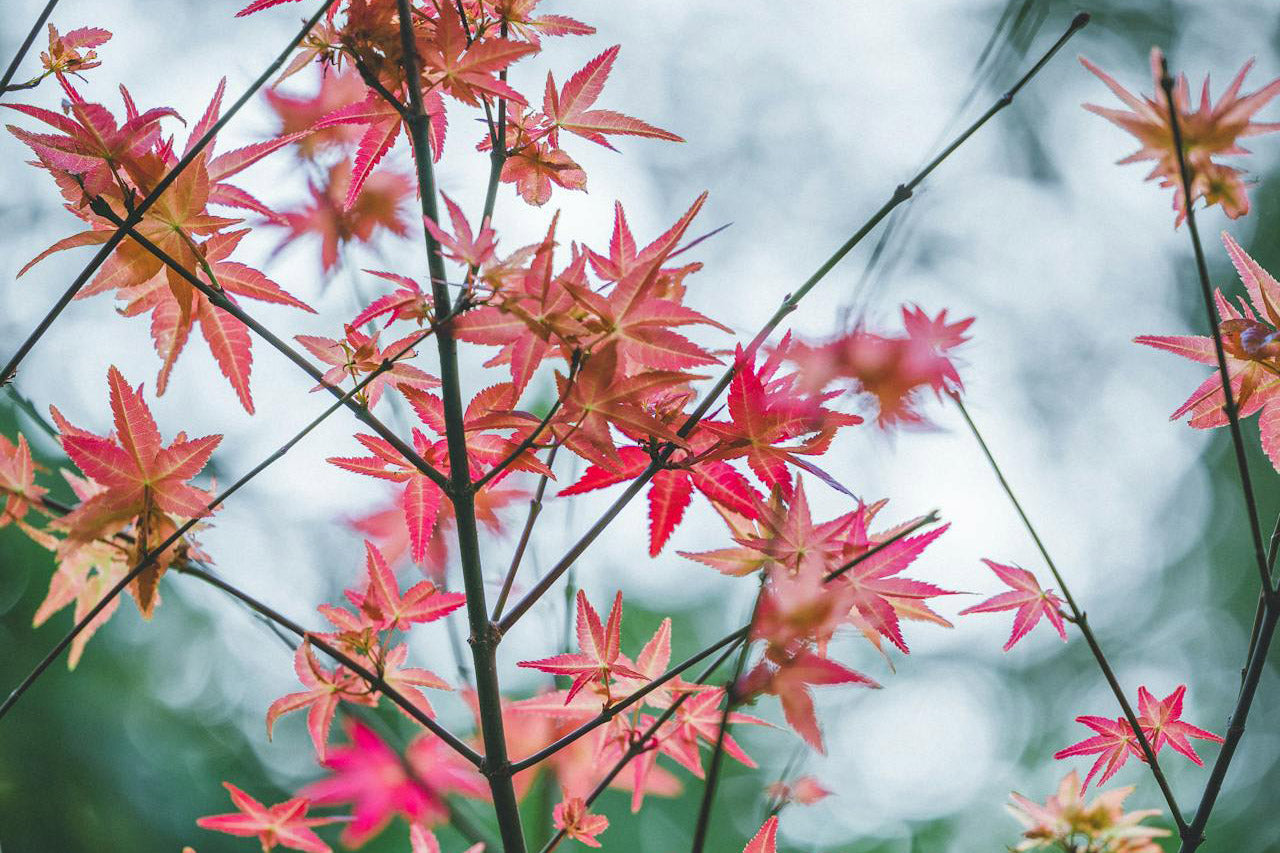
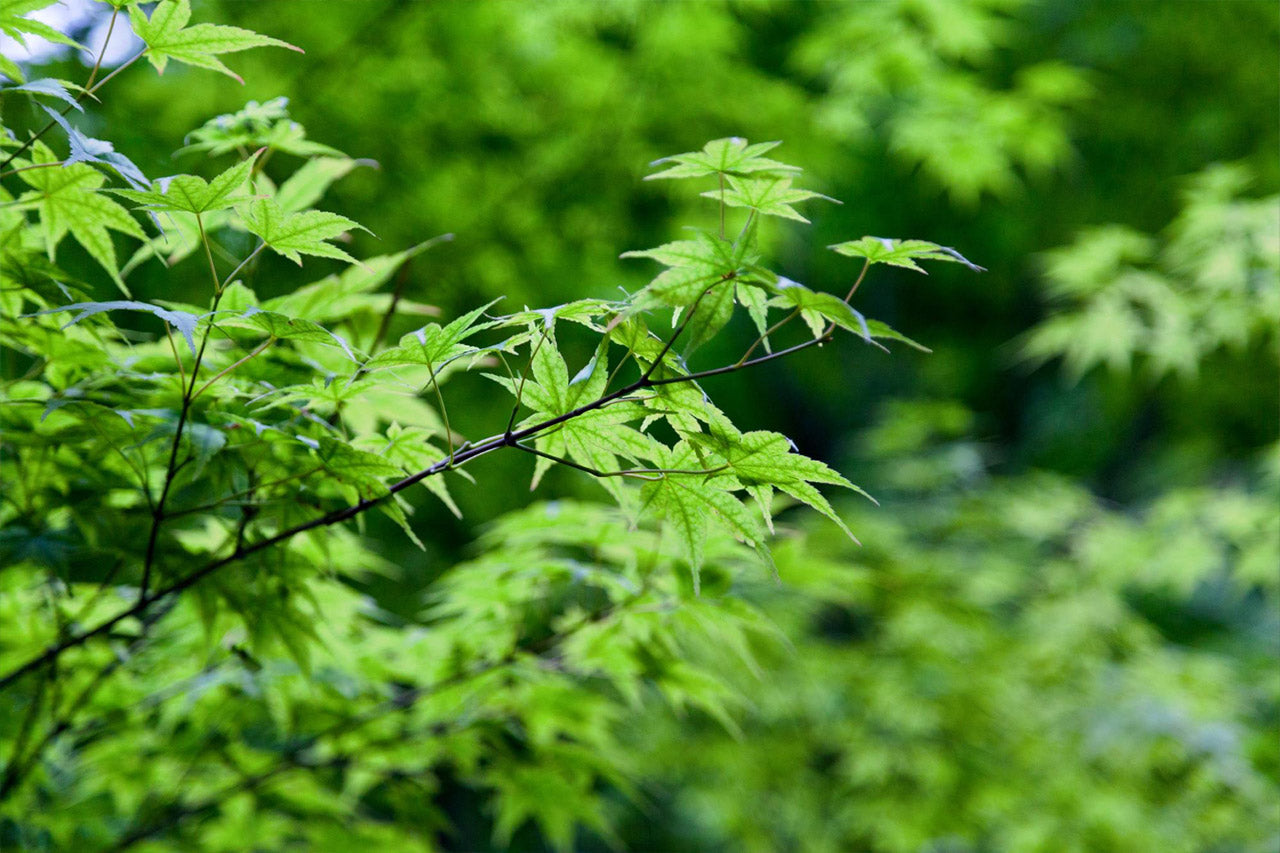
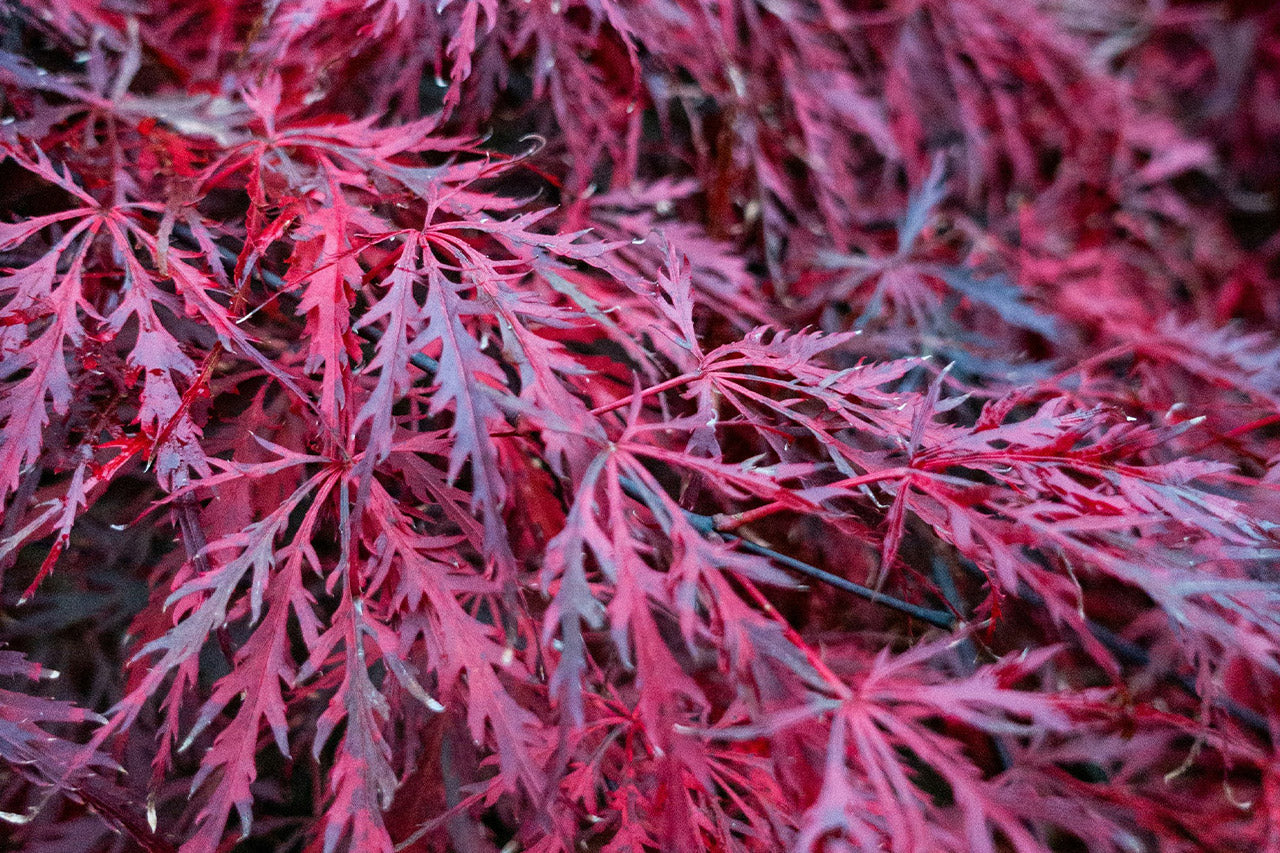
Japanese maples (Acer palmatum and A. japonicum cultivars) are famous for their finely divided leaves and remarkable colours. Through spring and summer the foliage can be lime, bronze, burgundy, soft green or almost black‑red, often changing tone as the season progresses. When autumn comes, the whole tree can flare into brilliant scarlet, orange, gold or a blend of all three, especially in a good, settled year. Even in a modest Cambridgeshire garden, a single Japanese maple can be the plant you notice first whenever you step outside, simply because its foliage feels so special.
Common name: Japanese maple
Latin name: Acer
Size in UK gardens: Typically 1.5–4m tall and wide, depending on variety and rootstock; some dwarf forms stay around 1–1.5m, while older trees in good soil can become larger.
Best position: A sheltered spot with dappled light or morning sun and afternoon shade; avoid harsh, drying winds and intense midday sun, especially in hot, dry areas.
Soil: Moisture‑retentive but well‑drained, humus‑rich soil, ideally slightly acidic to neutral. In pots, use a good loam‑based or ericaceous compost and avoid limey, very chalky conditions.
Main interest: Fine spring and summer foliage with outstanding autumn colour; some varieties also have attractive winter twigs and bark.
Fragrance: Usually not noticeably scented; appeal is mainly visual.
Hardiness: Generally hardy in most UK gardens once established, especially in sheltered positions; leaves can be damaged by late frosts and strong winds.
Care level: Moderate – easy if you can provide the right spot and steady moisture, a little fussier in exposed, very sunny or very alkaline sites.

The Simpson’s team raises the majority of our trees here at the nursery. For varieties outside our own production, we work with independent local growers we trust - all chosen for UK climate suitability.
Planting time: As container‑grown trees, Japanese maples can be planted in most months when the soil isn’t frozen or waterlogged, with autumn and early spring usually easiest. Avoid moving them in the very hottest, driest weather if you can.
Watering: Water regularly while establishing, and in dry spells thereafter, particularly on lighter soils and in containers. Aim for consistently moist, not sodden, soil – sudden swings from very dry to very wet are more stressful than gentle, steady moisture.
Feeding: In the ground, a spring mulch of compost or well‑rotted manure is usually enough. In poorer soils or containers, a modest, balanced slow‑release fertiliser in spring, plus a light top‑up of high‑potash feed in summer, keeps growth steady and foliage colourful without forcing it.
Pruning: Japanese maples need very little pruning beyond removing dead, damaged or badly placed branches. Light shaping is best done in mid‑summer or mid‑winter; avoid heavy pruning in late winter and early spring when sap is rising strongly.
Winter: In most UK gardens, established Japanese maples simply sit dormant through winter. A mulch over the root area helps, and container plants may benefit from a more sheltered spot to protect roots from severe cold and repeated freezing and thawing.
Availability is always changing, so please check with us if you have a particular variety in mind.


A reliable Japanese maple with rich burgundy foliage that keeps its colour well through summer, then finishes with glowing crimson tones in autumn. Upright and well-shaped, it gives strong contrast in borders without feeling fussy. A great “first Japanese maple” for creating instant presence.
A compact Japanese maple with neat leaves edged in cream, often flushed pink in spring. It brings light and fine detail to small gardens, and is excellent in pots near doors or seating. Give it shelter and soft sun for crisp variegation, steady colour, and a very tidy outline.
A classic weeping laceleaf that forms a graceful mound, draping like a living fountain. Leaves emerge red-purple and deepen through the season, then glow in autumn. Perfect by paths or water, where the cascading shape reads well and feels calm up close. Ideal for small spaces.
An elegant laceleaf maple with fresh green foliage and a naturally domed, cascading habit. It brings movement and fine texture to borders, especially in dappled shade where the leaves look feathery. Autumn colour turns warm gold and orange, softly and reliably. Suits part shade.


A classic sycamore valued for its strong structure and broad canopy of fresh green leaves. It suits larger gardens and open settings where a substantial, long-lived tree is appropriate. A dependable choice for creating shade and presence over time.
A bold sycamore distinguished by deep purple foliage that holds its colour well through the season. It adds contrast and richness to landscapes where green alone can feel flat. Particularly effective as a statement tree in lawns or spacious borders.
An unusual sycamore with marbled foliage in soft green, cream, and pink tones, changing as the leaves mature. It brings lightness and visual interest without feeling showy or overpowering. Best appreciated where its subtle patterning can be seen up close.
A refined sycamore with finely variegated leaves that create a calm, elegant effect. The colouring is more delicate than bold, giving the tree a composed, balanced appearance. Well suited to gardens where quiet detail matters more than drama.


A classic sycamore valued for its strong structure and broad canopy of fresh green leaves. It suits larger gardens and open settings where a substantial, long-lived tree is appropriate. A dependable choice for creating shade and presence over time.
A bold sycamore distinguished by deep purple foliage that holds its colour well through the season. It adds contrast and richness to landscapes where green alone can feel flat. Particularly effective as a statement tree in lawns or spacious borders.
An unusual sycamore with marbled foliage in soft green, cream, and pink tones, changing as the leaves mature. It brings lightness and visual interest without feeling showy or overpowering. Best appreciated where its subtle patterning can be seen up close.
A refined sycamore with finely variegated leaves that create a calm, elegant effect. The colouring is more delicate than bold, giving the tree a composed, balanced appearance. Well suited to gardens where quiet detail matters more than drama.


A classic sycamore valued for its strong structure and broad canopy of fresh green leaves. It suits larger gardens and open settings where a substantial, long-lived tree is appropriate. A dependable choice for creating shade and presence over time.
A bold sycamore distinguished by deep purple foliage that holds its colour well through the season. It adds contrast and richness to landscapes where green alone can feel flat. Particularly effective as a statement tree in lawns or spacious borders.