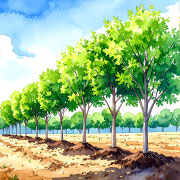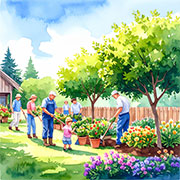

Norway maple is loved for one simple reason: it makes shade you can actually use. The leaves are broad and plentiful, and once the crown fills out it creates a cool, dappled space underneath that feels restful on hot days. In a larger UK garden, it’s the sort of tree that changes how you live outside — suddenly there’s somewhere to sit when the sun is strong, somewhere the lawn stays greener, and somewhere the garden feels more “finished”. Give it room, and it rewards you with calm, green shelter year after year.
Common name: Norway maple.
Latin name: Acer platanoides.
Size in UK gardens: A large deciduous tree over time; commonly 12–20m, with a broad crown if given space.
Best position: Sun or light shade in an open spot, with plenty of clearance from buildings and boundaries.
Soil: Adaptable, but best in fertile, well-drained soil; tolerates clay if it isn’t waterlogged.
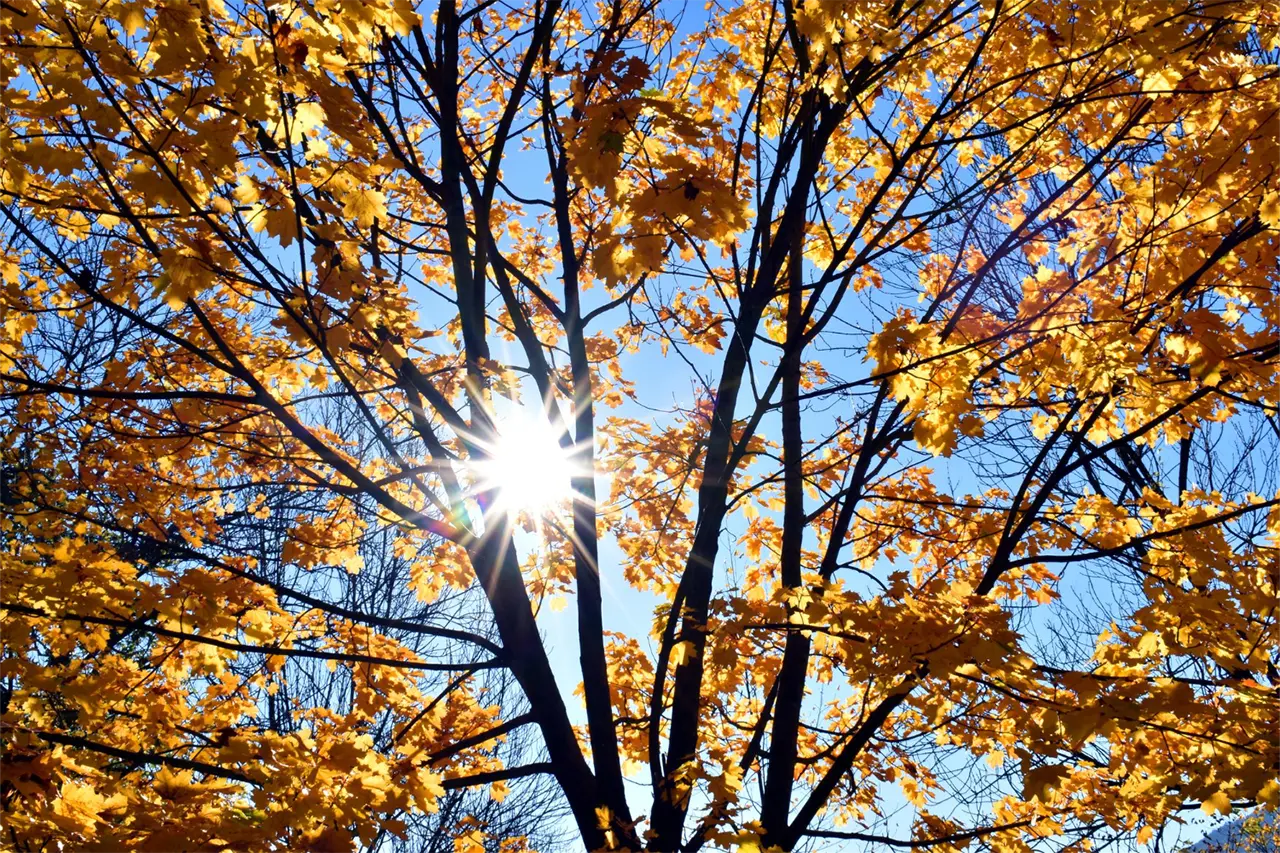
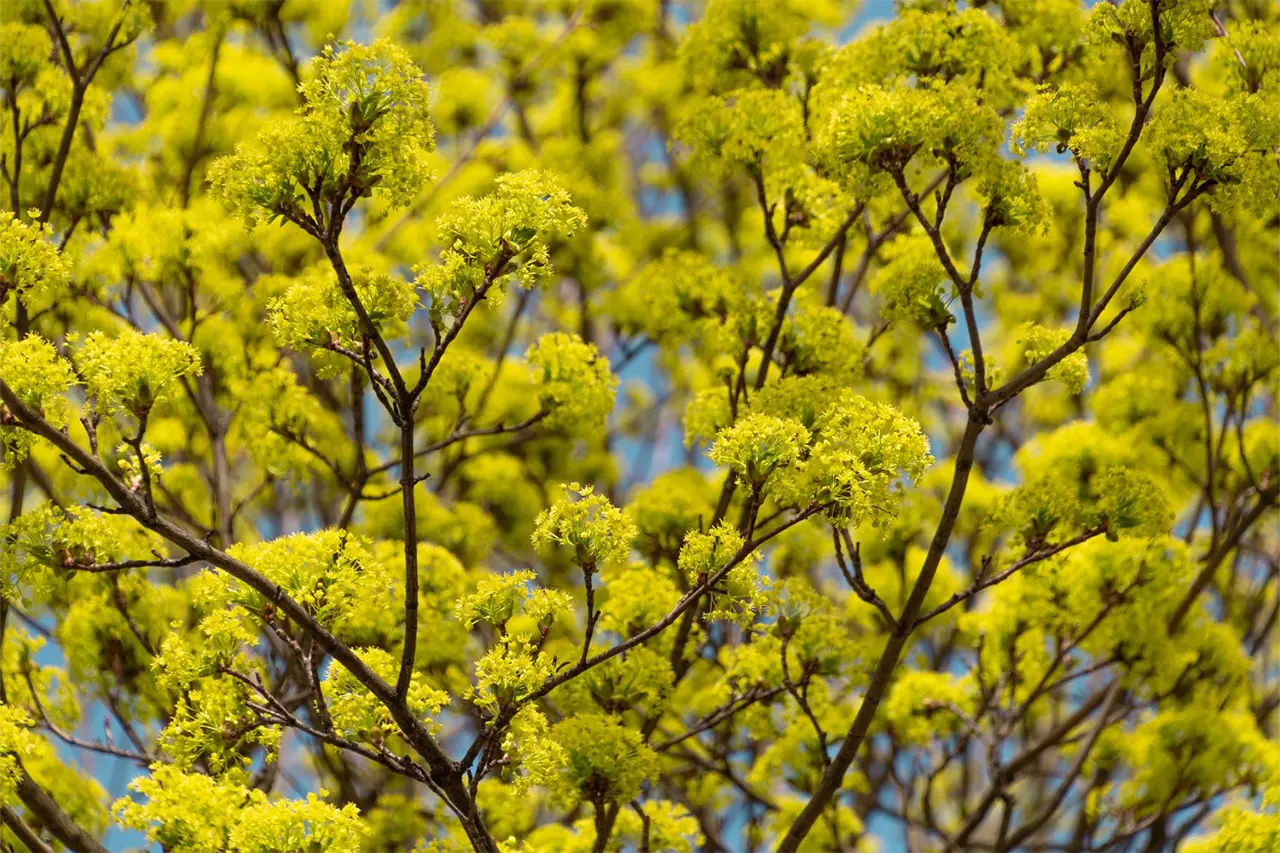
Main interest: Big shade canopy, spring flowers, and warm yellow autumn colour; winged seeds later in the season.
Fragrance: Usually not noticeably scented.
Hardiness: Very hardy in the UK once established.
Care level: Low to moderate – easy enough, but needs the right siting and room to grow.

The Simpson’s team raises the majority of our trees here at the nursery. For varieties outside our own production, we work with independent local growers we trust - all chosen for UK climate suitability.
Planting time: As container-grown trees, Norway maples can be planted in most months when the ground isn’t frozen or waterlogged; spring and autumn are usually easiest.
Watering: Water well in the first 1–2 seasons, then water deeply in prolonged dry spells; established trees are fairly resilient but look best without repeated drought stress.
Feeding: A spring mulch of compost or well-rotted manure is usually enough; feed lightly in spring if growth is weak.
Pruning: Minimal – remove dead or crossing branches; do bigger cuts in mid to late summer to avoid sap “bleeding”.
Winter: Fully hardy; young trees benefit from mulch and steady watering going into winter if autumn has been very dry.
Availability is always changing, so please check with us if you have a particular variety in mind.


A classic purple-leaved Norway maple with a broad, shady crown and strong summer colour that doesn’t fade quickly. It makes instant contrast against greens and silver foliage, then tones deeper in autumn. Best for larger gardens and streets where you can give it space to spread.
A narrow, upright purple Norway maple that keeps a slim footprint while delivering rich dark foliage all season. Ideal for drives, tighter gardens and formal planting where height matters more than width. Autumn colour deepens, and the silhouette stays tidy even in windy sites.
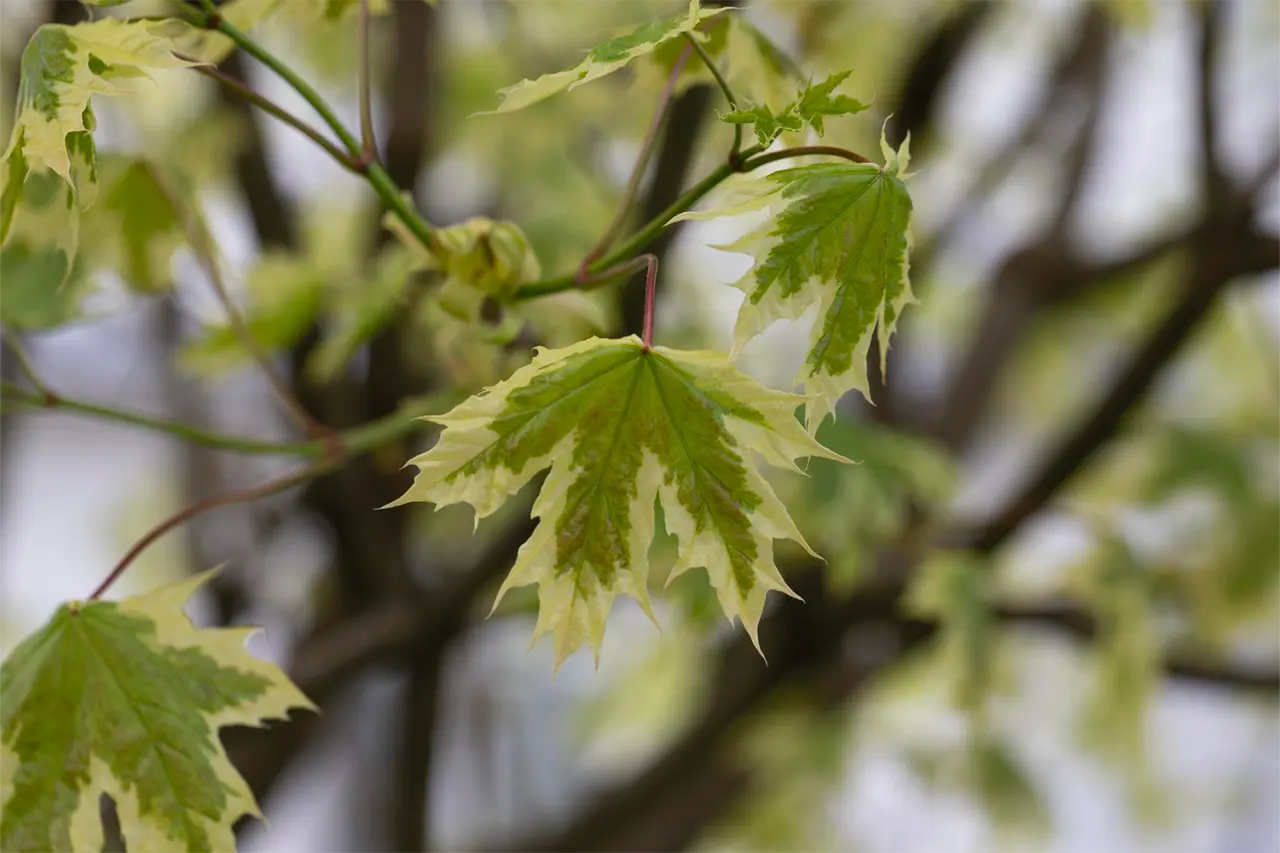
A bright variegated Norway maple with green leaves neatly edged in cream in spring, creating a calm, light canopy. It brings colour without flowers and gives gentle shade over lawns or patios. Best in sun or light shade for crisp margins, and sheltered sites to avoid scorch.
A compact Norway maple with a neat, rounded crown and clean green foliage, chosen for reliability and an even shape. It suits smaller gardens where a full-sized Norway maple would be too much. Expect pleasant yellow autumn colour and dependable shade without constant pruning.


A vivid Norway maple selected for stronger seasonal colour, with green summer leaves that shift to orange-red tones as autumn arrives. It keeps a tidy, upright-oval habit and feels more ornamental than the species. Great as a lawn tree where you want drama without fuss, too.
The traditional Norway maple: fast to establish, tough in urban conditions, and able to form a generous canopy of fresh green leaves. It gives strong shade and reliable yellow autumn colour, making it a good avenue or large-garden tree. Allow plenty of room for roots and spread.
A golden-leaved Norway maple that opens bright yellow in spring and stays luminous through summer, adding warmth and contrast. It forms a shade tree for medium to large gardens and looks superb against dark evergreens. Give it moisture in dry spells and avoid very exposed heat.