
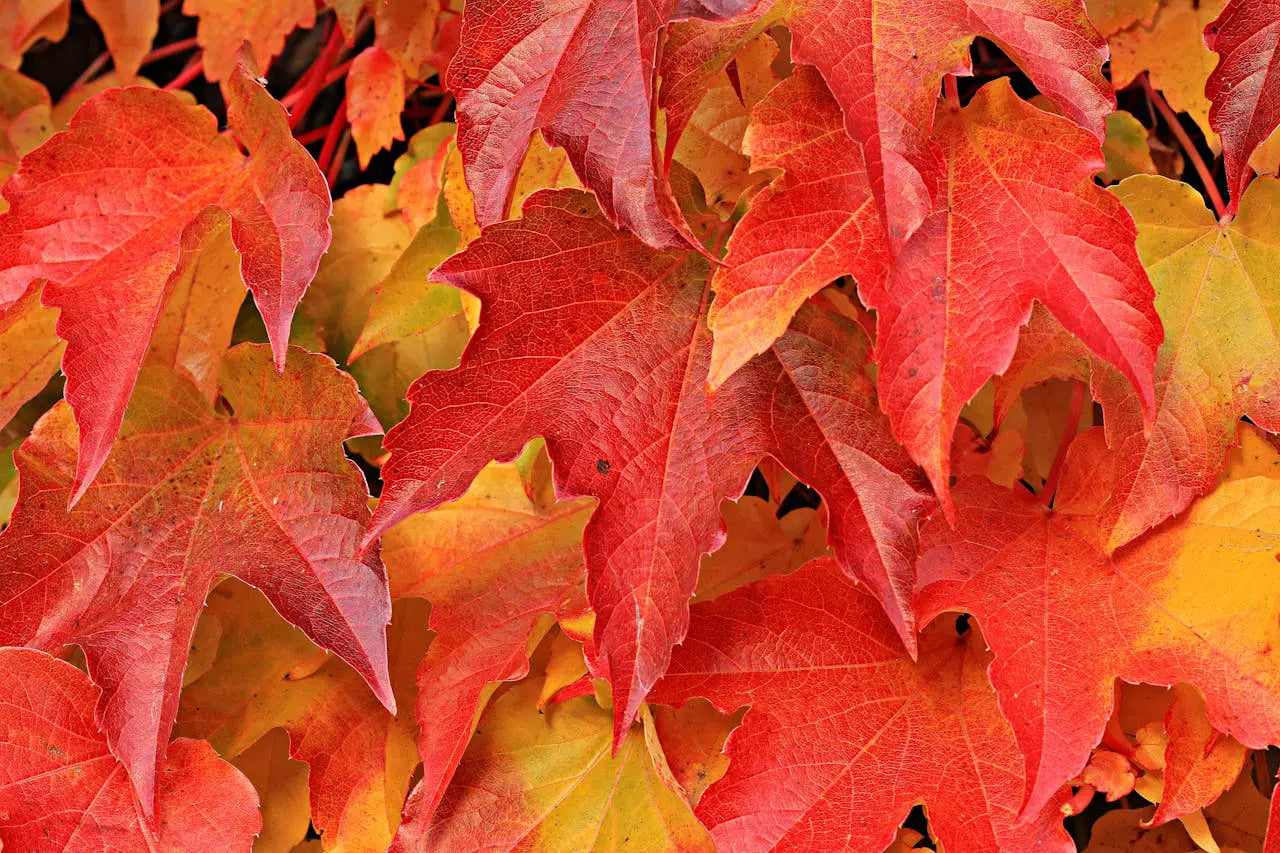
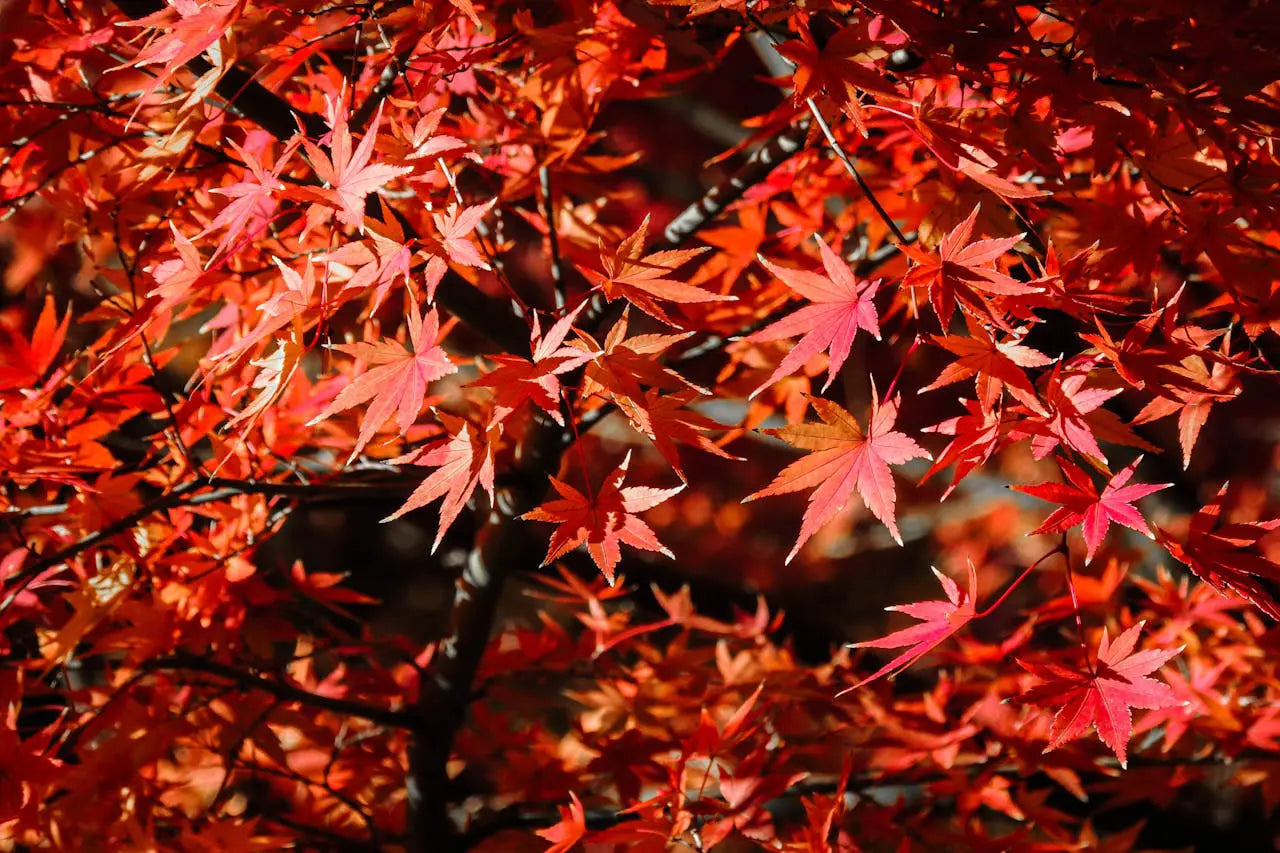
Acer rubrum is grown for its autumn show, and when it’s happy it can be breathtaking — glowing reds, oranges and warm golds that make the whole garden feel richer. The colour is often strongest in a sunny spot with steady moisture, especially after cool nights. Unlike some trees that only colour well “now and then”, red maple tends to be reliably good, giving you that late-season lift just when borders are fading. It’s the kind of tree that makes you slow down on the way to the shed and look up.
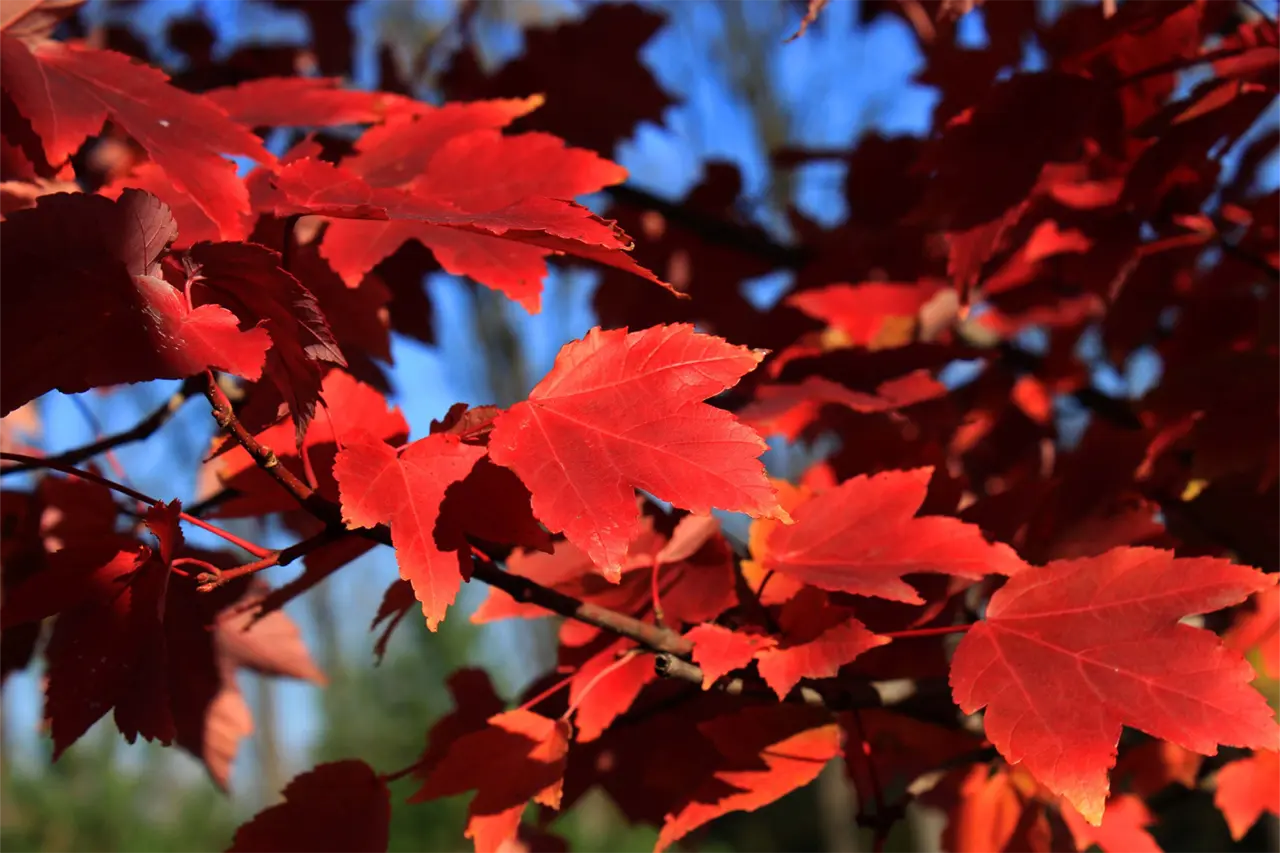
Common name: Red maple.
Latin name: Acer rubrum.
Size in UK gardens: Typically 8–15m over time (often smaller when young or in restricted spaces); allow room for a spreading crown.
Best position: Full sun or light shade in a sheltered spot for best colour and leaf quality.
Soil: Moist but well-drained, preferably slightly acidic; struggles on very chalky/alkaline ground unless grown in a large container or improved bed.
Main interest: Spectacular autumn colour, plus a handsome summer canopy and winged seeds later on.
Fragrance: Usually not noticeably scented.
Hardiness: Very hardy once established; young trees appreciate steady moisture and shelter from drying winds.
Care level: Moderate – straightforward if soil and moisture suit, with minimal pruning needed.

Rather than travelling halfway across Europe, our mimosa trees are grown on site by the Simpson’s team. They’re toughened to local conditions, properly potted, and ready to get growing the moment you plant them.
Planting time: As container-grown trees, Acer rubrum can be planted in most months when the ground isn’t frozen or waterlogged; spring and autumn are usually easiest.
Watering: Water regularly while establishing and during dry spells; red maple appreciates steady moisture, especially in its first few summers.
Feeding: Mulch in spring and top up organic matter yearly; on alkaline soils or in pots, an ericaceous feed can help keep growth lush and green.
Pruning: Minimal; remove dead or crossing branches, and do bigger cuts in mid to late summer to avoid sap “bleeding”.
Winter: Fully hardy once established; young trees benefit from mulch and a little wind protection in harsh spells.
Availability is always changing, so please check with us if you have a particular variety in mind.


A narrow, fast-growing red maple with a strong columnar habit—ideal where you want height but not width. Leaves are green through summer, then turn orange-red in autumn. Great for drives, tighter gardens, and avenue planting. Neat, upright outline.
A vigorous Freeman maple with a handsome oval crown and famously reliable scarlet autumn colour. It gives bold seasonal impact and strong shade without looking heavy. Excellent as a lawn tree or boundary marker where you want colour and quick presence.
Chosen for one of the deepest, longest-lasting autumn displays—often rich red to red-purple. Upright and oval, it suits spaces needing a more controlled canopy, while still feeling substantial. A brilliant focal tree for autumn, with colour lingering.
A tidy red maple with a flame-like pyramidal outline and a fiery autumn finish. Summer foliage stays dark green, and red spring flowers add early colour before the leaves open fully. Ideal when you want a formal shape, tidy lines, and seasonal drama.


A classic red maple valued for rich, later-season colour—often glowing red when many trees have already faded. It forms a broad, rounded canopy for shade and structure, with red spring flowers on bare branches. Superb for big autumn impact each year.
A dependable red maple (often sold as 'Franksred') with a more upright habit and reliably brilliant orange-red autumn colour. It makes a strong shade tree for medium to large gardens and is widely used for avenues. A safe bet for colour and shape.
The wild red maple is graceful and adaptable, with green leaves and a variable autumn show of yellow, orange and red. Small red flowers appear in spring before the leaves, followed by winged seeds. Ideal for a natural, woodland feel and gentle shade.
A medium-sized red maple with a symmetrical rounded-oval crown and long-lasting autumn colour in reds and oranges. It's a great garden choice when you want strong seasonal impact without an oversized canopy. Works beautifully as a central lawn feature.


A neat, narrow red maple with a naturally columnar habit—excellent for streets, drives and tighter gardens. Dark green leaves turn vivid orange to red in autumn, and it tends to keep a clean leader for a tidy outline. Perfect where space is limited.
Chosen for colourful new growth: young leaves can flush crimson through summer on red stems, then mature to green. In autumn it finishes with warm yellow, orange and red tones, giving a longer season of interest. Great where colour is the priority.