
Snakebark maples are famous for their beautifully patterned trunks — green, often with pale vertical striping, like brushstrokes running up the stem. It’s a kind of interest you only really appreciate once you’ve lived with it, because it makes the garden feel cared-for in the quieter months. On a bright winter day, those stripes catch the light; after rain, the bark looks richer and more polished. Planted near a path or patio, it’s the sort of tree that rewards you every time you pass.
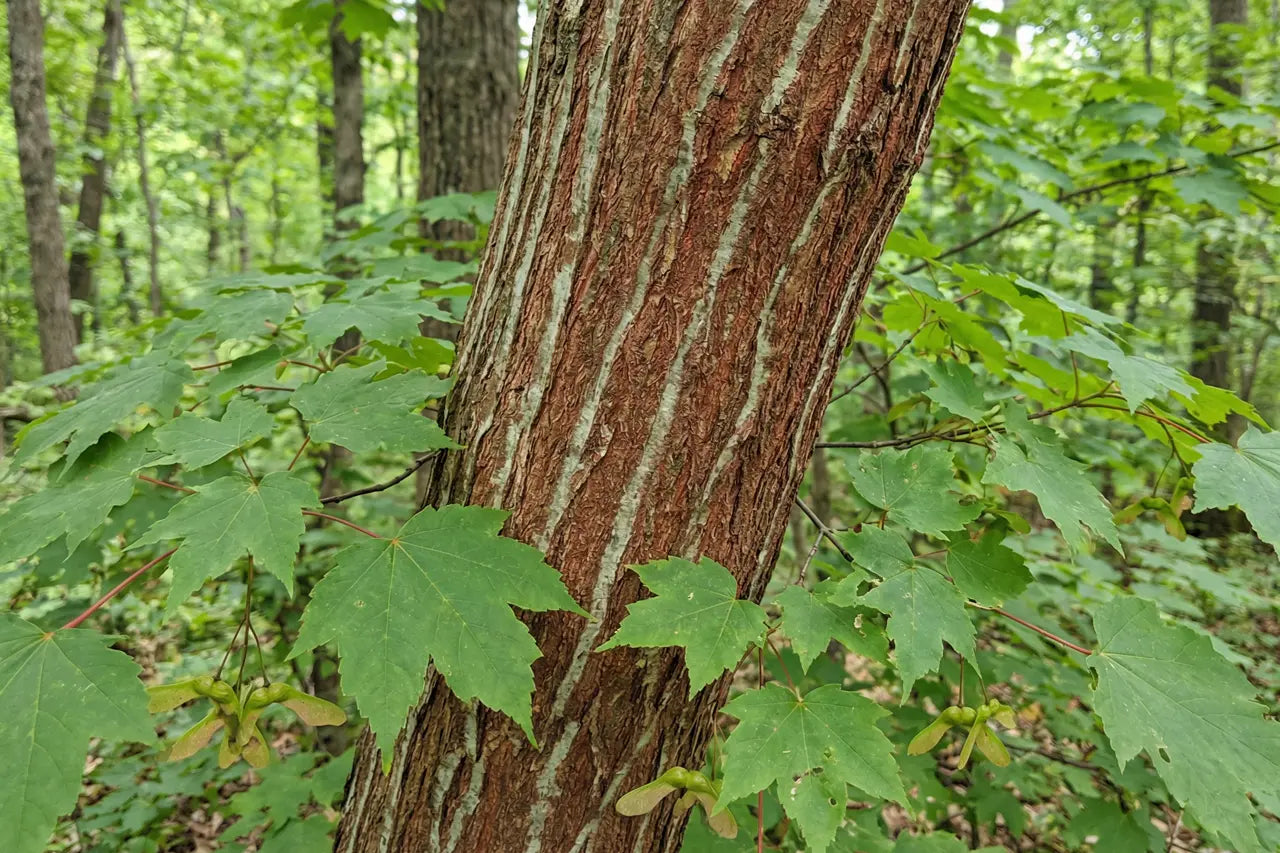
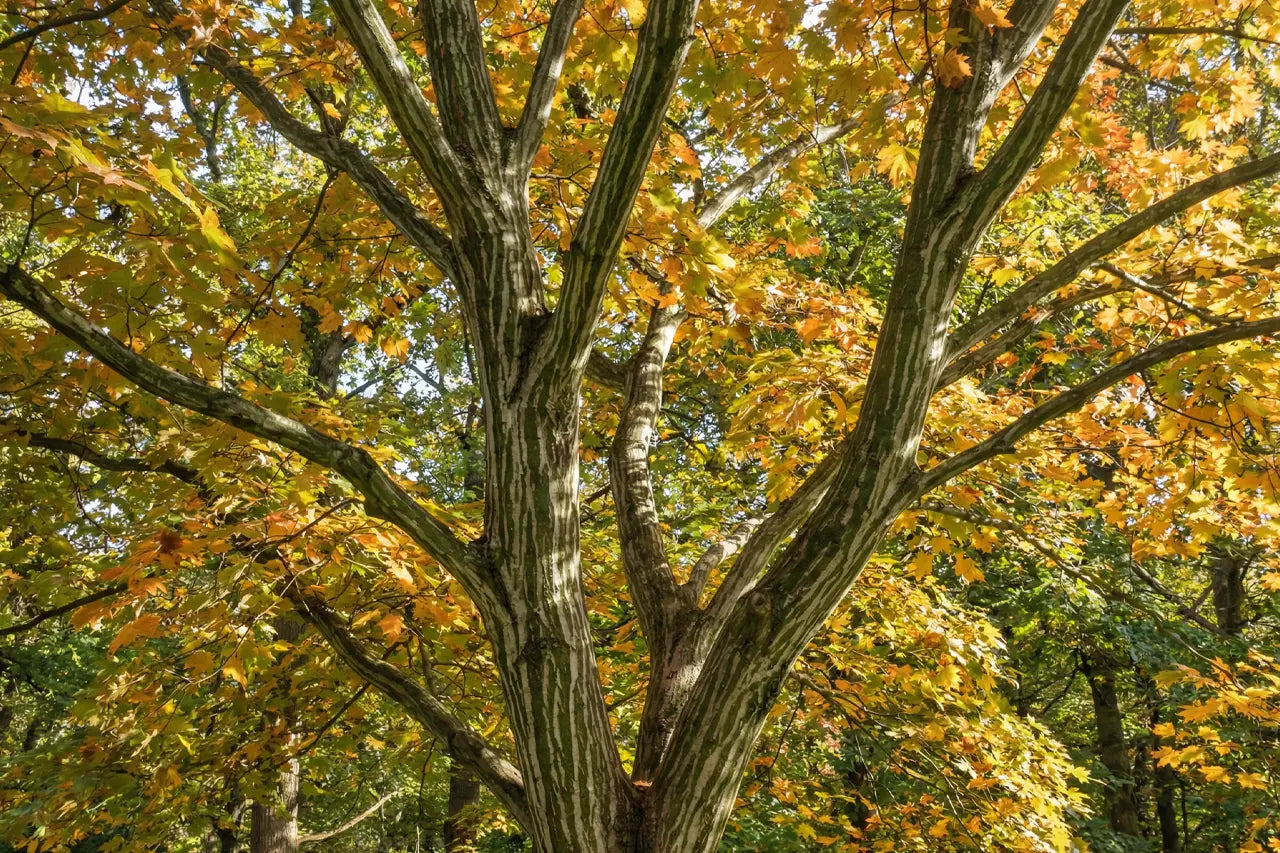
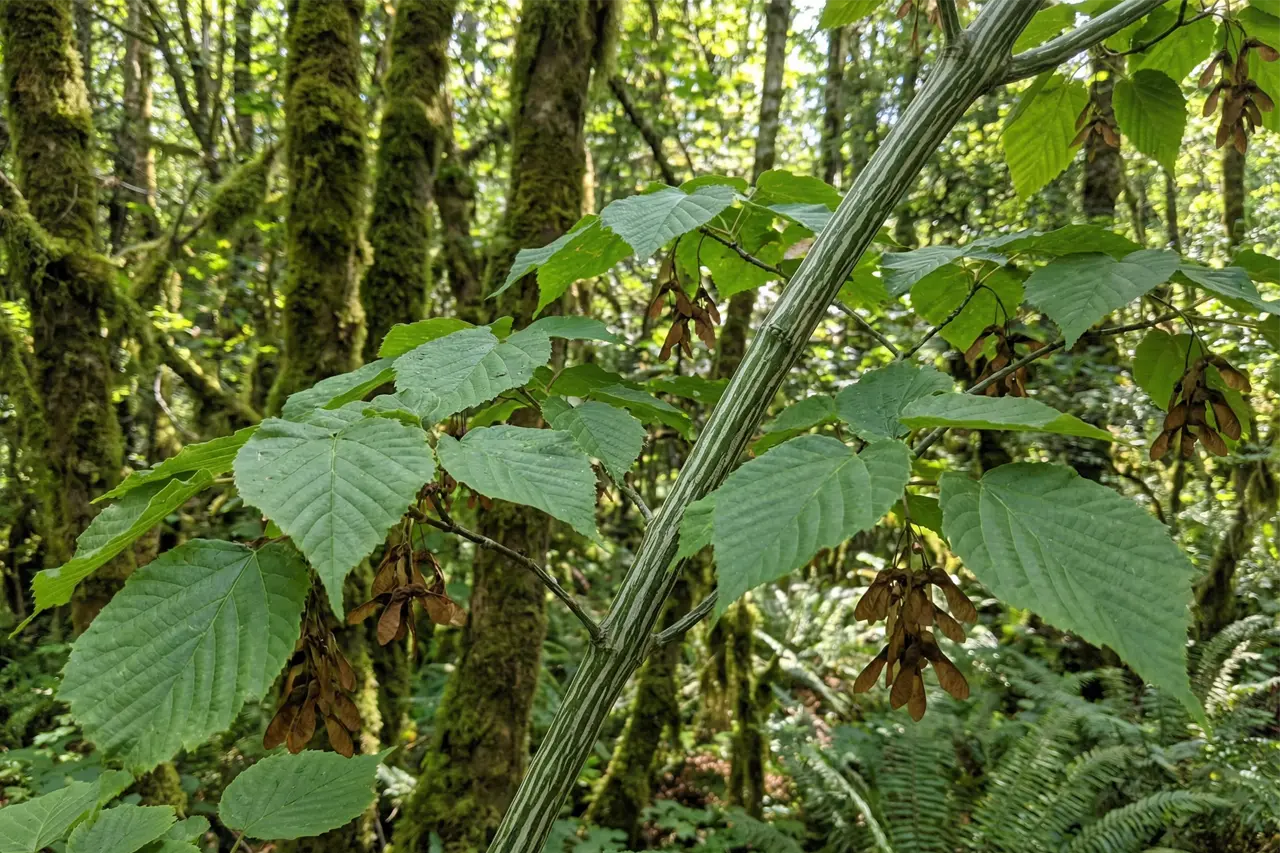
Common name: Snakebark maple.
Latin name: Acer (Snakebark group, often Acer davidii and close relatives).
Size in UK gardens: Typically 6–10m over time, often smaller in sheltered gardens; a nicely proportioned small tree with a modest spread.
Best position: Light shade or sun with shelter; happiest where roots stay evenly moist and leaves aren’t scorched by dry winds.
Soil: Humus-rich, moisture-retentive but well-drained; prefers neutral to slightly acidic conditions.
Main interest: Striped bark for winter interest, plus fresh foliage and warm autumn colour.
Fragrance: Usually not noticeably scented.
Hardiness: Very hardy in the UK once established.
Care level: Low to moderate – easy if planted in the right soil, with occasional watering in dry spells and only light pruning.

The Simpson’s team raises the majority of our trees here at the nursery. For varieties outside our own production, we work with independent local growers we trust - all chosen for UK climate suitability.
Planting time: As container-grown trees, snakebark maples can be planted in most months when the soil isn’t frozen or waterlogged; spring and autumn are usually easiest.
Watering: Water well in the first 1–2 seasons and in dry spells; even moisture helps prevent leaf scorch and keeps growth steady.
Feeding: Mulch in spring with compost or leaf mould; a gentle, balanced feed is useful if growth is weak, especially in pots.
Pruning: Minimal – mostly thinning and tidying; do bigger cuts in mid to late summer to avoid sap “bleeding”.
Winter: Very hardy; mulch helps young trees and keeps roots comfortable through cold snaps.
Availability is always changing, so please check with us if you have a particular variety in mind.


A refined snakebark maple with slim green stems striped in white, giving strong winter interest even without leaves. The foliage is delicate and elegant, with a light, airy feel rather than heavy shade. A beautiful choice for adding detail and calm structure in smaller gardens.
A standout snakebark maple with pink-flushed, variegated foliage and boldly striped stems. New growth is particularly colourful, giving a bright, decorative look from spring onwards. A superb focal tree when you want something crisp, modern, and genuinely different.
A classic snakebark maple with smooth green bark marked in pale vertical stripes, creating year-round character. The leaves are fresh green and neatly shaped, and the overall habit is graceful and lightly branching. Excellent for adding texture and interest without overwhelming a space.
A selected form of snakebark maple with especially handsome striped bark and a refined, elegant framework. Spring and summer foliage stays fresh and clean, while the stems keep interest through winter. Ideal as a collector’s tree that still feels easy to live with.

A beautiful maple valued for its silky, softly striped young bark and a particularly graceful, woodland look. The leaves are larger and slightly more textured than many snakebarks, giving a fuller canopy. A great choice when you want bark interest plus a gentle, natural presence.