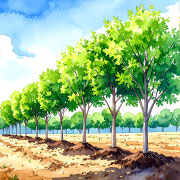

Sycamore and larger ornamental maples (Acer species such as A. pseudoplatanus, A. platanoides and A. campestre) are all about presence and season. In spring they break into fresh, generous foliage, often with soft tints of bronze or lime. Many carry dangling flower clusters that bees appreciate, followed by the familiar winged seeds. Through summer they cast a cool, steady shade, turning a bare patch of lawn into a proper sitting place. Come autumn, plenty of varieties colour well, with leaves turning yellow, orange or red before they fall and make that satisfying, crunchy carpet children love.


Common name: Sycamore And Maple Trees.
Latin name: Acer.
Size in UK gardens: Very variable – compact ornamental forms can be kept around 3–5m tall, while more vigorous trees may reach 8m+ over time if not pruned; always check the variety and rootstock.
Best position: A sunny or lightly shaded, reasonably open spot with room for the canopy to develop without crowding roofs, cables or tiny beds.
Soil: Deep, reasonably fertile, moisture‑retentive but well‑drained soil; many maples tolerate clay or chalk once established if structure is improved.
Flowering time: Usually spring for flowers and young foliage; winged seeds (samaras) follow in late summer and autumn, with strong autumn leaf colour on many cultivars.
Fragrance: Flowers are not strongly scented; the main appeal is foliage, shade and seasonal colour.
Hardiness: Generally fully hardy across the UK once established.
Care level: Moderate – mainly about choosing the right size, giving a good planting start, and keeping up with sensible pruning while trees are still manageable.

The Simpson’s team raises the majority of our trees here at the nursery. For varieties outside our own production, we work with independent local growers we trust - all chosen for UK climate suitability.
Planting time: As container‑grown trees, sycamores and maples can be planted in most months when the soil isn’t frozen or waterlogged; autumn and early spring are usually easiest, giving roots time to settle before summer heat or winter cold.
Watering: Water regularly in the first few years, particularly through dry springs and summers, so the rootball and surrounding soil stay evenly moist. Once established in decent soil, most trees cope well with normal dry spells but benefit from occasional deep watering in prolonged drought.
Feeding: In good ground, a spring mulch of compost or well‑rotted manure is often all that’s needed. On poorer soils, a light application of balanced fertiliser in early spring can help; aim to feed modestly, encouraging steady, sturdy growth rather than very soft, sappy shoots.
Pruning: Prune mainly in late winter, focusing on shaping young trees, removing crossing or rubbing branches and maintaining a strong, balanced framework. Larger trees in small gardens may need occasional crown‑lifting or thinning to let light reach underneath; if in doubt with big trees, seek professional help.
Winter: Established sycamores and maples need very little winter attention beyond a mulch and the usual checks on stakes and ties. Younger trees benefit from secure staking and a quick look after storms to make sure they haven’t rocked or loosened.
Availability is always changing, so please check with us if you have a particular variety in mind.


A compact sycamore maple prized for its soft shrimp-pink spring growth, which settles to pale green as the season matures. Neater and slower than the wild species, it suits smaller gardens and makes a lovely light canopy near lawns or patios. Give it shelter from drying winds and late frosts.
A variegated sycamore maple with green leaves splashed and marbled in cream, creating a bright, painterly canopy. Strong and long-lived once established, it’s best for medium to large gardens where its pattern can be appreciated at distance. Plant in good light for the clearest variegation.
An eye-catching variegated sycamore maple with green leaves flecked in cream, sometimes flushed pink on new growth. It brings colour and lift without flowers, and forms a shapely small to medium tree. Ideal as a statement on a lawn or beside a drive, with a tidy outline and gentle shade.
The classic sycamore maple: tough, wind-tolerant and quick to establish, with a broad, shady crown of fresh green leaves. It’s a dependable choice for bigger gardens, open sites and avenue planting where a substantial, long-lived tree is needed. Give it space and it will reward you for years.


A handsome variegated sycamore maple with crisp cream-white markings over mid-green leaves, giving a calm, elegant canopy. More composed than some heavily splashed forms, it suits larger borders and lawns where you want brightness without fuss. Best in sun or light shade for clear colour.
A golden-leaved sycamore maple that opens bright yellow in spring and stays luminous through summer, bringing warmth and contrast to the canopy layer. It makes a strong focal tree for medium to large gardens, especially against dark evergreens. Avoid very hot, exposed sites to prevent scorch.