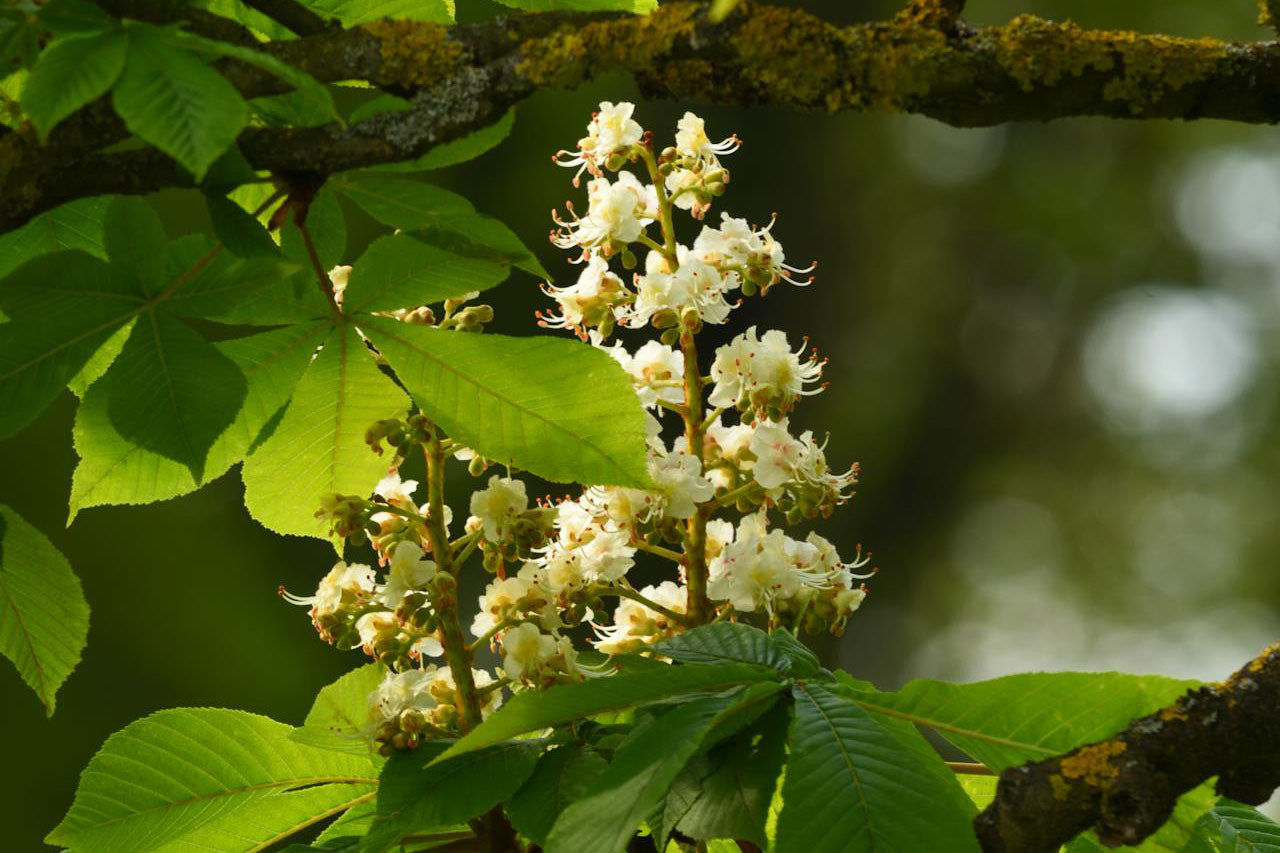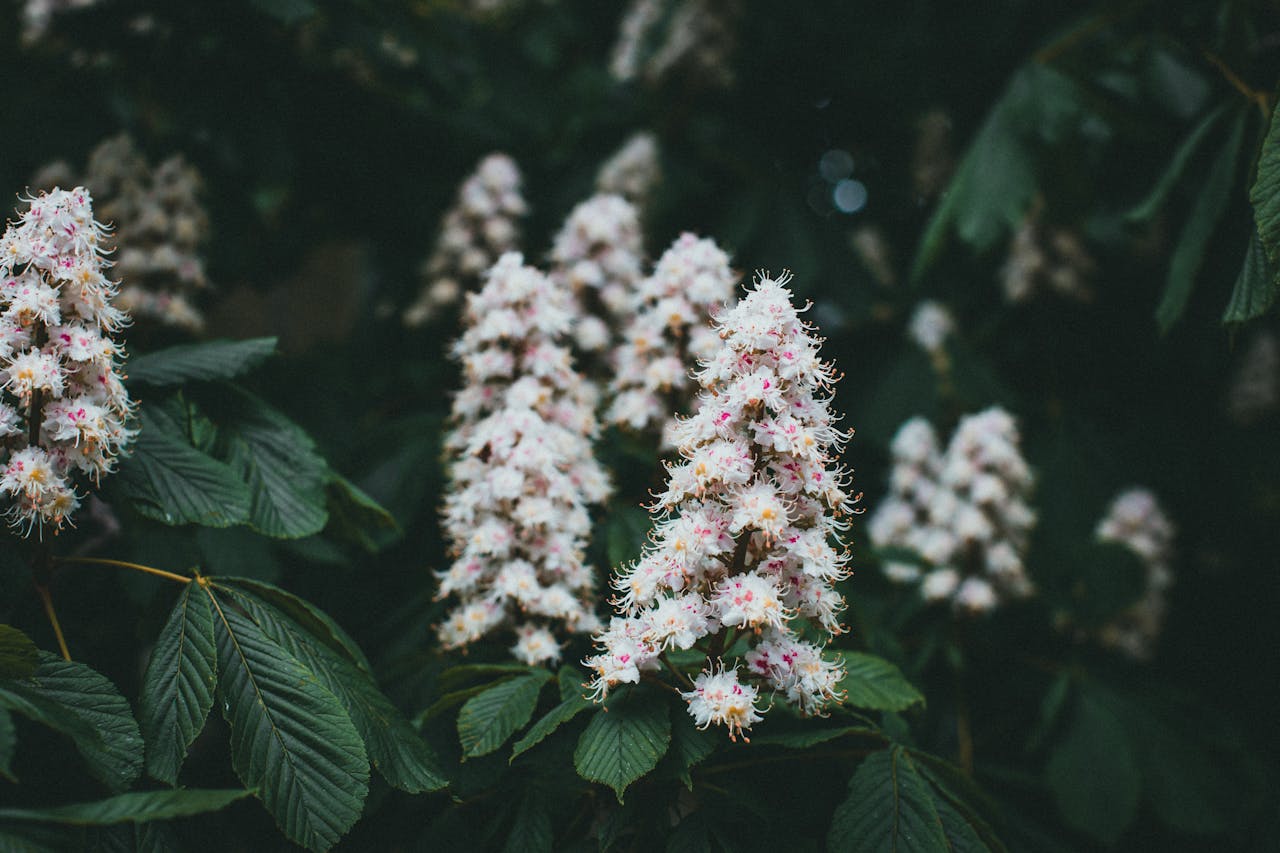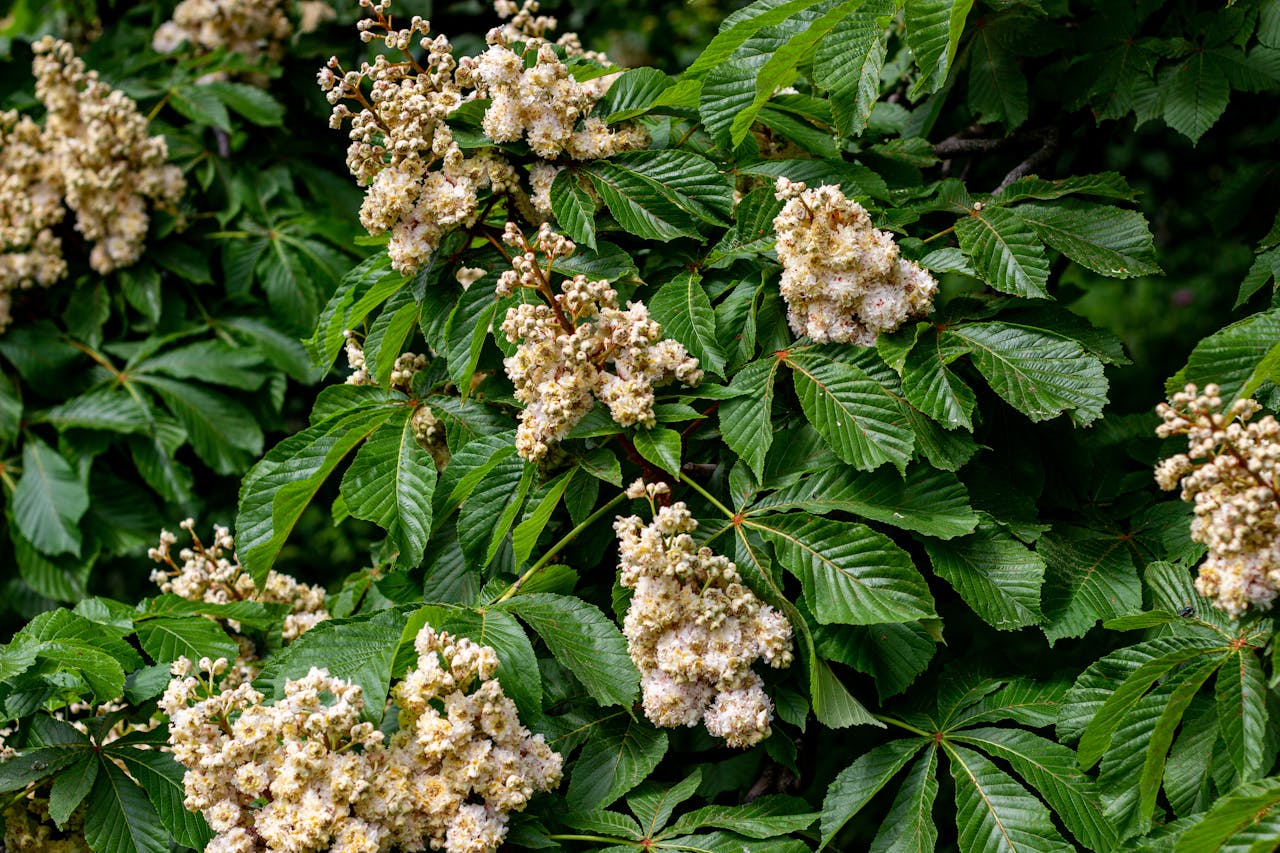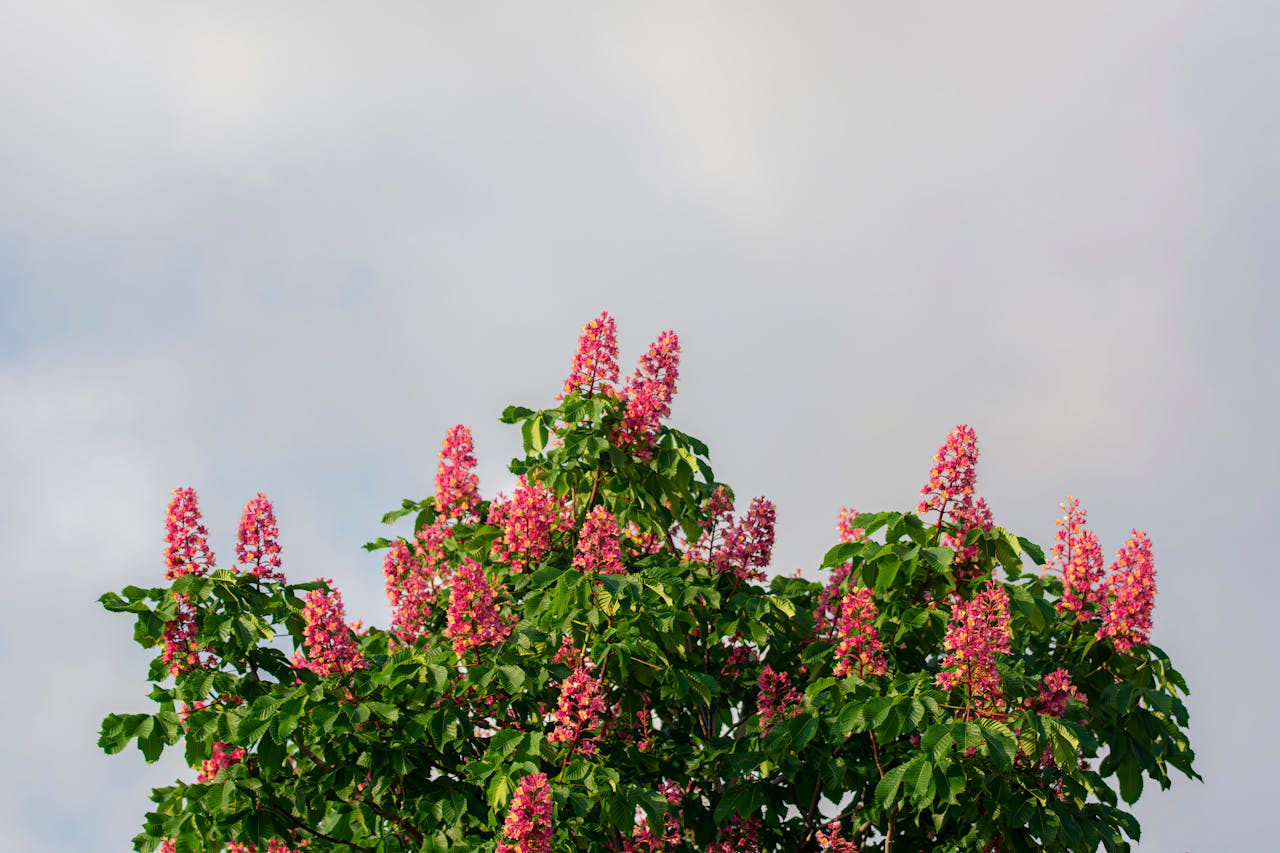

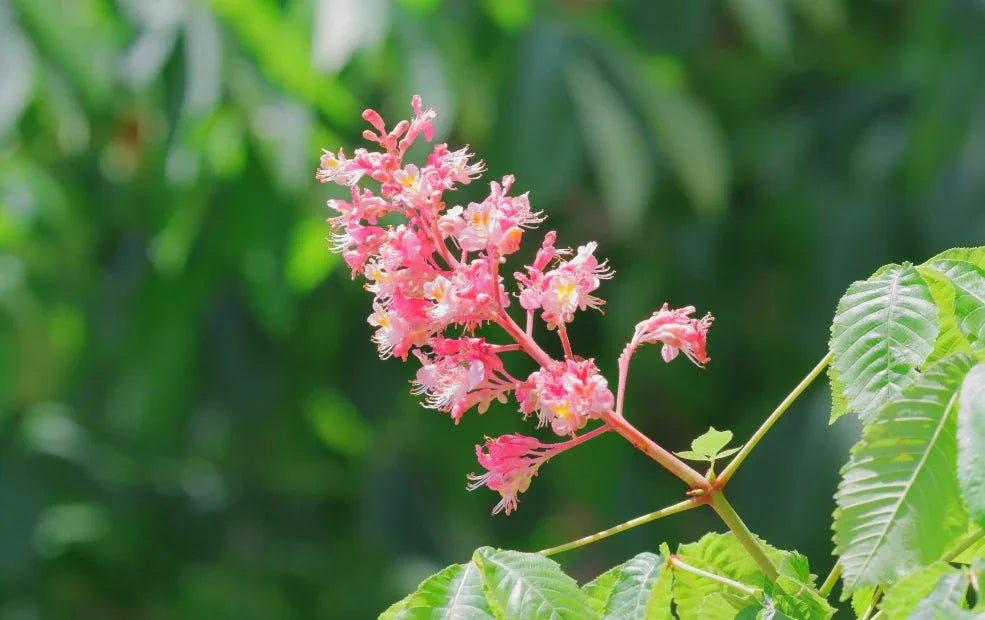
One of the great joys of Aesculus is the way it announces late spring. Just as the garden is shifting from fresh greens into early summer, the tree erupts into tall spires of blossom – white, creamy or flushed with pink or red, depending on the type. These upright “candles” catch the light beautifully and can be seen from quite a distance, especially against a backdrop of sky or darker trees. For many people, they are part of the classic British late‑spring scene.
Common name: Horse Chestnut Tree
Latin name: Aesculus
Size in UK gardens: Typically 6–15m tall × 4–10m wide over time, depending on species and rootstock. Best suited to medium and larger gardens, parks and paddocks.
Best position: Full sun or light dappled shade in an open spot with room for the canopy to develop naturally.
Soil: Preferably deep, moist but free‑draining soil. Happy in many ordinary garden soils, including heavier loams, provided they are not permanently waterlogged or bone dry.
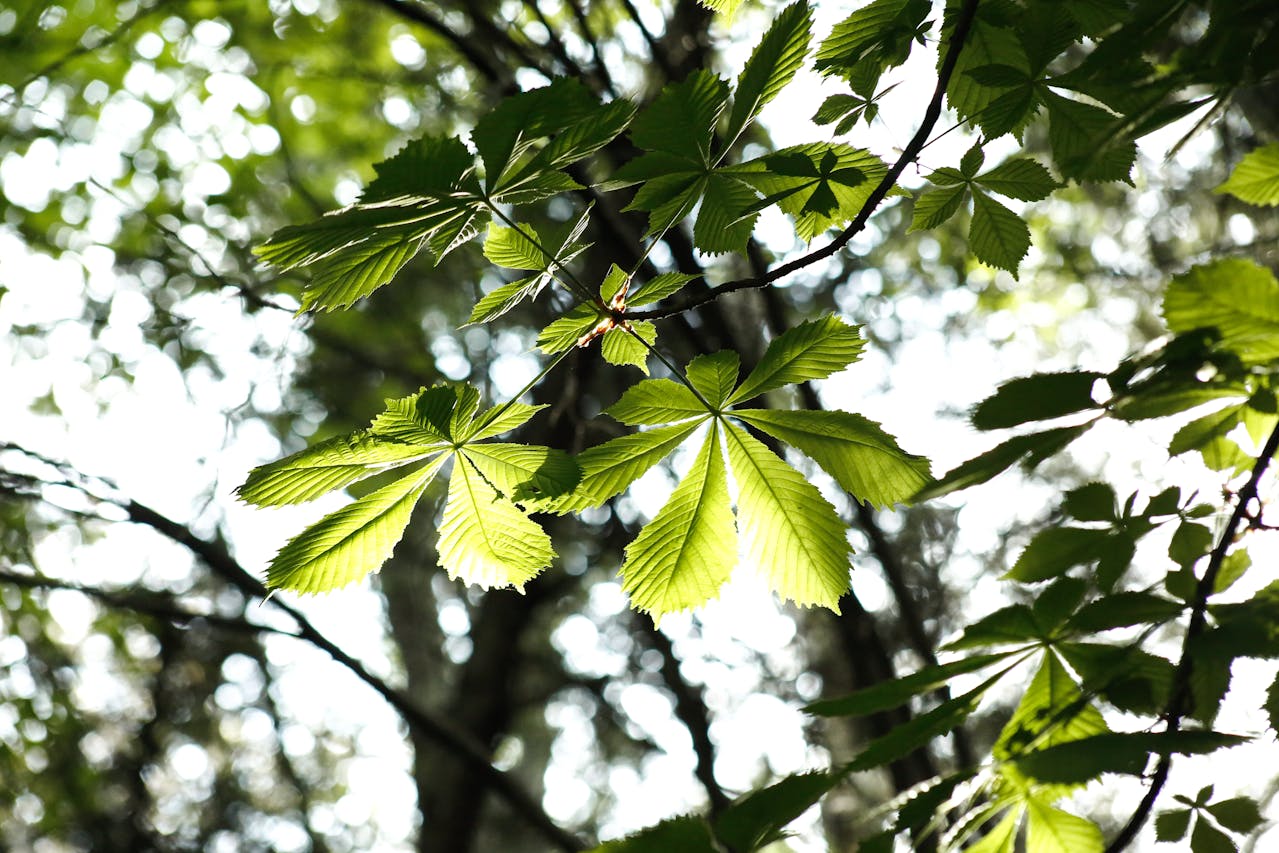
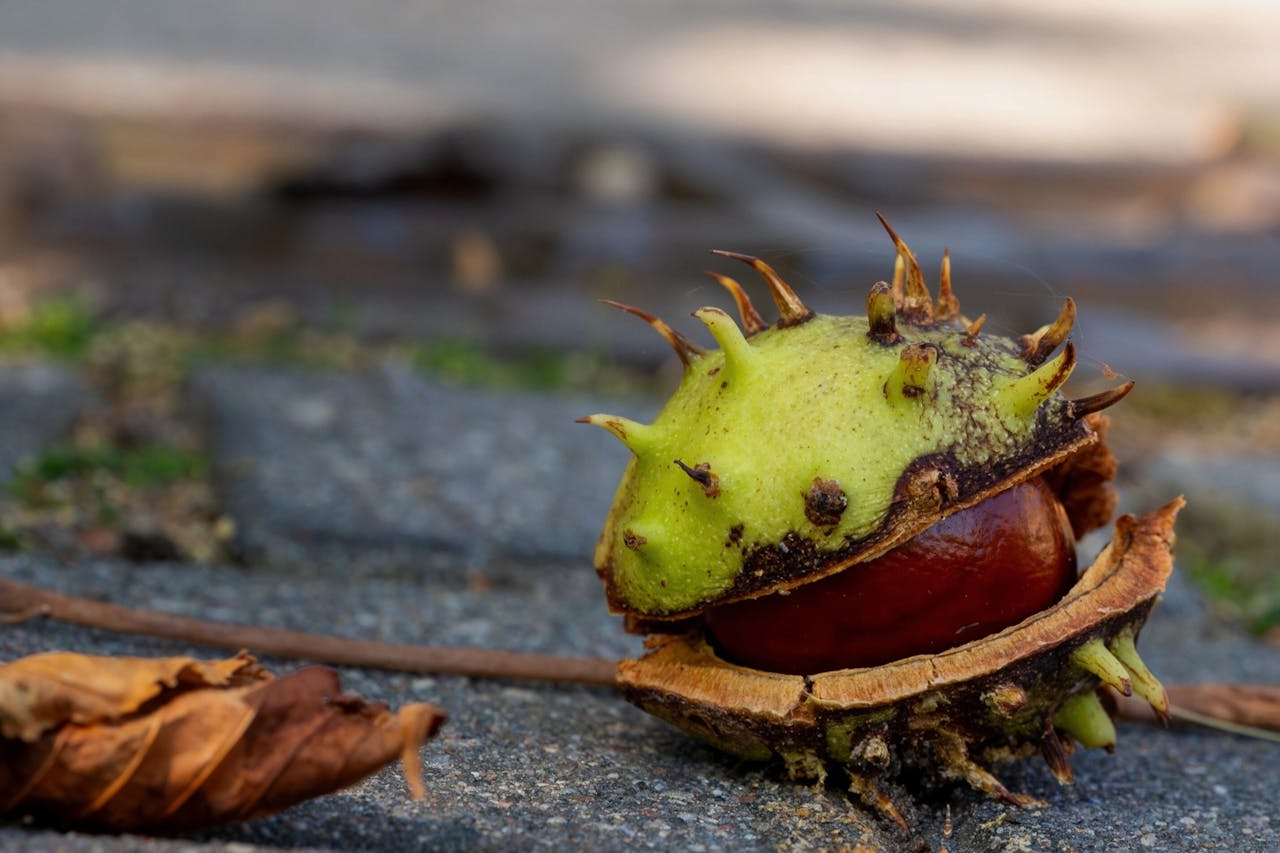
Flowering time: Striking upright “candles” of white, pink or red blossom in late spring, followed by bold, hand‑shaped leaves and, on some types, glossy conkers in prickly cases.
Fragrance: Flowers may have a light, honeyed scent close up, but are generally grown more for their showy display than for fragrance.
Hardiness: Generally very hardy across most of the UK (around –15 °C or lower once established). Young trees appreciate some shelter from extreme exposure.
Care level: Easy and long‑lived once established – mainly needs space, decent soil and occasional watering and mulching while young.

The Simpson’s team raises the majority of our trees here at the nursery. For varieties outside our own production, we work with independent local growers we trust - all chosen for UK climate suitability.
Planting time: Best planted in autumn or early spring, when the soil is workable and moist but not waterlogged. Container‑grown trees can be planted at most times, avoiding frozen or drought‑baked ground.
Watering: Keep well watered through the first couple of growing seasons, especially in dry spells, so roots can reach down into the soil. Established trees usually only need extra water in prolonged drought.
Feeding: A spring mulch of garden compost or well‑rotted manure is usually enough in ordinary garden soils. On very poor ground, a balanced tree or shrub fertiliser can be applied in early spring.
Pruning: Minimal – Aesculus has a naturally strong framework and is best left to form its own shape. Restrict pruning to removing dead, damaged or badly placed branches.
Winter: Generally hardy and needs little special winter care once established. Young trees benefit from a mulch around the base and a position out of the harshest, drying winds.
Availability is always changing, so please check with us if you have a particular variety in mind.


The classic horse chestnut, valued for its grand, spreading presence and bold spring “candles” of white blossom, often flecked with pink. Its broad canopy brings instant stature to larger gardens and parks, while the conkers in autumn add a nostalgic, seasonal flourish.
A superb red horse chestnut with rich rose-red flower spikes held upright in late spring, giving a deeper, more dramatic show than the common horse chestnut. Its handsome, dark green foliage and rounded habit make it an excellent specimen tree where you want colour and presence without fuss.