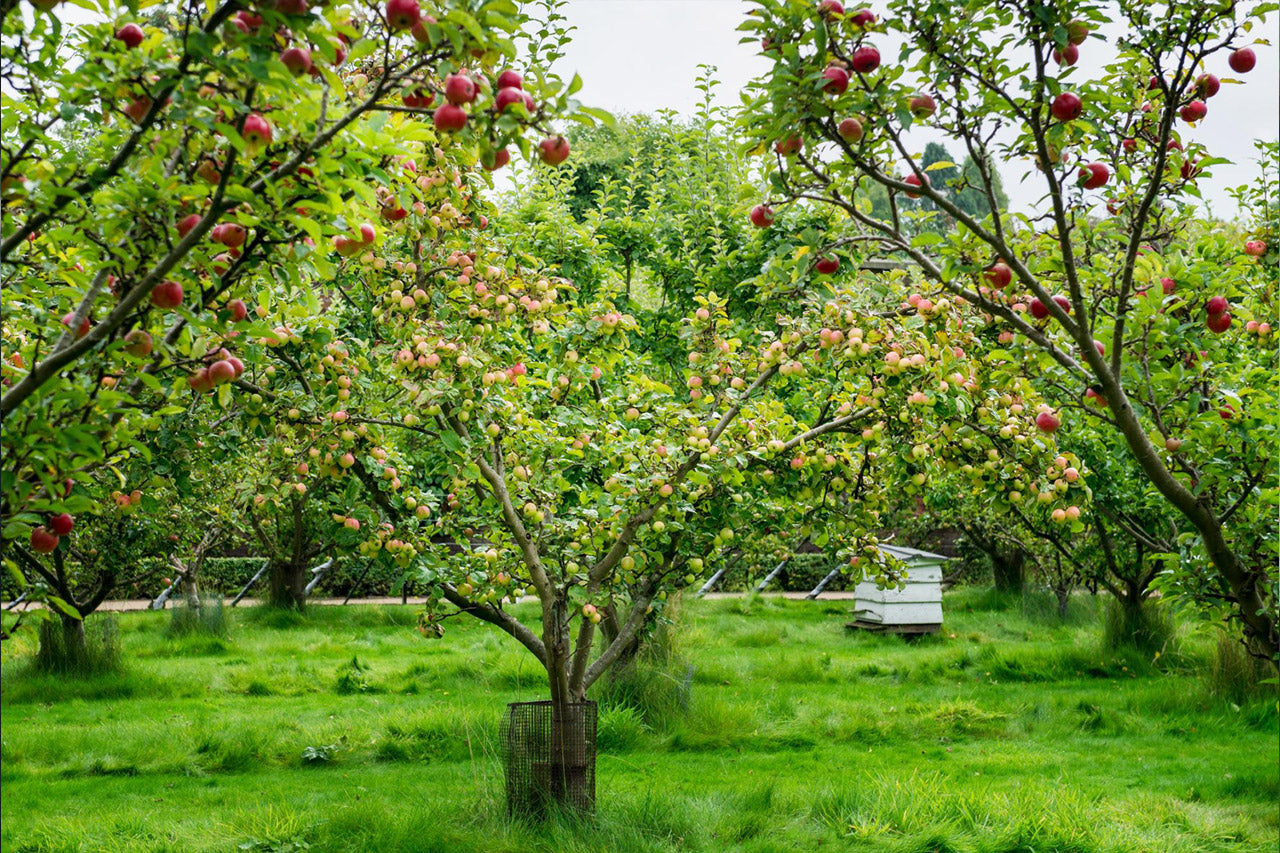
In Spring, Apple Blossom Opens in Pink and White, and You Can Almost Taste the Autumn Harvest While the Bees Get Busy.

Blossom That Changes The Mood

Apple blossom has a special knack for making a garden feel hopeful. After the long, grey stretch of winter, those clusters of pink-tinged buds opening into white flowers are a genuine lift — not loud or gaudy, just quietly generous. In a UK spring, especially on those bright days that still have a chill in the air, an apple in flower feels like the garden’s turning point. And because the flowers arrive on bare-to-freshening branches, you really notice them. It’s one of the loveliest seasonal sights you can grow at home.
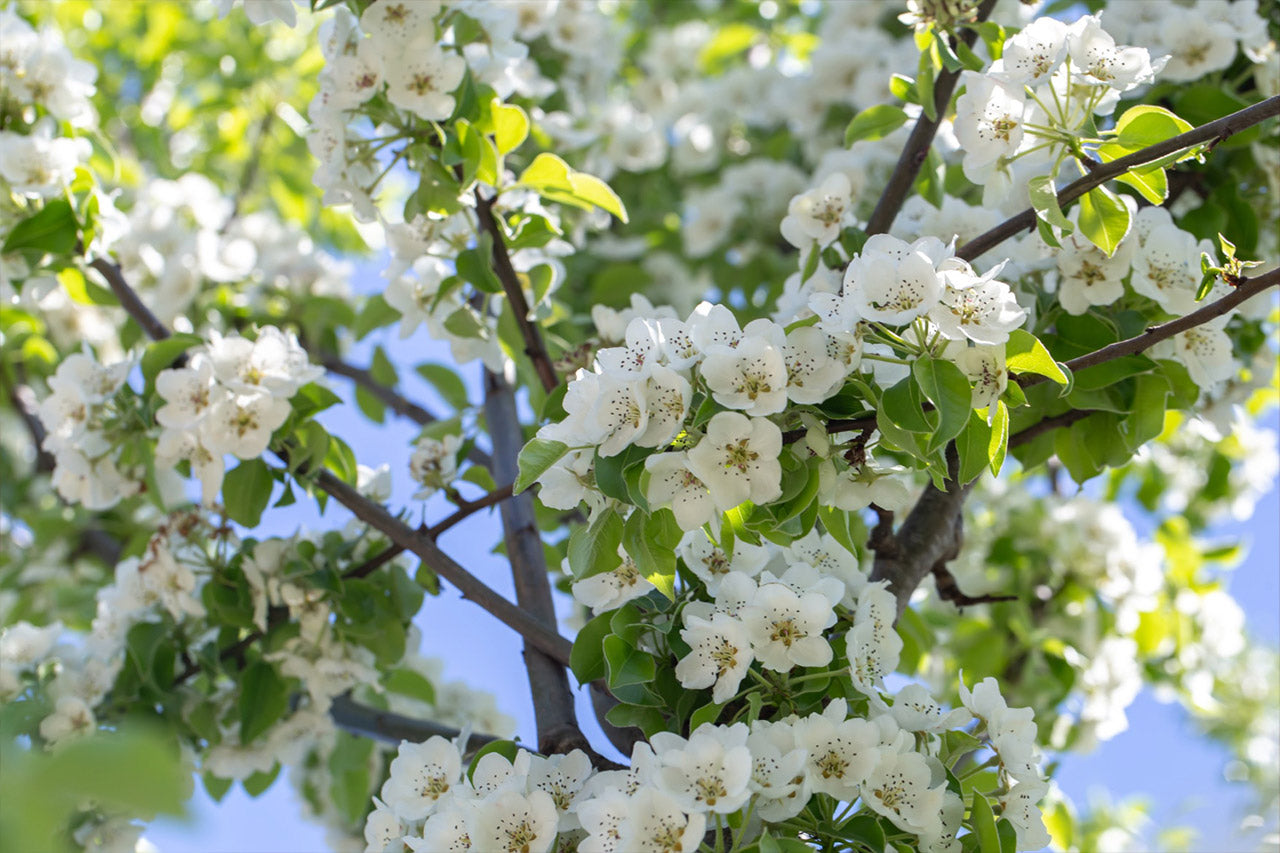
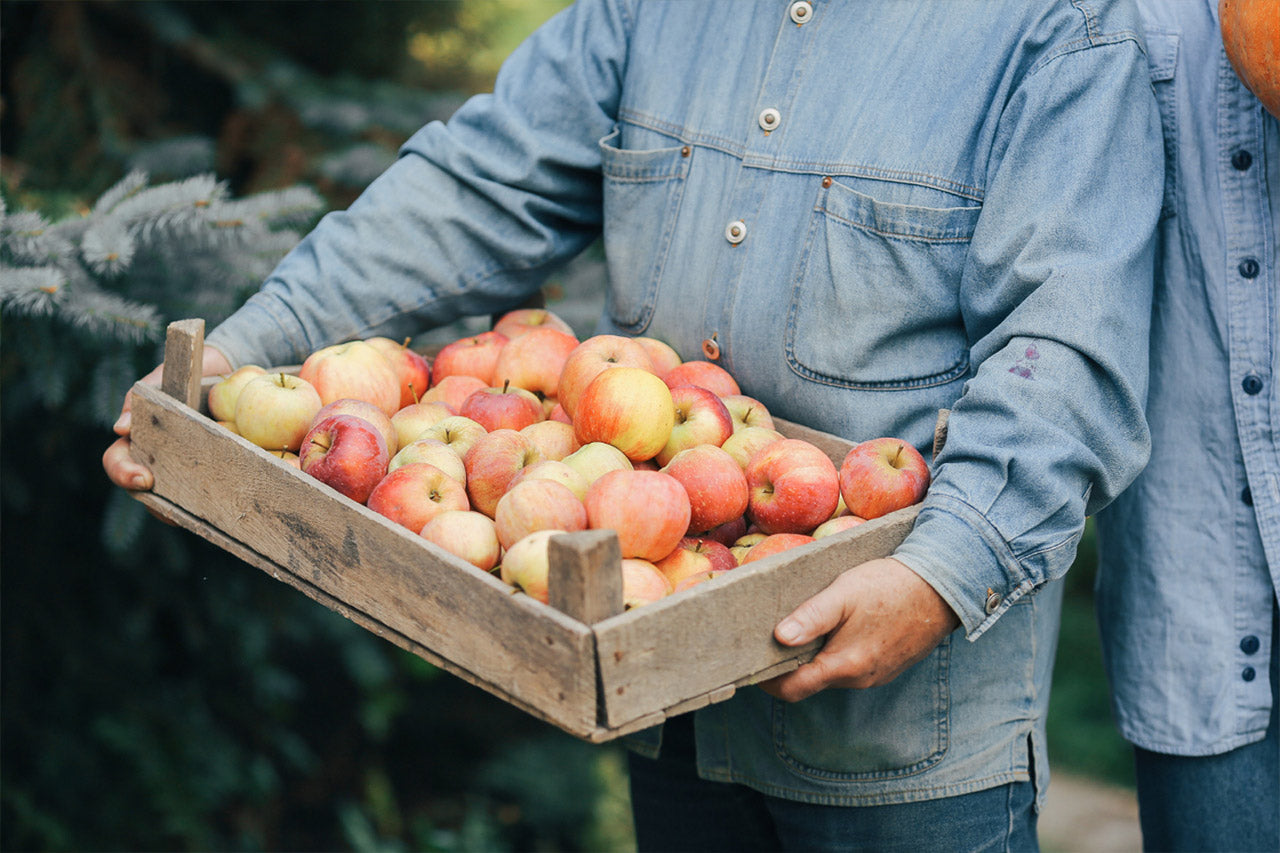
  • Blossom That Changes The Mood
  • Fruit That Feels Like Your Own Harvest
  • Flexible Forms For Real UK Gardens

Apple Trees at a Glance:

Common name: Apple tree.

Latin name: Malus domestica (garden and orchard apple varieties).

Size in UK gardens: Usually 2–4m on smaller rootstocks, or 4–6m+ on more vigorous ones; can be kept smaller with training and pruning.

Best position: Full sun in an open spot with reasonable shelter for blossom and good ripening.

Soil: Moist but well-drained, reasonably fertile soil; improves with annual mulching.

Flowering time: Spring (typically April–May, depending on variety and season).

Fragrance: Lightly scented blossom, usually subtle rather than strong.

Hardiness: Very hardy in most UK gardens.

Care level: Moderate – straightforward, but best crops come with pollination planning and a little annual pruning.

Our Team!

Grown Locally By Us.

Rather than travelling halfway across Europe, our mimosa trees are grown on site by the Simpson’s team. They’re toughened to local conditions, properly potted, and ready to get growing the moment you plant them.

Care at a Glance:

Planting time: As container-grown plants, apple trees can be planted in most months when the ground isn’t frozen or waterlogged; spring and autumn are usually easiest.

Watering: Water well in the first 1–2 seasons and during dry spells; consistent moisture helps fruit swell and reduces stress.

Feeding: A spring mulch of compost or well-rotted manure is usually enough; a light balanced feed in spring can help on poorer soils.

Pruning: Annual pruning keeps trees productive and well shaped; trained forms need a little summer tidying too.

Winter: Very hardy; focus more on soil health and shelter for blossom than on winter protection.

Varieties We Usually Stock

Availability is always changing, so please check with us if you have a particular variety in mind.

Acacia dealbata (Silver Wattle)

The classic golden mimosa for late‑winter sparkle

When the rest of the garden is still rubbing its eyes, Acacia dealbata is already wide awake – cloaked in soft, silver foliage and clouds of golden pom‑poms. It’s the archetypal mimosa: fast‑growing, generously scented and guaranteed to turn heads on a bright February day.

Typical Sizes We Stock: 10 Litre and 5 Litre Pots.

Enquire Now
Acacia dealbata (Silver Wattle)

Acacia baileyana ‘Purpurea’ (Purple Mimosa)

Dusky purple foliage with a blaze of yellow bloom

‘Purpurea’ adds a touch of drama: new leaves flush rich purple before maturing to misty grey‑green, so even out of flower it’s a picture. Come late winter, the yellow blossom lights up the dusky foliage and the whole tree looks as if it’s been dusted with sunshine.

Enquire Now
Acacia baileyana ‘Purpurea’ (Purple Mimosa)

Frequently Asked Questions

Most apple trees crop far better with a compatible pollination partner nearby, because they rely on bees moving pollen between varieties that flower at a similar time. In many UK gardens, you might already have an apple or crab apple close by, or a neighbour’s tree that helps without you even realising. If you’re planting just one, choosing a self-fertile variety can work well, but even then a pollination partner often improves yield and fruit quality. As a simple rule: two apples (or an apple plus a crab apple) makes life easier and harvests more reliable.

Size depends mainly on rootstock and training. On dwarfing rootstocks, many apples stay in the 2–3 metre range and suit smaller gardens, especially if you prune annually. Trained forms like cordons or espaliers can be even more space-efficient, giving you good cropping along a fence line with minimal footprint. More vigorous trees can reach 4–6 metres or more, which is lovely if you have room, but not essential for a home harvest. If space is tight, pick a dwarfing rootstock and consider training — it’s often the perfect compromise.

Yes, provided the pot is genuinely large and you choose a tree on a dwarfing rootstock. The key differences with pot-grown apples are watering and feeding: compost dries out quickly, especially in sunny, breezy weather, and nutrients wash through faster. Water little and often in summer, feed in spring and early summer, and make sure drainage is excellent. Over time, you may need to top-dress with fresh compost or repot. Done well, container apples can be beautifully productive and are ideal for patios or smaller gardens.

For most apple trees, winter pruning is the main job — it’s the easiest time to see the structure and make clean decisions. The aim is to keep the centre open, remove crossing or congested branches, and maintain a balanced shape. You don’t need to be heavy-handed: small, steady yearly cuts are better than one big overhaul. If you’re growing a trained apple, a little summer pruning helps keep it neat and encourages fruiting spurs. If you’re ever unsure, focus on airflow and light — apples nearly always thank you for that.