

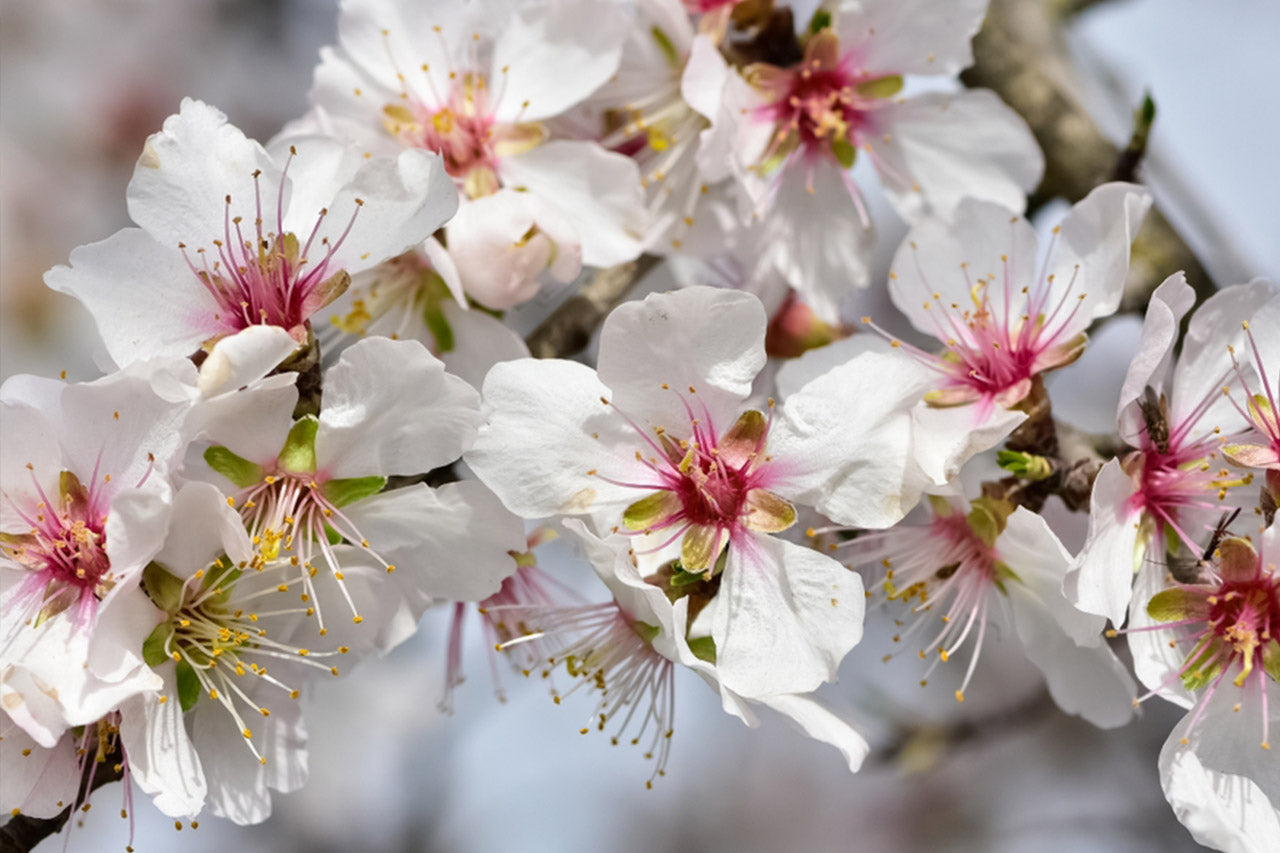
Apricot blossom arrives early — sometimes while winter still has a hand on the gate — and that’s exactly why it feels so special. The flowers are soft and delicate, with a faint blush that looks lovely against bare wood, and they have a gentle, hopeful quality that lifts the whole garden. In the UK, the trick is giving that blossom a sheltered spot so it isn’t battered by cold winds or late frosts. Get the siting right, and an apricot becomes one of the most beautiful early-season trees you can grow.

Common name: Apricot tree.
Latin name: Prunus armeniaca.
Size in UK gardens: Often 2.5–4m with pruning; smaller if fan-trained on a wall, larger if grown as a free-standing tree in ideal conditions.
Best position: Full sun, warm and sheltered — a south or south-west facing wall is ideal.
Soil: Fertile, well-drained soil; dislikes waterlogging, especially in winter.
Flowering time: Early spring (often February–March, depending on weather and variety).
Fragrance: Lightly scented blossom, usually delicate rather than strong.
Hardiness: Hardy once established, but early blossom can be vulnerable to frost.
Care level: Moderate – straightforward with good siting, but best results come from shelter, training, and a little annual pruning.

The Simpson’s team raises the majority of our trees here at the nursery. For varieties outside our own production, we work with independent local growers we trust - all chosen for UK climate suitability.
Planting time: As container-grown plants, apricots can be planted in most months when the ground isn’t frozen or waterlogged; spring and early autumn are usually easiest.
Watering: Water well in the first 1–2 seasons, and during dry spells in summer, especially for wall-trained trees in rain shadows.
Feeding: Mulch in spring with compost or well-rotted manure; a light balanced feed in spring can help on poorer soils.
Pruning: Best pruned in summer to reduce disease risk; wall-trained trees need a little regular shaping.
Winter: The tree is hardy, but early blossom appreciates shelter; protect flowers in severe frosts if you want the best chance of fruit.
Availability is always changing, so please check with us if you have a particular variety in mind.


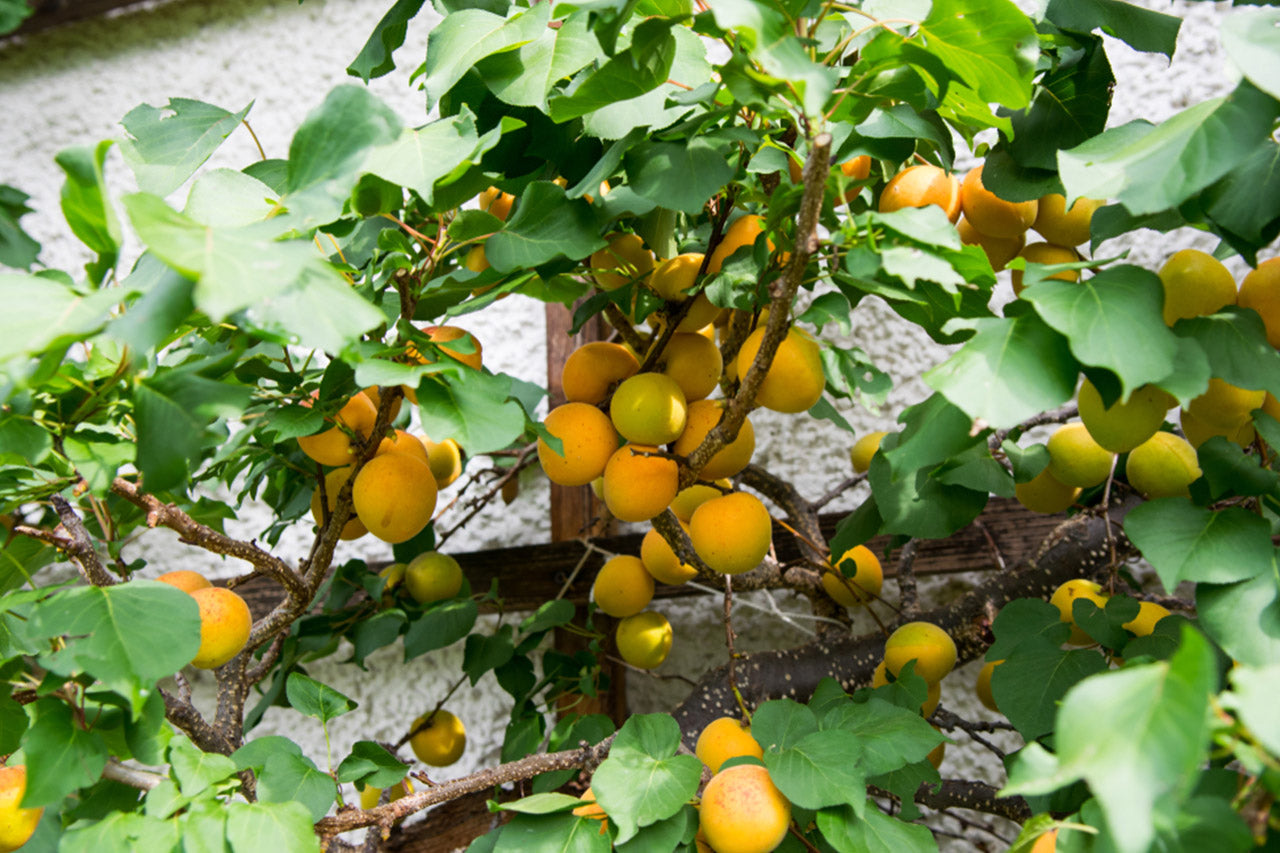
A truly romantic apricot for a warm wall—lush foliage, early blossom, and fruit that makes a garden feel suddenly Mediterranean. The flavour is sweet, rich, and fragrant when ripened properly, with that soft, sun-warmed apricot depth that feels like a treat. Ideal if you can give it shelter and a sunny spot where it can really perform.
A bright, cheerful apricot with a warm, sunny personality—best against a sheltered wall where it can build proper sweetness. The flavour is rich and honeyed when ripened well, with a soft, fragrant apricot perfume and a mellow finish. A lovely choice if you want golden fruit and a little Mediterranean atmosphere at home.
A wonderfully romantic apricot for a warm wall—lush foliage, early blossom, and fruit that makes a garden feel suddenly Mediterranean. The flavour is rich, sweet, and deeply fragrant when ripened properly, with that soft, sun-warmed apricot depth that feels like a treat. Best in a sheltered spot where it can really gather heat.