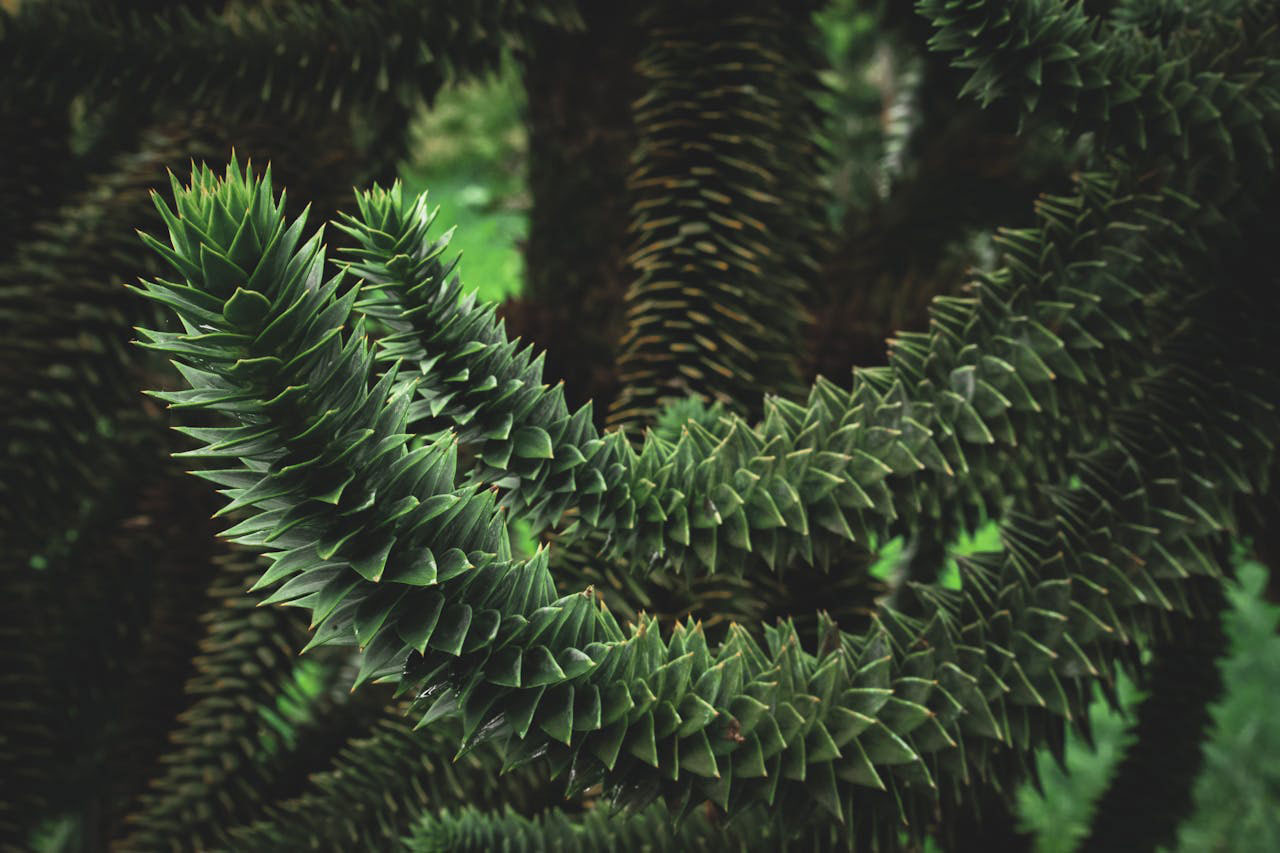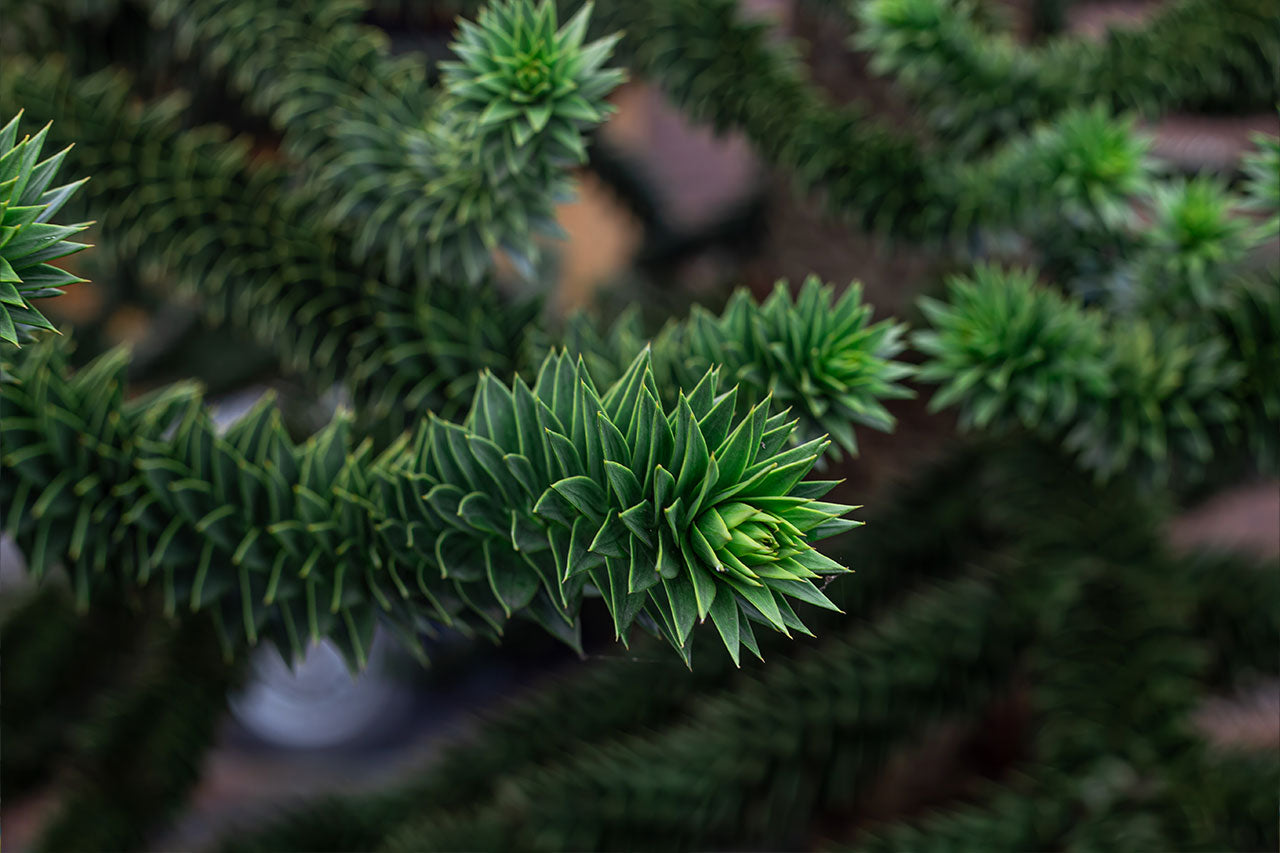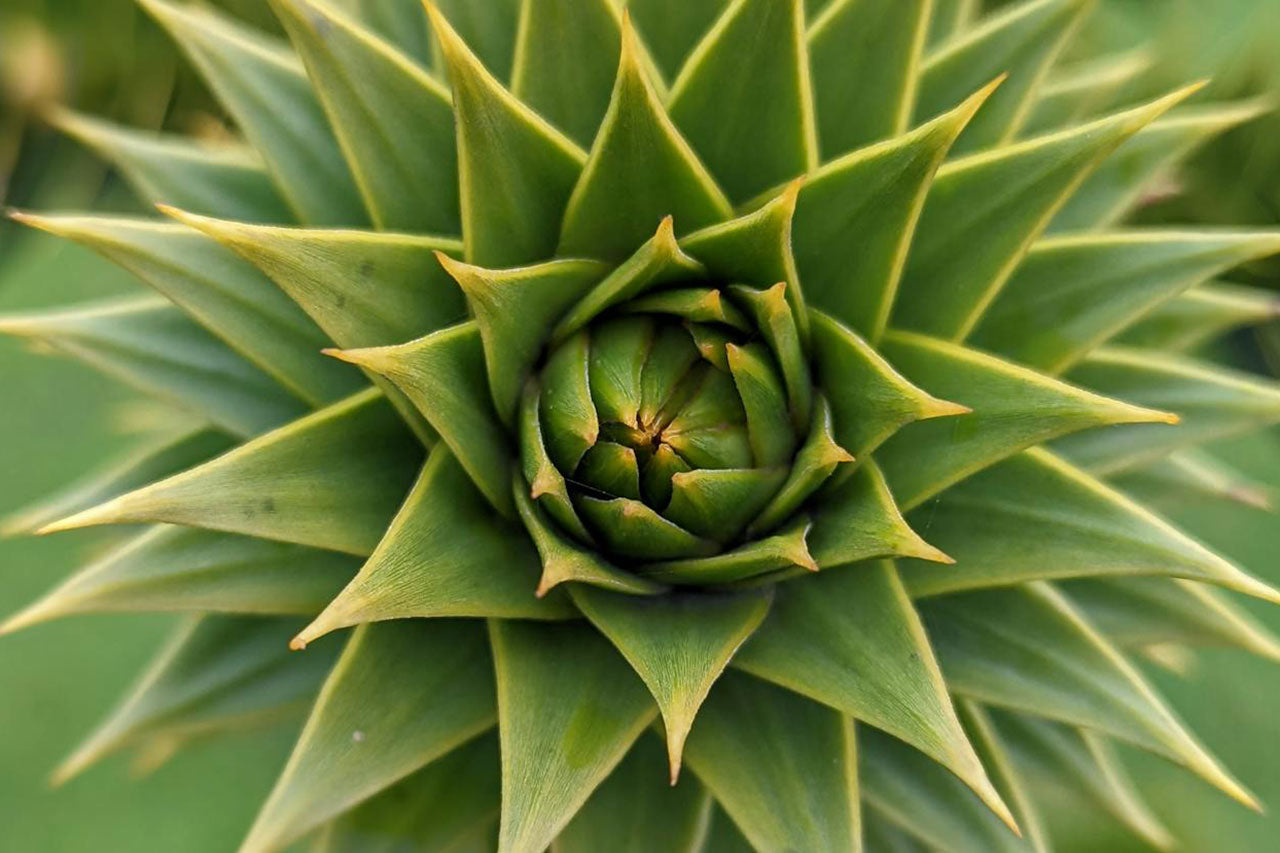

Monkey puzzle (Araucaria araucana) is one of those trees that always gets a reaction. Its strong, upright trunk, whorled branches and sharply geometric foliage give it a striking, almost sculptural quality that you simply don’t get from more ordinary conifers. Planted in the right place, it becomes a natural focal point, drawing the eye from inside the house as well as out in the garden. Even when nothing else much is happening – on a wet November afternoon or a frosty February morning – that bold, evergreen shape quietly earns its keep.


Common name: Monkey Puzzle Tree.
Latin name: Araucaria araucana.
Size in UK gardens: Slow to moderate growth; often 8–12m tall and 4–6m wide over a few decades in a typical garden, eventually much taller in ideal conditions. Best treated as a long‑term specimen tree.
Best position: A sunny or lightly shaded spot with room to develop its natural shape, away from very narrow beds, overhead lines and close building corners.
Soil: Moist but well‑drained, reasonably deep, fertile soil; prefers slightly acidic to neutral conditions and is less happy on very shallow, chalky or compacted ground.
Flowering time: Not grown for flowers; main visual interest is bold evergreen foliage and, in time, decorative cones that form and ripen high in the canopy.
Hardiness: Generally fully hardy across most of the UK once established, including much of East Anglia, provided the soil drains freely and roots aren’t waterlogged.
Care level: Easy to moderate – low‑maintenance once settled, with sensible watering in the early years, good siting, and minimal pruning.

The Simpson’s team raises the majority of our trees here at the nursery. For varieties outside our own production, we work with independent local growers we trust - all chosen for UK climate suitability.
Planting time: As container‑grown plants, monkey puzzles can be planted in most months when the soil isn’t frozen or waterlogged. Autumn and early spring are usually easiest, as the soil is moist and still relatively warm, helping new roots to establish.
Watering: Water regularly during the first couple of years, particularly in dry weather, so the original rootball and surrounding soil do not dry out completely. Once firmly established, monkey puzzle usually manages well on normal rainfall, needing extra water only in prolonged droughts on light soils.
Feeding: On reasonable garden soil, feeding can be very light – a spring mulch of compost or well‑rotted manure is usually enough. On very poor or sandy ground, a modest application of balanced, slow‑release fertiliser in early spring can support healthy growth without forcing it.
Pruning: Very little pruning is needed or desirable. Remove only dead, damaged or badly placed lower branches, and do this gradually over several years if you need to lift the crown. Avoid cutting the main leader or heavily reducing the tree – monkey puzzle does not respond well to hard pruning.
Winter: Established trees need almost no winter protection beyond a mulch around the base. Young plants in particularly exposed, windy sites may benefit from a temporary stake and good soil preparation rather than wrapping; the tree itself is naturally equipped for cold.
Availability is always changing, so please check with us if you have a particular variety in mind.
A wonderfully eccentric statement tree, with bold, geometric branches and spiky, scale-like leaves that look almost prehistoric. Give it pride of place in a lawn or gravel garden and it becomes living sculpture—unmistakable, architectural, and always a conversation starter.