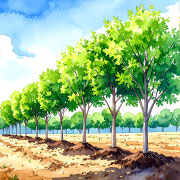

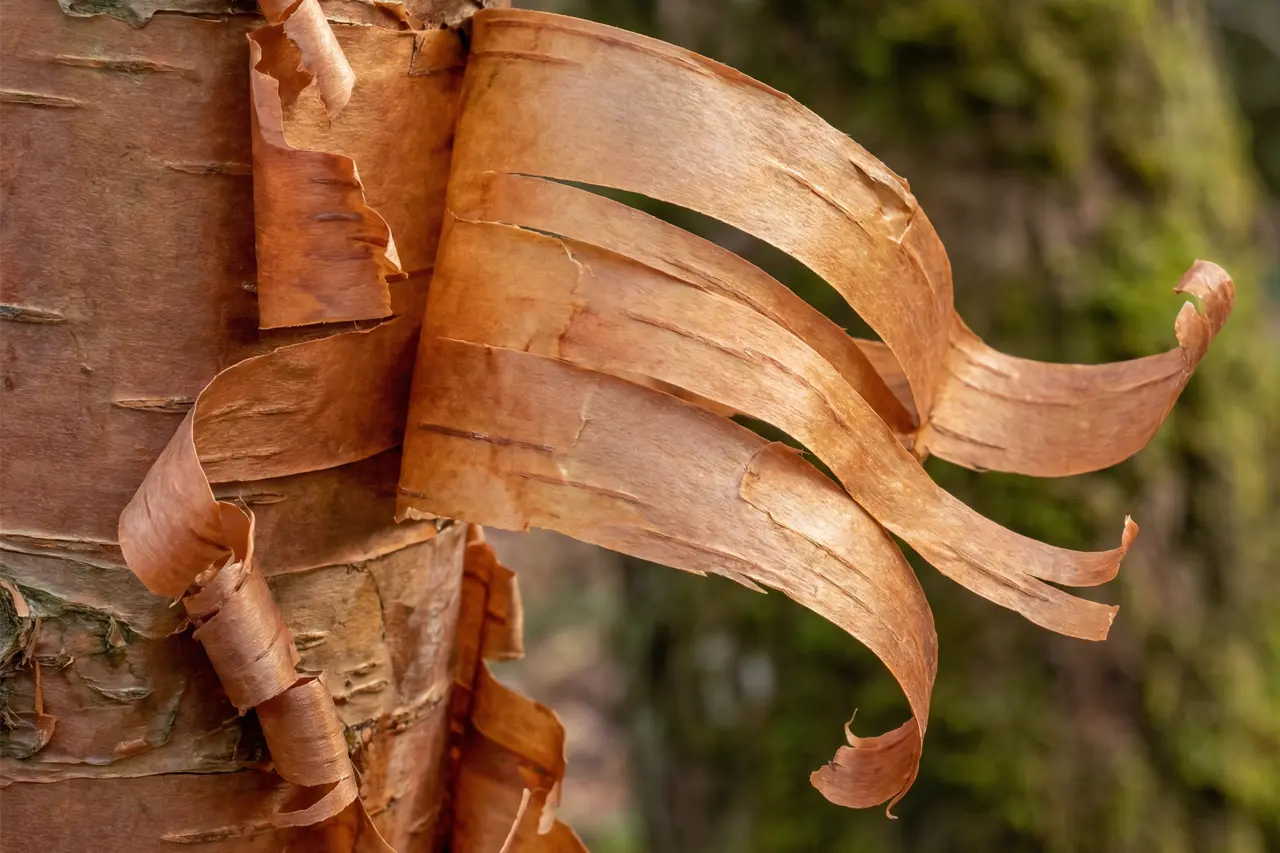
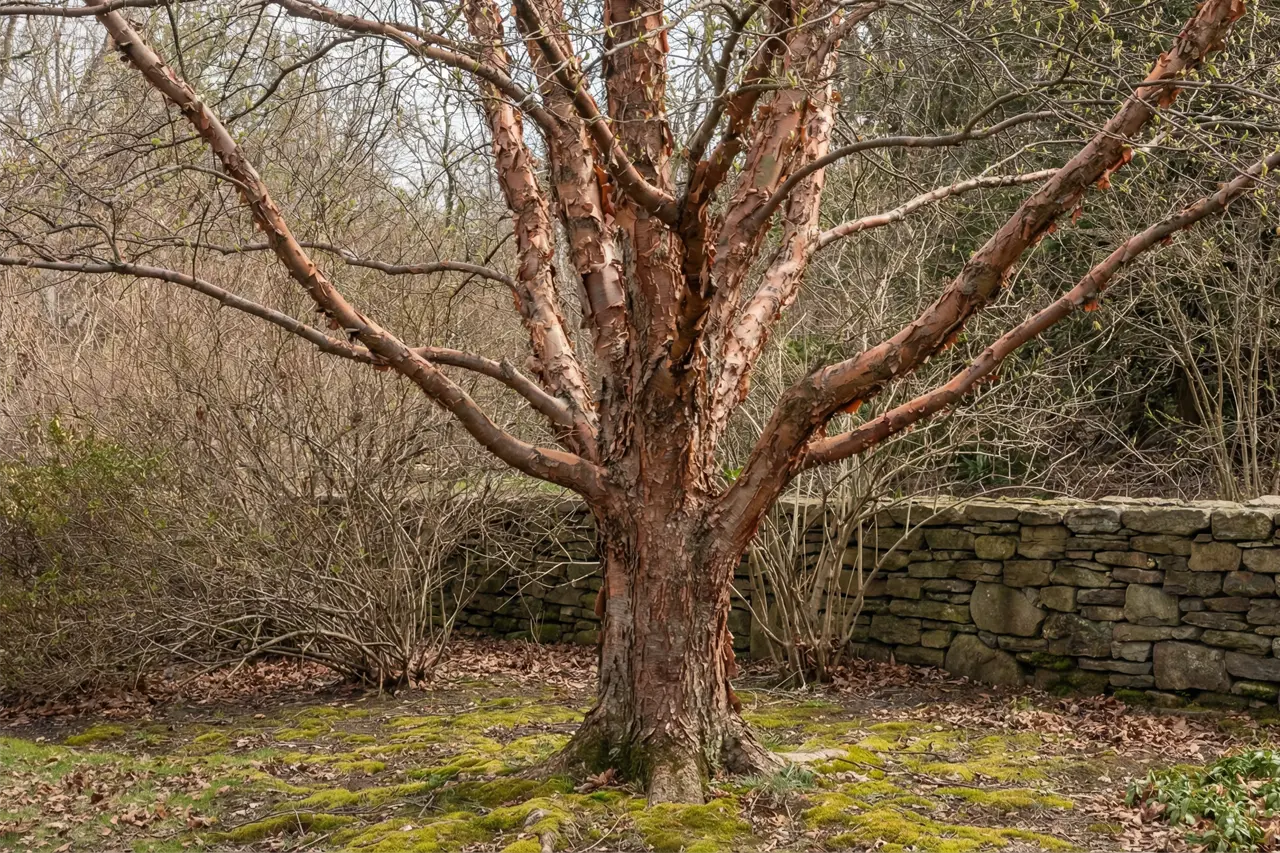
Chinese red birch is one of those trees you appreciate most when the garden is quiet. The bark is orange‑brown and peels as it matures, revealing paler layers beneath — a detail that catches low winter light beautifully and brings warmth to the view. Plant it where you’ll see the trunk from a path or window, and it becomes a year‑round feature, not just a summer tree. In the softer light of late afternoon, the whole stem can seem to glow — a small piece of theatre when borders are bare.
Common name: Chinese red birch.
Latin name: Betula utilis subsp. albosinensis (often also listed as Betula albosinensis).
Size in UK gardens: Typically a medium tree; often around 8–12m over time, and potentially higher than 12m with age and room.
Best position: Full sun or partial shade, in exposed or sheltered gardens (though shelter helps it look its best).
Soil: Moist but well‑drained to well‑drained; tolerant of chalk, clay, loam and sand if not waterlogged.
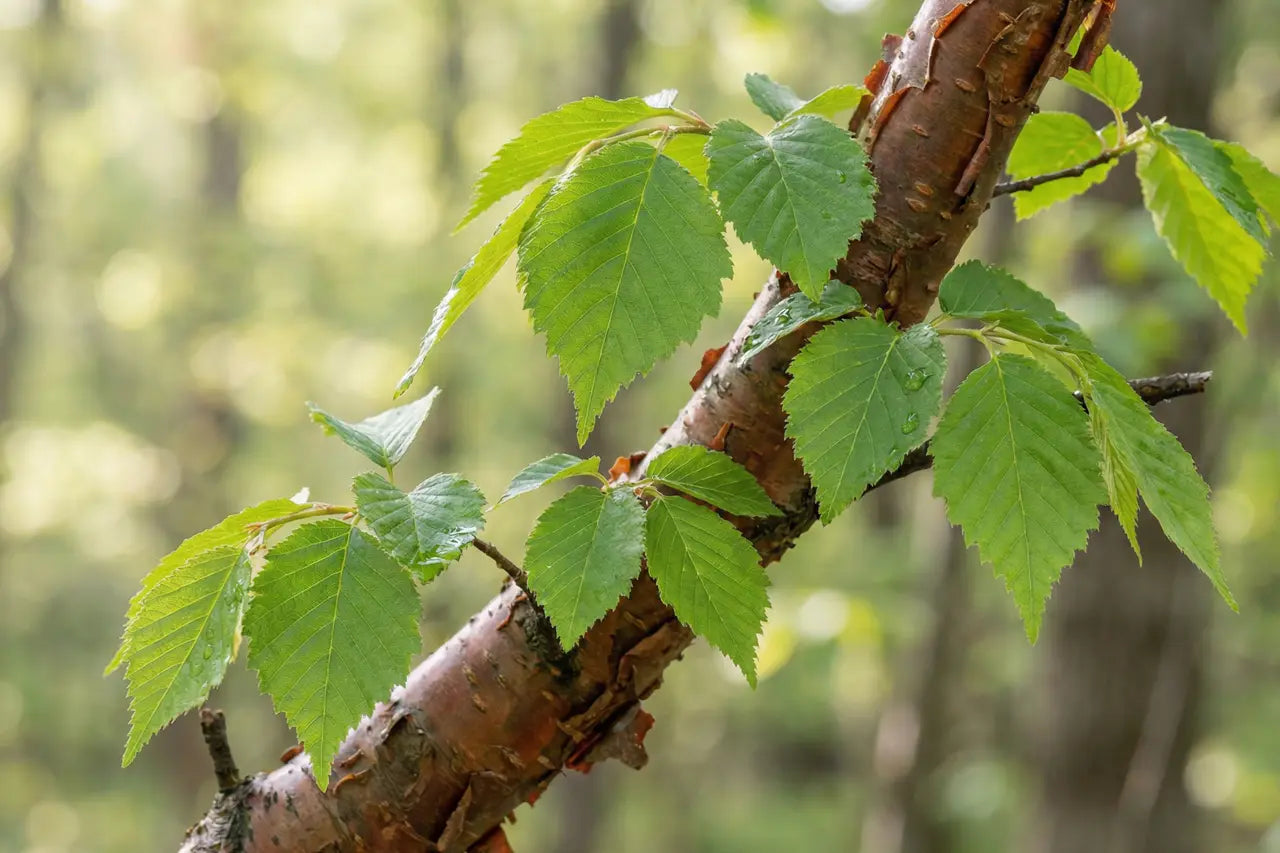
Main interest: Peeling bark for winter interest, fresh green summer foliage, and yellow autumn colour; catkins in spring.
Fragrance: Usually not noticeably scented.
Hardiness: Very hardy in UK conditions (RHS H7).
Care level: Low to moderate – largely easy, with sensible watering while establishing and only light pruning.

Rather than travelling halfway across Europe, our mimosa trees are grown on site by the Simpson’s team. They’re toughened to local conditions, properly potted, and ready to get growing the moment you plant them.
Planting time: As container‑grown trees, Chinese red birch can be planted in most months when the ground isn’t frozen or waterlogged; spring and autumn are usually easiest.
Watering: Water well in the first 1–2 seasons, especially in dry spells; a deep soak helps roots establish properly.
Feeding: A spring mulch of compost or leaf mould is usually enough; on poorer soils, a light balanced feed in spring can help young trees build strength.
Pruning: Minimal – remove dead, damaged or crossing branches, and keep shaping light.
Winter: Very hardy once established; young trees benefit from mulch and secure staking in windy sites.


A handsome Chinese red birch whose peeling bark reveals cinnamon, copper and salmon tones that glow in winter light. Its airy canopy brings a soft woodland feel, and a small grove makes a show-stopping backdrop to evergreens, grasses and winter interest.
Chosen for striking bark, peeling in glossy sheets to reveal apricot, cinnamon and rose tones. The trunk colour shines in winter, while the canopy stays light and elegant—perfect as a specimen or planted in threes for extra drama and sparkle.
A Chinese red birch with superb coloured bark that peels to show warm chestnut, copper and orange. The trunk becomes a feature in its own right, especially against dark hedging, and the airy crown keeps the whole tree light on its feet year-round.
A real charmer, with peeling bark washed in creamy pink and soft salmon tones. The trunk colour is the star in winter, while the canopy stays open and refined, making it glorious as a specimen or in a small birch grove for instant warmth.

A northern form of Chinese red birch with peeling bark in buff, copper and soft pink tones, held on a clean, upright frame. The trunk display is the main event in winter, and the light canopy keeps it elegant—lovely in a small grove.