
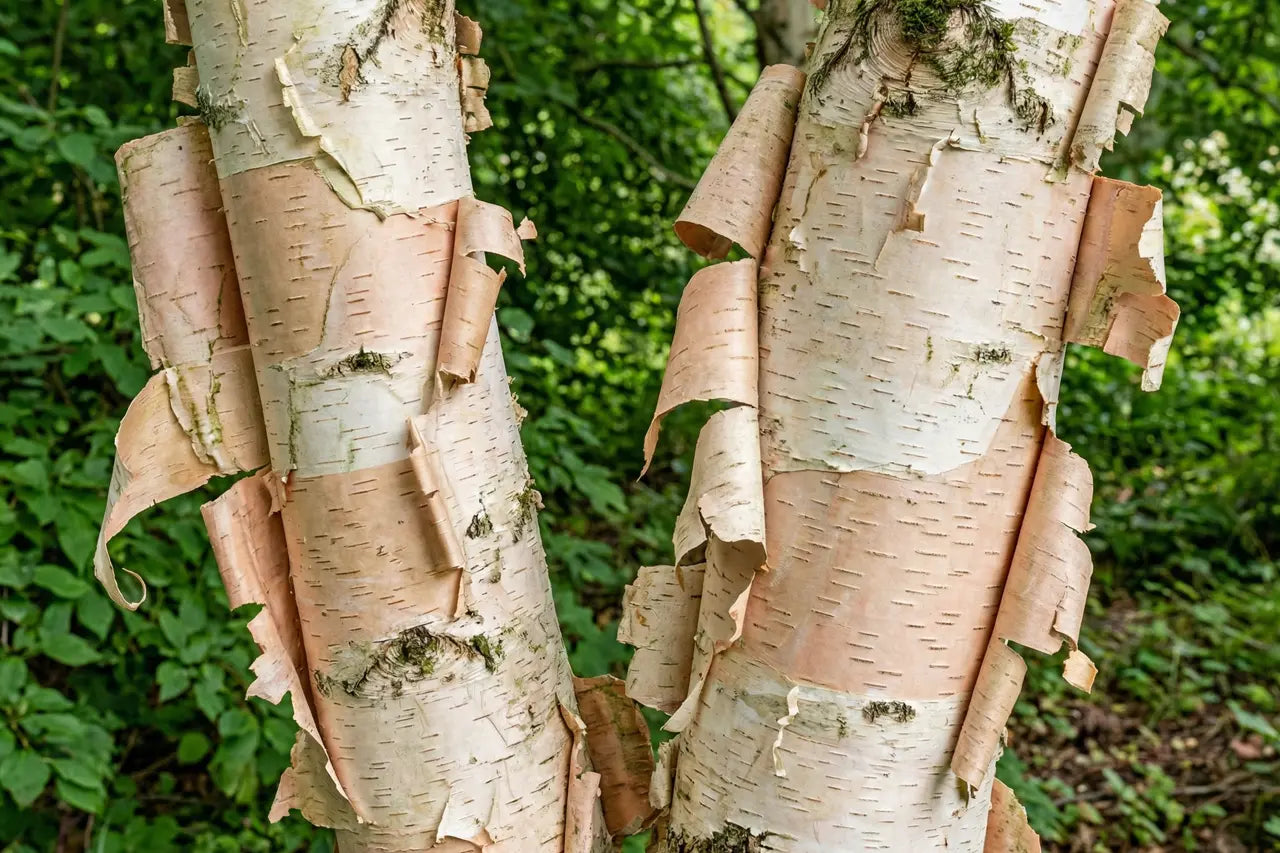
Erman’s birch is all about the trunks — pale, peeling, and full of quiet character. The bark often shows creamy white on the outside, with warmer, honeyed or apricot tones beneath as it lifts and flakes in thin curls. In winter, when borders are bare, that brightness is priceless: it catches low light, stands out against evergreens, and makes the whole garden feel more “finished”. Plant it where you’ll see it from a path or a window, and it becomes a year‑round feature rather than a seasonal extra.
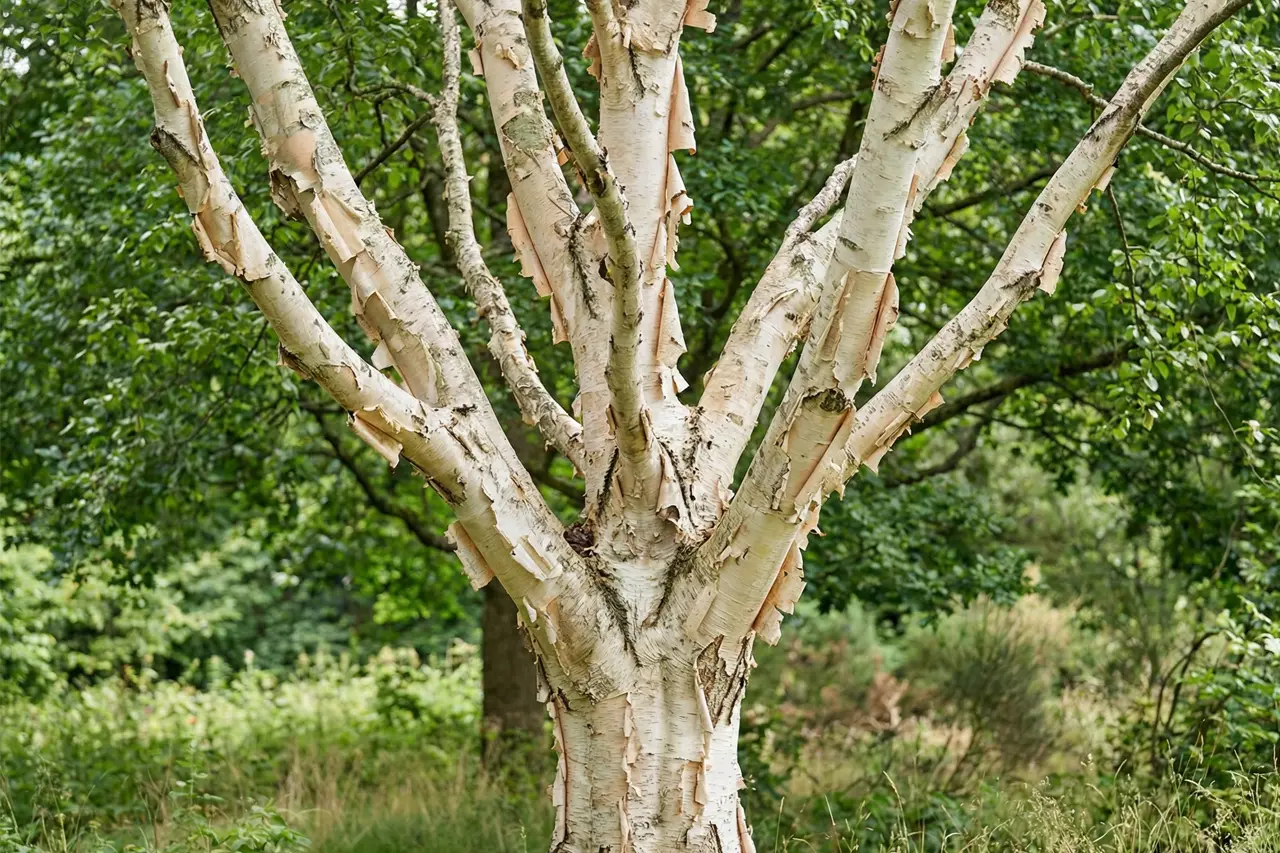
Common name: Erman’s birch.
Latin name: Betula ermanii.
Size in UK gardens: Typically around 8–15m over time, with a light canopy; multi‑stem forms often feel softer and slightly smaller in outline.
Best position: Full sun or light shade in an open, airy spot; bark colour and canopy shape are best with good light.
Soil: Moist but well‑drained; prefers soil improved with organic matter and dislikes prolonged waterlogging.
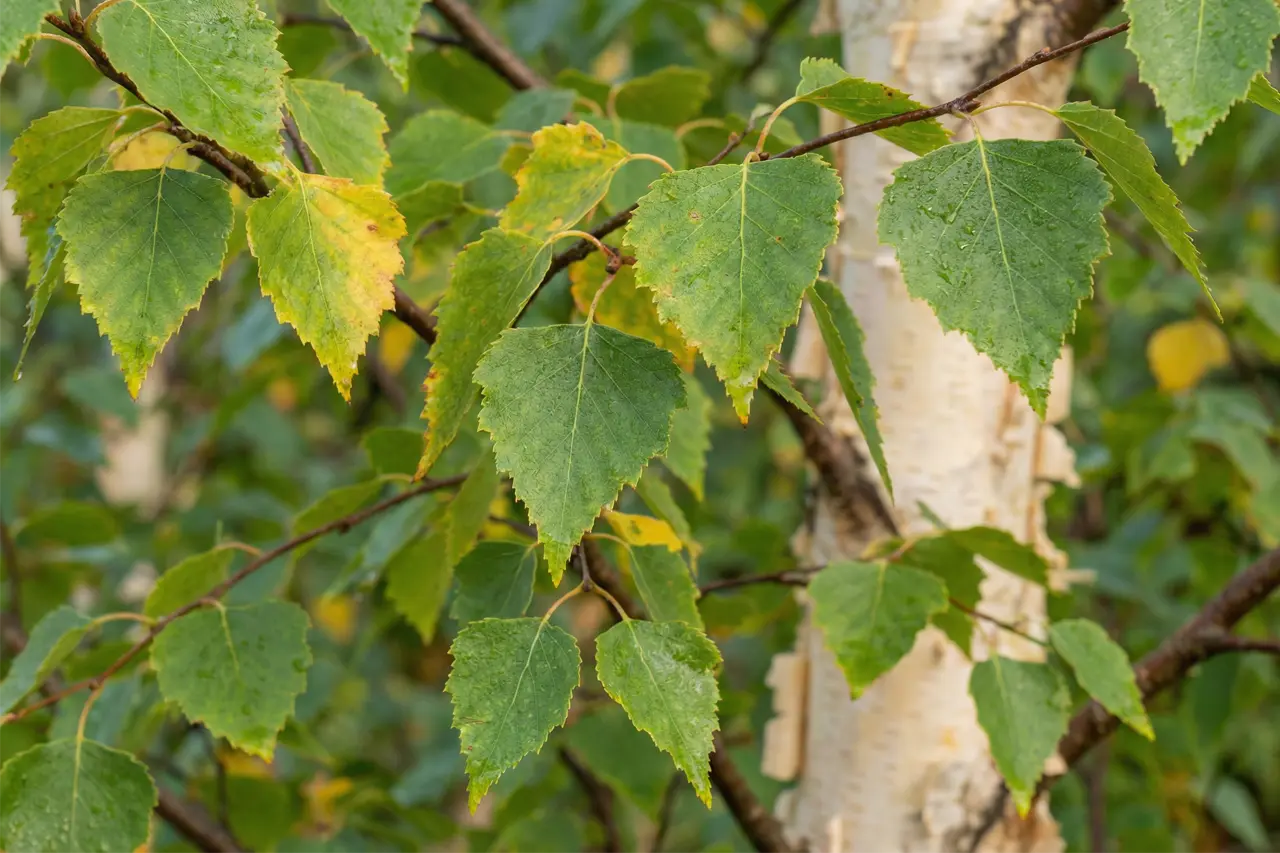
Main interest: Decorative peeling bark, airy summer canopy, and clear yellow autumn colour; catkins in spring.
Fragrance: Usually not noticeably scented.
Hardiness: Very hardy in most gardens once established.
Care level: Low to moderate – easy-going with minimal pruning, but appreciates watering in dry spells while young.

The Simpson’s team raises the majority of our trees here at the nursery. For varieties outside our own production, we work with independent local growers we trust - all chosen for UK climate suitability.
Planting time: As container‑grown trees, Erman’s birch can be planted in most months when the soil isn’t frozen or waterlogged; spring and autumn are usually easiest.
Watering: Water regularly in the first 1–2 seasons and give deep soaks in prolonged dry spells; birch looks best with steady moisture.
Feeding: A spring mulch of compost or leaf mould is usually enough; heavy feeding isn’t needed, just good soil condition.
Pruning: Minimal – mostly tidy and thin; avoid late winter/early spring pruning as birch can “bleed” sap.
Winter: Fully hardy; mulch helps young trees and improves the root zone through cold snaps and drying winds.
Availability is always changing, so please check with us if you have a particular variety in mind.


A handsome birch with creamy white to pale peach bark that flakes and peels, giving lovely texture up close. The tree has a neat, upright habit and an airy crown that lets light through, making it ideal for a fresh woodland feel or a crisp specimen on a lawn.
Chosen for bark with a warm, rosy tint—creamy white brushed with peach, like dawn light on the trunk. It keeps a tidy, upright shape and a light canopy, so the bark stays centre stage. A superb choice to lift darker planting and add winter glow, too.
A showy birch with bark that peels to reveal glowing orange and copper tones, at its best in winter light. The effect is warm and richly coloured, yet the canopy remains airy and elegant. Plant it as a specimen, or in a trio for real theatre.
A smart, upright Erman’s birch with clean lines and pale, peeling bark that brings quiet brightness through winter. The canopy stays open and tidy, so it never feels heavy—ideal where you want height, movement and a crisp woodland look all year round.

A distinctive Erman’s birch with bark in smoky tones and a subtle purple cast, giving a richer look than the usual pale trunks. The habit stays neat and upright, and the canopy is airy, so it reads as unusual—perfect for contrast planting.