
Birch is one of the few trees that earns its keep in the quiet months, when borders are bare and the light is low. In this “other birches” group you’ll find everything from the warm, peeling cinnamon bark of Betula nigra (and Betula nigra ‘Black Star’), to the bright, papery whites of Betula papyrifera and ‘Saint George’, plus the handsome, larger‑leaved presence of Betula maximowicziana. Add in the cascading form of Betula ‘Summer Cascade’, and you’ve got bark and shape that keeps the garden interesting all year.
Common name: Birch.
Latin name: Betula.
Size in UK gardens: Varies by selection — from compact weeping forms (often around 2–4m) up to larger canopy trees (often 10–18m+ where there’s room).
Best position: Sun or light shade in an open, airy spot; shelter from drying winds helps foliage stay fresher in summer.
Soil: Moist but well‑drained is ideal; B. nigra is notably tolerant of heavier, damper soils, while most birches dislike winter waterlogging.
Main interest: Decorative bark, airy foliage movement, spring catkins, and clear yellow autumn colour; ‘Summer Cascade’ adds strong weeping form.
Fragrance: Usually not noticeably scented.
Hardiness: Very hardy in most of the UK once established.
Care level: Low to moderate – generally easy, but appreciates steady watering while establishing and in prolonged dry spells.

The Simpson’s team raises the majority of our trees here at the nursery. For varieties outside our own production, we work with independent local growers we trust - all chosen for UK climate suitability.
Planting time: As container‑grown plants, birches can be planted in most months when the ground isn’t frozen or waterlogged, with spring and autumn usually easiest.
Watering: Water well in the first 1–2 seasons and give deep soaks in prolonged dry spells; birches look best with steady moisture rather than repeated drought stress.
Feeding: A spring mulch of compost or leaf mould is usually enough, improving soil and keeping roots cooler; feed lightly only if growth is weak.
Pruning: Minimal – mainly tidying and thinning; time bigger cuts for mid to late summer to avoid sap “bleeding”.
Winter: Fully hardy once established; mulch helps young trees and pot‑grown plants through cold, drying spells.
Availability is always changing, so please check with us if you have a particular variety in mind.


The monarch birch, with broad, luminous leaves and a bold, parkland outline. Pale bark and a generous canopy create calm scale without heaviness, making it a superb specimen for larger gardens where you want presence, shade-dapple and quiet grandeur.
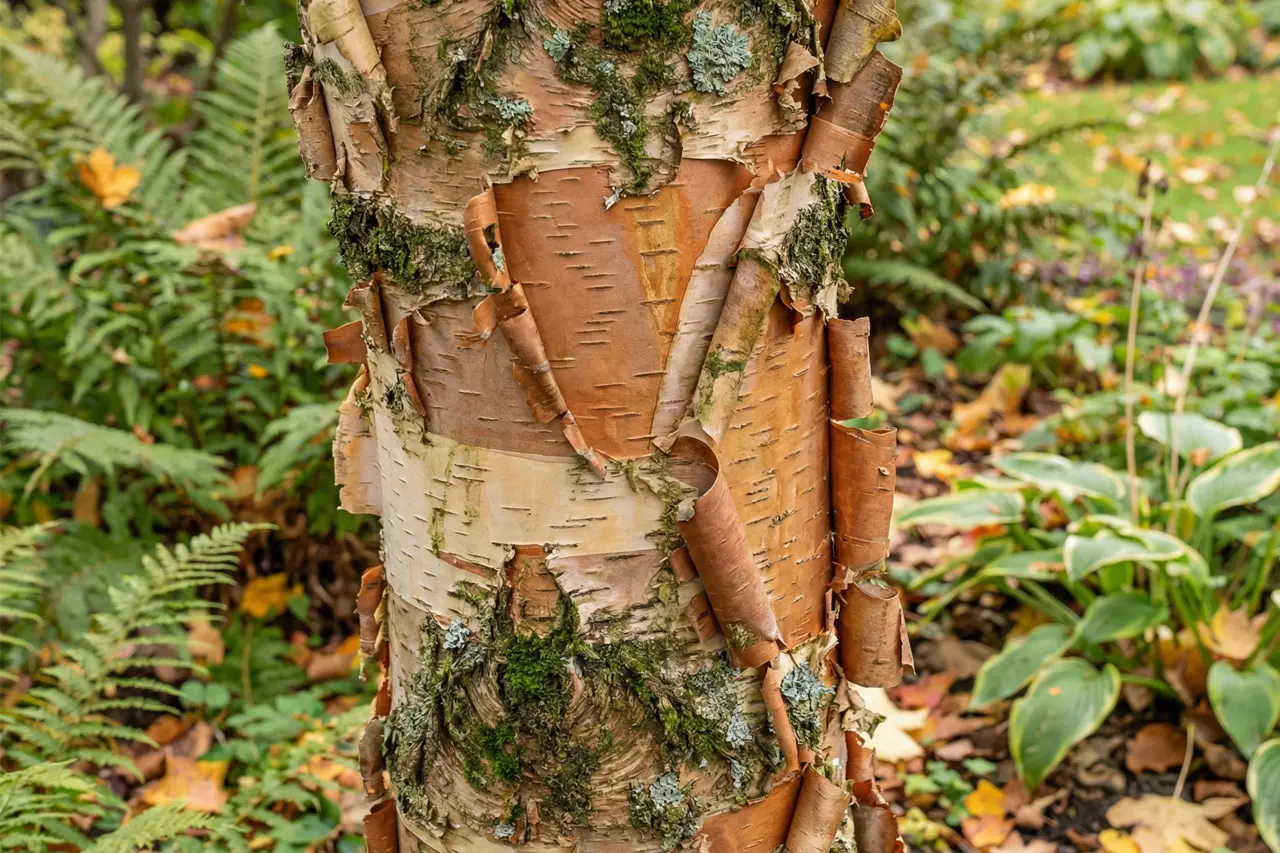
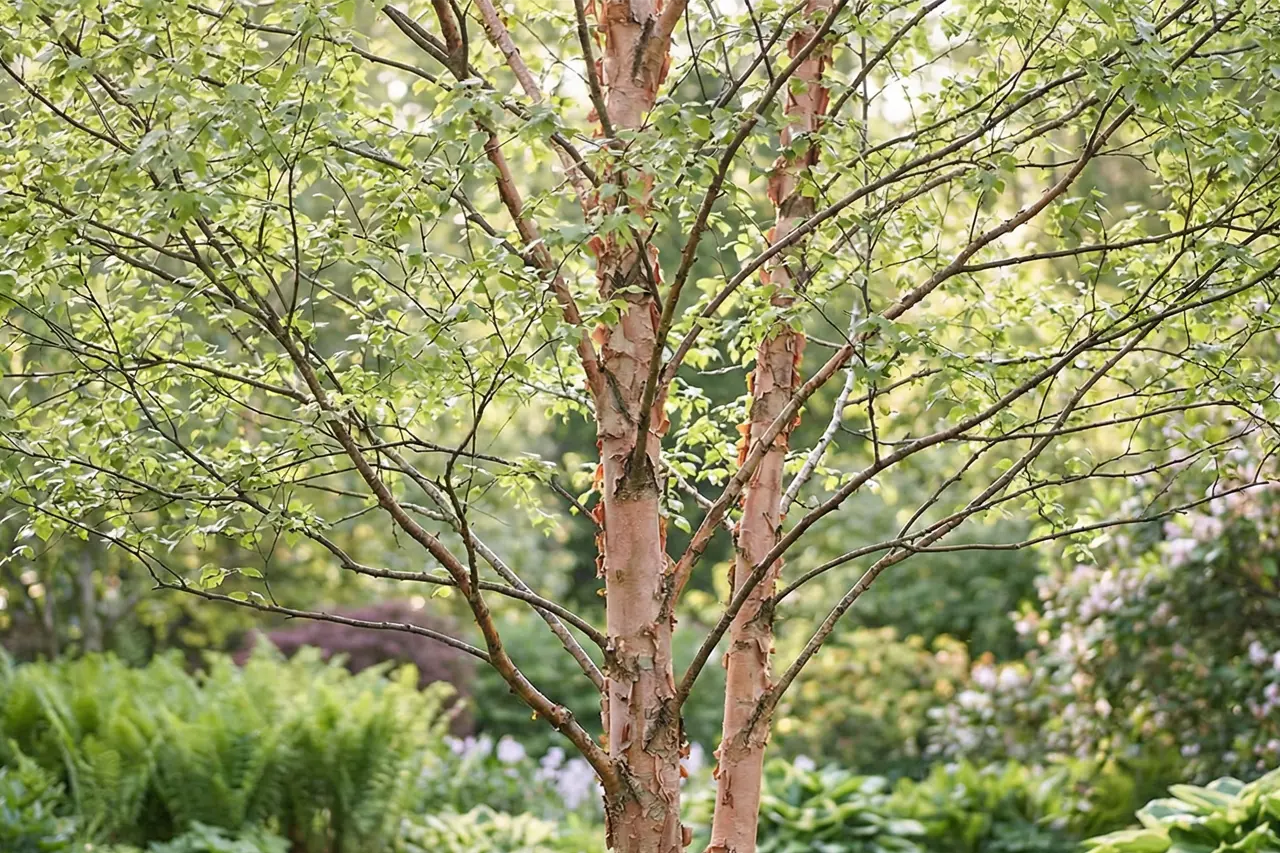
River birch brings rugged charm, with peeling bark in cinnamon, salmon and cream that curls away in papery strips. The trunk texture is the main event in winter, while the canopy stays light and airy—perfect for warmth, movement and lovely, natural character.
A distinctive river birch with deeper, smokier bark tones and a strong upright frame. Peeling trunks reveal rich browns and creams for striking winter detail, giving depth up close and character. A brilliant statement tree when you want bark to lead.
Paper birch is loved for bright, clean bark that peels in thin sheets, catching low winter light beautifully. The airy canopy gives a fresh woodland feel and a sense of lift. A classic choice for brightness, elegance and gentle movement from spring to autumn.


‘Saint George’ is a paper birch selected for especially clean, bright bark and a tidy upright outline. The trunk peels in pale layers for wonderful winter detail, while the canopy stays airy and refined, with a poised, elegant silhouette.
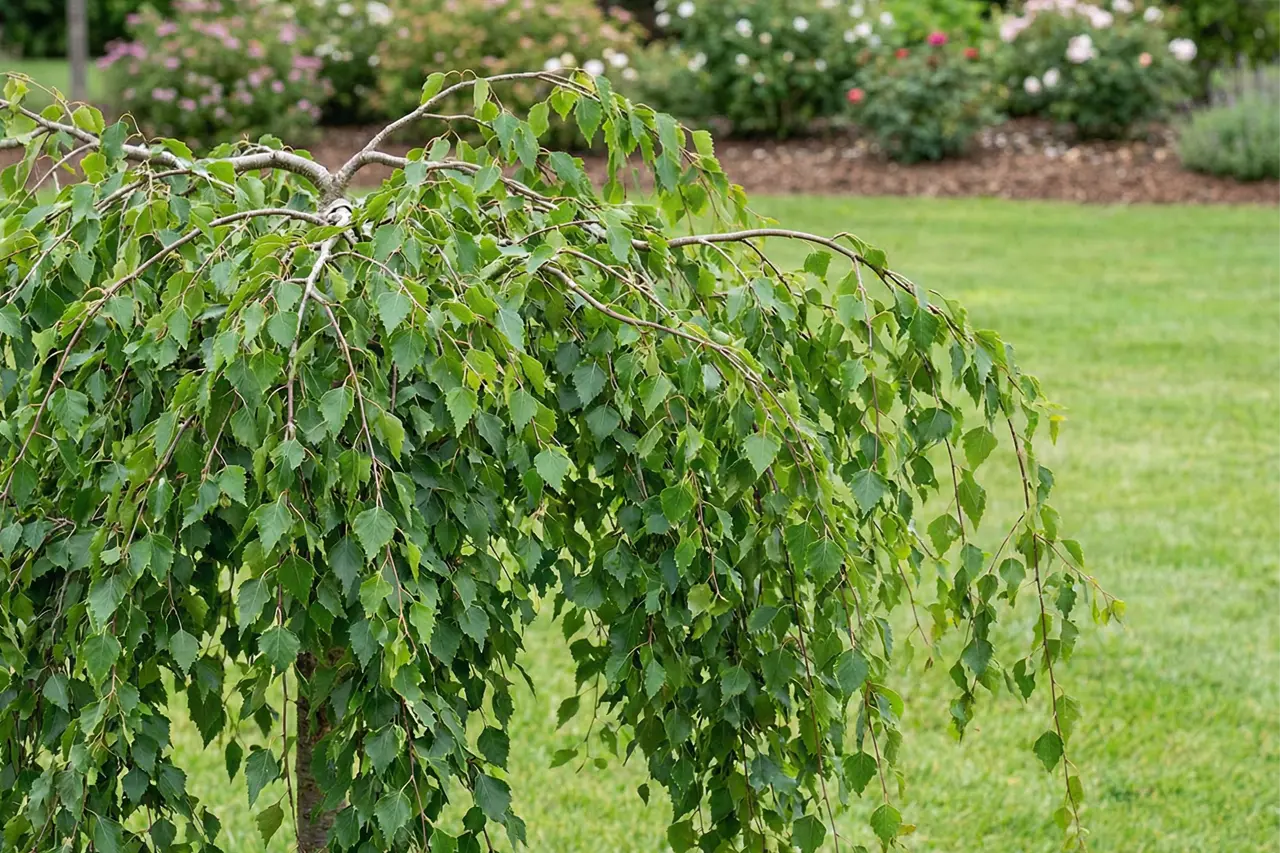
A wonderfully weeping birch with cascading branches that form a flowing, fountain-like silhouette. Fine foliage makes a soft curtain of green, and the shape reads as living sculpture. Perfect for adding romance and movement beside a lawn or path too.