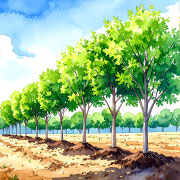

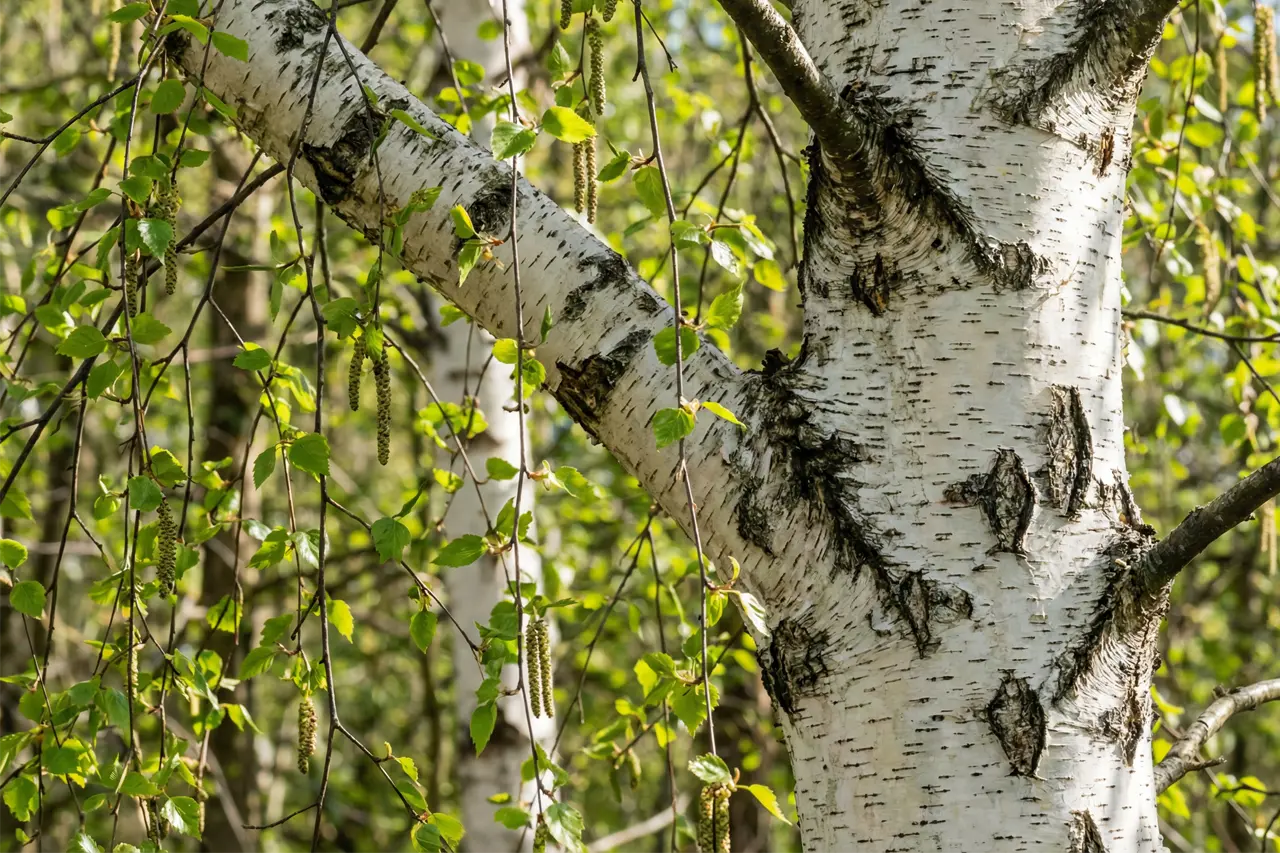
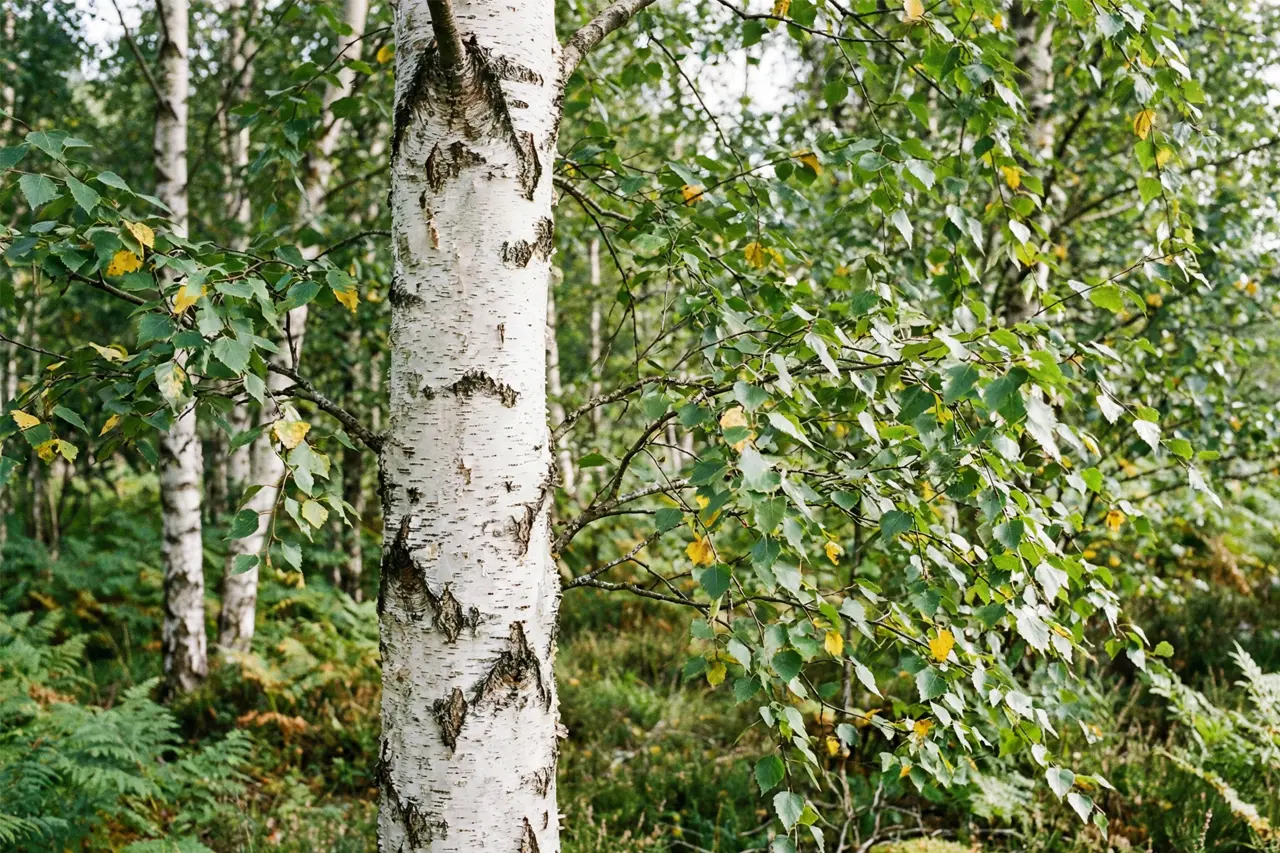
Silver birch earns its place with the trunk alone. That clean, pale bark catches every scrap of winter light and makes a garden feel brighter when borders are bare and skies are low. Up close, you’ll notice the texture too — darker markings, papery peeling on older stems, and that lovely contrast of white against evergreens and brickwork. Planted where you pass it often, silver birch gives you year-round interest without needing flowers or fuss, and it’s especially magical after rain when the bark looks freshly polished.
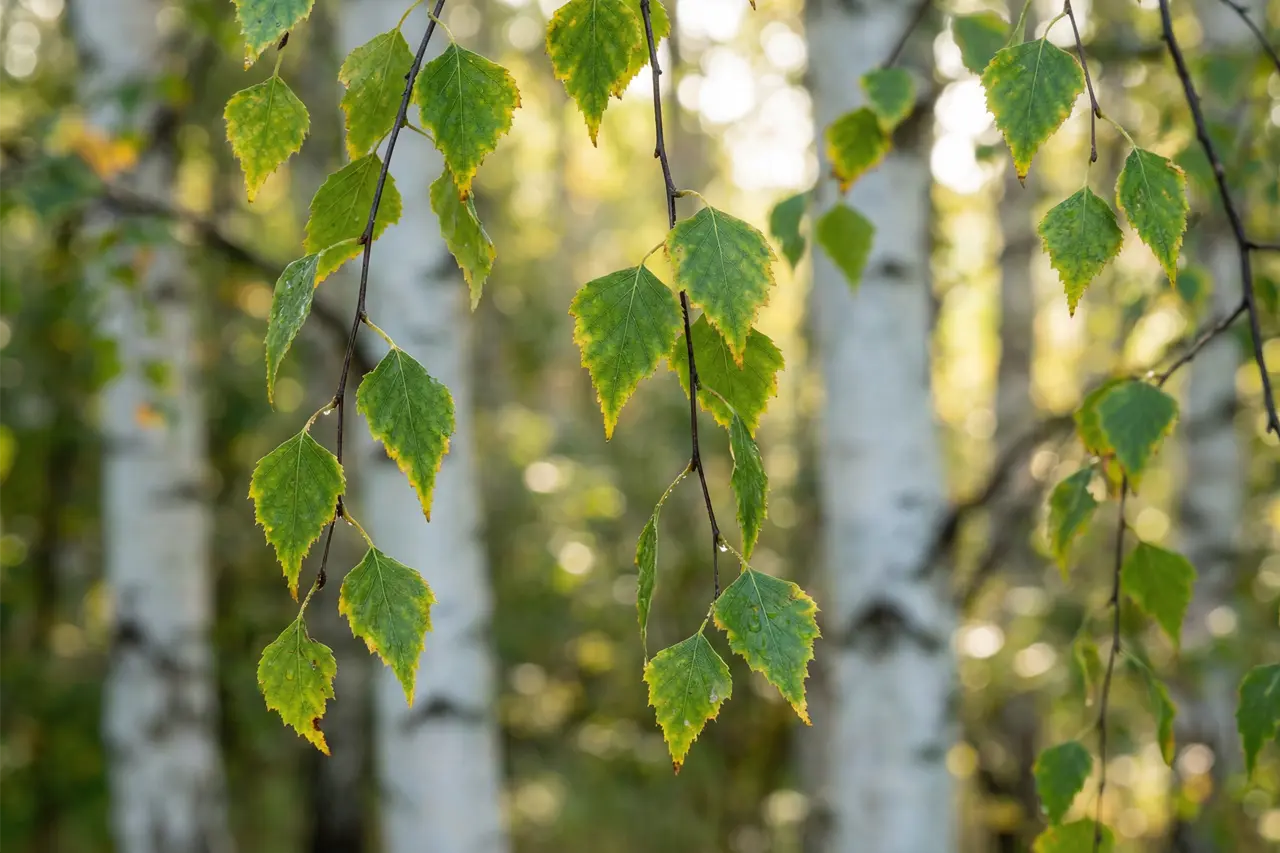
Common name: Silver birch.
Latin name: Betula pendula.
Size in UK gardens: Typically 10–18m over time, with a light canopy; multi-stem forms often feel a little smaller and softer in outline.
Best position: Full sun or light shade; happiest where it has space to lift its canopy and catch the light.
Soil: Well-drained soil is ideal; tolerates poorer ground, but dislikes prolonged waterlogging.
Main interest: White bark, airy foliage movement, and clear yellow autumn colour; catkins in spring.
Fragrance: Usually not noticeably scented.
Hardiness: Very hardy in the UK.
Care level: Low to moderate – easy-going once established, with minimal pruning and sensible watering in dry spells.

The Simpson’s team raises the majority of our trees here at the nursery. For varieties outside our own production, we work with independent local growers we trust - all chosen for UK climate suitability.
Planting time: As container-grown trees, silver birch can be planted in most months when the ground isn’t frozen or waterlogged; spring and autumn are usually easiest.
Watering: Water regularly in the first 1–2 seasons, and give a deep soak in prolonged dry spells; birch looks best when it isn’t repeatedly drought-stressed.
Feeding: A spring mulch of compost or leaf mould is usually enough; birch doesn’t need heavy feeding, just good soil condition.
Pruning: Minimal – mostly removing dead or rubbing branches; avoid heavy pruning and time cuts for mid to late summer.
Winter: Fully hardy; mulch helps young trees and improves the root zone through cold snaps.
Availability is always changing, so please check with us if you have a particular variety in mind.


The classic silver birch, loved for its bright white bark and that wonderfully light, dancing canopy that lets sunshine through. It brings instant height and movement, and always looks at home—whether you’re aiming for woodland softness, a natural screen, or a simple, elegant feature in a lawn.
A silver birch with a more delicate, cut-leaf look that gives the whole tree a lacy, filigree texture. The airy canopy feels lighter and more ornamental than the straight species, making it a superb choice when you want the brightness of birch bark with extra finesse and detail.
A tall, narrow silver birch with an upright, columnar habit—ideal when you want birch elegance without the spread. The white trunk and neat silhouette create a crisp vertical accent, perfect for framing views, lining a drive, or adding height in tighter gardens.
A cheerful, golden-leaved birch that lifts a planting scheme the moment you see it. The foliage holds a warm yellow tone through the season, giving the tree a sunlit presence even on grey days. Brilliant as a bright contrast against darker evergreens and deep greens.


Softer and more luminous than brash, ‘Golden Cloud’ has a gentle yellow-green canopy that glows rather than shouts. The effect is light and airy, like a haze of sunshine in leaf. A lovely option for bringing warmth and sparkle to mixed borders and woodland-style planting.
A striking birch with rich purple foliage that adds depth and drama, especially when paired with silvers, greens, and pale-flowering plants. The dark canopy makes the pale bark stand out all the more, giving you that classic birch silhouette with a bold, contemporary twist.
One of the most eye-catching purple-leaved birches, combining dark, glossy foliage with a bright white trunk for superb contrast. It reads crisply from a distance and looks especially smart in modern planting schemes, where the colour and bark together create a strong, graphic statement.
A silver birch with a more weeping, melancholy grace, its fine branches drooping to create a softer outline. It has a romantic, old-fashioned charm, adding movement and gentleness to the garden. A beautiful choice where you want a tree that feels lyrical rather than formal.

The classic weeping birch, forming an umbrella of cascading branches that creates a living curtain of foliage. It makes a wonderful focal point, especially near seating or at the edge of a lawn, where the draped shape brings softness, sheltering presence, and a real sense of character.