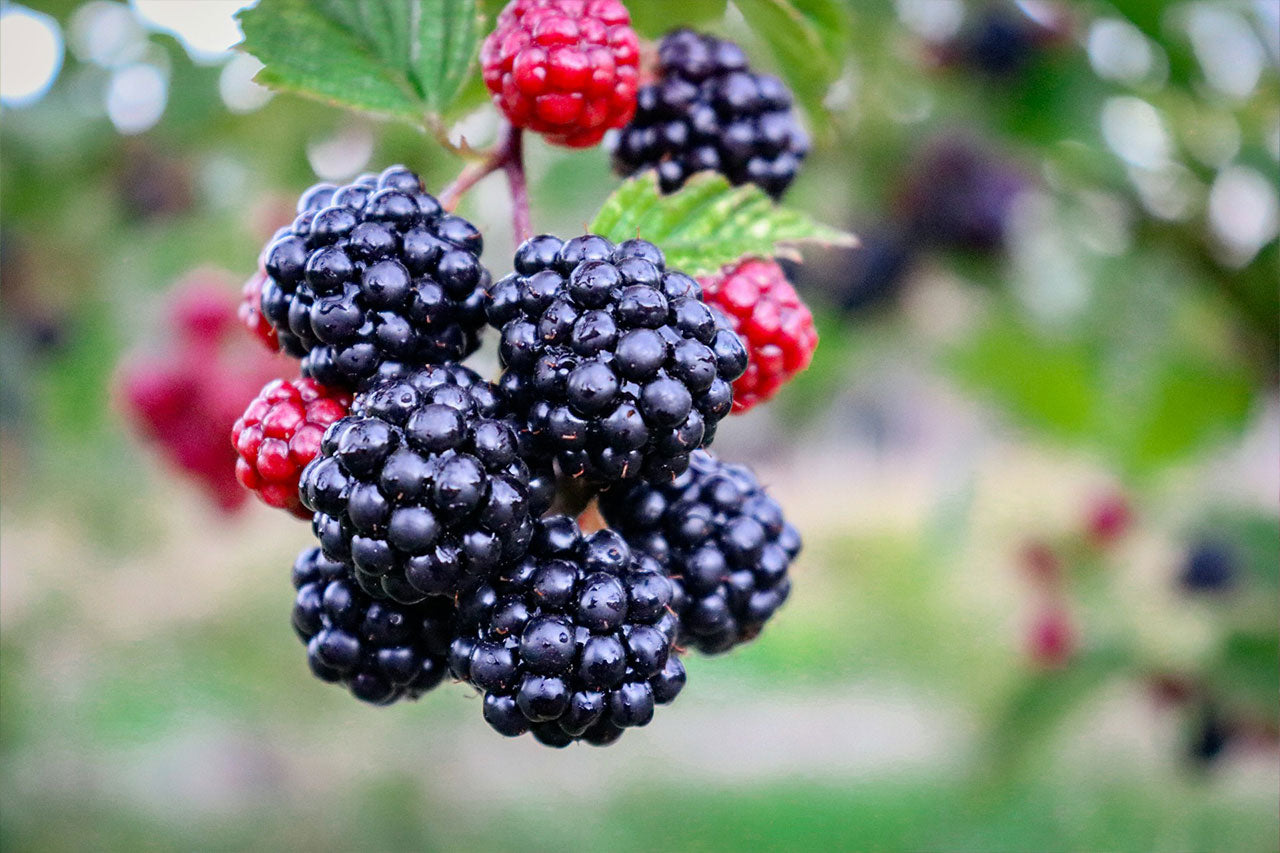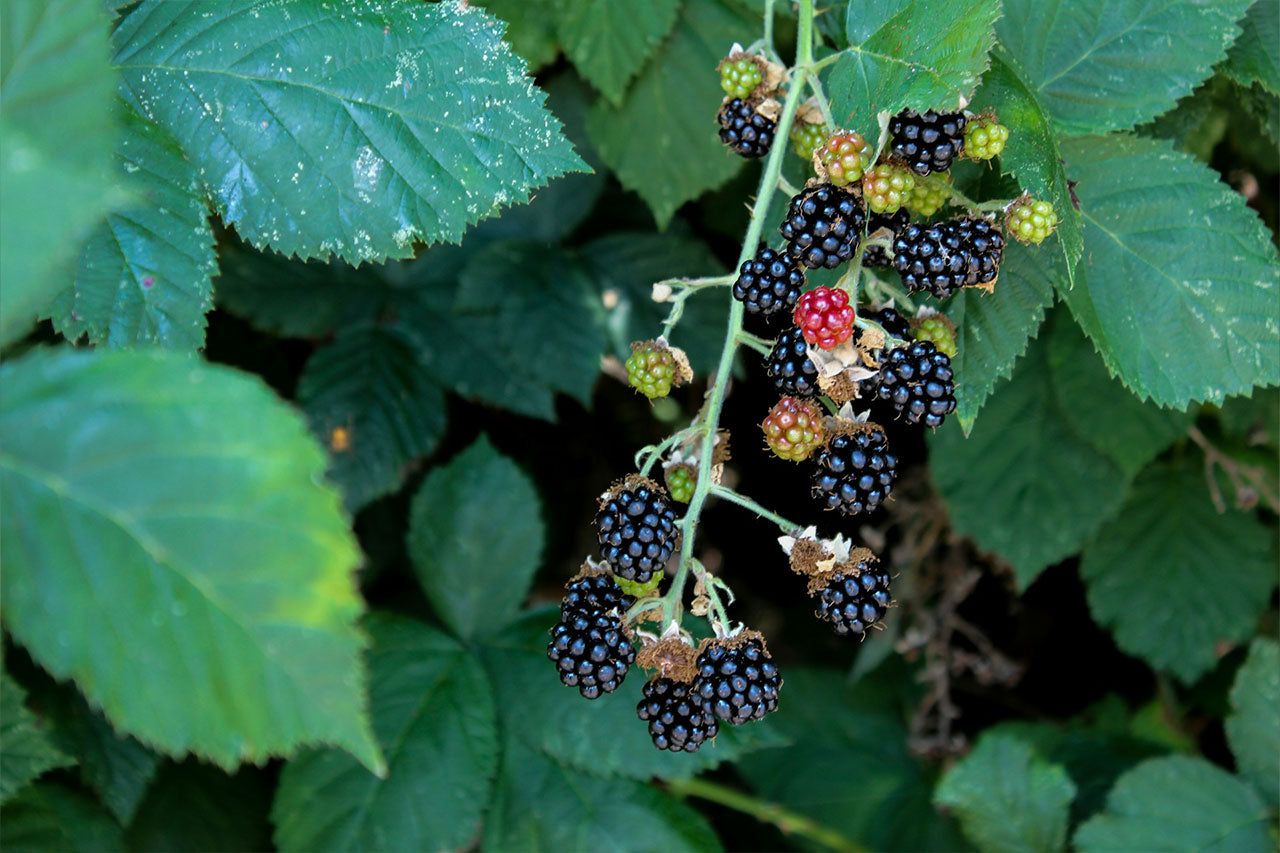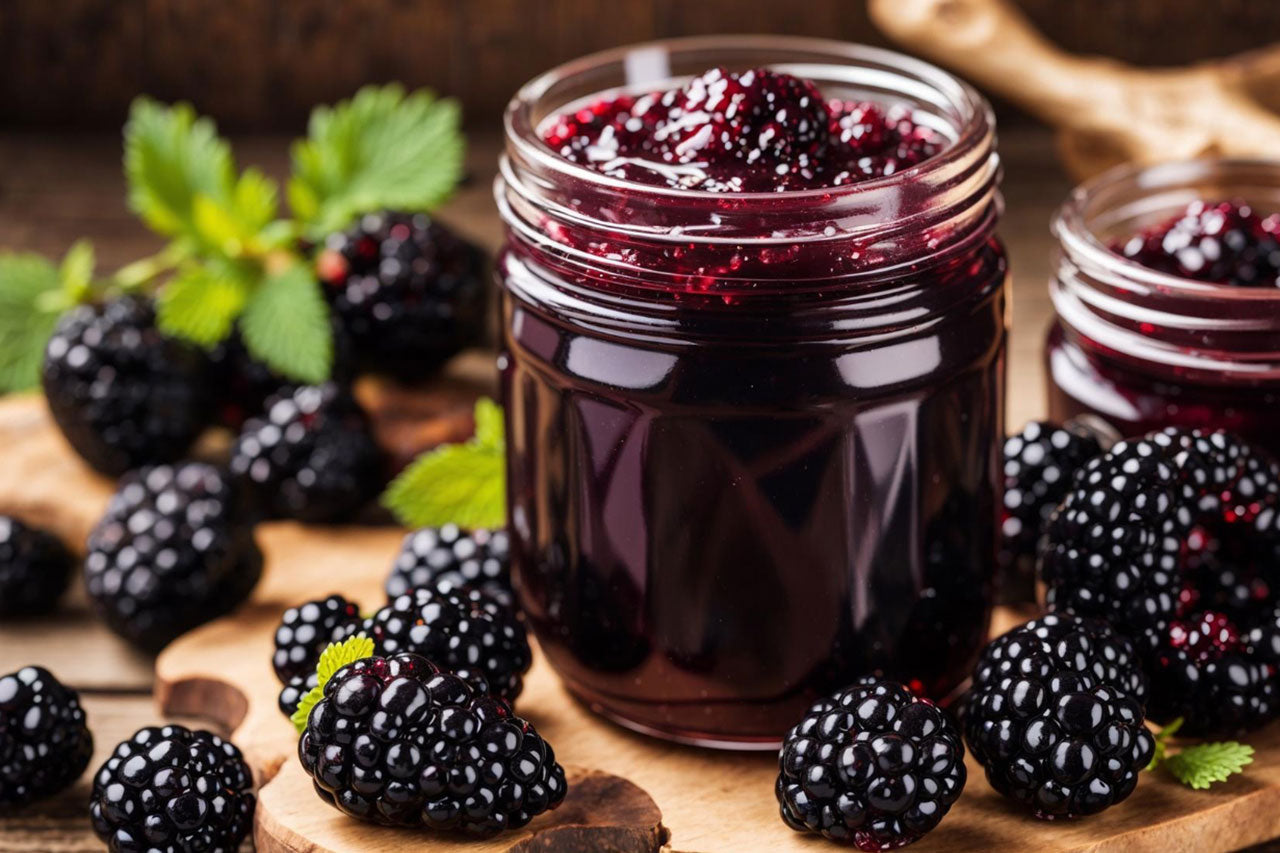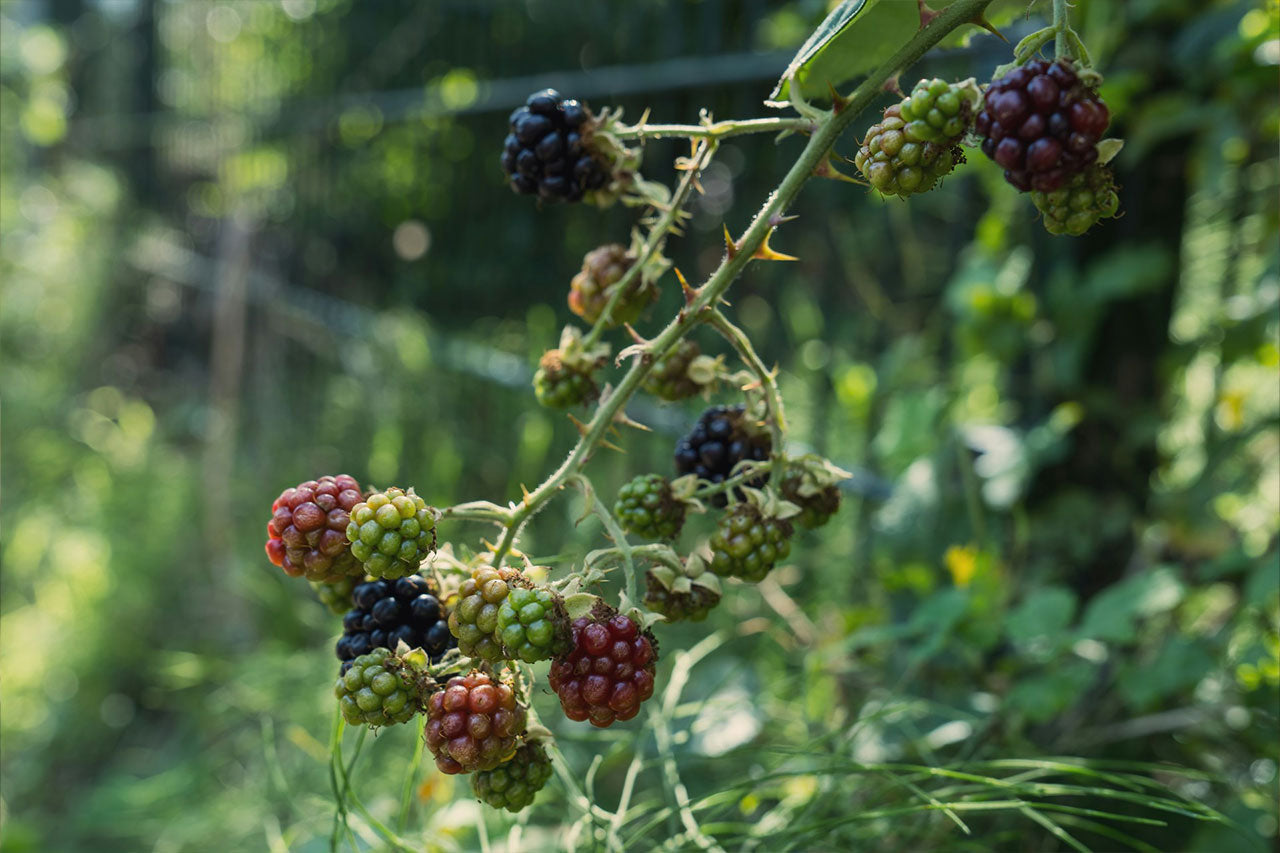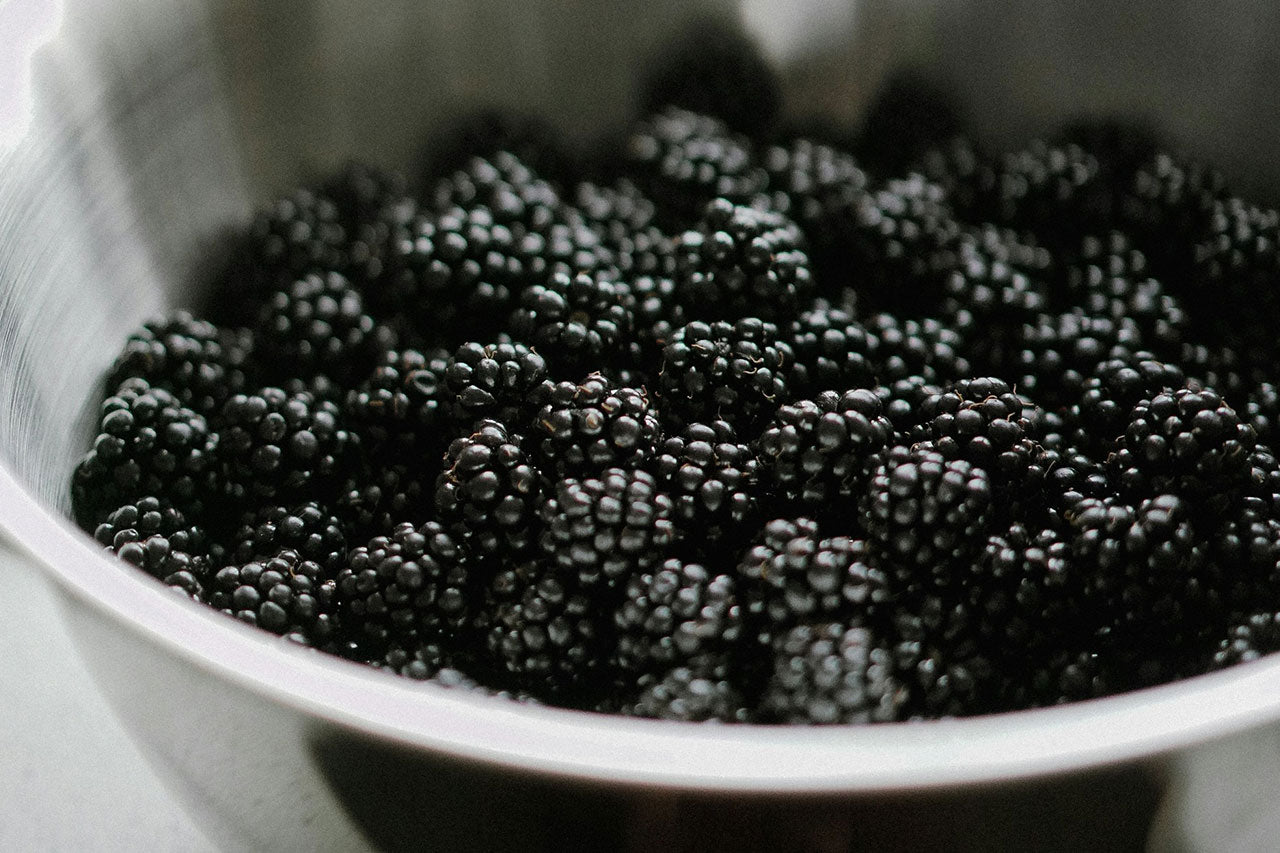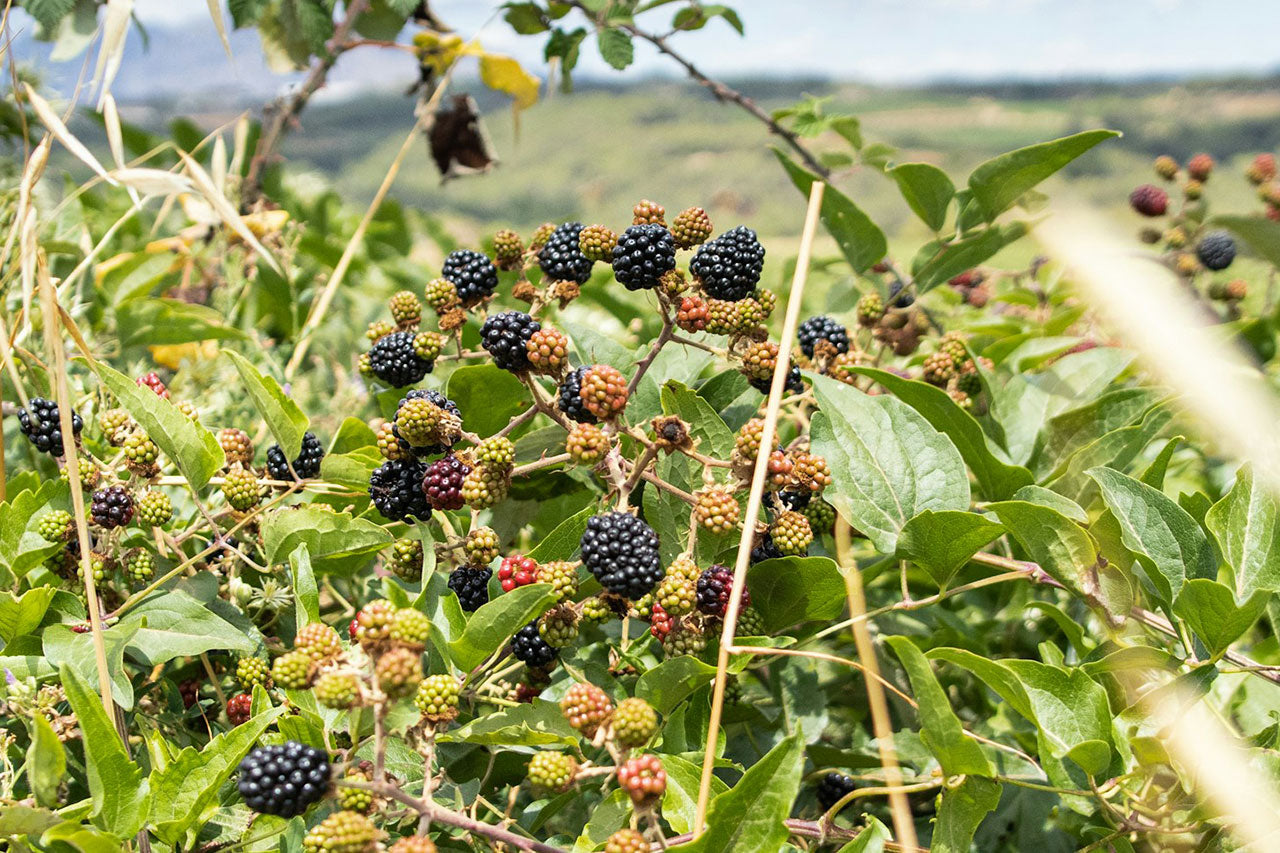

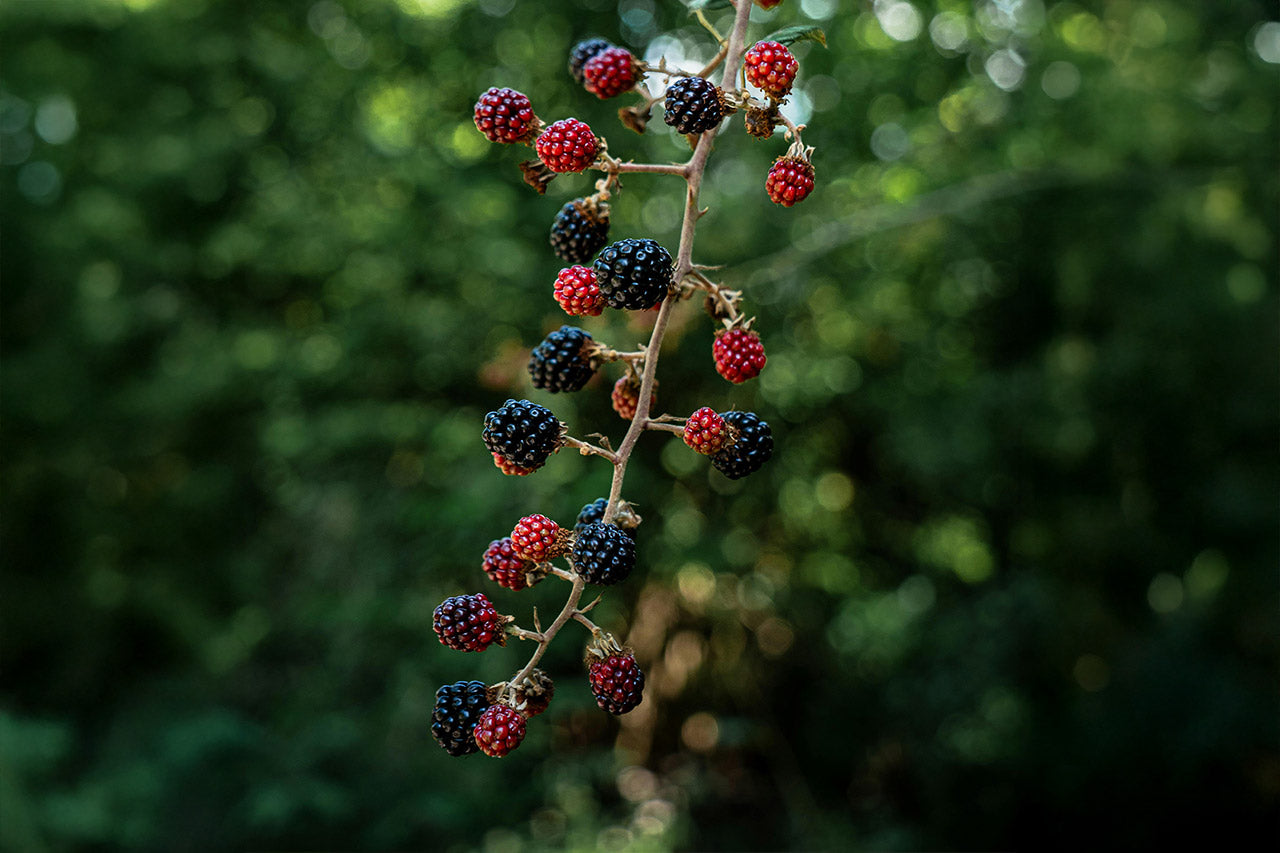
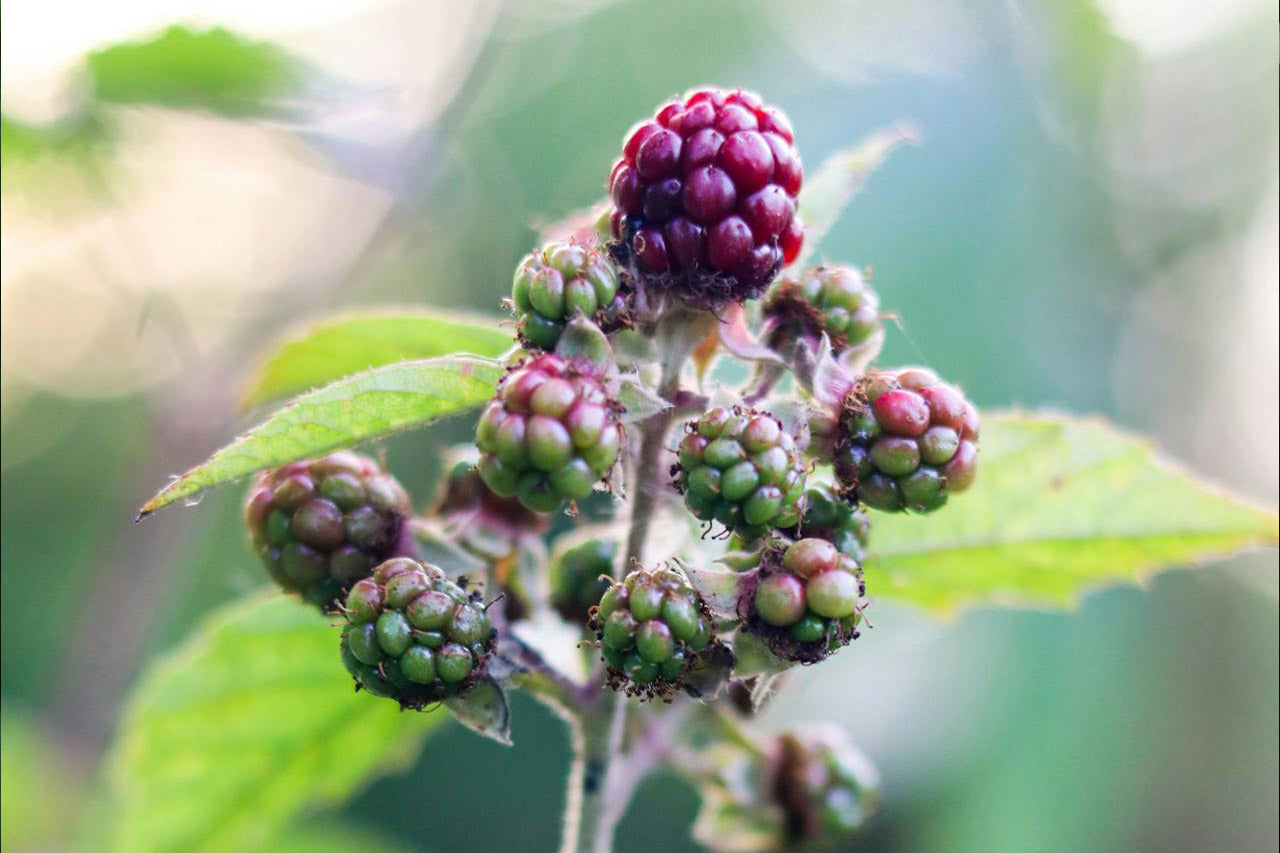
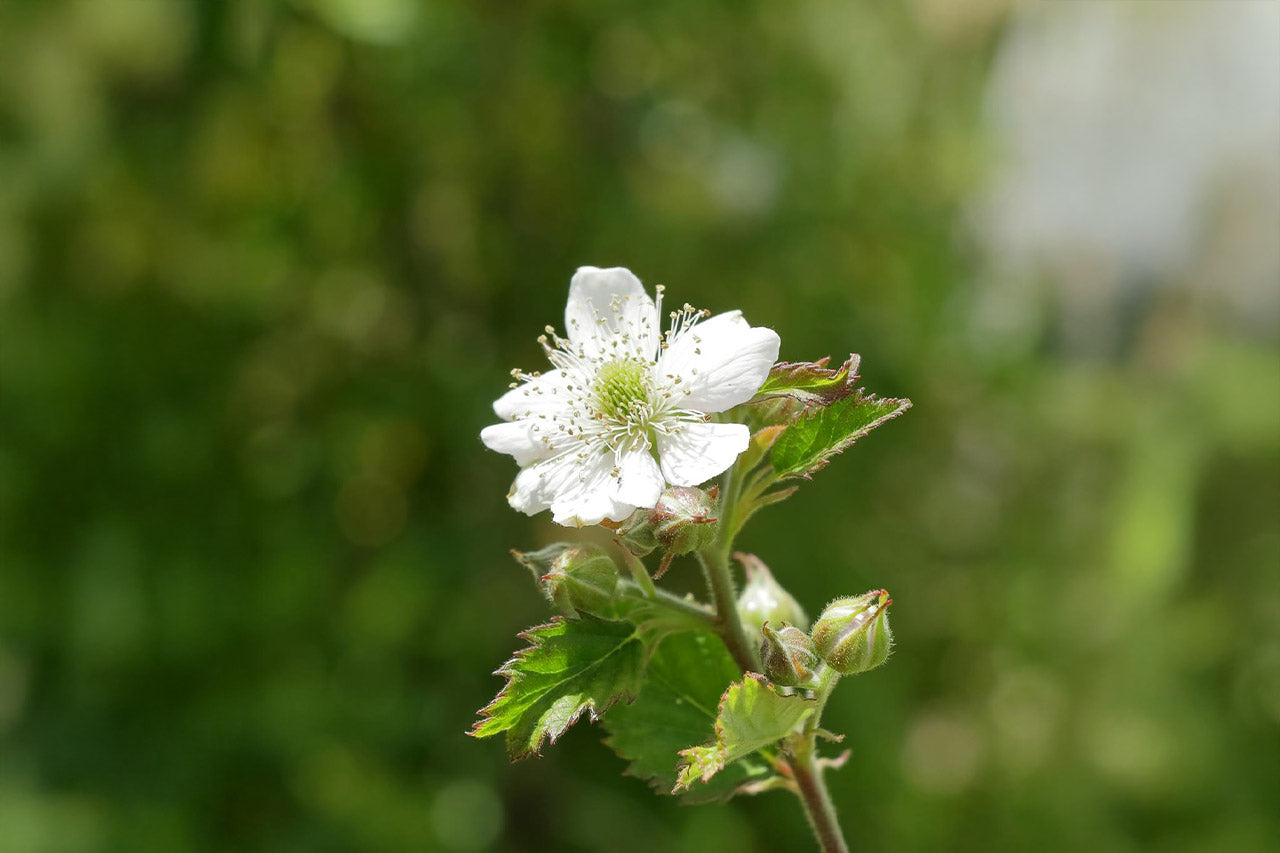
Blackberry (Rubus fruticosus and modern hybrids) really earns its place in a garden. In late spring and early summer, pretty white or pinkish flowers open along the canes, buzzing with bees and hoverflies on warm days. These are followed by clusters of green, then red, then fully ripe black berries from mid‑summer into early autumn, depending on the variety and the weather. In a typical Cambridgeshire garden, a well‑grown blackberry can keep a family in fresh fruit for weeks – for eating straight from the cane, popping into lunchboxes, or carrying inside for crumbles and jam‑making.
Common name: Blackberry
Latin name: Rubus fruticosus
Size in UK gardens: Typically 2–3m long canes when trained on wires; height and spread depend on support, usually managed within 2–3m high and wide. Compact varieties are available for smaller spaces.
Best position: A sunny, sheltered spot against a fence, wall or free‑standing support; will tolerate light shade but fruits best in full sun.
Soil: Moist, fertile, well‑drained soil; happy on most garden soils except very dry, thin or waterlogged ground. In pots, a quality loam‑based compost is best.
Flowering time: Blossom in late spring to early summer; fruit ripens from mid‑summer into early autumn depending on variety and local climate.
Fragrance: Flowers are lightly scented but not strongly fragrant; main appeal is visual and, of course, the fruit.
Hardiness: Fully hardy across the UK once established.
Care level: Moderate – easy enough once you understand the pruning (fruit on last year’s canes), with regular tying‑in and yearly thinning.

The Simpson’s team raises the majority of our trees here at the nursery. For varieties outside our own production, we work with independent local growers we trust - all chosen for UK climate suitability.
Planting time: As container‑grown plants, blackberries can be planted in most months when the ground isn’t frozen or waterlogged, with autumn and early spring usually easiest for both roots and gardeners.
Watering: Water regularly through the first year, and in subsequent years during dry spells, especially as flowers open and fruits swell. Soil should stay evenly moist but not sodden, particularly on lighter, sandy soils common in parts of East Anglia.
Feeding: In good soil, a generous spring mulch of garden compost or well‑rotted manure is often enough. On poorer ground or in pots, a balanced fertiliser in early spring plus a high‑potash feed in late spring can improve flower and fruit production.
Pruning: Blackberries fruit on last year’s canes. After cropping, cut those fruited canes right down to the base and tie in the new, current‑season canes to replace them. Aim to keep a manageable framework of strong, well‑spaced stems.
Winter: In the ground, blackberries usually need no winter protection beyond their mulch. In very exposed gardens, you can lightly tie in or bundle canes to stop them whipping in the wind; container plants may benefit from a more sheltered winter spot.
Availability is always changing, so please check with us if you have a particular variety in mind.


A modern thornless blackberry with strong, upright canes and generous crops of glossy, jet-black fruit. The berries are large and easy to pick, making it ideal for gardens where you want plenty of harvest without the scratches. Brilliant trained along wires or a fence, and perfect for pies, jams and freezing.
A superb thornless blackberry, valued for heavy yields of large, firm fruit with a good, rich flavour. It’s a very garden-friendly variety—easy to train, easy to pick, and reliable year after year. Excellent for a sunny wall or fence, and a great choice if you want serious cropping in a tidy package.
A classic thornless blackberry that’s been a favourite for years, producing good crops of sweet, dark fruit on manageable canes. It’s a great choice for family gardens—far kinder to hands and arms than spiny types—while still delivering plenty for eating fresh, cooking and preserving.
An evergreen blackberry with thornless canes and decorative, finely cut foliage that looks handsome even outside fruiting season. It’s excellent for training along fences, where it provides structure as well as a good crop of blackberries. A particularly useful choice when you want a fruit plant that also earns its keep as a screen.

A vigorous, traditional blackberry known for big crops and bold, robust growth—great if you want plenty of fruit and have the space to let it do its thing. The berries are large and very useful for cooking and preserving. Best for larger gardens or wilder edges, where it can ramble more naturally and deliver a generous harvest.