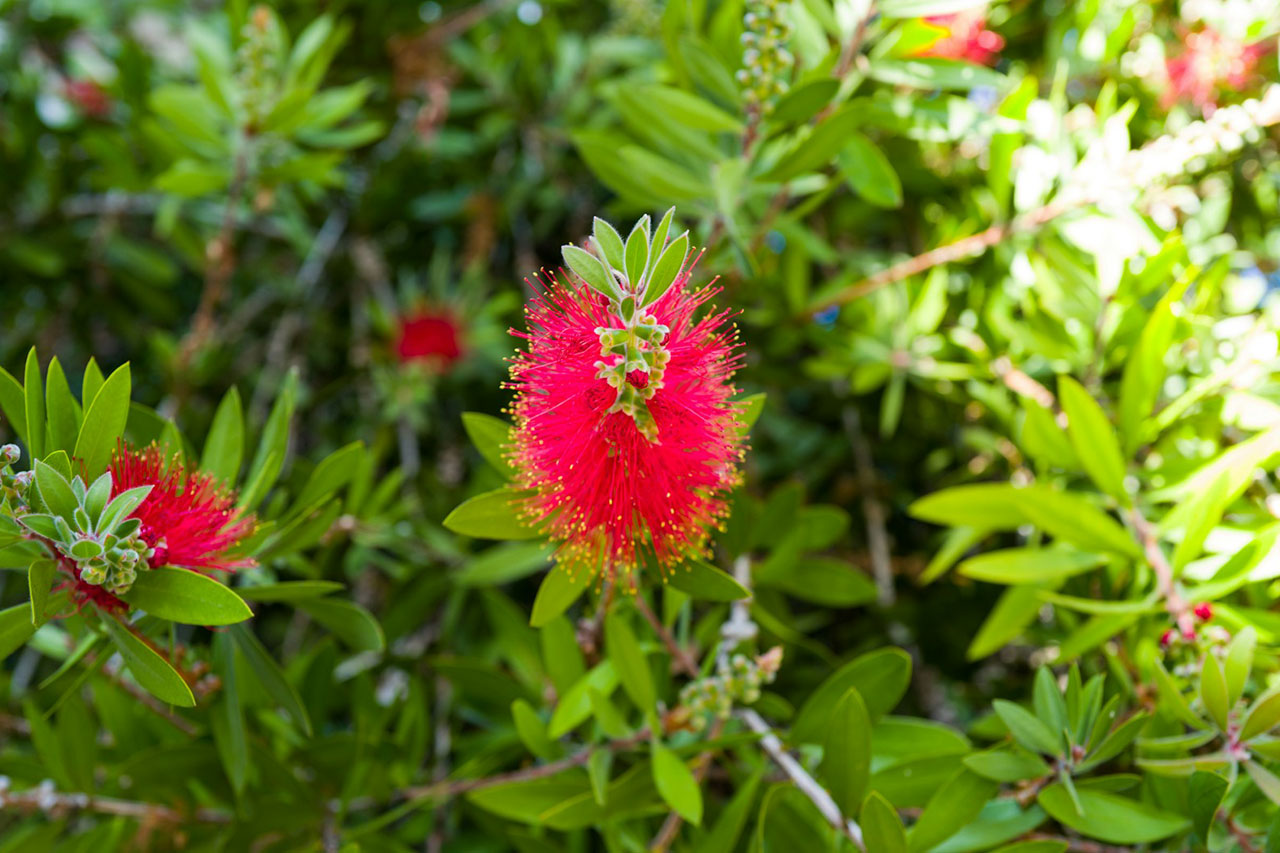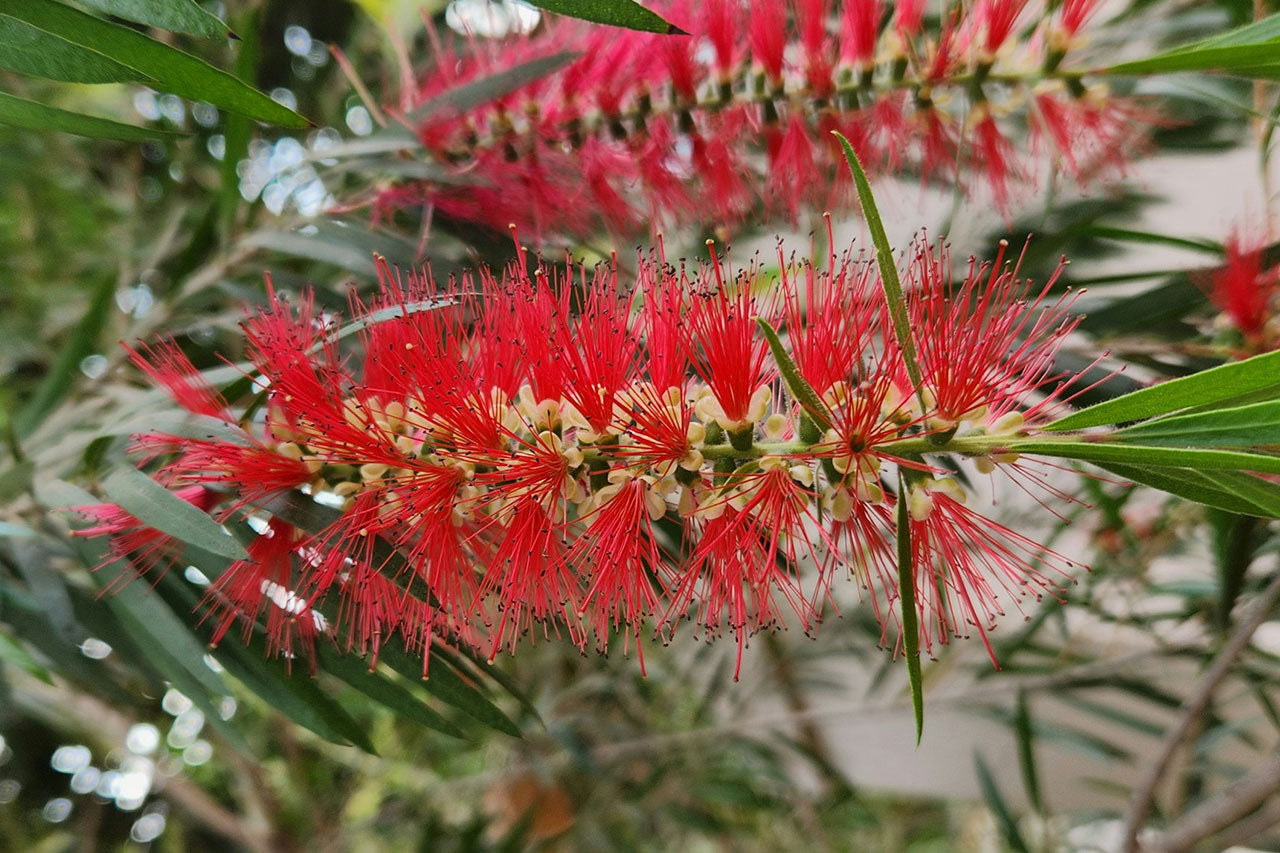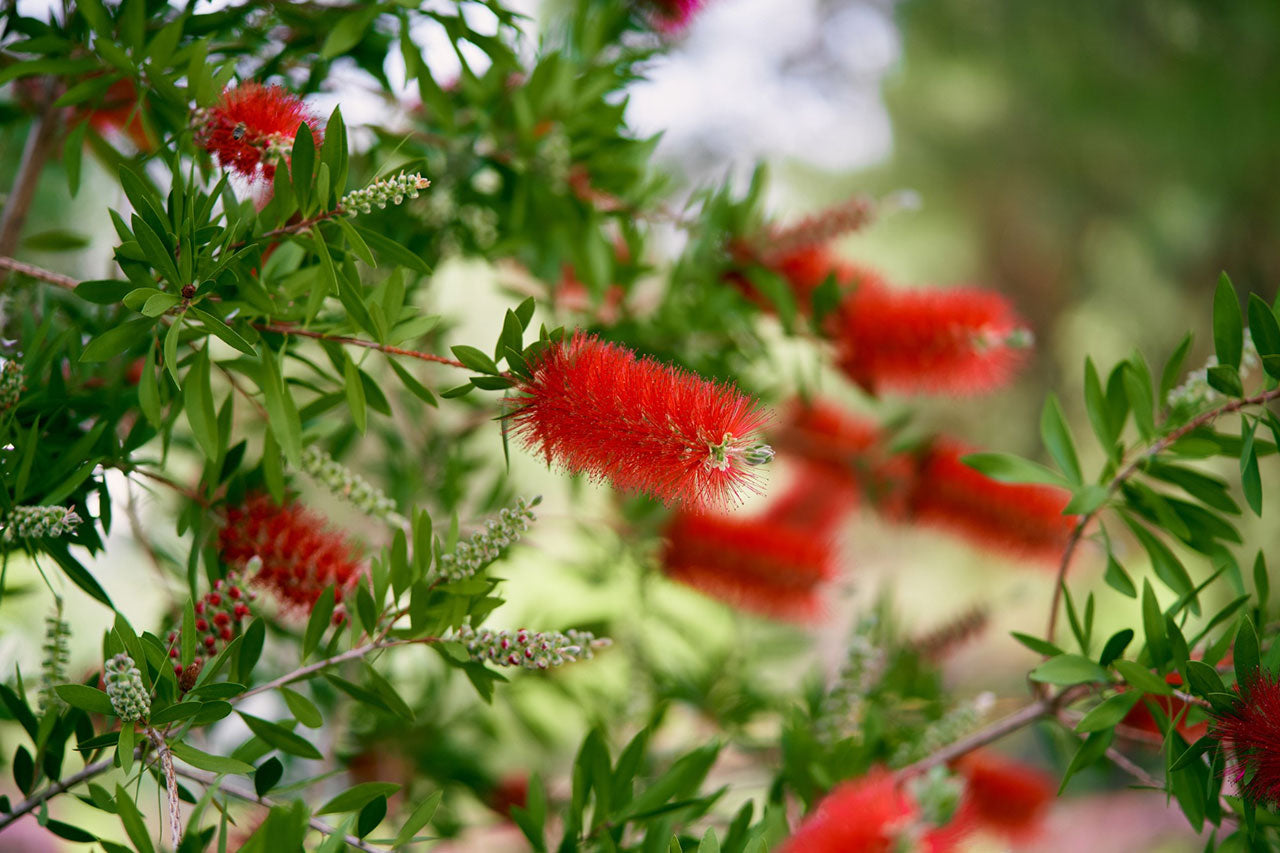

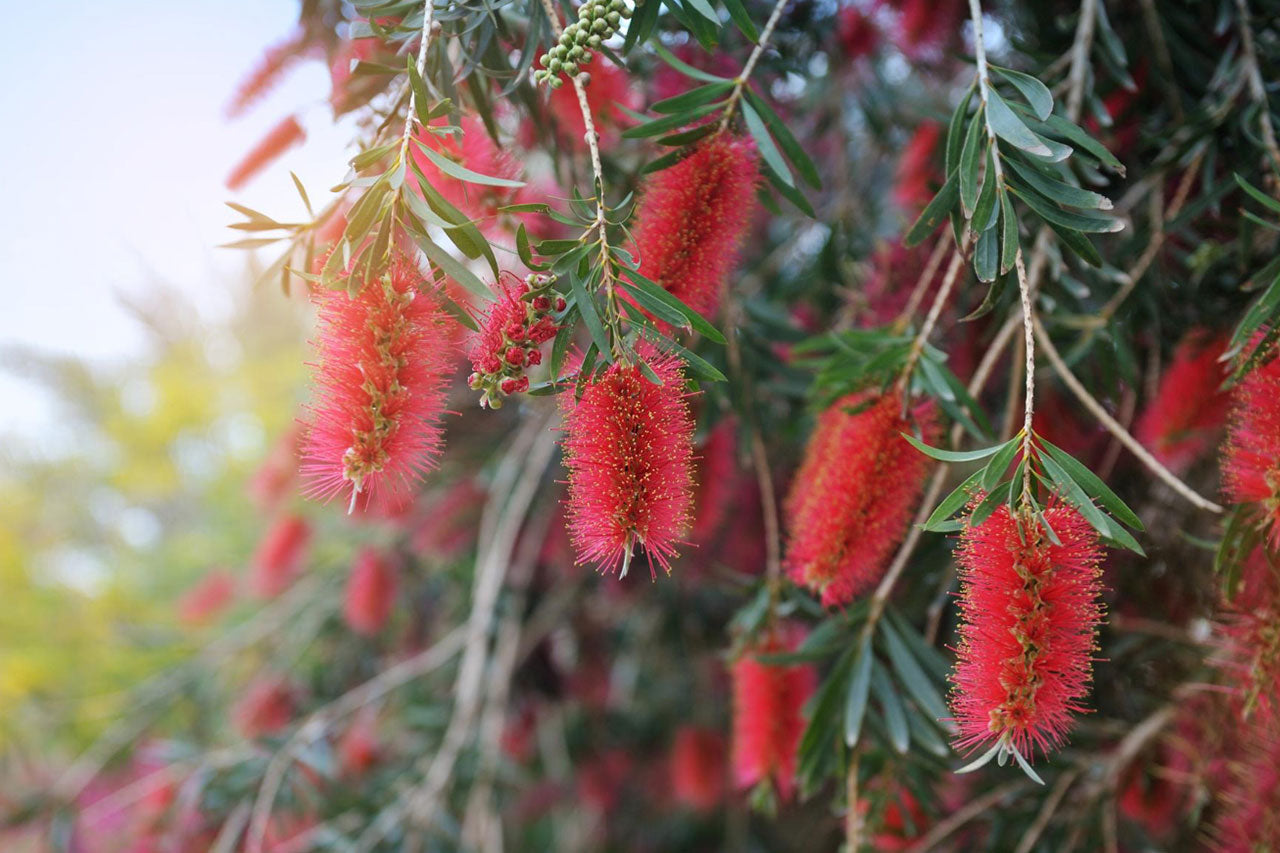
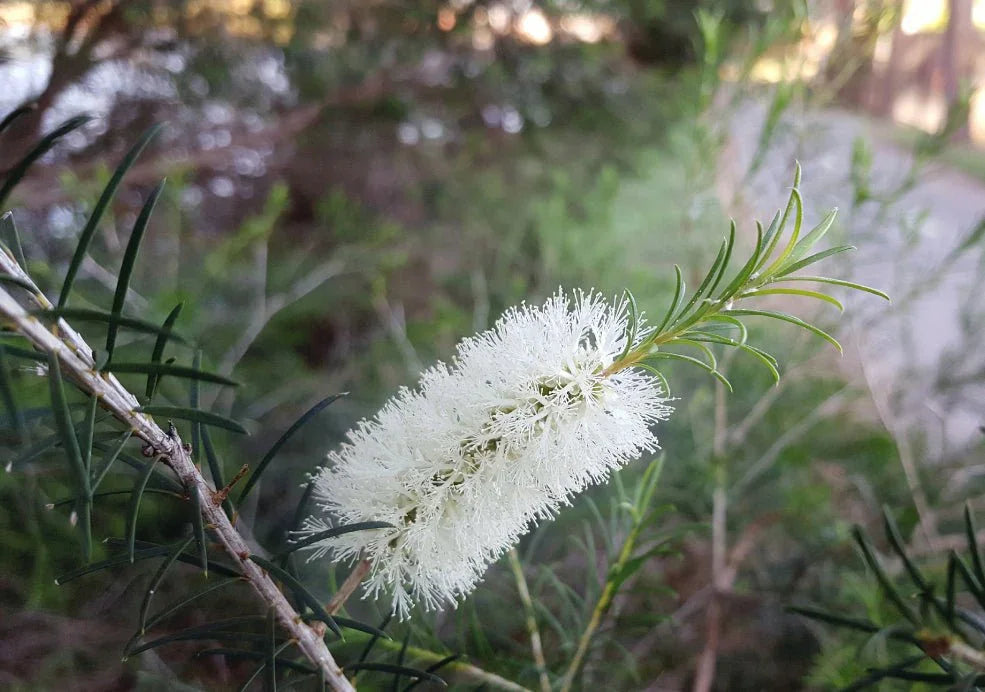
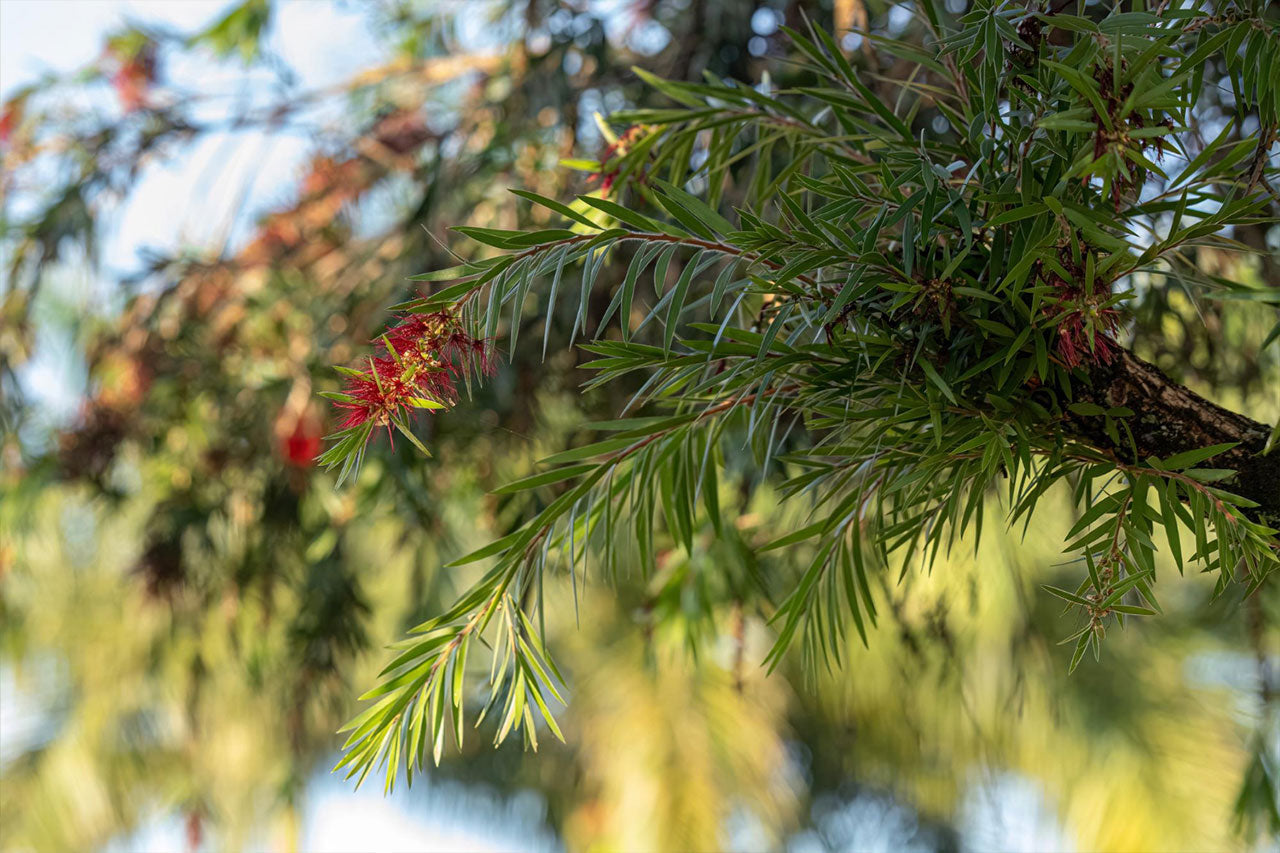
The most eye‑catching feature of Callistemon is, of course, its extraordinary flowers. The vivid, brush‑like spikes look almost as though they’ve been dipped in paint, standing out dramatically against the fine, evergreen foliage. In late spring and early summer, a mature plant can be studded with blooms, turning a simple corner into something rather special. Whether you favour deep red, cherry pink or more unusual shades, these flowers have a way of stopping visitors in their tracks and making the garden feel a little more exotic.
Common name: Bottlebrush
Latin name: Callistemon
Size in UK gardens: Typically 1.5–3m tall × 1–2.5m wide in time, depending on variety and pruning. Compact forms and pot‑grown plants can be kept smaller.
Best position: A sunny, sheltered spot – often against a south or west‑facing wall, in a warm border or courtyard where it can soak up heat.
Soil: Free‑draining, reasonably fertile garden soil. It dislikes heavy, waterlogged clay but enjoys moisture‑retentive yet well‑drained loam, especially if slightly on the acidic side.
Flowering time: Late spring into summer (usually May–July) with striking, brush‑like flower spikes in red, pink or other shades, sometimes with a lighter second flush later in the season.
Hardiness: Borderline hardy – generally fine in milder, coastal or urban gardens with shelter, but may suffer damage in severe frosts in colder regions.
Care level: Moderately easy – enjoys sun, drainage and shelter, with a little extra winter protection in cooler parts of the UK and light pruning after flowering.

The Simpson’s team raises the majority of our trees here at the nursery. For varieties outside our own production, we work with independent local growers we trust - all chosen for UK climate suitability.
Planting time: Best planted in late spring or early summer in cooler areas, once frosts are past and the soil has warmed, or in early autumn in mild regions so roots can establish before winter. Avoid planting into very cold or waterlogged ground.
Watering: Keep newly planted Callistemon evenly moist during its first growing season, especially in dry spells. Once established in the ground, it will cope with short dry periods but appreciates occasional deep watering in prolonged drought.
Feeding: A light feed in spring with a balanced fertiliser, or a top‑dress of garden compost, is usually enough. On very chalky soils, an ericaceous feed can help keep foliage greener. Over‑feeding is unnecessary and can encourage soft, sappy growth.
Pruning: Light to moderate pruning after flowering helps keep the shrub compact and encourages more blooms on new wood. Avoid cutting back into very old, bare wood if you can – focus on shaping and removing dead or straggly stems.
Winter: In mild gardens, a sheltered position is often enough. In colder areas, protect roots with a mulch and consider fleece or extra shelter in severe cold, especially for young or container‑grown plants.
Availability is always changing, so please check with us if you have a particular variety in mind.
Bottlebrush flowers bring a wonderfully exotic touch—bright, brush-like blooms that look almost theatrical against evergreen foliage. It makes a superb feature shrub in a sunny, sheltered border or large pot, giving a real holiday feel and a strong architectural presence even when it’s not in bloom.
A more graceful bottlebrush with a gently weeping habit that gives it a softer silhouette, like a small tree with a relaxed, coastal air. It’s ideal as a feature near patios where you can enjoy the shape and the showy brush flowers up close, bringing a touch of the unusual to the garden.
Bold red bottlebrush flowers appear in clusters, giving a strong, colourful display that feels wonderfully summery and a little exotic. It’s excellent as a statement plant in borders or pots, and it pairs beautifully with silvery foliage and grasses for a modern, Mediterranean-leaning look.
Stiff, upright growth gives this bottlebrush a strong, architectural presence, with the flowers adding that unmistakable brush-like theatre. It’s a fine choice when you want a shrub that looks structured and bold, providing evergreen form and a touch of drama when in flower.
A slightly different bottlebrush character, with a lighter, finer look that feels airy and elegant. It makes a lovely feature shrub where you want an evergreen presence that isn’t heavy, and it brings that gently exotic feel that works so well in contemporary and Mediterranean-style planting.
Crimson bottlebrush blooms give this real impact, producing a vivid, unmistakable display that draws the eye immediately. It’s ideal as a focal shrub in a border or large pot, adding that sense of summer heat and drama, especially when set against calmer greens and silvery foliage.