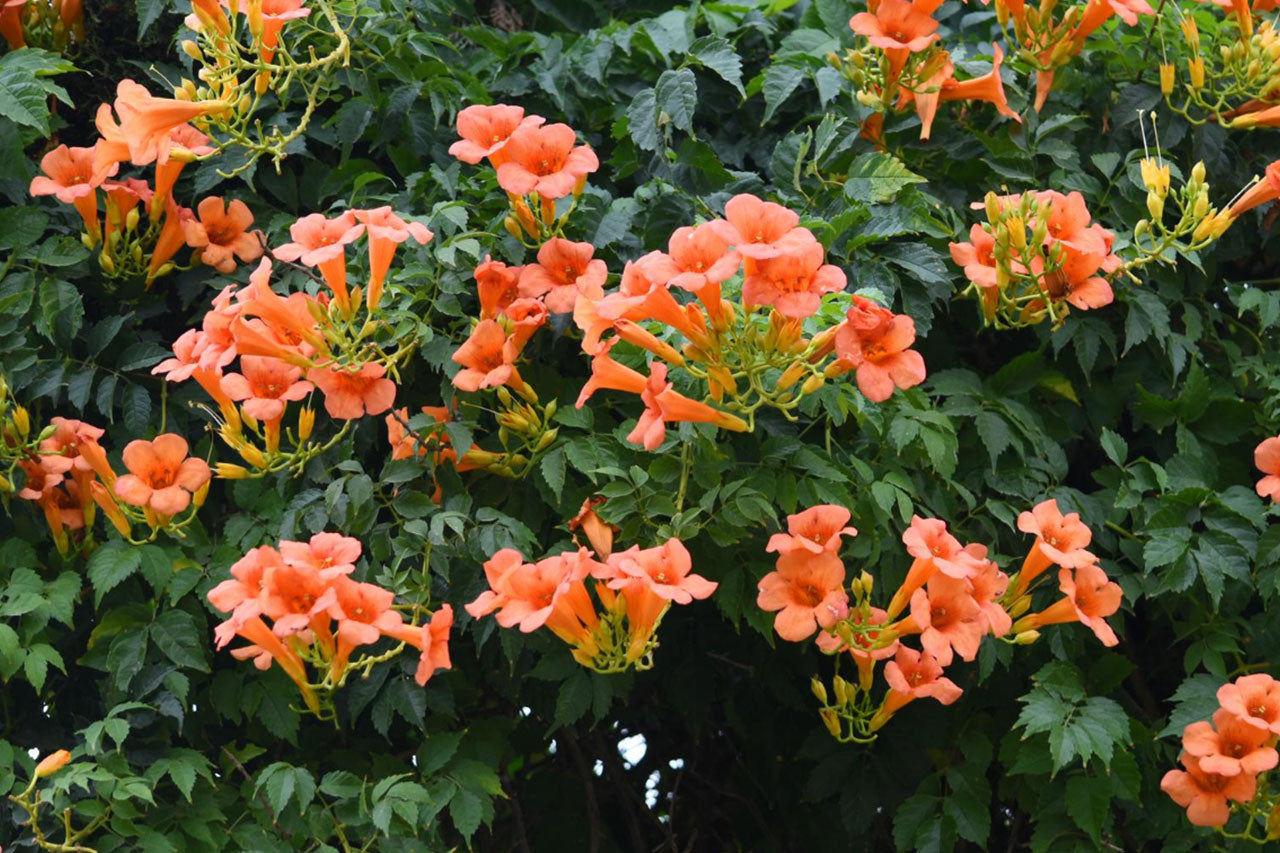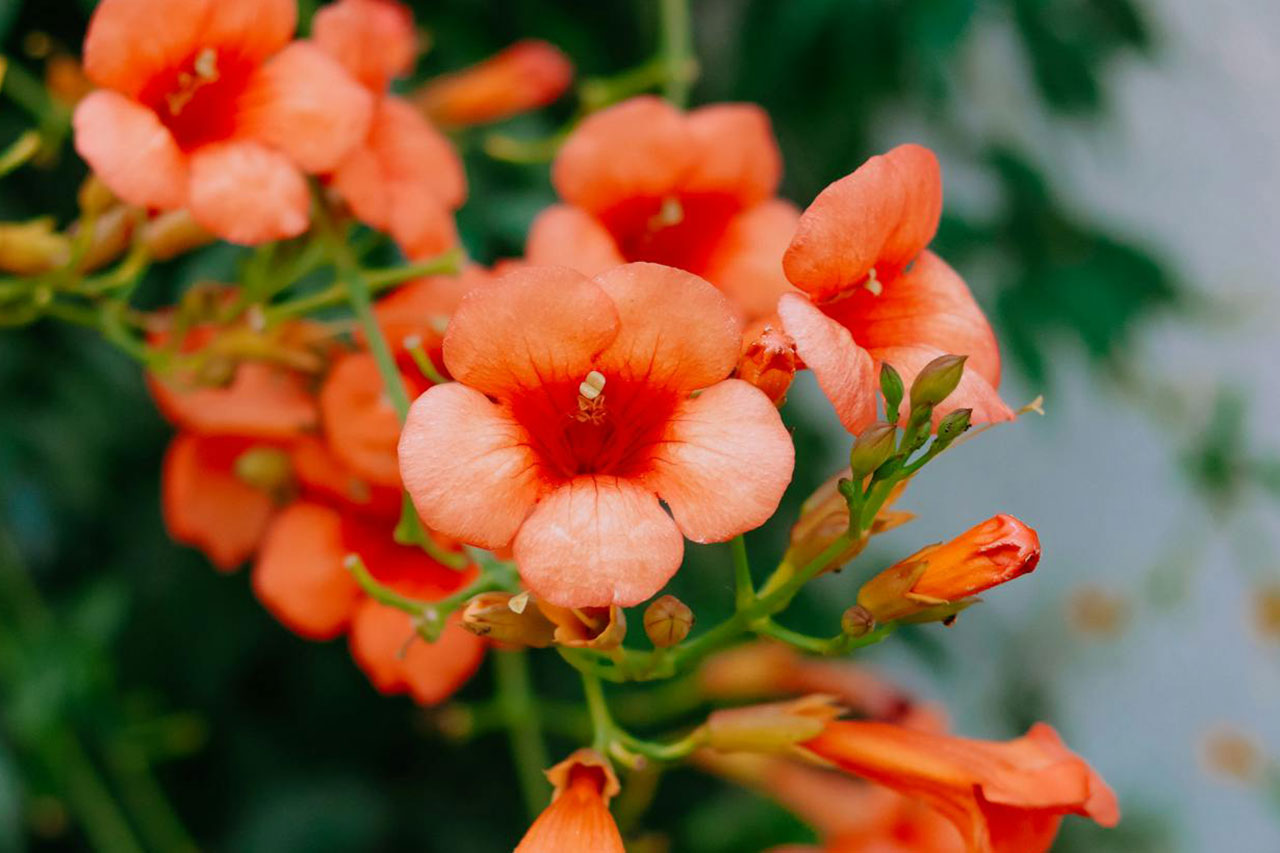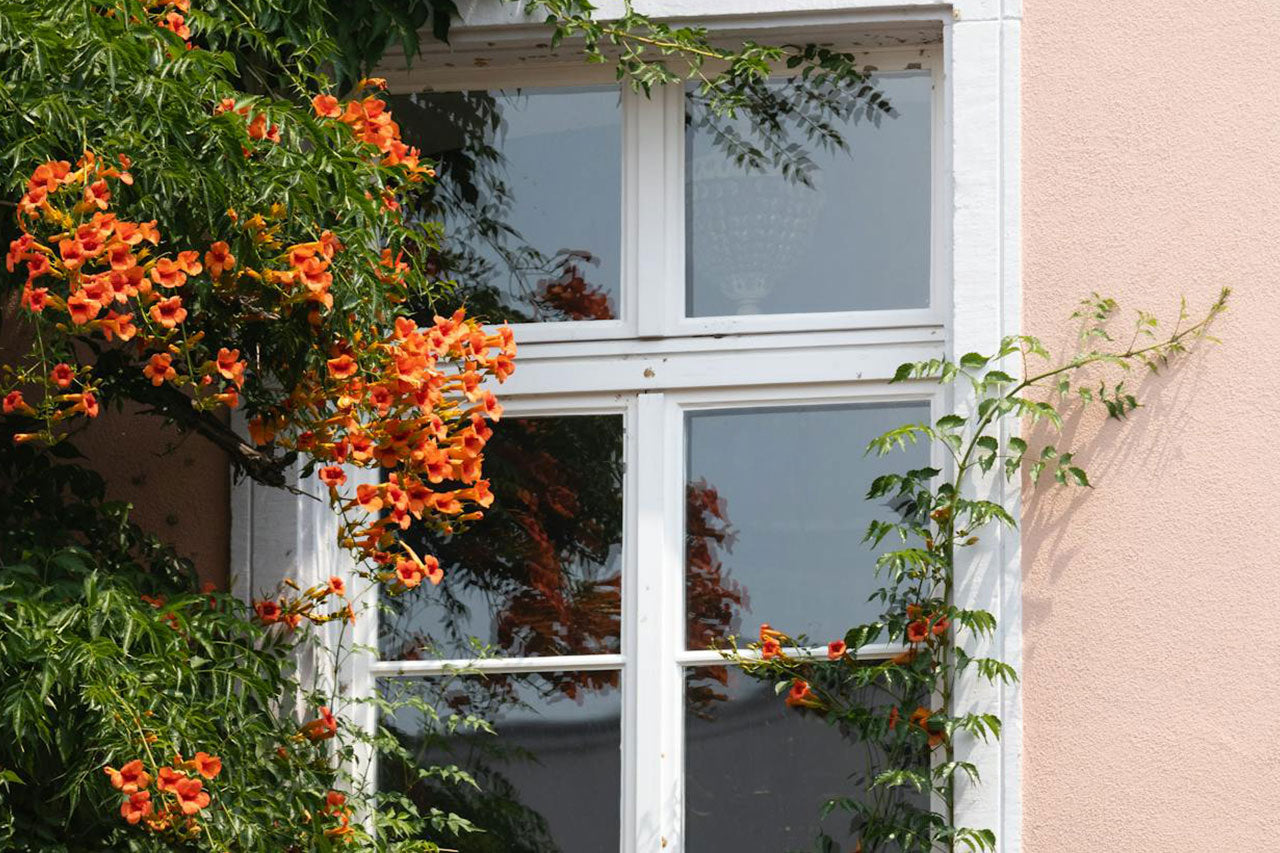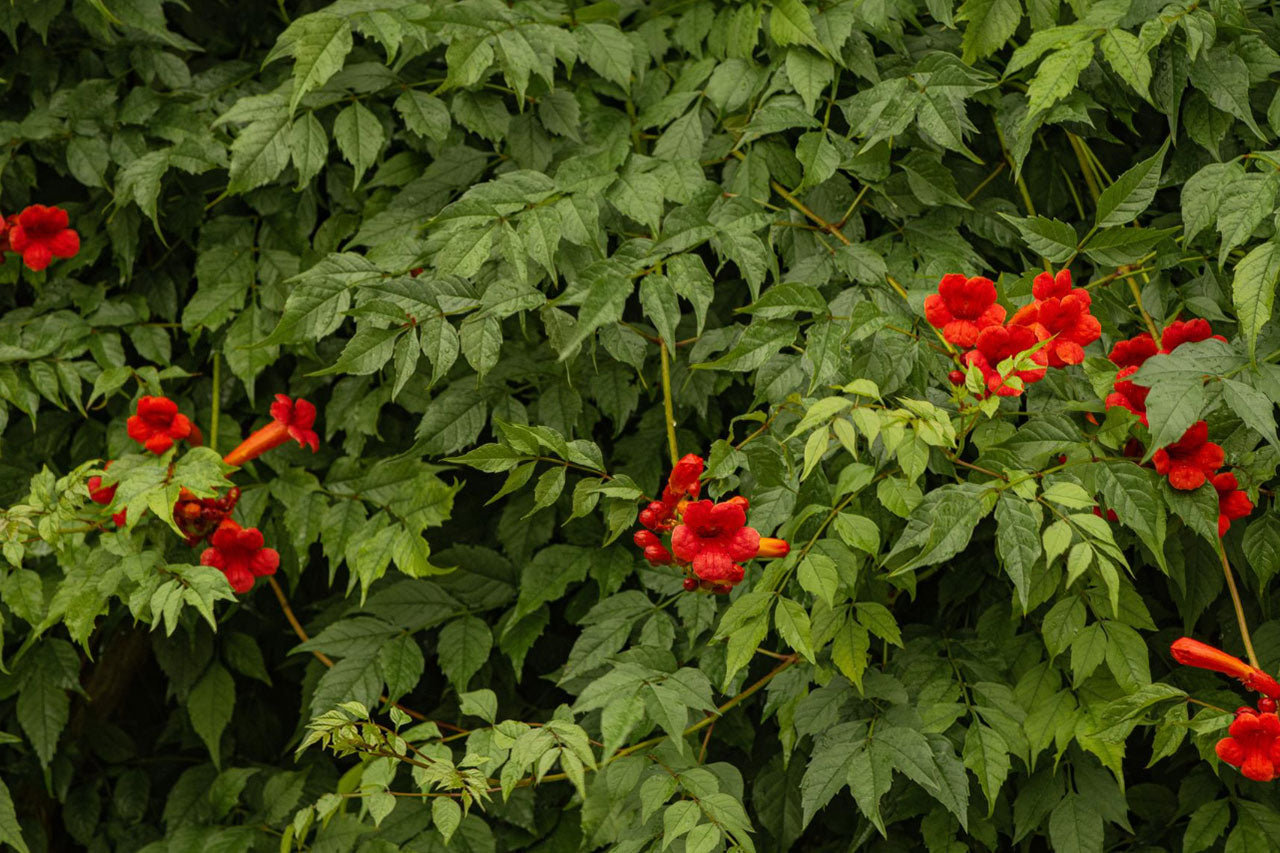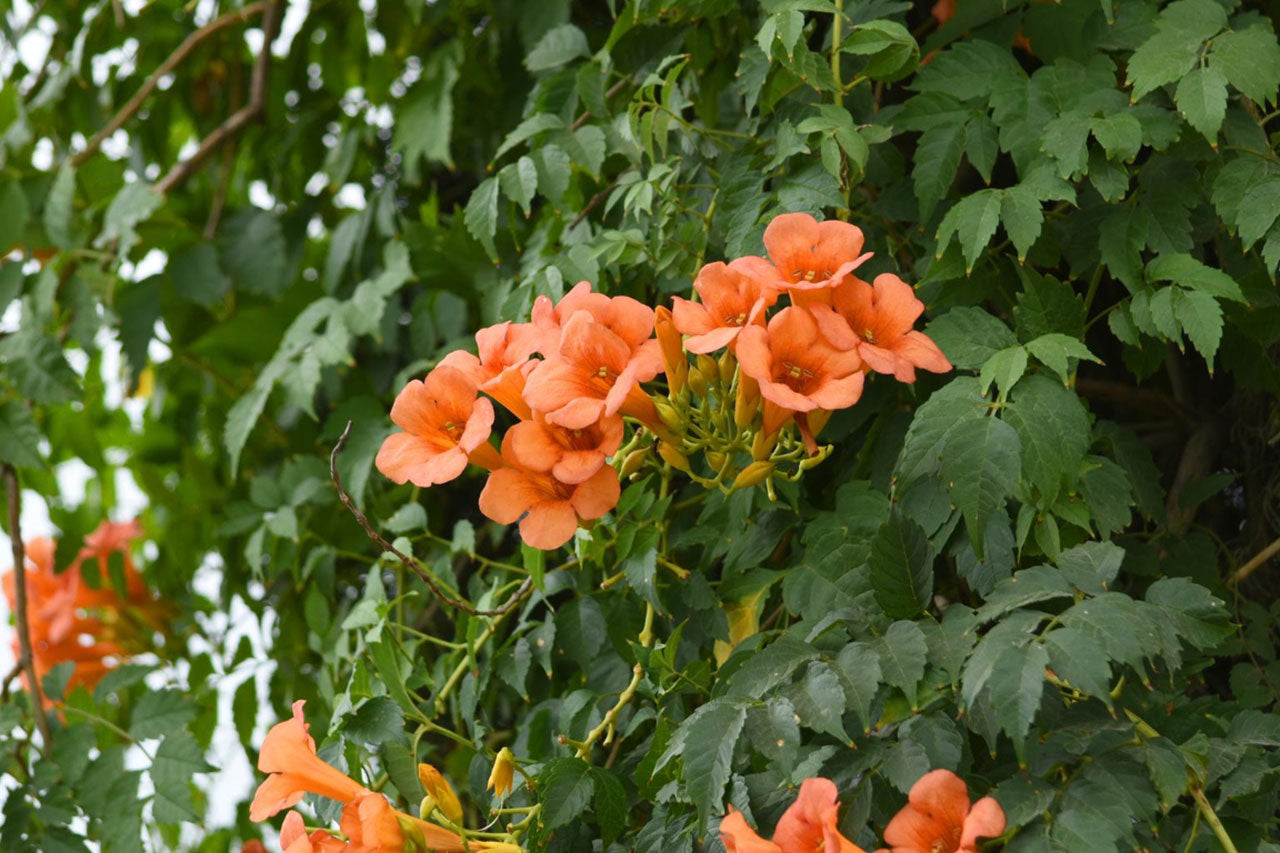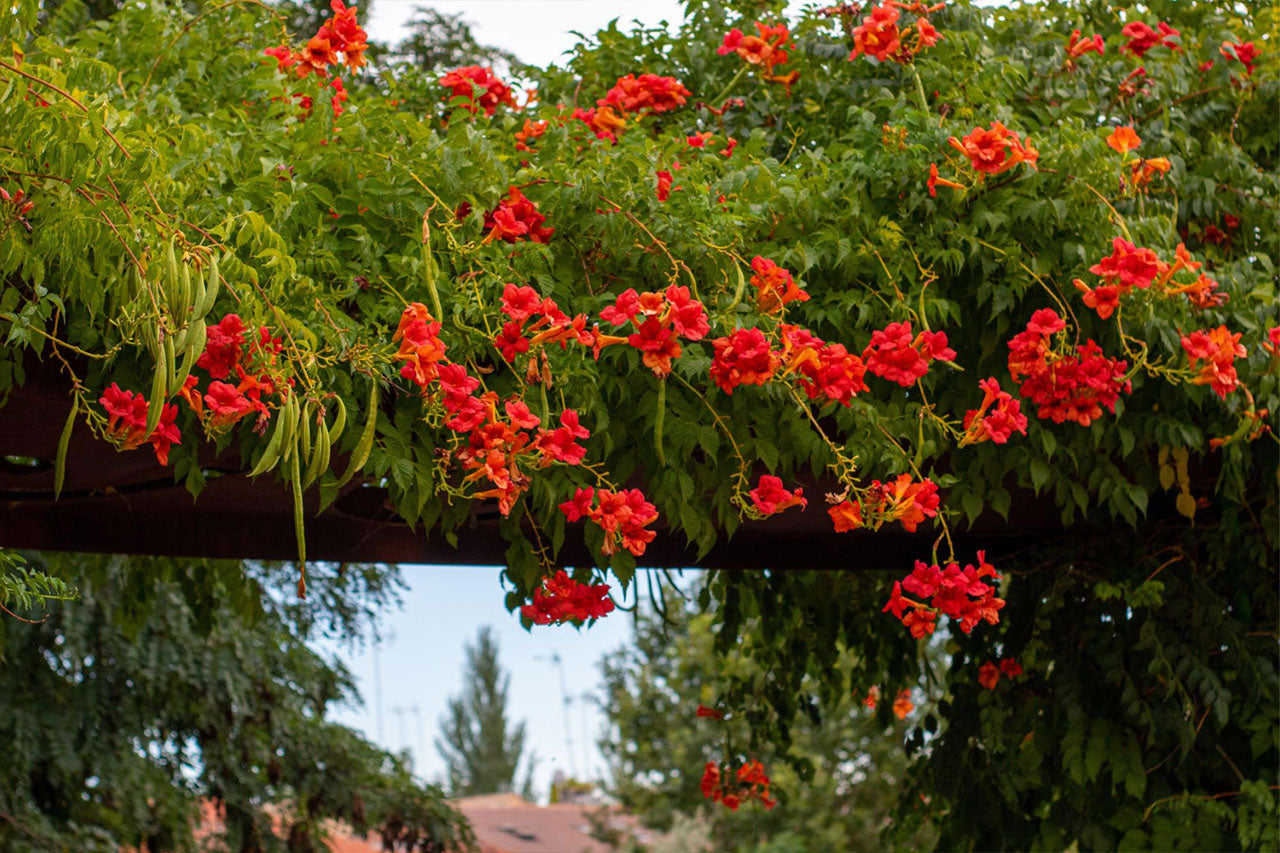

Campsis really comes into its own from late summer into early autumn, just as many other plants are winding down. The long, tubular, trumpet‑shaped flowers in hot shades of orange, red and yellow are carried in showy clusters, often at the tips of sun‑ripened shoots, and can be up to 8cm long on some varieties such as ‘Madame Galen’. In the right spot the display lasts for weeks, sometimes right up to the first frosts, giving a strong splash of colour at a time when borders can otherwise look tired.
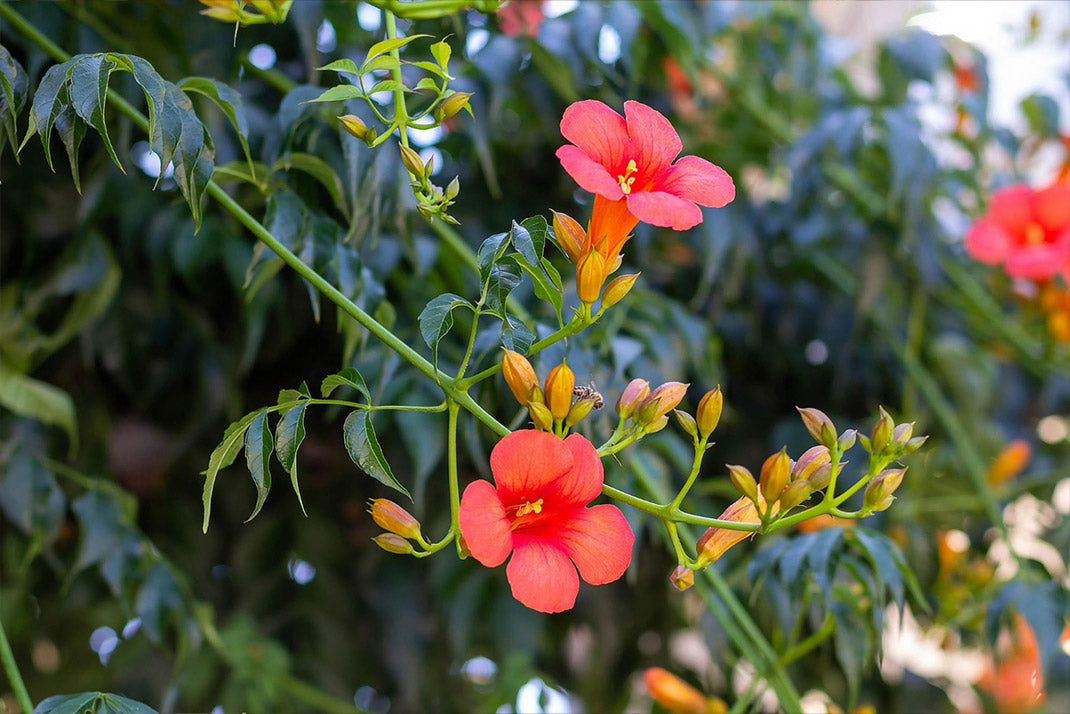
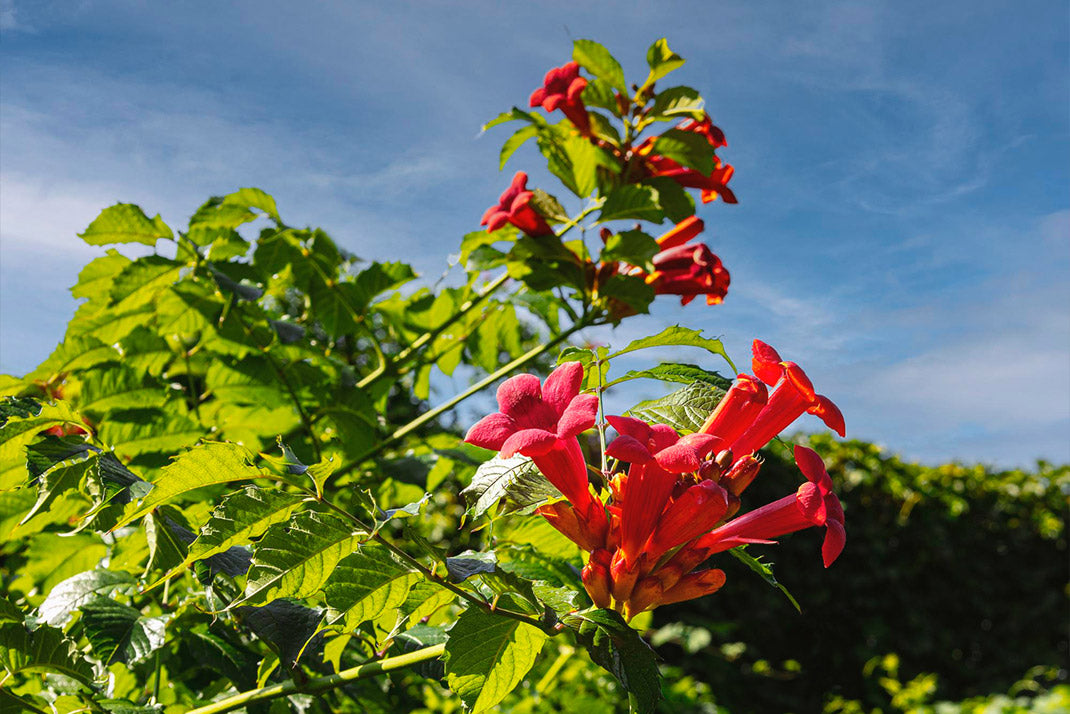
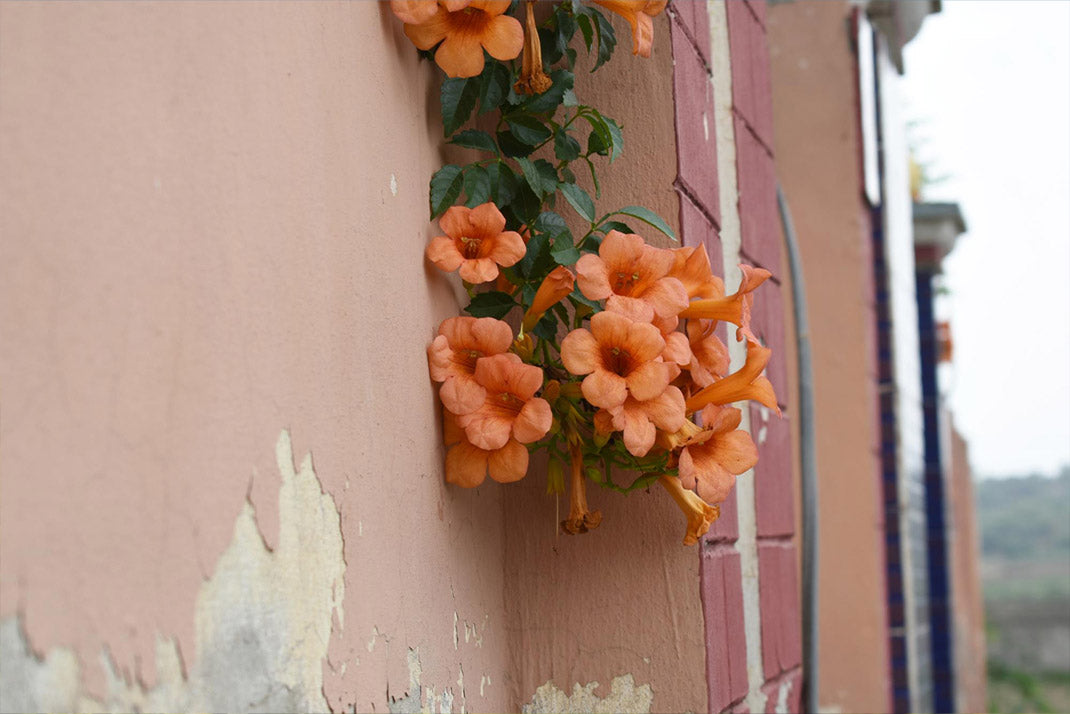
Common name: Trumpet vine or Trumpet Creeper.
Latin name: Campsis
Size in UK gardens: Typically 6–10m tall and 2.5–4m wide on a sturdy support; can be kept smaller with regular pruning.
Best position: A warm, sheltered spot in full sun, planted at the base of a large wall, pergola or other strong support, ideally south‑ or west‑facing.
Soil: Moderately fertile, moist but well‑drained soil; tolerates a wide range from sand to chalk and clay, but dislikes heavy, waterlogged ground.
Flowering time: Usually late summer into early autumn – roughly July to September, sometimes to first frosts in a warm year.
Hardiness: Generally hardy in most UK gardens if planted in a sheltered, sunny spot and well‑drained soil; wood needs a warm summer to flower freely and resist winter die‑back.
Care level: Moderate – easy to grow in the right place, but vigorous, so it needs a big support, some training and regular pruning to keep it in bounds.

The Simpson’s team raises the majority of our trees here at the nursery. For varieties outside our own production, we work with independent local growers we trust - all chosen for UK climate suitability.
Planting time: As container‑grown climbers, Campsis plants can go in any time from autumn to spring when the soil isn’t frozen or waterlogged, though early spring and early autumn are usually kindest for new roots.
Watering: Water regularly for at least the first year so the rootball and surrounding soil don’t dry out, especially in hot, sheltered positions; once established in the ground, Campsis is reasonably drought‑tolerant but still appreciates a good soak in long dry spells.
Feeding: In good garden soil it often flowers happily without much extra feeding, but a mulch of garden compost in spring and a light scattering of general fertiliser can boost growth and flowering, especially on poor or chalky ground or in containers.
Pruning: Prune in late winter to keep the plant to size and encourage flowering spurs, cutting back the previous season’s side‑shoots to two or three buds from the main framework and removing any weak or badly placed growth.
Winter: In most UK gardens no elaborate protection is needed; focus on a warm, sunny site, a good mulch over the roots, and, in colder spots, a little fleece over young stems in the harshest weather while plants establish.
Availability is always changing, so please check with us if you have a particular variety in mind.


A bold, late-summer climber that brings a proper burst of trumpet flowers when many climbers are winding down. It’s a vigorous plant that wants sun and warmth, and it’s happiest on a sturdy support where it can build a strong framework. Treat it like a performance climber: give it heat, feed and water in growth, then prune firmly to keep flowering wood coming.
A classic trumpet vine with a slightly more refined, ornamental feel—lush foliage and generous late-season flowers that look brilliant against brick and warm walls. It climbs strongly once established, so it suits robust trellis systems and pergolas rather than delicate obelisks. A firm annual prune keeps it productive, flowering well, and sensibly contained.
The full-throttle trumpet vine—vigorous, confident, and capable of covering space with real authority once it gets going. It’s best reserved for strong structures and solid walls, where it can do its job without causing chaos, and it rewards sun and warmth with late-season colour. Prune hard to control size and encourage flowering, and place it where its strength is an asset, not a problem.
A bright, punchy cultivar that keeps the same bold Campsis energy but with an especially vivid, warm flower colour. It’s superb for a sunny wall where you want late-summer impact and a slightly exotic feel, but it still needs sturdy support and a confident siting. Manage it with firm pruning and clear boundaries, and it becomes a spectacular seasonal feature.