

Caryopteris is a good‑natured shrub that fits easily into real gardens. It doesn’t demand huge space, copes well with the bright, dry conditions often found in Cambridgeshire and Suffolk, and only asks for sun, drainage and a simple prune at the right time. The foliage is attractive even before the flowers arrive, and the whole plant feels light and airy rather than dense or overbearing. For newer gardeners wanting something reliable, wildlife‑friendly and not too big, it’s a very reassuring choice.
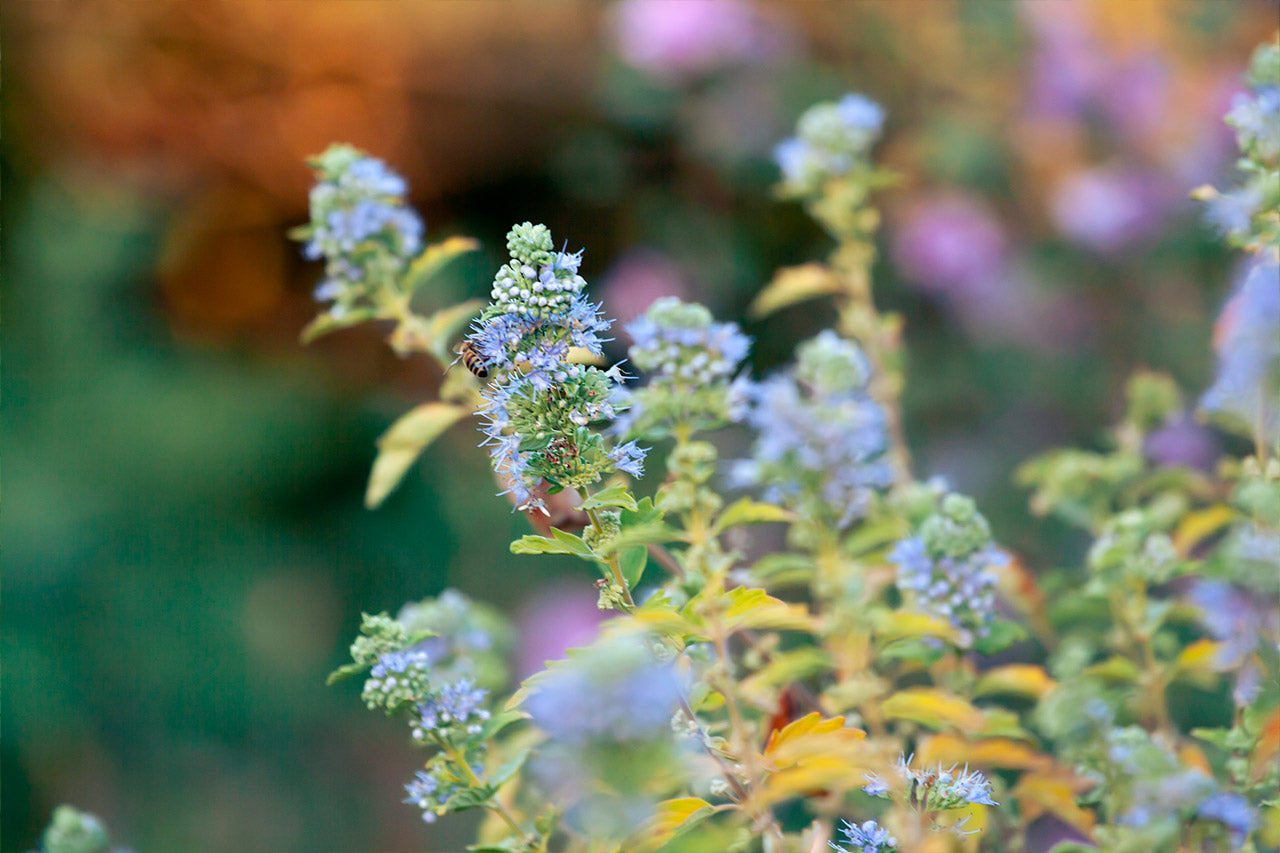
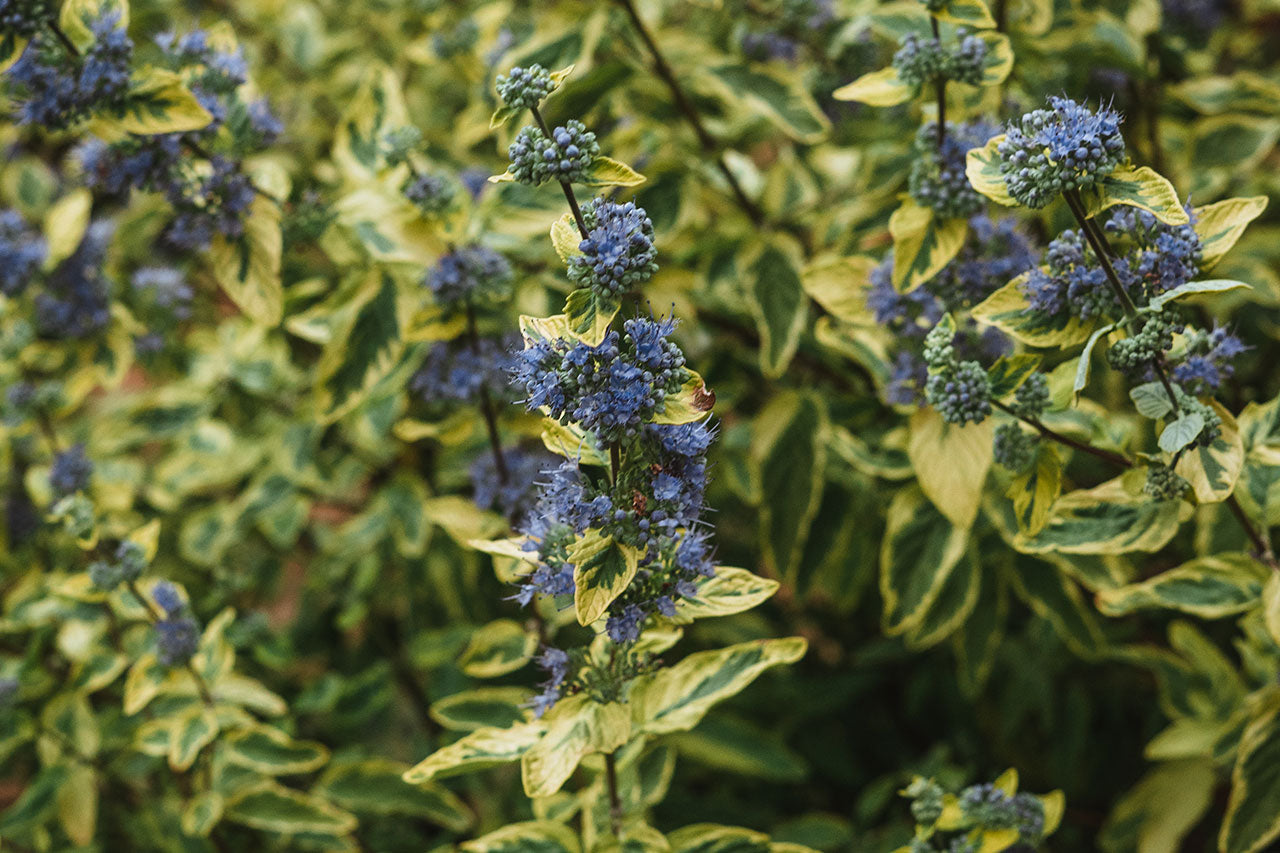
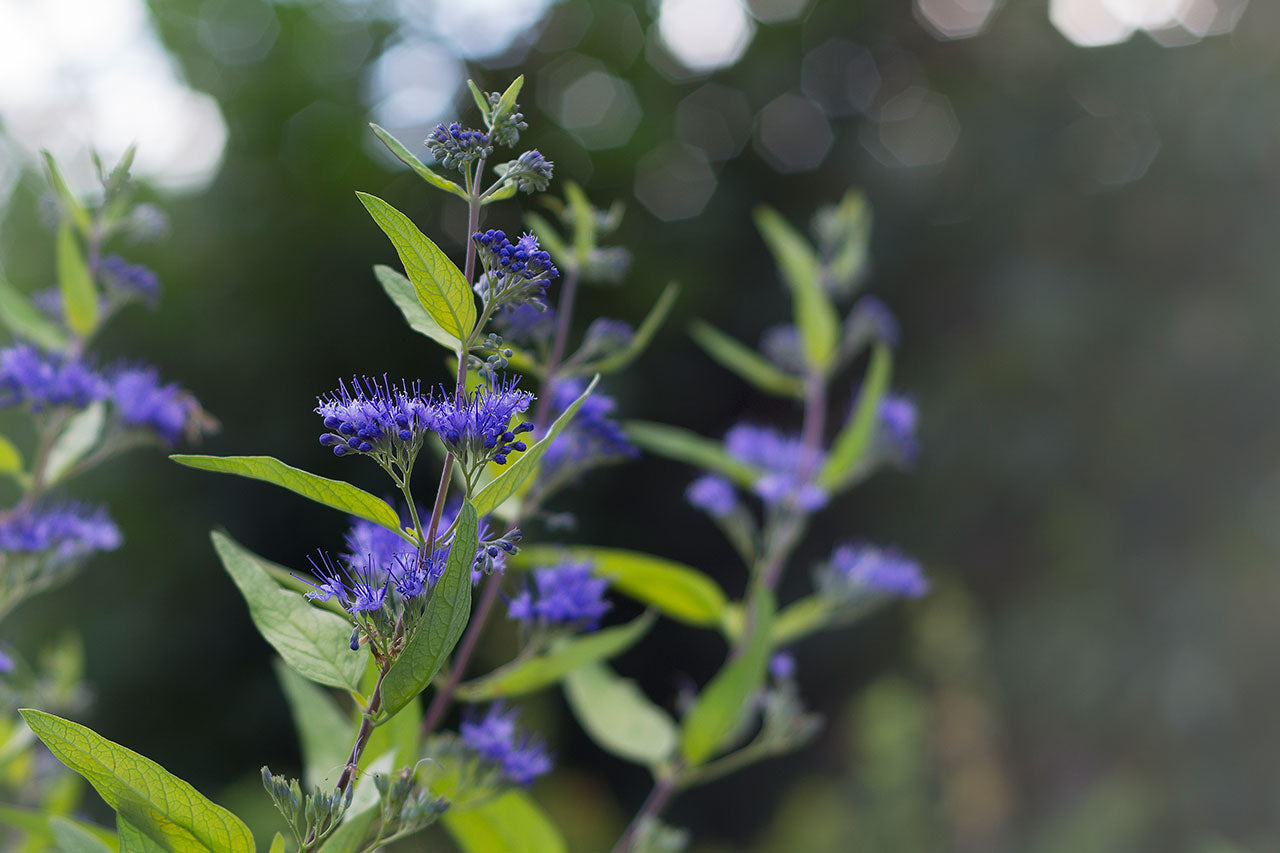
Common name: Bluebeard
Latin name: Caryopteris
Size in UK gardens: Usually around 60–120cm tall × 60–100cm wide, forming a low, bushy mound that sits happily towards the front or middle of a border.
Best position: A warm, sunny spot in a mixed border or gravel garden.
Soil: Prefers light, free‑draining soil that doesn’t sit wet in winter. Will grow in most average garden soils if drainage is reasonable.
Flowering time: Late summer into early autumn (typically August–October) with clusters of rich blue to violet flowers on the tips of new growth.
Fragrance: Leaves are often aromatic when brushed, and flowers can have a light, honeyed sweetness that’s most noticeable on warm, still days.
Hardiness: Generally hardy in typical East Anglian gardens; may lose some top growth in very hard winters but usually shoots from lower down in spring.
Care level: Easy and undemanding – enjoys sun and good drainage, and only needs a simple yearly prune to keep it neat and flowering well.

The Simpson’s team raises the majority of our trees here at the nursery. For varieties outside our own production, we work with independent local growers we trust - all chosen for UK climate suitability.
Planting time: As your Caryopteris is container‑grown, it can be planted at almost any time of year when the soil is workable and not frozen or waterlogged. Spring and early autumn are especially comfortable times, as the soil tends to be moist and mild, helping new roots settle in quickly.
Watering: Water regularly during the first growing season, particularly in dry spells, so the rootball does not dry out completely. Once established in the ground, Caryopteris usually only needs extra water in prolonged dry weather.
Feeding: A light mulch of garden compost in spring is usually enough to keep the plant happy. On very poor soils, you can use a balanced, slow‑release fertiliser once a year, but heavy feeding is not necessary.
Pruning: Caryopteris flowers on new wood, so an annual prune in late spring is ideal. Cutting back last year’s stems to a low framework encourages strong, fresh growth and a good display of flowers later in the year.
Winter: In most East Anglian gardens, Caryopteris needs no special winter protection once established. Any frost‑browned tips can simply be removed at pruning time in spring when you can see which shoots are strongest.
Availability is always changing, so please check with us if you have a particular variety in mind.
When late summer and early autumn need a lift, bluebeard steps in with a haze of rich blue flowers that seems to shimmer against the foliage. ‘Grand Bleu’ has a strong, confident colour, perfect for adding a cool, calming note to borders, and it pairs beautifully with grasses and late perennials for that classic end-of-season glow.
Variegated foliage brings brightness long before the flowers arrive, giving borders a light, decorative look through the season. When it blooms, the blue flowers provide that lovely late-summer contrast, making it an excellent choice for mixed borders where you want both foliage interest and a late burst of colour.
Golden foliage makes this one a real border brightener, bringing warmth and colour even on dull days. The blue flowers then provide a wonderfully crisp contrast later in the season, creating that “gold and sapphire” pairing that looks particularly striking with ornamental grasses and deeper green shrubs nearby.
Here you get the best of both worlds: bright, sunny foliage that keeps borders lively, and then a late-season flourish of blue flowers that feels especially welcome as autumn approaches. It’s a lovely choice for adding colour and structure to mixed borders, and it works beautifully with grasses for a soft, natural finish.
Deep, inky blue flowers give this a wonderfully dramatic look, perfect for adding richness and depth late in the season. It’s superb in mixed borders where you want a strong colour note, and it looks especially handsome alongside pale flowers and silver foliage, where that dark blue feels like a deliberate, elegant statement.
A gentle wash of golden foliage gives this bluebeard a brighter, lighter feel through the season, before the blue flowers arrive to add that classic late-summer lift. It’s ideal when you want a plant that looks decorative for months, bringing both foliage sparkle and a soft haze of blue as the year begins to turn.
Late summer borders often need a fresh spark, and ‘Kew Blue’ supplies it with a haze of clear blue flowers that sits beautifully among fading perennials and grasses. It brings a cool, calming note when many colours are warming up, and it’s a splendid way to keep the garden feeling lively as the season begins to turn.
Silvery foliage gives this bluebeard a refined, airy look long before it flowers, making it a lovely plant for brightening borders with texture and light. When the blue blooms arrive, the contrast is particularly handsome—silver and sapphire together—giving a crisp, modern finish to late-summer planting.
Variegated leaves bring plenty of brightness through the season, so it looks decorative even when not in flower. When the blooms appear, they sit against that pale foliage with a fresh, clean effect, making this a very useful plant for lifting borders and adding a lighter note to late-season colour schemes.