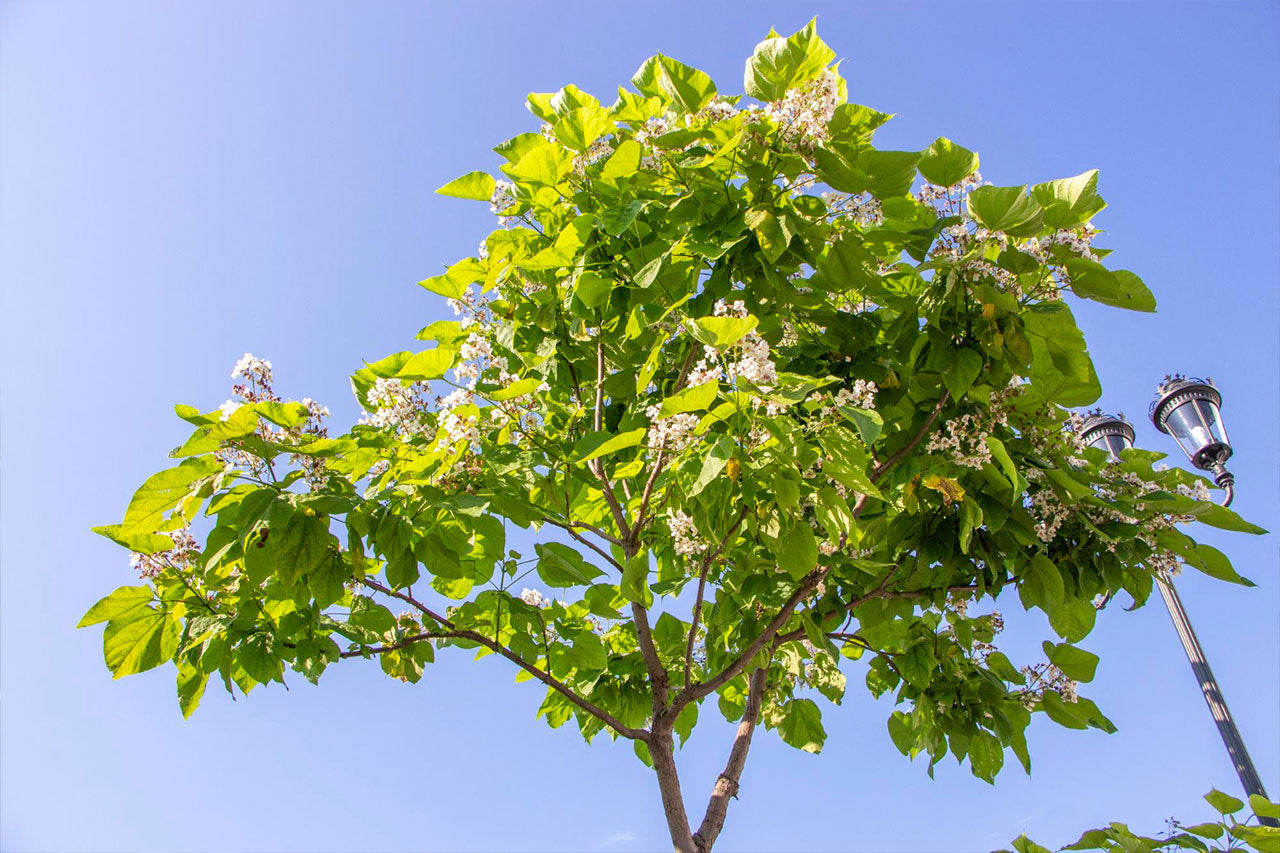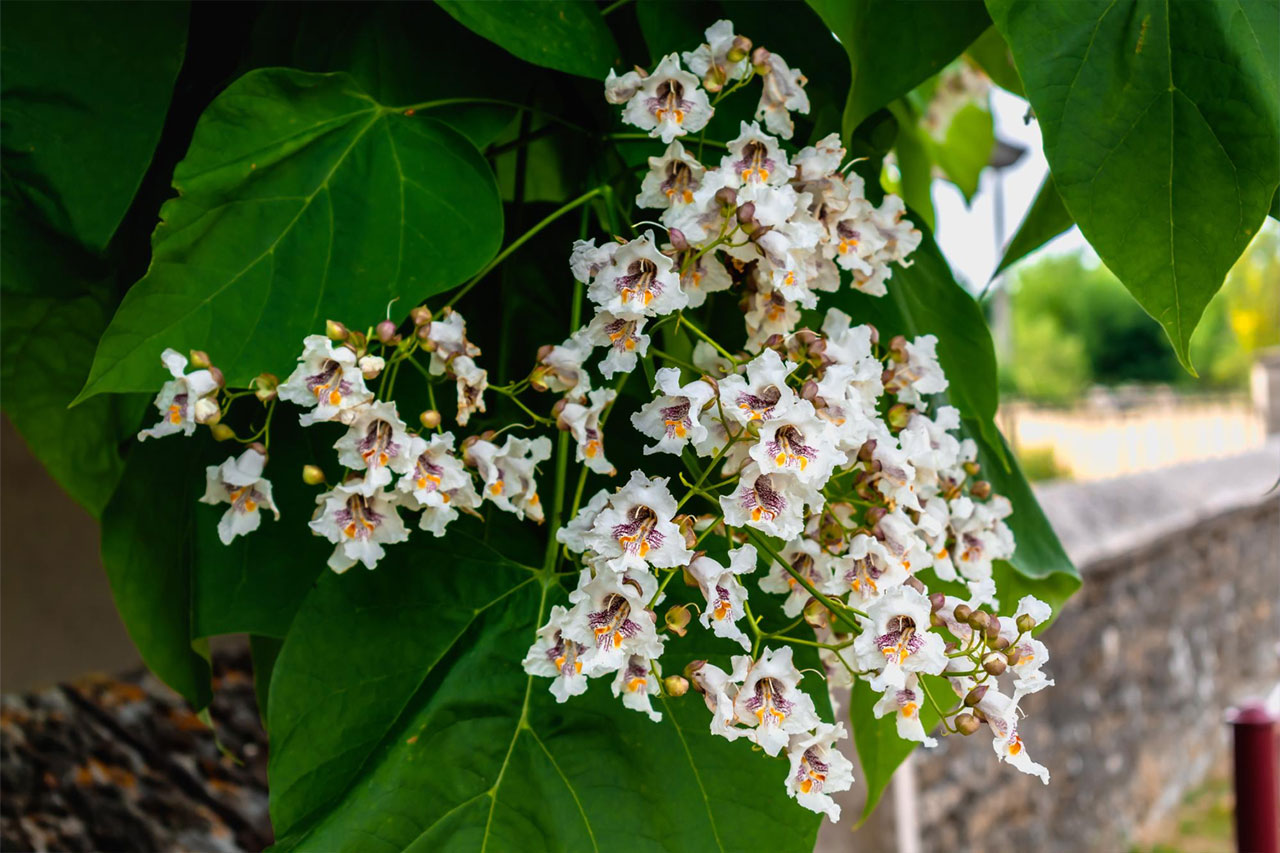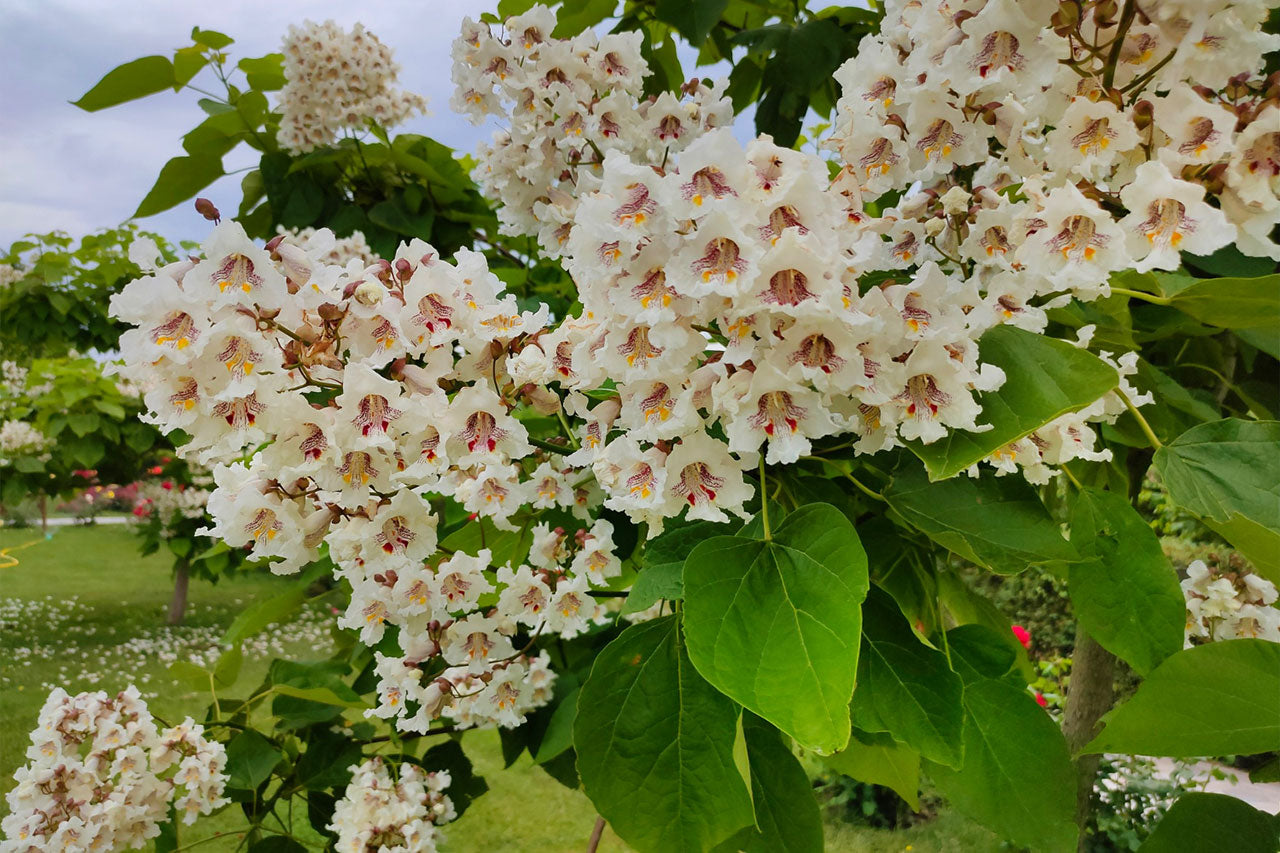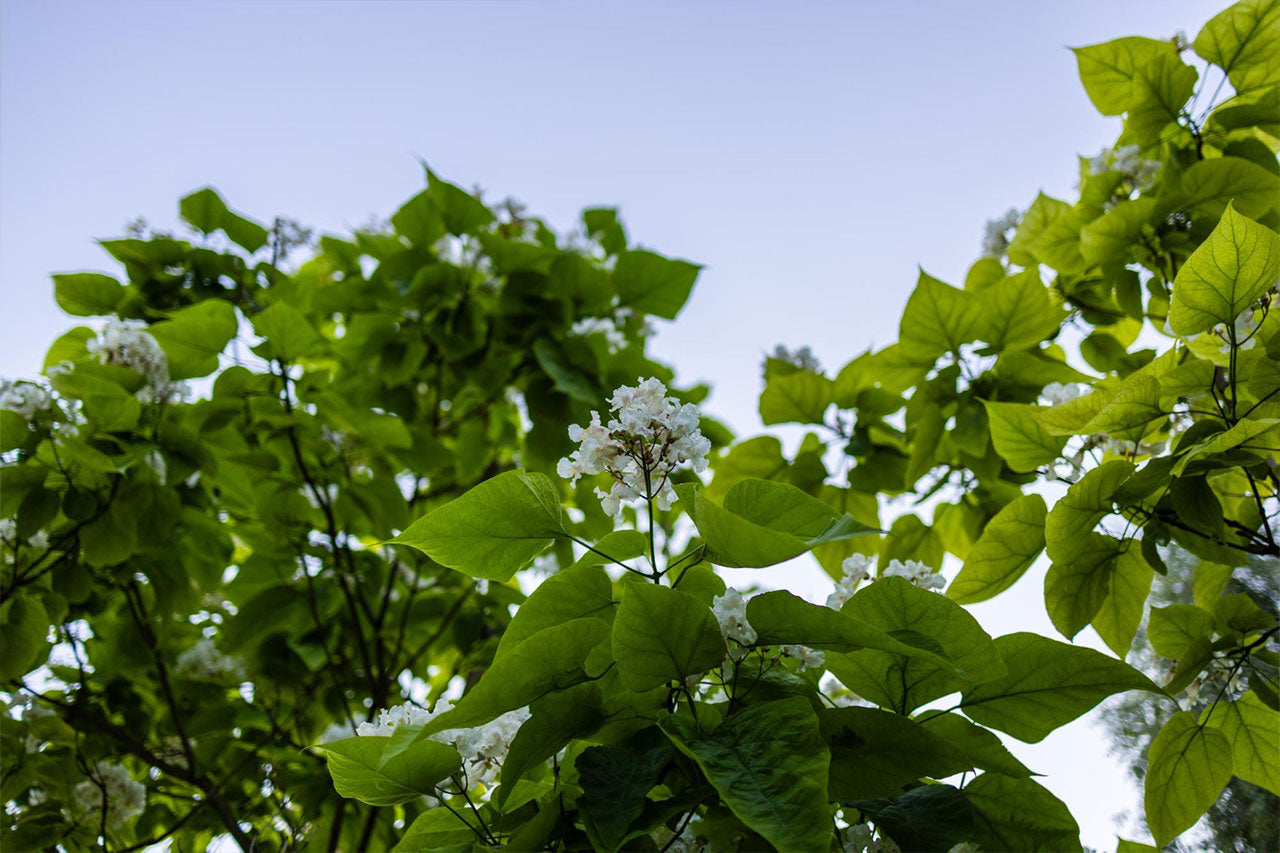

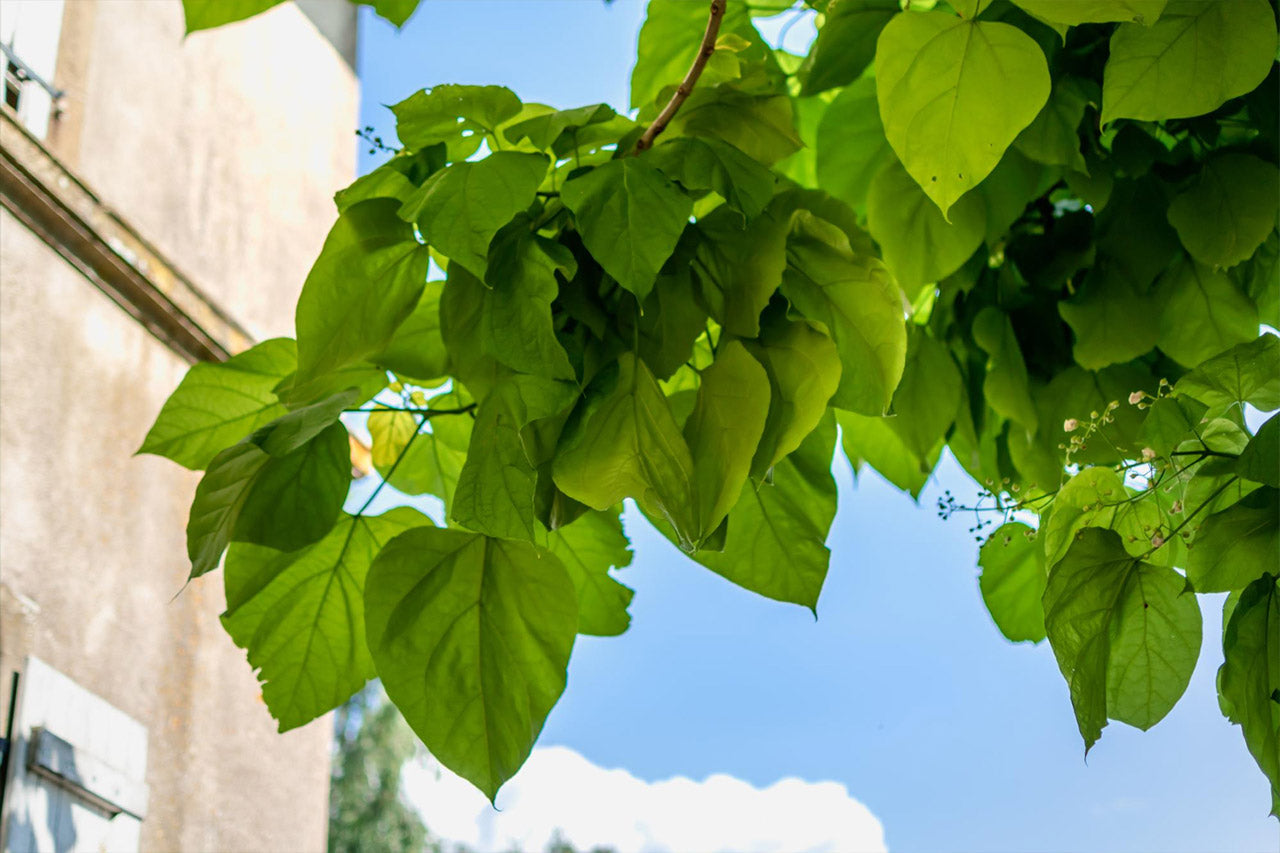
One of the great delights of Catalpa is its foliage. The large, heart‑shaped leaves unfurl in spring and quickly give the tree a lush, almost tropical feel, even in an ordinary East Anglian garden. Against the sky, the canopy looks generous and full, casting a broad, soft shade beneath. Whether you choose a green‑leaved form or a golden selection, that big‑leaf effect brings drama and a touch of indulgence to the garden without needing exotic conditions.
Common name: Indian Bean Tree.
Latin name: Catalpa.
Size in UK gardens: Commonly around 6–10m tall × 5–8m wide in time, with some compact forms staying smaller; ideal as a statement tree in medium to larger gardens, or pruned to fit a modest plot.
Best position: A sunny, open spot where the canopy can spread and be admired.
Soil: Most ordinary, reasonably fertile garden soils that hold some moisture but drain freely; copes with clay improved with organic matter.
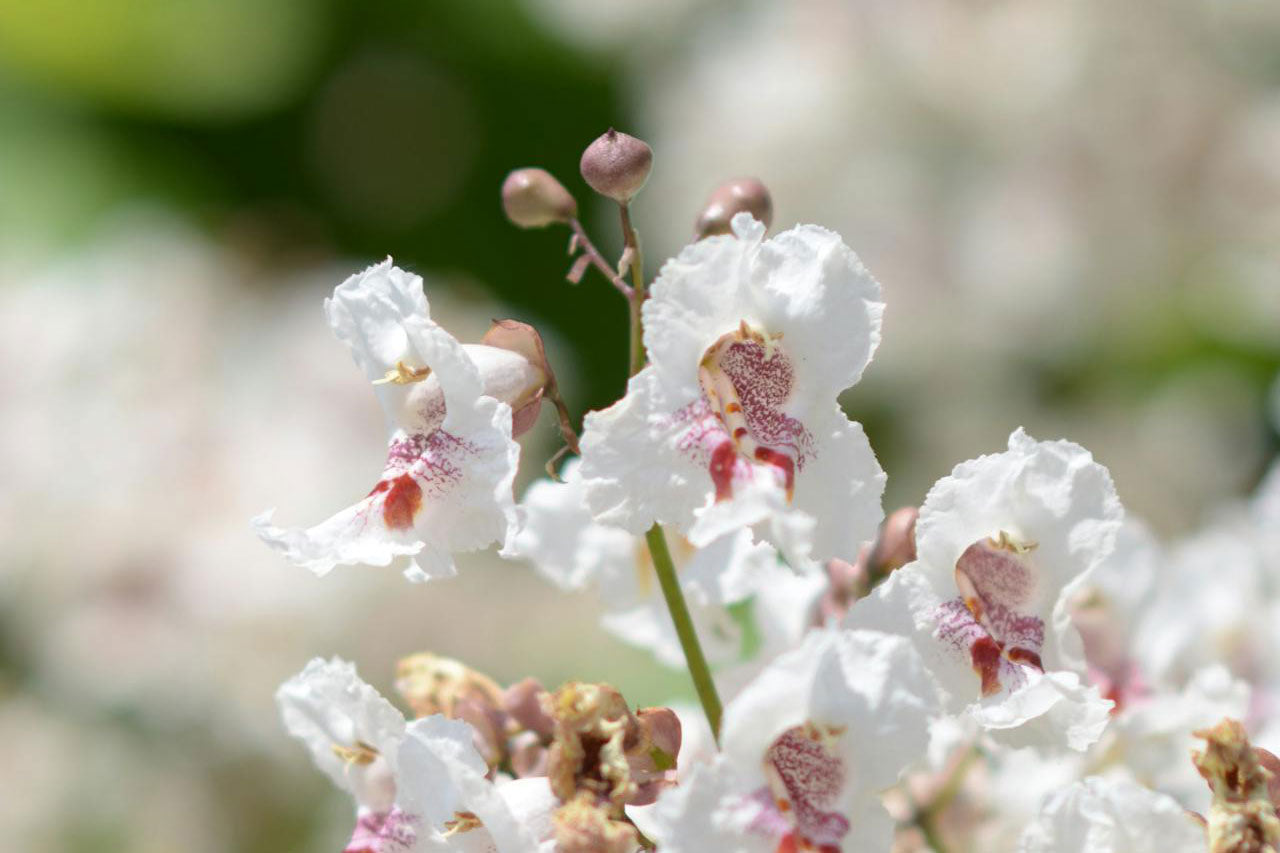
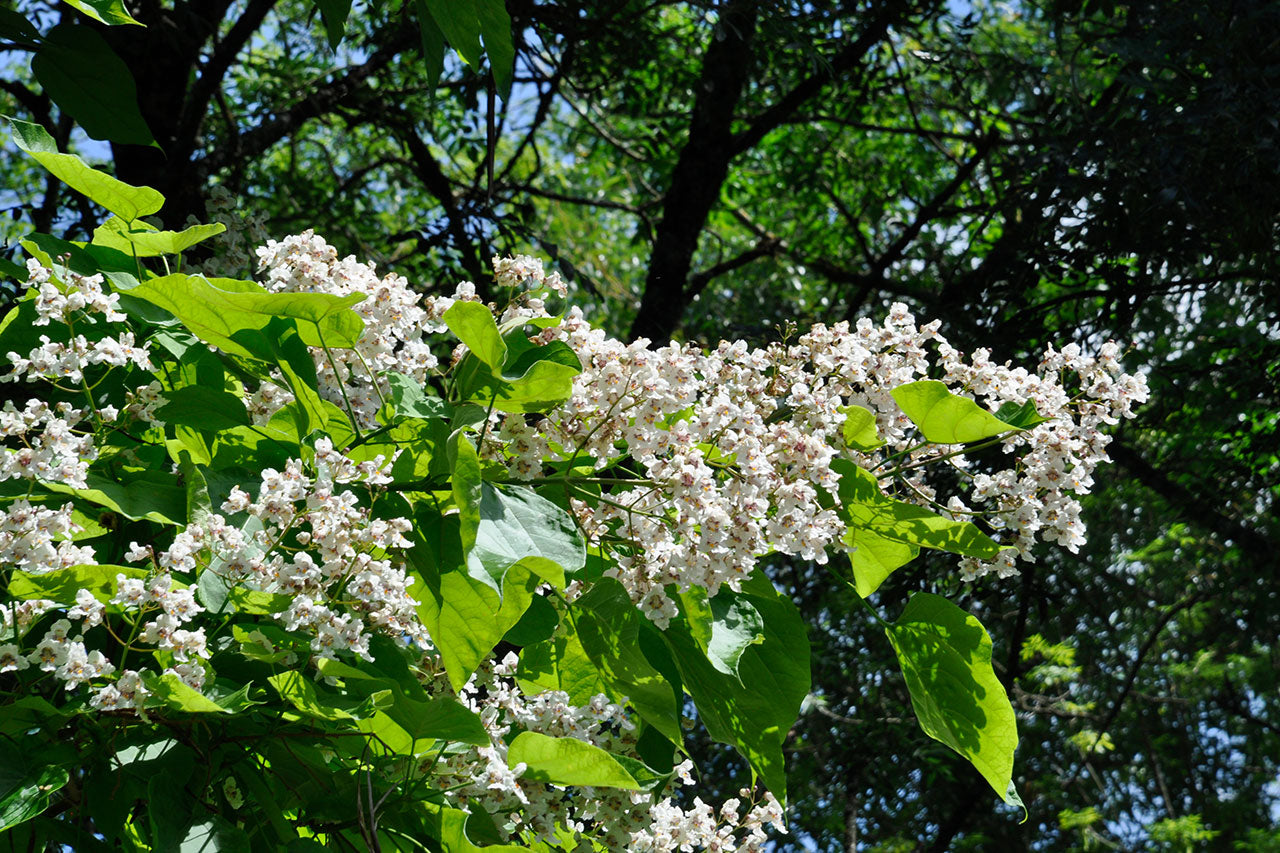
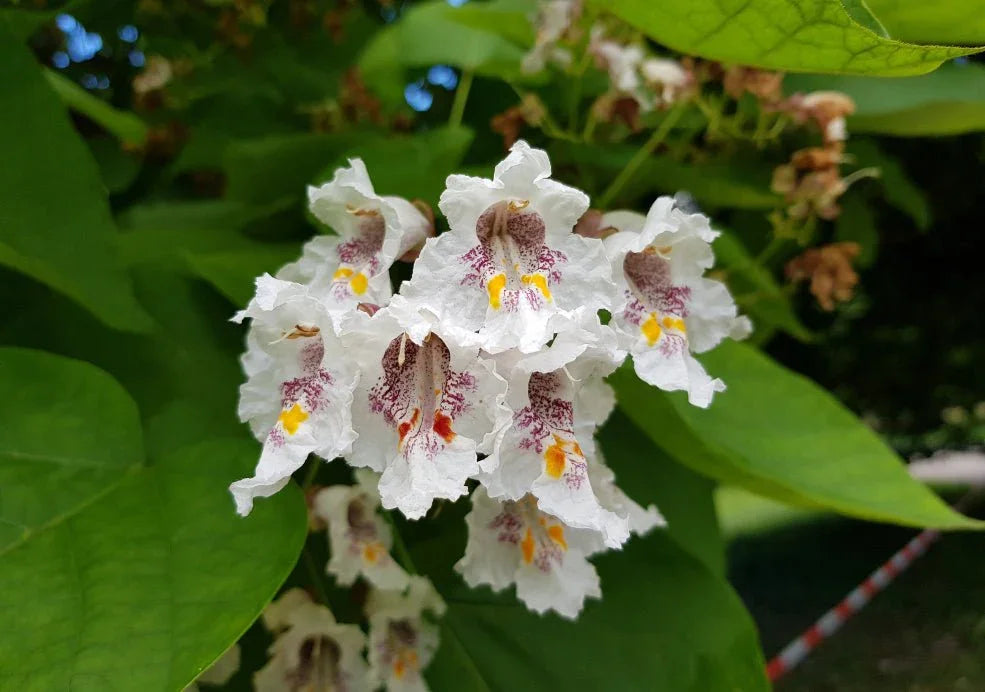
Flowering time: Large, showy panicles of white, foxglove‑like flowers in early to mid‑summer, followed by long, bean‑like pods that hang through autumn.
Fragrance: Flowers may have a light, sweet scent up close, but the tree is grown more for its impressive foliage, flowers and pods than strong fragrance.
Hardiness: Generally hardy in much of the UK and well suited to East Anglian conditions once established.
Care level: Fairly easy – give space, sun, decent soil and occasional watering in dry spells while young; little fuss once settled.

The Simpson’s team raises the majority of our trees here at the nursery. For varieties outside our own production, we work with independent local growers we trust - all chosen for UK climate suitability.
Planting time: Because your Catalpa is container‑grown, it can be planted in the garden at most times of year when the soil is workable, avoiding only frozen or very waterlogged conditions. Spring and early autumn are especially helpful for easy establishment.
Watering: Water well in the first couple of growing seasons, particularly during dry spells, so the roots can reach out into the surrounding soil. Once established, a Catalpa with decent soil beneath it usually copes well with normal dry periods.
Feeding: On reasonably fertile garden soil, Catalpa needs little more than an annual mulch of garden compost or a light sprinkle of general fertiliser in spring. Over‑feeding is rarely necessary.
Pruning: Pruning is generally minimal – mainly to lift the canopy or remove crossing, damaged or awkward branches. Some gardeners choose to pollard to keep the tree smaller and encourage very large leaves; this is optional rather than essential.
Winter: Established Catalpas normally manage fine through East Anglian winters. Young trees benefit from a little attention to watering in dry spells and a spring mulch to keep the root area in good heart.
Availability is always changing, so please check with us if you have a particular variety in mind.


The Indian bean tree is all about bold, tropical-style drama: huge heart-shaped leaves, a broad, shady canopy, and airy panicles of creamy white, orchid-like flowers in summer. Later, long bean-like pods hang on, adding quirky character and a talking point.
A golden-leaved Indian bean tree that brings instant brightness, its large heart-shaped leaves glowing chartreuse to yellow like a pool of sunlight. The effect is bold and exotic, and the summer flowers add a soft, creamy flourish. A superb specimen when you want colour at scale.
A wonderfully theatrical tree with young leaves that emerge a deep, smoky purple before maturing to rich green. The large foliage gives a tropical look, and the pale summer flowers stand out beautifully against the darker leaf tones. A striking choice for bold contrast and real presence.