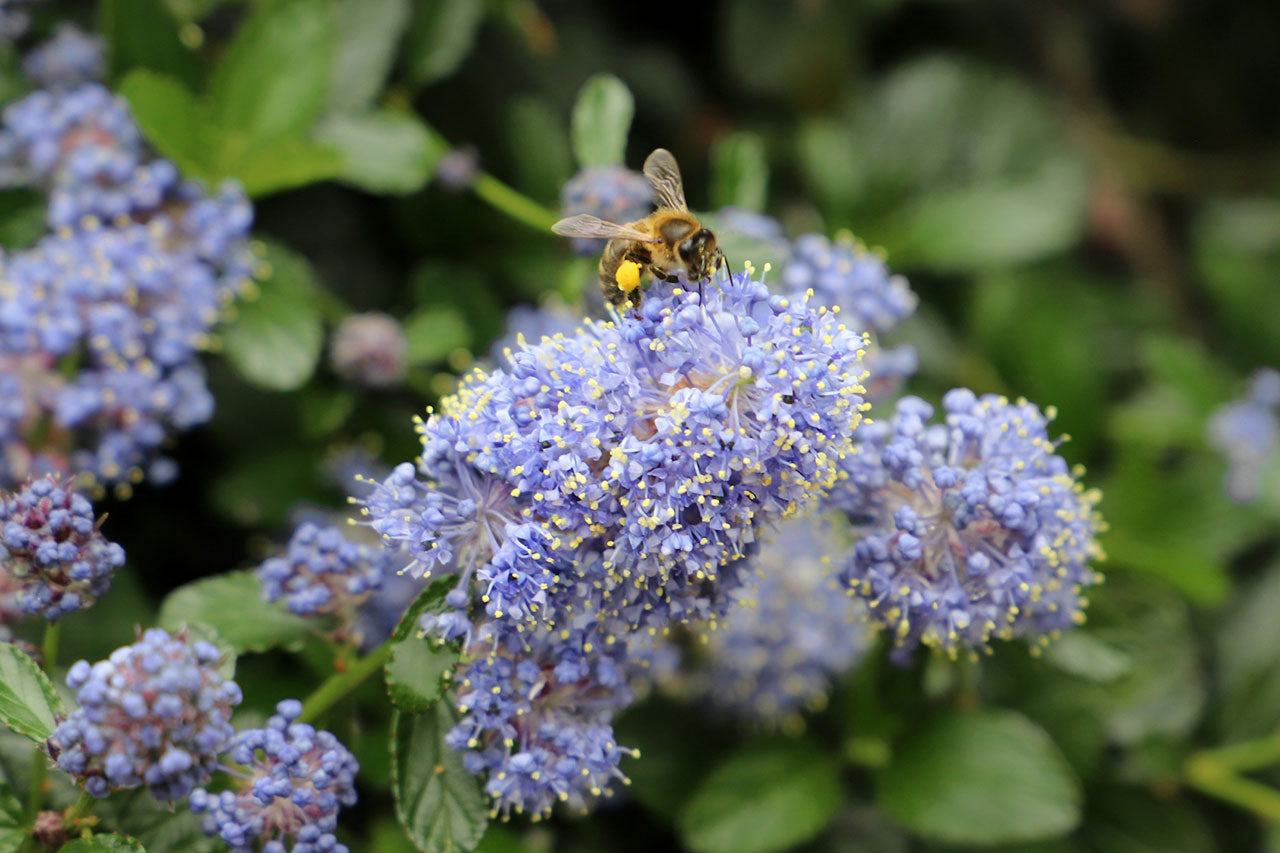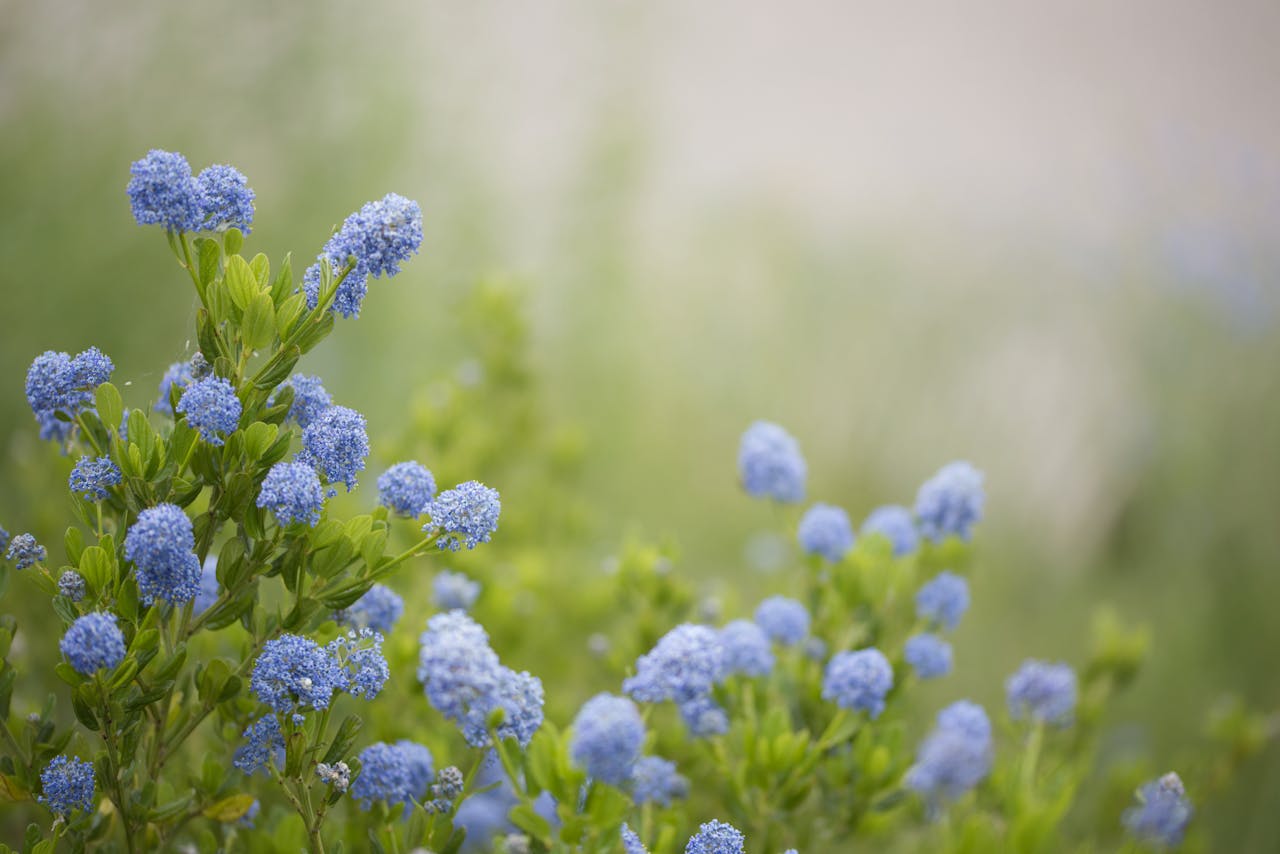

Few shrubs can match the sheer impact of a Ceanothus in full bloom. For several weeks in late spring or early summer, the branches are smothered in clouds of tiny blue flowers that almost glow in the sun. Planted in the right spot, it becomes the sort of plant that stops you in your tracks every time you step into the garden. The colour works beautifully with whites, silvers and soft pinks, bringing a touch of seaside‑holiday sky to a corner of a garden.

Common name: California lilac
Latin name: Ceanothus species and garden cultivars.
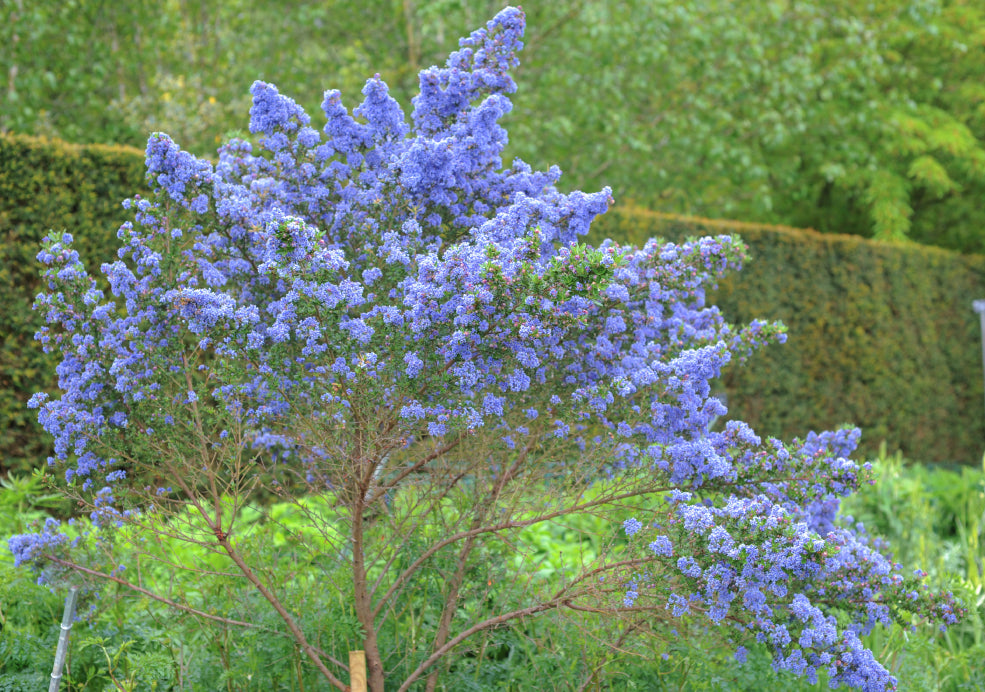
Size in UK gardens: Many forms reach around 1.5–3m tall × 1.5–3m wide over time, though some stay smaller and can be kept compact in a modest garden with light pruning.
Best position: A sunny, sheltered spot – often against a south or west‑facing wall, in a warm border or courtyard where it can soak up heat in Cambridgeshire, Suffolk and across East Anglia.
Soil: Prefers well‑drained, reasonably fertile garden soil; happiest where winter wet doesn’t linger around the roots.
Flowering time: Most popular forms flower in late spring to early summer with clouds of blue blossom; some varieties also give a second or later flush.
Fragrance: Many varieties have a light, honeyed scent when in full flower, especially noticeable on still, warm days.
Hardiness: Generally hardy in a good, sunny position in our area; young plants appreciate shelter while they establish.
Care level: Fairly easy if you can offer sun and drainage – plant well, avoid heavy pruning into old wood, and enjoy a big display for relatively little effort.

The Simpson’s team raises the majority of our trees here at the nursery. For varieties outside our own production, we work with independent local growers we trust - all chosen for UK climate suitability.
Planting time: As container‑grown plants, Ceanothus can be planted in most months when the soil is workable, avoiding only very hard frosts and extreme heat. Spring and early autumn are usually the most comfortable times for both gardener and roots.
Watering: Water regularly through the first growing season so the soil stays lightly moist, especially in dry spells. Once established in good ground, Ceanothus is fairly drought‑tolerant but still appreciates a soak in prolonged dry weather.
Feeding: In ordinary garden soil, an annual mulch of garden compost in spring is normally enough. On poorer soils or in containers, a light spring feed with a balanced fertiliser supports flowering and healthy growth.
Pruning: Most plants only need light pruning – generally a trim after flowering to remove faded flowered shoots and keep the shape tidy. Avoid cutting back very hard into old, bare wood unless you are confident in how your particular variety responds.
Winter: In a suitable sunny, sheltered position, established Ceanothus usually needs no special winter care. Young plants benefit from a little extra shelter from cold winds and a mulch around the base to help roots settle.
Availability is always changing, so please check with us if you have a particular variety in mind.
Few shrubs give quite such a burst of blue, and ‘Dark Star’ does it with real confidence—rich, deep flowers that feel almost electric against the foliage. It makes a splendid feature in the border, bringing that “Mediterranean holiday” mood when in bloom, and it looks especially striking against pale walls and lighter planting.
Golden-edged foliage gives you brightness even when the plant isn’t in flower, making it a superb choice for lifting borders and adding contrast among evergreens. When the blue blooms arrive, the effect is particularly handsome—blue against gold—giving a crisp, cheerful look that feels both bold and refined.
This has a beautifully textured, slightly quilted foliage that looks smart all year, then comes the real treat: a cloud of blue flowers that feels wonderfully generous. It’s an excellent shrub for creating a compact, evergreen backbone in borders, bringing structure first and colour second in the most satisfying way.
A neat, reliable ceanothus with a tidy outline and plenty of that classic blue flower, making it a very easy way to bring colour and evergreen structure into the garden. It’s particularly effective as a low shrub in mixed borders, where it gives the planting a calm, settled feel and then provides a vivid spring flourish.
Glossy evergreen foliage and a confident show of deep blue flowers make ‘Victoria’ a real garden classic. It’s superb as a border shrub where you want year-round backbone, and it delivers that wonderful spring and early-summer “blue wall” effect when planted in groups or used as a feature.
This one is prized for giving blue at a slightly different time, extending the ceanothus season and keeping the garden colourful when you might not expect it. It’s perfect for adding a fresh lift later in the year, and it brings that familiar Californian lilac charm with a useful twist in timing.
A compact, mound-forming ceanothus that’s ideal for smaller gardens and the front of borders, giving a neat evergreen shape and then a generous flush of blue. It works beautifully in groups, where the mounded habit creates a soft, rounded line and the flowers read as a bright ribbon through the planting.
Deep, vivid blue flowers give this variety a rich, jewel-like look that stands out beautifully in spring. It’s an excellent choice when you want a strong colour statement without a shrub feeling too coarse, and it pairs wonderfully with softer planting so the blue feels all the more luminous.
A very garden-friendly Californian lilac with a tidy evergreen habit and a reliable show of blue flowers that never fails to lift the border. It’s ideal for creating low structure, for pairing with perennials, and for giving the garden that fresh, breezy “blue and green” look in season.
‘Concha’ is famed for strong, clear blue and a generous flowering display that feels like a proper spring celebration. It’s wonderful as a feature shrub, and it looks especially good when you give it a little space so the outline and the flower clusters can be appreciated as a whole.
A lighter, more airy ceanothus with a softer look, carrying blue flowers that feel less solid and more “misty.” It’s lovely in mixed borders where you want a relaxed, natural feel, and it blends beautifully with cottage-garden planting, bringing a gentle wash of blue rather than a dense block.
The name sets the mood perfectly: clear, bright blue flowers that bring a crisp, sunny feeling to the garden. It’s a superb choice for adding a Mediterranean note to borders, and it looks particularly effective with silvery foliage and warm-toned companions, where the blue feels even cleaner and more luminous.
A bold, distinctive ceanothus with strong presence, valued for bringing that Californian lilac character—evergreen structure and a vivid blue display—into a planting scheme. It works best as a feature shrub where you want a confident splash of colour, helping borders feel lively and lifted when in flower.