
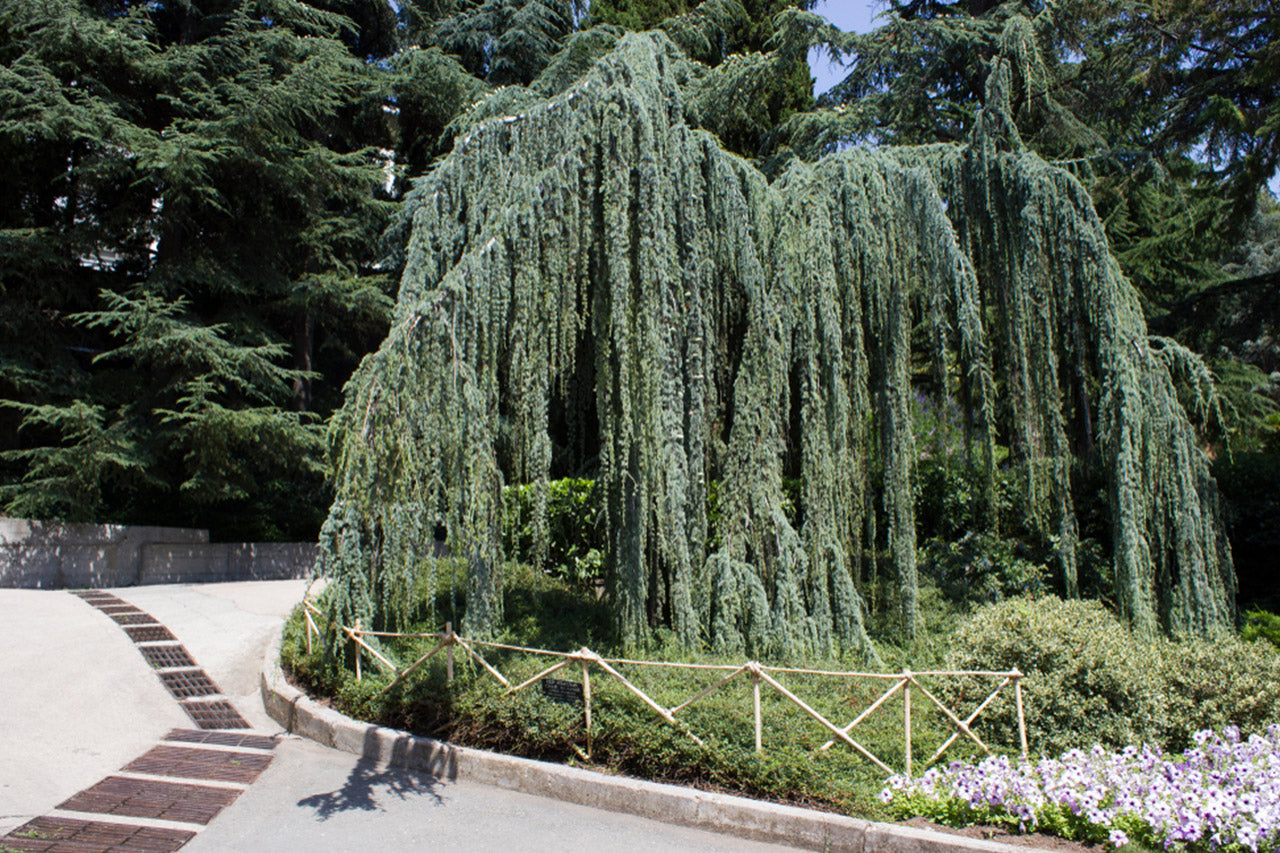
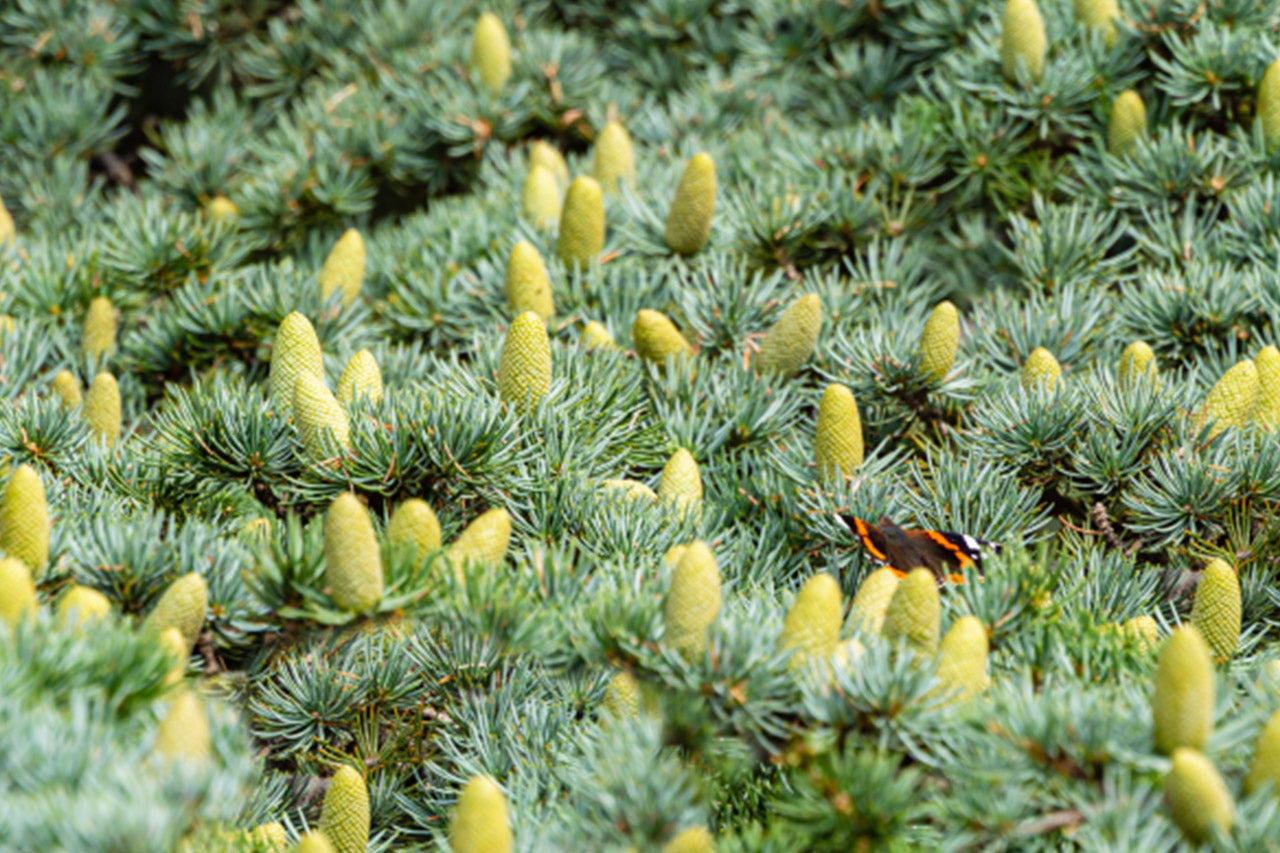
Cedar (Cedrus) is one of those trees that can completely change how a garden feels, even if you only have room for one. With its broad, layered branches and soft, evergreen needles, it creates a strong, three‑dimensional shape that looks good in every season. Young trees are often almost conical; as they mature, many cultivars broaden into wide, sweeping forms that give a gentle parkland feel, even in a normal back garden. When you catch sight of a cedar from the house on a dull January morning, it’s hard not to feel grateful for that permanent splash of green.
Common name: Cedar
Latin name: Cedrus
Size in UK gardens: Ultimately large trees; many cultivars reach 8–15m tall and wide over several decades, though dwarf and weeping forms can be much smaller. Best treated as long‑term specimens.
Best position: A sunny, reasonably sheltered spot with plenty of space for the chosen form to develop its natural shape, well away from tight corners, overhead lines and very narrow beds.
Soil: Moist but well‑drained, reasonably deep, fertile soil; most cedars prefer slightly acidic to neutral conditions and can struggle on very shallow, chalky or compacted ground.
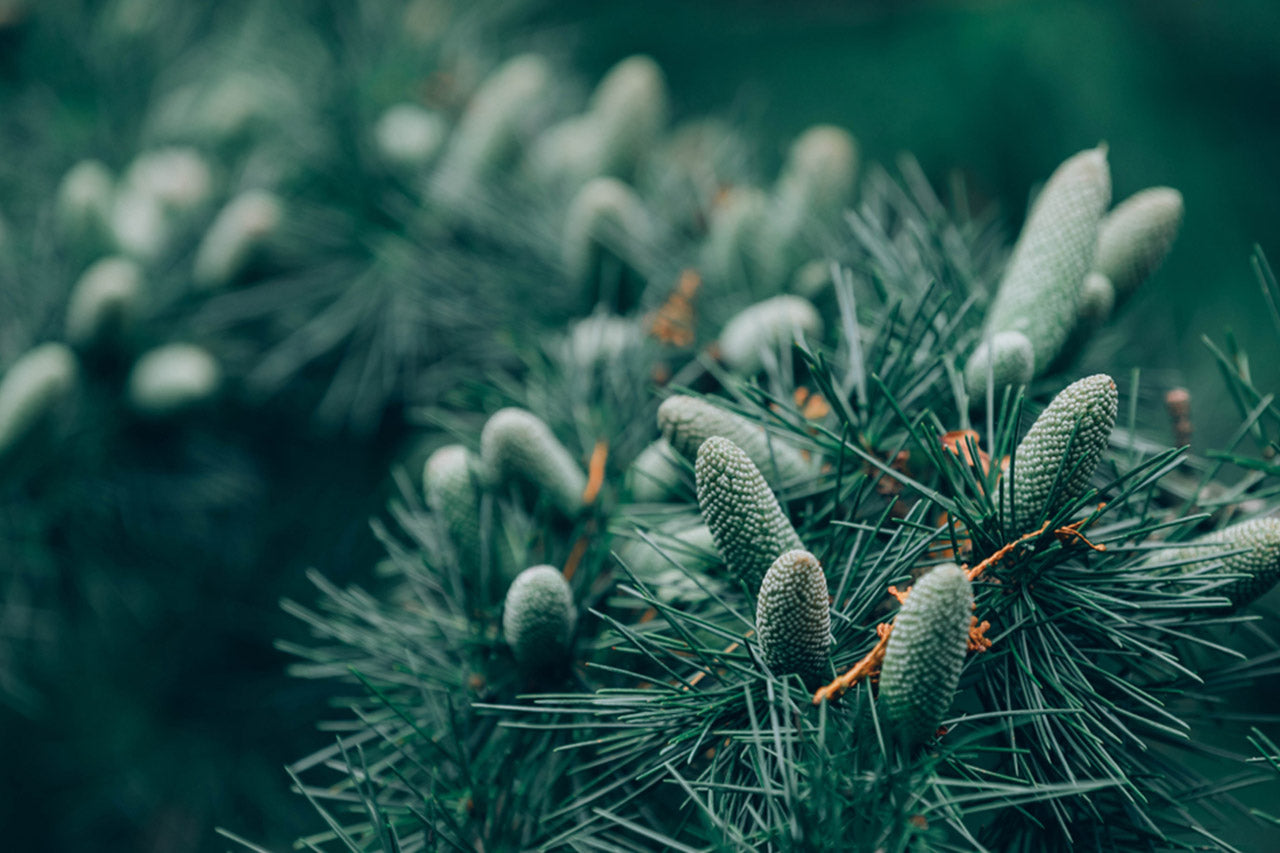
Flowering time: Not grown for flowers; main interest is evergreen needles, attractive branching and, in maturity, decorative cones that ripen over several seasons.
Hardiness: Generally fully hardy across most of the UK once established; more tender deodar types may appreciate the warmest, most sheltered spots. All resent long periods of waterlogged soil.
Care level: Moderate – low‑maintenance once established, provided you choose the right variety for your space, give it good soil, and avoid heavy pruning.

The Simpson’s team raises the majority of our trees here at the nursery. For varieties outside our own production, we work with independent local growers we trust - all chosen for UK climate suitability.
Planting time: Container‑grown cedars can be planted in most months when the soil isn’t frozen or waterlogged, with autumn and early spring usually easiest. This gives roots time to settle before summer heat or the depths of winter.
Watering: Water regularly for the first couple of years, especially in dry East Anglian spells, so the rootball and surrounding soil stay evenly moist but not waterlogged. Once established in decent soil, cedars usually cope well with normal rainfall, needing extra watering only in prolonged drought.
Feeding: In reasonable garden soil, cedars need very little feeding – a spring mulch of compost or well‑rotted manure is usually enough. On very poor or sandy soils, a light application of balanced, slow‑release fertiliser in early spring can support healthy growth. Avoid heavy, high‑nitrogen feeding.
Pruning: Cedars generally need minimal pruning. Limit yourself to removing dead, damaged or badly placed branches and, if necessary, lifting lower limbs gradually where they obstruct access. Avoid cutting back into old, bare wood or shortening the main leader.
Winter: Established cedars need almost no winter attention beyond a mulch over the root area and an occasional check after strong winds. Minor browning from cold or wind is usually grown out the following season as new needles emerge.
Availability is always changing, so please check with us if you have a particular variety in mind.
A blue Atlas cedar is pure elegance: sweeping branches and silvery-blue needles that glow against dark hedging and brick. Use it as a focal point to cool and sharpen a planting scheme, or as a single ‘anchor’ tree that lends instant parkland grandeur year-round, even in snow.
Graceful and slightly theatrical, the deodar cedar carries soft, draping branch tips that give it a relaxed, romantic outline. It’s superb as a specimen in larger gardens, creating a calm evergreen canopy and a sense of maturity—like the garden has always had a centrepiece.
A golden deodar cedar brings warmth to the evergreens, with sunlit needles and that same elegant, sweeping habit. It’s brilliant as a highlight tree in winter, lifting dark corners and pairing beautifully with greens and purples, while still keeping a poised, stately presence.
The cedar of Lebanon is the grand old classic—broad, tiered branches and a commanding, timeless outline that belongs in landscape gardens. Plant it as a legacy specimen and it becomes the backbone of the view, giving scale, dignity, and evergreen structure in every season.
An Atlas cedar with airy, architectural branching that feels lighter than it looks, yet still wonderfully imposing. Ideal as a statement evergreen in a lawn or large border, where it brings a relaxed parkland feel and a strong silhouette that reads beautifully from a distance.