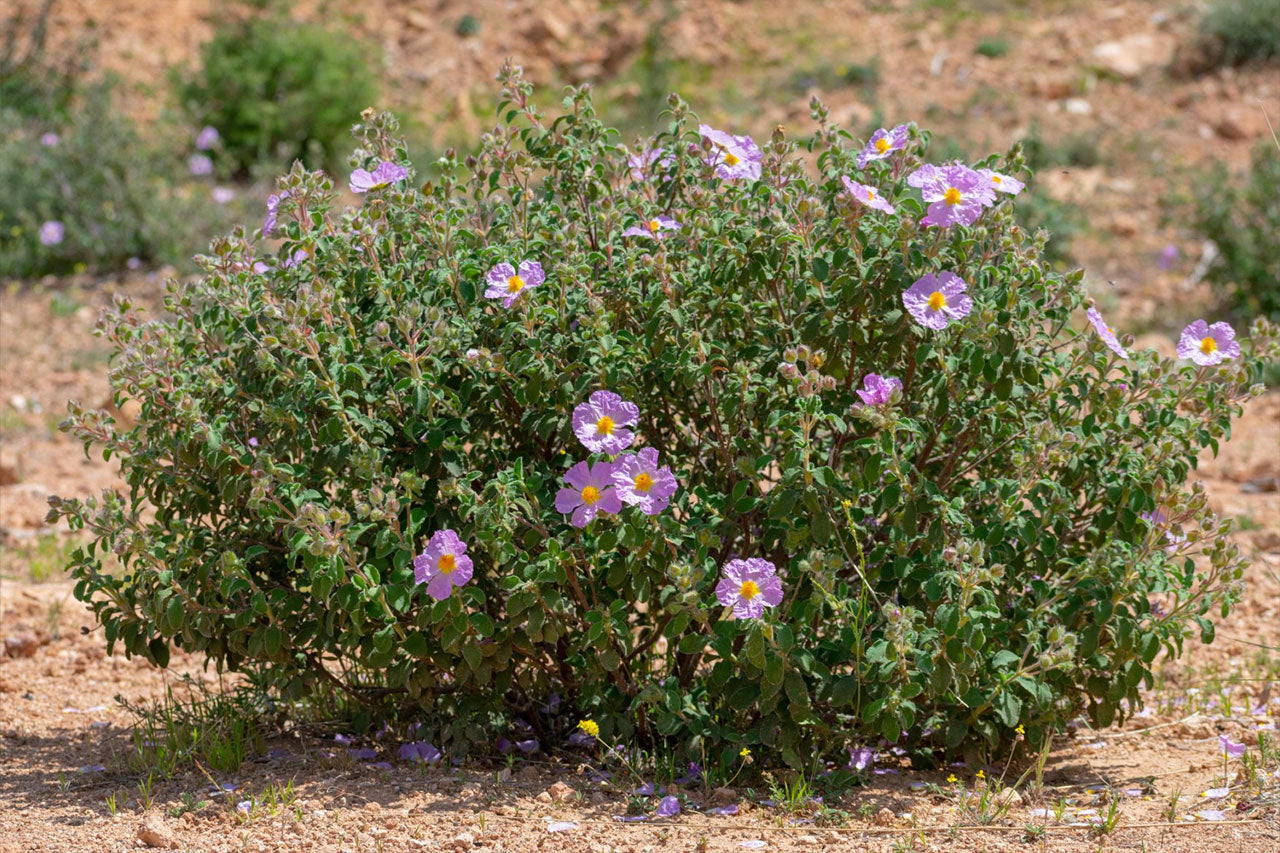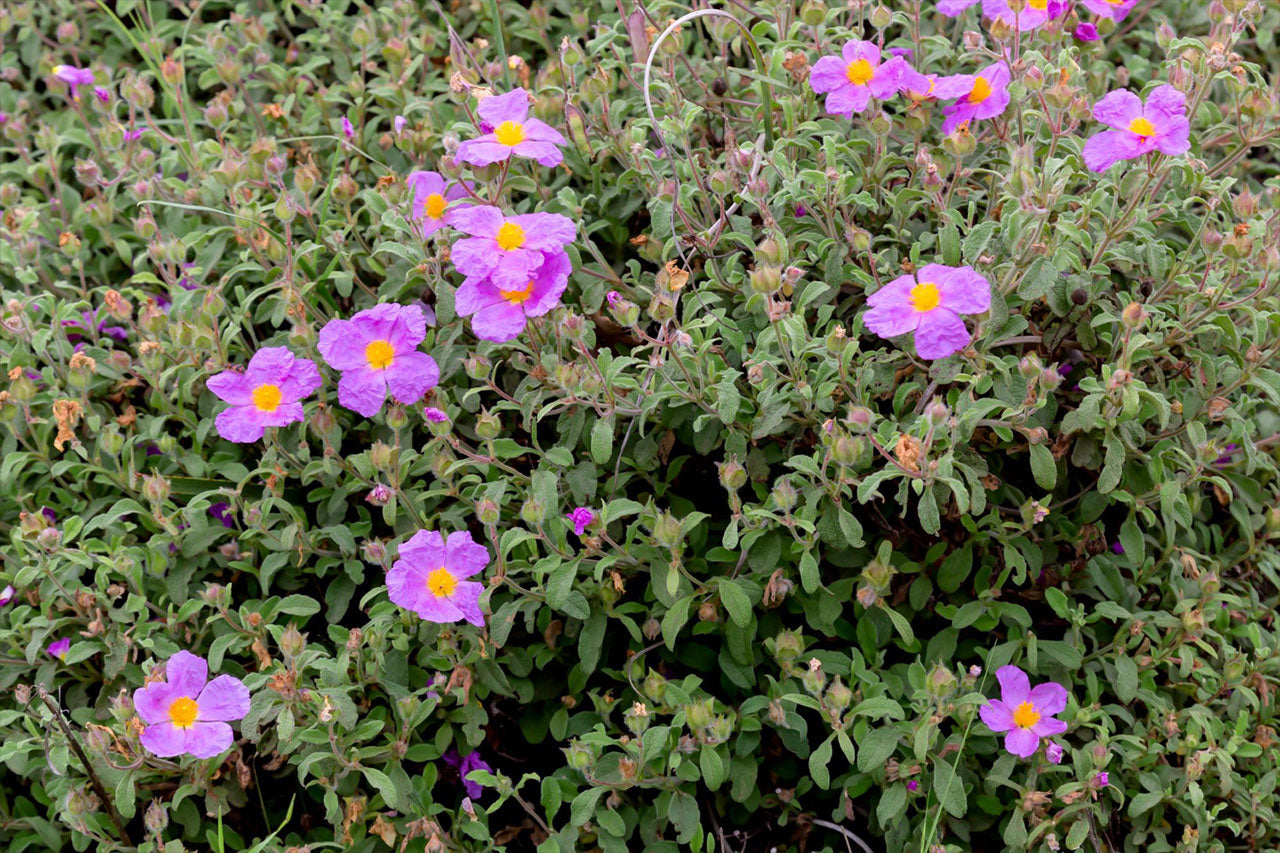

Rock roses form low, evergreen mounds that hold their shape nicely through the year. The small, often greyish leaves create a pleasing contrast with fresher green foliage nearby and look particularly good with gravel, stone and timber. For gardeners who have a sunny bed that can feel bare in winter, Cistus offers a simple way to keep interest going without resorting to more formal topiary or large shrubs that may overwhelm the space.
Common name: Rock rose
Latin name: Cistus
Size in UK gardens: Most forms make low, spreading shrubs around 0.6–1.2m tall and up to 1.5m wide.
Best position: A warm, sunny, sheltered spot – often in a gravel garden, on a slope, or at the front of a border where it can bask in full sun.
Soil: Prefers light, free‑draining, often slightly stony soil. Happy in many well‑drained East Anglia gardens but dislikes heavy, waterlogged clay.
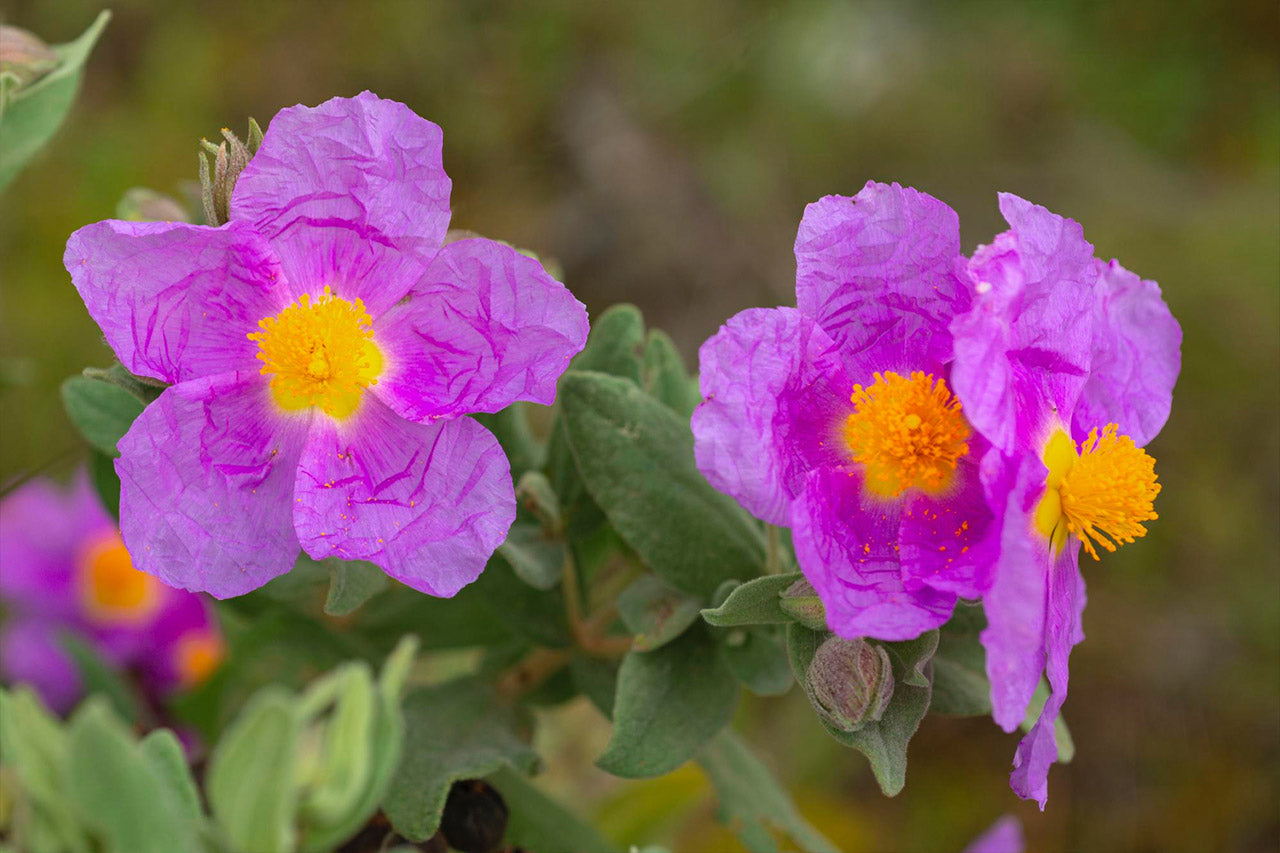
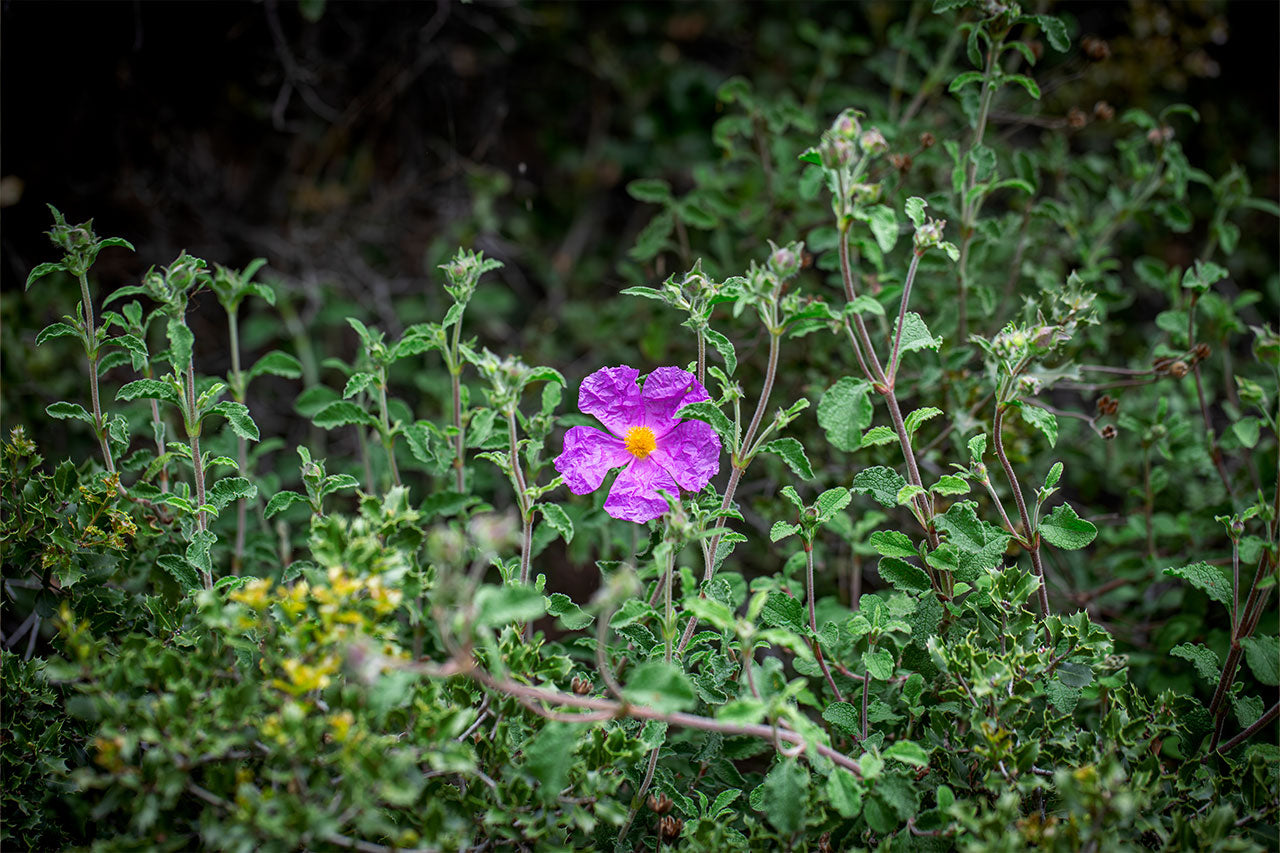
Flowering time: Usually late spring into early summer (often May–July), with masses of silky, crêpe‑paper flowers that open in sunshine. Individual blooms are brief, but the display is long.
Fragrance: Some varieties have lightly scented flowers and many have foliage with a warm, resinous scent on hot days.
Hardiness: Generally hardy in well‑drained soil. Established plants usually cope well with normal Cambridgeshire winters, especially in sunny, sheltered positions.
Care level: Easy if given the right spot – full sun, very good drainage and only light pruning. A classic “plant it and enjoy it” choice for dry, sunny areas.

The Simpson’s team raises the majority of our trees here at the nursery. For varieties outside our own production, we work with independent local growers we trust - all chosen for UK climate suitability.
Planting time: As a container‑grown shrub, Cistus can be planted in most months when the soil is workable and not waterlogged or frozen. Spring and early autumn are often the most comfortable times for both gardener and plant.
Watering: Water well through the first growing season so the roots can move out into the surrounding soil, then gradually reduce watering as the plant settles. Once established in the ground, it usually prefers to be kept on the drier side.
Feeding: Cistus is not a hungry plant. In most gardens, a light mulch of compost or a small handful of balanced fertiliser in spring is quite sufficient; too much feeding can encourage soft, sappy growth that isn’t in keeping with its naturally tough character.
Pruning: Little pruning is needed. A light trim after flowering, shortening back the spent flowered shoots, will help keep the shrub compact and encourage fresh growth without cutting into old wood.
Winter: In a typical Cambridgeshire winter, established plants in well‑drained soil usually cope well. Young plants benefit from a sunny, sheltered position and good drainage while they find their feet.
Availability is always changing, so please check with us if you have a particular variety in mind.
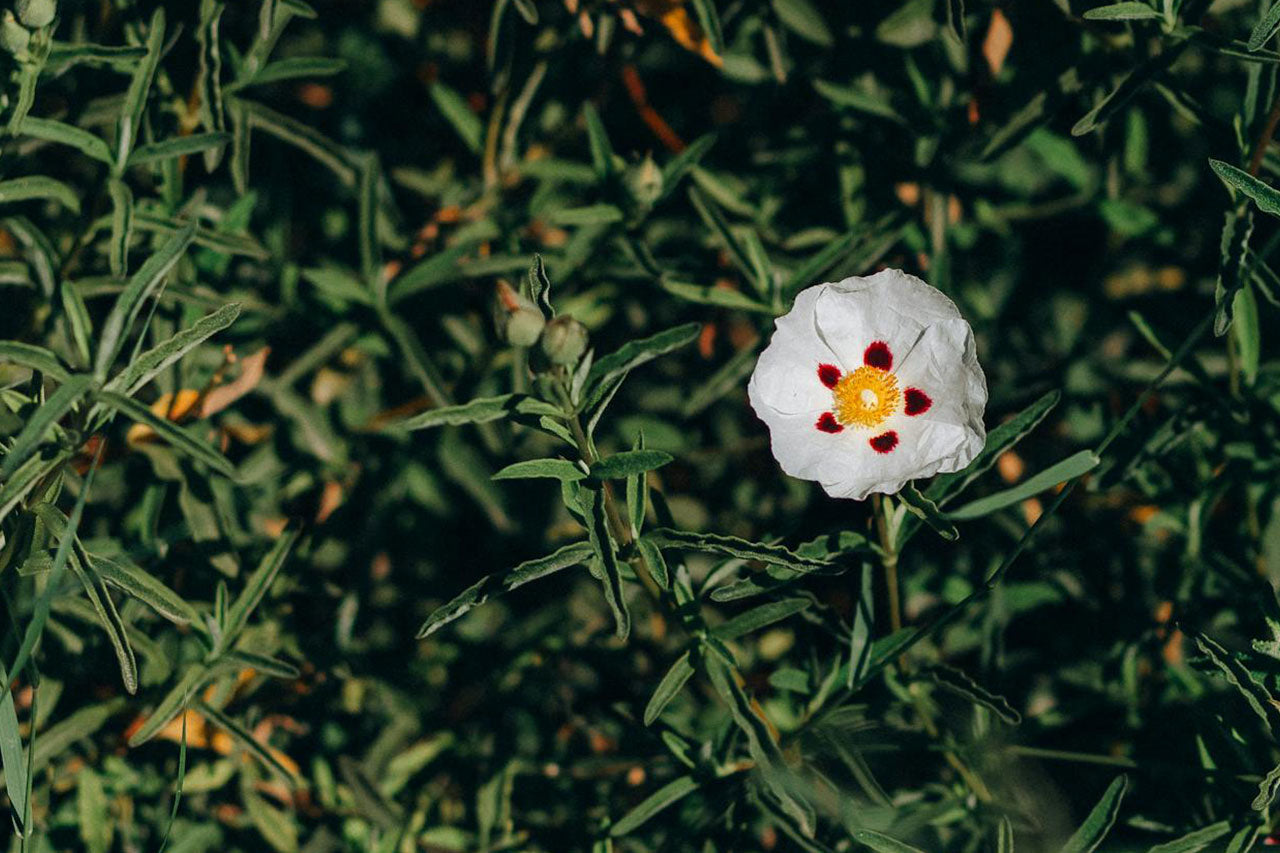
Sunshine in shrub form, with papery white flowers often marked with a bold splash of darker colour at the base, giving a “painted” look that feels wonderfully Mediterranean. It’s brilliant for adding summer sparkle and a dry, sun-baked romance to planting schemes, and it looks especially good with silvery foliage and gravel-garden companions.
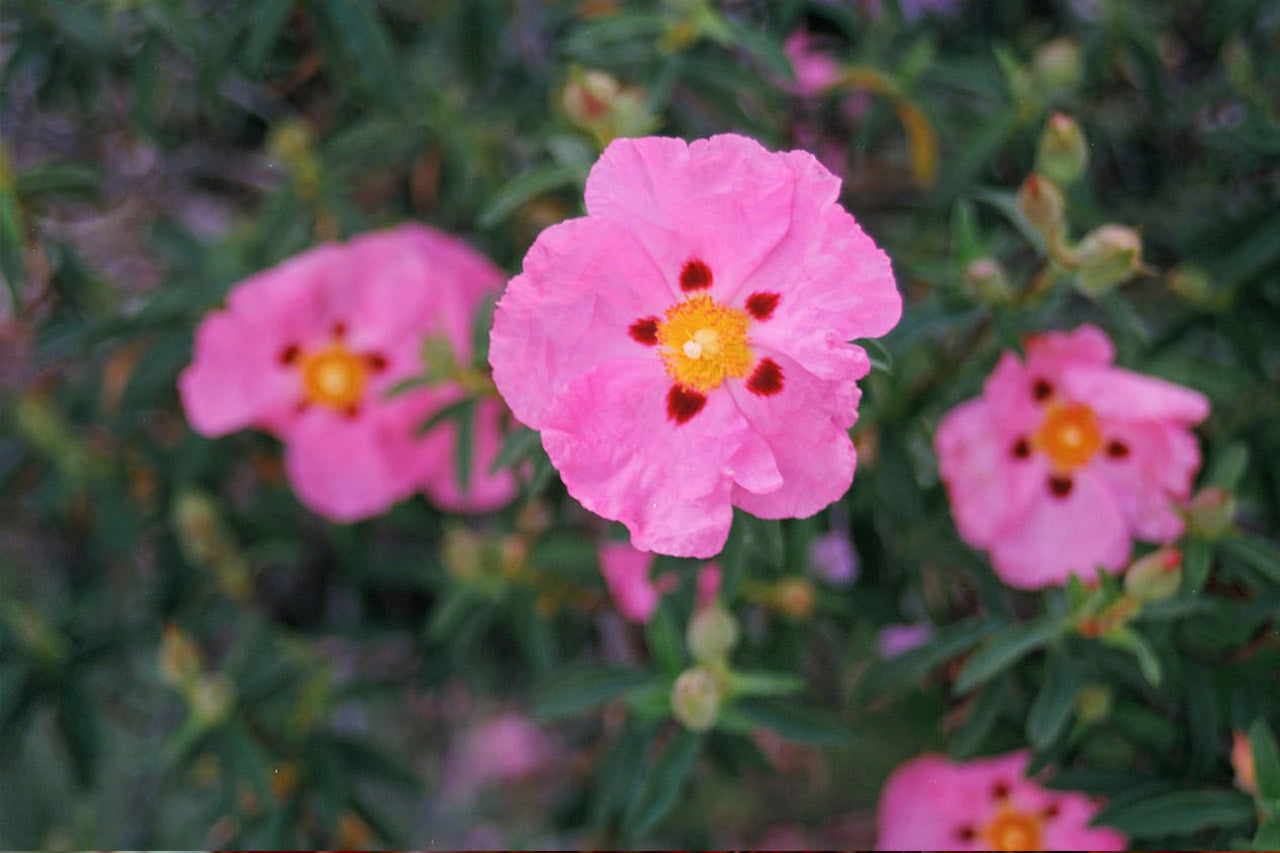
Richly marked flowers give this cistus real presence—white petals often splashed with bold, wine-coloured blotches that look as though they’ve been painted on. It’s perfect when you want a shrub that feels properly dramatic in bloom, creating a strong focal point and pairing beautifully with grey foliage and other sun-loving companions.
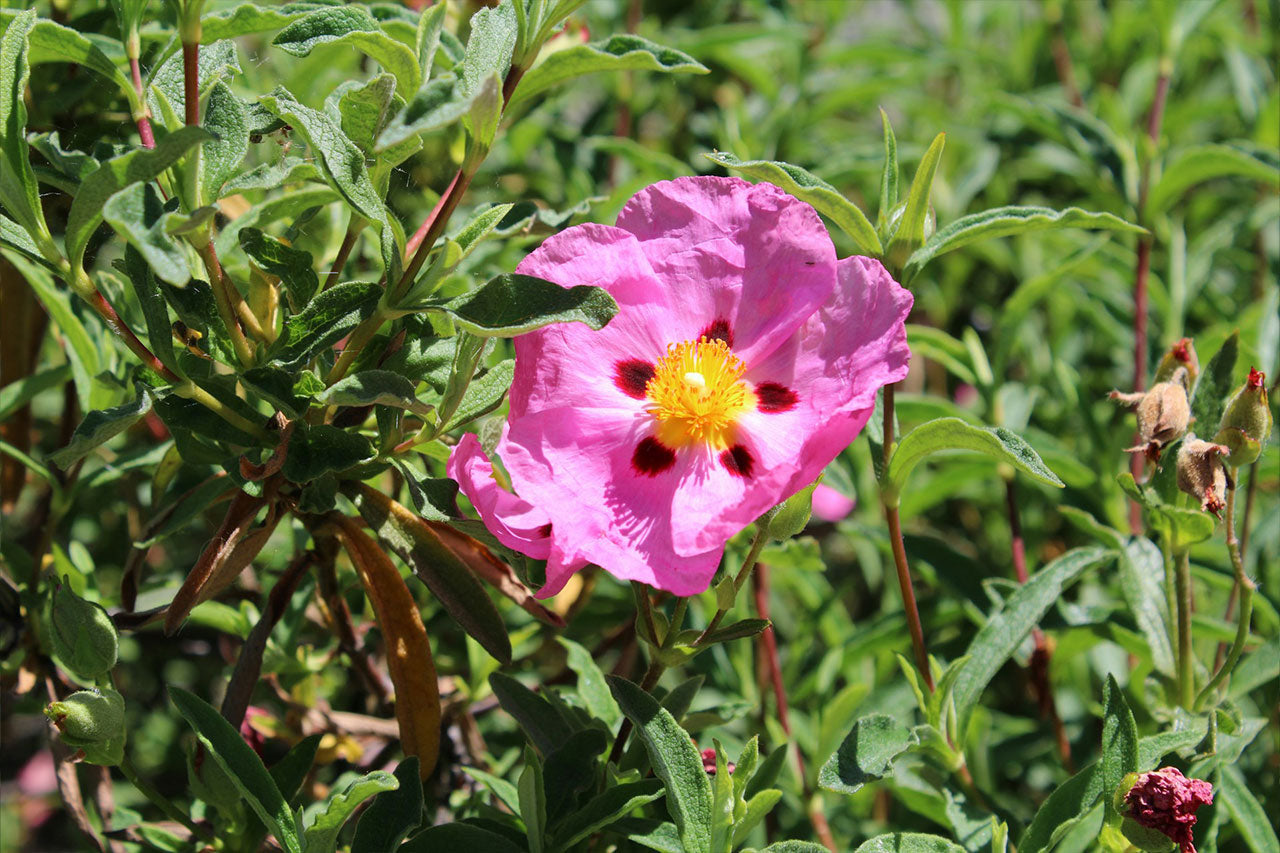
A classic Cretan rock rose with soft, crinkled flowers in warm pink tones that feel wonderfully natural and “wild hillside” in character. It brings that easy Mediterranean romance to borders, looking superb in mixed shrub planting where you want a relaxed, sunlit look rather than something clipped and formal.
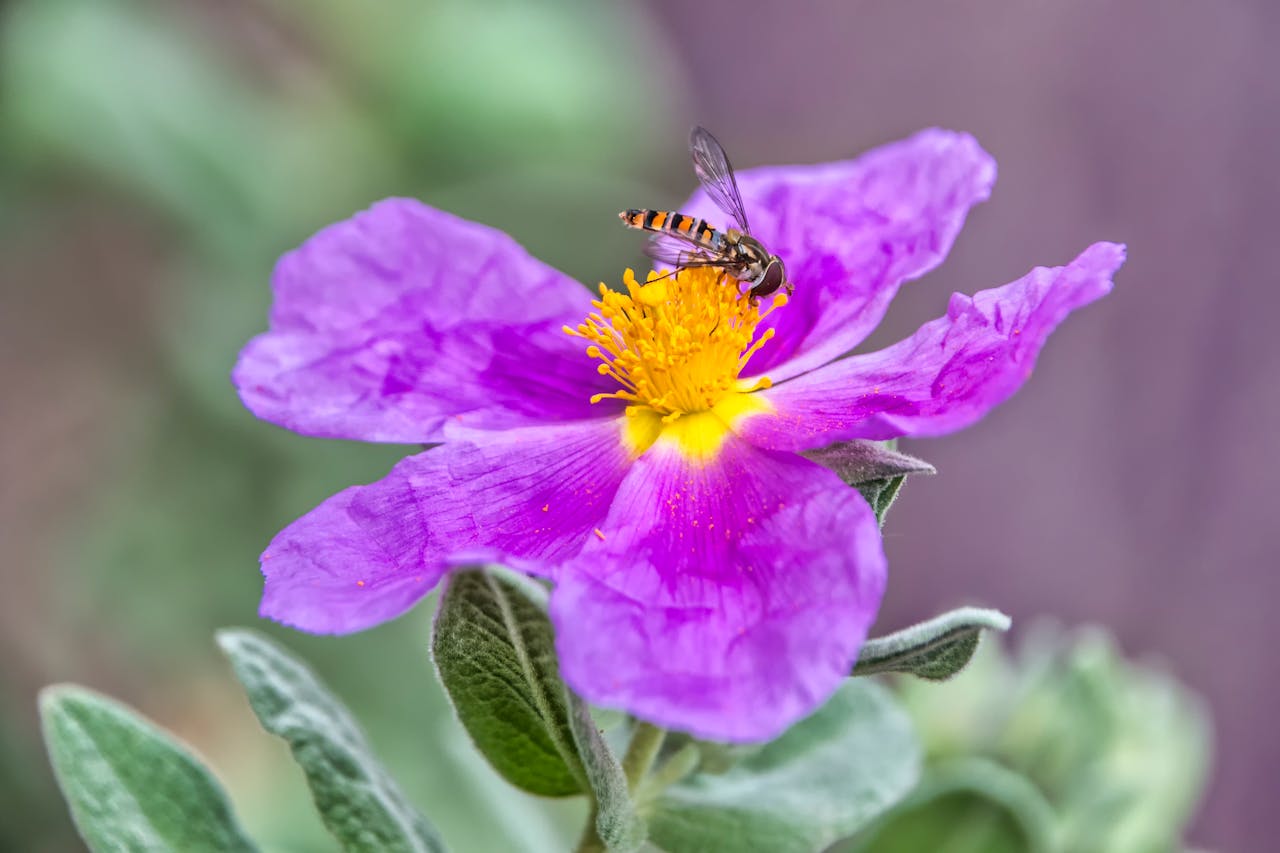
Silvery foliage gives this one a lovely, cool sheen even before the flowers arrive, then the pink blooms add a gentle wash of colour that feels soft and summery. It’s particularly handsome in gravel gardens and coastal-style planting, where the silver leaves knit everything together and the flowers provide a charming seasonal flourish.
Lower, spreading growth makes this a wonderful choice for softening edges and giving borders that relaxed, ground-hugging look. In flower it brings that classic cistus sparkle—crisp, papery blooms that sit beautifully against evergreen foliage—ideal for weaving through sun-baked planting schemes where you want a natural, informal sweep.
A generous, sunny shrub that captures the spirit of Mediterranean hillsides, with evergreen foliage and a bright flush of flowers that feel like summer in a single plant. It’s excellent for adding lightness and sparkle to mixed shrub borders, and it pairs beautifully with lavenders, sages and silver foliage for that classic sun-warmed palette.
Few shrubs look quite so “sunset” in tone, with rich pink flowers that glow warmly against soft grey foliage. It’s perfect for creating a romantic, Mediterranean-leaning border, where the combination of pink and silver feels both natural and stylish, especially alongside grasses and other droughty-looking companions.
A particularly showy rock rose, with bold, marked flowers that give it real theatre in bloom. It’s ideal when you want a cistus that doesn’t just “sparkle” but properly announces itself, making a fine focal shrub in a sunny planting scheme and pairing beautifully with silver foliage and warm stone.