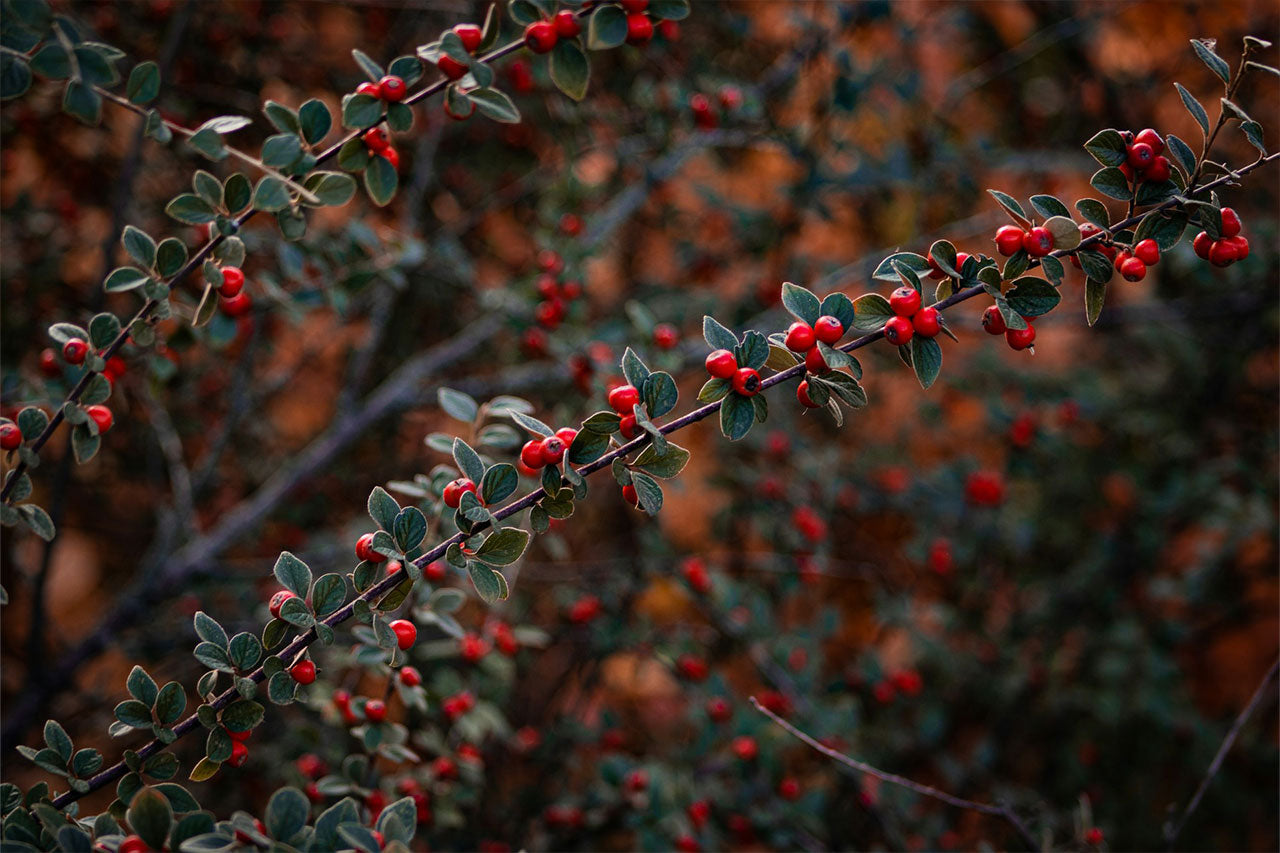

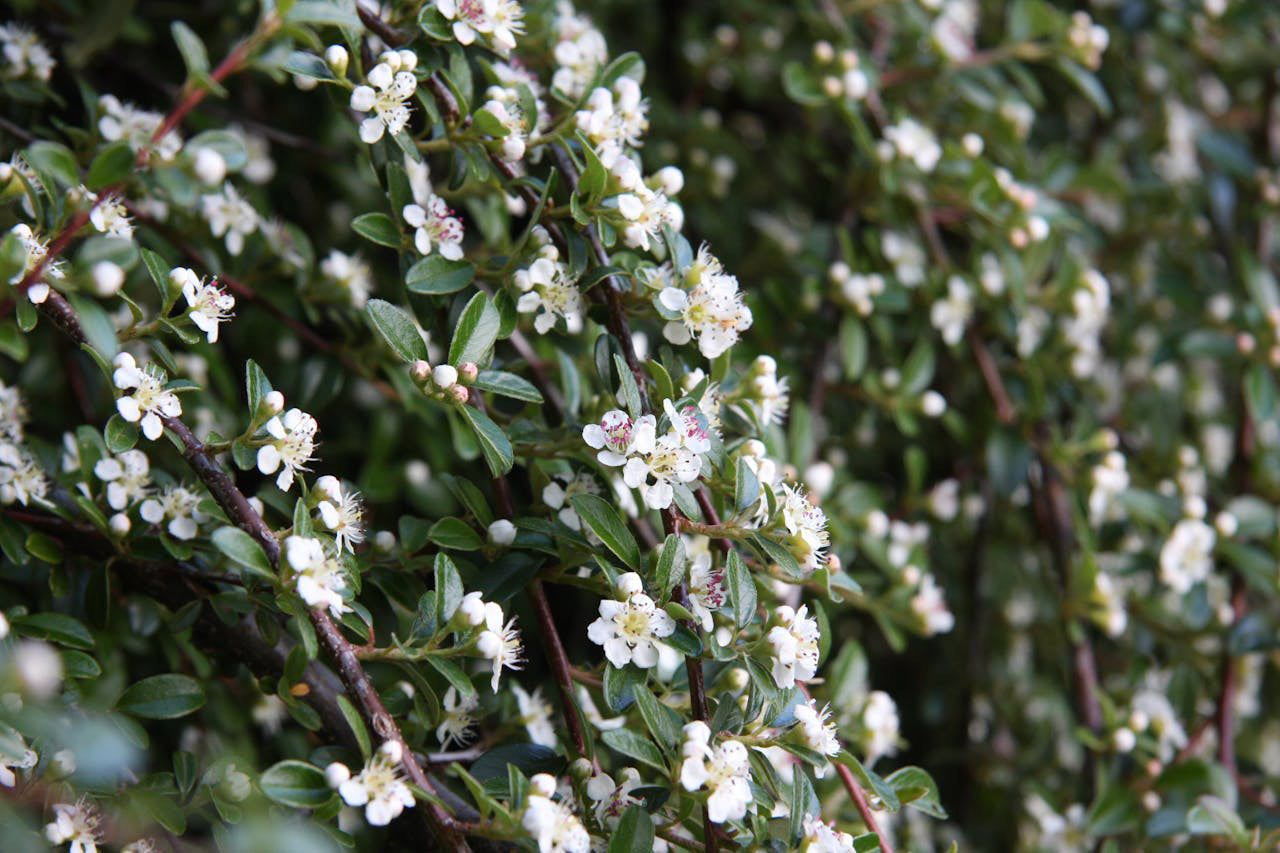
Cotoneaster is one of those shrubs that earns its keep twice over – first with clouds of small, bee‑friendly flowers in late spring, and then with strings and clusters of bright berries from late summer onwards. The effect is cheerful rather than showy, but in the best possible way: blossom that hums with life, followed by fruits that light up the branches. For a gardener who wants something that looks good and gives back to wildlife without fuss, it is hard to beat.

Common name: Cotoneaster.
Latin name: Cotoneaster.
Size in UK gardens: Many types stay around 0.5–2m tall and wide; larger shrubs and small tree‑forms can eventually reach 3–5m.
Best position: A sunny or lightly shaded spot in a border, on a bank, along a path or trained against a wall. Flowers, berries and autumn colour are all at their best in good light.
Soil: Adaptable and easy‑going in most well‑drained garden soils, from lighter loams to slightly heavier ground, as long as water does not sit around the roots for long periods.
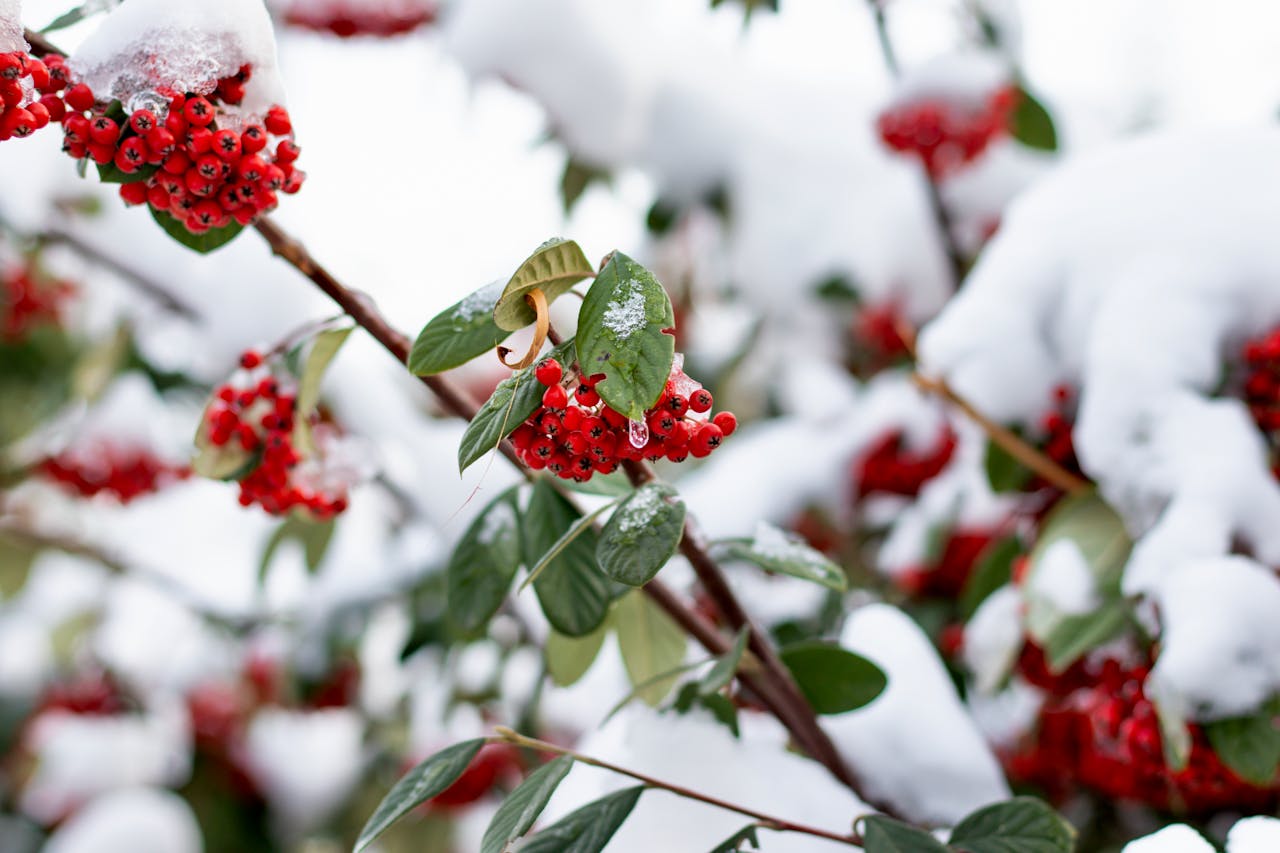
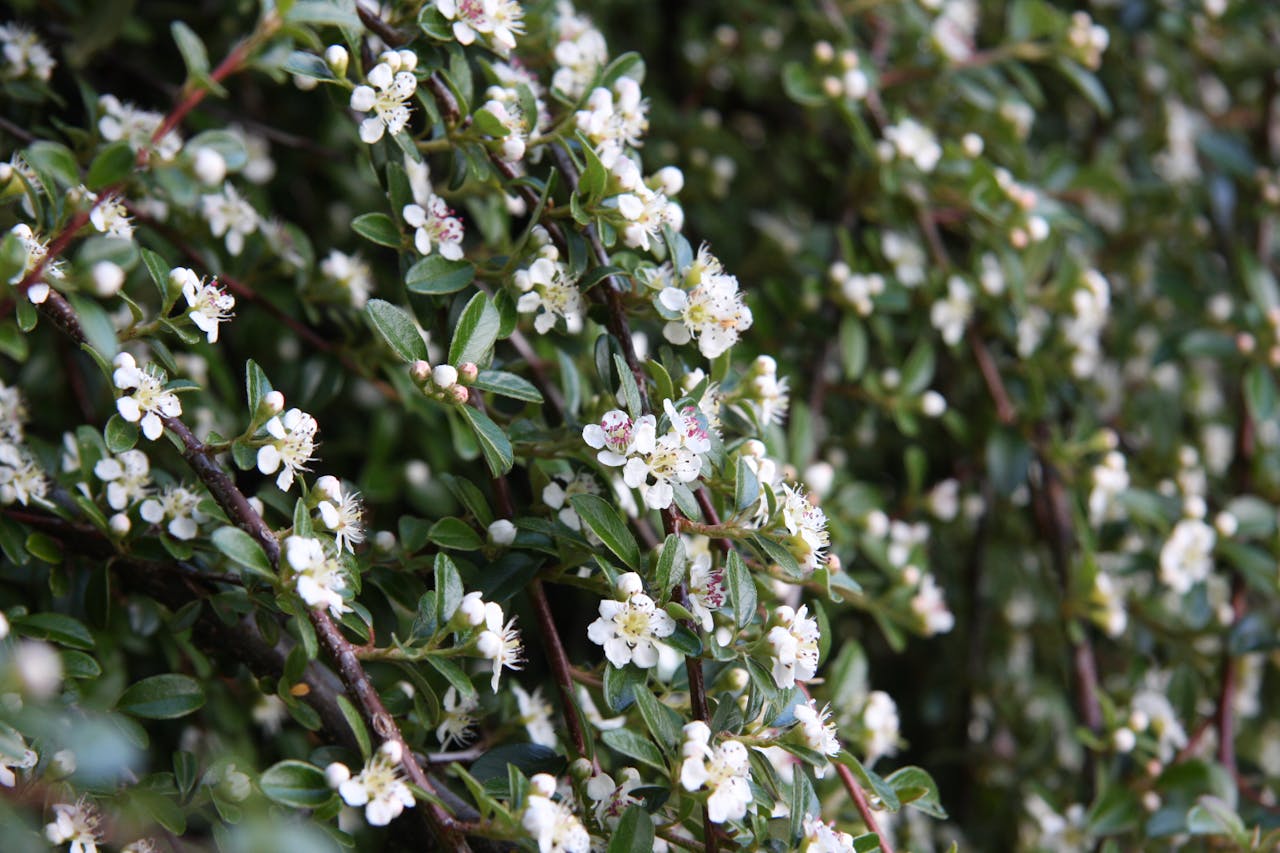
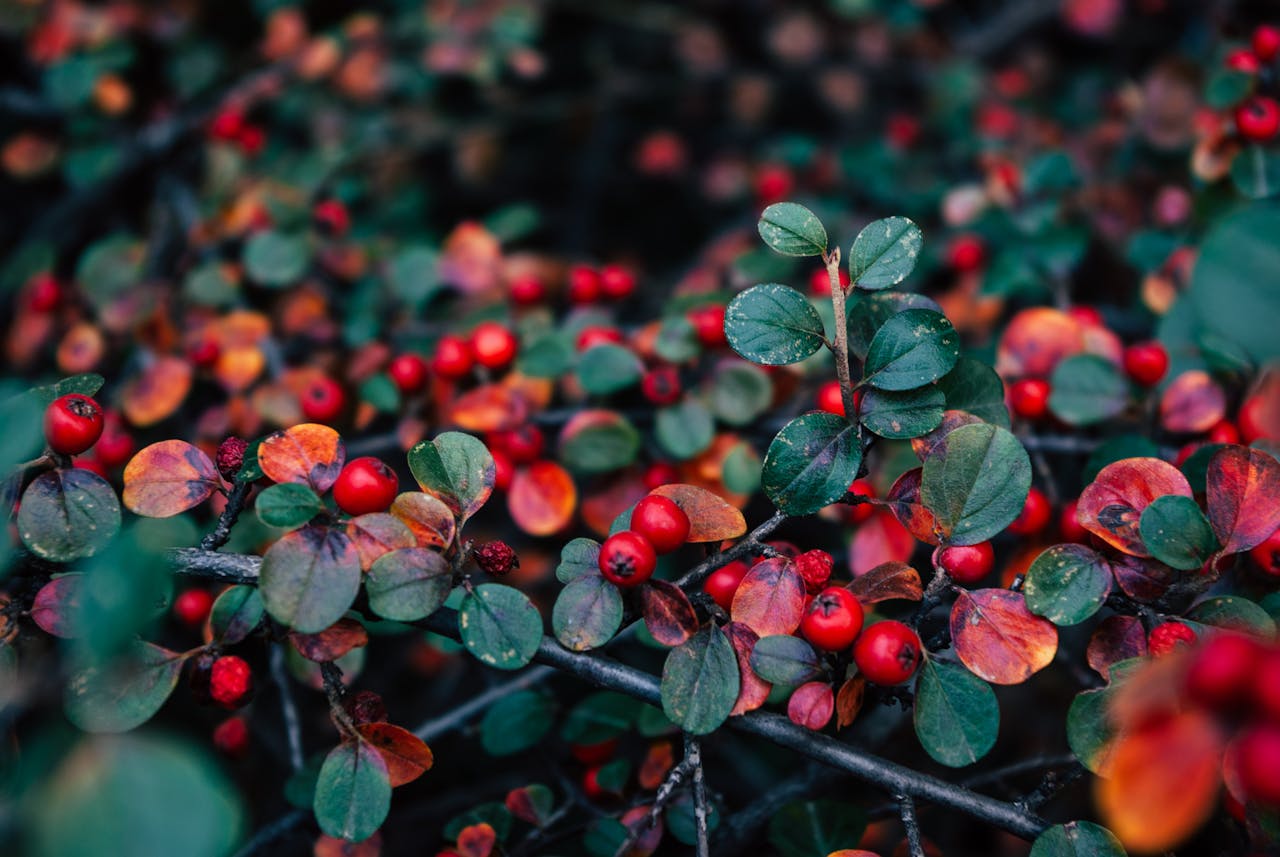
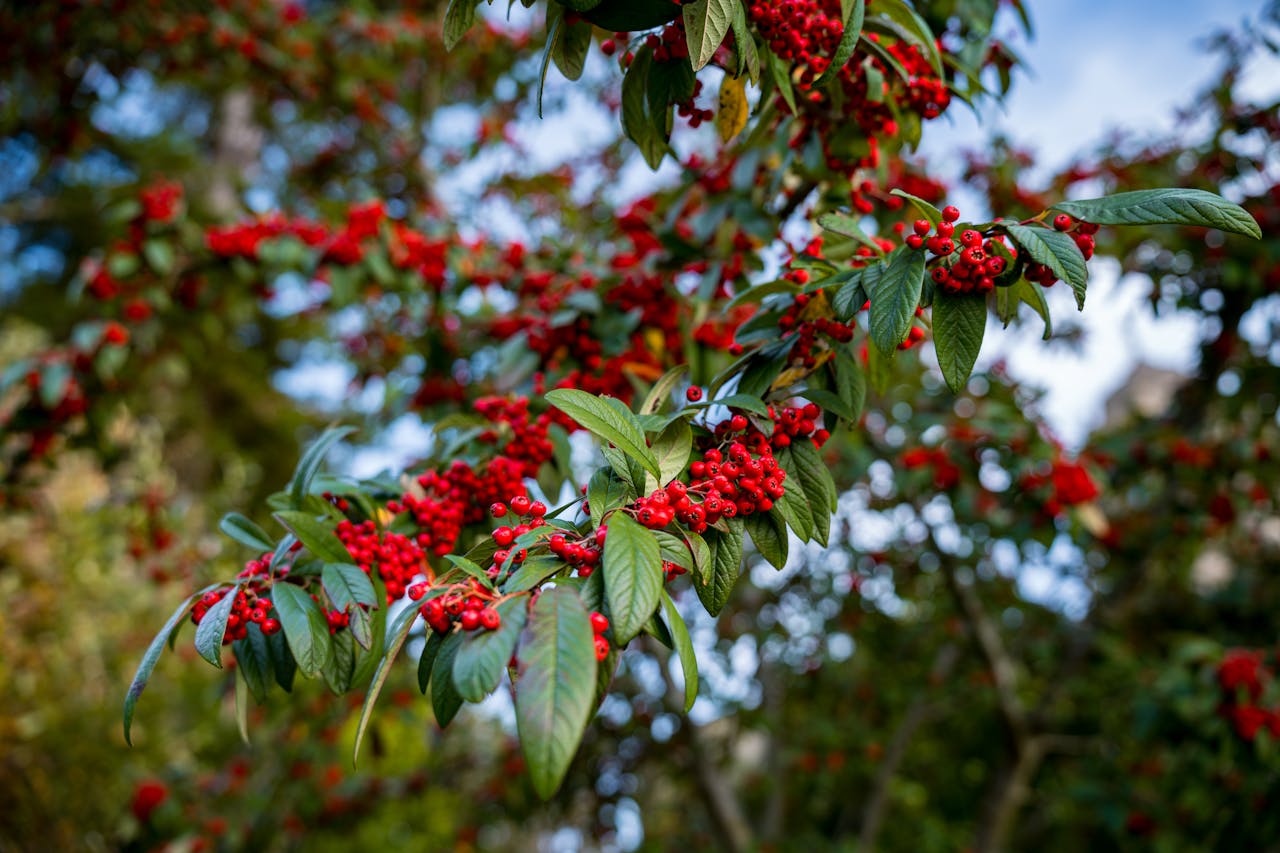
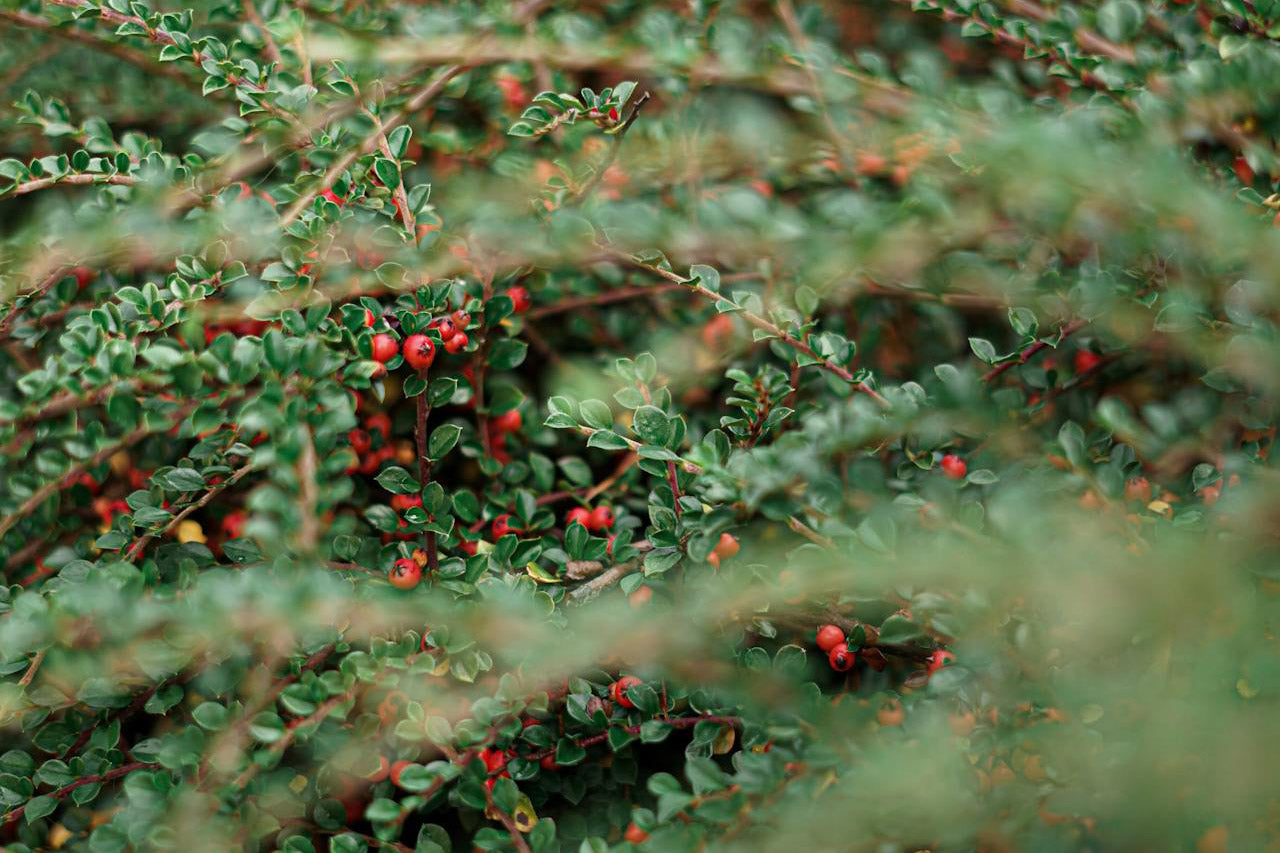
Flowering time: Small white or soft pink flowers in late spring to early summer, followed by red, orange or sometimes yellow berries from late summer into autumn and often well into winter.
Fragrance: Usually not noticeably scented; the main appeal is the combination of blossom, berries and foliage rather than strong perfume.
Hardiness: Generally very hardy in normal UK winters without any special winter protection once established.
Care level: Very easy and forgiving – an excellent “low‑fuss” shrub for newer gardeners who still want good colour and wildlife interest.

The Simpson’s team raises the majority of our trees here at the nursery. For varieties outside our own production, we work with independent local growers we trust - all chosen for UK climate suitability.
Planting time: Cotoneasters can be planted in most months when the soil is not frozen or waterlogged. Spring and early autumn are often easiest, as the soil has some warmth and natural moisture to help new roots establish.
Watering: Water regularly during the first growing season, especially in dry spells, so the rootball and surrounding soil don’t dry out completely. Once established in the ground, most cotoneasters only need extra water in particularly hot, prolonged dry periods.
Feeding: A light mulch of garden compost or well‑rotted manure in spring is usually enough to keep plants in good heart. They are not heavy feeders and generally prefer steady, moderate growth rather than strong, lush shoots.
Pruning: Many forms need little more than occasional tidying to remove dead, damaged or wayward stems. Groundcover and wall‑trained types can be trimmed lightly after flowering or berrying to keep within bounds.
Winter: Most cotoneasters take normal UK winters in their stride, whether evergreen or deciduous. Established plants in the ground usually need no special protection, simply waiting for spring to start into growth again.
Availability is always changing, so please check with us if you have a particular variety in mind.


A generous, glossy-leaved cotoneaster that smothers itself in small white flowers, then follows with a crop of coral-red berries that last well into winter. Its low, spreading habit is superb for softening edges, spilling over walls, and adding year-round polish to any garden.
A handsome, small tree cotoneaster with large glossy leaves and an architectural, tiered look. In early summer it carries creamy white flowers, followed by bold clusters of orange-red berries that decorate the branches for months—brilliant for structure and winter colour too.
A neat, evergreen cotoneaster with small, glossy leaves and a naturally tidy outline. It flowers freely, then sets bright red berries that stand out against the dark foliage and linger into winter. Ideal for crisp groundcover effects, low hedging lines, and smart edging close.
A charming weeping cotoneaster that drapes its branches in a soft cascade, perfect for adding movement and a gentle, trailing line. White flowers appear in season, followed by plenty of red berries that hang on, giving long interest and a picturesque, cottage-garden feel too.


A compact, ground-hugging cotoneaster with glossy leaves and a neat, mounded habit that looks smart all year. It’s sprinkled with small white flowers, then loaded with red berries that sit on the stems like little beads. Lovely for edging, low planting and softening paving.
A distinctive cotoneaster with creamy-white flowers, followed by clusters of pale yellow berries that glow through autumn. Its branches arch softly, giving a graceful outline. A lovely choice where you want a lighter berry display to contrast with reds and oranges nearby too.
A classic cotoneaster forming a handsome large shrub or small tree, with glossy leaves and a gently tiered outline. Creamy flower clusters are followed by bunches of orange-red berries that decorate the branches for months. Excellent for structure and winter colour each year.