

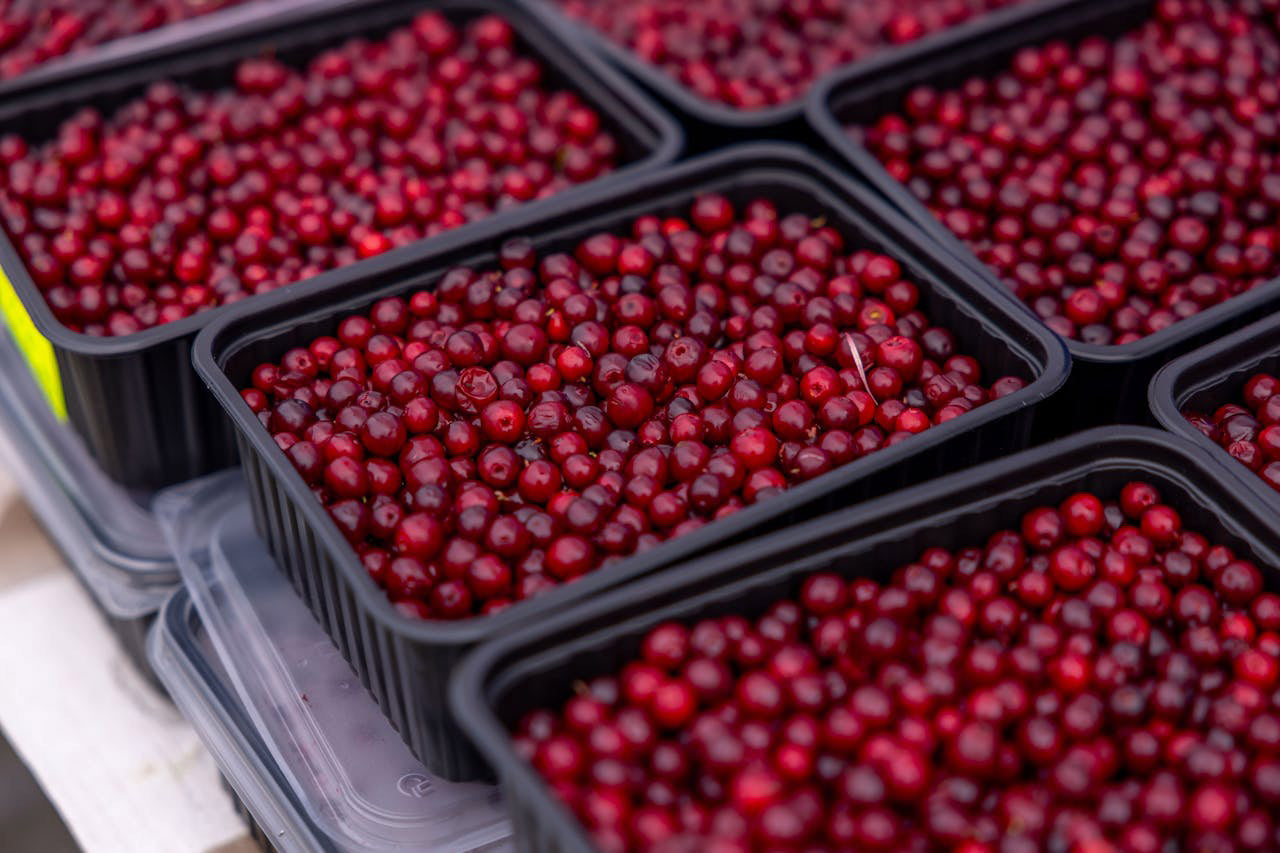
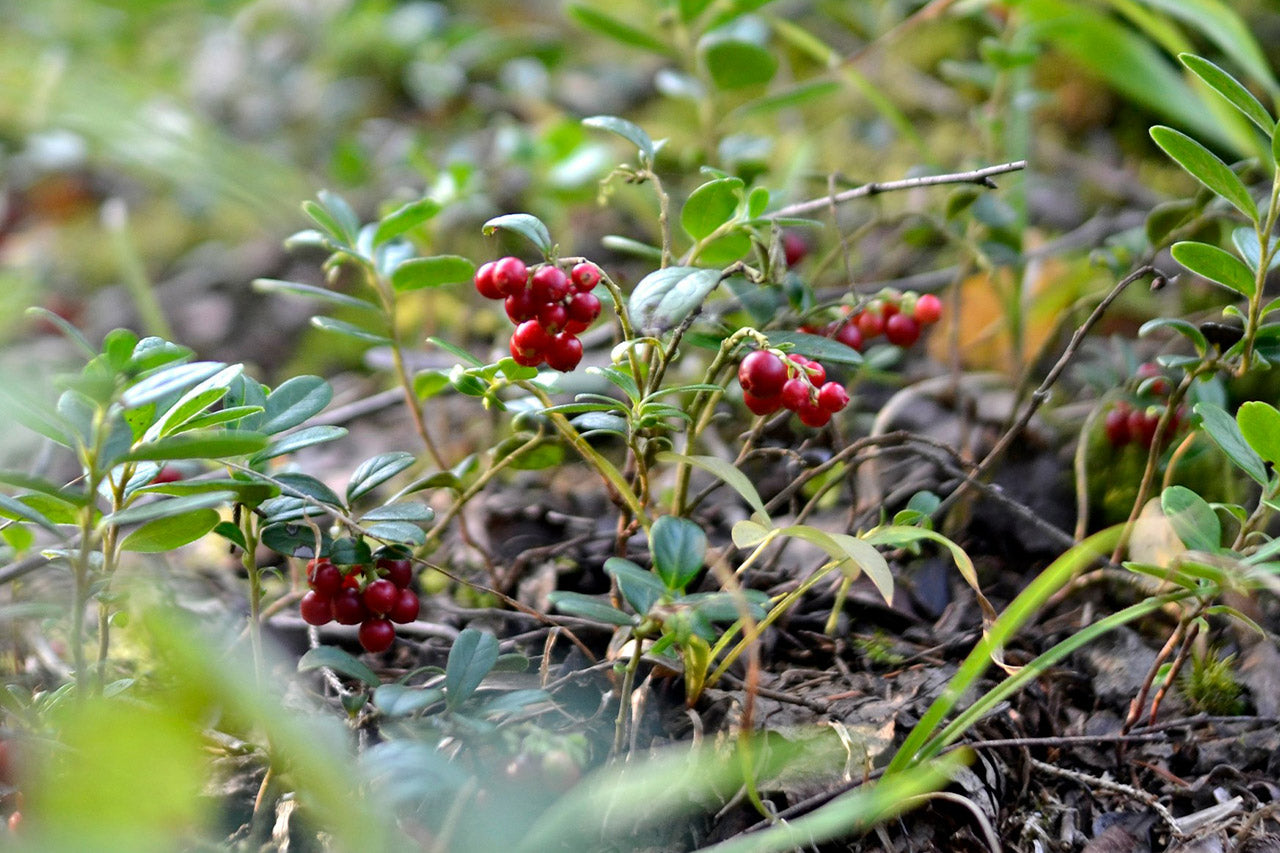
Cranberries are grown for their small, glossy berries that ripen from green to rich red in late summer and autumn. The flavour is distinctly sharp when fresh, but that’s exactly what makes them so good in sauces, chutneys, jams and baking, especially when balanced with sugar or sweeter fruits. In a UK garden, even a few plants can give a respectable bowlful of fruit, and because the berries hang close to the stems they’re surprisingly easy to pick. For gardeners who like something a little different from the usual currants and raspberries, cranberries are a satisfying addition.
Common name: Cranberry.
Latin name: Mainly Vaccinium macrocarpon and related Vaccinium hybrids grown for fruit.
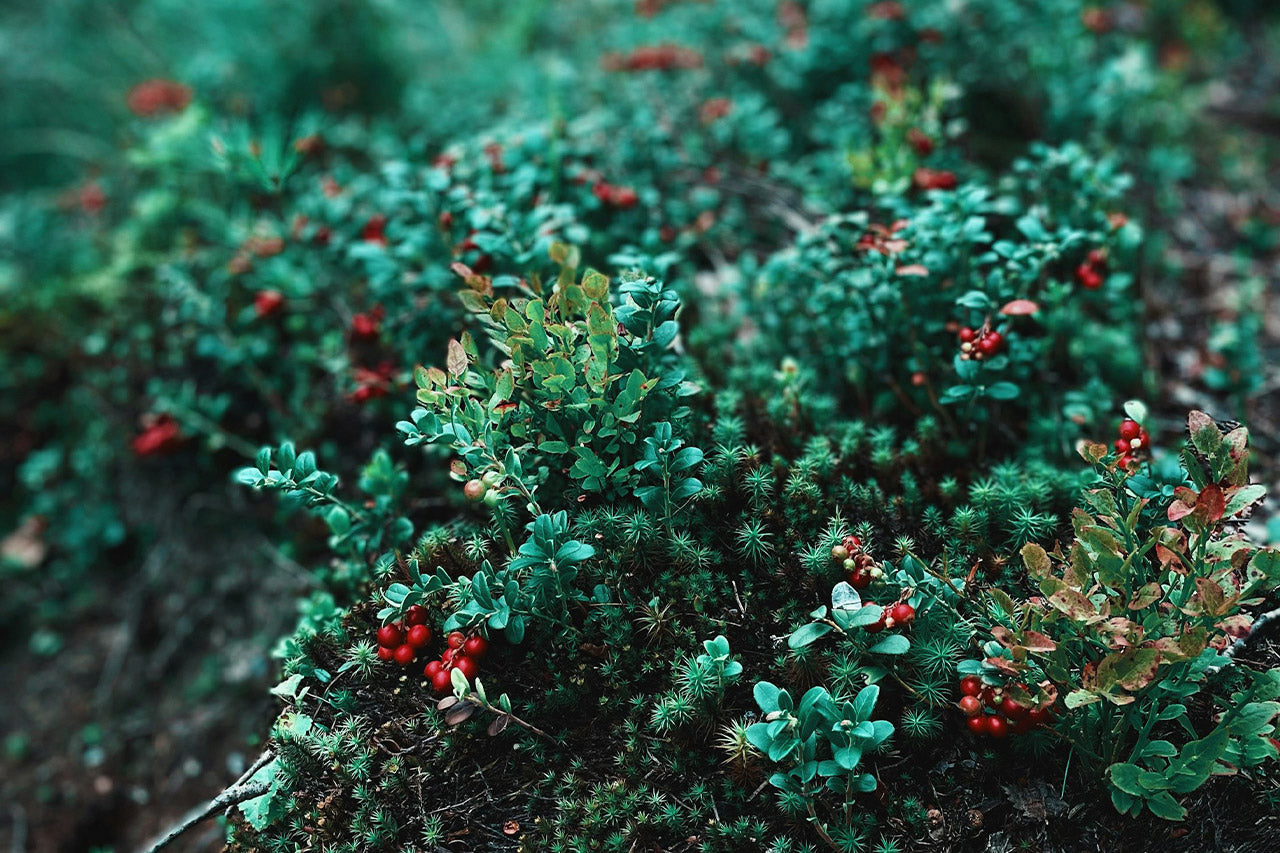
Size in UK gardens: Typically 10–20cm high, with trailing stems that can spread 60–100cm or more over time if allowed to carpet an area.
Best position: A sunny, reasonably sheltered spot such as a raised bed, trough or large container; light shade is tolerated but fruiting is best in full sun.
Soil: Moist but free‑draining, humus‑rich, acidic soil or compost (ericaceous); strongly dislikes chalky or alkaline conditions.
Flowering time: Small, nodding pink or white flowers in late spring to early summer; berries ripen from late summer into autumn.
Fragrance: Flowers are not strongly scented; fruit has a fresh, tangy aroma when crushed or cooked.
Hardiness: Generally hardy once established in most UK gardens; flowers and young growth can be nipped by late frosts, which may reduce the crop.
Care level: Moderate – straightforward if you can provide acidic compost and steady moisture, with some netting and light pruning as plants spread.

The Simpson’s team raises the majority of our trees here at the nursery. For varieties outside our own production, we work with independent local growers we trust - all chosen for UK climate suitability.
Planting time: As container‑grown plants, cranberries can be planted in most months when the soil or compost isn’t frozen or waterlogged. Spring and early autumn are often easiest, giving roots time to settle before the extremes of summer heat or winter cold.
Watering: Keep cranberries evenly moist, especially in containers and raised beds. Their shallow roots are sensitive to both drying out and prolonged waterlogging, so aim for “damp sponge” rather than “soggy bog” in ordinary gardens, using rainwater where possible in hard‑water areas.
Feeding: Use an ericaceous fertiliser in spring according to the packet, and top up with a mulch of ericaceous compost, leaf mould or composted bark around the stems. Avoid lime‑rich manures or feeds that could raise the pH and upset their preference for acidity.
Pruning: Very little pruning is needed beyond trimming back over‑long runners if they stray too far, and removing any dead or weak stems in late winter or early spring. Light shaping can help keep plants neat in containers.
Winter: In the ground, established cranberries usually need no special winter care beyond their mulch. Containers and troughs may benefit from being grouped together or moved to a slightly more sheltered spot so the compost doesn’t swing from saturated to frozen and back again.
Availability is always changing, so please check with us if you have a particular variety in mind.


A hardy cranberry variety valued for its early cropping and tangy, deep-red berries—perfect for sauces, juices and festive cooking. It forms a low, spreading evergreen-ish carpet and looks lovely in a pot or raised bed filled with acidic compost, where it can trail gently and stay tidy.
A popular cranberry with larger berries and generous yields, giving plenty of fruit for cooking, baking and preserving. It makes an attractive low groundcover with a neat, spreading habit, and it’s ideal in pots of acidic compost where you can keep it evenly moist. In autumn the berries colour up beautifully, making it decorative as well as useful.