

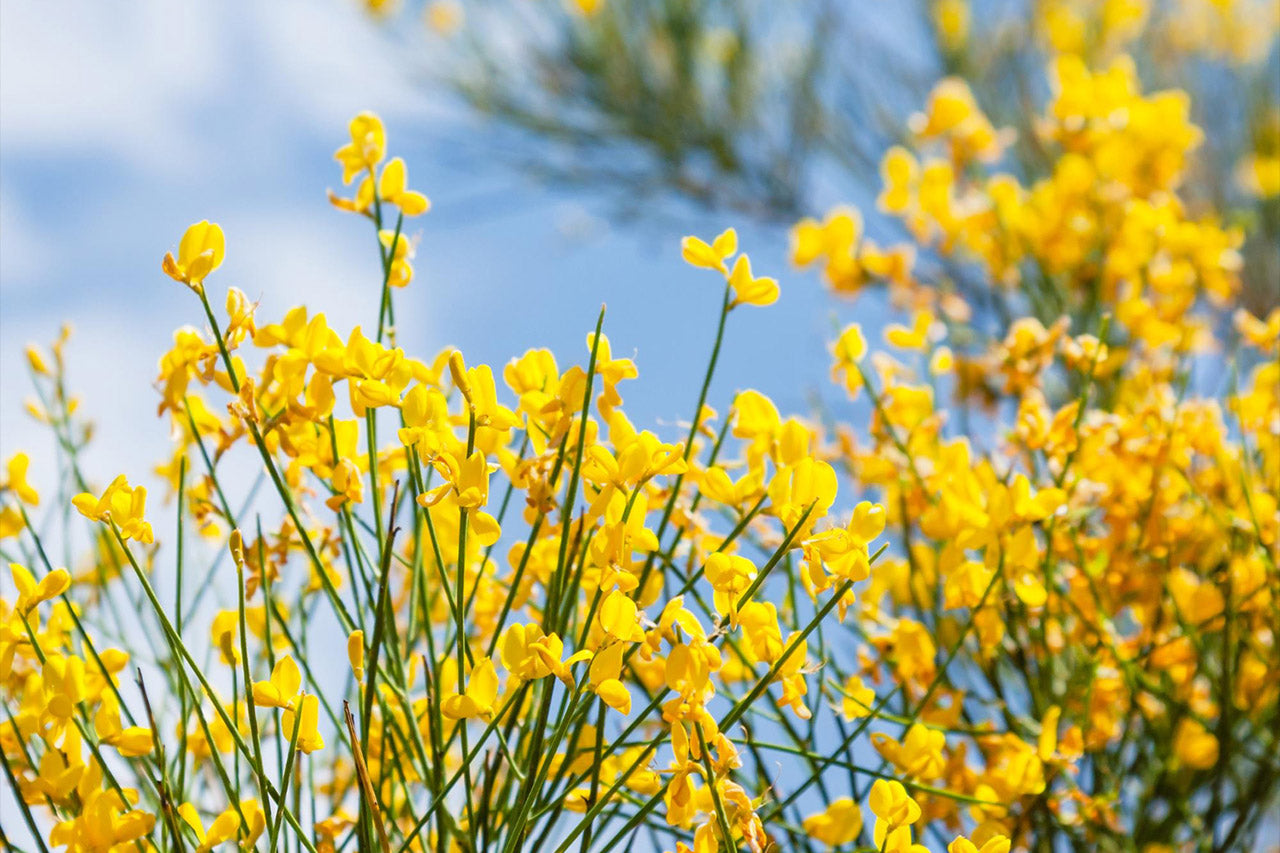
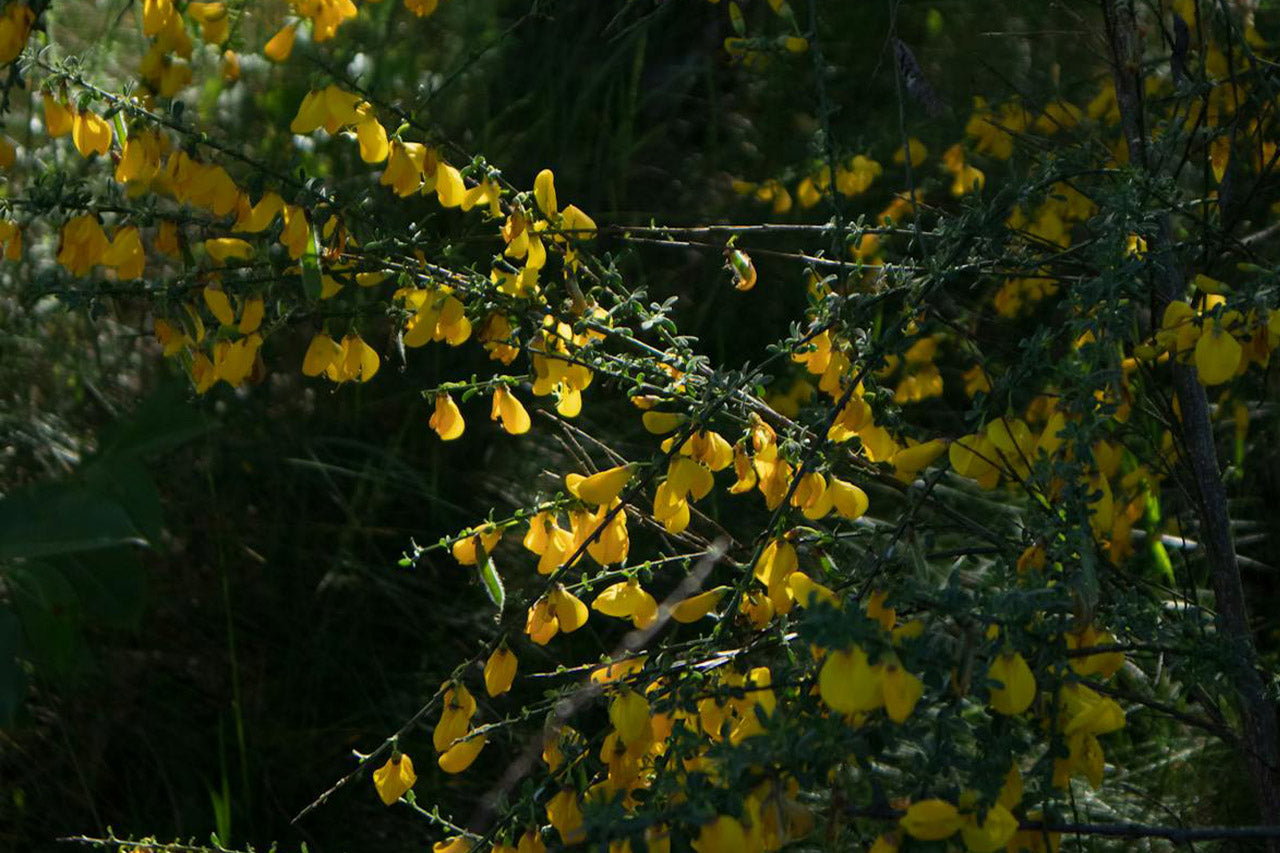
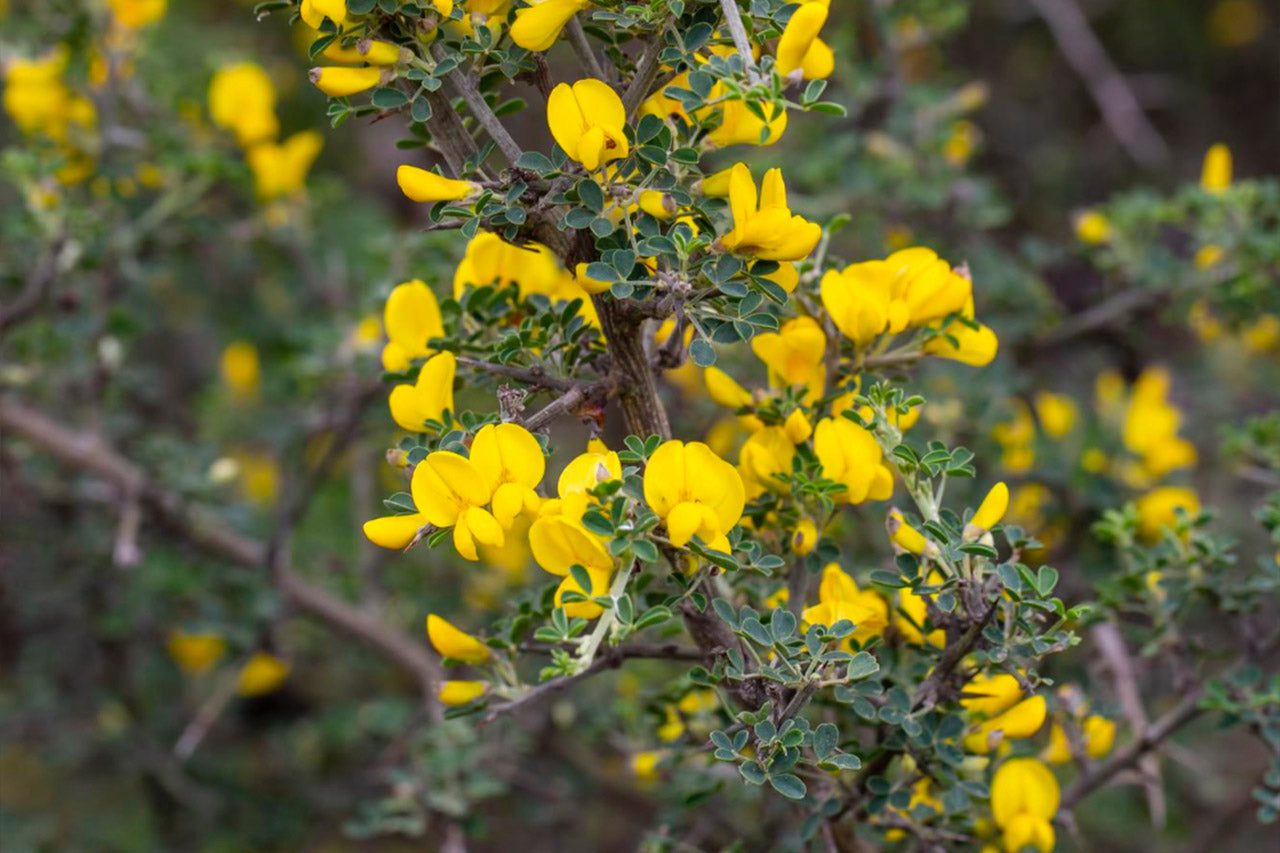
When broom comes into flower, it doesn’t do things by halves. In late spring and early summer, the wiry green stems are smothered in pea‑shaped blooms, often in shades of yellow, cream, gold, orange, red or bi‑colour combinations. From a little distance, the whole shrub can look like a cloud of colour hovering above the border. In many UK gardens the flowering show lasts several weeks, especially in good light and free‑draining soil. For a relatively small, easy shrub, the impact is impressive – the kind of display that makes neighbours lean over the fence to ask what it is.
Common name: Broom.
Latin name: Cytisus.
Size in UK gardens: Typically 1–2m tall and wide, depending on variety; some compact forms stay nearer 80–100cm, while a few older types can reach around 2.5m over time.
Best position: A sunny, open spot with good air flow and free‑draining soil; ideal for banks, gravel areas, mixed borders and lighter ground.
Soil: Prefers light, well‑drained soil, including sandy or stony ground; dislikes heavy, poorly drained clays and boggy spots.
Flowering time: Usually late spring to early summer (often May–June), with flowers borne all along the previous season’s stems.
Fragrance: Some hybrids have a light scent on warm days, but many are grown for colour rather than perfume; fragrance is usually modest.
Hardiness: Generally hardy in most UK gardens once established, particularly in sunny, well‑drained positions; very wet or waterlogged winter soils can cause losses.
Care level: Easy if you can offer sun and drainage; needs light, timely pruning after flowering and doesn’t like being cut back into old wood.

The Simpson’s team raises the majority of our trees here at the nursery. For varieties outside our own production, we work with independent local growers we trust - all chosen for UK climate suitability.
Planting time: As container‑grown plants, Cytisus can be planted in most months when the soil isn’t frozen or waterlogged; spring and early autumn are usually easiest, giving roots time to settle before extreme heat or cold.
Watering: Water regularly in the first season so the rootball and surrounding soil don’t dry out completely, especially on very light, sandy ground. Once established in the right spot, broom is quite drought‑tolerant and usually needs little additional watering.
Feeding: Broom is not a hungry shrub. In most gardens, an annual mulch of compost or well‑rotted organic matter around, but not against, the stems is enough. Avoid heavy feeding, which can encourage soft, sappy growth at the expense of flowers.
Pruning: Prune straight after flowering, lightly shortening the current season’s growth and shaping the plant without cutting back into old, bare wood. This keeps it compact, encourages new flowering shoots and helps prevent it becoming leggy.
Winter: In the ground, established Cytisus usually needs no special winter protection beyond its mulch and sensible siting on well‑drained soil. Container plants are more exposed and may appreciate a sheltered spot in the coldest weather.
Availability is always changing, so please check with us if you have a particular variety in mind.

A real conversation piece, carrying soft grey-green leaves and dense, upright flower spikes that look like little golden cones. The scent is the delight—warm and fruity, famously reminiscent of pineapple. It brings an exotic, sun-baked feel and a bold splash of colour in early summer.