

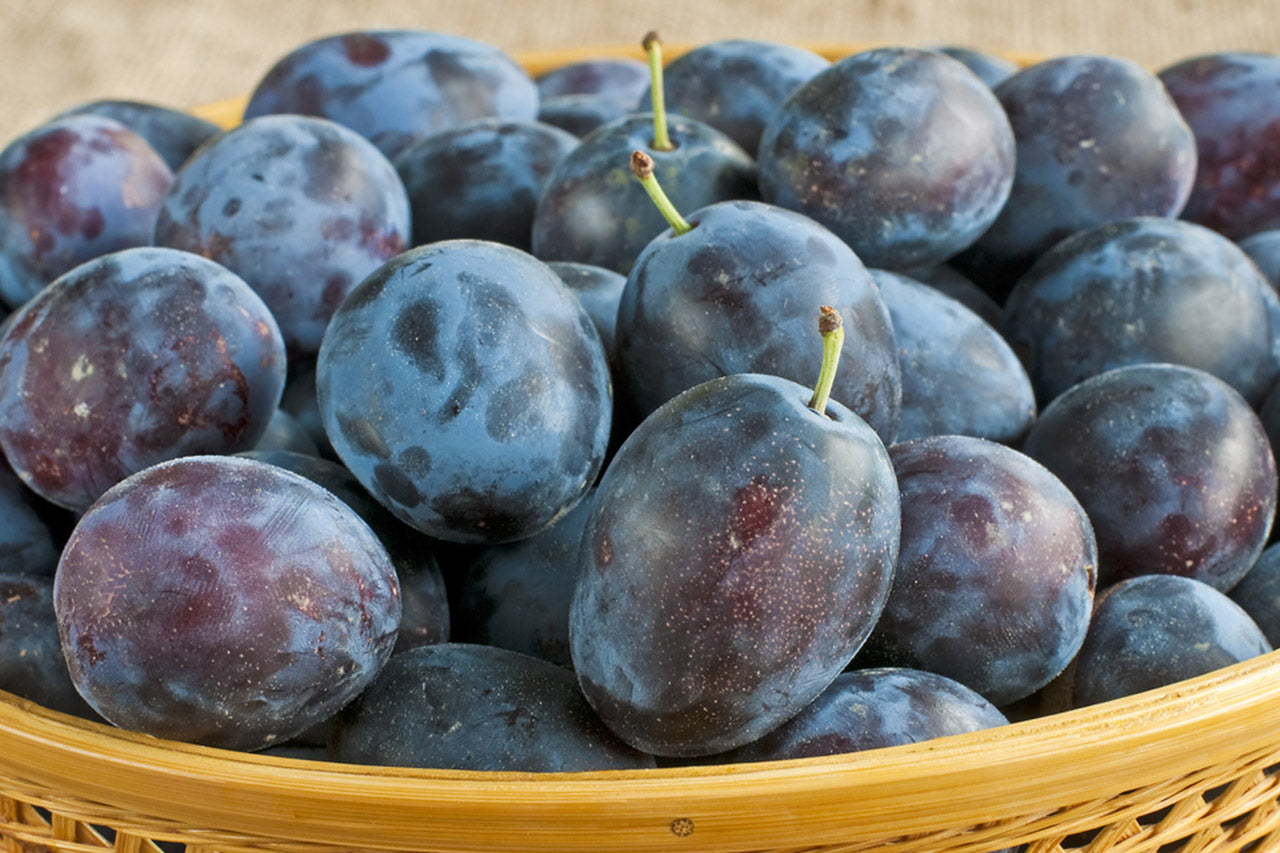
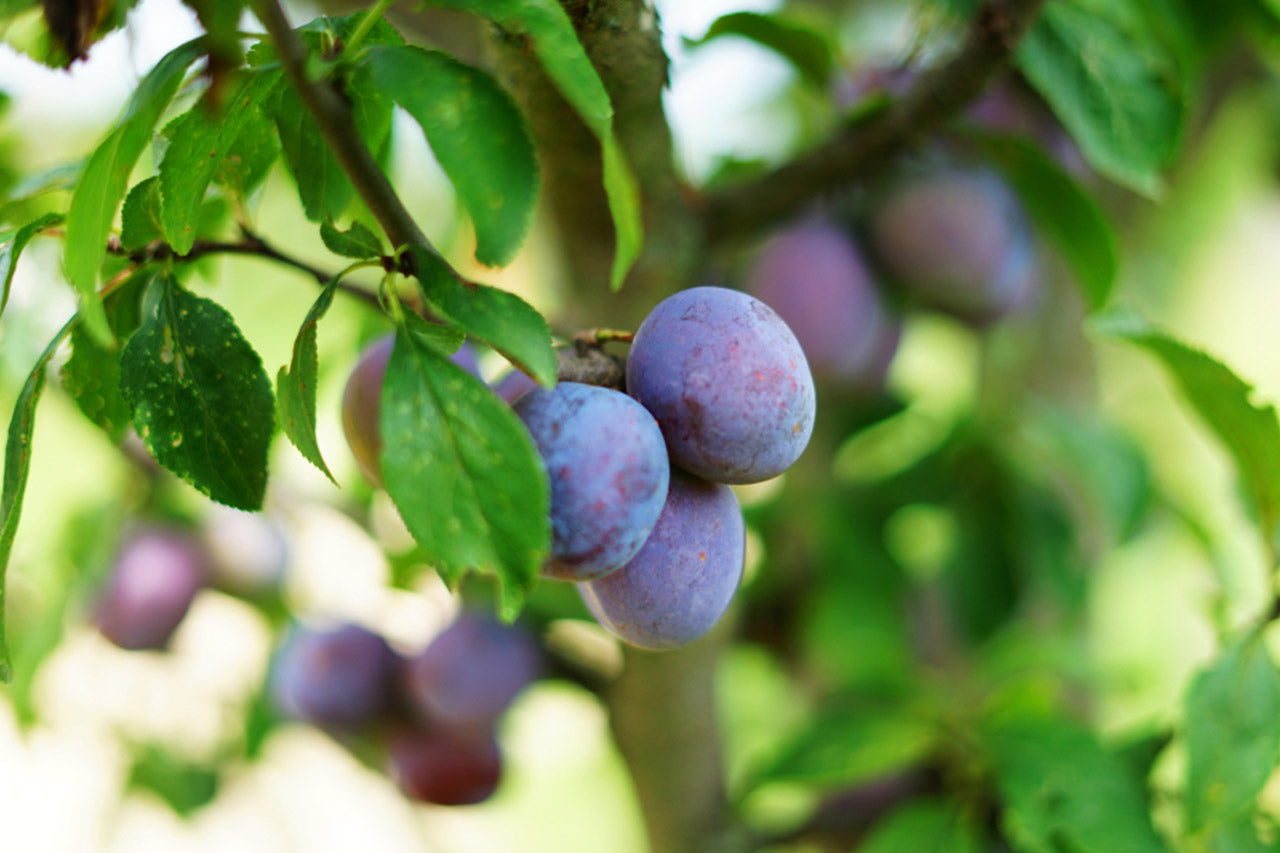
Damsons are one of those fruits that rarely go to waste, because they shine in the things we actually make. They’re rich, tangy, and full-flavoured — the sort of plum that turns into proper jam, jelly, chutney, crumbles and damson gin with very little persuasion. Even a modest crop feels generous because the flavour is so concentrated. If you’ve ever wanted a fruit tree that earns its keep beyond the odd snack, damson is a brilliant choice: productive, traditional, and quietly satisfying in a way that fits real UK gardens.
Common name: Damson tree (a type of plum traditionally grown for cooking and preserving).
Latin name: Prunus domestica subsp. insititia (often sold simply as Prunus domestica “Damson”).
Size in UK gardens: Commonly around 3–5m, depending on variety and rootstock; can be kept smaller with pruning.
Best position: Full sun in a reasonably sheltered spot for best flowering and fruiting.
Soil: Fertile, well-drained soil is ideal; tolerates many soils if not waterlogged.
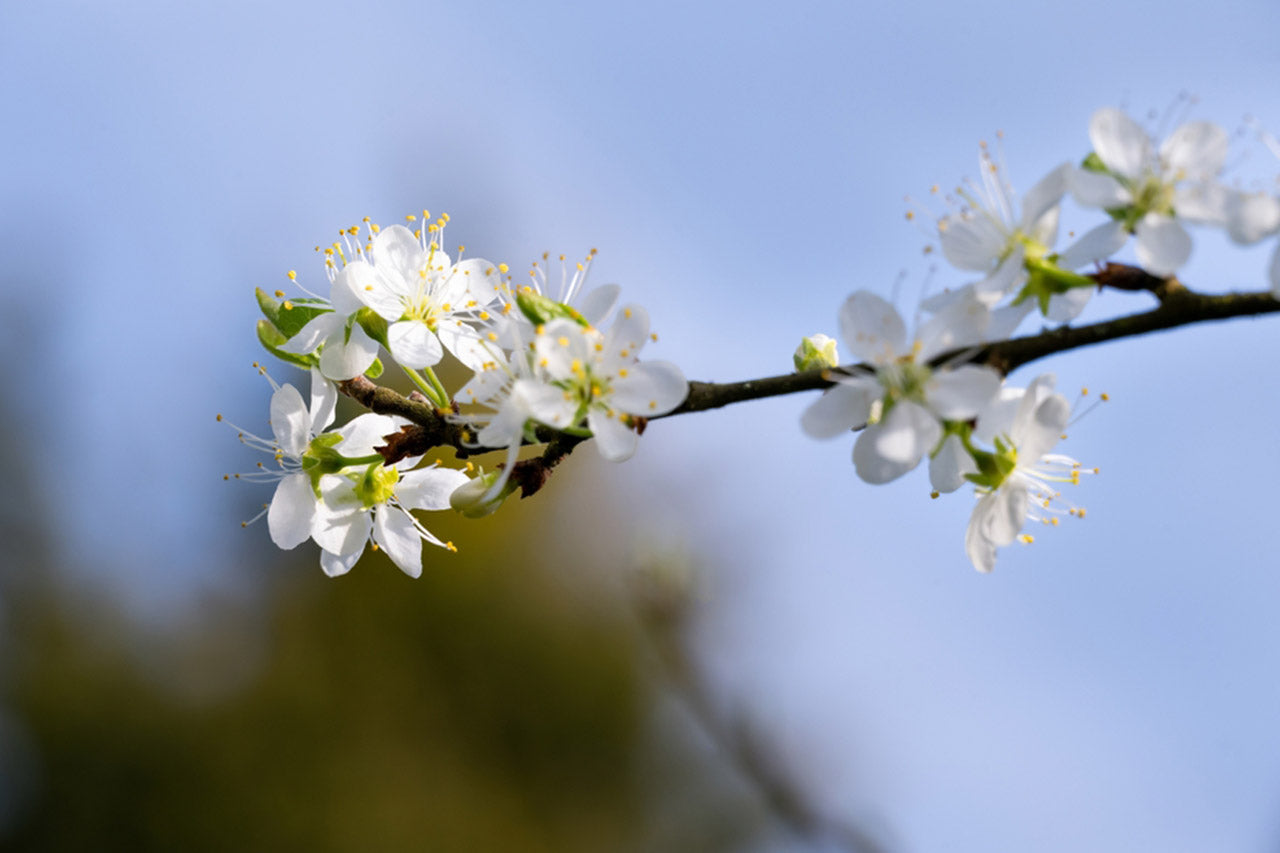
Flowering time: Spring (typically April).
Fragrance: Usually not noticeably scented.
Hardiness: Very hardy in most UK gardens once established.
Care level: Low to moderate – generally easy, with simple pruning and consistent watering while young.

The Simpson’s team raises the majority of our trees here at the nursery. For varieties outside our own production, we work with independent local growers we trust - all chosen for UK climate suitability.
Planting time: As container-grown plants, damsons can be planted in most months when the ground isn’t frozen or waterlogged; spring and autumn are usually easiest.
Watering: Water well through the first 1–2 seasons and during dry spells; consistent moisture helps roots establish and supports fruit formation.
Feeding: A spring mulch of compost or well-rotted manure is usually enough; add a light balanced feed if growth seems weak.
Pruning: Prune lightly to shape and remove crossing growth; summer pruning is often preferred for Prunus.
Winter: Very hardy; focus on good drainage and a mulch rather than heavy protection.
Availability is always changing, so please check with us if you have a particular variety in mind.
A proper damson with real heritage energy—tough, productive, and beautifully suited to jams, jellies, and preserves. The flavour is rich, deep, and pleasantly tart, with that unmistakable damson intensity that becomes wonderfully rounded when cooked. Perfect if you love traditional preserves and a tree with strong old-orchard character.
A big-hearted damson with real old-fashioned usefulness—reliable, productive, and made for the kitchen. The flavour is deep and richly tart, with that unmistakable damson intensity that turns wonderfully mellow and jammy when cooked. Ideal if you love preserves, pies, and proper pantry fruit.