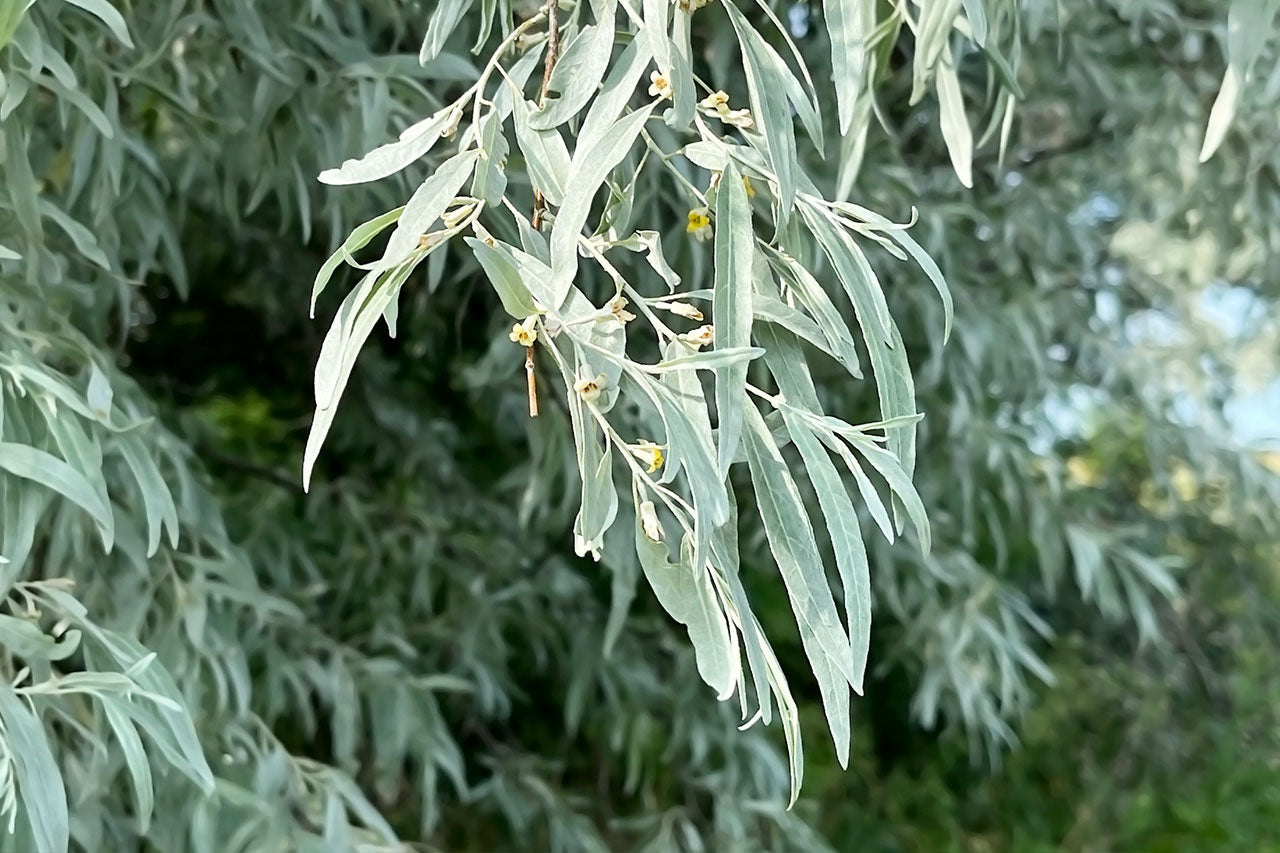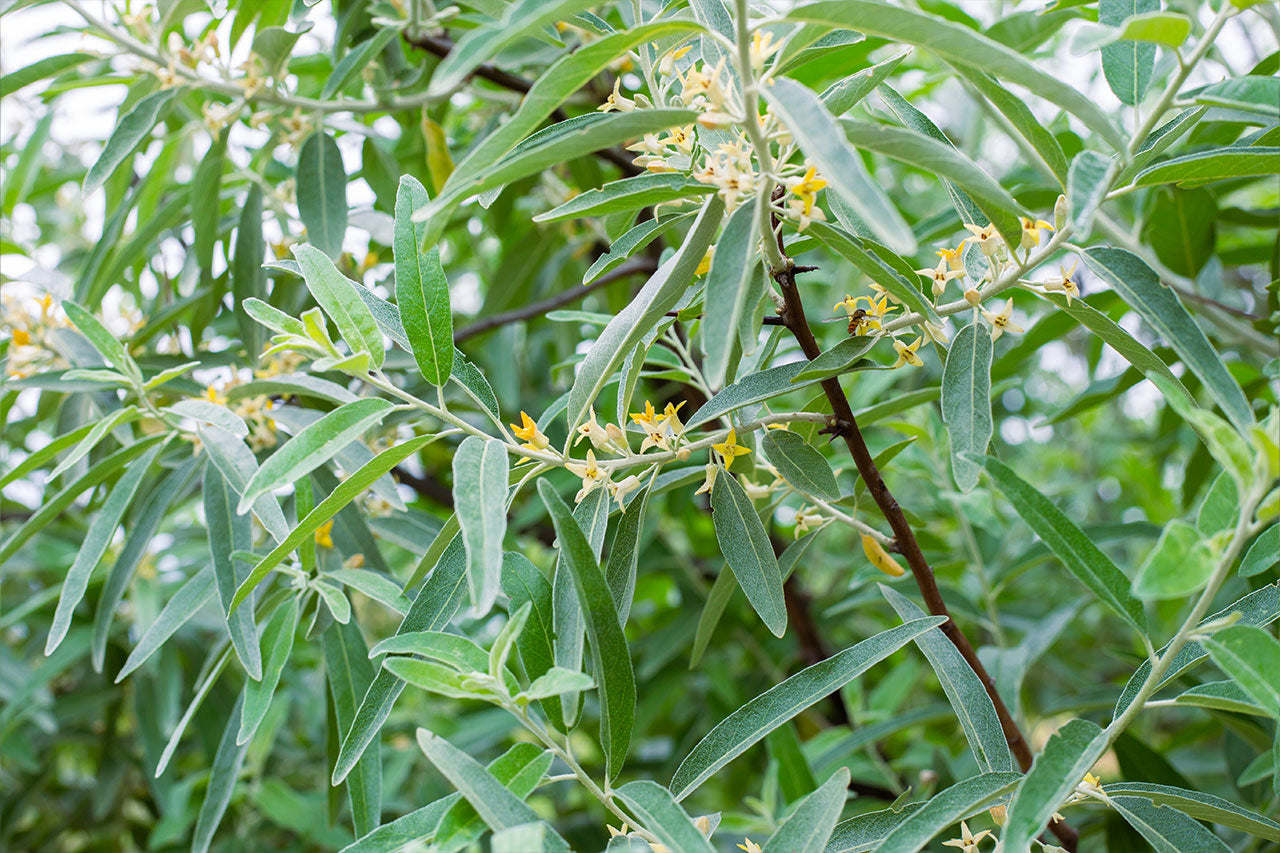

Elaeagnus is one of those shrubs that quietly earns its place by simply being there, reliably, in every season. Its sturdy leaves stand up to wind, traffic and salt-laden air, making it as useful in exposed gardens as it is in sheltered town plots. Through winter it holds the line along paths and boundaries, giving shape and privacy when many other plants have disappeared. For a gardener who wants a backbone they can depend on, Elaeagnus is a reassuringly solid choice.
Common name: Oleaster
Latin name: Elaeagnus
Size in UK gardens: Usually 2–3m tall and wide if left to grow, but easily kept lower with light pruning.
Best position: Full sun or light shade in a reasonably open spot; excellent for windy, exposed or coastal gardens.
Soil: Well-drained soil of almost any type, including poorer or chalky ground, once established.
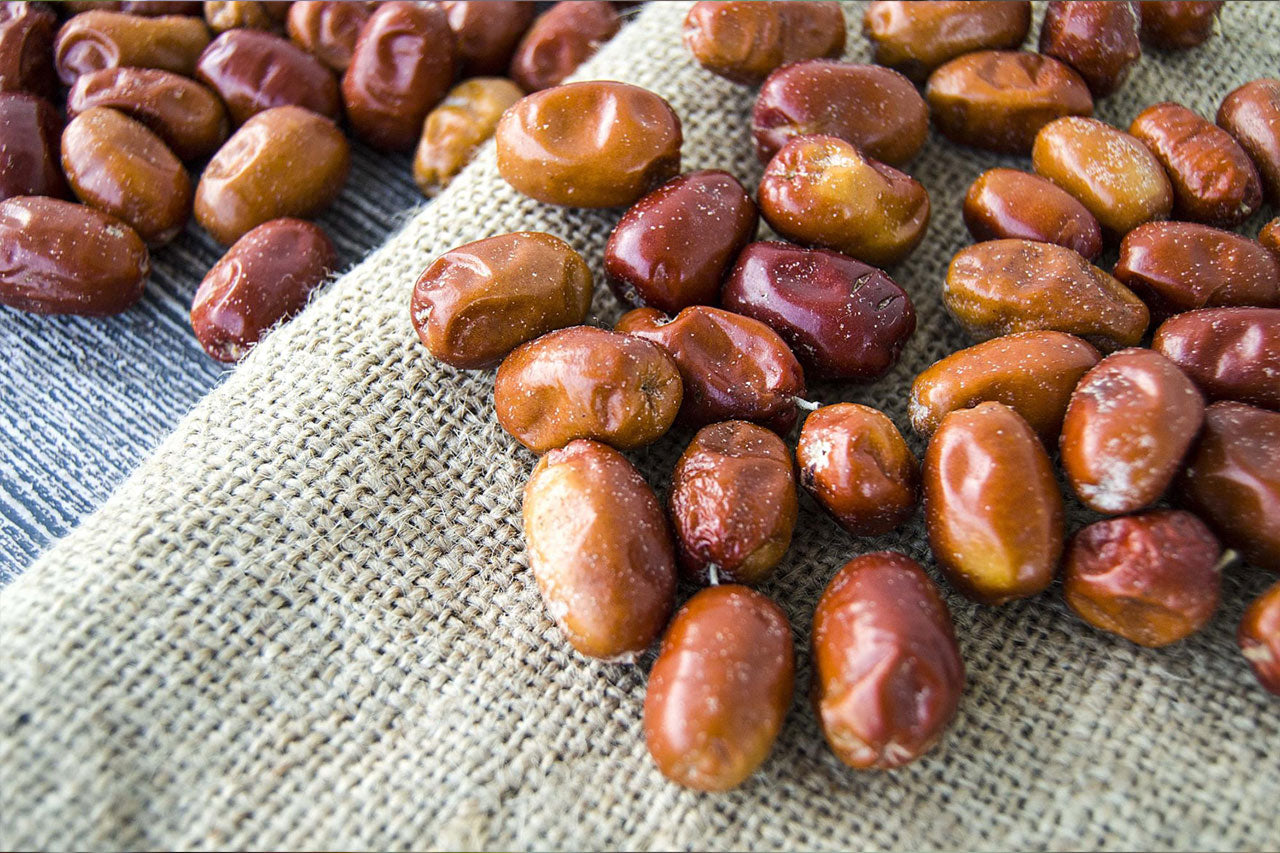
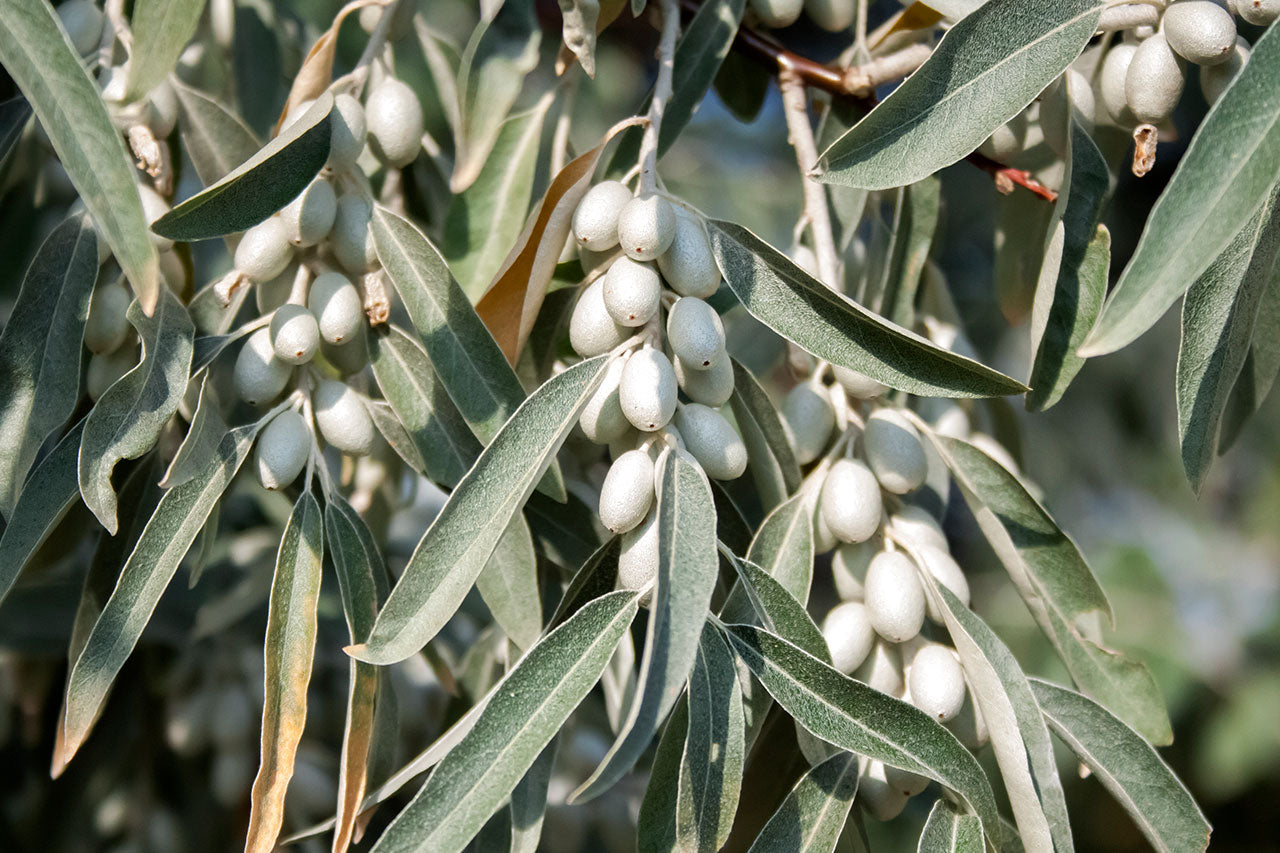
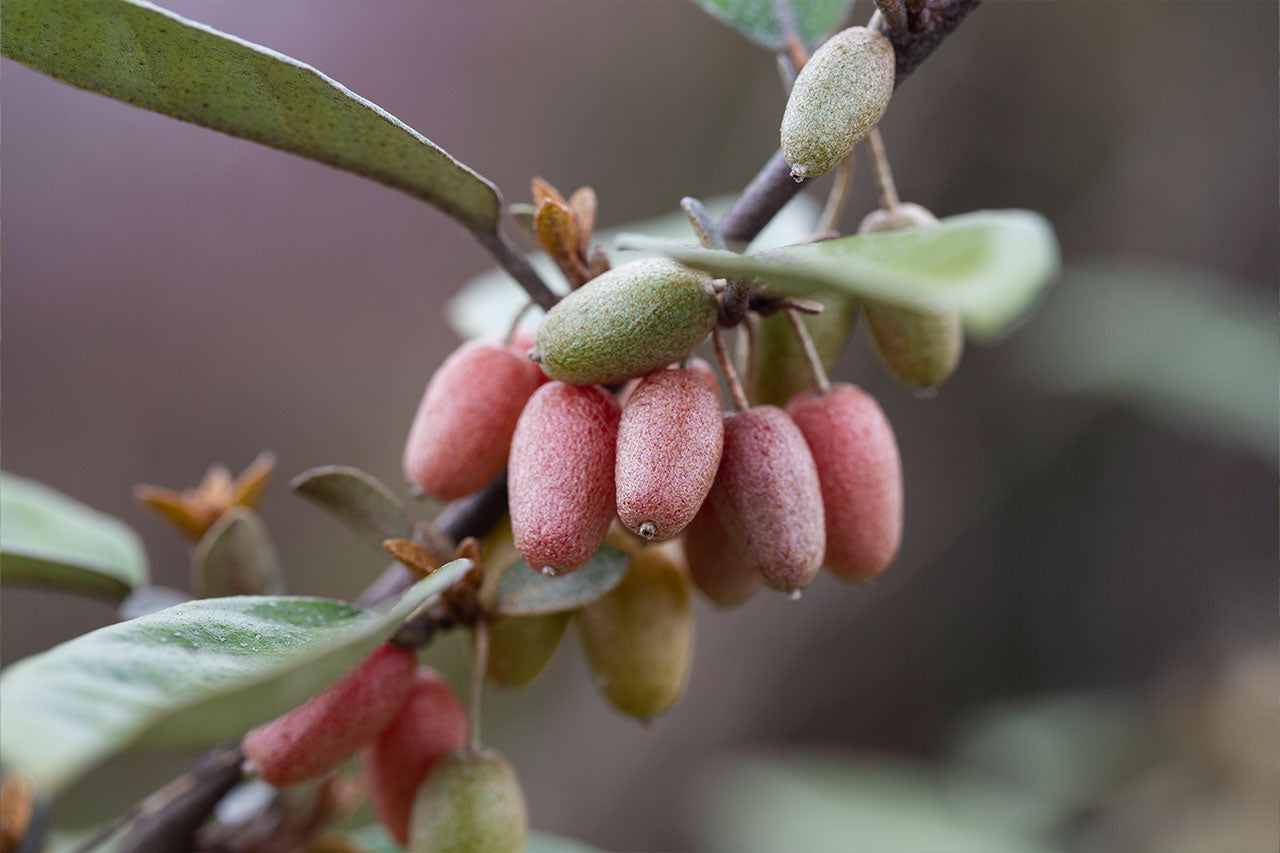
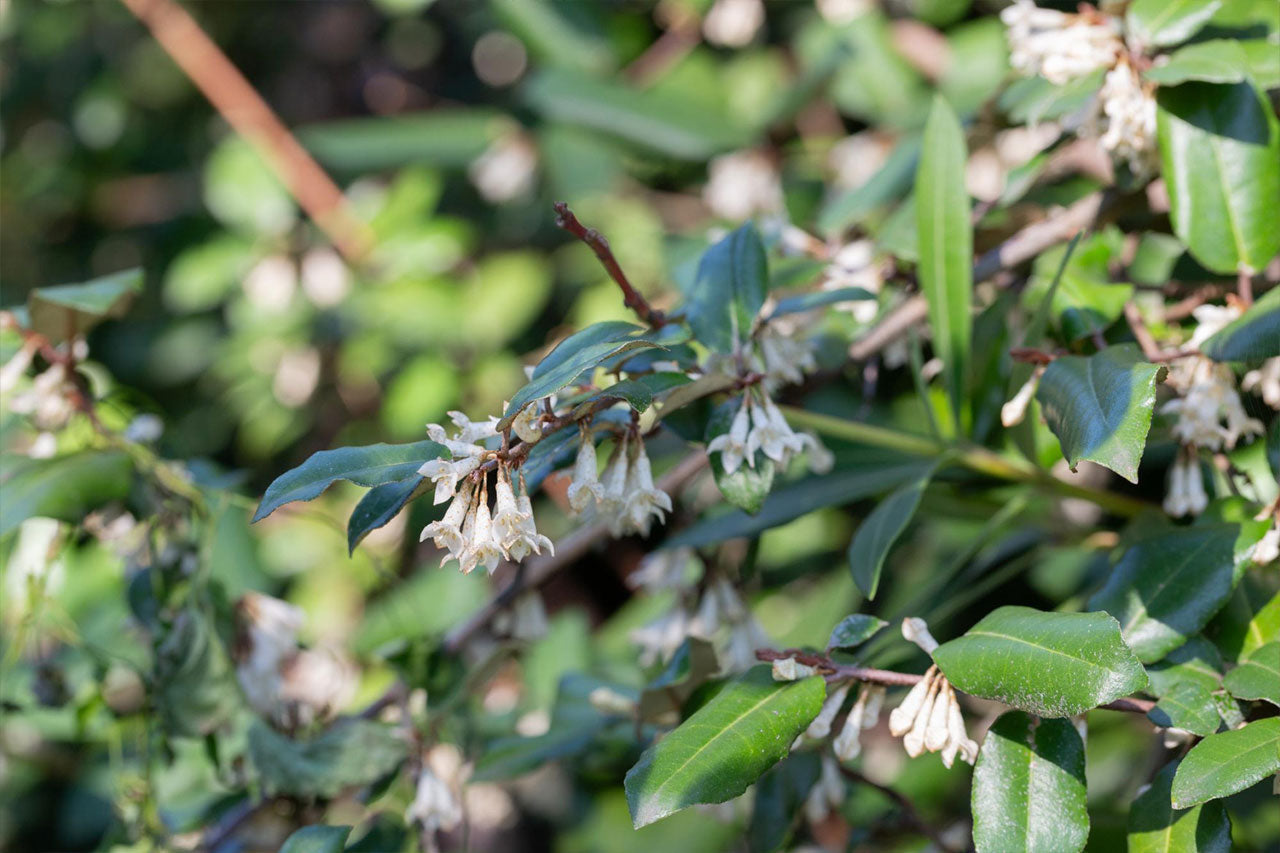
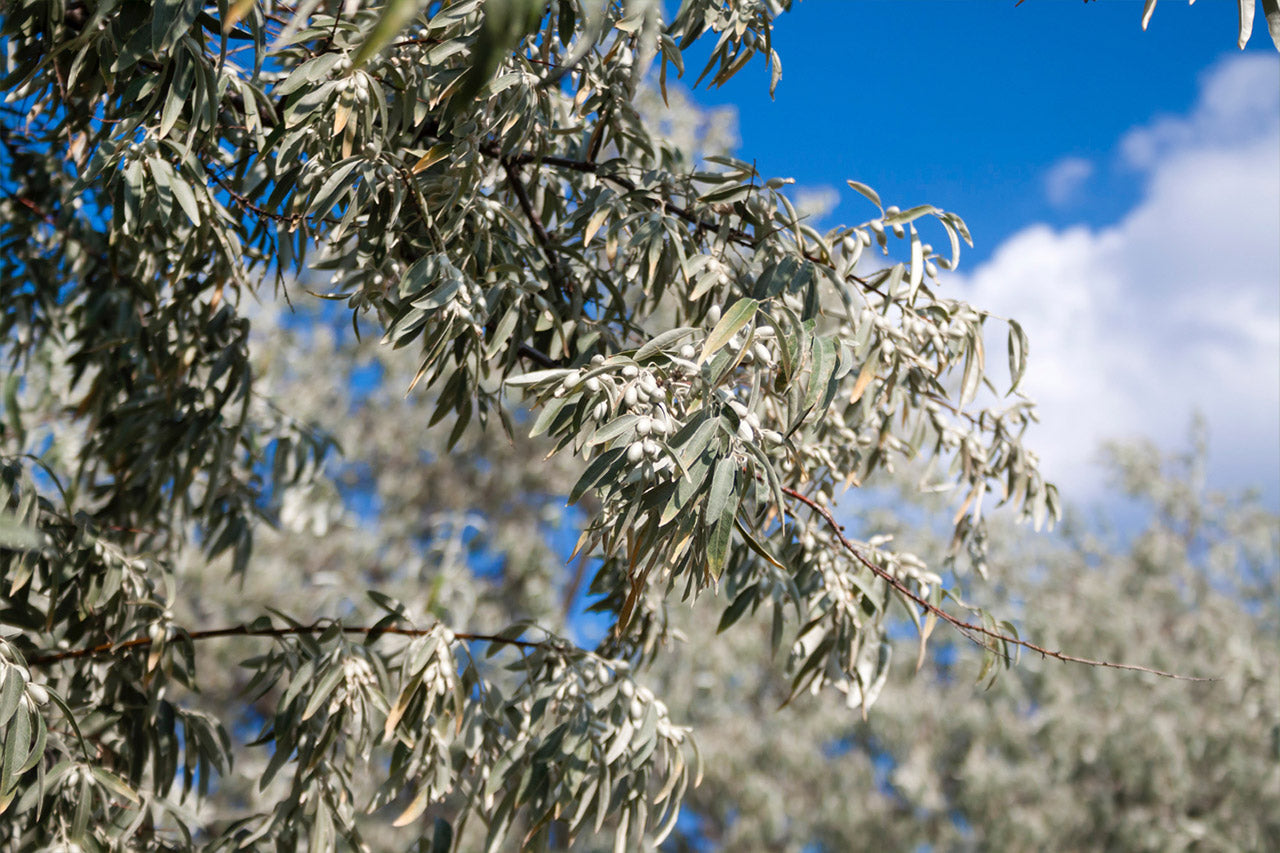
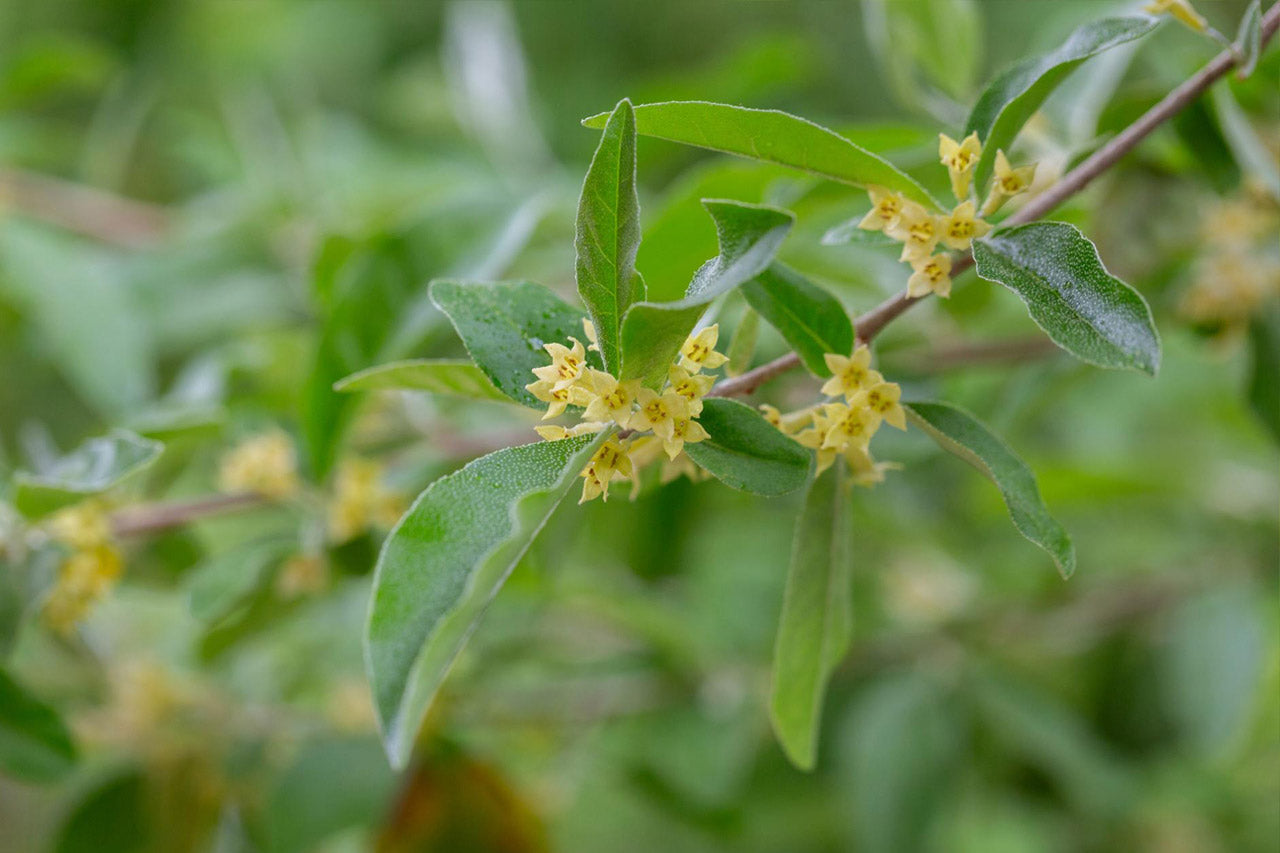
Main interest: Attractive evergreen foliage with silvery undersides, small but powerfully scented autumn flowers and, on some forms, orange or red berries.
Fragrance: Autumn flowers are surprisingly sweet and strong on still days; foliage is usually not scented.
Hardiness: Generally hardy in most UK gardens, including Cambridgeshire and East Anglia, once roots are established.
Care level: Low maintenance once settled in; mainly watering in the first season and an occasional trim to keep in shape.

Rather than travelling halfway across Europe, our mimosa trees are grown on site by the Simpson’s team. They’re toughened to local conditions, properly potted, and ready to get growing the moment you plant them.
Planting time: As a container-grown shrub, Elaeagnus can be planted in most months when the ground is not frozen or waterlogged. Spring and autumn are usually the kindest times for new roots to settle in.
Watering: Water regularly through the first growing season, especially in dry spells, so the root system can spread into the surrounding soil. Once established, it usually only needs extra water in prolonged drought.
Feeding: A light application of a balanced, slow-release fertiliser in spring, or a mulch of garden compost around the base, will help keep growth steady and foliage healthy.
Pruning: It generally needs just one or two light trims a year to maintain its shape, ideally after the main flush of spring growth and again in late summer if required.
Winter: In most UK gardens Elaeagnus keeps its leaves right through winter. Young plants may appreciate a mulch around the base and a little shelter from very sharp winds in their first year.
Availability is always changing, so please check with us if you have a particular variety in mind.
A handsome evergreen with leaves neatly edged in gold—smart, bright, and wonderfully useful. It’s brilliant for lifting a darker corner, creating a tidy screen, or forming a backdrop that makes other plants look richer. In winter, that golden margin catches low light beautifully, giving the garden a warm, composed feel.
A real light-bringer: bold evergreen leaves with bright, almost luminous variegation that lifts a border even on dull days. It’s excellent for hedging, screening, or as a feature shrub near paths and patios where you’ll enjoy that colour up close. Tough, reliable, and surprisingly elegant when clipped lightly.
An evergreen shrub with beautifully splashed foliage—greens mottled with creamy-yellow markings that feel painterly rather than harsh. It’s a splendid choice for brightening boundaries, adding contrast among plain green shrubs, or giving structure to a mixed border year-round. It’s especially valuable in winter when foliage interest really matters.
One of the great workhorse evergreens: tough as old boots, wind-tolerant, and brilliant for screening and hedging. The leaves are a handsome grey-green, often with a silvery underside that flickers in the breeze. If you need an evergreen backbone that looks smart, copes with coastal exposure, and gives you privacy, this is a superb choice.