

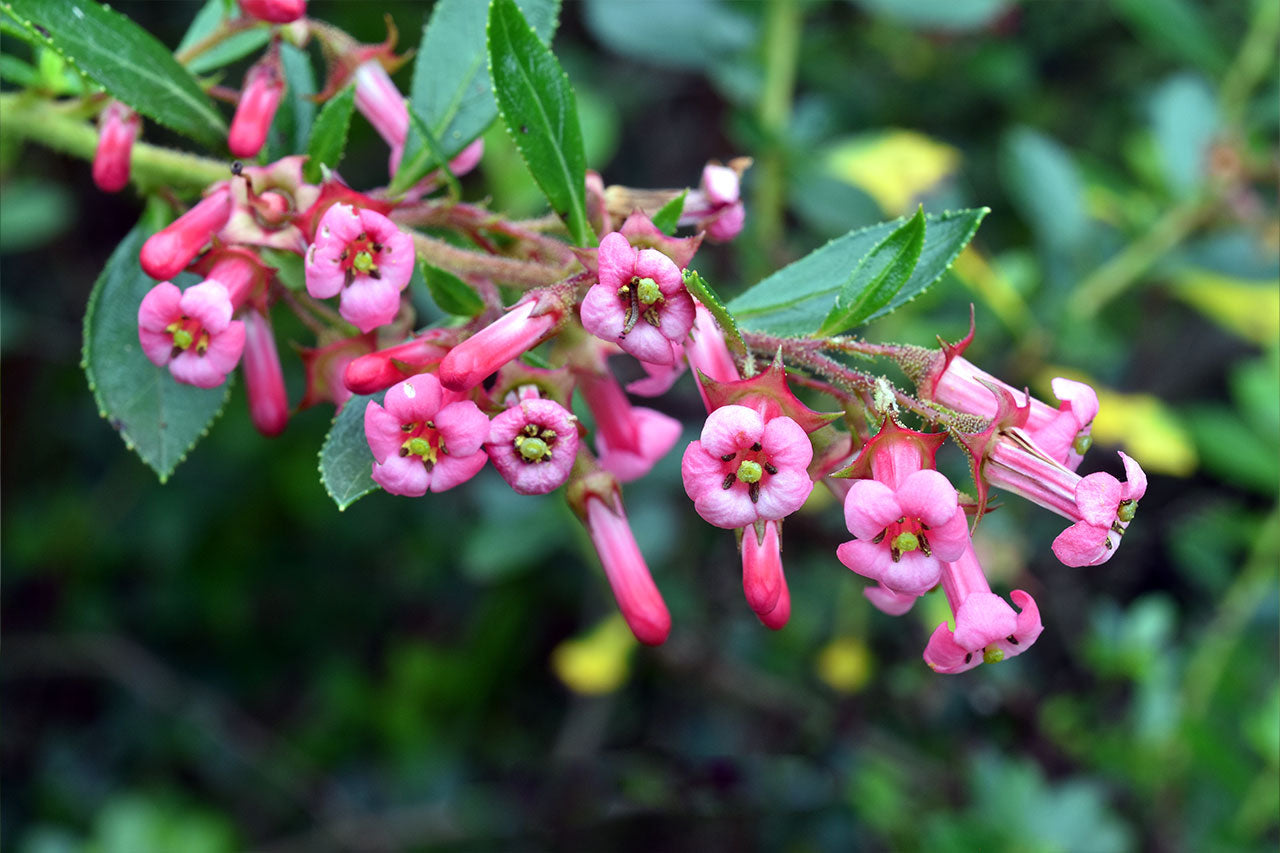
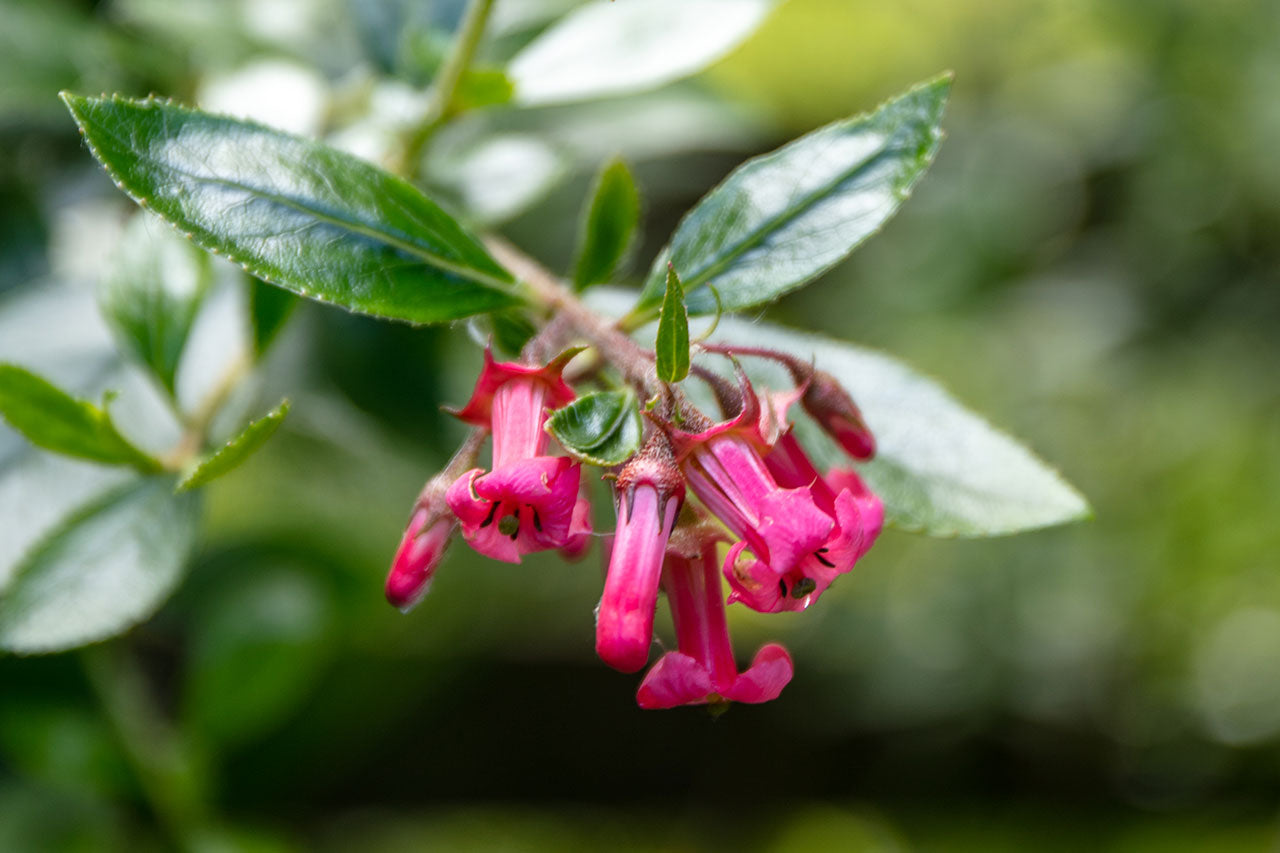
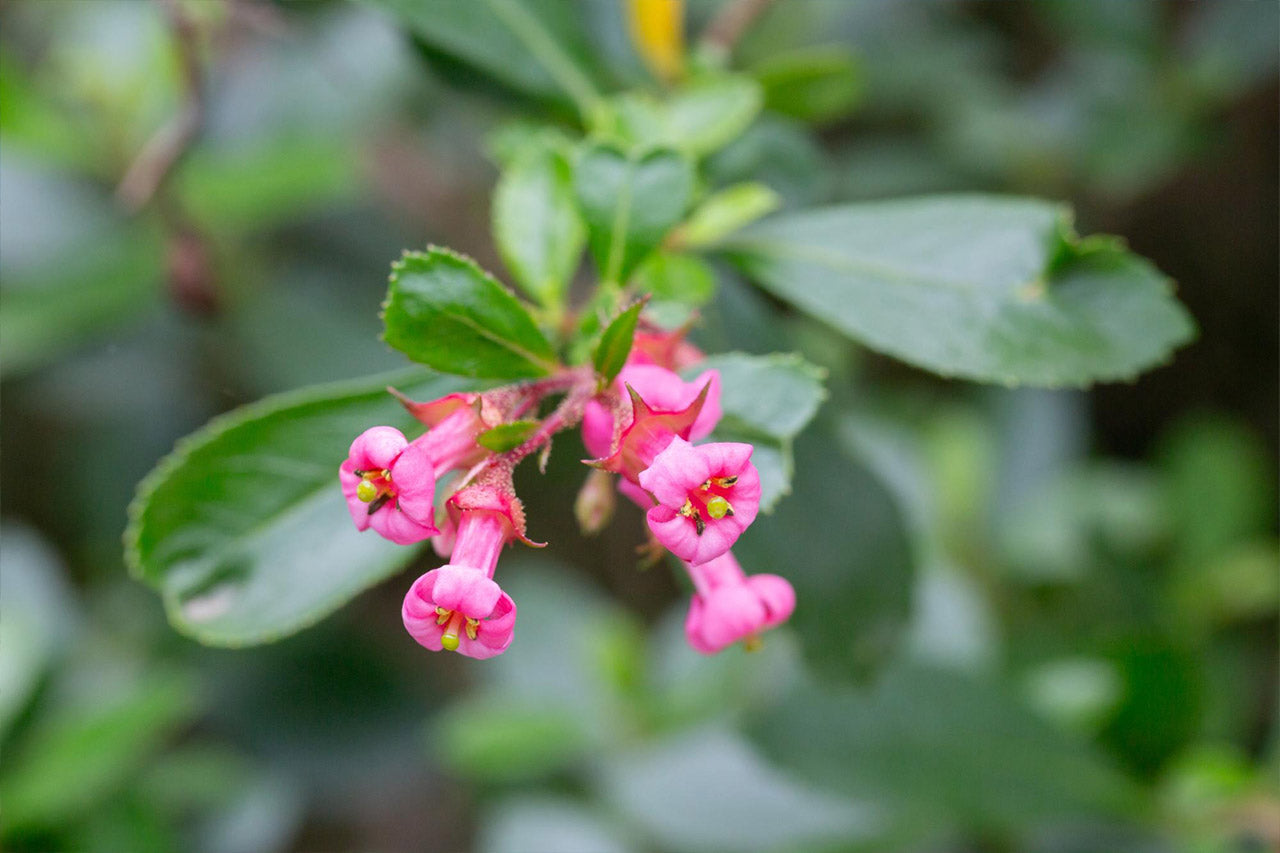
Escallonia’s real party trick is just how long it can stay in bloom. Starting in early summer and often continuing in flushes right into early autumn, it sprinkles the garden with clusters of pink, red or white flowers when many shrubs have already finished their main show. In a sunny position, the flowers are produced generously along the stems, creating a soft haze of colour. It’s the sort of shrub that quietly keeps things cheerful through holidays, barbecues and late-season evenings outdoors.
Common name: Escallonia
Latin name: Escallonia
Size in UK gardens: Commonly 1.5–2m tall and wide, sometimes up to around 2.5m if left untrimmed, but easy to keep smaller with regular pruning.
Best position: A sunny, reasonably sheltered spot, ideal along a fence, as a hedge, or at the back of a mixed border.
Soil: Free-draining, moderately fertile soil; happiest where winter wet is avoided.
Flowering time: Typically June to September, with clusters of pink, red or white flowers that can repeat through summer.
Fragrance: Flowers are often lightly scented, and the foliage has a resinous aroma when brushed or crushed.
Hardiness: Generally hardy in most milder and coastal parts of the UK and in many Cambridgeshire gardens; in colder, exposed sites it may need a bit of shelter.
Care level: Low to moderate; regular watering while young and a yearly trim after flowering keep it neat and floriferous.

The Simpson’s team raises the majority of our trees here at the nursery. For varieties outside our own production, we work with independent local growers we trust - all chosen for UK climate suitability.
Planting time: As a container-grown shrub, Escallonia can be planted in most months when the ground isn’t frozen or waterlogged, with spring and autumn usually the easiest times for new roots to get going.
Watering: Water regularly through the first growing season so the roots can spread into the surrounding soil, especially in dry spells. Once established, it’s fairly drought-tolerant and only needs extra water in prolonged dry weather.
Feeding: A light feed with a balanced granular fertiliser in spring, or a mulch of garden compost around the base, is usually enough to keep growth healthy and flowering reliable.
Pruning: Prune lightly after the main flush of flowers, trimming back the season’s growth to keep the shape neat and encourage fresh shoots. Avoid very hard pruning at the wrong time if you want a good display of blooms.
Winter: In most milder UK gardens Escallonia remains evergreen, though in particularly cold winters there may be some leaf scorch or dieback at the tips. A little shelter and a mulch at the base will help younger plants through their first winters.
Availability is always changing, so please check with us if you have a particular variety in mind.
A handsome evergreen with rich foliage tones that can look almost bronzy, especially in cooler weather—bringing depth and warmth to the garden year-round. It’s excellent as a smart hedge or a feature shrub, and it carries flowers that add a little extra cheer in season. A very good choice for sheltered, sunny gardens where you want structure with colour.
A pretty escallonia with soft, blush-pink flowers that feel fresh and gently romantic against glossy evergreen leaves. Lovely for hedging in milder areas, or as a feature shrub in borders where you want year-round structure plus a floral moment. It suits cottage-style gardens surprisingly well, especially near paths and patios.
A more upright, emphatic escallonia with deep crimson flowers that stand out beautifully against glossy foliage. It’s excellent for adding vertical structure in evergreen planting, and very effective as a hedge with a little extra flair. In summer, those darker blooms bring a richer, more dramatic note than the softer pink forms.
A bright, reliable escallonia that brings a crisp, fresh feel—glossy evergreen leaves and plenty of flowers in season. It’s ideal for hedging, screening, or using as a shapely shrub in a mixed border where it adds year-round presence. Particularly good in coastal and milder gardens where it keeps its poise through winter.
A classic, much-planted escallonia that earns its place with dependable evergreen structure and a generous show of flowers. Brilliant as a hedge, a boundary shrub, or a quiet backbone in mixed planting where you want something that looks good in every month. It’s the sort of shrub that makes a garden feel settled and established.
A wonderfully bright evergreen that looks as though it’s caught a little sunshine and kept it in its leaves. The golden foliage brings instant lift to borders and boundaries, and it’s especially valuable in winter when colour can be in short supply. Use it as a smart shrub in mixed planting or as a low, glowing hedge in a sheltered spot.
A classic escallonia with glossy evergreen leaves and a froth of clean white flowers that feel fresh and generous in summer. It makes a splendid hedge in milder gardens, giving structure all year and a proper floral moment when it comes into bloom. Very good near patios and paths, where the white flowers brighten evenings beautifully.
A pretty, pink-flowered escallonia with a soft, friendly look—just the thing for bringing a gentle blush of colour to evergreen structure. It works beautifully as a shrub in a mixed border, or clipped as a neat hedge where you want year-round presence without feeling too formal. A reliable choice for sheltered gardens with a little warmth.
A compact evergreen with deep pink-to-red flowers that add a richer note than the softer forms. It’s ideal for smaller gardens, pots, and front-of-border planting where you want evergreen structure plus a bold splash in summer. Tidy, dependable, and very good at making a space feel “finished”.
A lively, compact escallonia with bright, rosy-red flowers that give a cheerful, summery sparkle against glossy foliage. Perfect for a small hedge, a low screen, or as a colourful shrub in borders and containers. It has that lovely quality of looking smart even when it’s simply sitting there doing its evergreen job.