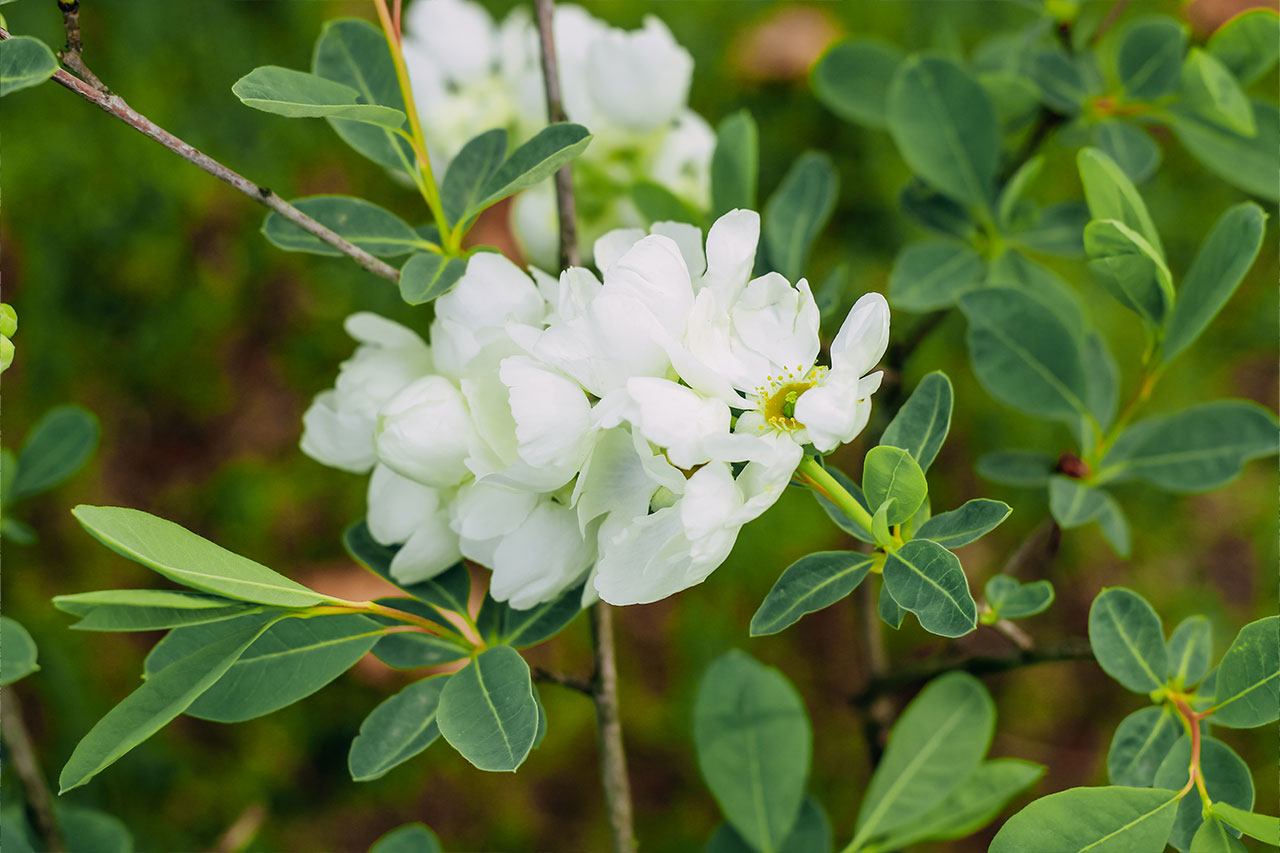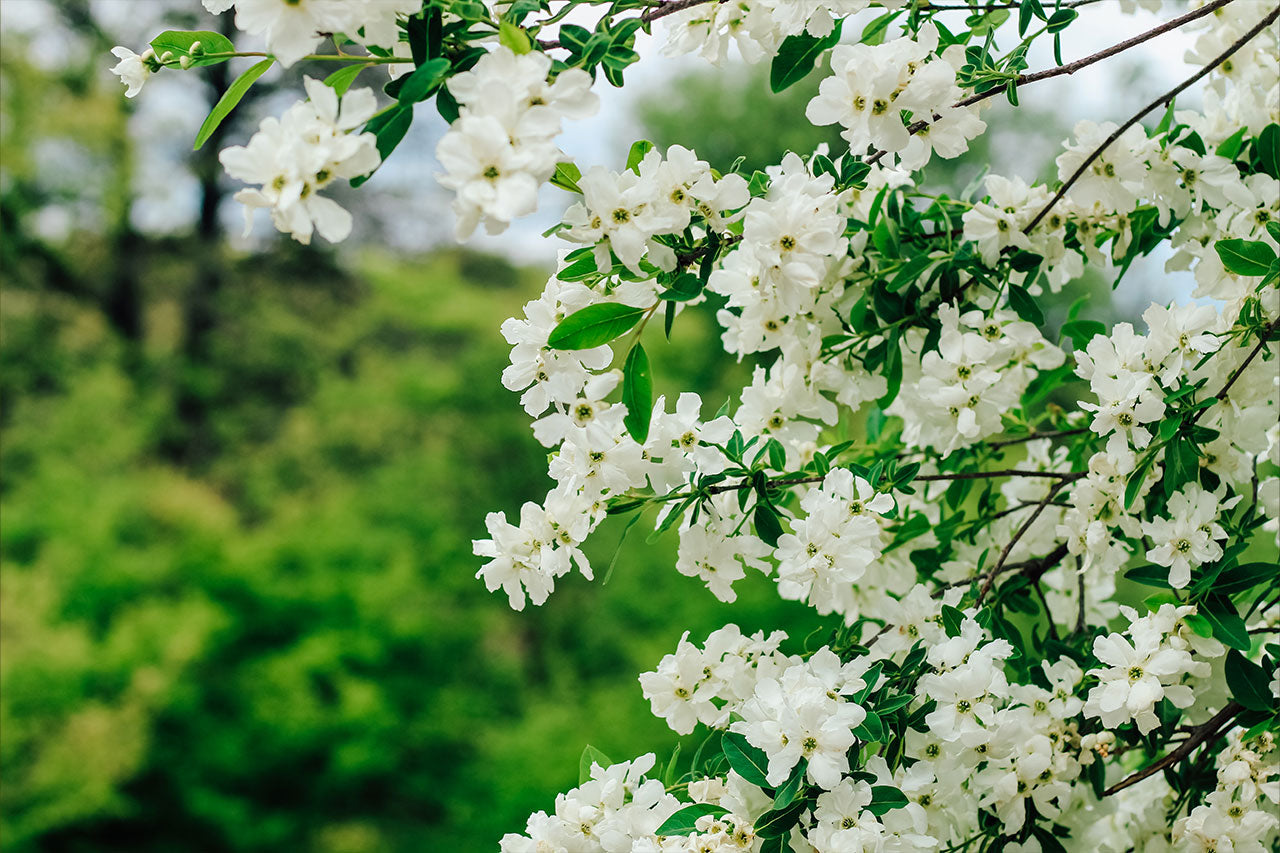

When Exochorda flowers, it does so with generosity. The branches are strung with pearl‑like buds that open into pure white blooms, often so thickly that the shrub looks as though it’s been dusted with snow. On bright spring days the effect can be breathtaking, especially against a blue sky or darker evergreens. That concentrated moment of beauty is part of the charm; it arrives, dazzles, and then hands the baton on to summer flowers, leaving you looking forward to its return next year.
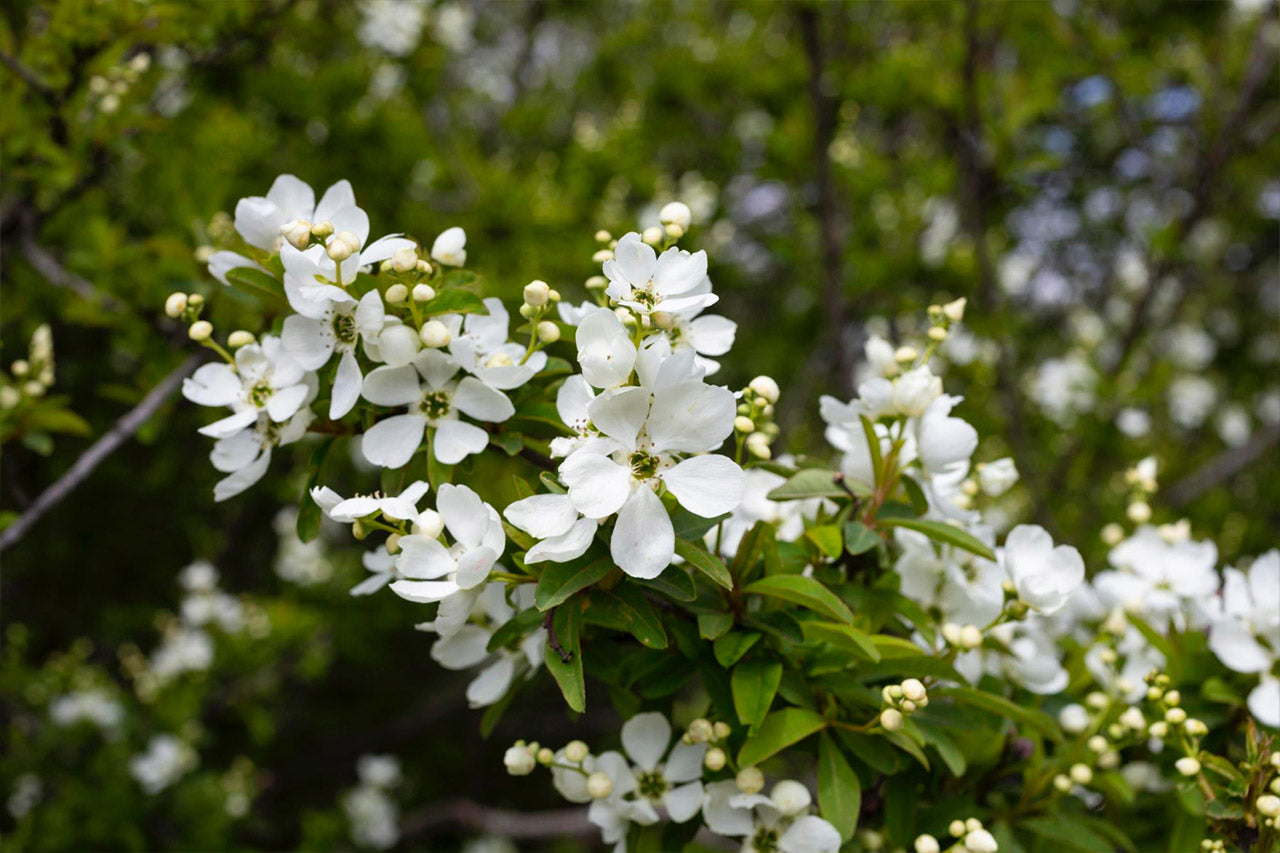
Common name: Pearl Bush
Latin name: Exochorda
Size in UK gardens: Usually around 1.5–2.5m tall and wide in time; smaller in size if lightly pruned after flowering each year.
Best position: A sunny or lightly shaded spot with room for its arching branches to spread and show off their spring blossom.
Soil: Moderately fertile, moist but well‑drained soil; happiest where winter waterlogging is avoided.
Flowering time: Typically April to May, when branches can be smothered in pure white, “pearl”‑like flowers.
Fragrance: Flowers may be very lightly scented close up, but are usually not strongly fragrant in most gardens.
Hardiness: Fully hardy in most UK gardens, including inland areas such as Cambridgeshire and East Anglia.
Care level: Low to moderate; a good soak in dry spells and simple pruning after flowering keep it looking its best.

The Simpson’s team raises the majority of our trees here at the nursery. For varieties outside our own production, we work with independent local growers we trust - all chosen for UK climate suitability.
Planting time: As a container‑grown shrub, Exochorda can be planted in most months when the ground isn’t frozen or waterlogged, with spring and autumn usually the easiest seasons for new roots to settle.
Watering: Water regularly during the first couple of years, especially in dry springs and summers, so the root system can establish well. Once settled, it usually copes with normal dry spells without fuss.
Feeding: A mulch of garden compost or well‑rotted manure in spring is generally enough; on very poor soils, a light balanced fertiliser can support good flowering and healthy foliage.
Pruning: Prune lightly after flowering, shortening some of the flowered shoots and removing a few of the oldest stems to keep a graceful, open shape. Avoid heavy winter pruning, which would remove many of the following spring’s flowers.
Winter: Fully hardy and leafless in winter, Exochorda normally needs no special protection in the ground. A mulch over the root area is helpful in colder or more exposed gardens.
Availability is always changing, so please check with us if you have a particular variety in mind.
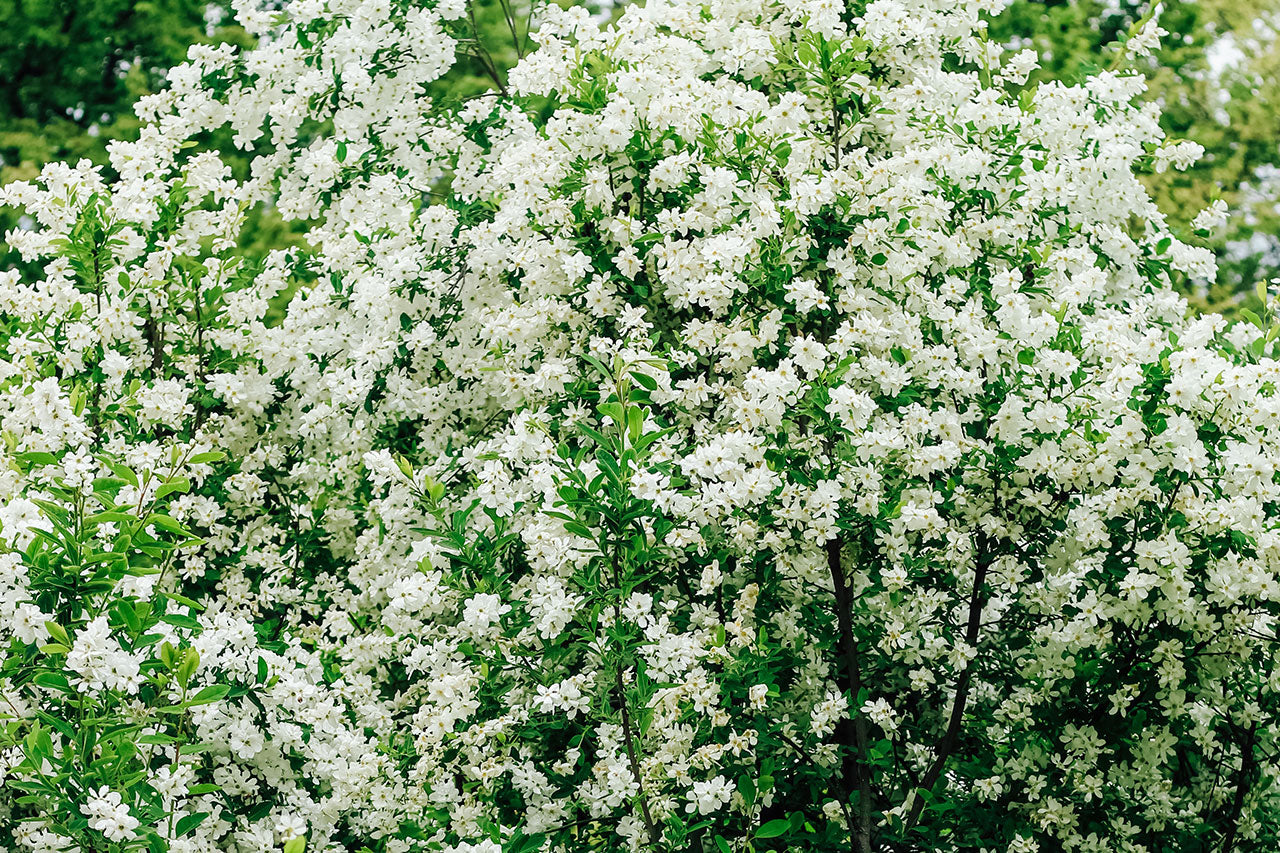
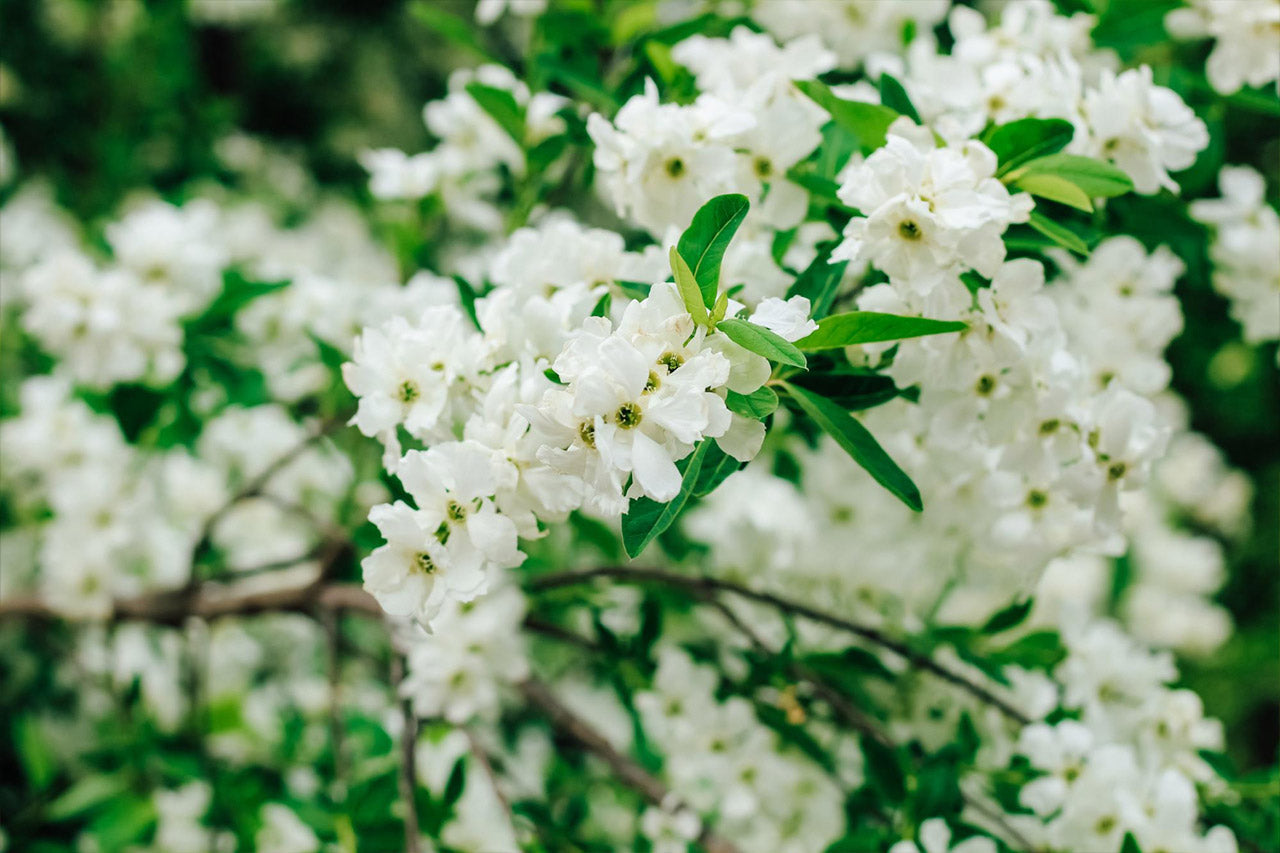
A spring showstopper: arching branches smothered in pristine white buds and blossom, like strings of pearls opening into frothy flowers. It’s at its best where it has space to billow a little—near a lawn, along a boundary, or as a feature in a mixed shrub border. When it’s in flower, it stops you in your tracks.