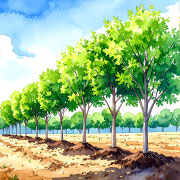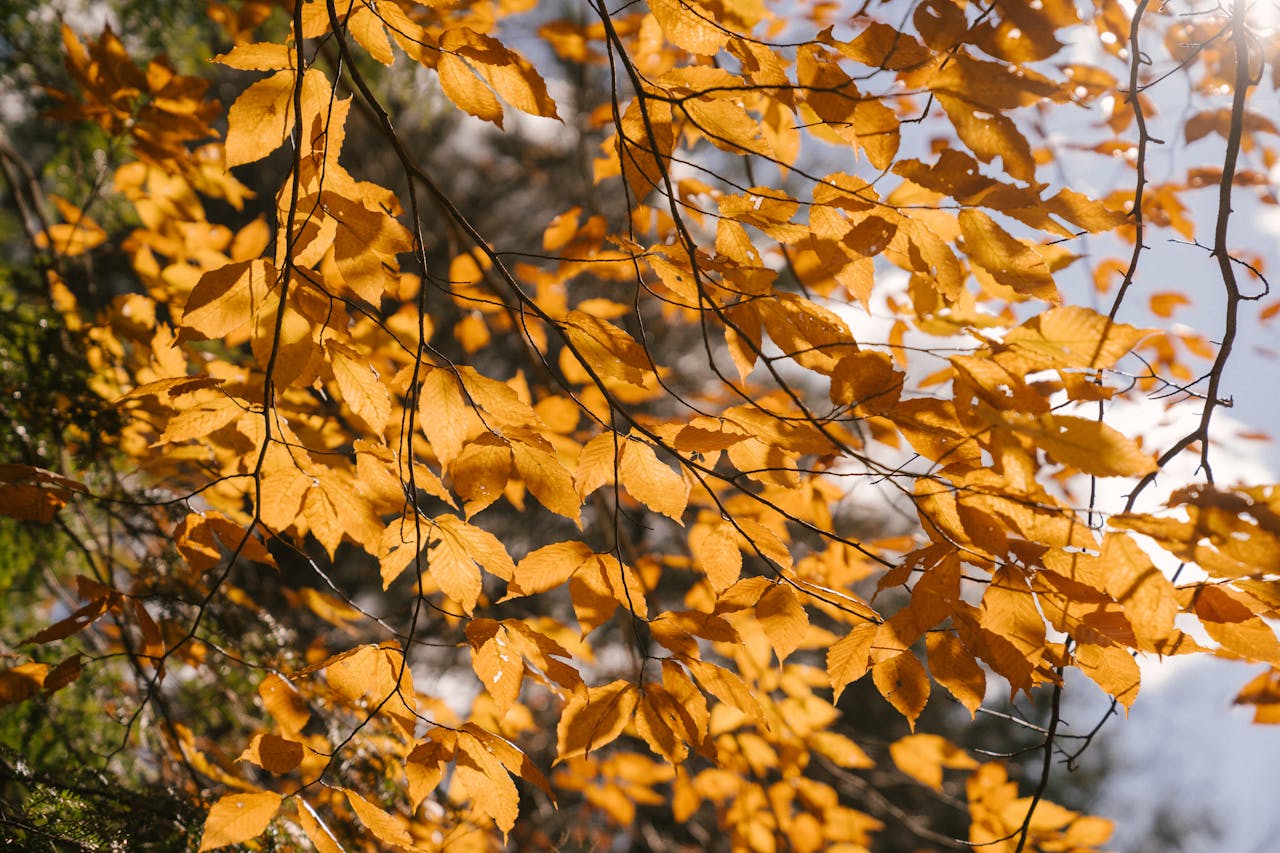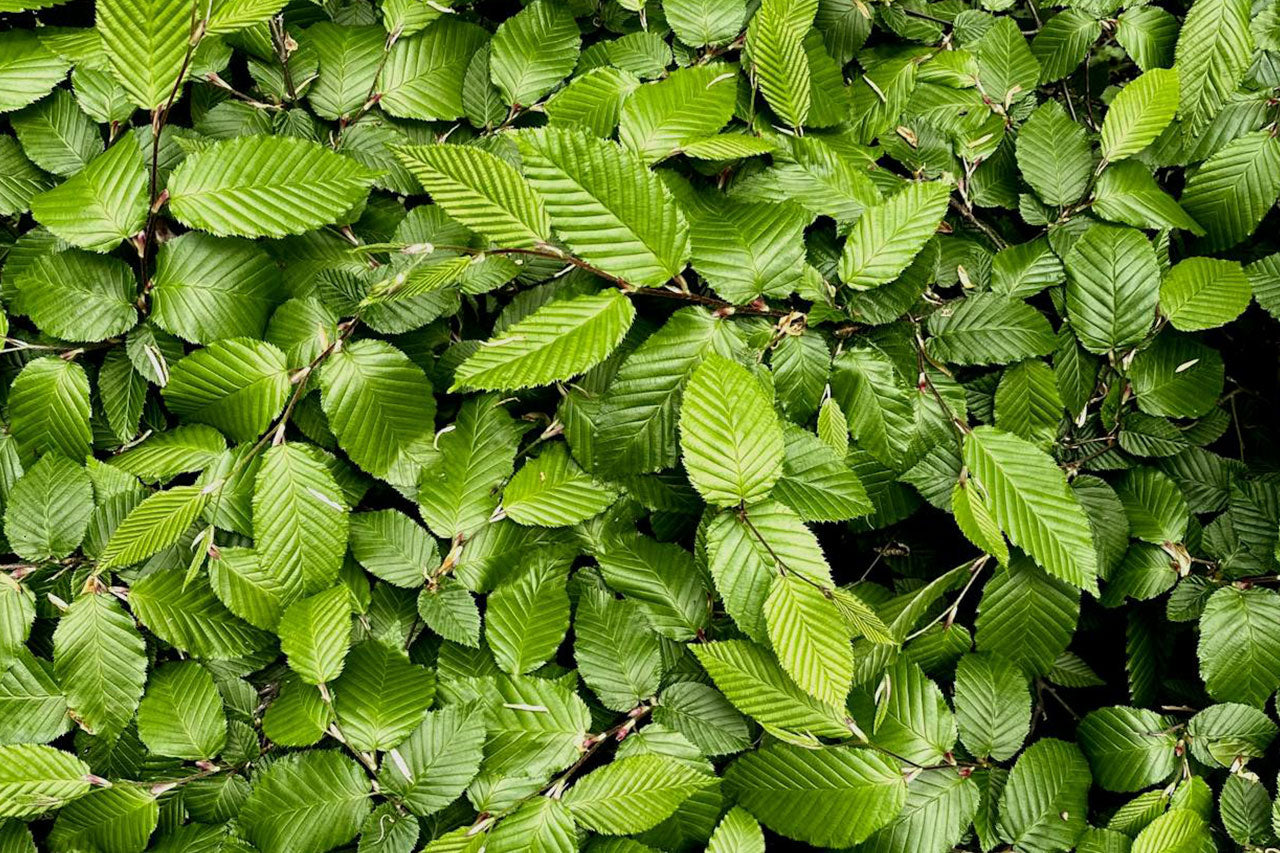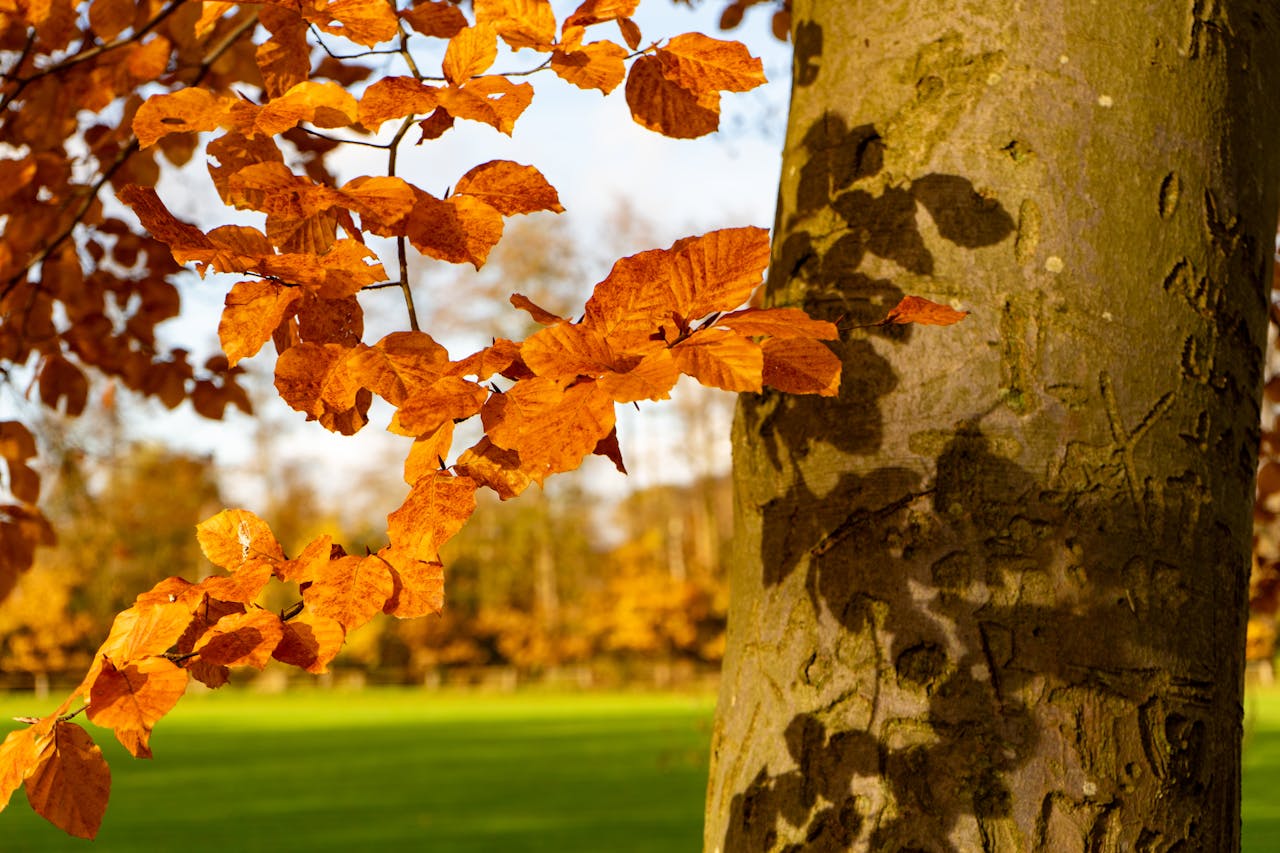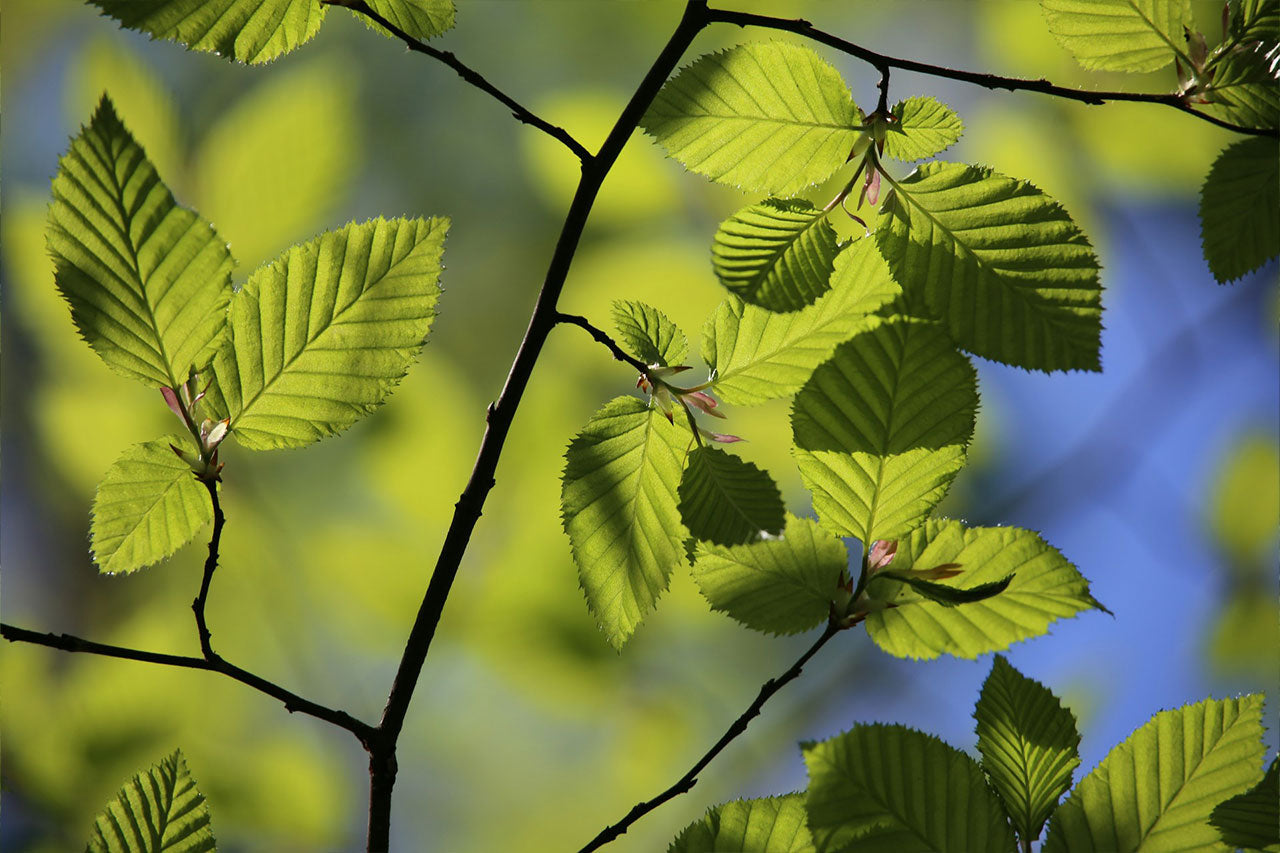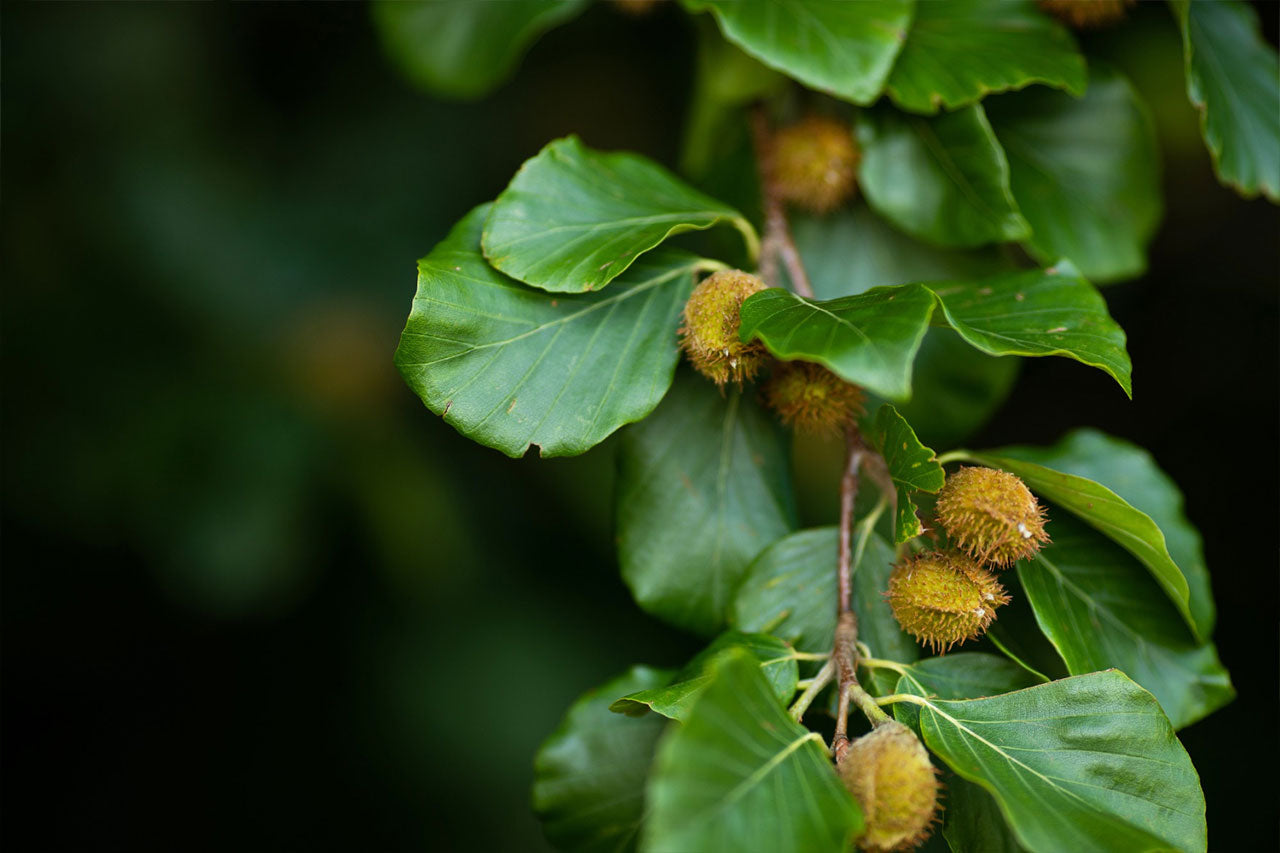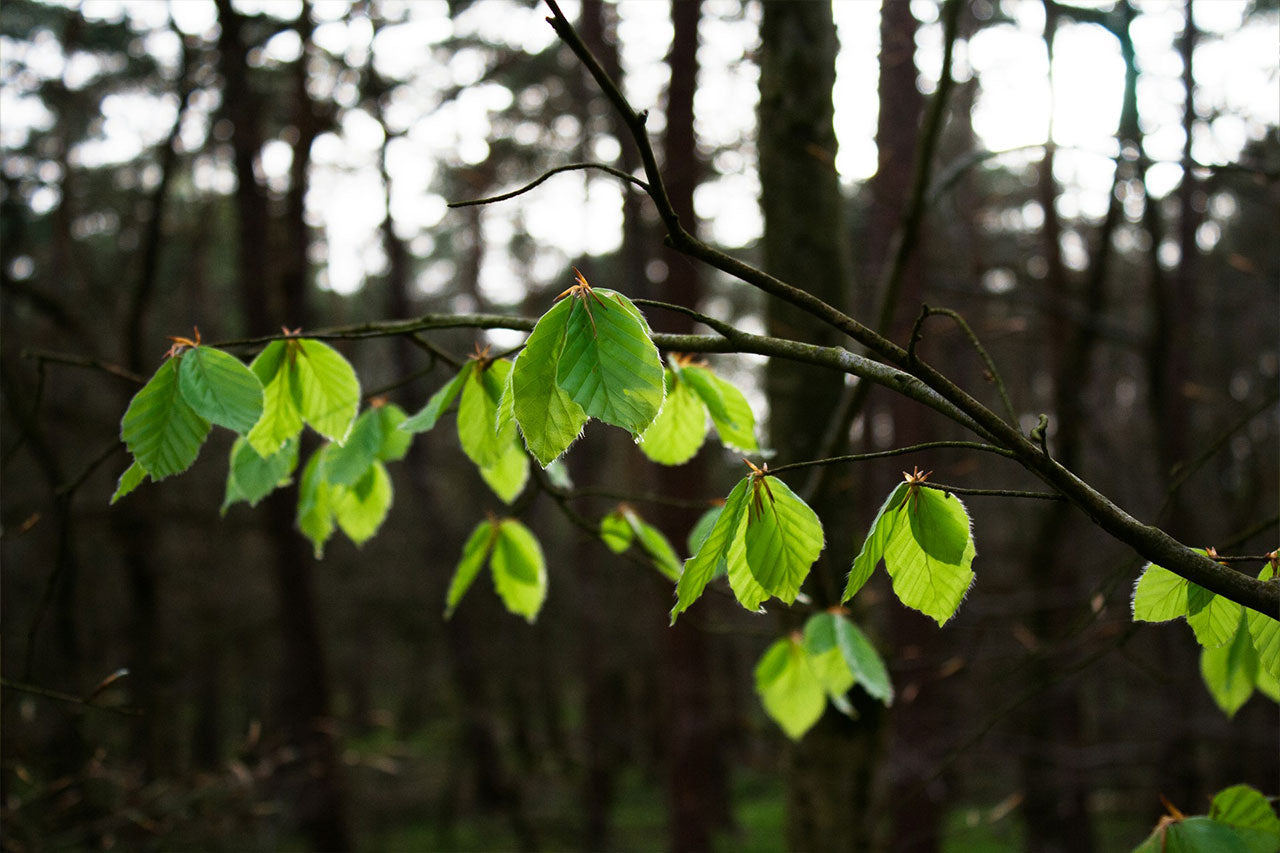

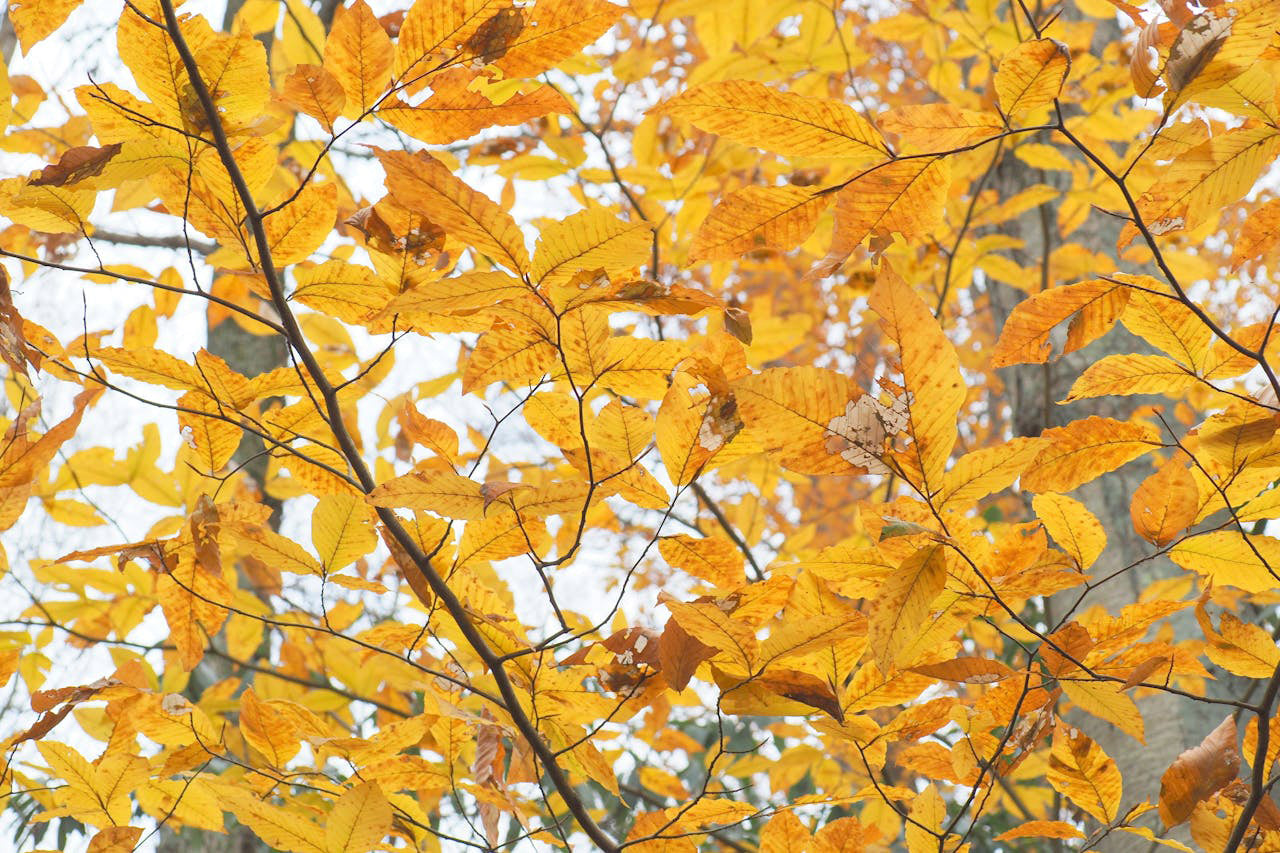
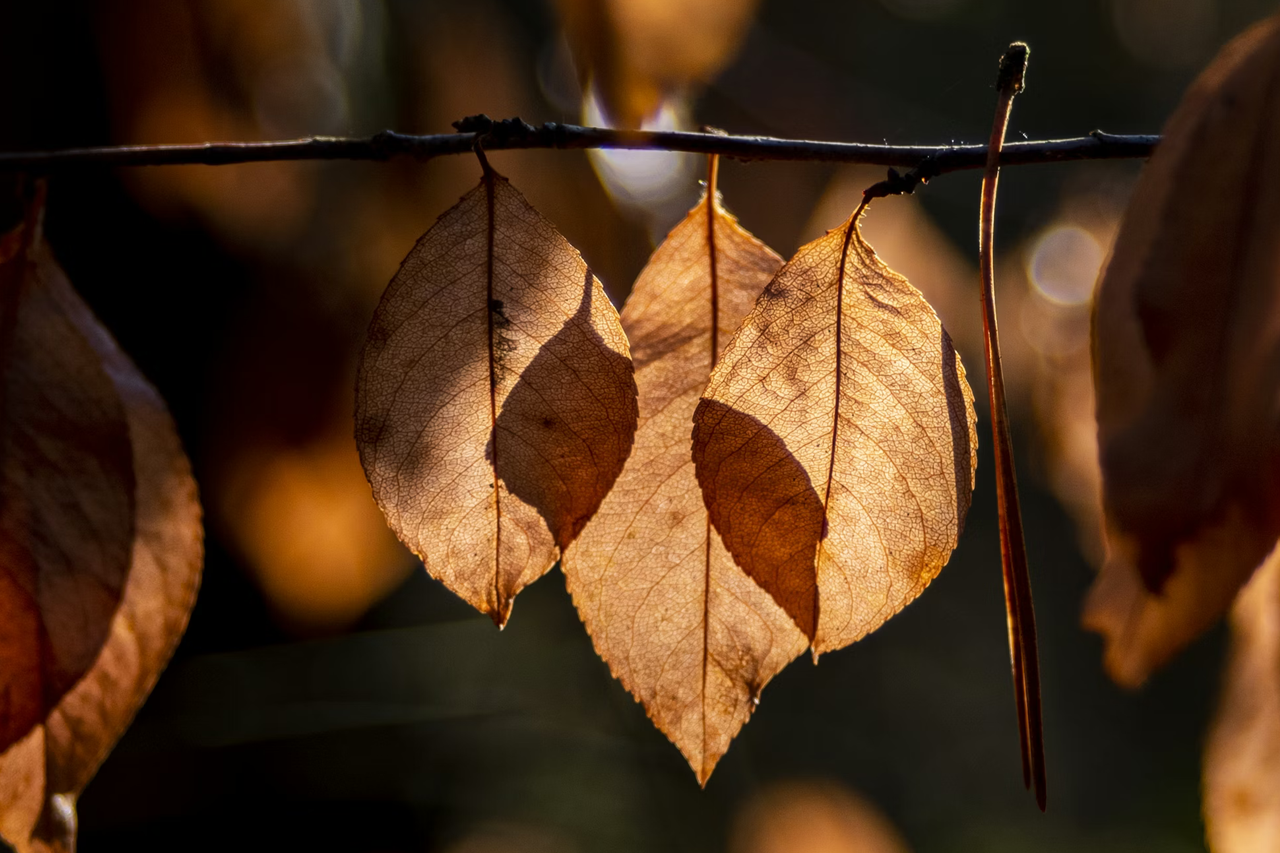
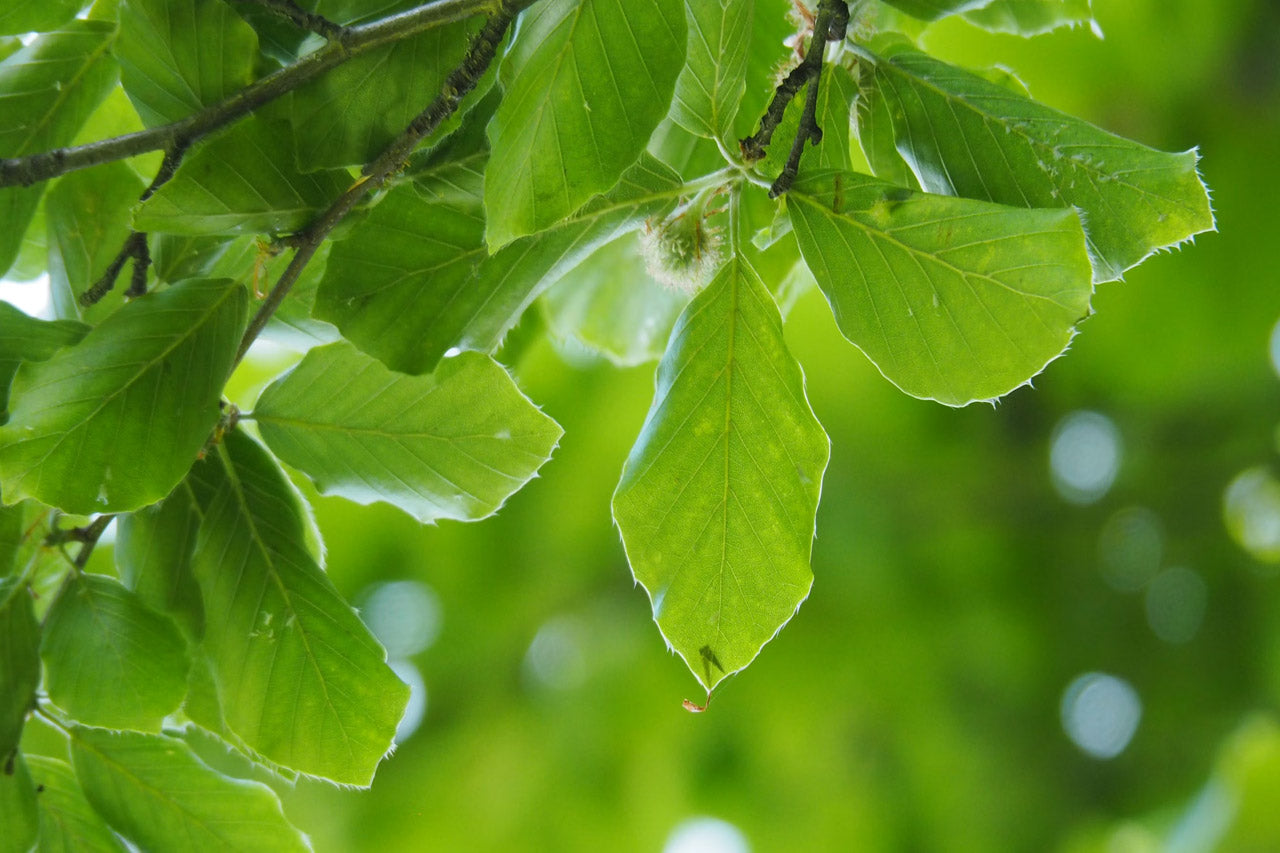
Beech has a knack for looking good in every season. In spring, the fresh, soft leaves emerge a clear, light green that almost glows when backlit by low sunshine. Through summer, the canopy deepens into a rich, calm green that feels wonderfully restful. Autumn brings warm golds and russets, and on hedges many of those leaves stay in place as a coppery curtain through winter. All the while, the smooth grey trunk and fine framework of branches add quiet elegance, even when the tree stands bare.
Common name: Beech Tree
Latin name: Fagus
Size in UK gardens: As a tree, often 10–20m tall in larger gardens over time; as a hedge, usually maintained between 1–4m high and 60–100cm wide.
Best position: A sunny or lightly shaded spot with room for its roots and canopy or hedge line to develop.
Soil: Preferably deep, moist but well‑drained soil; happiest on reasonably fertile loams and chalky soils, not in very wet or compacted ground.
Main interest: Fresh spring foliage, rich autumn colour and, on hedges, the lovely coppery leaves that often remain through winter, plus smooth grey bark and a strong framework.
Fragrance: Usually not noticeably scented; leaves have a clean, green smell when crushed.
Hardiness: Fully hardy across most of the UK once established.
Care level: Moderate; easy once settled, though new hedges and young trees need regular watering and thoughtful, occasional pruning.

The Simpson’s team raises the majority of our trees here at the nursery. For varieties outside our own production, we work with independent local growers we trust - all chosen for UK climate suitability.
Planting time: As a container‑grown plant, Fagus can be planted in most months when the ground isn’t frozen or waterlogged, with spring and autumn usually the easiest seasons for new roots to get going.
Watering: Water regularly in the first couple of years, especially for hedging plants and young trees in dry spells. Once well established, beech usually only needs extra water in prolonged drought, particularly on very light soils.
Feeding: A yearly mulch of garden compost or well‑rotted manure in spring helps maintain soil health. On poorer soils, a light dressing of balanced fertiliser in spring can support steady growth, especially for hedges you are trying to thicken up.
Pruning: Beech hedges are typically trimmed once a year in late summer; trees need very little pruning beyond formative work and the occasional removal of dead, damaged or crossing branches.
Winter: Fully hardy and leafless as a tree; hedges often hold their dry copper leaves, providing winter colour and screening. Newly planted hedges and trees benefit from a mulch around the base in late autumn.
Availability is always changing, so please check with us if you have a particular variety in mind.


The quintessential beech, with a smooth grey trunk and a dense, elegant canopy that gives instant structure and calm. The leaves are glossy and refined, and in autumn they turn warm coppery tones. A superb choice for creating a stately backdrop, a strong avenue, or a classic parkland specimen.
A beautifully unusual beech with slender, fern-like leaves that give a fine, feathery texture. The overall effect is lighter and more delicate than the standard beech, yet still with that same handsome presence. A wonderful specimen if you love beech but want something quietly distinctive.
A golden, columnar beech that brings both height and colour in one elegant stroke. The narrow habit makes it ideal where space is tight, and the foliage glows yellow-green, especially in spring. A superb vertical accent—smart, bright, and wonderfully architectural.
A narrow, upright beech with rich purple foliage, perfect for adding drama without taking up too much room. The columnar silhouette is crisp and formal, while the dark leaves give depth and contrast all season. Ideal as a repeated feature in lines, or as a single statement tree.


The classic copper beech, loved for its deep wine-purple leaves and grand, spreading habit. It makes a magnificent specimen with real weight and presence, turning the canopy into a rich, dark ceiling in summer. A timeless choice for bold contrast and that stately, traditional feel.
A superb purple beech with particularly rich, glossy foliage that holds its colour well, giving a slightly brighter, more luminous look than some darker forms. It develops into a handsome, broad-crowned tree—excellent as a specimen where you want deep colour and a refined finish.
A distinctive beech with finely cut, deeply lobed leaves in rich purple tones, adding extra texture as well as colour. The canopy looks more intricate and “designed”, making it a fantastic specimen for collectors or anyone who wants a beech that stands apart from the usual forms.
A striking purple beech selection with a bold, saturated leaf colour and a strong, well-shaped outline. It brings that classic beech grandeur, but with a deeper, moodier canopy that makes lighter planting sing. Ideal as a feature tree when you want richness and presence.