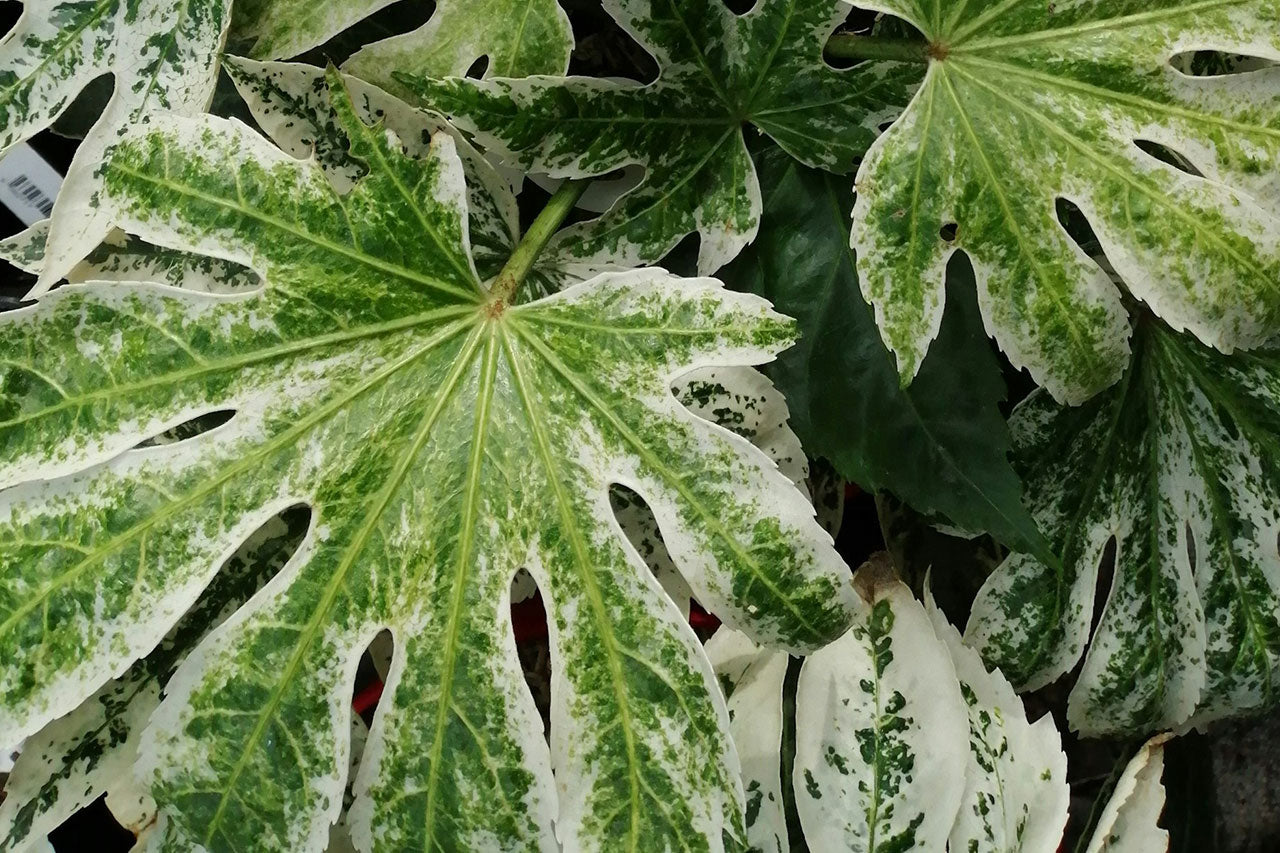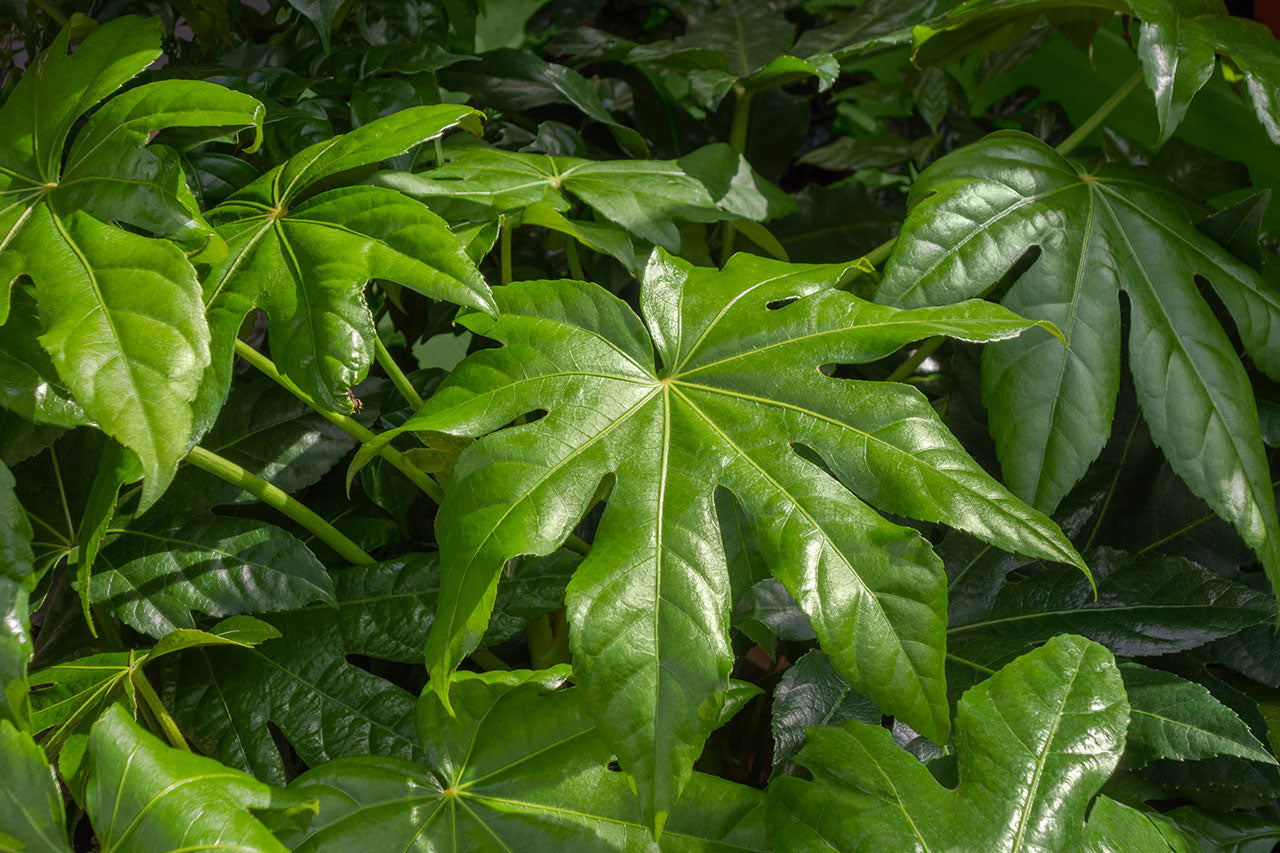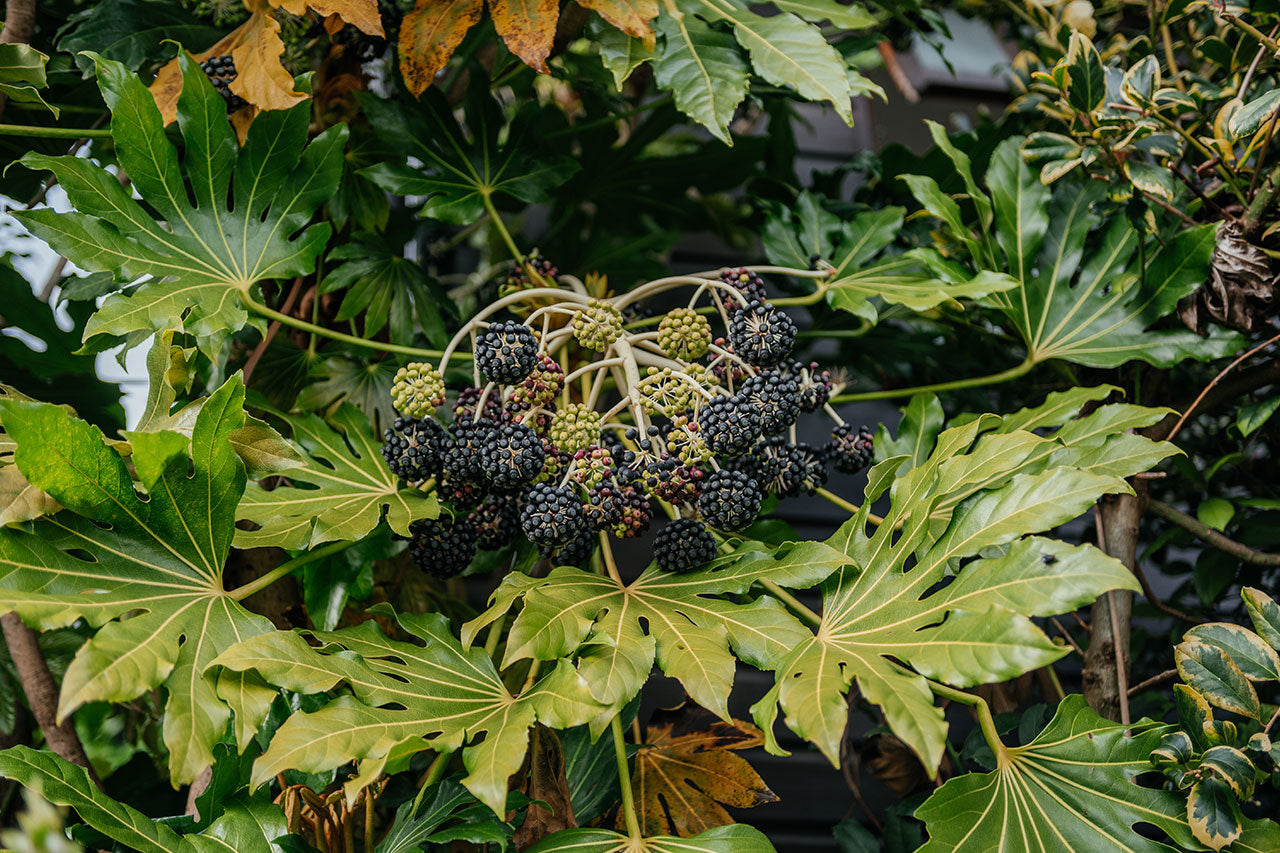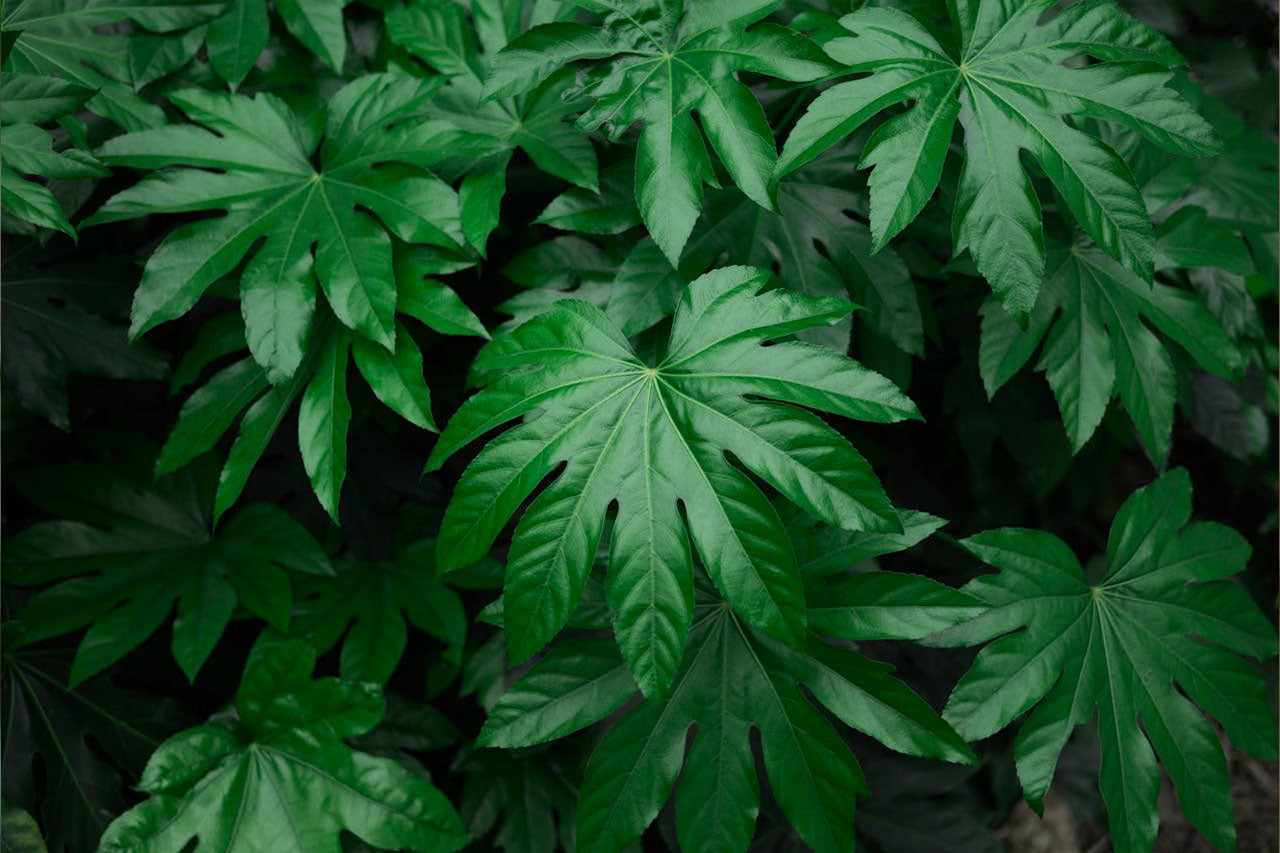

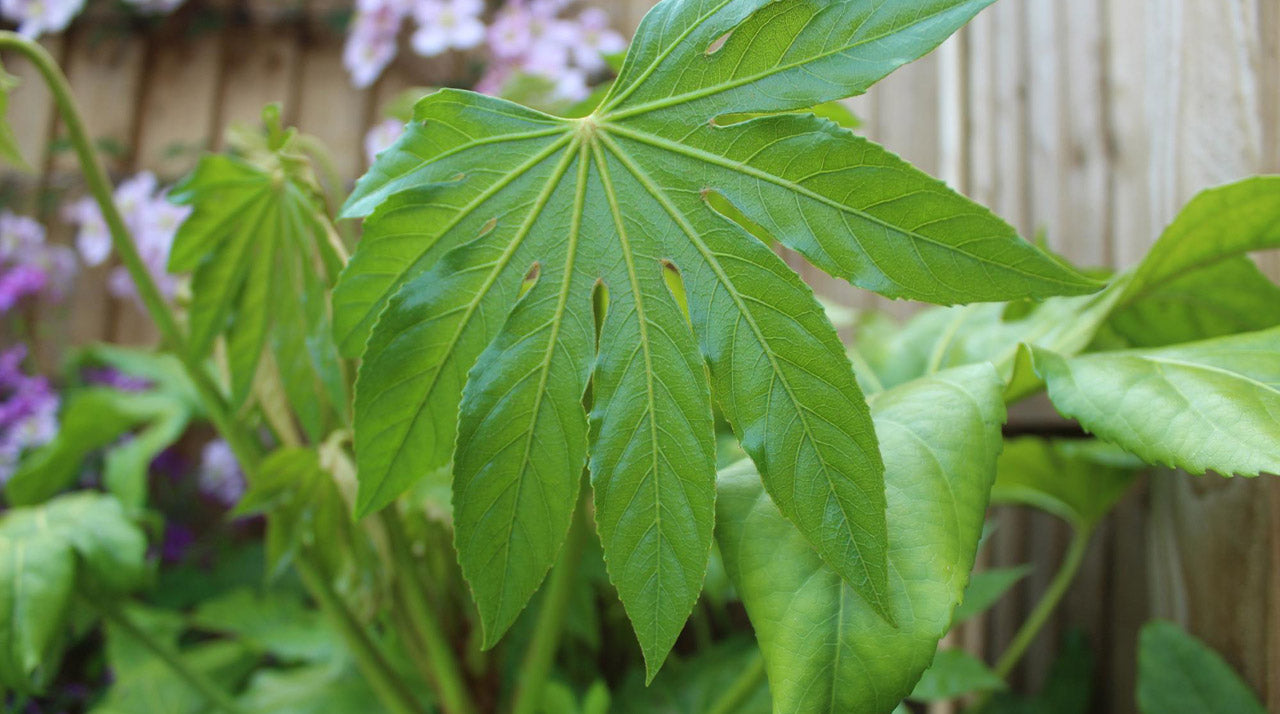
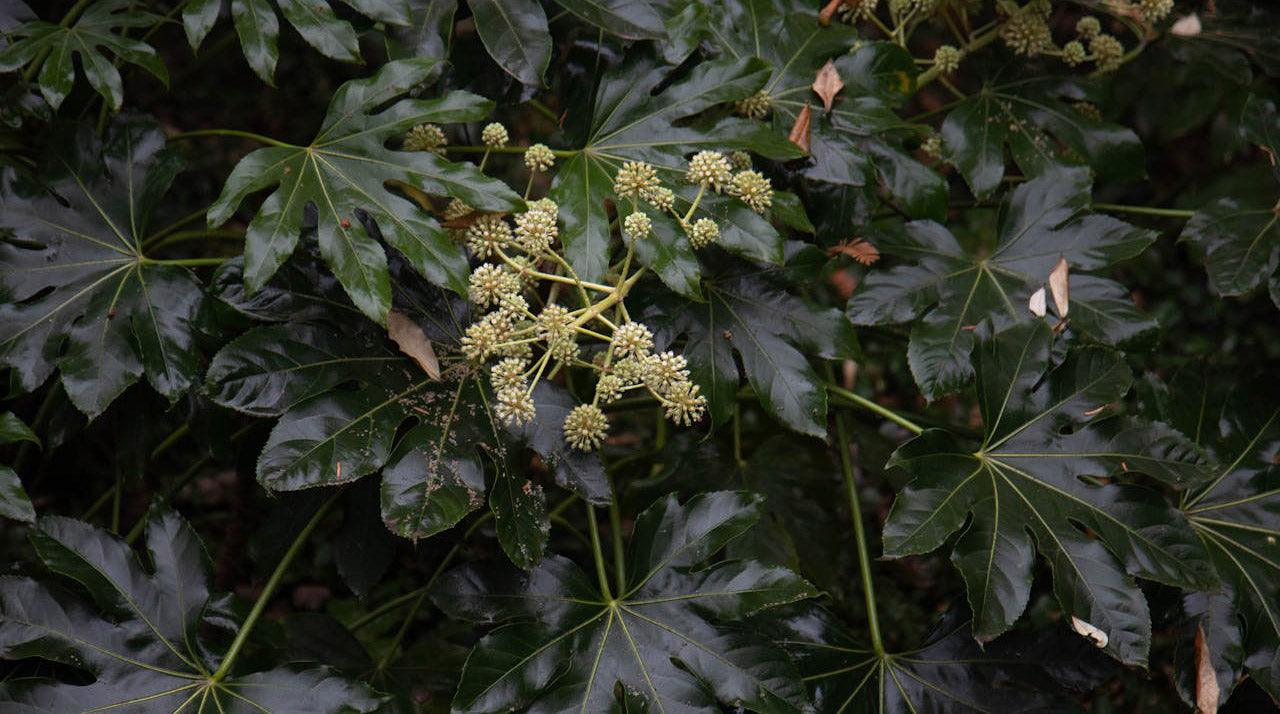
The first thing everyone notices about Fatsia is the foliage. Those large, hand‑shaped leaves catch the eye from across the garden, bringing instant structure and personality, especially in shadier spots. In summer they feel cool and lush, adding a sense of calm abundance; in winter they provide something substantial to look at when many other plants have retreated. The surface of the leaves reflects low light on dull days, so even a gloomy corner can feel that bit more alive and interesting.
Common name: Japanese Aralia
Latin name: Fatsia
Size in UK gardens: Typically 1.5–2.5m tall and wide in time; in very kind spots it can reach around 3m, but is easily kept a little smaller with light pruning.
Best position: A sheltered spot in light or partial shade, often near a wall, fence or in a shaded border where its foliage can really shine.
Soil: Moist but well‑drained, reasonably fertile garden soil; happiest where winter waterlogging is avoided and some organic matter has been added.
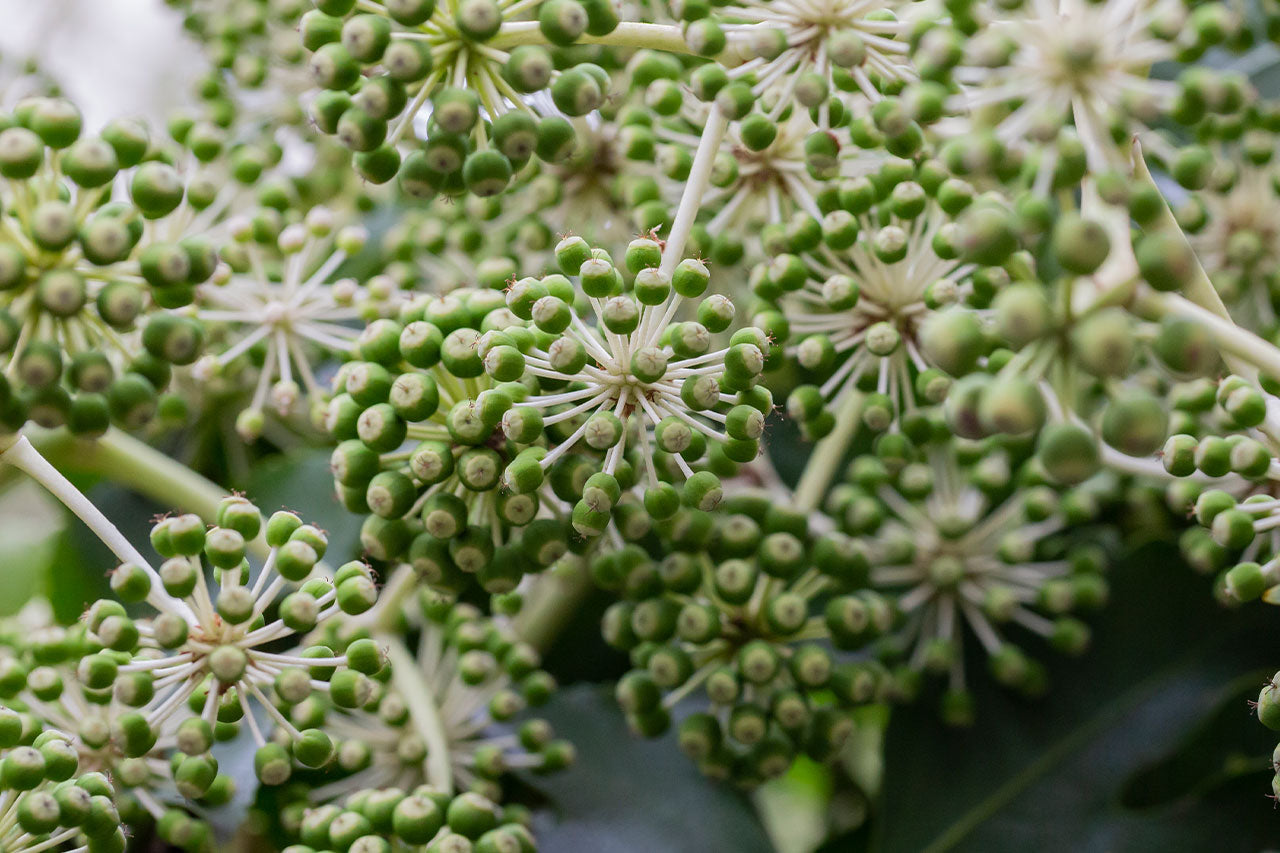
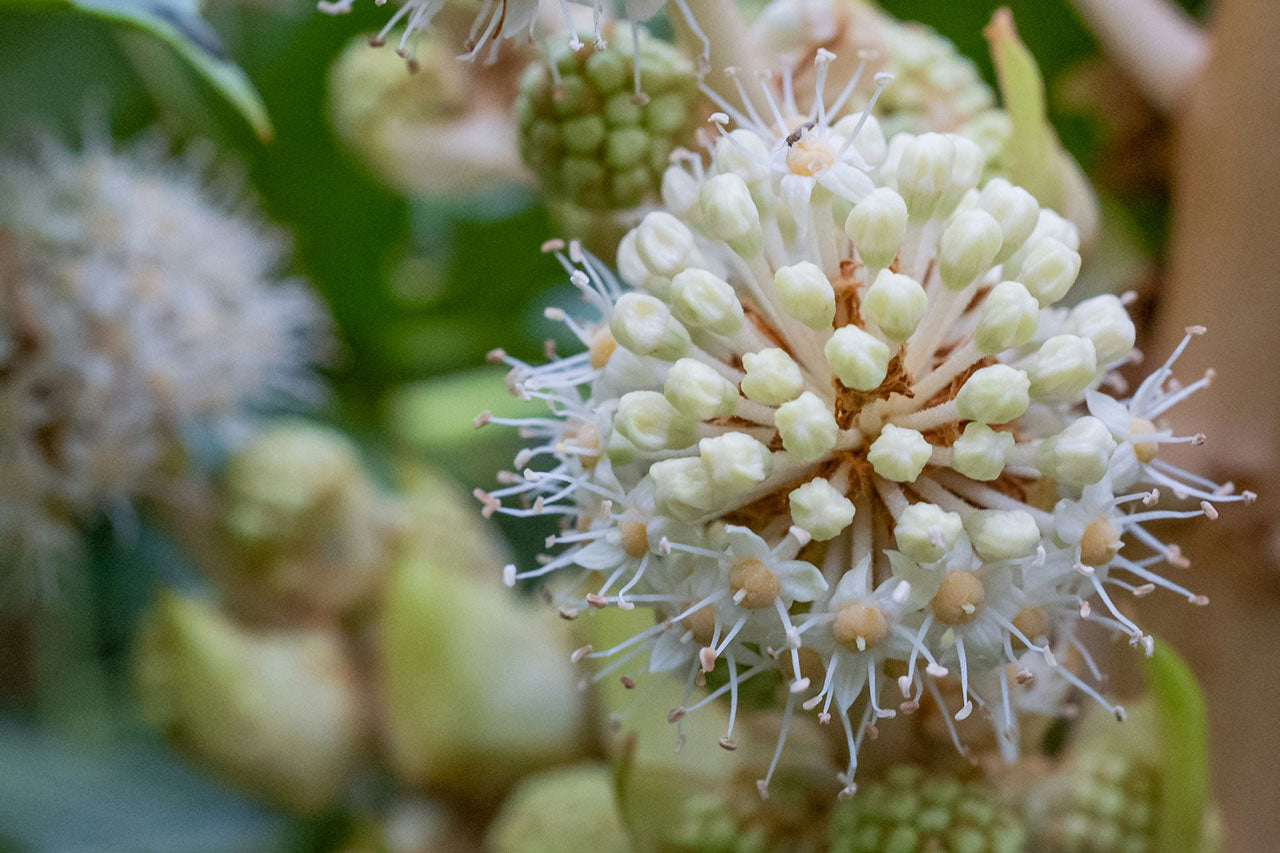
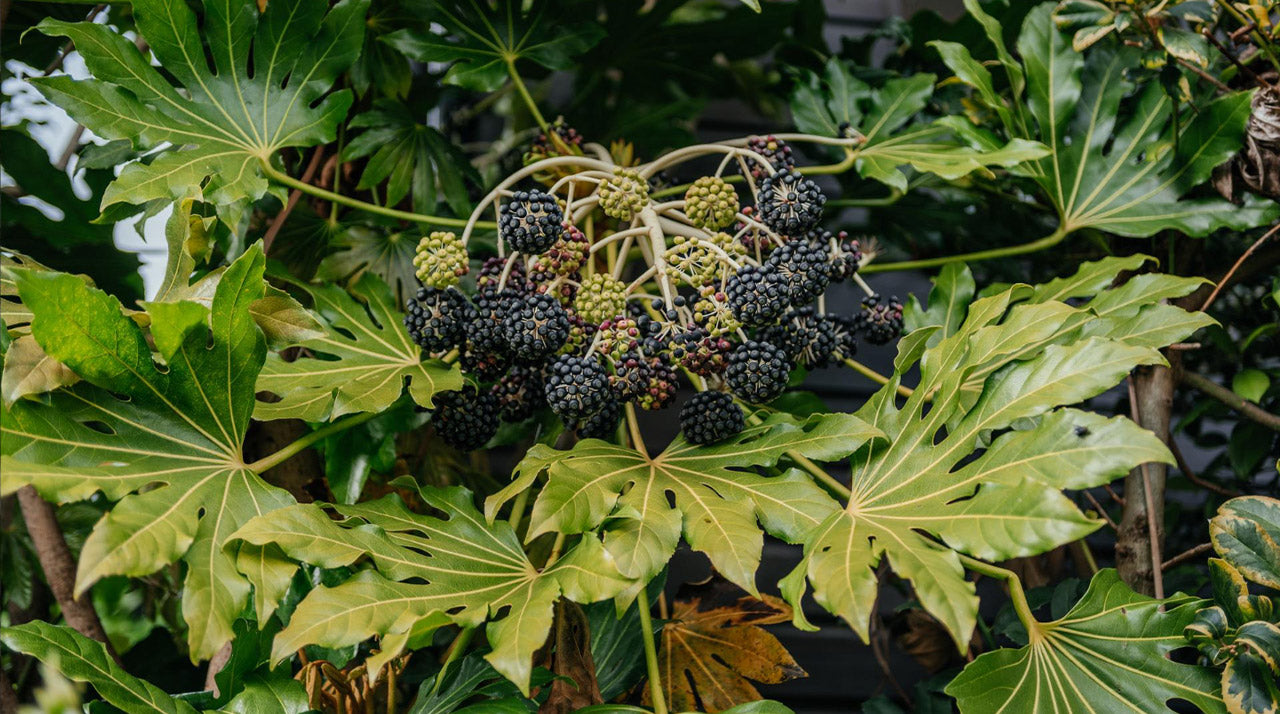
Main interest: Large, glossy, hand‑shaped evergreen leaves that give a bold, architectural look, plus sprays of creamy‑white autumn flowers followed by dark berries.
Fragrance: Flowers are lightly scented if you get close; foliage is usually not noticeably scented.
Hardiness: Generally hardy in most of the UK, including Cambridgeshire and East Anglia, especially in a sheltered position away from cold, drying winds.
Care level: Low to moderate; easy to live with once established, needing mainly watering in dry spells and occasional pruning to keep its shape.

The Simpson’s team raises the majority of our trees here at the nursery. For varieties outside our own production, we work with independent local growers we trust - all chosen for UK climate suitability.
Planting time: As a container‑grown shrub, Fatsia can be planted in most months when the soil isn’t frozen or waterlogged, with spring and autumn usually the kindest times for new roots to settle.
Watering: Water regularly through the first year or two, especially in dry weather or if it’s planted in a rain‑shadow near buildings. Once established, it usually only needs extra watering during prolonged dry or hot periods.
Feeding: A mulch of garden compost or well‑rotted manure in spring is often enough to keep it going. On very poor soils or in containers, a light balanced fertiliser in spring helps maintain strong, leafy growth.
Pruning: Pruning is generally light – remove tired, damaged or yellowing leaves and shorten overly long stems in late winter or early spring to keep the shape balanced. Older plants can be thinned a little if they become congested.
Winter: In sheltered gardens Fatsia usually keeps most of its foliage through winter. In colder or windier spots, some leaves may scorch or blacken, but these can be removed in spring as new growth comes through. A mulch over the roots is helpful in colder areas.
Availability is always changing, so please check with us if you have a particular variety in mind.
Big, glossy, hand-shaped leaves that give you instant, lush drama—almost tropical, yet perfectly at home in a sheltered UK garden. It’s superb for shade, courtyards, and north-facing corners where other plants sulk. Pop one in and the whole space feels greener, cooler, and more generous.
All the boldness of fatsia, but with creamy variegation that brightens darker spots beautifully. It’s wonderful in sheltered shade, especially near a doorway or patio where those patterned leaves can be enjoyed up close. A real “lift” plant that brings light and presence without needing flowers.
A truly striking fatsia, with leaves marbled and flecked as if someone’s dusted them with icing sugar. It’s dramatic, but in a refined way—excellent in a pot, a courtyard, or a shady border where it becomes a focal point all year. One of those plants that makes visitors ask, “What is that?"