

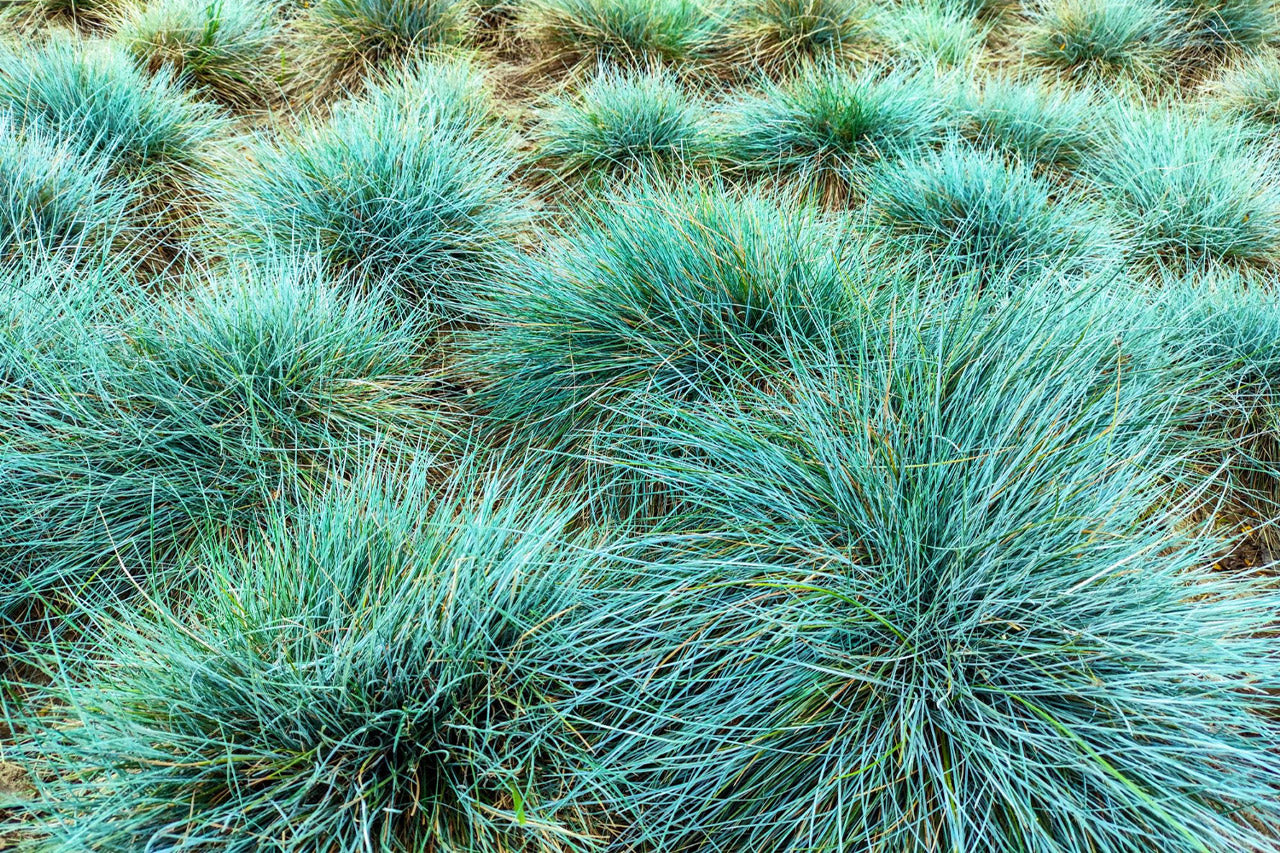
Ornamental fescue grasses form small, neat clumps of fine leaves that look like little domes or cushions scattered through the border. Depending on the variety, the foliage may be blue‑grey, steel‑blue, bright green or even variegated, but the overall effect is the same: a series of tidy hummocks that instantly make a planting look more intentional. In real UK gardens, where borders often end up a bit patchy, slipping a few Festuca plants in at the front or between perennials helps link everything together and gives year‑round structure with very little fuss.

Common name: Fescue
Latin name: Festuca
Plant type: Small, clump‑forming evergreen or semi‑evergreen perennial grass.
Size in UK gardens: Typically 20–40cm tall and wide, forming rounded mounds; some varieties stay nearer 15–20cm, others may reach around 45cm in flower.
Best position: A sunny, open spot with free‑draining soil – ideal for front‑of‑border edging, gravel gardens, banks and containers.
Soil: Well‑drained, moderately fertile soil; happy on lighter, sandy or stony ground and improved clay if it doesn’t stay waterlogged in winter.
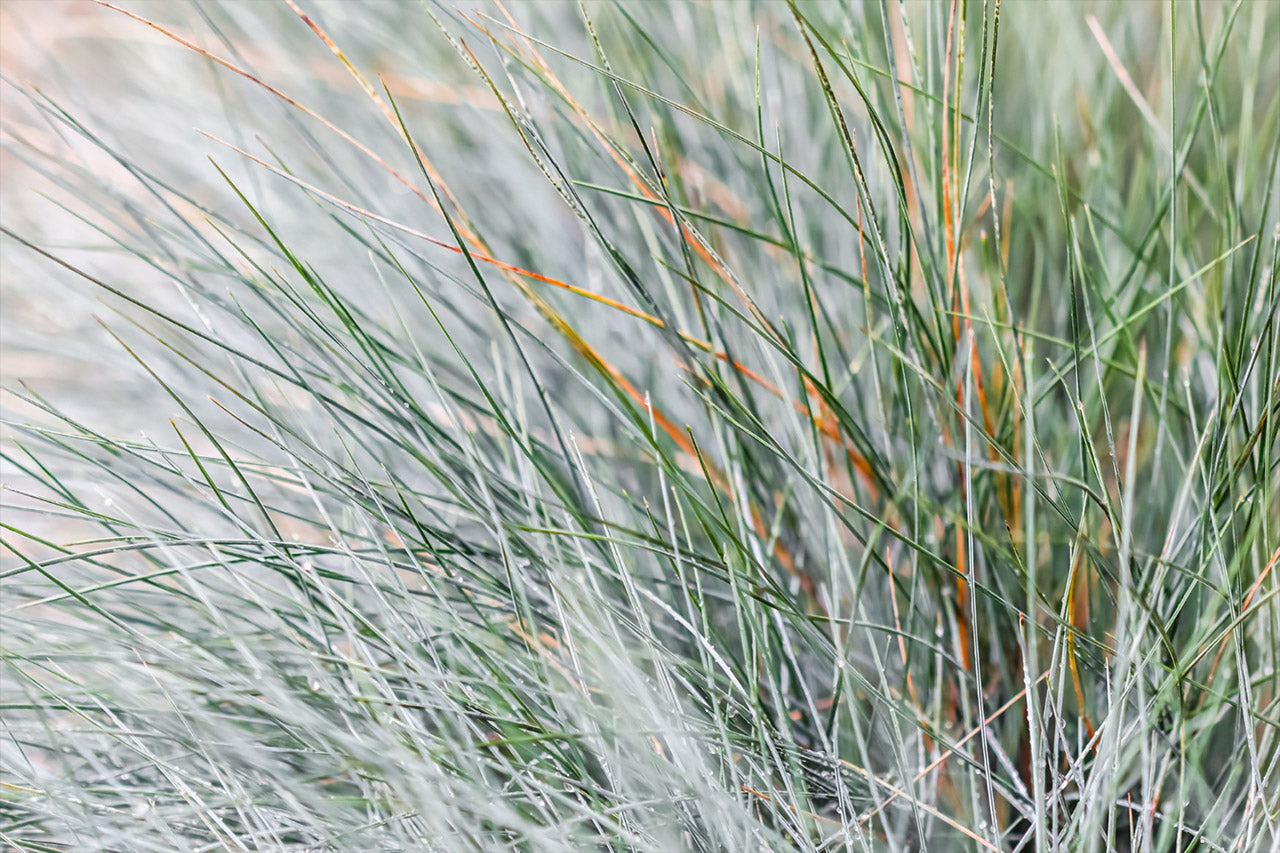
Main interest: Fine, tufted foliage in shades of blue, grey or green; neat mounds that give structure all year, with airy flower stems in summer.
Fragrance: Not grown for scent – the appeal is mainly visual and textural.
Hardiness: Generally hardy in most UK gardens; older clumps can get a bit tired and may need dividing or replacing after several years.
Care level: Easy – low maintenance once established, with occasional trimming and sensible watering in very dry spells.

The Simpson’s team raises the majority of our trees here at the nursery. For varieties outside our own production, we work with independent local growers we trust - all chosen for UK climate suitability.
Planting time: As container‑grown plants, Festuca can be planted in most months when the soil isn’t frozen or waterlogged. Spring and early autumn are usually easiest, giving roots time to settle before either high summer heat or winter wet.
Watering: Water regularly in the first season so the rootball and surrounding soil don’t dry out completely, especially on very free‑draining sites or in containers. Once established in the ground, Festuca is fairly drought‑tolerant and usually only needs extra water in prolonged dry spells.
Feeding: Fescue grasses are not heavy feeders. In most gardens, a light mulch of compost or fine gravel each spring is enough. Avoid very rich feeding, which can encourage soft, floppy growth at the expense of neat, tight clumps.
Pruning: Comb or lightly trim plants in late winter or early spring to remove dead and tatty foliage, cutting back only into leafy growth rather than very hard into the base. Older clumps that have thinned in the middle can be lifted and divided or replaced.
Winter: In the ground, established Festuca usually just sits through winter with its mounds intact, though foliage may bronze or look weathered. Good drainage and a modest mulch are more important than elaborate protection.