
A fig tree has a way of making a garden feel “done” almost overnight. The leaves are large and deeply lobed, so even when the tree is still young it looks dramatic and full of character. In a mixed border it adds a completely different texture from most shrubs, and in a courtyard or patio planting it becomes a real focal point — architectural without being cold. If you’re after a plant that brings shade, shape and a touch of Mediterranean spirit to an ordinary UK corner, fig is one of the most rewarding trees you can grow.
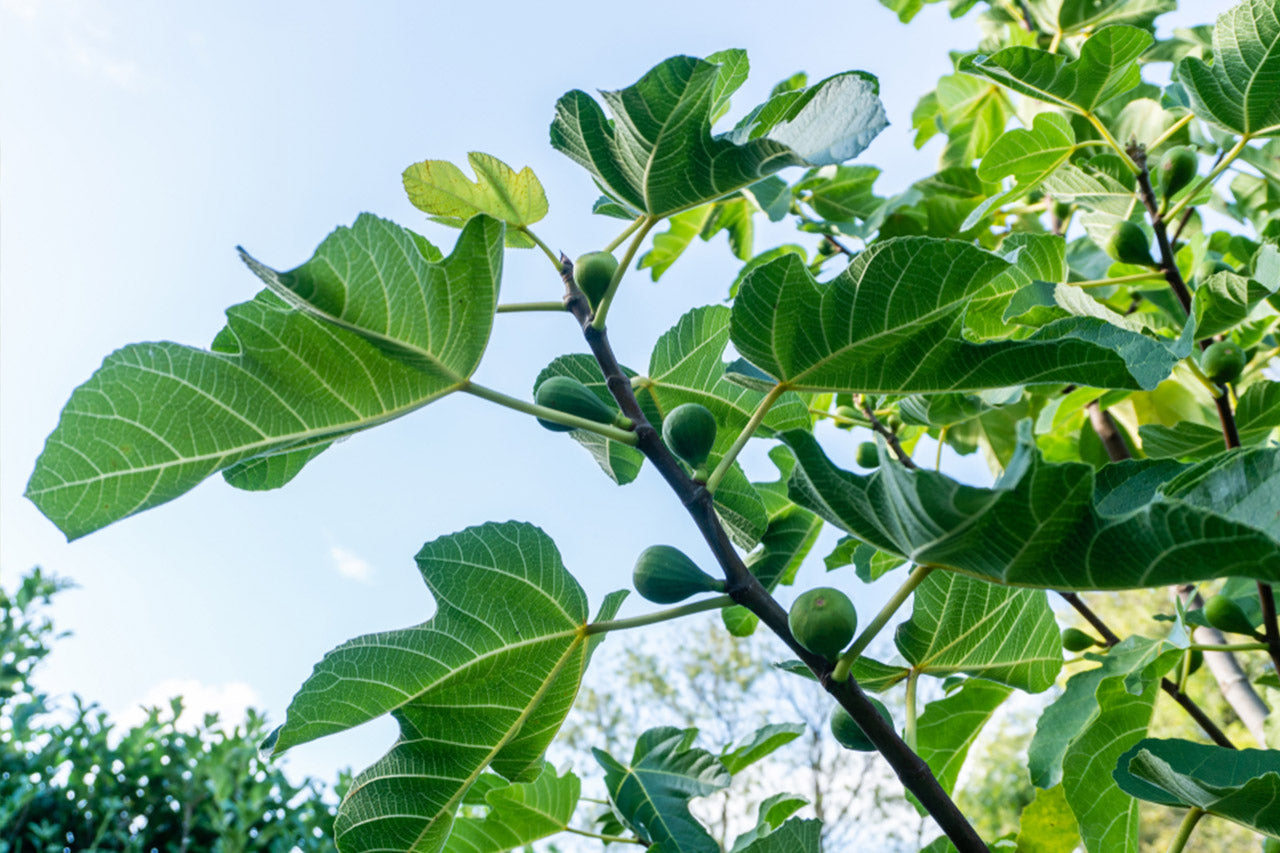
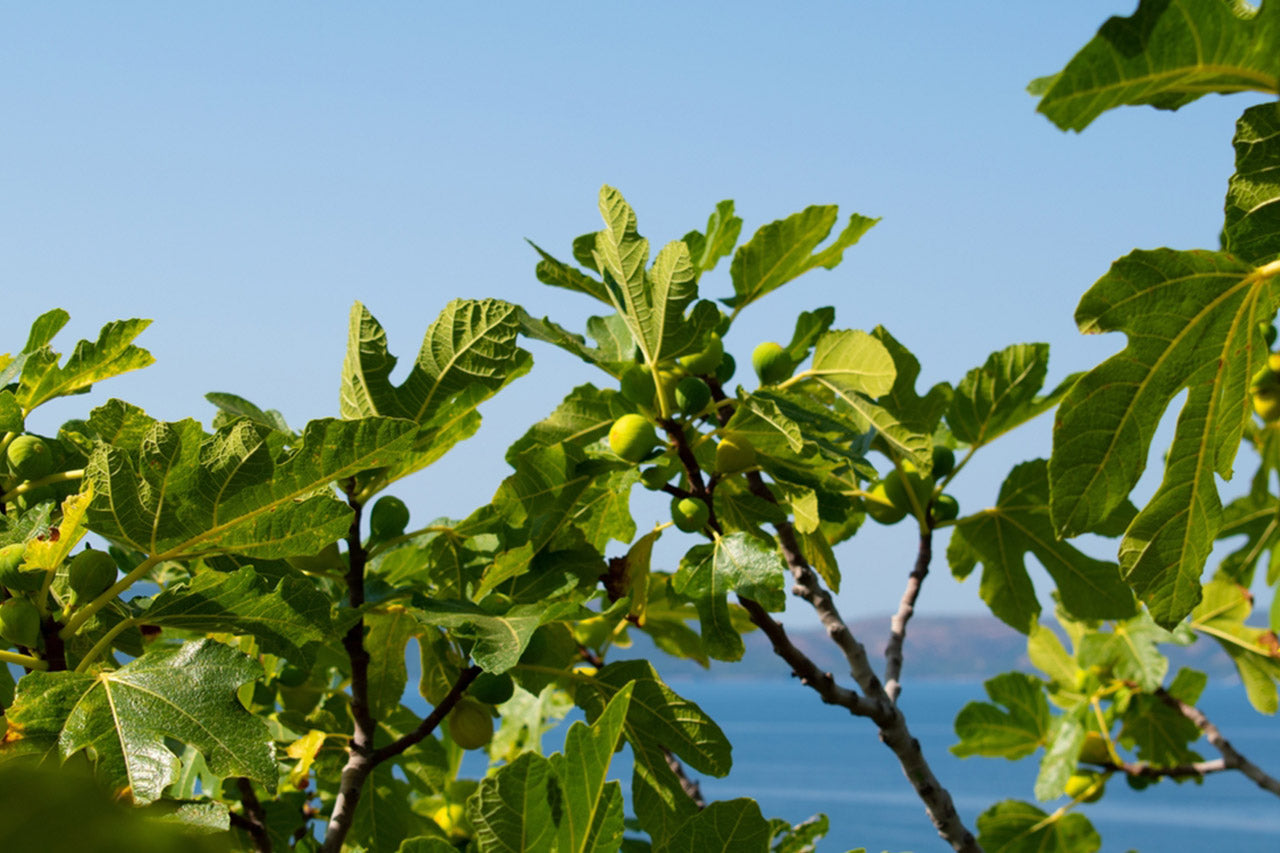
Common name: Fig tree.
Latin name: Ficus carica.
Size in UK gardens: Often 2–4m, depending on variety and how it’s grown; can be kept smaller with pruning and root restriction.
Best position: Full sun, ideally against a warm, sheltered south or west-facing wall.
Soil: Well-drained soil; tolerates poorer soils if drainage is good.
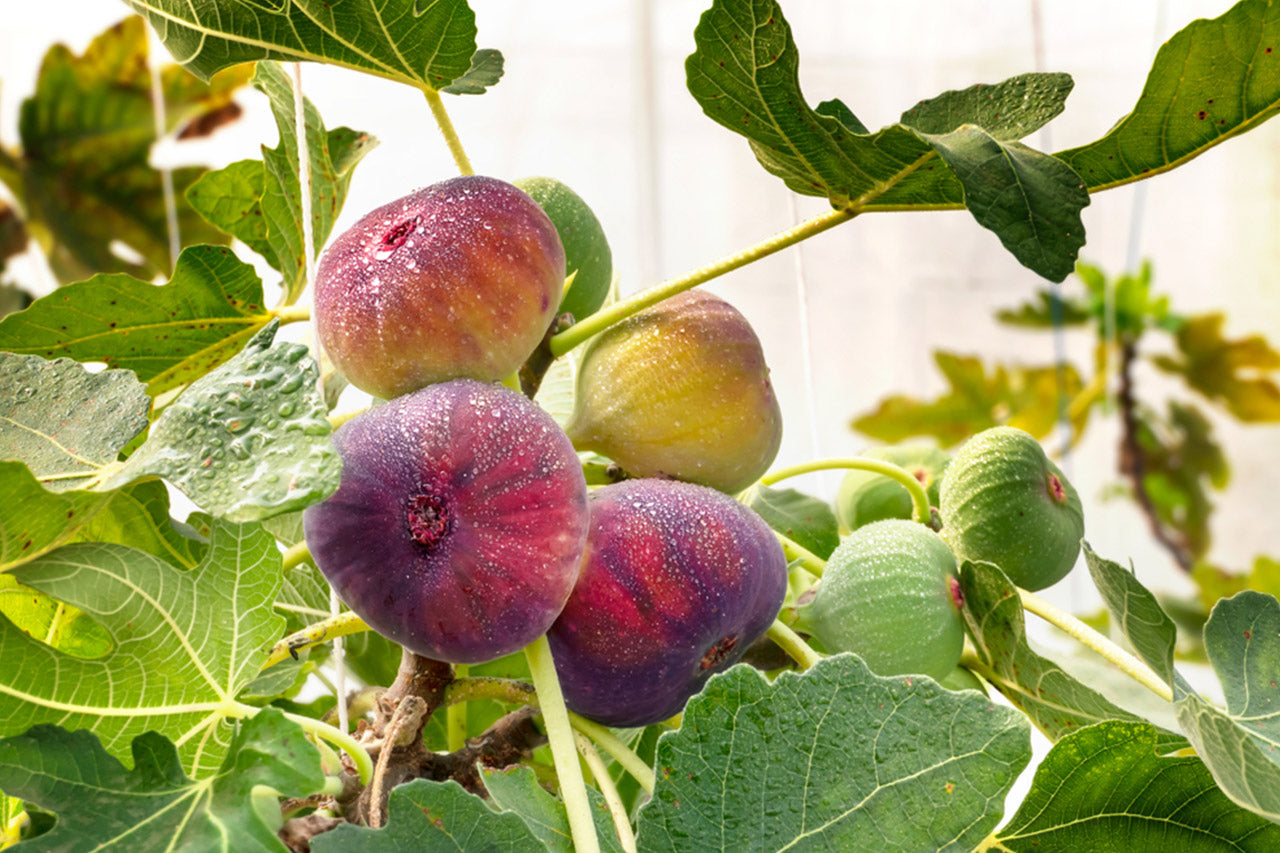
Main interest: Bold foliage and edible figs (ripening late summer into autumn in good years).
Fragrance: Usually not noticeably scented.
Hardiness: Generally hardy in milder UK areas once established, but young plants benefit from shelter in cold spells.
Care level: Moderate – straightforward, but position and root control make a big difference to fruiting.

Rather than travelling halfway across Europe, our mimosa trees are grown on site by the Simpson’s team. They’re toughened to local conditions, properly potted, and ready to get growing the moment you plant them.
Planting time: As container-grown plants, figs can be planted in most months when the ground isn’t frozen or waterlogged; spring and early autumn are usually easiest.
Watering: Water well in the first 1–2 seasons and during dry spells; wall-grown figs can be surprisingly thirsty because rain often misses the root zone.
Feeding: A spring mulch is usually enough; avoid over-rich feeding, which can encourage lots of leaf at the expense of fruit.
Pruning: Light shaping and training keeps it tidy; pruning is often about encouraging fruiting wood and maintaining size.
Winter: Usually fine once established in a sheltered spot, but young plants appreciate a mulch and occasional fleece in hard frosts.
Availability is always changing, so please check with us if you have a particular variety in mind.


A deeply atmospheric fig—dark, rich, and undeniably Mediterranean in spirit, with a strong architectural shape and big, handsome leaves. It feels like a “courtyard tree” even in a small garden, especially trained against a warm wall. The fruit has that luxurious, inky look that makes it feel like a true connoisseur’s variety.
The classic, garden-friendly fig—reliable, adaptable, and wonderfully easy to place, with that instantly recognisable big-leaf silhouette. It brings a holiday mood to patios and sunny corners, and it’s often the one people choose when they want a fig that just gets on with it. A brilliant first fig, and still a favourite even when you’ve grown a few.
A fig with a relaxed, traditional character—broad leaves, a sturdy habit, and a warm, orchard-by-the-wall feel. It has that generous, “abundant” energy in a sunny spot, looking increasingly sculptural as it grows. Ideal if you like fruit trees that feel historic, useful, and quietly handsome.
A romantic, French-named fig that feels a little more special—ornamental, refined, and very “sunny wall in a sheltered garden.” The leaves are bold and lush, giving great texture, while the overall presence feels soft and inviting rather than rugged. A lovely choice if you want a fig that brings both atmosphere and a touch of romance.


A fig with real drama—dark fruit, rich colour, and a slightly more intense, “gourmet” feel than many standard garden varieties. It gives the garden a warm, southern European mood, especially when the leaves are full and the fruit begins to deepen in tone. A great pick if you like your fruit trees to feel a bit decadent and distinctive.
A fig that feels playful and different—still unmistakably fig in shape and presence, but with a quirkier leaf look that gives it extra ornamental interest. It has that bold, architectural silhouette, yet it reads more “collector” than purely traditional. Perfect if you want a fig that’s as much about character and conversation as it is about fruit.
A warm, sun-loving fig with a calm confidence—big leaves, a pleasing structure, and that unmistakable holiday feel on a patio or against a wall. It has a slightly more distinctive personality than the everyday standards, making it feel like a considered choice rather than the default. Great if you want a fig that feels both productive and a little bit curated.
A softer, gentler-feeling fig—lush foliage, a relaxed habit, and a bright, fresh look in the canopy that feels very inviting. It brings that easy Mediterranean atmosphere without looking too severe or “gnarled.” A lovely choice for anyone who wants a fig that feels sunny, generous, and quietly abundant.

The showstopper: a fig that looks almost painted, with strikingly striped fruit that feels instantly exotic and decorative. Even as a plant, it has that glamorous, courtyard-tree presence—big leaves, bold shape, and a real sense of occasion. A brilliant choice when you want a fig that’s as much about visual theatre as it is about the harvest.