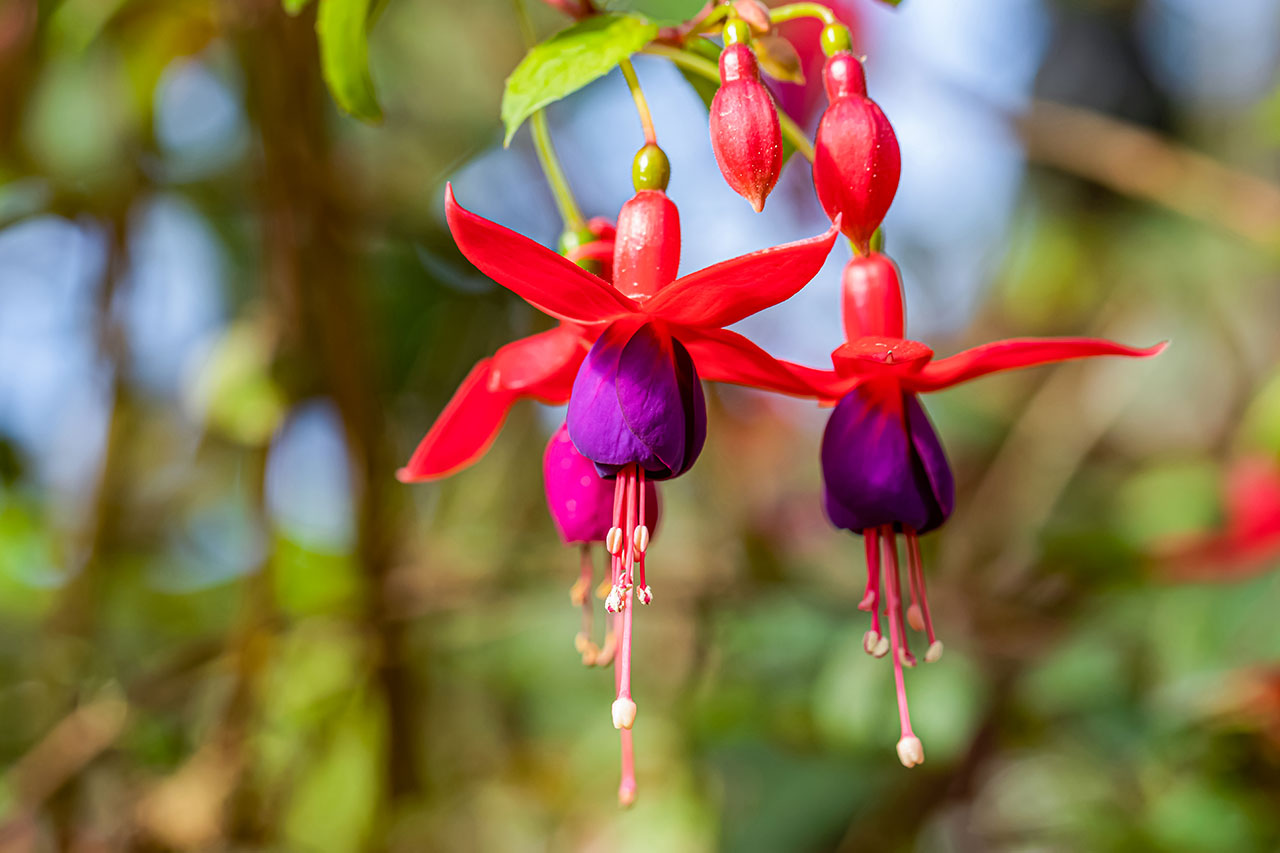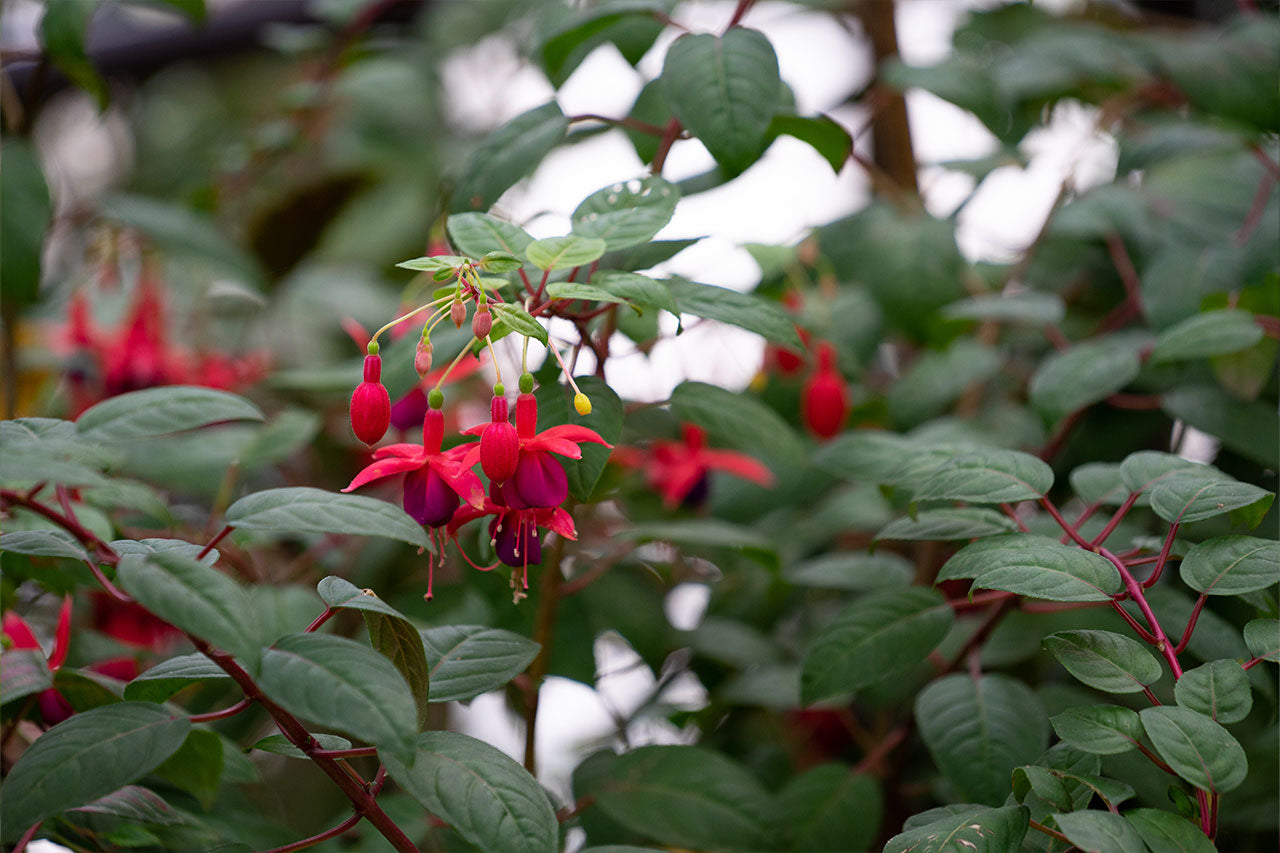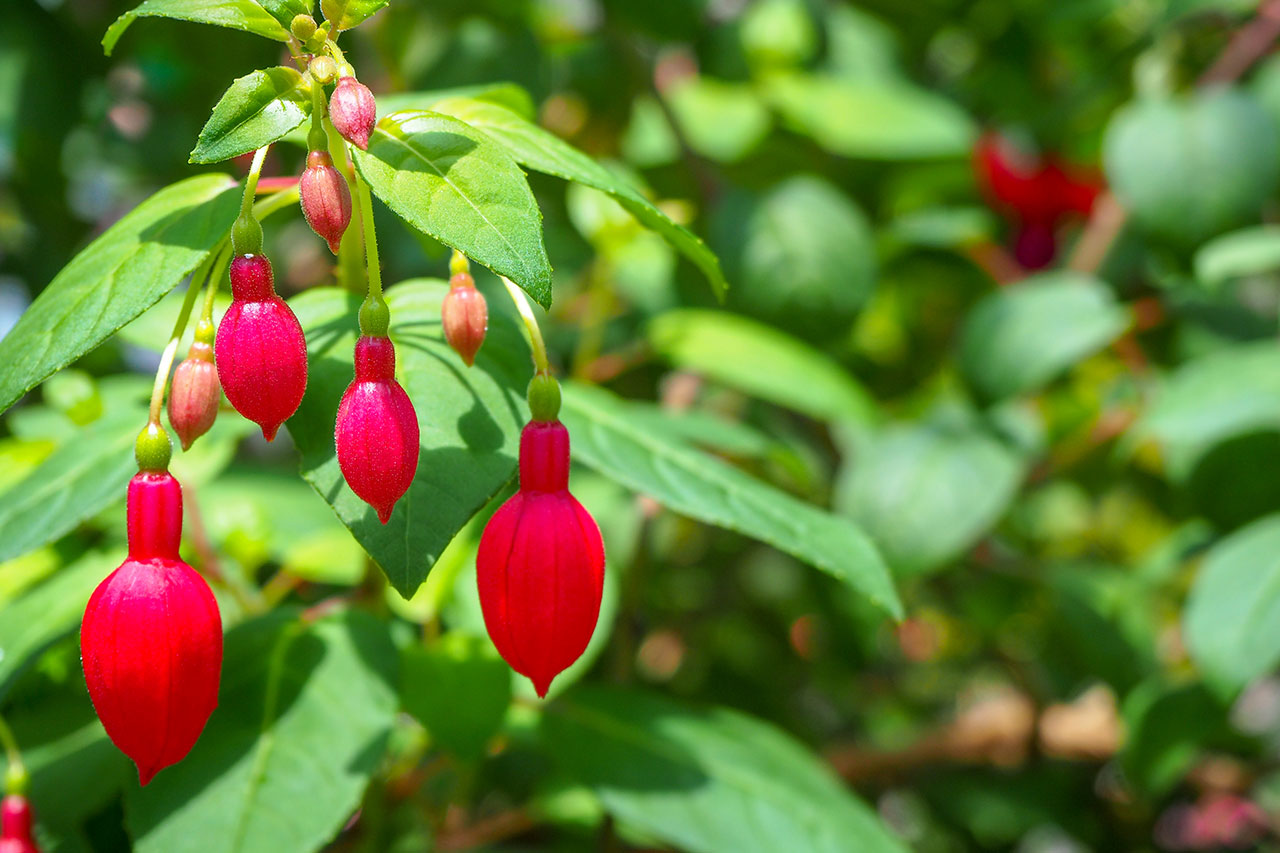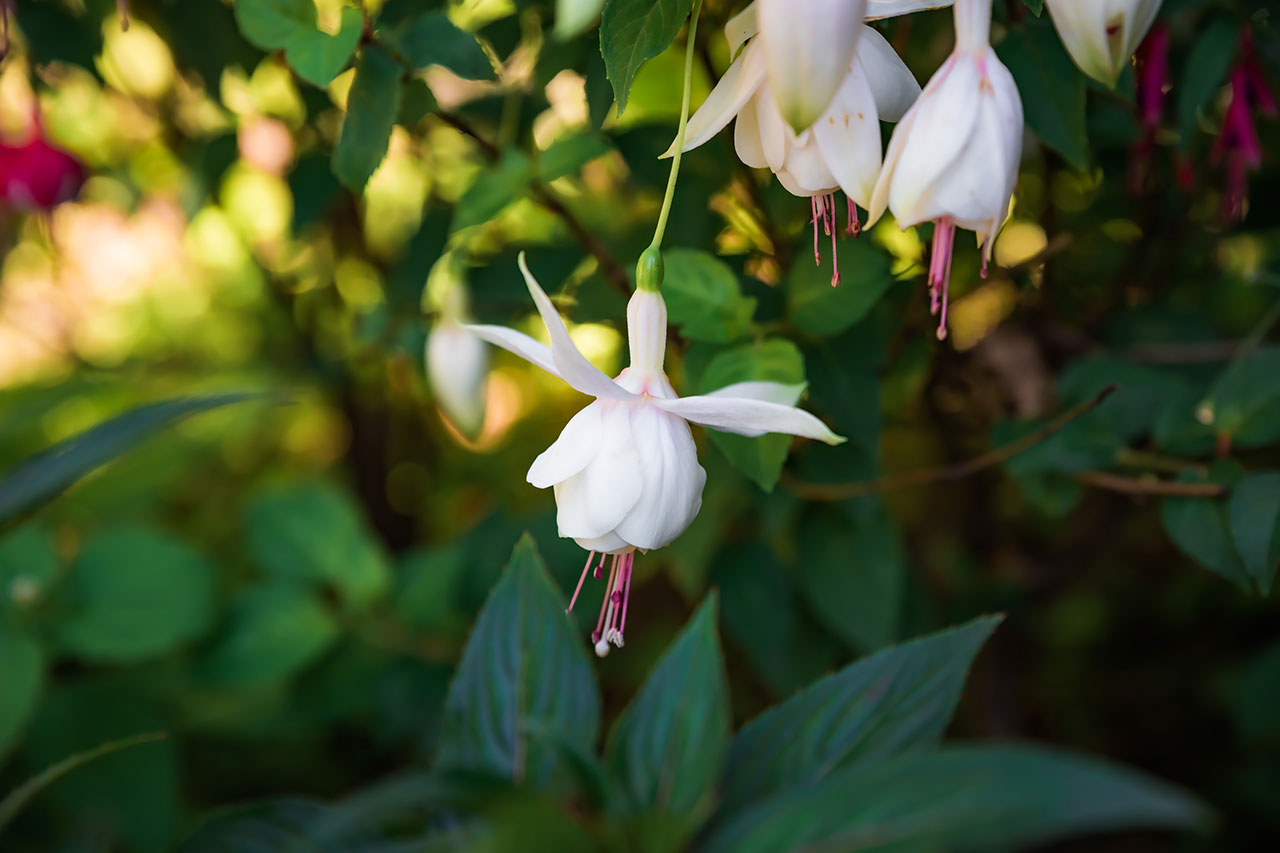

One of the loveliest things about hardy fuchsias is just how long they keep going. As early summer unfolds, the first buds open into dainty, dangling flowers – and they don’t really stop until autumn frosts finally call time. Each bloom looks like a tiny dancer in a layered skirt, but it’s the sheer number of them, one after another, that makes the plant so valuable. In a border or pot, that steady rhythm of colour carries the garden happily through the middle and later parts of the year.
Latin name: Fuchsia
Size in UK gardens: Commonly 1–2m tall and wide in time; some compact varieties stay nearer 60–90cm, while older plants can be kept in check with pruning.
Best position: Sun or partial shade, ideally in a spot that gets morning sun and a little afternoon shade, with some shelter from strong winds.
Soil: Moist but well‑drained, reasonably fertile garden soil with added organic matter; dislikes bone‑dry or waterlogged conditions.
Flowering time: Long flowering from early summer right into autumn, often until the first hard frosts.
Fragrance: Flowers are usually not noticeably scented, but the profusion of colour more than makes up for it.
Hardiness: Hardy forms are generally reliable in much of the UK, including Cambridgeshire and East Anglia, especially with a mulch in winter; more tender types may need extra protection.
Care level: Moderate; needs regular watering in dry spells and a yearly prune, but otherwise easy and forgiving.

The Simpson’s team raises the majority of our trees here at the nursery. For varieties outside our own production, we work with independent local growers we trust - all chosen for UK climate suitability.
Planting time: As container‑grown plants, hardy fuchsias can be planted in most months when the soil isn’t frozen or waterlogged, with spring and autumn usually the easiest times for them to settle.
Watering: Water regularly in the first season, especially in dry spells, so the root system can develop. Once established in the ground, they still appreciate a drink in prolonged dry weather, particularly on lighter soils.
Feeding: A mulch of garden compost in spring and a light balanced fertiliser at the same time will support strong, flowering growth through the season. Container plants benefit from a little extra feeding.
Pruning: Cut back dead and frost‑damaged growth in spring once new shoots appear, and lightly trim to shape. More vigorous varieties can be reduced further to keep them within bounds.
Winter: Hardy fuchsias may die back to the base in colder areas but usually reshoot from low down in spring. A good mulch over the root area in late autumn helps protect crowns in colder or more exposed gardens.
Availability is always changing, so please check with us if you have a particular variety in mind.
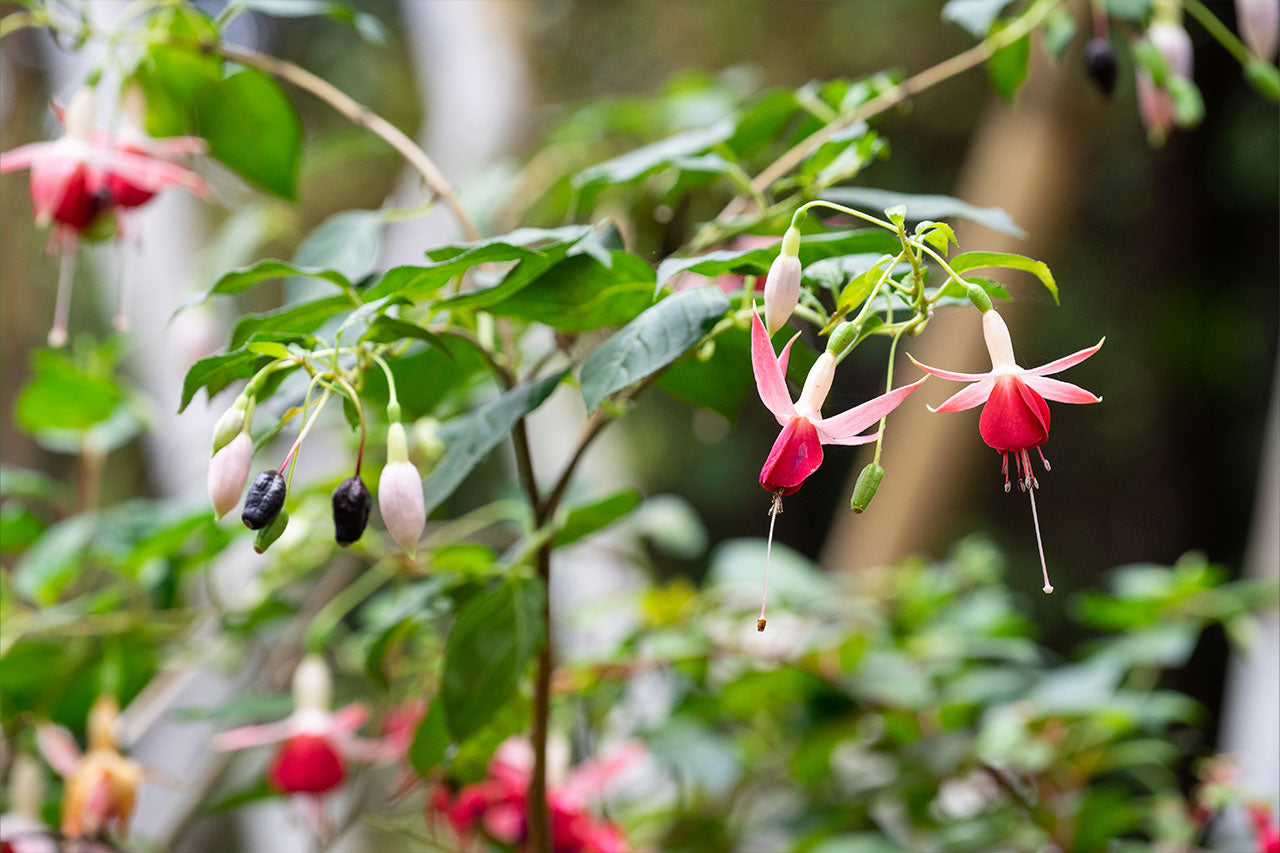
A wonderfully elegant fuchsia, with slim, white-and-green flowers that look almost porcelain as they dangle from the stems. It has a lightness that suits shade and part shade beautifully, especially in cottage-style borders and pots. It’s one of those plants that looks refined without being fussy.
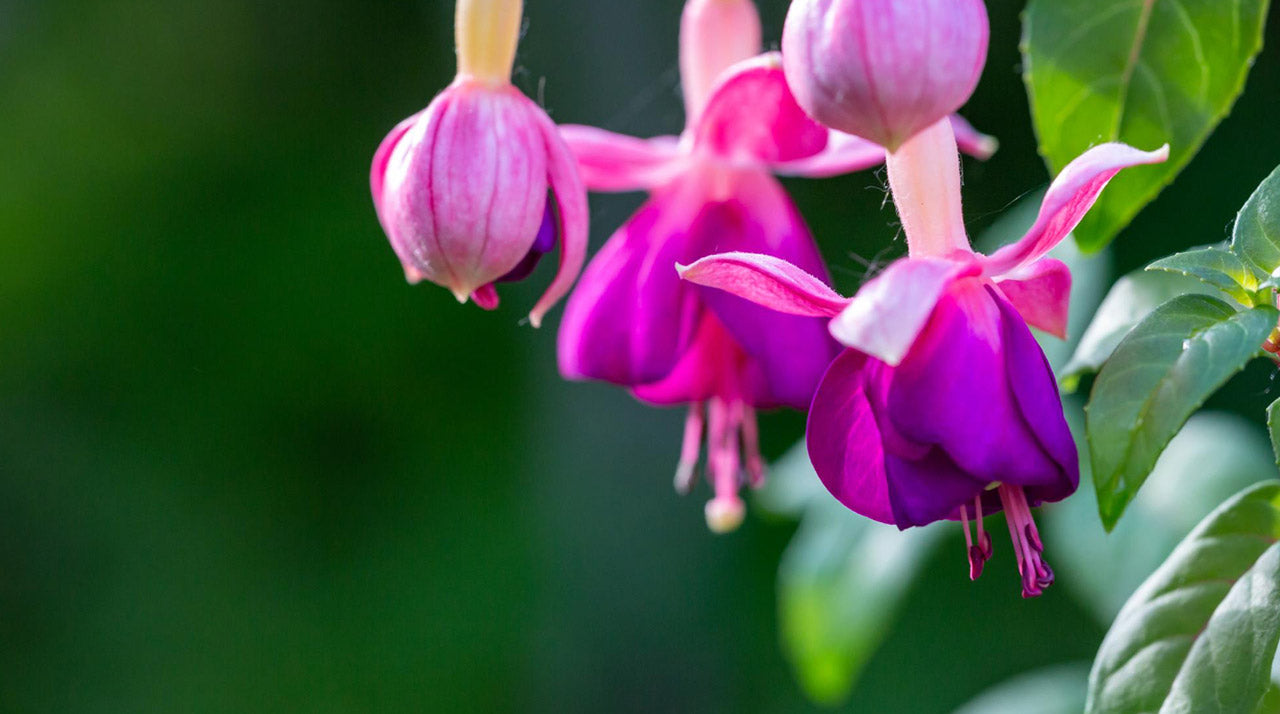
A proper garden stalwart—bold, bright flowers in rich pink and purple, and a long season of colour that just keeps going. Perfect in borders, pots, and hanging baskets, and it copes well with a bit of shade too. If you want a fuchsia that’s generous and dependable, this one rarely disappoints.
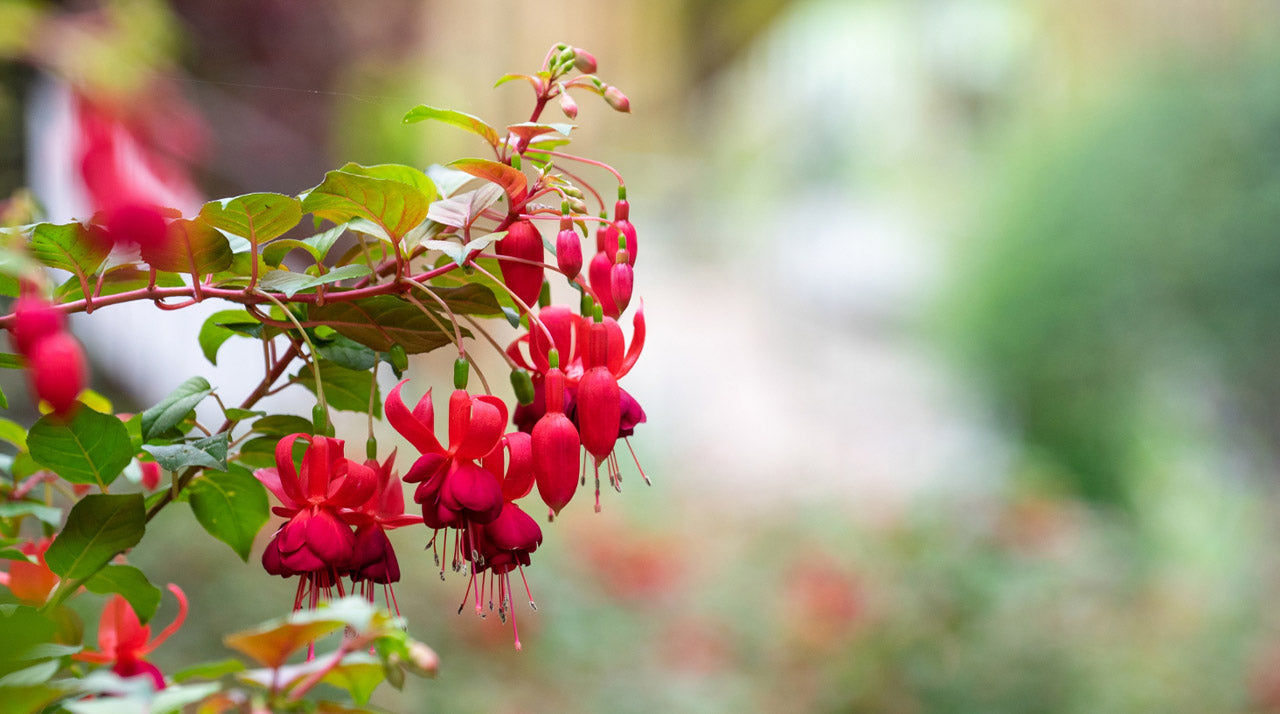
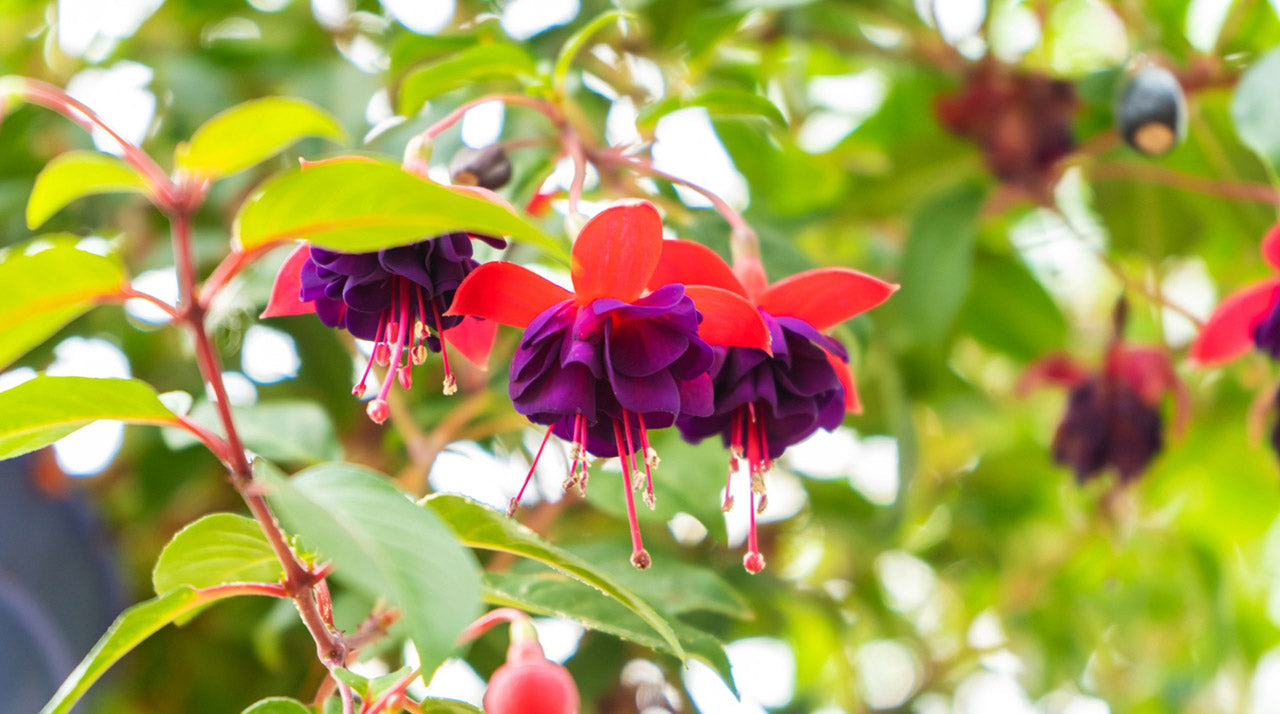
A classic hardy fuchsia with a slightly more natural, old-fashioned look—slender flowers in red and purple held on graceful stems. It’s superb in borders and informal hedging, where it can weave in among other shrubs and perennials. Lovely for pollinators, and a real favourite for giving shade a bit of colour and movement.