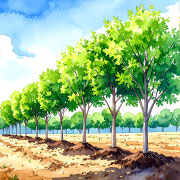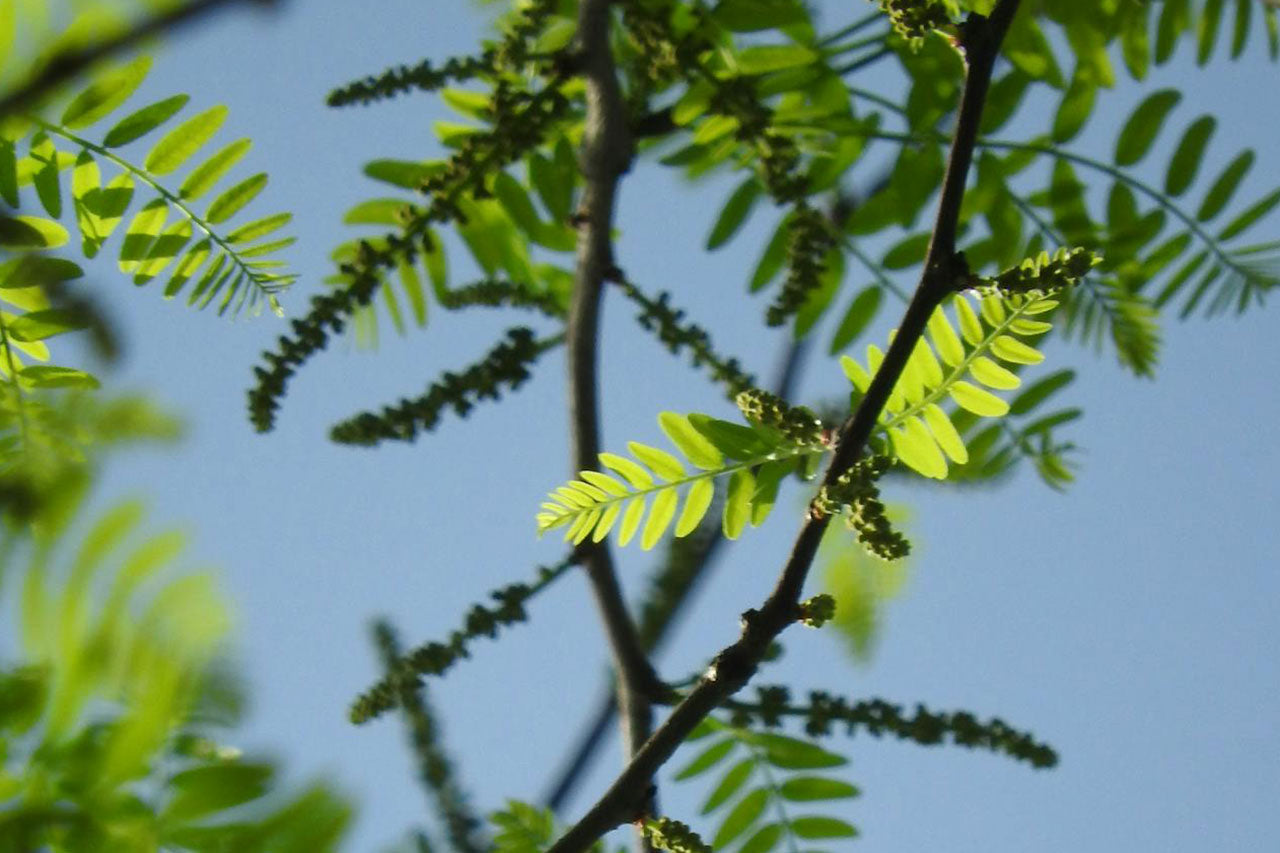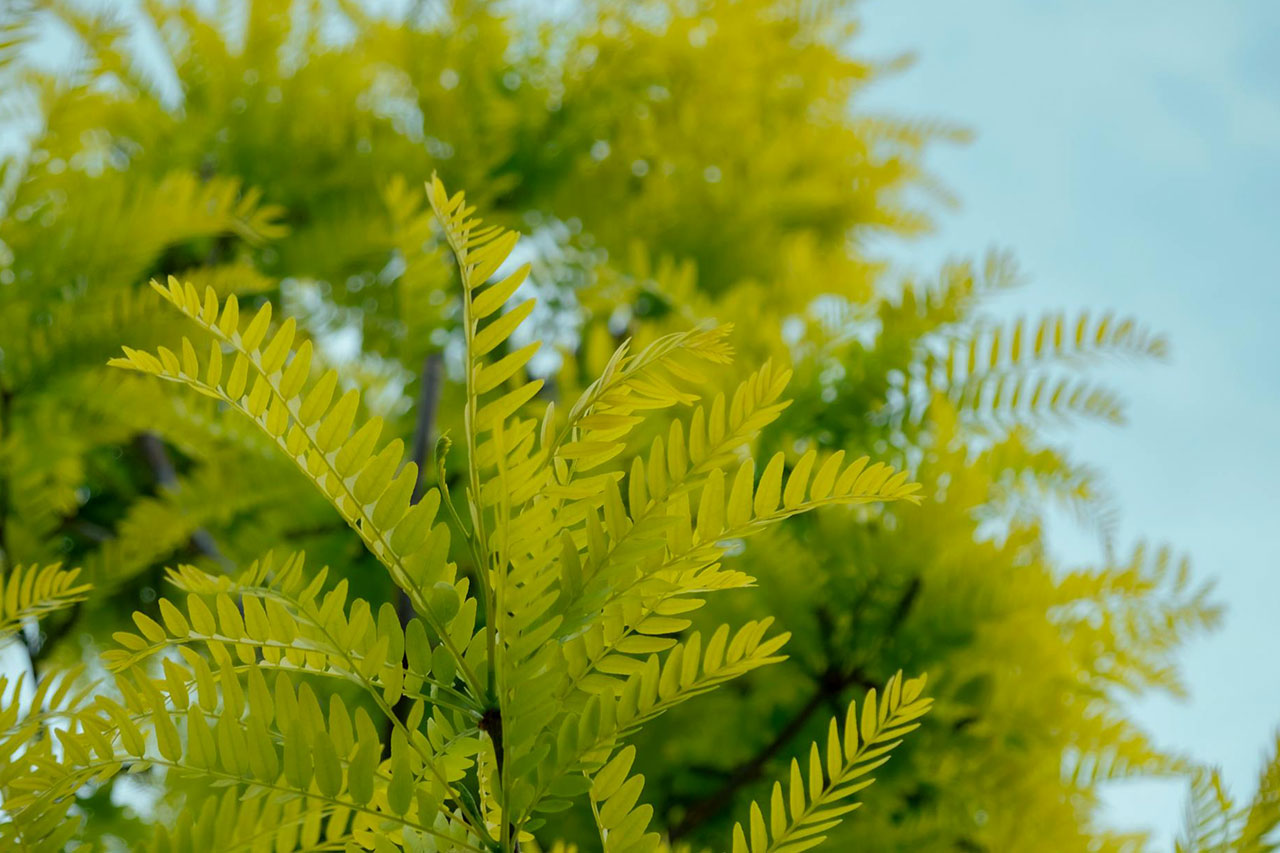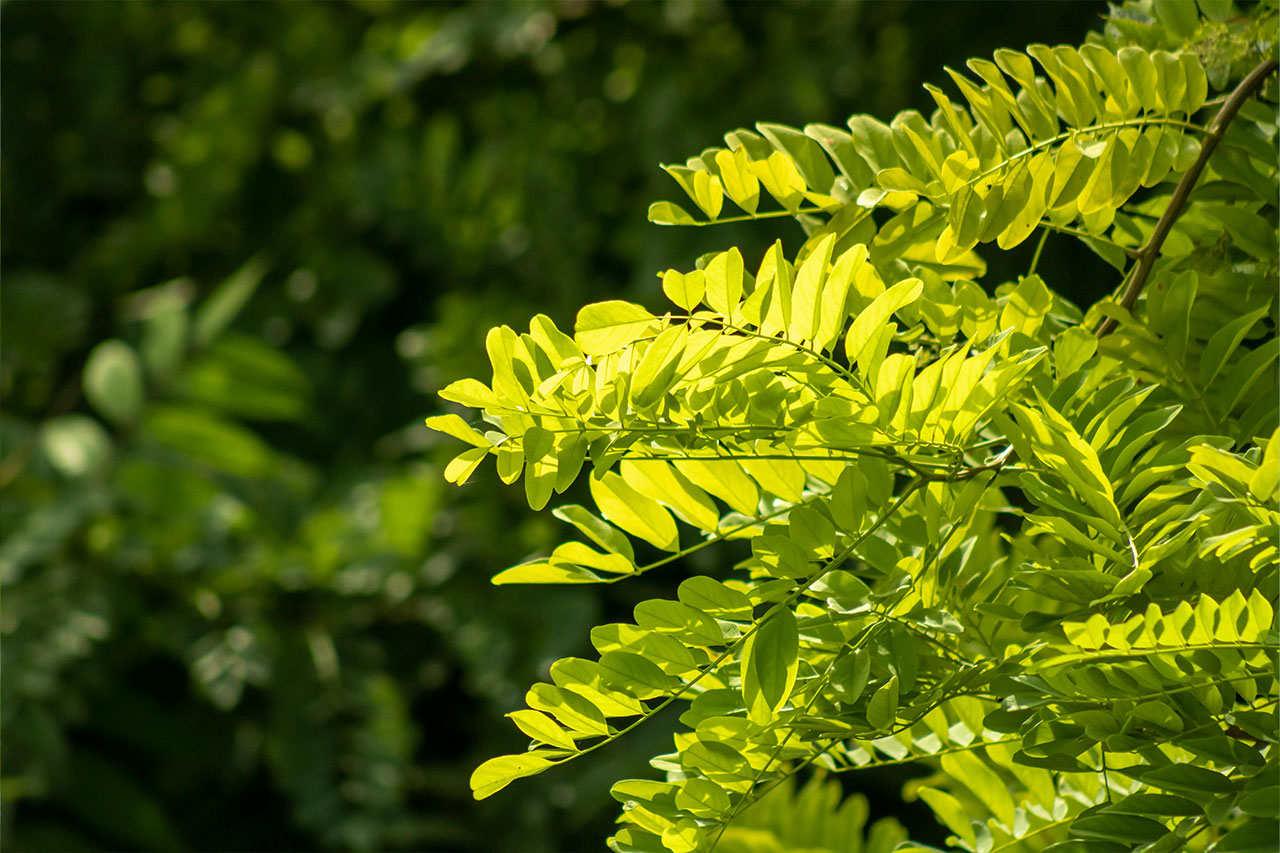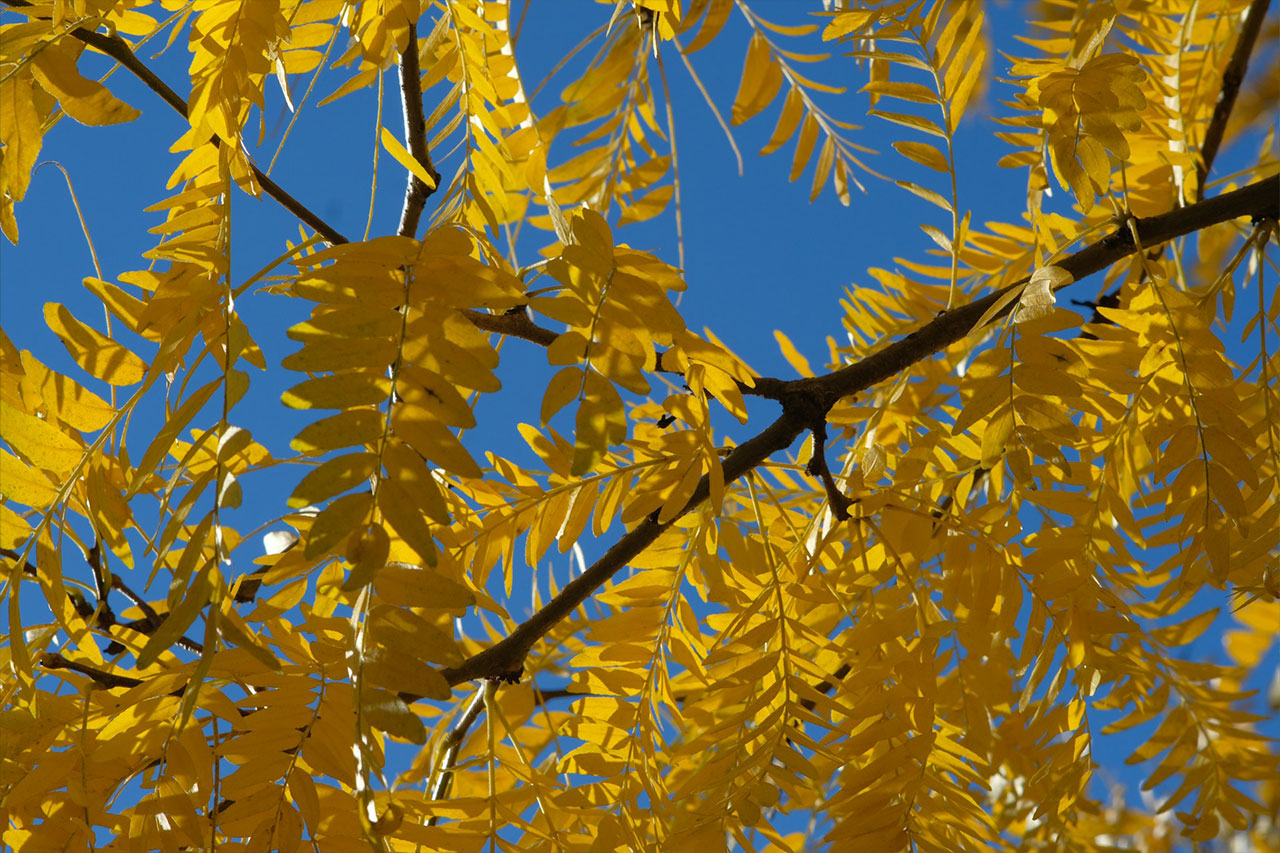

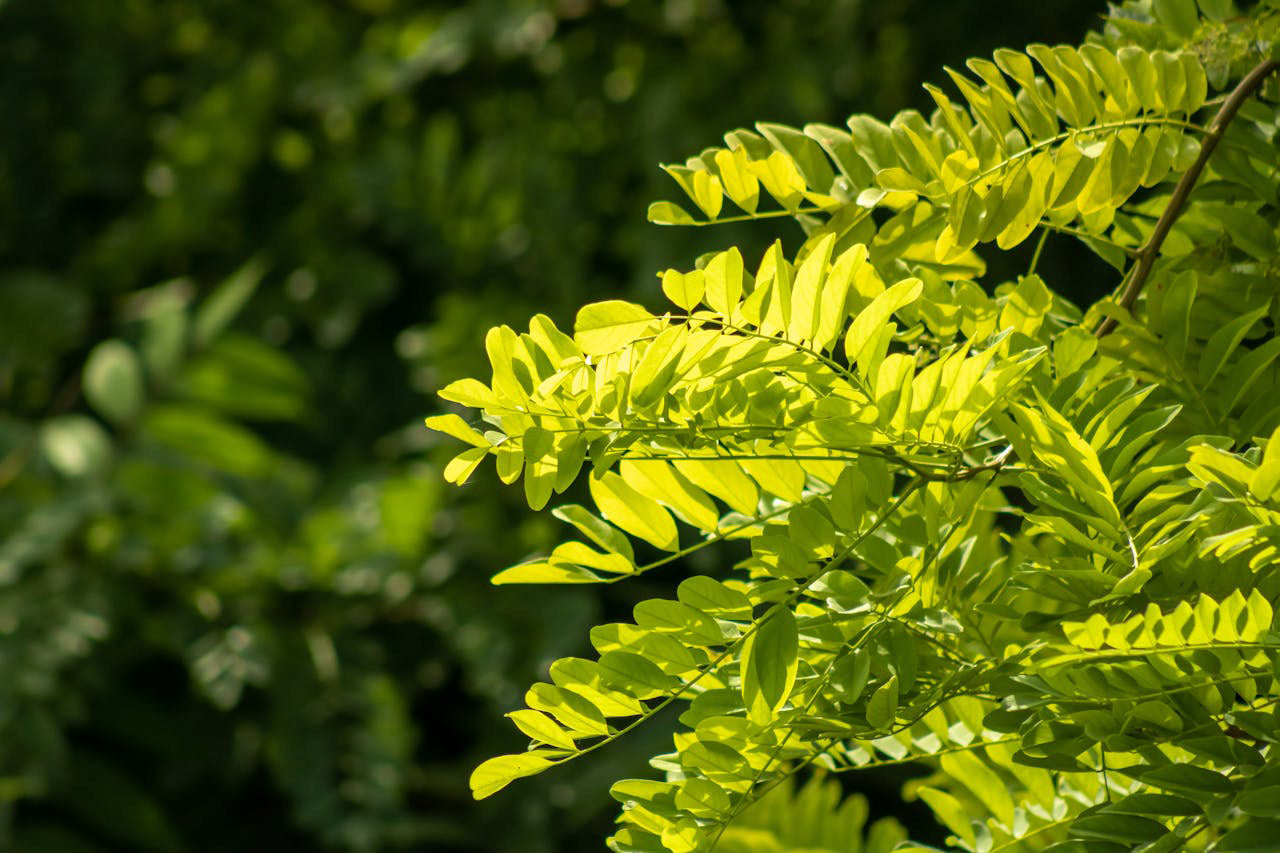
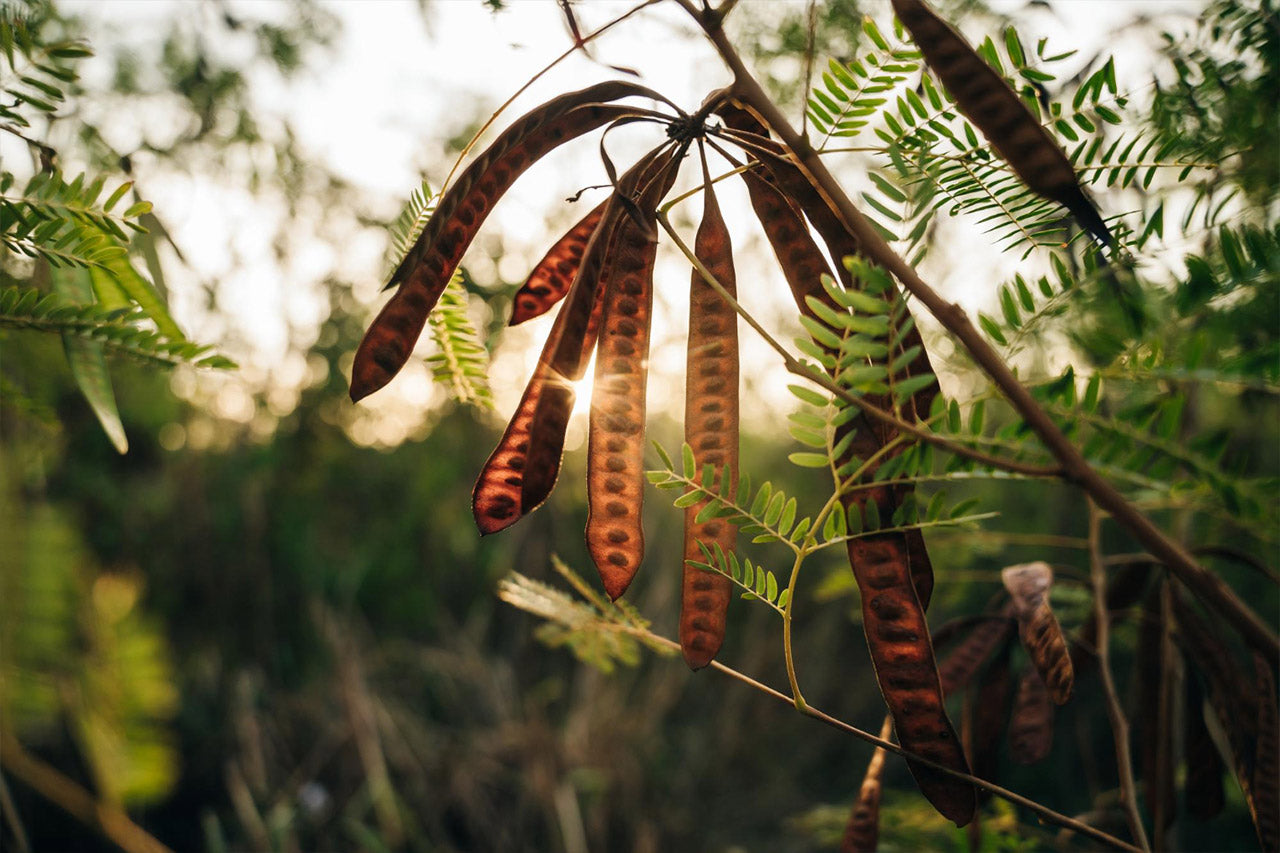
Gleditsia is best known for its graceful, finely divided leaves. Each “leaf” is made up of many small leaflets, giving a soft, fern‑like texture that moves gently in the lightest breeze. Instead of casting a solid block of shade, the canopy filters sunlight into a beautiful dappled pattern on the ground. That makes it a lovely tree to sit under, and much kinder to planting beneath than many heavier shade trees. In a typical UK garden, this light, airy foliage helps the whole space feel larger and less hemmed in.
Common name: Honey locust
Latin name: Gleditsia
Plant type: Medium to large deciduous tree for gardens and streets.
Size in UK gardens: Typically 6–10m tall and 4–7m wide over time for many garden selections; some forms can grow larger in very favourable conditions.
Best position: A sunny or lightly shaded, reasonably sheltered spot with space for a broad, open crown; ideal as a specimen over lawn, gravel or a generous border.
Soil: Moist but well‑drained soil; tolerant of many loams and improved clays, and reasonably happy on lighter ground once established, as long as it isn’t waterlogged.
Main interest: Fine, divided foliage giving dappled shade; attractive spring and autumn colour; light, airy crown that works well in real gardens.
Fragrance: Not grown for scent; appeal is mainly in foliage, form and light.
Hardiness: Generally hardy in most UK gardens once established; young growth can be nipped by late frosts in very cold springs.
Care level: Moderate – easy if you can offer sun, sensible soil and a little room, with only light pruning and some early watering needed.

The Simpson’s team raises the majority of our trees here at the nursery. For varieties outside our own production, we work with independent local growers we trust - all chosen for UK climate suitability.
Planting time: As container‑grown trees, Gleditsia can be planted in most months when the soil isn’t frozen or waterlogged. Autumn and early spring are usually best, allowing roots to settle before summer heat or winter cold.
Watering: Water regularly in the first few seasons, especially in dry spells, so the rootball and surrounding soil don’t dry out completely. Once established, honey locust is reasonably drought‑tolerant, but prolonged, severe dryness can still cause stress and early leaf drop.
Feeding: In decent garden soil, an annual mulch of compost or well‑rotted manure over the root area is usually enough. On very poor or sandy sites, a light feed with a balanced fertiliser in early spring can support steady growth; avoid heavy feeding that pushes lush, sappy shoots.
Pruning: Gleditsia needs very little pruning beyond formative shaping when young and the removal of dead, damaged or badly placed branches as it matures. It is not a tree to clip hard or “top” regularly; gentle, occasional work is better than drastic cuts.
Winter: Established trees generally need no special winter protection beyond their mulch. Young trees benefit from firm staking, a clear, weed‑free root zone and avoidance of waterlogged conditions while they establish.
Availability is always changing, so please check with us if you have a particular variety in mind.


A beautifully light-textured tree with ferny, finely divided leaves that emerge rich burgundy, then deepen and soften as the season progresses. The canopy always feels airy and dappled, never heavy. Ideal for adding a veil of colour, movement, and a contemporary elegance.
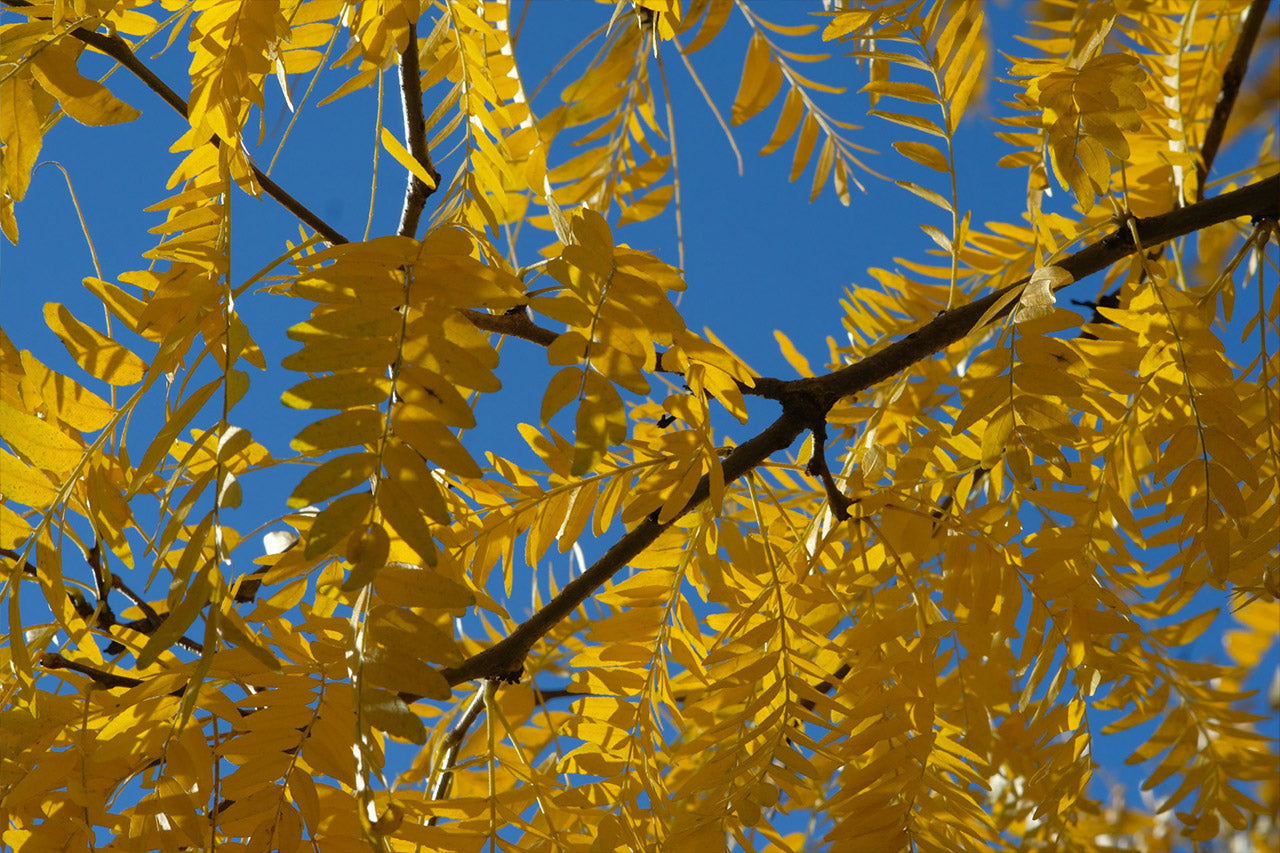
A sunshine tree in every sense, with fresh golden foliage that brightens the garden from spring onwards. The fine, feathery leaves create a light canopy with soft shade and plenty of movement. A superb specimen for lifting darker planting and adding an easy, cheerful glow.