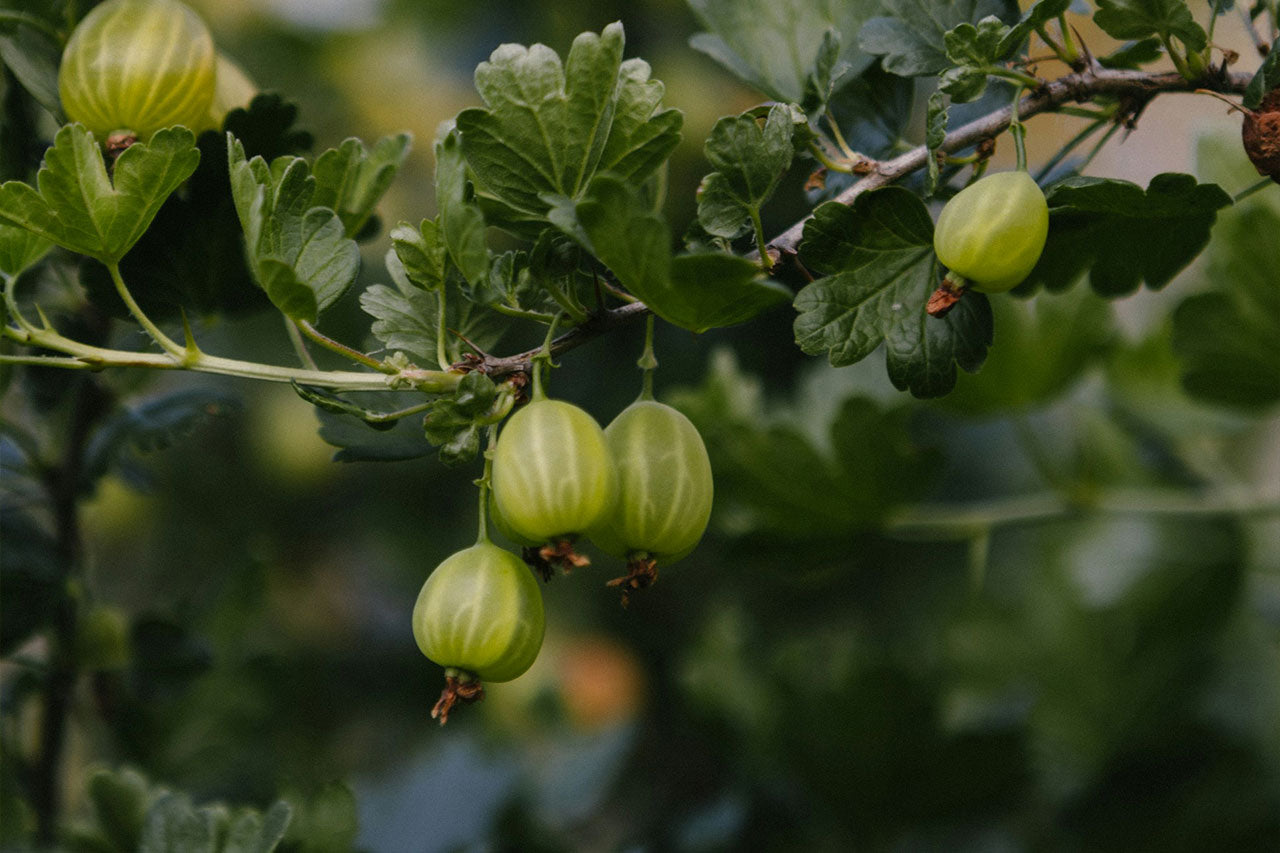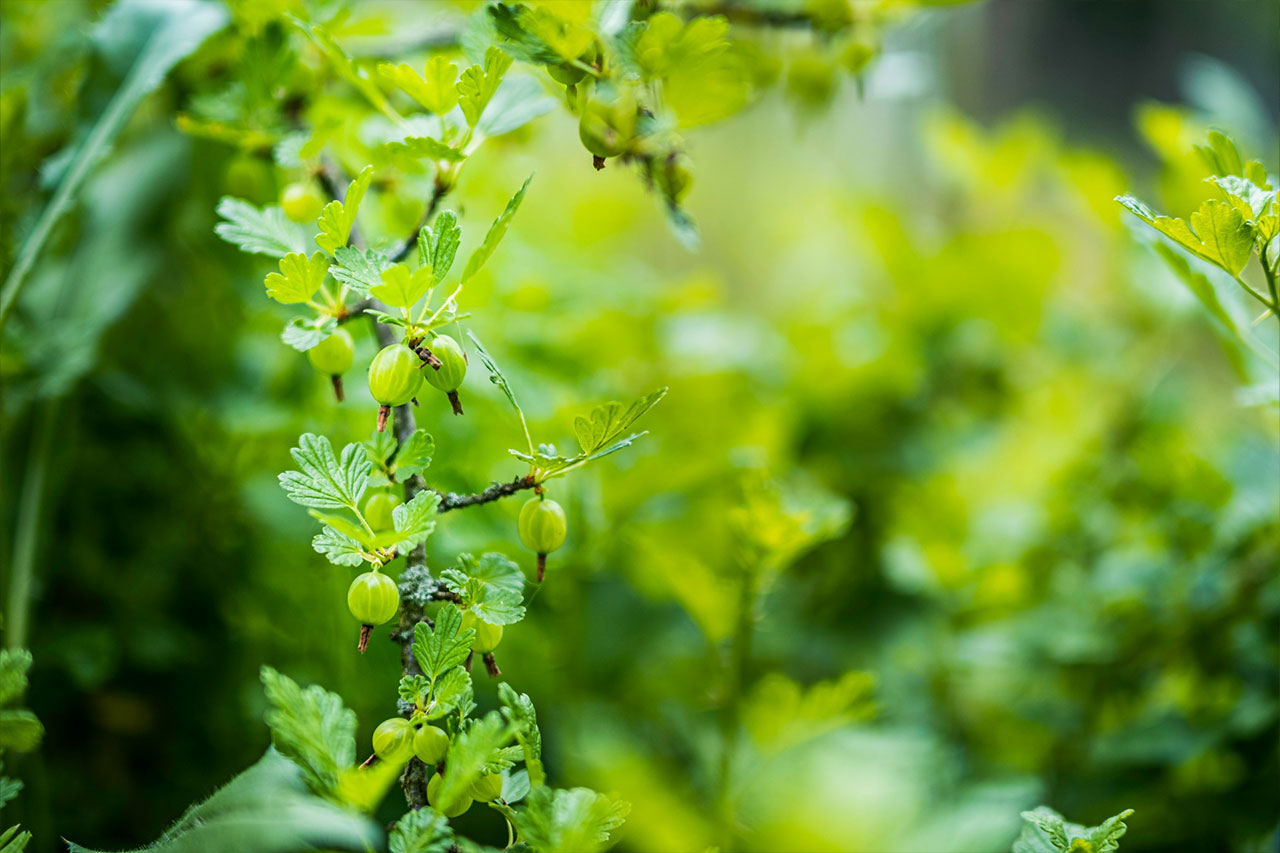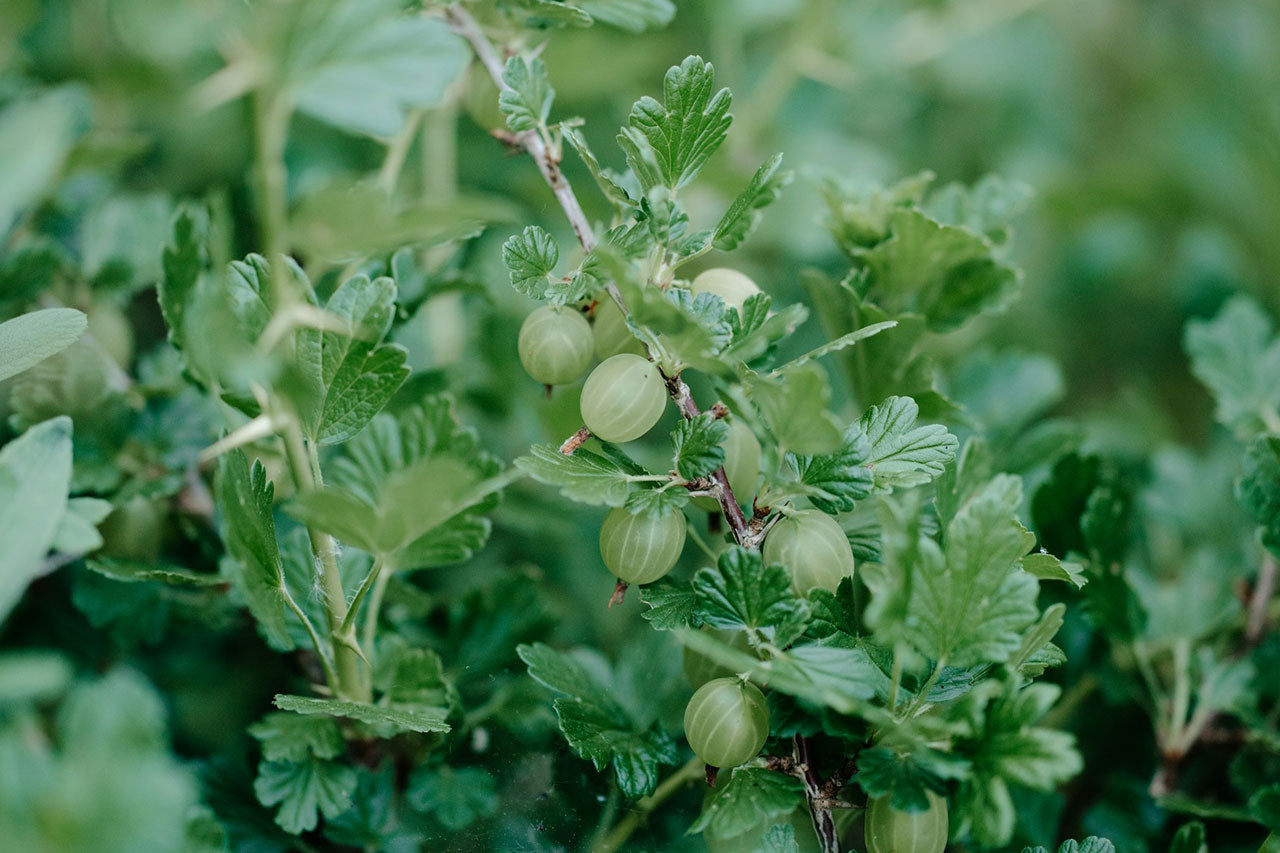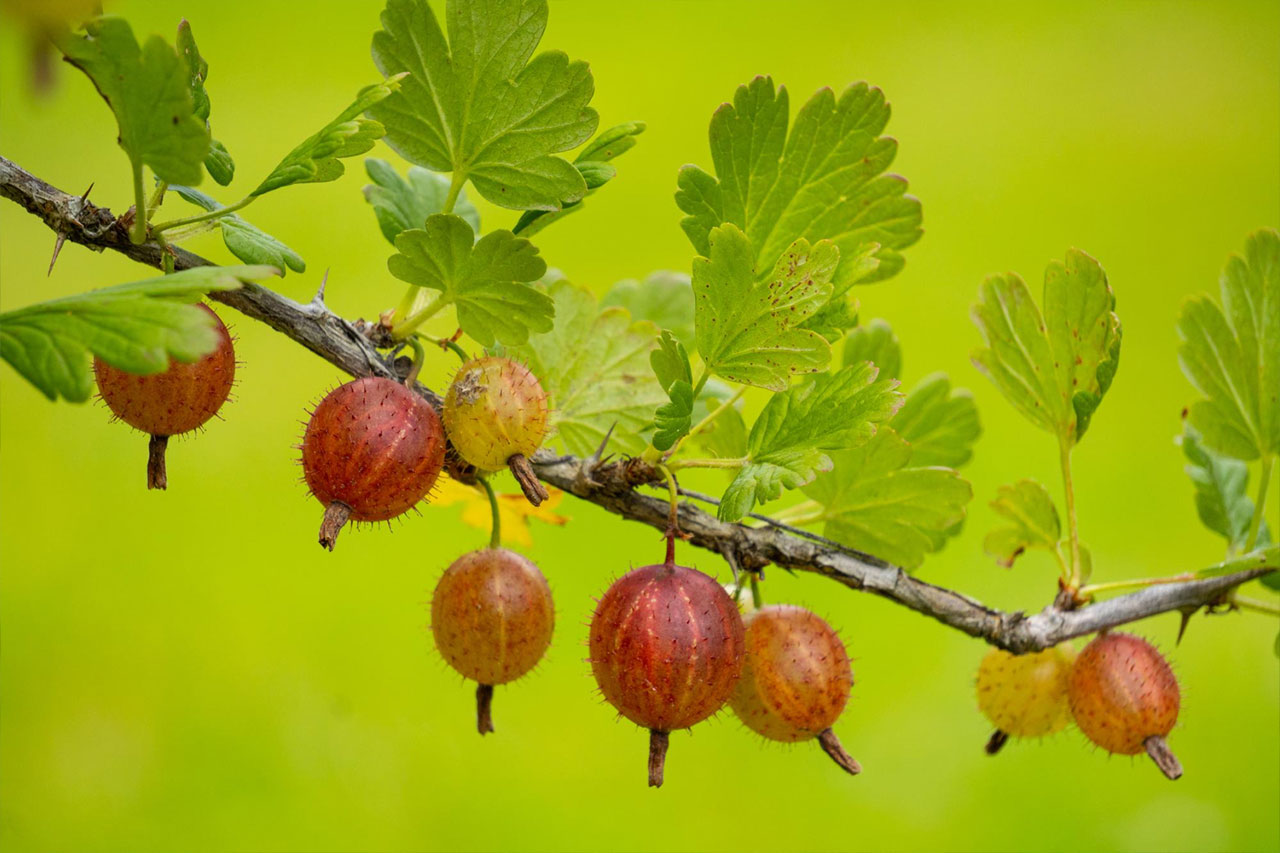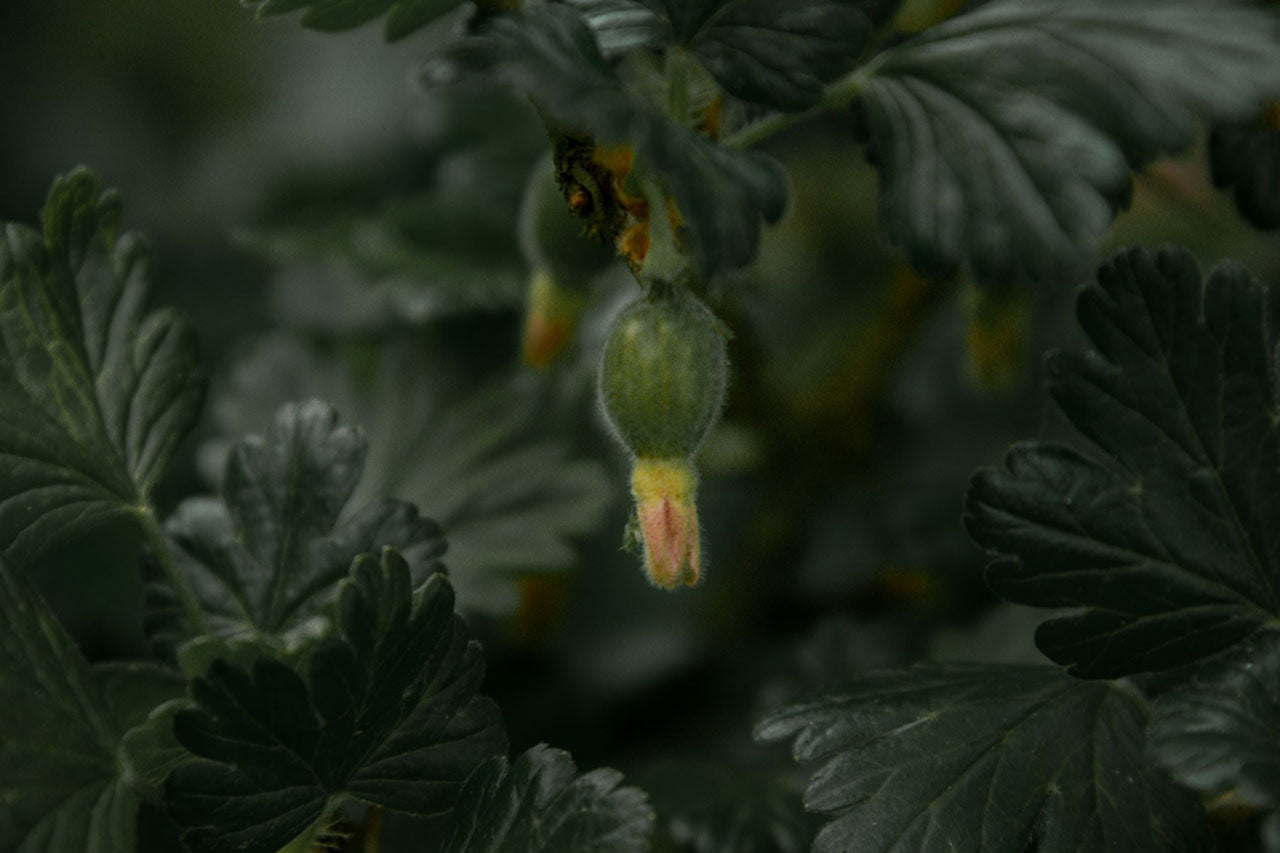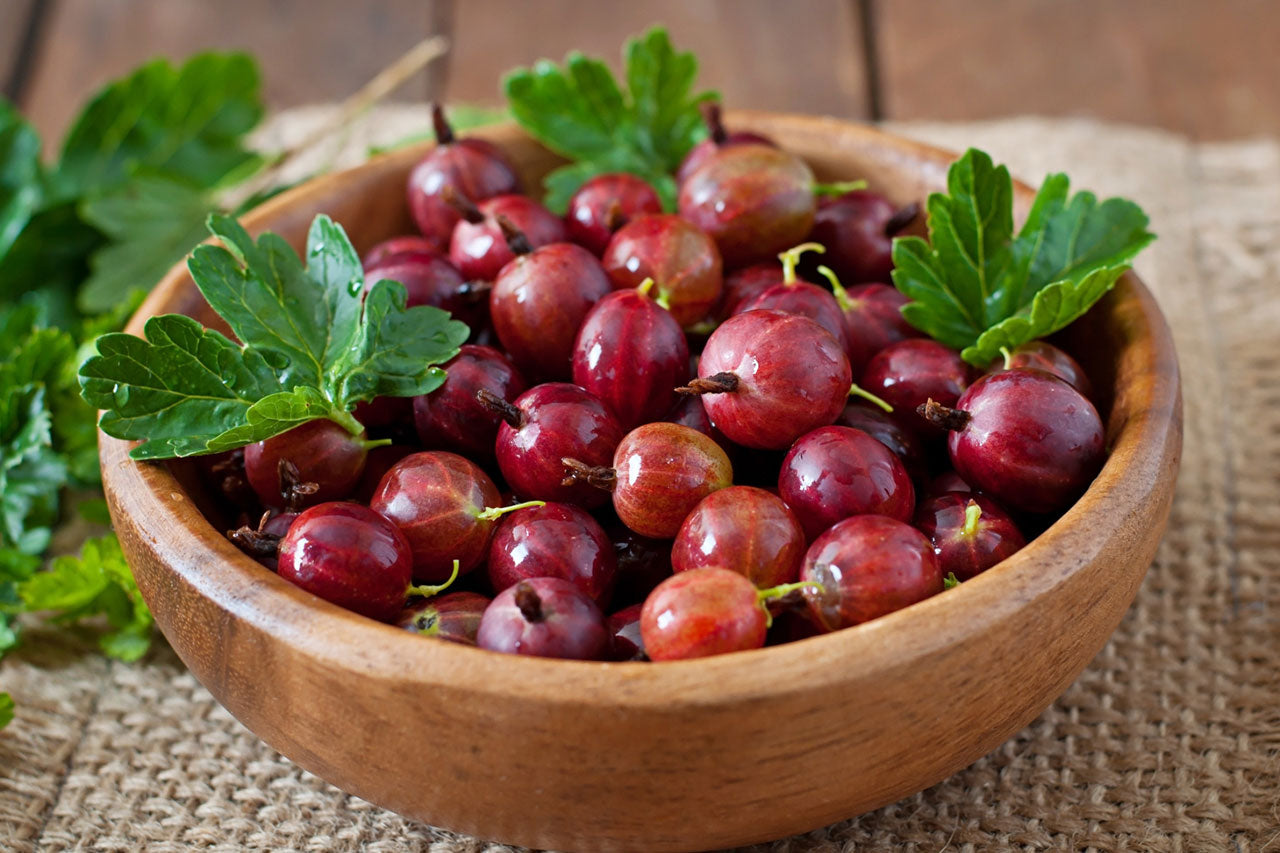

Gooseberries (Ribes uva‑crispa and modern hybrids) are wonderfully generous plants. Once established, a single bush can give several kilos of fruit in a good season, especially if it’s well mulched and watered. You can pick the berries early, while they’re still firm and tart for pies, tarts and sauces, or leave some to ripen to a soft, almost dessert‑sweet stage for eating fresh. In a typical Cambridgeshire garden, a small row of gooseberries can keep you in puddings, bottled fruit and jam right through the summer – and there’s usually still enough to squirrel away in the freezer for winter treats.


Common name: Gooseberry.
Latin name: Ribes uva‑crispa and modern hybrid cultivars.
Size in UK gardens: Typically 1–1.5m tall and wide as a bush; cordons and fans can be kept narrower and more upright.
Best position: A sunny, reasonably sheltered spot; will tolerate light shade, but crops are heaviest and sweetest in full sun.
Soil: Fertile, moisture‑retentive but well‑drained soil with plenty of organic matter; dislikes very dry, thin or waterlogged ground.
Flowering time: Modest green‑white flowers in spring; fruit ripens from early to mid‑summer depending on variety and location.
Fragrance: Leaves and fruit have a sharp, “gooseberry” scent when crushed; flowers are not strongly fragrant.
Hardiness: Fully hardy across the UK once established.
Care level: Moderate – straightforward once you learn the pruning, with regular mulching, simple feeding and some attention to pests like sawfly.

The Simpson’s team raises the majority of our trees here at the nursery. For varieties outside our own production, we work with independent local growers we trust - all chosen for UK climate suitability.
Planting time: As container‑grown plants, ivies can be planted almost any time the ground isn’t frozen or waterlogged, though spring and early autumn are usually easiest for root establishment and watering.
Watering: Water well in the first season, especially in dry East Anglian summers or in very free‑draining soils, so the rootball doesn’t dry out. Once established in the ground, ivy usually needs little watering except in prolonged drought or on extreme walls.
Feeding: In average soil ivy rarely needs special feeding; a mulch of garden compost or a light sprinkle of general fertiliser in spring is usually ample, particularly on poor or chalky ground or in containers.
Pruning: Trim back ivy once or twice a year to keep it where you want it, usually in late spring and again in late summer if needed. On walls and fences, clip it away from gutters, windows and rooflines, and thin congested areas occasionally to keep growth healthy.
Winter: No special winter care is needed in the UK – ivy is fully hardy and evergreen. The main winter job is simply to keep an eye on any growth creeping into gutters or under tiles and to tidy it once conditions are safe to work in.
Availability is always changing, so please check with us if you have a particular variety in mind.


A very garden-friendly gooseberry, valued for its generous crops and easier picking thanks to fewer spines than many traditional sorts. The berries ripen to a rich red and have a lovely balance of sweetness and tang, making it excellent for eating fresh as well as for crumbles and jams. A great choice for family gardens.
A hardy, reliable gooseberry that produces plenty of green fruits with a really good flavour—fresh, sharp and wonderfully useful in the kitchen. Pick earlier for classic cooking gooseberries, or leave a little longer for a sweeter, softer bite. A superb choice if you want a steady crop and a traditional gooseberry taste.
A much-loved variety for its attractive red fruits and excellent flavour, with berries that sweeten nicely as they ripen. Brilliant for eating straight from the bush once fully coloured, but still useful for cooking earlier in the season. A very dependable plant for a productive garden, and a lovely one for children to forage.
One of the most reliable, heavy-cropping gooseberries, producing plenty of large green fruits that are superb for cooking—think pies, fools and preserves. It’s a great “workhorse” variety for anyone who wants proper harvests, and it suits the traditional fruit garden or allotment perfectly.

A classic old favourite with large, richly coloured red berries and a proper, old-fashioned gooseberry flavour. Excellent for the kitchen when picked a little early, and delicious fresh once fully ripe and sweetened. A really satisfying variety if you like heritage fruit with generous, worthwhile harvests.