
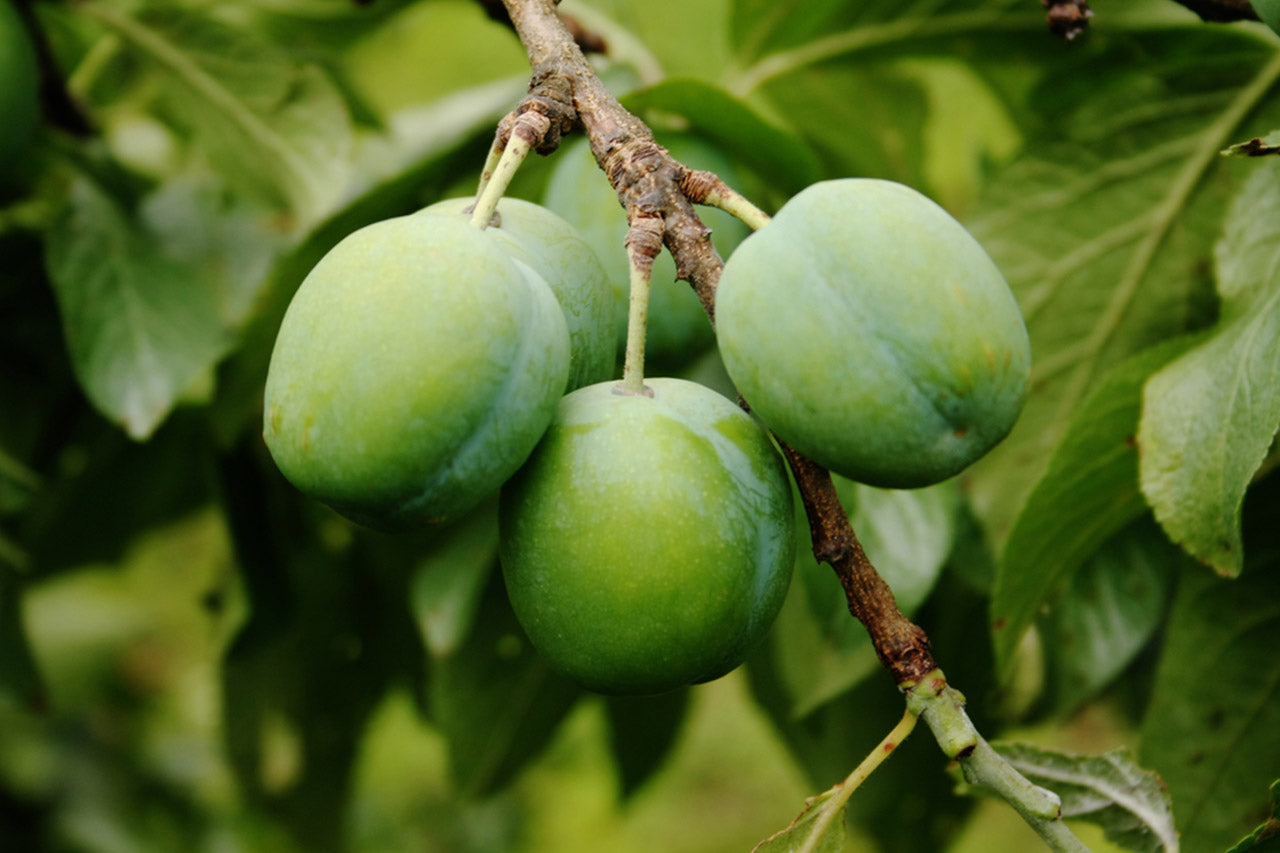
Greengages are often described as the “connoisseur’s plum”, and once you’ve tasted a ripe one it’s easy to see why. The fruit is usually green to green-gold, sometimes with a soft blush, and the flavour is remarkably rich — sweet, aromatic, and almost honeyed when fully ripe. They’re wonderful eaten straight from the tree, but also superb for tarts, crumbles, bottling and jam, because the sweetness holds up beautifully. If you’ve only ever known supermarket plums, a home-grown greengage feels like a different fruit altogether.
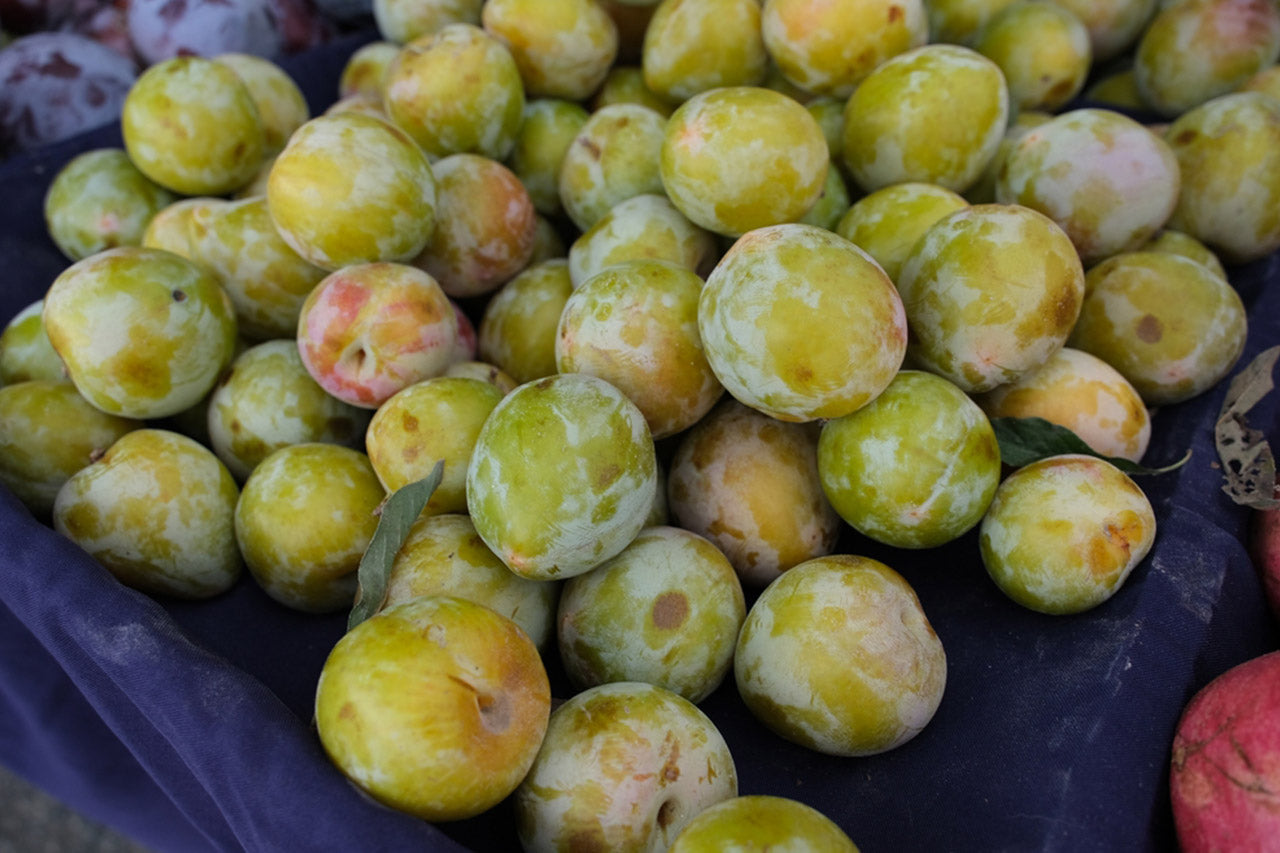
Common name: Greengage (a sweet dessert plum).
Latin name: Prunus domestica subsp. italica (commonly sold simply as Prunus ‘Greengage’ types).
Size in UK gardens: Often 3–5m, depending on rootstock and pruning; can be kept smaller as a trained tree.
Best position: Full sun in a sheltered spot for best flowering and fruit ripening.
Soil: Fertile, moisture-retentive but well-drained soil; avoid waterlogged winter ground.
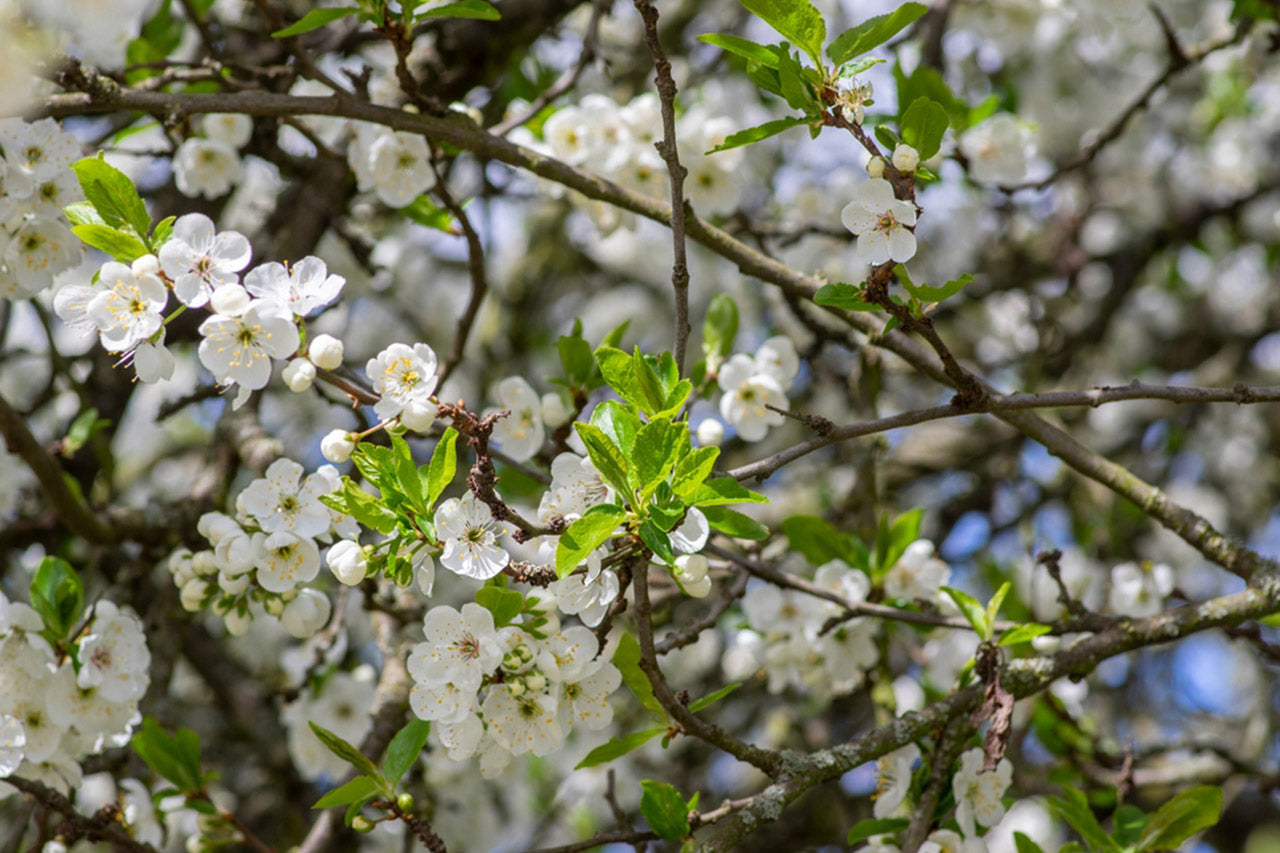
Flowering time: Spring (often April), with fruit ripening late summer into early autumn.
Fragrance: Usually not noticeably scented.
Hardiness: Hardy in most UK gardens, though blossom can be vulnerable to late frosts.
Care level: Moderate – easy enough, but benefits from good siting, pruning, and a watchful eye for pests.

Rather than travelling halfway across Europe, our mimosa trees are grown on site by the Simpson’s team. They’re toughened to local conditions, properly potted, and ready to get growing the moment you plant them.
Planting time: As container-grown plants, greengage trees can be planted in most months when the ground isn’t frozen or waterlogged; spring and autumn are usually easiest.
Watering: Water well in the first 1–2 seasons and during dry spells, especially while fruit is swelling in summer.
Feeding: A spring mulch of compost or well-rotted manure is ideal; a balanced feed in spring can help on lighter soils.
Pruning: Prune to maintain shape and airflow; timing depends on training, but many gardeners prune plums in summer to reduce disease risk.
Winter: Fully hardy once established; focus on a mulch and good drainage rather than heavy protection.
Availability is always changing, so please check with us if you have a particular variety in mind.


A proper gage with a refined, almost “orchard connoisseur” feel—beautiful in blossom and quietly special once fruit arrives. The flavour is richly sweet and honeyed, with that classic gage perfume and a soft, melting juiciness when perfectly ripe. Ideal if you want fruit that feels luxurious and a little bit rare in the garden.
A lighter, earlier gage with a delicate, refined character—subtle blossom, neat habit, and fruit that feels elegant rather than hefty. The flavour is sweet, honeyed, and gently aromatic, with a soft juiciness when picked at peak ripeness. Ideal if you want that classic gage sweetness earlier in the season.
A classic gage with a rich, refined orchard feel—ornamental in spring, then quietly luxurious once fruit arrives. The flavour is deeply sweet, honeyed, and aromatic, often with a melt-in-the-mouth texture at peak ripeness. Ideal if you want gage fruit that feels truly indulgent.
A true heritage greengage with a refined, almost luxurious feel—beautiful blossom followed by fruit that’s quietly special. The flavour is intensely sweet, honeyed, and richly aromatic, with that classic greengage “nectar” quality when perfectly ripe. Ideal if you want fruit that feels rare, indulgent, and properly old-fashioned.


A bright, golden gage with a sunny, elegant character—ornamental in blossom, then very rewarding in fruit. The flavour is richly sweet and honeyed, with a soft juiciness and a gentle aromatic lift that feels refined rather than sharp. Ideal if you want that classic gage sweetness in a glowing golden form.
A refined gage with a quiet “orchard connoisseur” feel—elegant in blossom, then quietly luxurious once the fruit is ready. The flavour is intensely sweet and honeyed, with that rich gage perfume and a soft, melting juiciness when perfectly ripe. Ideal if you want fruit that feels special and indulgent, not just everyday.