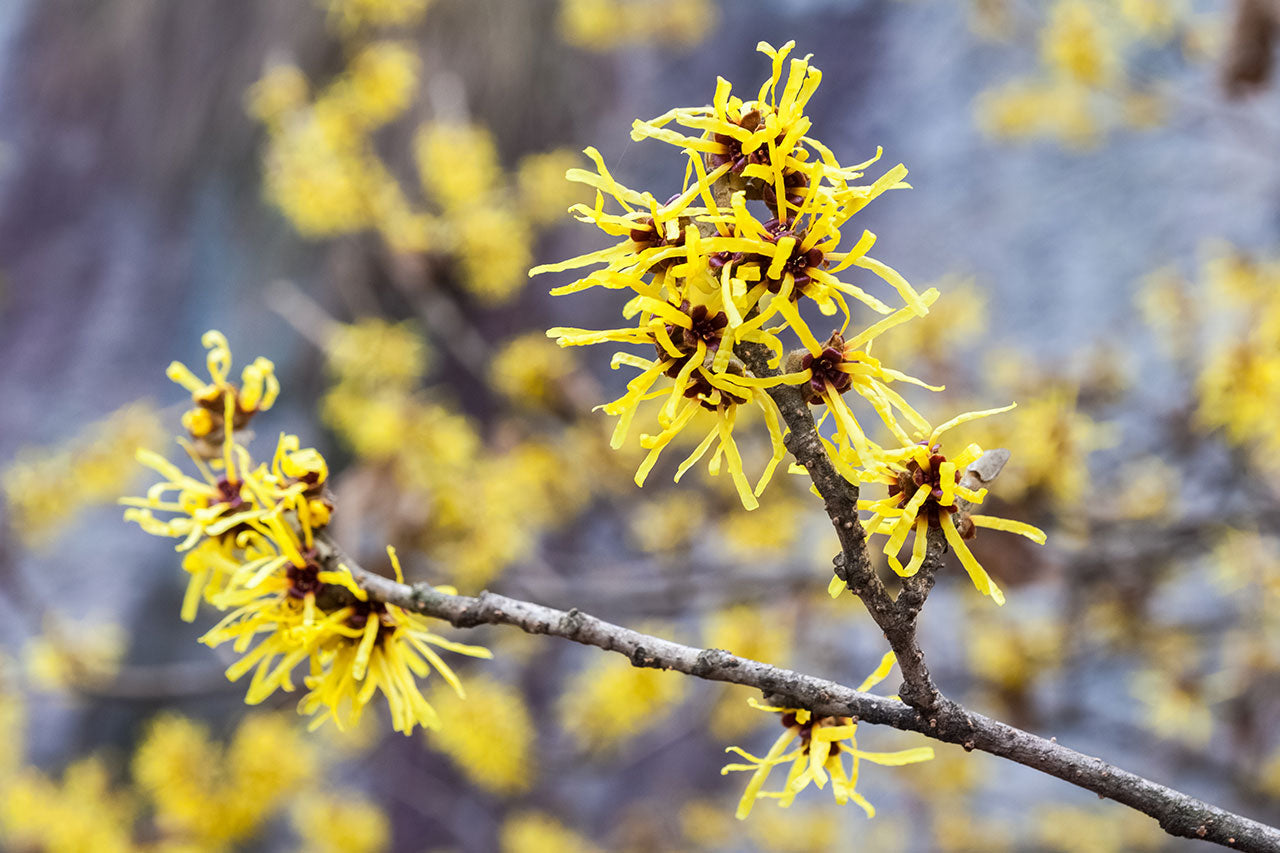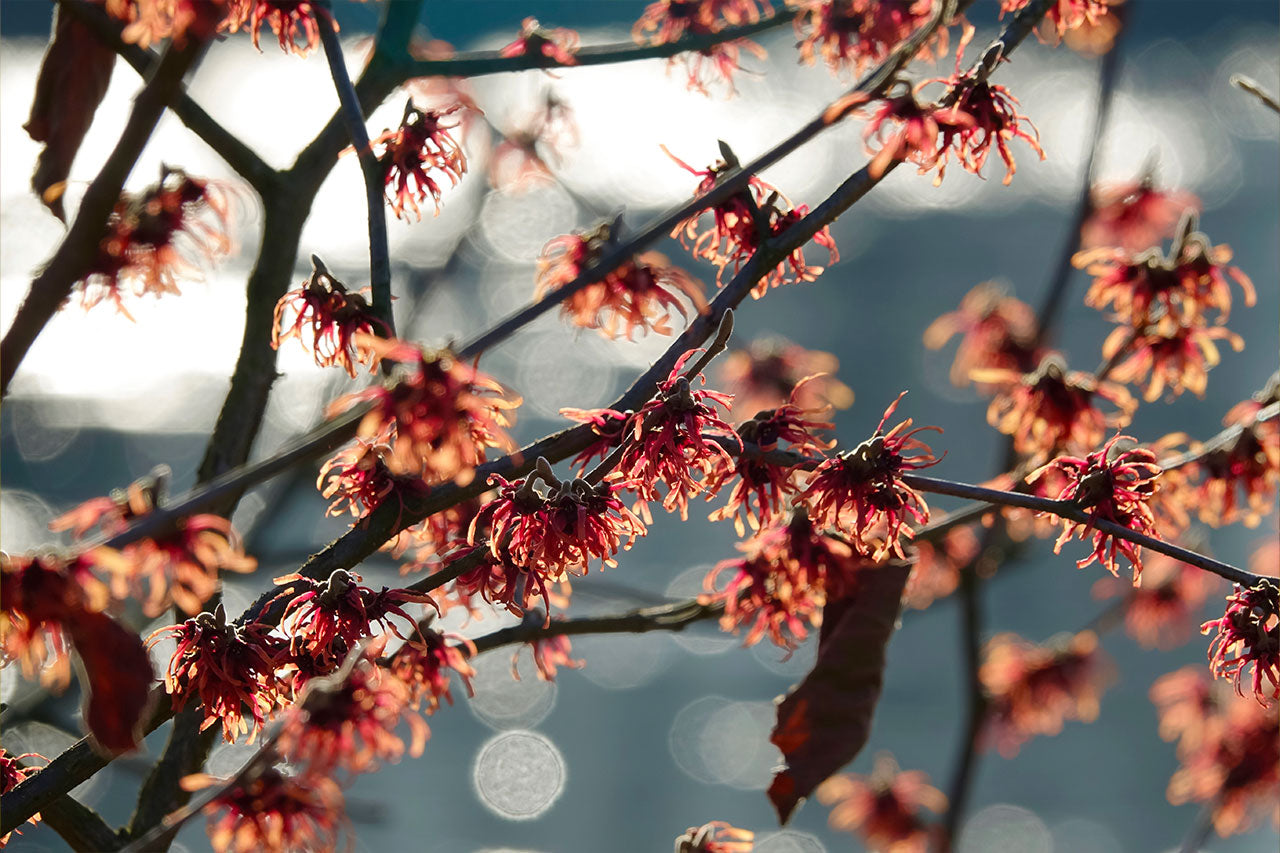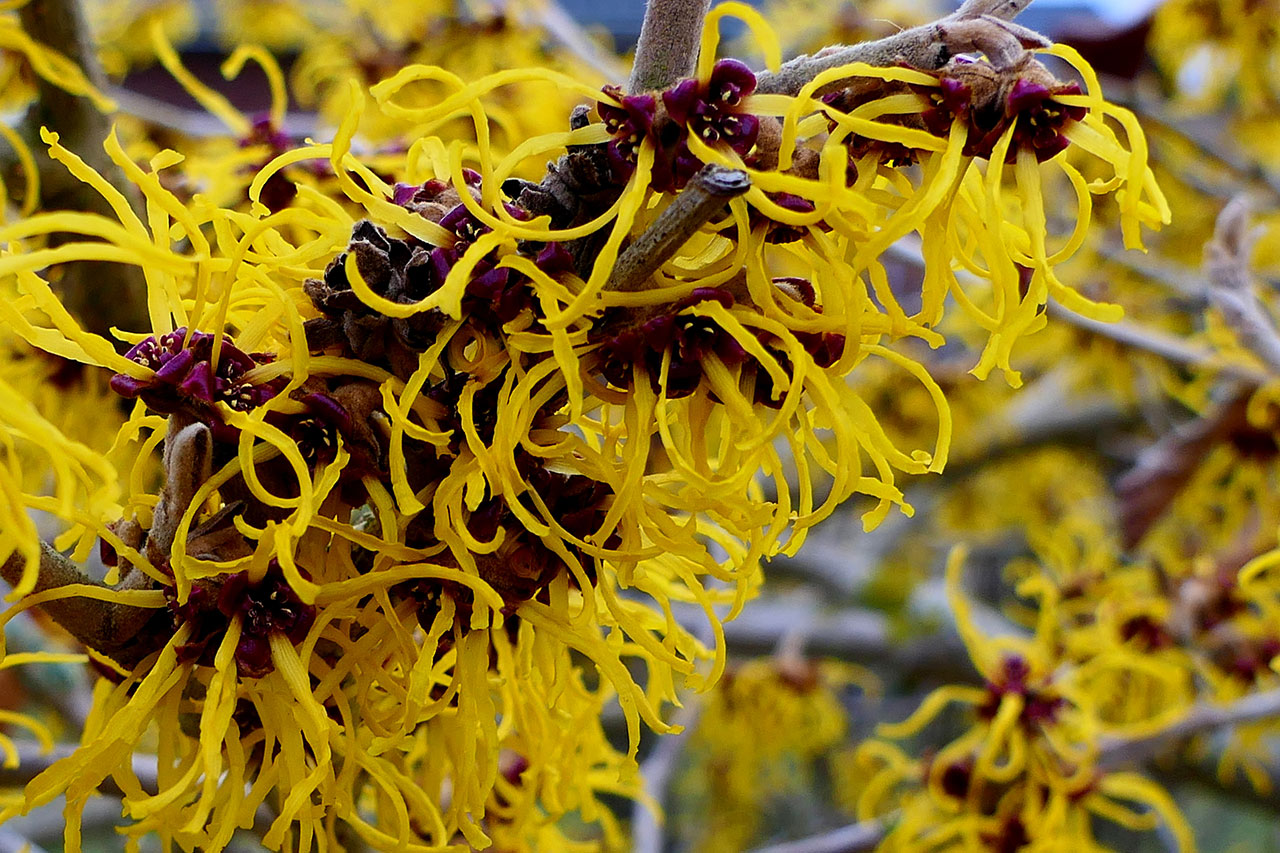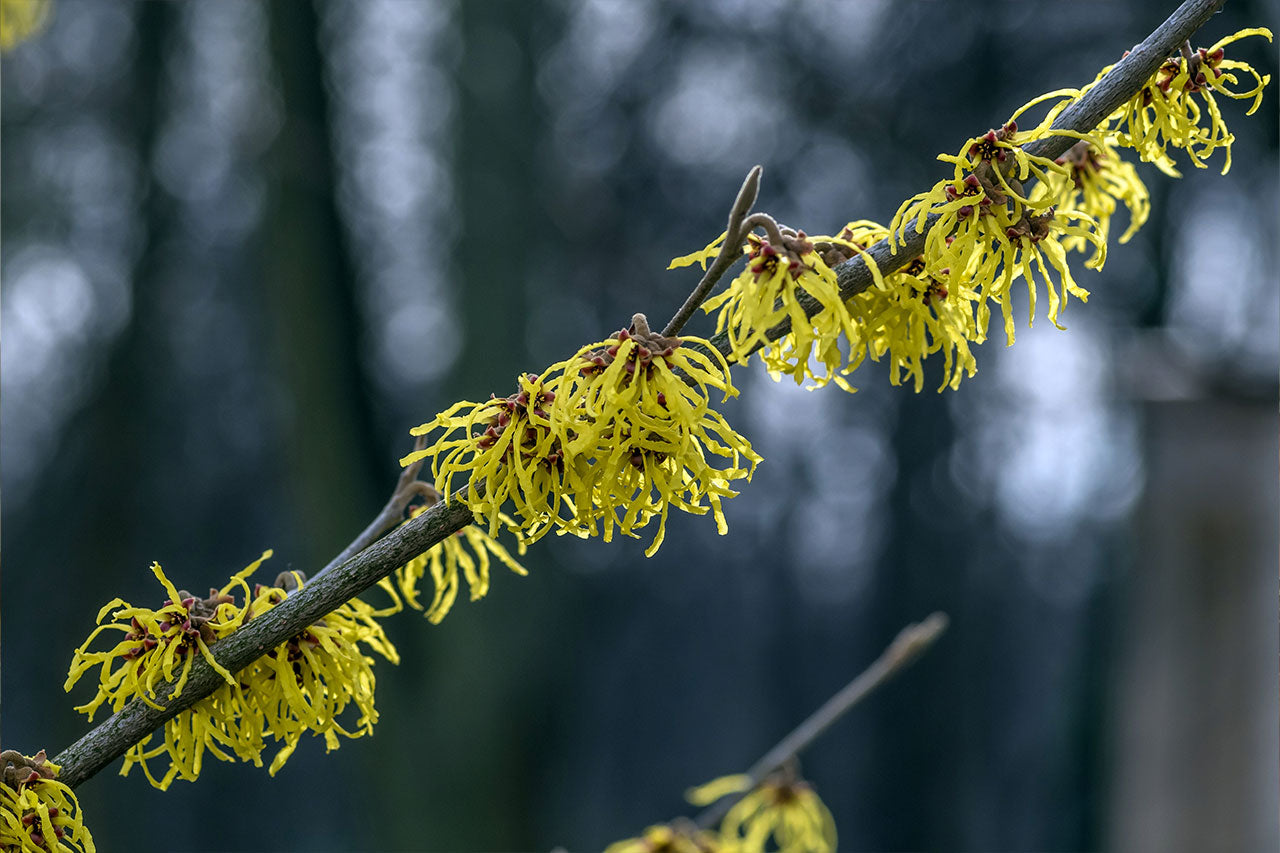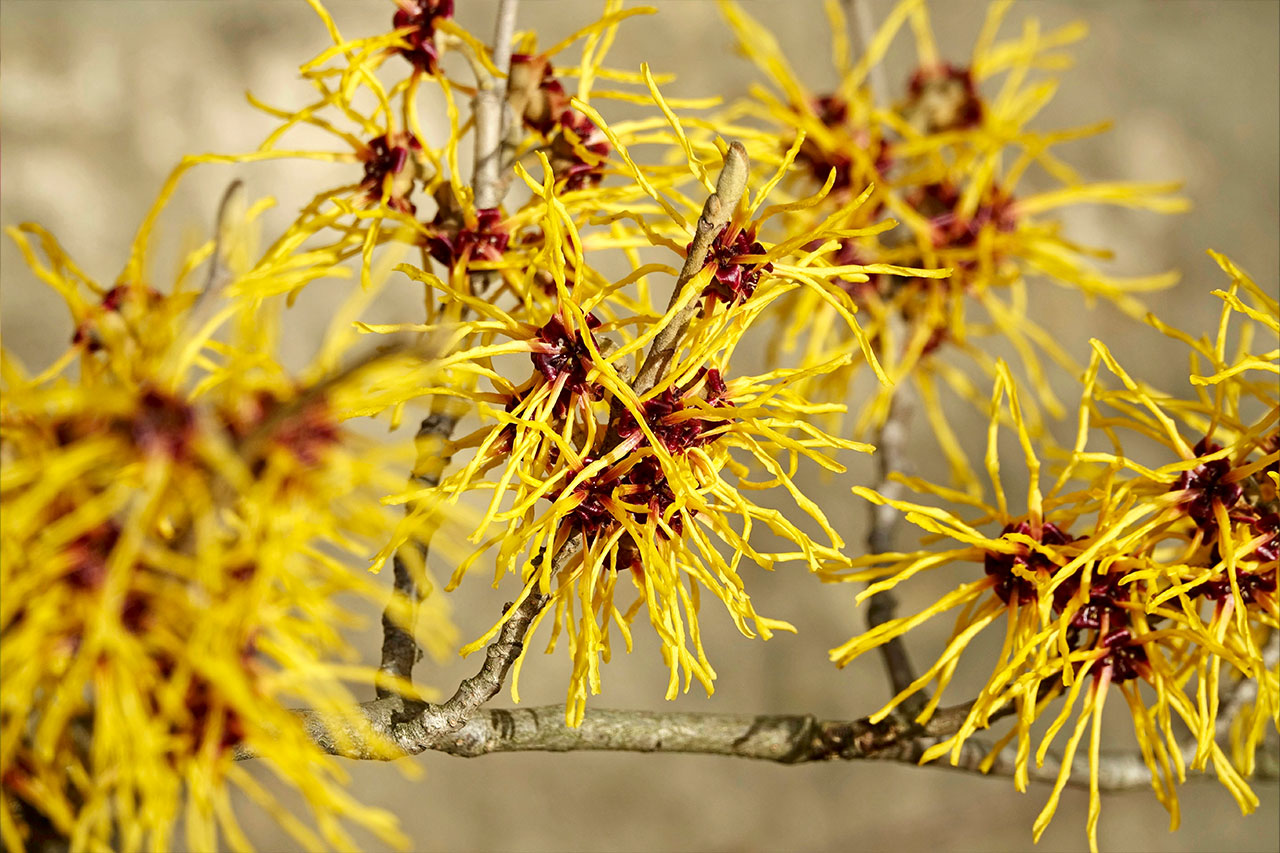

Perhaps the most magical thing about Hamamelis is its willingness to perform when the garden feels at its quietest. On bare branches, clusters of spidery petals unfurl in shades of yellow, orange or red, catching low winter light and shining out on grey days. On mild afternoons the scent can drift on the air, spicy and sweet, making you stop and look twice at what seemed a lifeless thicket only a week before. It’s a reminder that the garden is still ticking away, even in January.
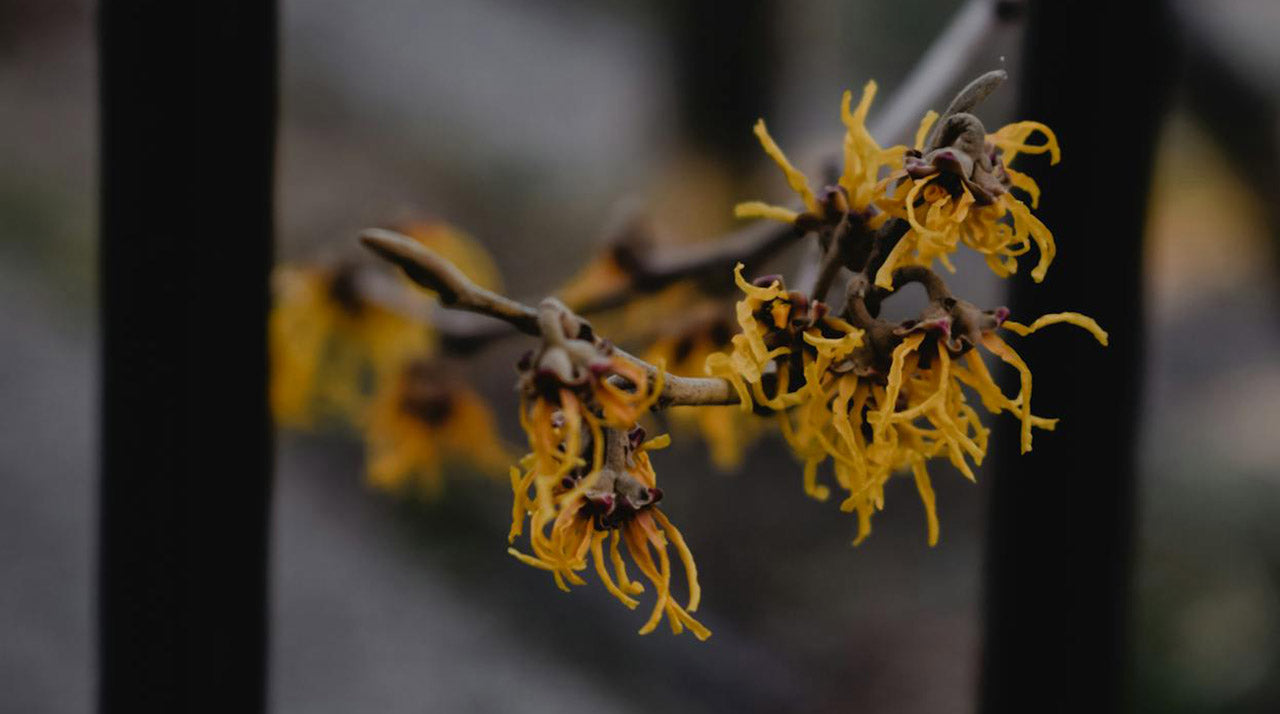
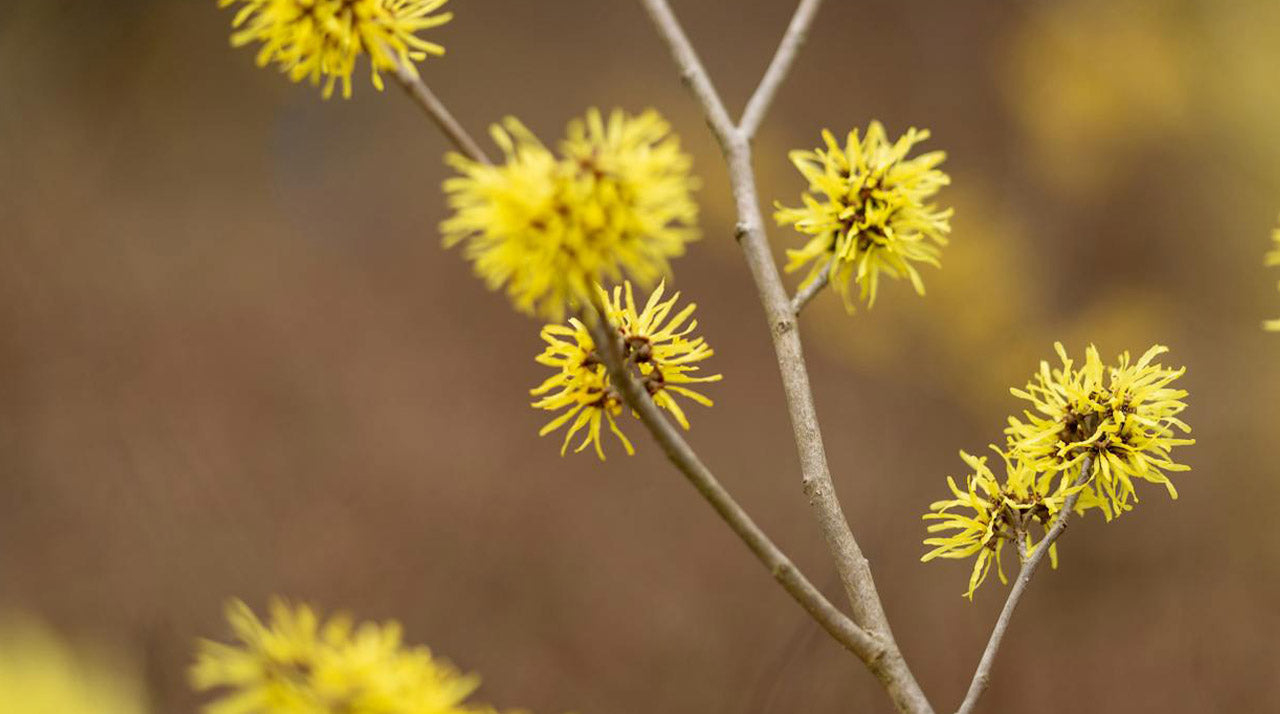
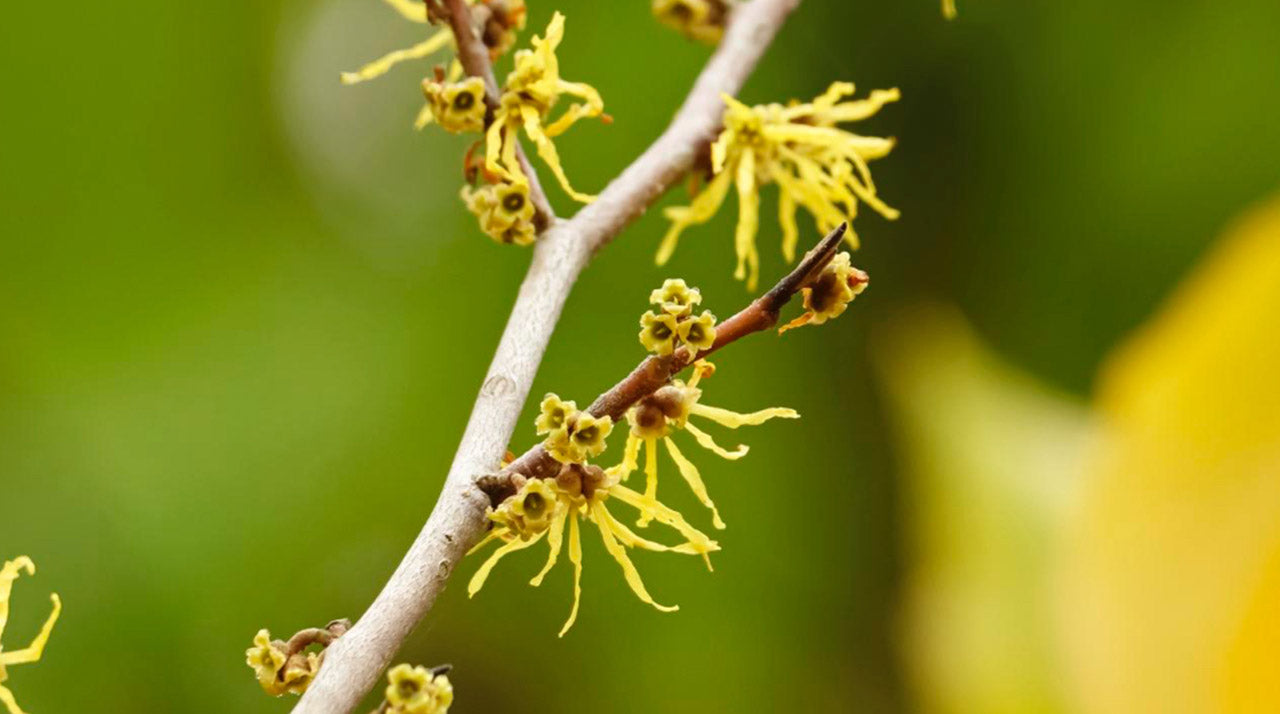
Common name: Witch Hazel.
Latin name: Hamamelis.
Size in UK gardens: Usually around 2.5–4m tall and wide over many years; slow growing and easily kept a little smaller with light, careful pruning.
Best position: A sunny or lightly shaded, sheltered spot where you can see and smell the winter flowers from a path, window or seating area.
Soil: Moist but well‑drained, humus‑rich soil, ideally on the slightly acidic to neutral side; dislikes very chalky, shallow or waterlogged ground.
Flowering time: Mid‑winter to very early spring (often January to March), with ribbon‑petalled blooms on bare branches, followed by good autumn colour.
Fragrance: Many cultivars are beautifully scented on mild winter days, with a sweet, spicy perfume that carries on the air.
Hardiness: Fully hardy in most UK gardens, including Cambridgeshire and East Anglia; flowers usually cope well by curling up in frost and opening again as temperatures rise.
Care level: Moderate; not difficult, but rewards good soil preparation, thoughtful siting and light, occasional pruning rather than heavy cutting.

The Simpson’s team raises the majority of our trees here at the nursery. For varieties outside our own production, we work with independent local growers we trust - all chosen for UK climate suitability.
Planting time: As a container‑grown shrub, Hamamelis can be planted in most months when the soil isn’t frozen or waterlogged, with spring and autumn usually the kindest times for both roots and gardener.
Watering: Water regularly for the first couple of years, especially in dry spells, so the root system can establish. Once settled, witch hazel appreciates soil that doesn’t swing between bone‑dry and waterlogged, so keep an eye on moisture levels in hot, dry summers.
Feeding: A yearly mulch of leaf‑mould, compost or well‑rotted manure in spring helps maintain the humus‑rich conditions it enjoys. On poorer or more alkaline soils, a light application of an ericaceous or general balanced fertiliser can support healthy growth.
Pruning: Needs very little pruning; usually just the removal of dead, damaged or crossing wood, and a light trim after flowering if shaping is needed. Avoid hard cutting into old wood where possible.
Winter: Fully hardy and leafless in winter, witch hazel usually needs no special protection in the ground. A mulch over the root area in autumn is helpful in colder or more exposed gardens.
Availability is always changing, so please check with us if you have a particular variety in mind.


A winter treasure, producing spidery, lemon-yellow flowers that glow against bare branches when the garden most needs cheering. The blooms look like little bursts of fringe, and their gentle fragrance adds to the magic. A wonderfully elegant shrub or small tree for bringing life and colour to the quiet months.
One of the best red witch hazels, with rich, coppery-red flowers that open on bare branches in winter like tiny bursts of flame. The effect is warm and dramatic, and the perfume is a bonus. A superb choice if you want a bold winter highlight with real theatre.
A beautifully coloured witch hazel with flowers in warm shades of copper and orange, glowing on the bare stems in midwinter. The blooms have that distinctive, spidery elegance and often a light fragrance. A lovely choice for adding rich, warming colour when little else is in bloom.
A refined witch hazel with pale sulphur-yellow flowers that seem to catch the winter light. The blooms open along bare branches, creating a soft, luminous haze and often a delicious scent. A superb choice for a gentler winter display—elegant, bright, and quietly uplifting.