

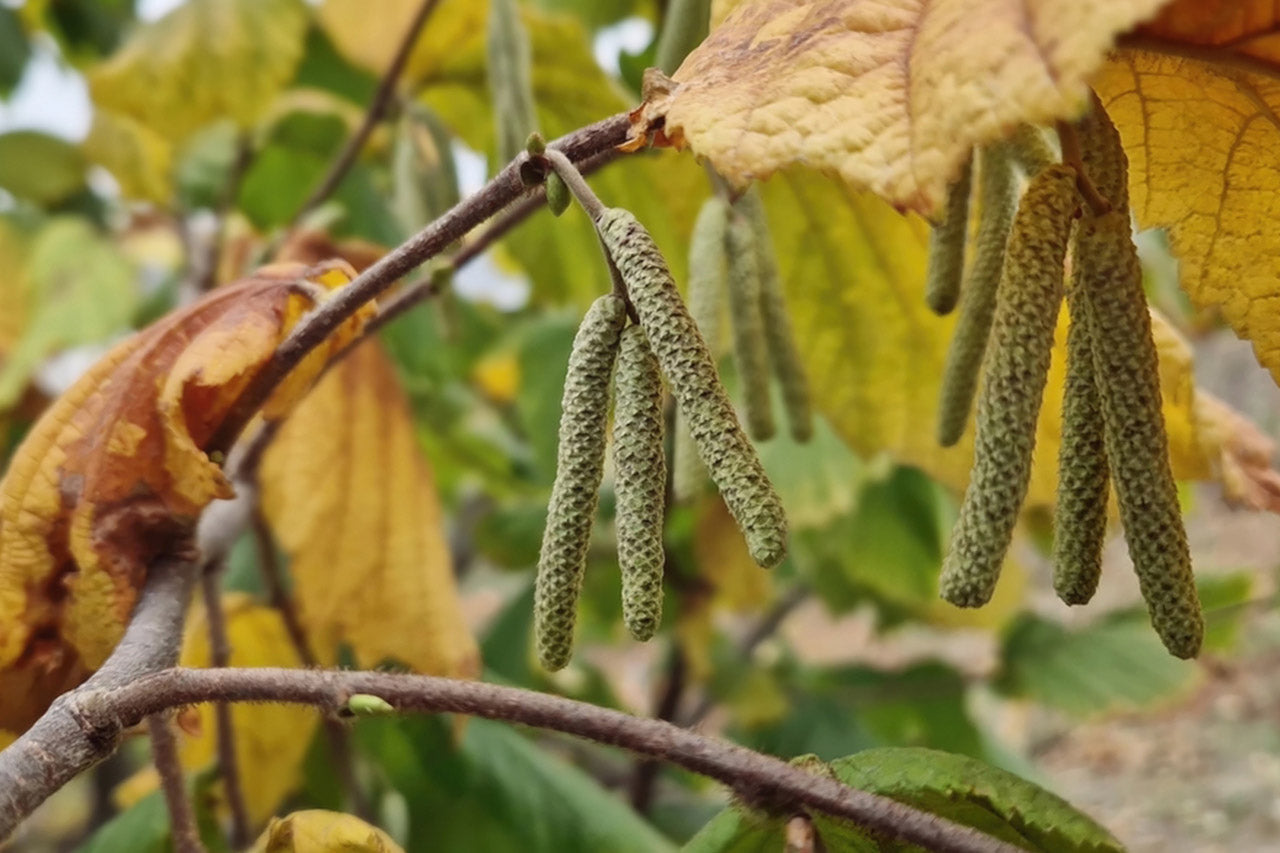
Hazelnut and filbert trees (Corylus) have a lovely way of starting the year before most plants have even thought about it. In late winter, long catkins appear on bare branches, moving in the breeze like soft tassels and bringing life to an otherwise quiet garden. They’re not showy in the way blossom trees are, but they’re full of atmosphere — especially against low winter light. Those catkins also mark the beginning of the tree’s growing year, and the whole plant feels quietly purposeful from the very start.
Common name: Hazelnut / Filbert.
Latin name: Corylus (commonly Corylus avellana and Corylus maxima types and cultivars).
Size in UK gardens: Often 3–5m tall and wide if left to grow naturally; easy to keep smaller with pruning.
Best position: Full sun or light shade in an open but reasonably sheltered spot.
Soil: Moist but well-drained, fertile soil is ideal; tolerant once established if not waterlogged or bone-dry for long periods.
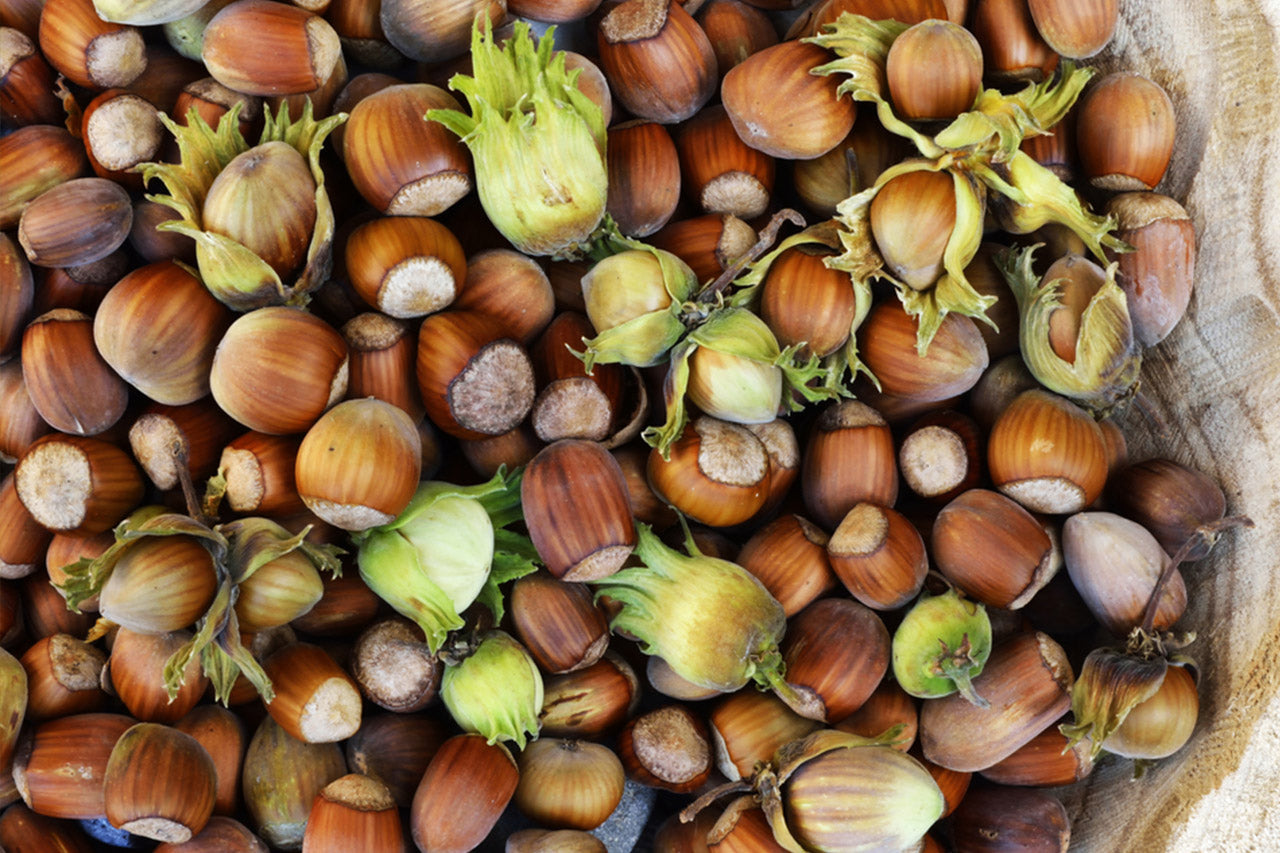
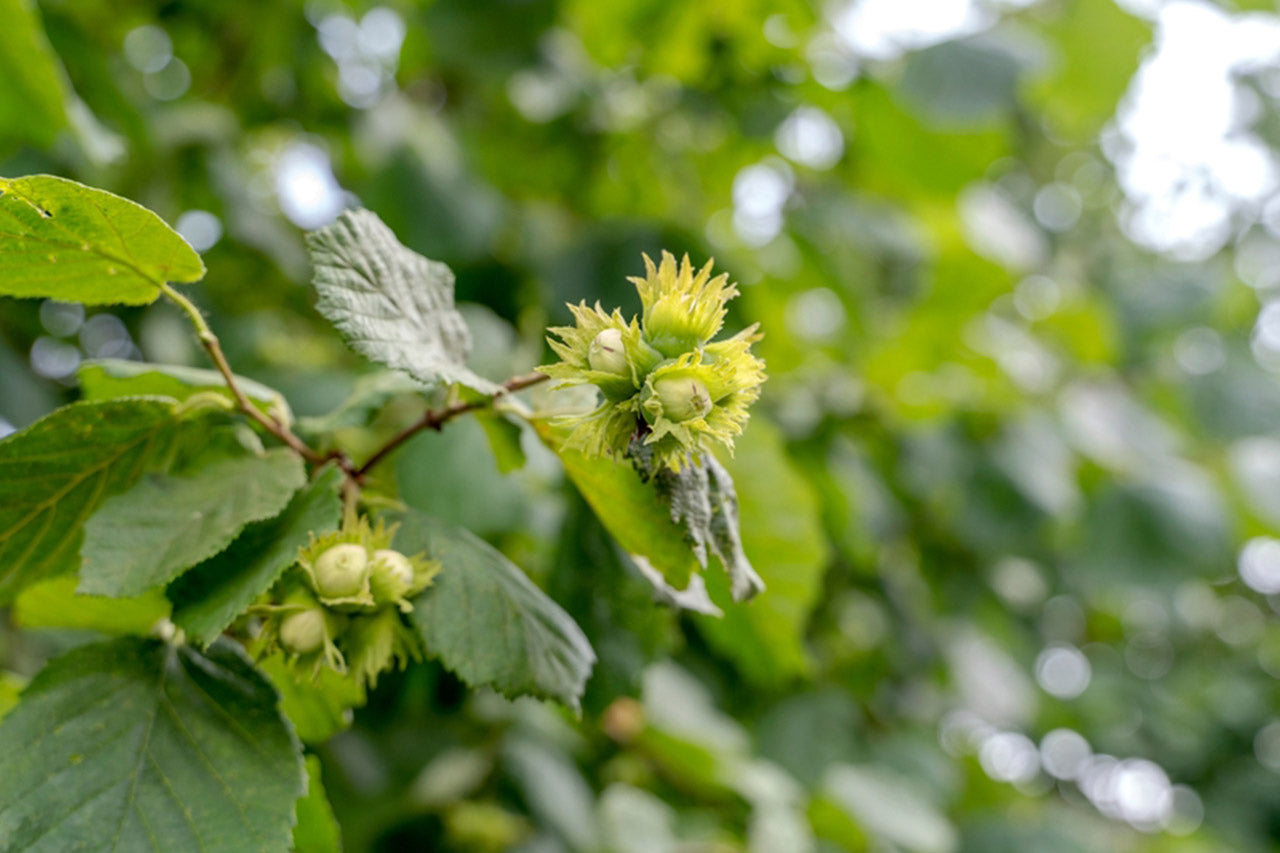
Main interest: Winter catkins, summer foliage, and edible nuts in early autumn.
Hardiness: Very hardy in most UK gardens.
Care level: Low to moderate – generally easy, with best crops needing sensible pollination and a little protection from wildlife.

The Simpson’s team raises the majority of our trees here at the nursery. For varieties outside our own production, we work with independent local growers we trust - all chosen for UK climate suitability.
Planting time: As container-grown plants, hazelnuts can be planted in most months when the soil isn’t frozen or waterlogged; spring and early autumn are usually easiest for establishment.
Watering: Water well in the first 1–2 seasons, especially in dry spells; established plants are fairly resilient but crop better with occasional deep watering in drought.
Feeding: A spring mulch of compost or well-rotted manure is usually enough to keep growth steady and healthy.
Pruning: Light annual thinning keeps plants open, productive, and easy to harvest; they respond well to simple, steady pruning.
Winter: Usually fine without protection once established; shelter and mulch help in very exposed spots.
Availability is always changing, so please check with us if you have a particular variety in mind.


The classic hazel look: informal, generous, and quietly productive, with a naturally “hedgerow” character that suits orchard edges and wilder corners. Those dangling catkins in late winter are a small moment of magic when little else is stirring, and the plant always feels full of life and movement. A brilliant choice if you want something useful that still looks completely at home in a British garden.
A sturdy, no-nonsense hazel with a confident, orchard-ready feel—more “crop and kitchen” than purely decorative, though it still makes a handsome shrub or small tree. It has a wholesome abundance to it, the sort of plant that looks like it’s meant to be there for years, quietly getting on with the job. A good choice when you want a reliable nut tree with a solid, dependable presence.
A bold, generous hazel with a slightly more purposeful, cultivated look—like something you’d plant because you really do want nuts, not just “the idea” of them. It reads as vigorous and productive, building a substantial framework that feels properly orchard-like over time. Ideal if you want a hazel that leans confidently towards harvest and plenty.
A characterful, traditional-feeling cobnut with a pleasingly classic look—catkins, foliage, and fruit all doing their thing in a very “proper nut tree” way. It has that reassuring sense of reliability, as if it’s been part of the landscape forever.


A big-hearted, robust hazel with an old-fashioned generosity to it—vigorous, practical, and very much in the “plant it and you’ll get nuts” camp. It carries itself with that traditional orchard confidence, making it an easy fit in productive gardens. A great pick when you want a classic, time-tested cobnut presence.
The quintessential English cobnut vibe: traditional, familiar, and wonderfully suited to the sort of garden that wants to feel rooted and established. It has a gentle, heritage character—more kitchen-garden and orchard boundary than showy specimen. Perfect when you want something that feels historically “right” in a UK setting.
A steady, dependable hazel that feels practical and unfussy—exactly the sort you plant when you want consistent cropping without drama. The overall impression is of a traditional, productive shrub with a straightforward orchard personality. A good choice for anyone who wants hazels to be simple, rewarding, and reliable.
A real winter-framework plant: twisting, contorted branches that look sculptural when bare, then followed by richly coloured foliage that adds drama through the growing season. It feels more ornamental and “collector” than most nut hazels—something you place where you’ll see it often, especially in the quieter months. A brilliant choice when you want hazel character with a theatrical silhouette.

A hazel with genuine dual-purpose charm: handsome, dark-toned foliage and catkins that give it ornamental weight, plus nuts that make it feel properly useful. It reads as a little more “designed” than a standard hazel—richer, moodier, and more of a statement—while still keeping that warm, orchard spirit. Ideal if you want productivity and a strong colour presence in the canopy.