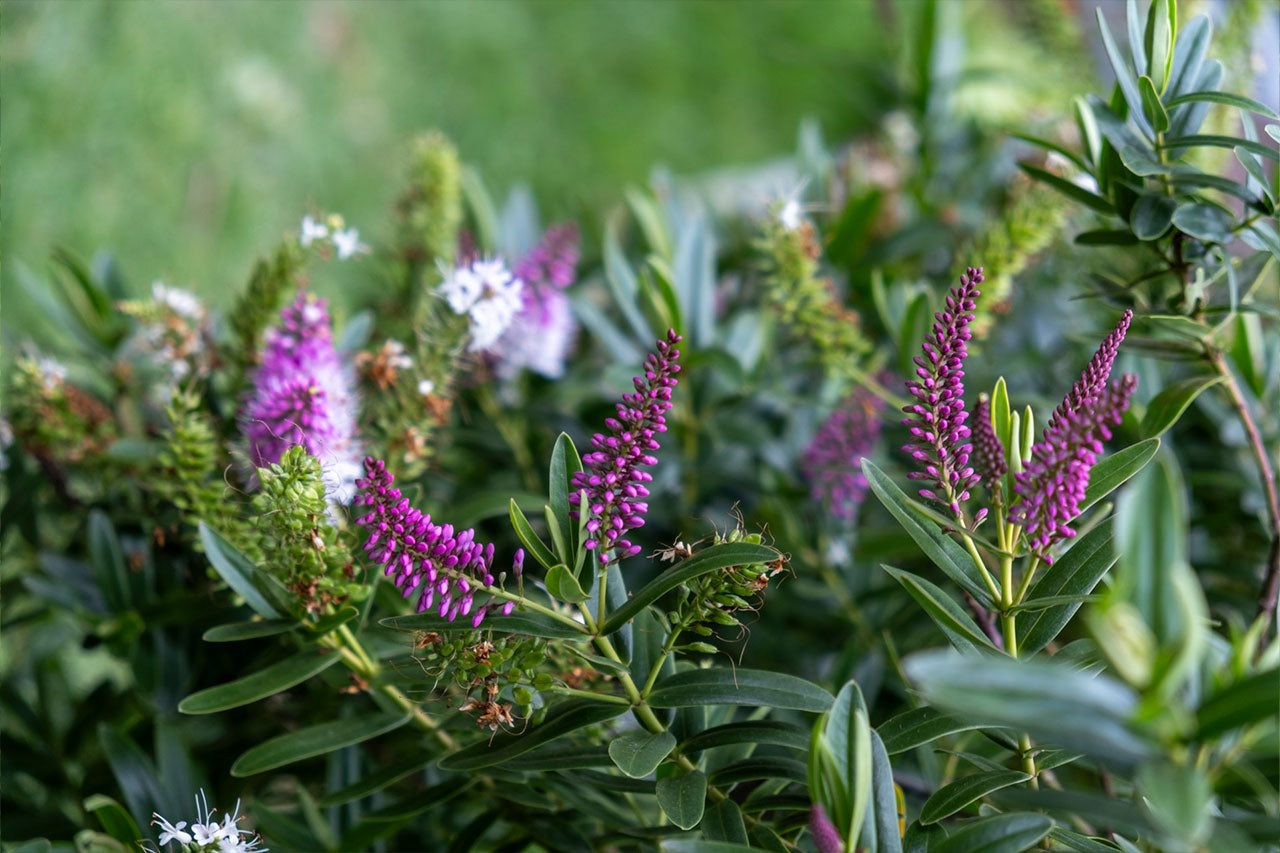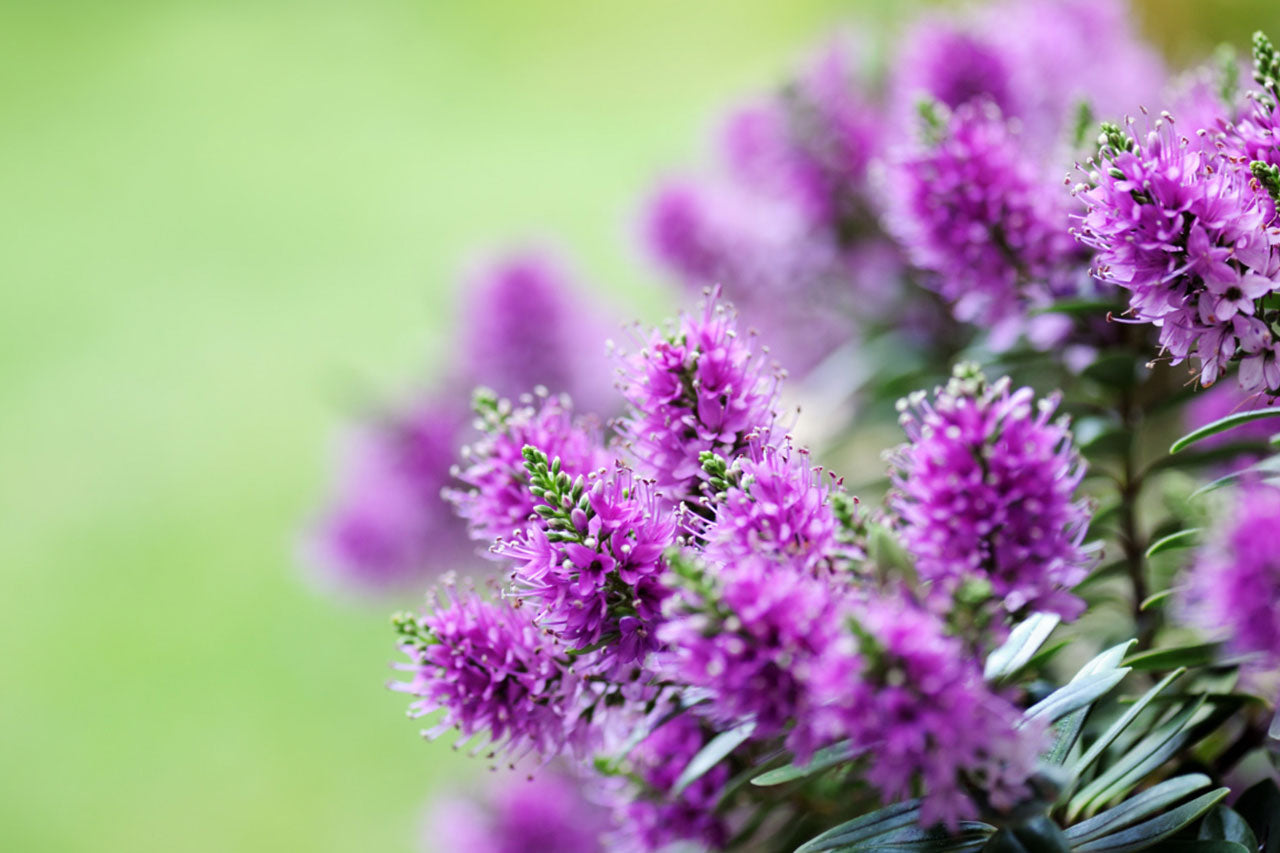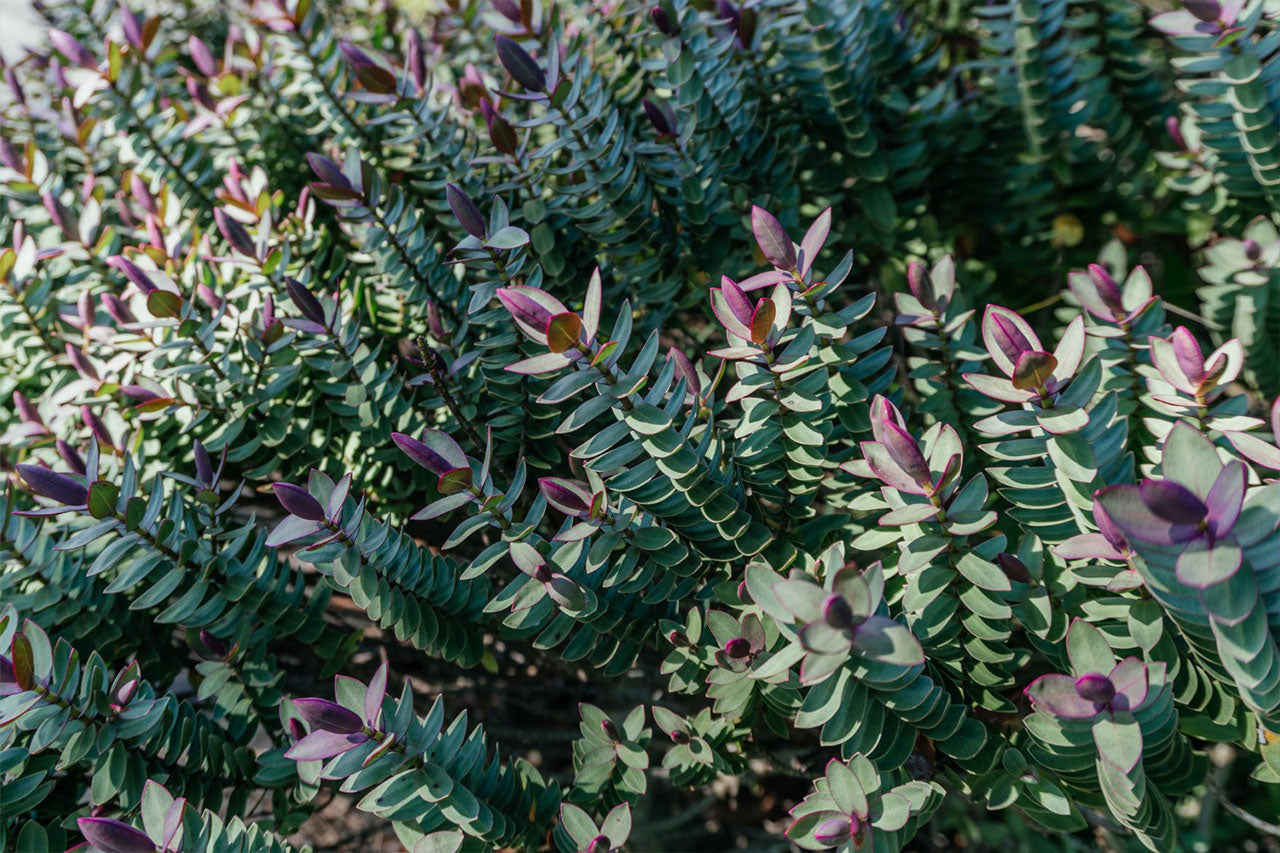

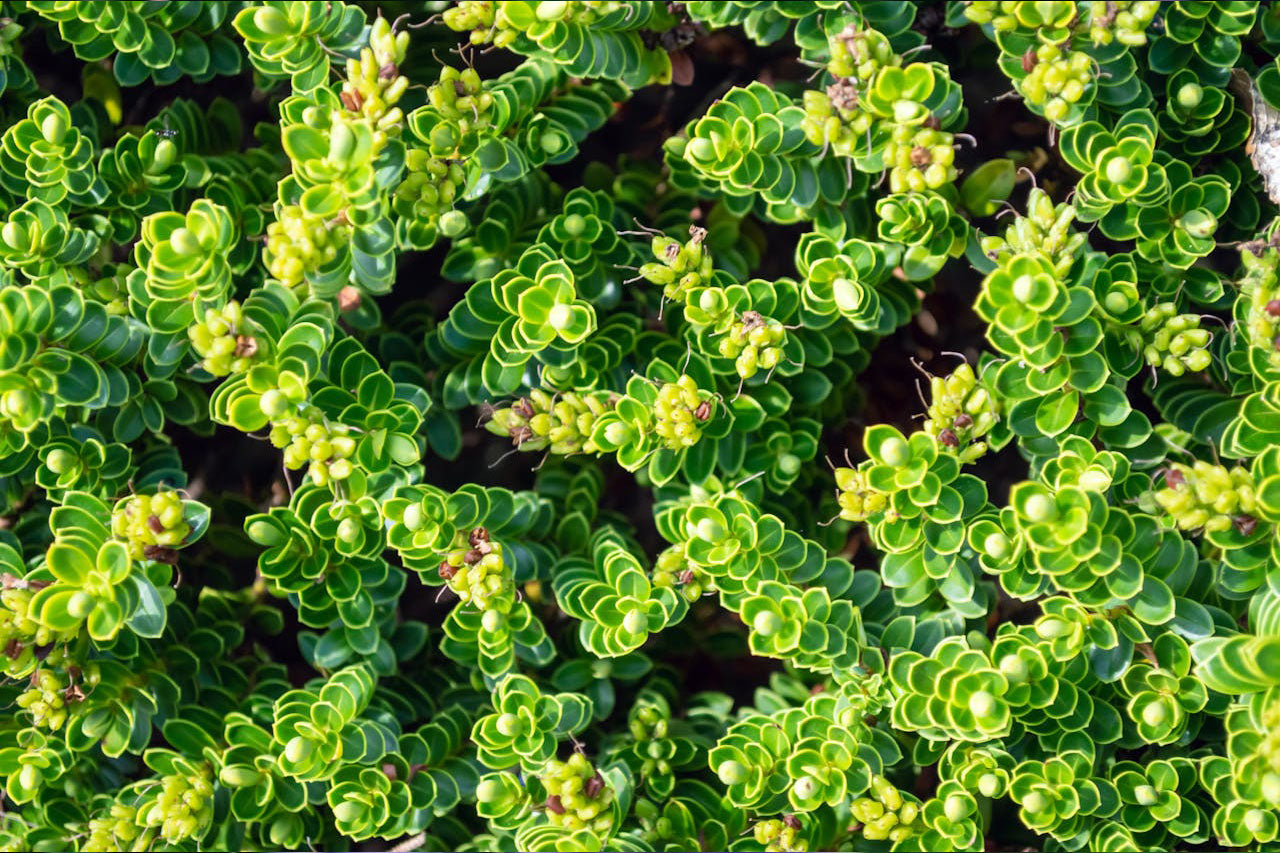
Hebes offer that highly prized combination of being evergreen and yet rarely overwhelming. Their leaves stay on the plant through winter, giving structure and a touch of neatness when many perennials are asleep, but most varieties stay within a sensible 60cm–1.5m range. This makes them ideal for front gardens, small borders and drives where you don’t want big shrubs taking over. Variegated and coloured foliage types are particularly good at brightening dull corners and providing contrast with plainer greens.
Common name: Shrubby Veronica
Latin name: Hebe and garden cultivars
Size in UK gardens: Most varieties reach around 60cm–1.5m tall and wide in time, with dwarf forms smaller and taller types a little larger.
Best position: A sunny or lightly shaded, reasonably sheltered spot, ideally out of the very coldest winds so foliage and flowers stay neat.
Soil: Moist but free‑draining garden soil, preferably reasonably fertile; dislikes heavy, waterlogged clay or very dry, stony ground with no added organic matter.
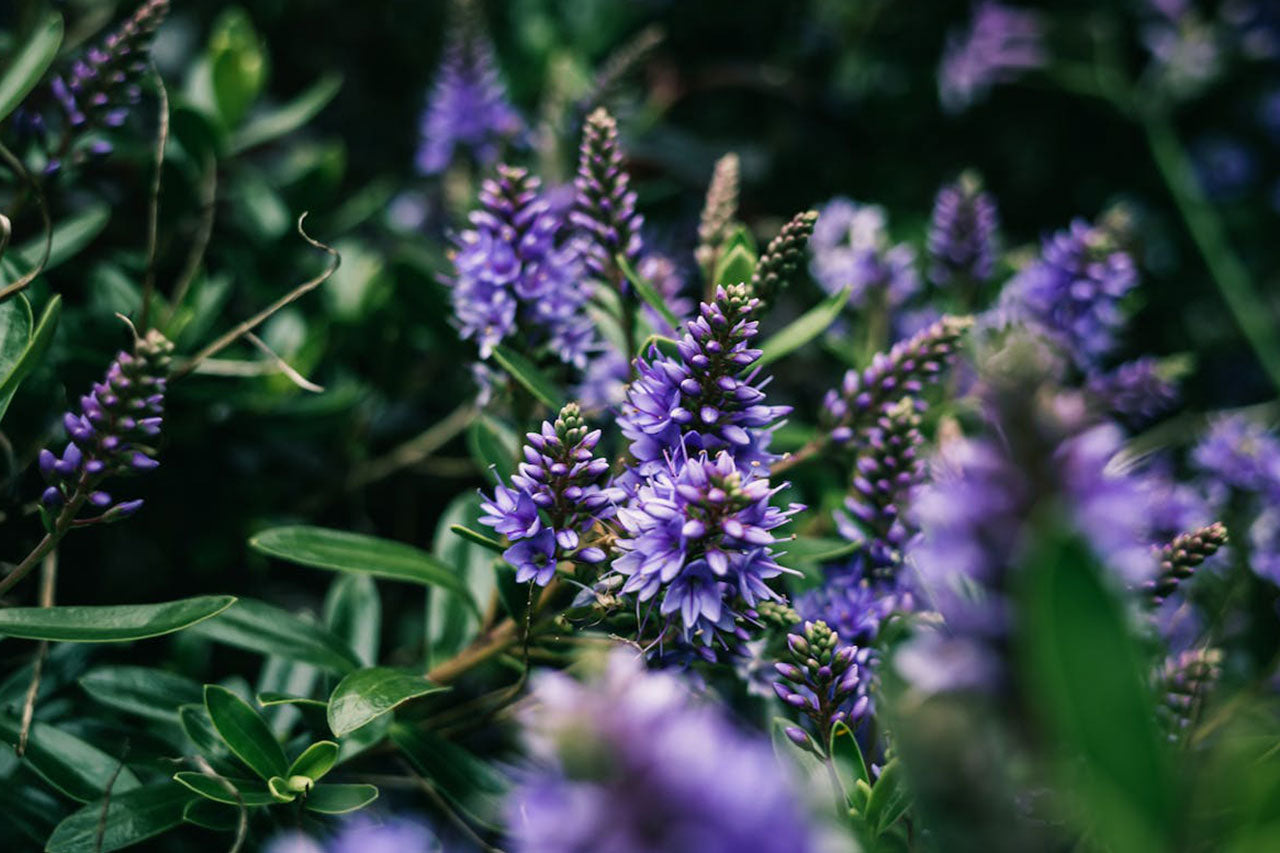
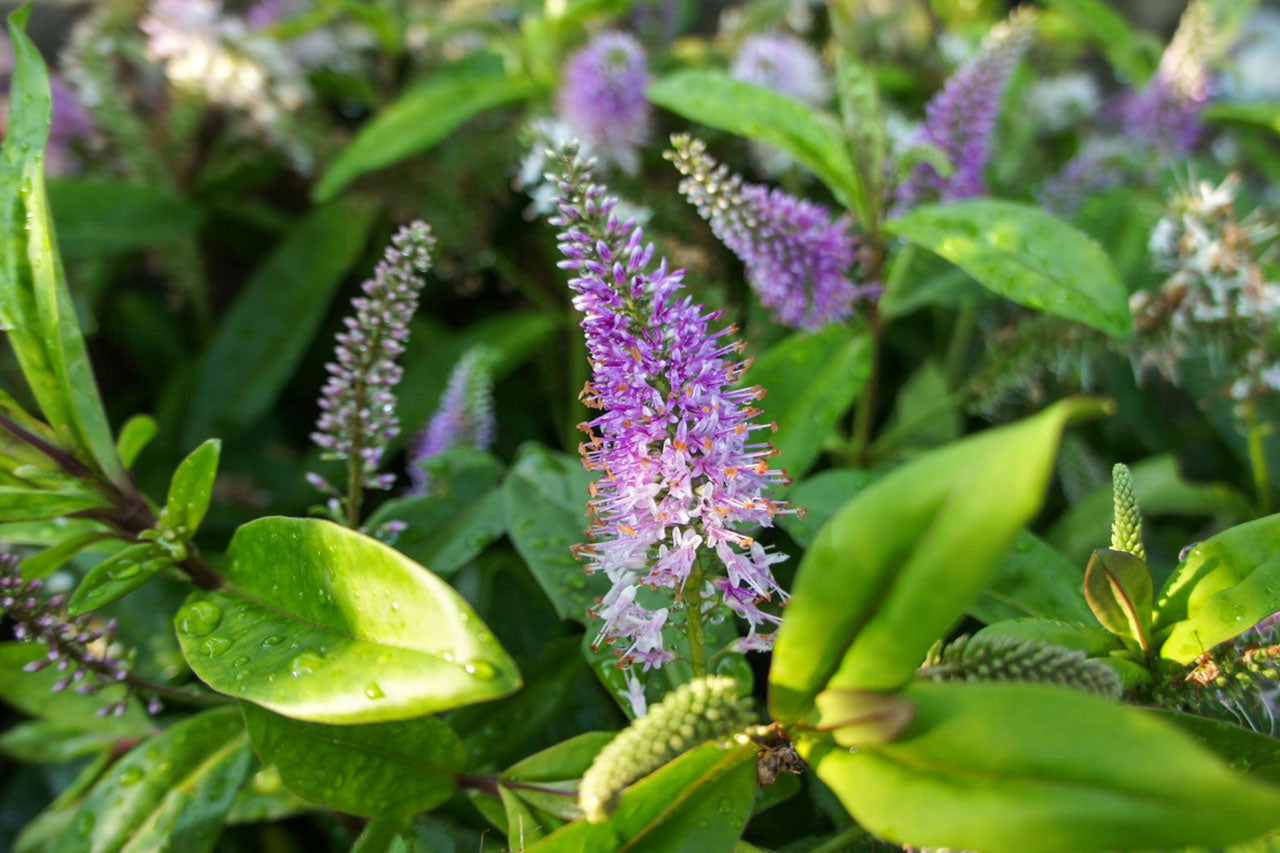
Flowering time: Usually summer into early autumn, with many varieties giving a long season of neat flower spikes above evergreen foliage.
Fragrance: Flowers are usually only lightly scented close up; Hebe is grown mainly for colour, shape and all‑year foliage.
Hardiness: Generally hardy in much of the UK, including many Cambridgeshire and East Anglian gardens, though some forms may suffer in severe or very exposed winters.
Care level: Low to moderate; easy once established, needing regular watering in dry spells and light pruning to keep it compact and flowering well.

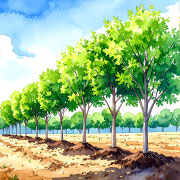
Rather than travelling halfway across Europe, our mimosa trees are grown on site by the Simpson’s team. They’re toughened to local conditions, properly potted, and ready to get growing the moment you plant them.
Planting time: As container‑grown shrubs, Hebes can be planted in most months when the soil isn’t frozen or waterlogged, with spring and autumn usually the easiest times for them to establish.
Watering: Water regularly in the first growing season, especially in dry weather and on sandy soils. Once established in the ground, they usually only need extra watering during prolonged dry spells.
Feeding: A light mulch of garden compost in spring helps keep the soil in good condition. On poorer soils or in pots, a modest application of balanced fertiliser in spring will support strong, flowering growth.
Pruning: Lightly trim after the main flush of flowers to remove spent spikes and keep plants bushy. Older, leggy specimens can be gently thinned, but avoid cutting hard into very old wood if possible.
Winter: Most Hebes are hardy enough for normal winters in sheltered spots, though some foliage may scorch in severe cold. A mulch around the base and a little extra shelter for container plants can help them through harder winters.
Availability is always changing, so please check with us if you have a particular variety in mind.