

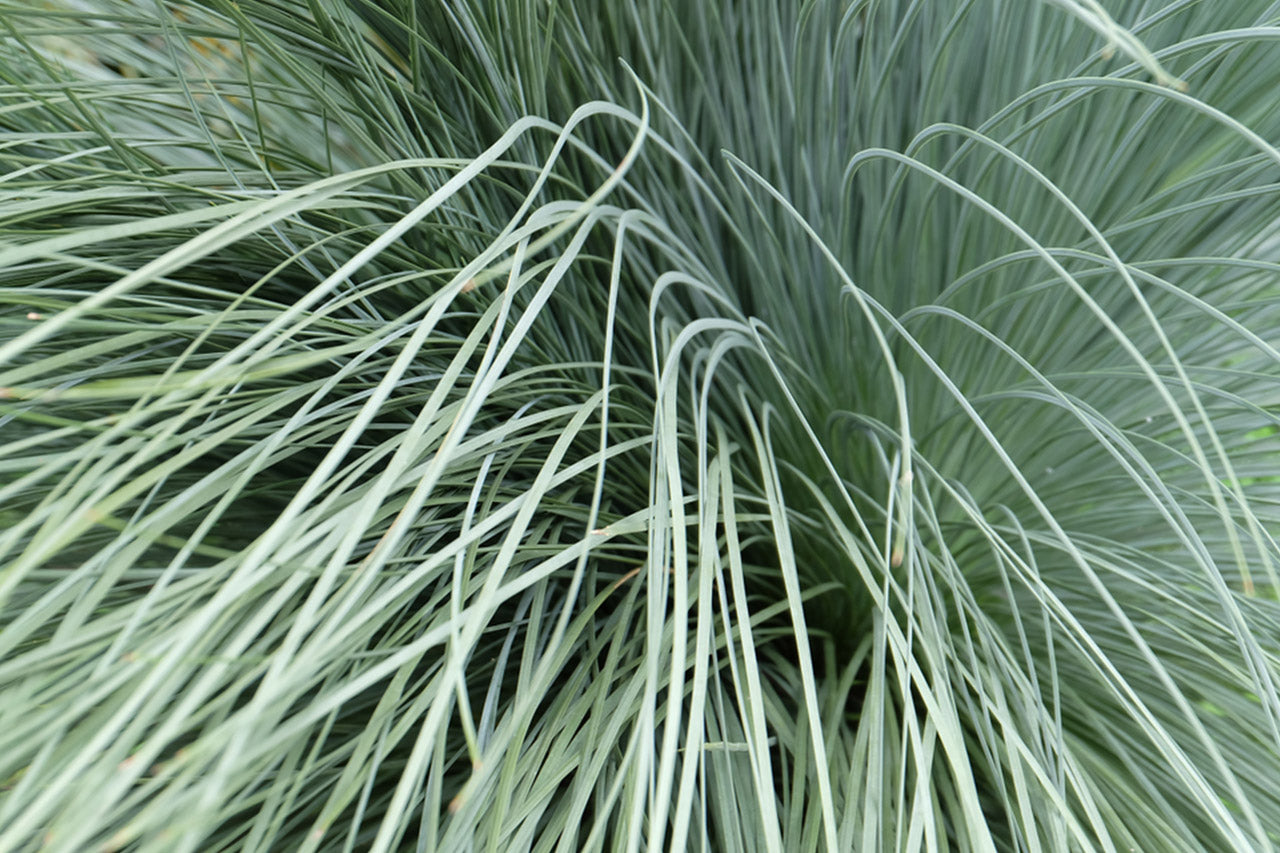
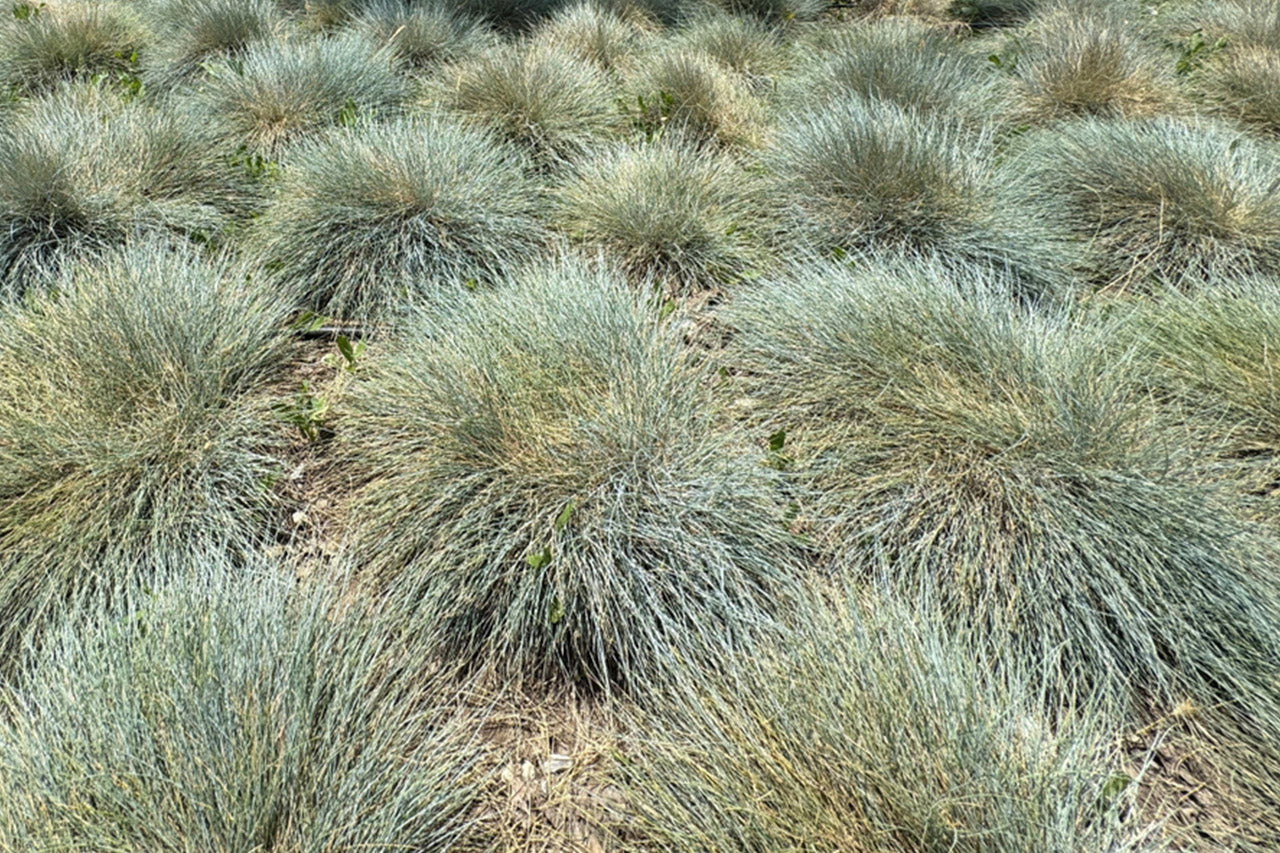
Helictotrichon sempervirens, usually known as blue oat grass, forms dense, upright clumps of steel‑blue leaves that look like elegant fountains frozen mid‑splash. The foliage colour holds beautifully through much of the year, giving that sought‑after blue note without needing acid soil or constant pampering. Each plant makes a tidy dome, with leaves arching outwards but never sprawling. In a mixed border, that cool blue contrasts gently with greens and warms up beautifully beside brick, gravel or paving. It’s the sort of grass that instantly makes a planting look more deliberate and composed.
Common name: Blue oat grass
Latin name: Helictotrichon
Plant type: Clump‑forming evergreen or semi‑evergreen perennial grass.
Size in UK gardens: Typically around 40–60cm tall in foliage, with flower stems reaching roughly 80–120cm, and a spread of about 40–70cm once established.
Best position: A sunny, open spot with good drainage – ideal for gravel areas, front‑of‑border planting and sunny banks.
Soil: Poor to moderately fertile, neutral to alkaline, well‑drained soil; dislikes heavy, waterlogged ground.
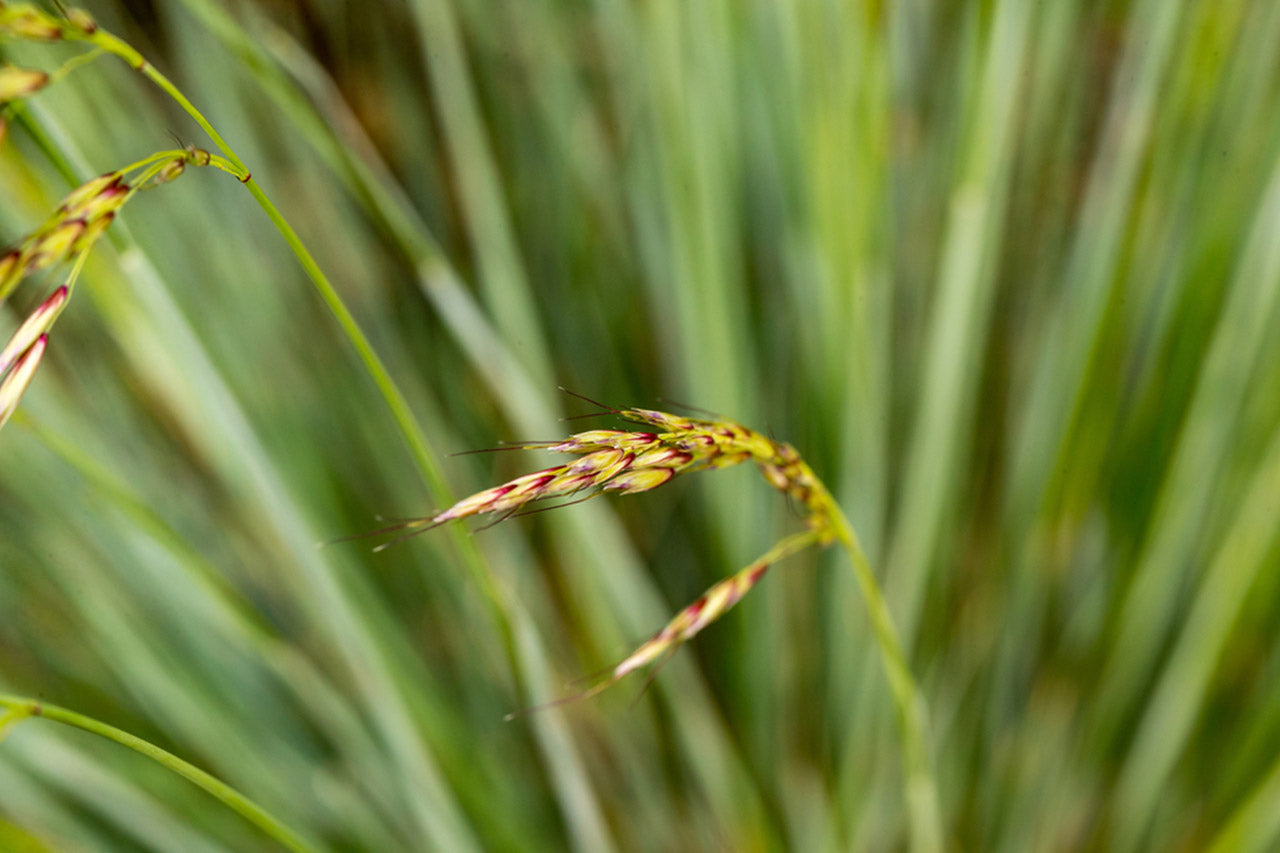
Main interest: Steel‑blue foliage in tight clumps, plus airy oat‑like flower stems in early to midsummer, and strong winter outline.
Fragrance: Not noticeably scented – grown for foliage colour, structure and movement.
Hardiness: Hardy in most UK gardens; rated H5, so should cope with severe winters in much of the country if drainage is good.
Care level: Easy – low‑maintenance once established, needing only occasional watering in very dry spells and a yearly tidy‑up.

The Simpson’s team raises the majority of our trees here at the nursery. For varieties outside our own production, we work with independent local growers we trust - all chosen for UK climate suitability.
Planting time: As container‑grown grasses, Helictotrichon can be planted in most months when the ground isn’t frozen or waterlogged; spring and early autumn are usually easiest, giving roots time to establish before extremes of heat or cold.
Watering: Water regularly in the first growing season so the rootball and surrounding soil don’t dry out completely, especially in very free‑draining beds or raised planters. Once established, blue oat grass is quite drought‑tolerant in the ground and usually only needs help in prolonged dry spells.
Feeding: Blue oat grass is not a hungry plant. In most gardens, a light mulch of compost or fine gravel in spring is enough. Avoid heavy feeding, which can push soft, floppy growth and dull the foliage colour.
Pruning: In late winter or very early spring, comb or trim out dead leaves and old flower stems, taking care not to cut hard into the crown. Every few years, older clumps that have thinned in the middle can be lifted and divided or replaced.
Winter: In well‑drained soil, Helictotrichon usually sits through winter with its clump intact, sometimes bleached but still clearly structural. Good drainage and a modest mulch are far more important than fleece or elaborate protection.