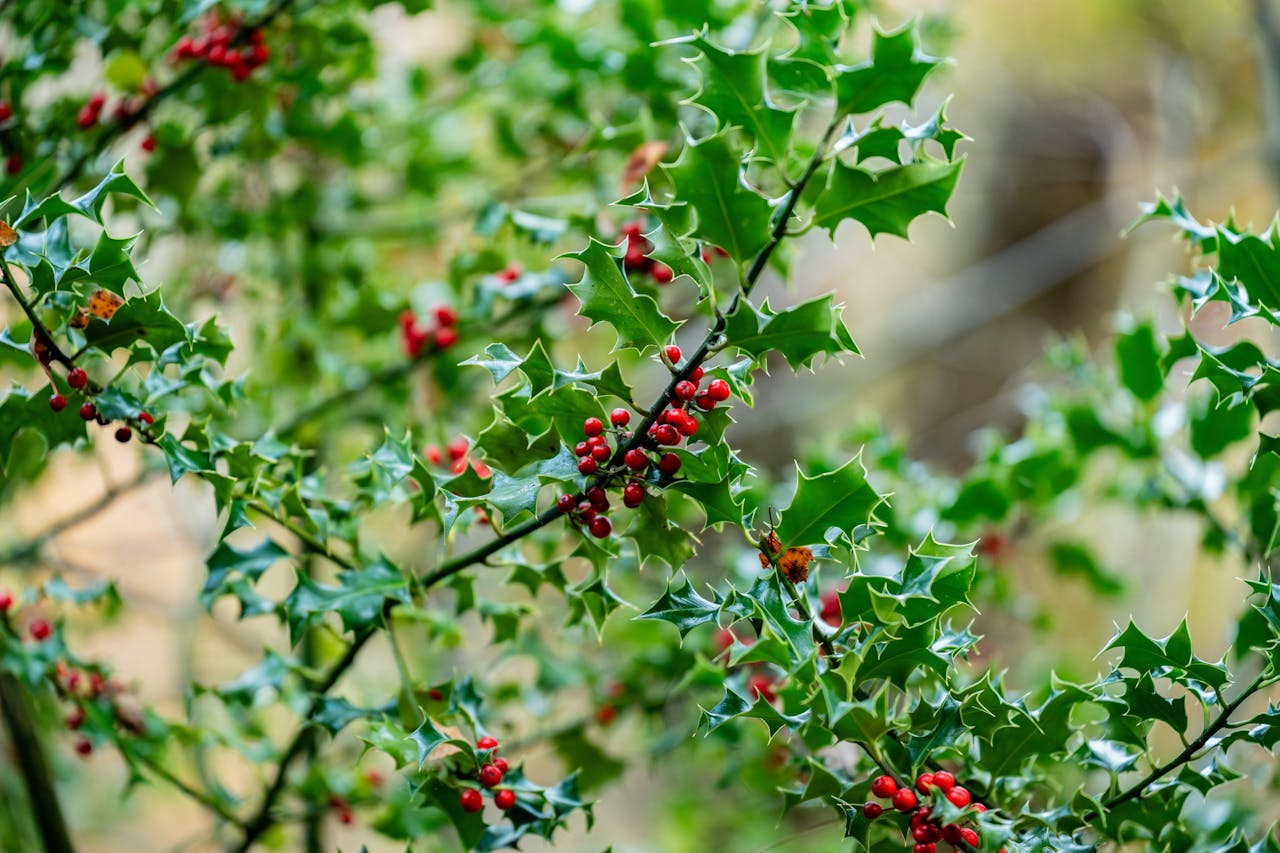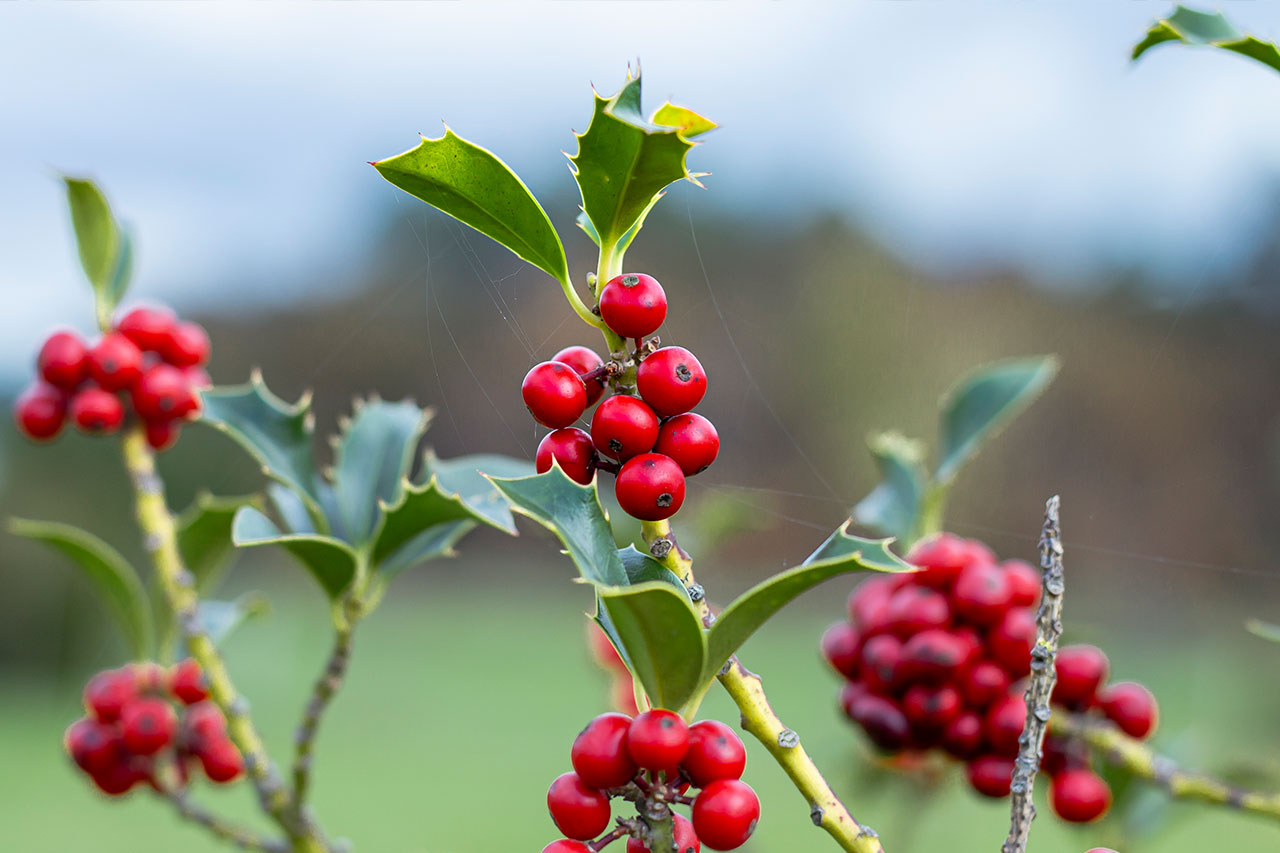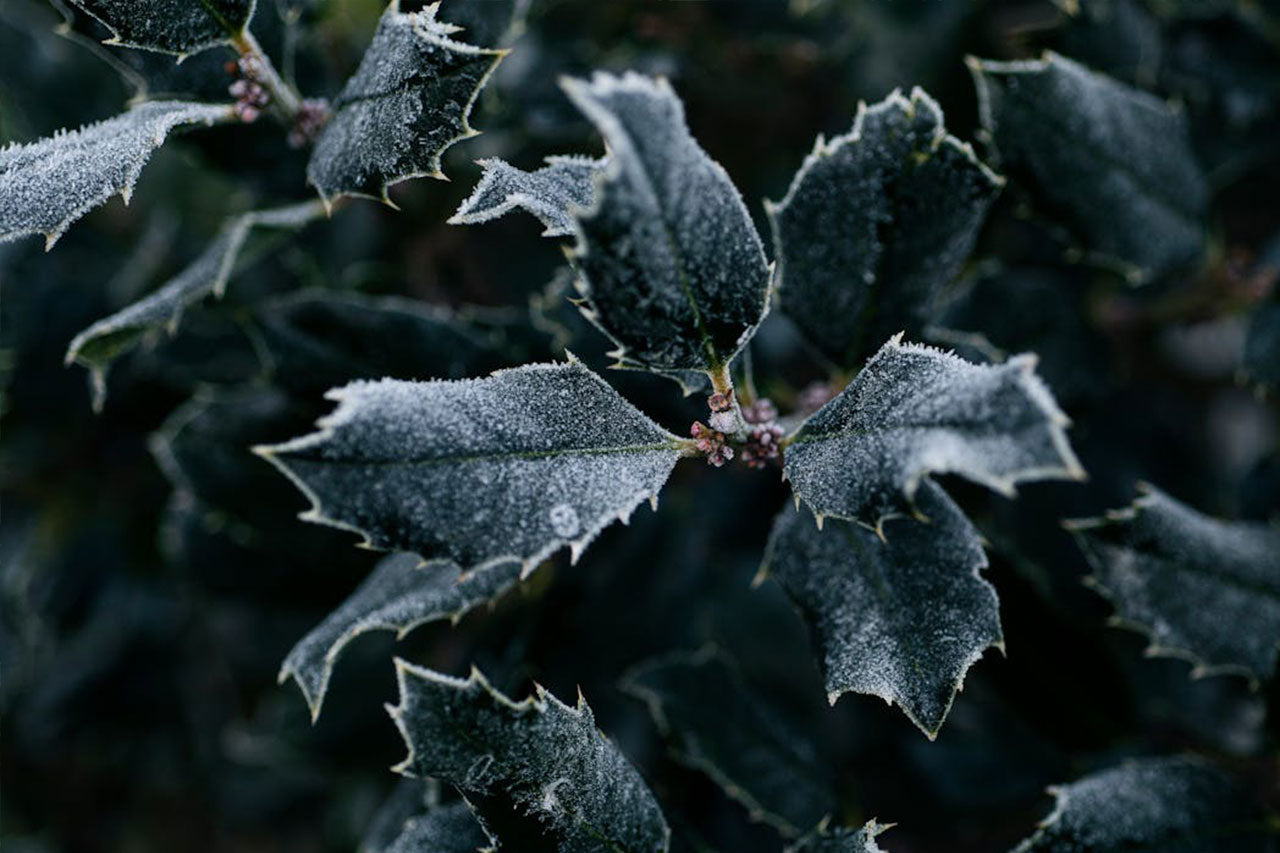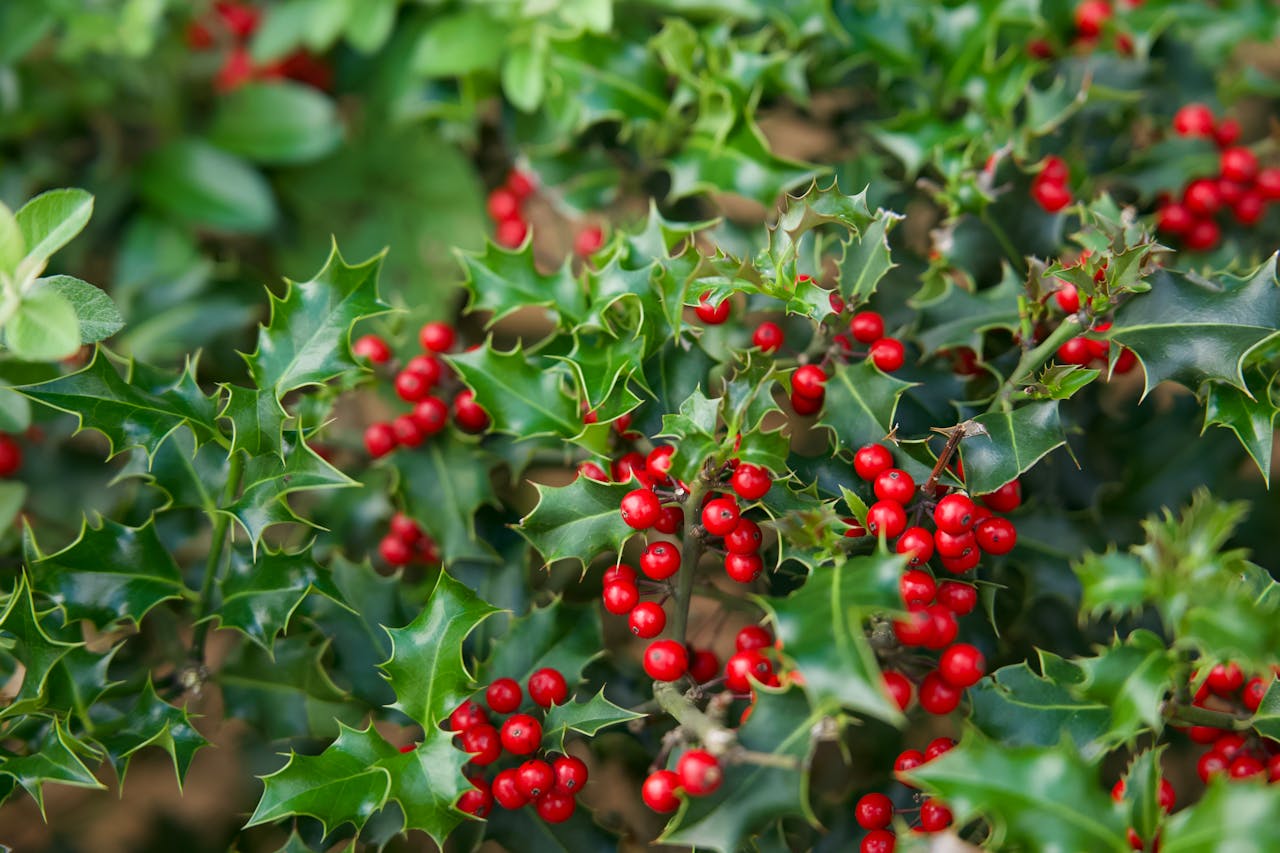

Holly is one of those plants that quietly holds a garden together through all four seasons. While other shrubs lose their leaves, its glossy foliage remains, catching light on dull days and providing a dark, rich backdrop to whatever else is happening. In summer it blends into the scene, in autumn it supports fading flowers and fiery leaves, and in winter it steps forward as a main character. Whether you use it as a hedge, a single specimen or part of a mixed border, that steady, evergreen structure is a real comfort.
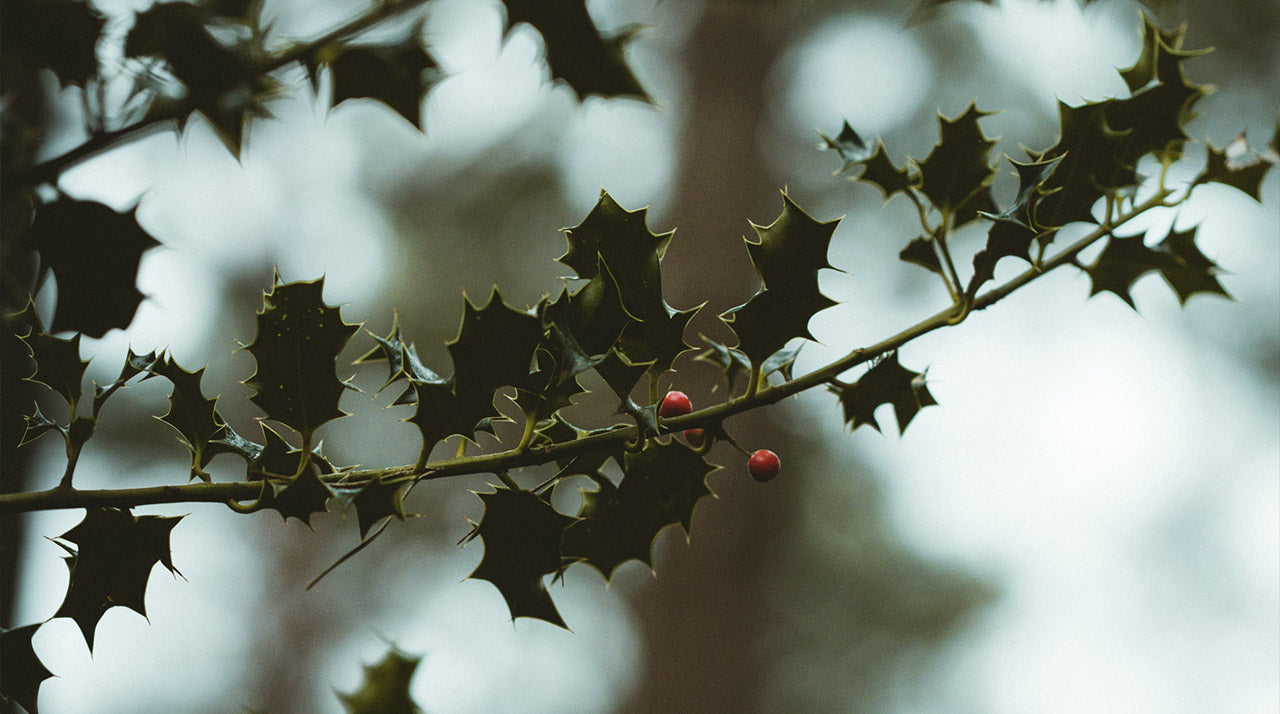
Common name: Holly
Latin name: Ilex
Size in UK gardens: Many garden hollies reach 3–6m tall and 2–4m wide over time, but dwarf and slow‑growing forms often stay around 1–2m and can be kept smaller with pruning.
Best position: Sun or partial shade, with at least some direct sun for the best berry display and dense growth.
Soil: Most reasonably fertile, moist but well‑drained garden soils; tolerates clay and lighter ground as long as it doesn’t sit waterlogged for long periods.
Main interest: Glossy evergreen foliage all year, tiny spring flowers, and bright berries in autumn and winter on female plants.
Fragrance: Small spring flowers can be lightly scented close up, but holly is grown mainly for its foliage, shape and berries.
Hardiness: Fully hardy across the UK, including exposed and inland areas such as Cambridgeshire and much of East Anglia.
Care level: Low to moderate; long‑lived and tough once established, needing only sensible watering while young and occasional pruning to manage size.

The Simpson’s team raises the majority of our trees here at the nursery. For varieties outside our own production, we work with independent local growers we trust - all chosen for UK climate suitability.
Planting time: As container‑grown plants, hollies can be planted in most months when the soil isn’t frozen or waterlogged, with spring and autumn usually the easiest times for both roots and gardener.
Watering: Water regularly through the first couple of years, especially in dry spells, so roots can spread deeply. Once established in the ground, holly is quite drought‑tolerant and usually only needs extra water in prolonged dry periods or on very light soils.
Feeding: In ordinary garden soil a yearly mulch of compost or well‑rotted manure in spring is usually enough. On very poor soils, a light sprinkling of balanced fertiliser in spring can help maintain steady growth and good foliage colour.
Pruning: Holly responds well to pruning and clipping. Hedges are usually trimmed once or twice a year; specimen plants can be lightly shaped in late winter or mid‑summer, removing unwanted shoots and keeping the outline tidy.
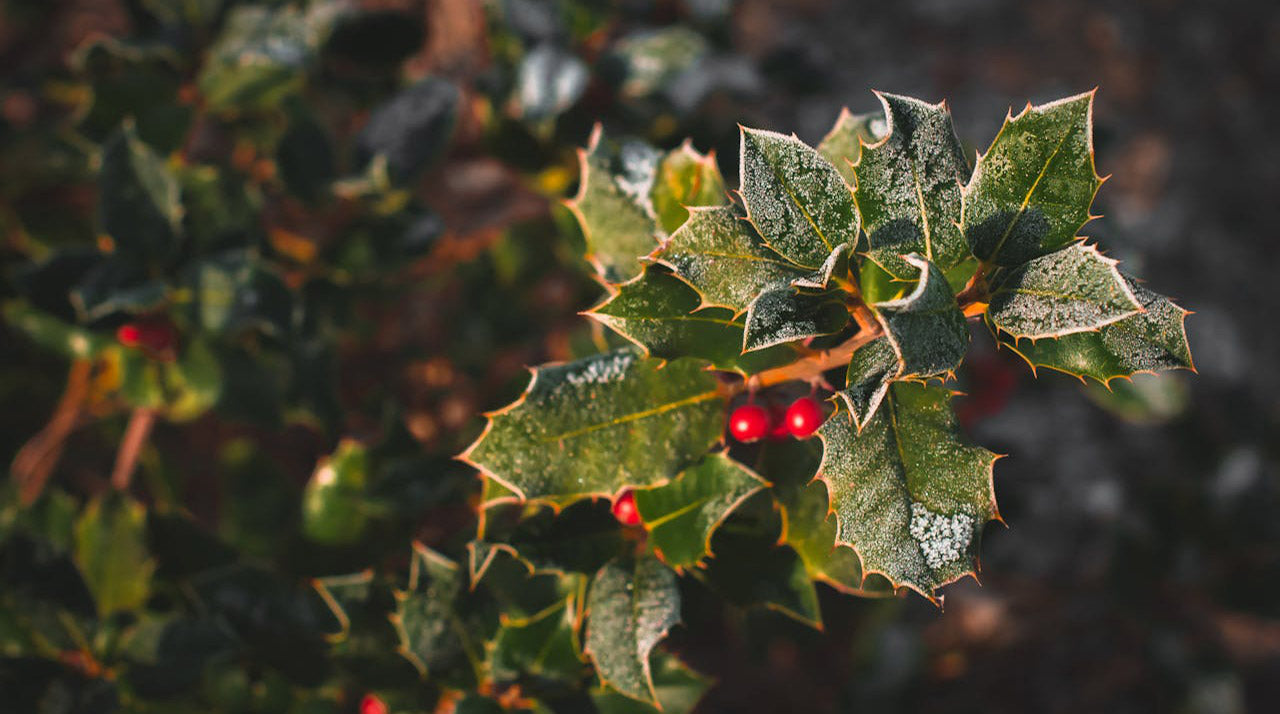
Winter: Fully hardy and evergreen, holly usually needs no special winter protection in the ground. Young plants benefit from a mulch around the base, and container specimens appreciate a sheltered position in very hard winters.
Availability is always changing, so please check with us if you have a particular variety in mind.
A handsome evergreen holly with glossy, deep green leaves and a naturally upright, refined habit. Excellent as a specimen, a smart screen, or clipped into a formal hedge, it gives year-round structure and a calm, traditional feel—especially valuable when the rest of the garden is bare.
The great British evergreen: glossy, prickly leaves and a wonderfully timeless presence, whether as a hedge, a screen, or a specimen tree. In winter it looks superb, and with a female plant plus a suitable pollinator you may get those classic berries too. Tough, dependable, and beautifully traditional.
A smart, upright holly with a tidy habit and rich green foliage, useful for hedging and screening where you want a clean, composed look. It clips well, holds its leaves through winter, and makes a reliable evergreen backbone in borders and boundaries without feeling fussy.
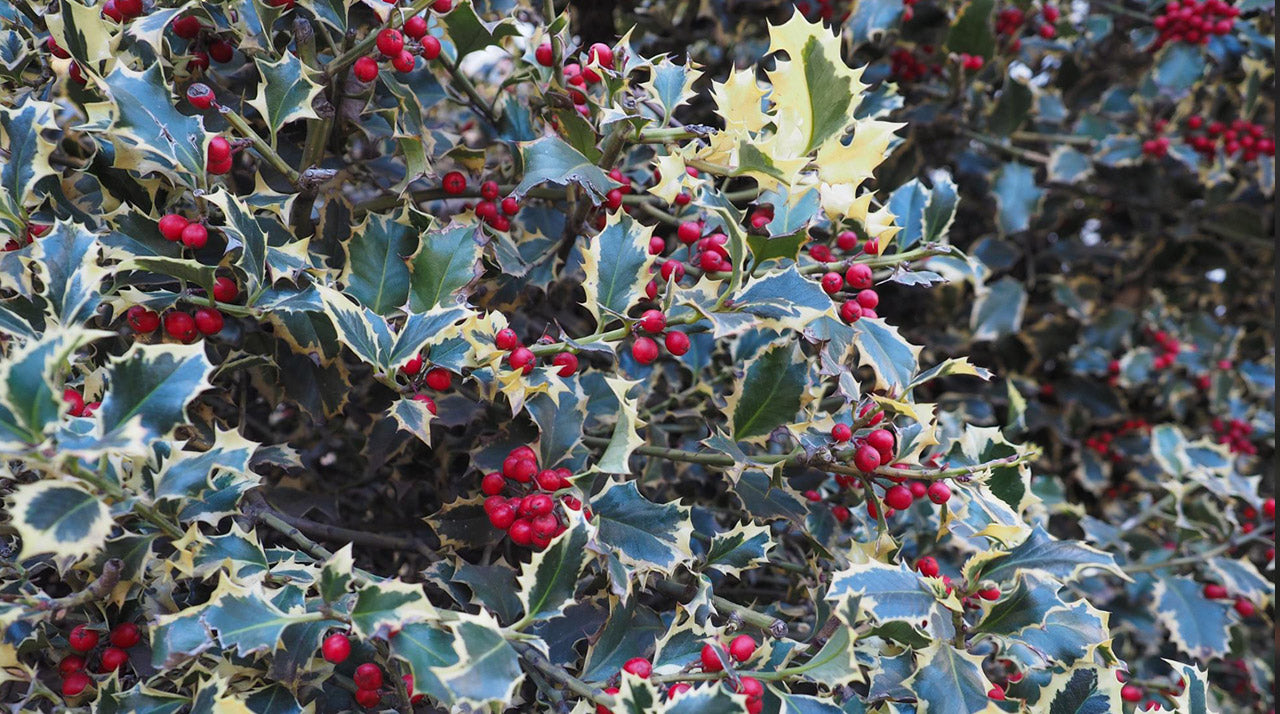
A striking female holly with glossy green leaves crisply edged in silver, bringing light and definition to evergreen planting all year. Superb as a specimen or hedge, and particularly handsome in winter. Add a suitable male nearby and you may enjoy berries for extra seasonal colour.
A real character, with fiercely spiny “hedgehog” leaves splashed with silver, giving bold texture and drama in every season. Excellent as a specimen or a defensive hedge, and especially striking in winter light. With a pollinator nearby, it can also produce berries to complete the effect.
Despite the name, this is a female holly—handsome, bright, and wonderfully useful, with leaves boldly marked and edged in gold. It lifts borders and hedges through winter, and looks especially cheerful against darker evergreens. Add a male pollinator and it may carry berries too.
A softer-looking, largely less-spiny female holly with warm golden-tinged foliage, making it friendlier near paths and patios. It forms a tidy shrub or small tree, clips well for hedging, and brings a bright, welcoming note through winter. With a pollinator, it can berry too.
A smart variegated holly with glossy leaves edged in clean silver, perfect for brightening hedges and adding contrast among deeper greens. It clips well, keeps a crisp outline, and looks particularly fresh in winter. A very good choice when you want structure with a little sparkle.
A reliable female holly with smoother, less prickly foliage than many, so it’s easier to place near paths and seating. It forms a tidy shrub or small tree, clips well for hedging, and with a suitable male nearby can produce berries. Practical, handsome, and wonderfully adaptable.
A bright, traditional favourite, with rich green leaves edged in warm gold that bring colour and structure all year. Excellent for hedging, screening, or as a specimen shrub, and especially cheering in winter light. Add a suitable male pollinator and it can carry berries for seasonal sparkle.