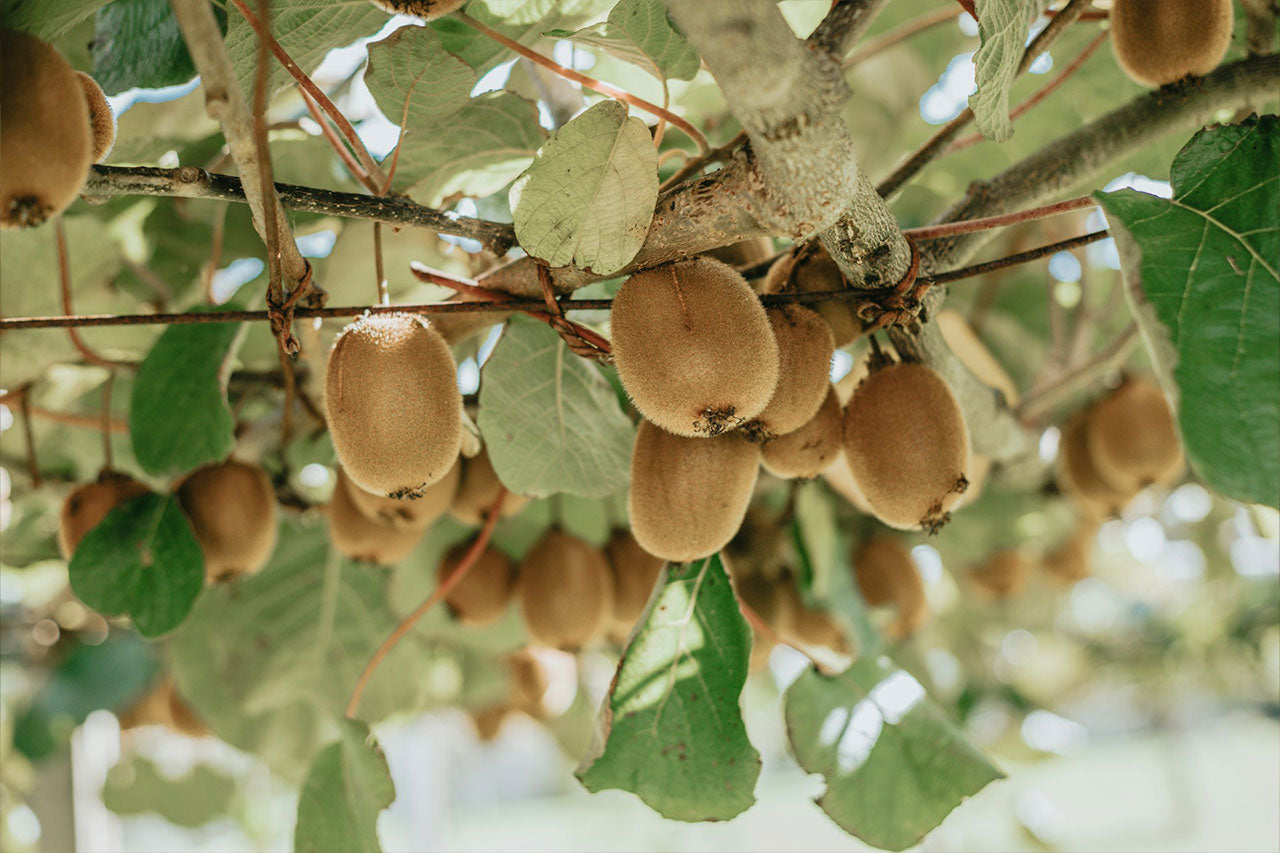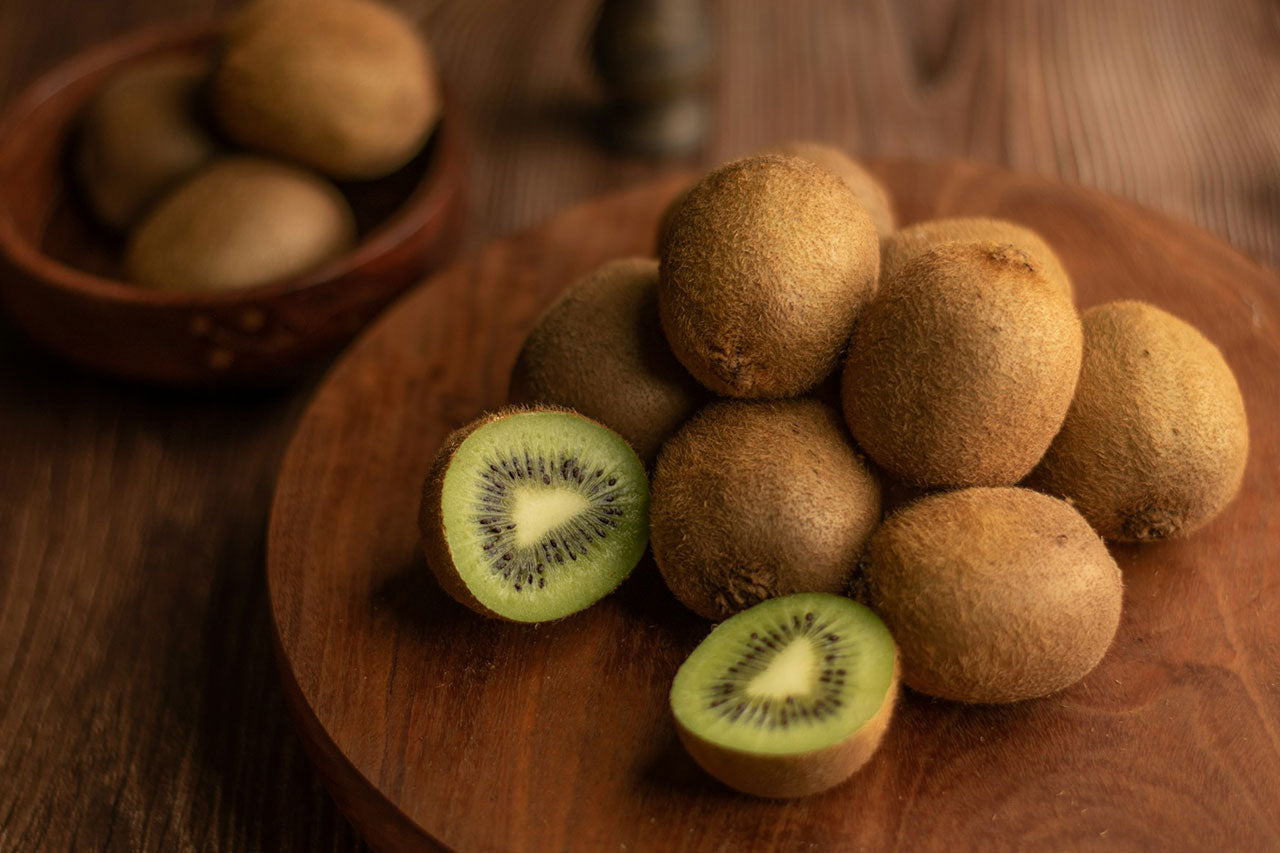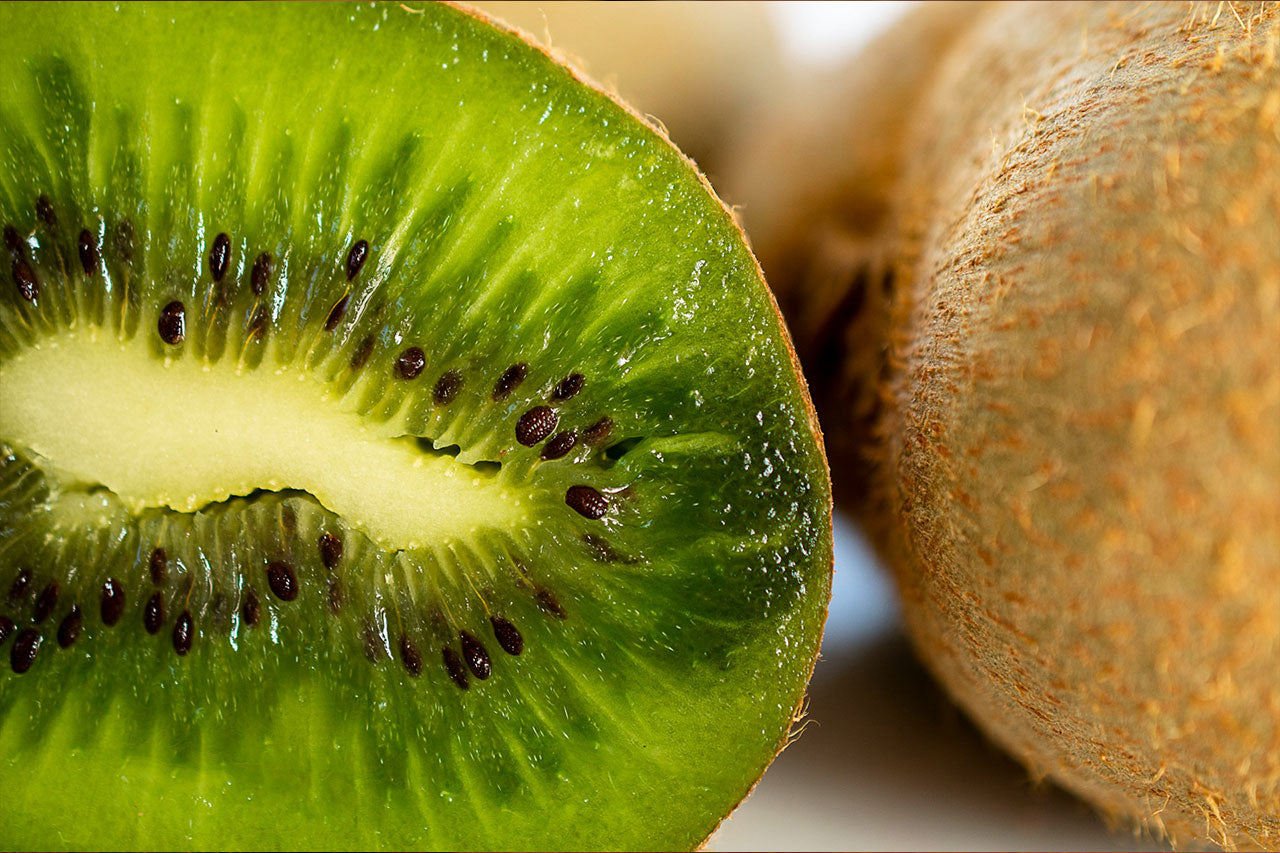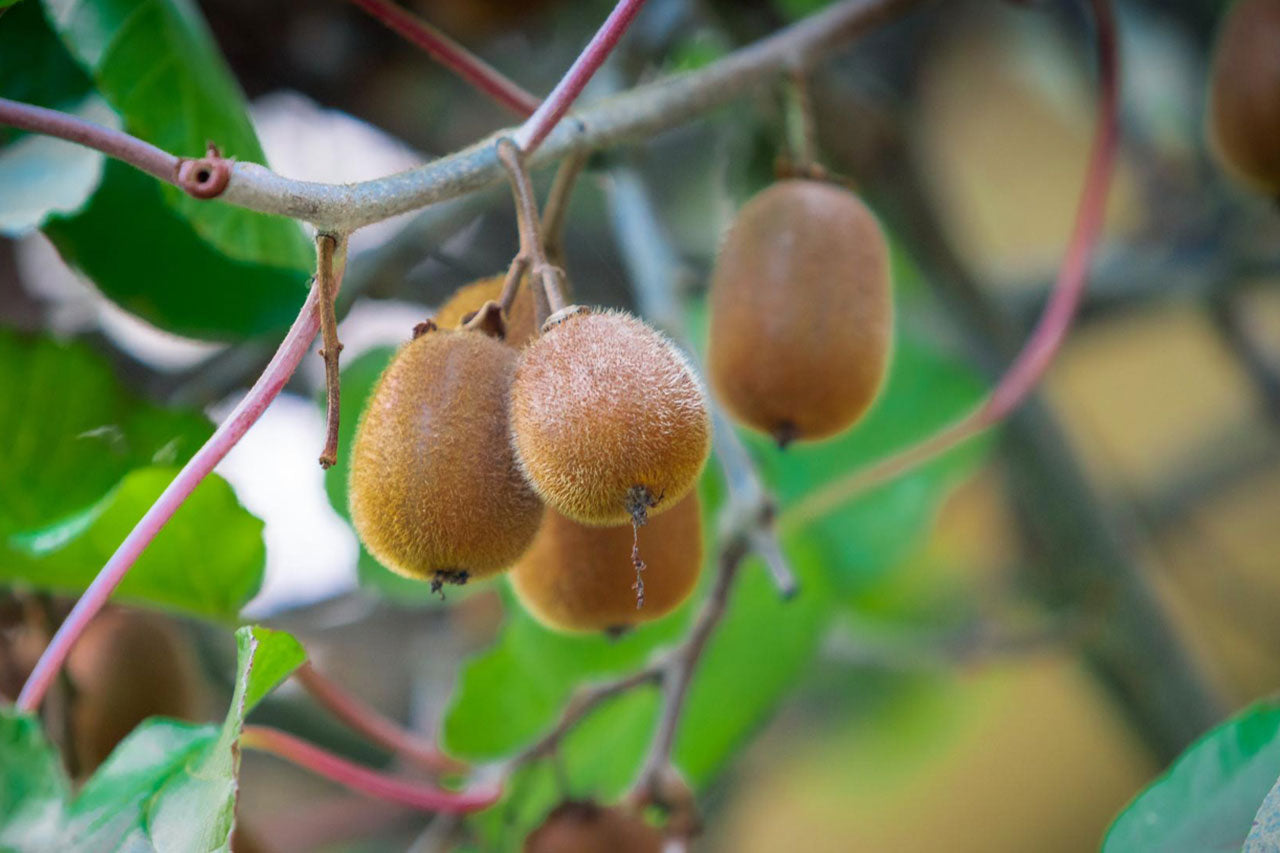

Kiwi (Actinidia deliciosa and its relatives) looks like the sort of fruit you’d only expect to see in warmer climates, but with a good, sunny position and the right variety it can crop nicely in many UK gardens. Creamy white flowers appear in early summer, followed by fuzzy brown fruits that slowly swell and ripen into autumn. In a warm, settled year in Cambridgeshire, you can pick fruits with a rich, sweet‑sharp flavour straight from your own vine, or harvest them slightly under‑ripe and finish them indoors. It’s a lovely way to bring a touch of the greenhouse or grocery aisle into an ordinary back garden.


Common name: Kiwi
Latin name: Actinidia
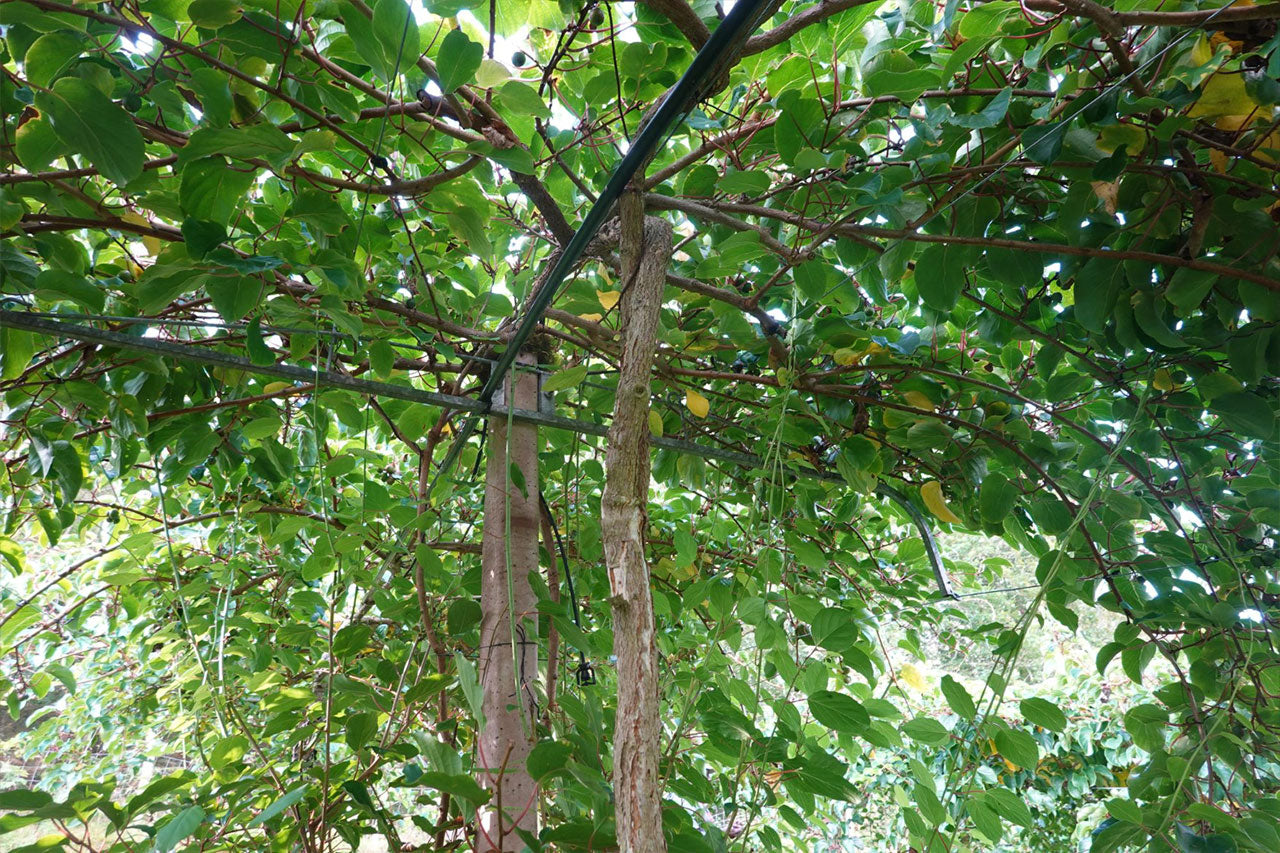
Size in UK gardens: Typically 3–6m high and wide when trained on a wall, fence or pergola; growth is easily controlled with regular pruning and a clear support.
Best position: A warm, sunny, sheltered spot – ideally a south‑ or south‑west‑facing wall or pergola – with room to train stems and good access for pruning and picking.
Soil: Fertile, moisture‑retentive but well‑drained soil with plenty of organic matter; dislikes very dry, thin soils and heavy, waterlogged ground. In pots, use a rich, loam‑based compost.
Flowering time: Small, creamy white flowers in late spring to early summer; fruits ripen from late summer into autumn depending on variety and season.
Fragrance: Flowers have a light, sweet scent at close quarters; foliage is not strongly fragrant.
Hardiness: Many named varieties are hardy in much of the UK once established in a sheltered spot; young vines and early shoots are vulnerable to late frosts.
Care level: Moderate – needs a sunny, sheltered site, sturdy support, regular tying‑in and yearly pruning, plus decent watering while establishing and as fruits swell.

The Simpson’s team raises the majority of our trees here at the nursery. For varieties outside our own production, we work with independent local growers we trust - all chosen for UK climate suitability.
Planting time: As container‑grown plants, kiwis can be planted in most months when the soil isn’t frozen or waterlogged, with late autumn and early spring usually easiest. This gives roots time to settle before the rush of summer growth or the worst winter weather.
Watering: Water regularly in the first two or three years, particularly in dry spells and on lighter soils, so the rootball and surrounding soil stay evenly moist. Once established in the ground, kiwis are reasonably tolerant of short dry periods but will fruit better with extra water as the crop is swelling.
Feeding: In decent soil, a generous spring mulch of compost or well‑rotted manure is often enough. On poorer soils or in containers, a balanced fertiliser in early spring plus a little extra potash as flowers form will help support strong growth and fruiting. Avoid heavy, high‑nitrogen feeding, which encourages leaf at the expense of fruit.
Pruning: Kiwi vines do need regular pruning to stay manageable and fruitful. A main structural prune in winter sets the framework, and a lighter summer prune controls excess growth and lets light in to ripen fruit. Once you’ve chosen a training pattern, repeat it each year so it becomes familiar.
Winter: Established vines usually need no winter protection beyond a mulch over the root area in most UK gardens. The main cold‑weather job is timely pruning; be ready with fleece in spring if late frosts threaten new shoots and flower buds.
Availability is always changing, so please check with us if you have a particular variety in mind.

A wonderfully worthwhile kiwi vine for the garden, prized because it’s self-fertile—so you can get fruit from a single plant. With a sunny, sheltered wall or pergola it makes a lush, leafy screen in summer, then rewards you with sweet, green, fuzzy kiwis in autumn once established. Perfect for adding an exotic, edible twist to a warm corner.