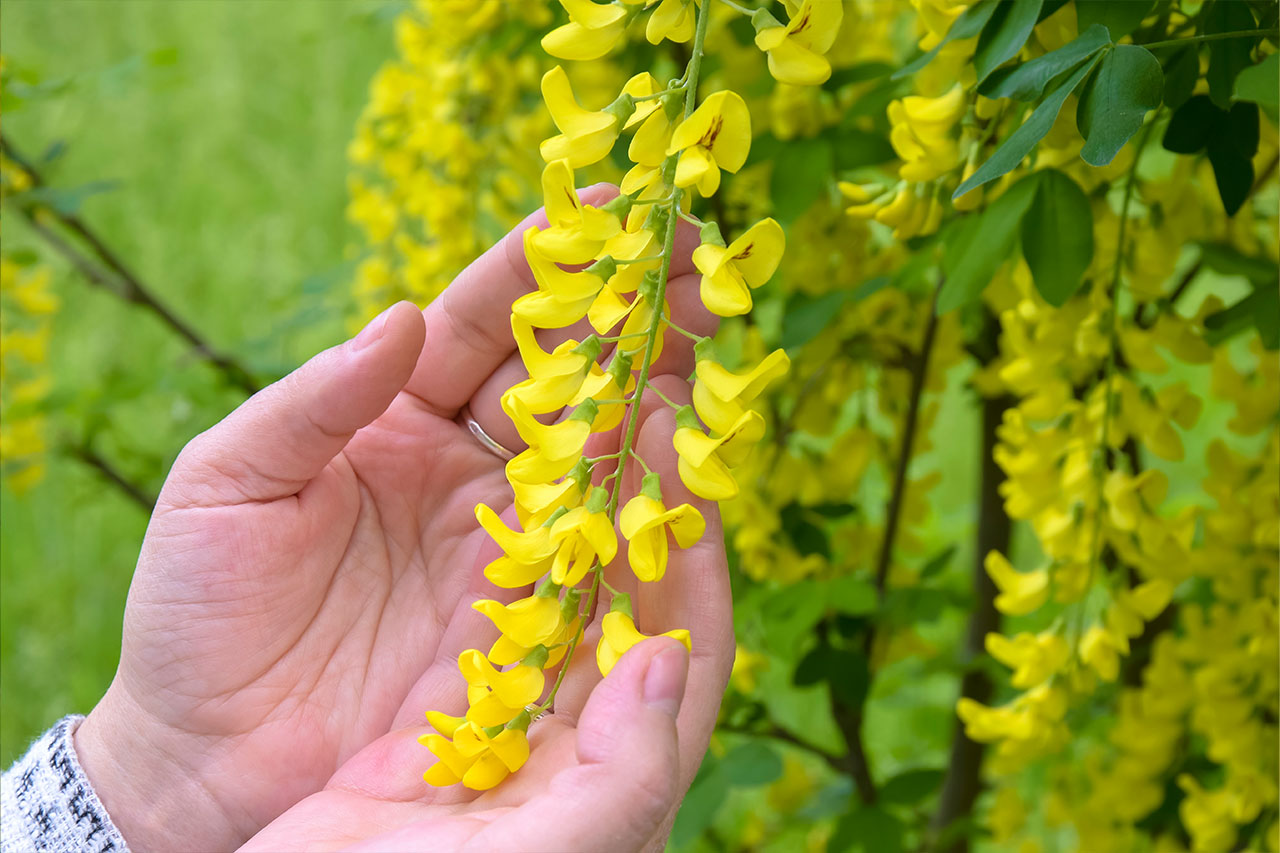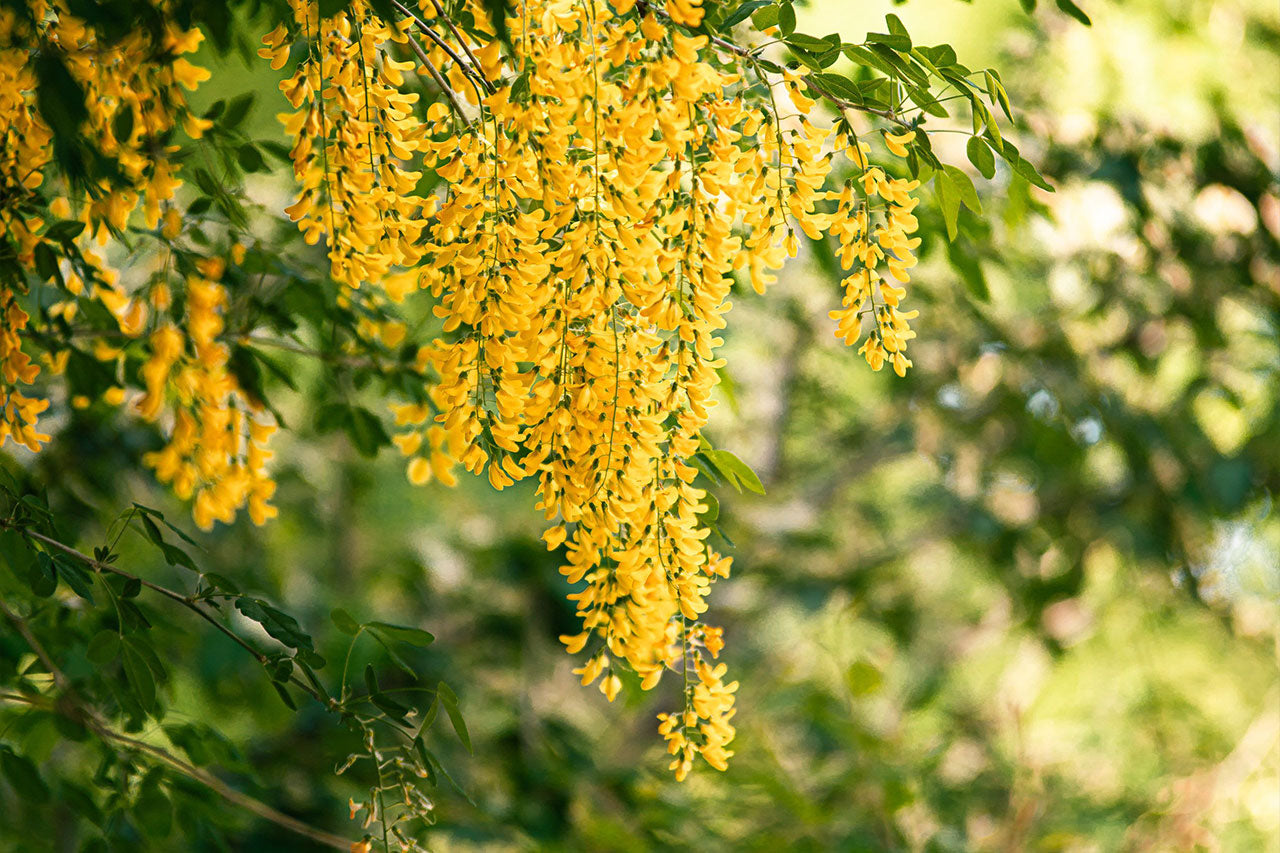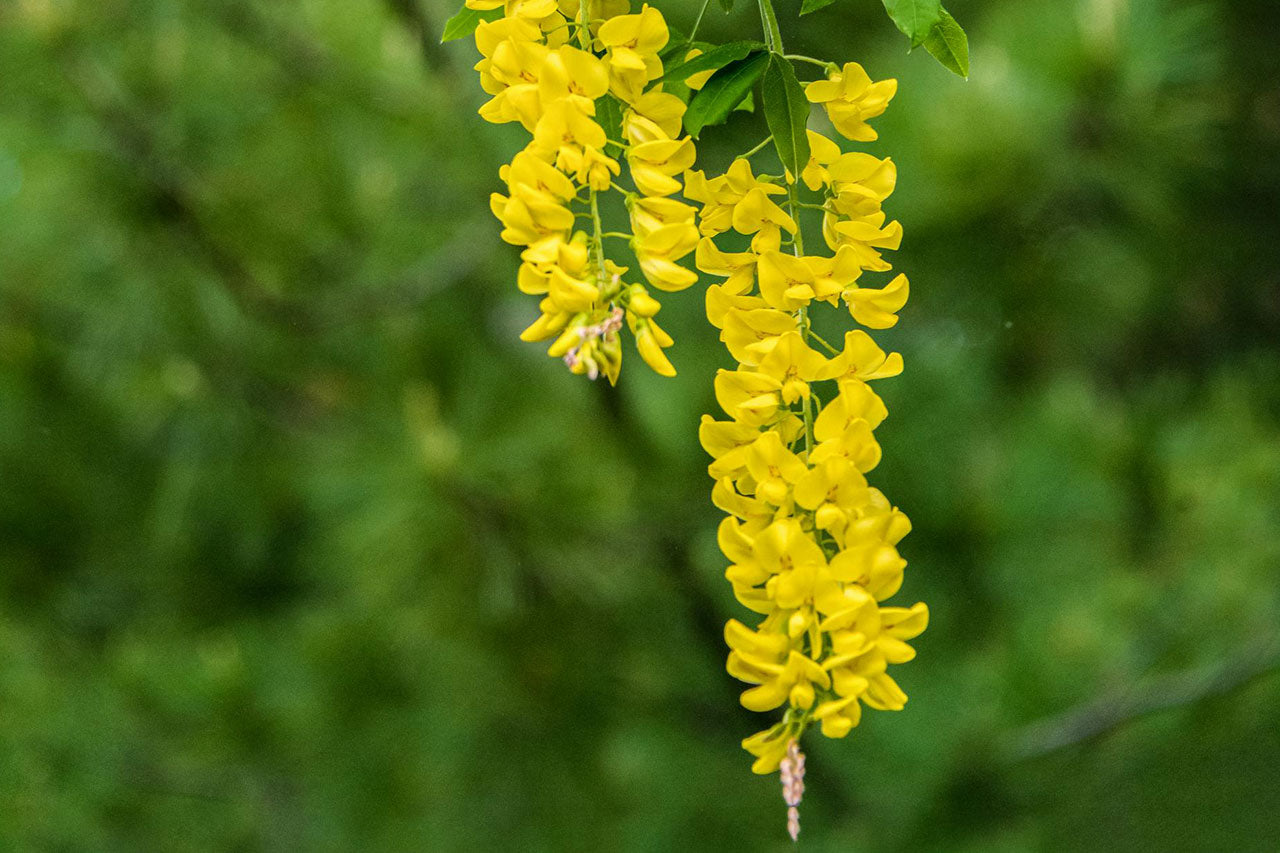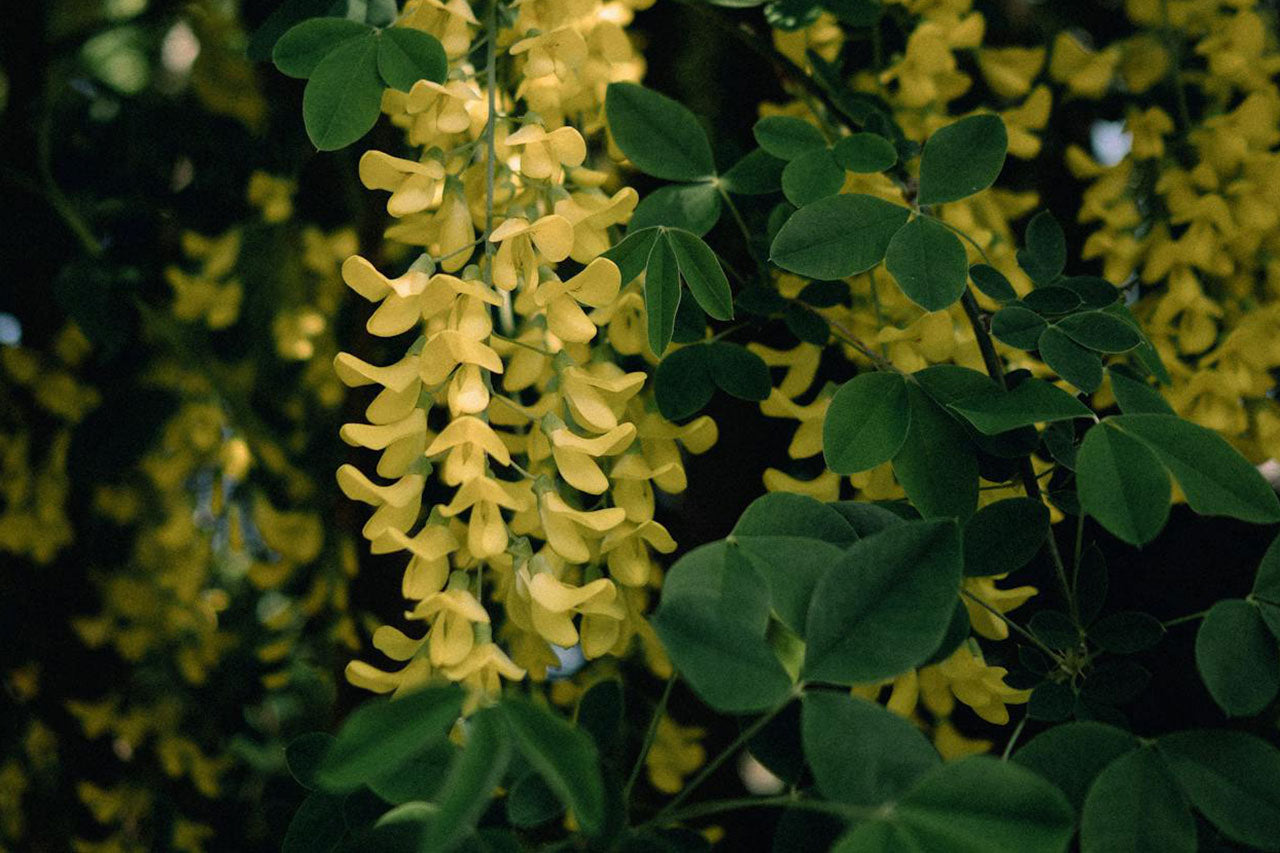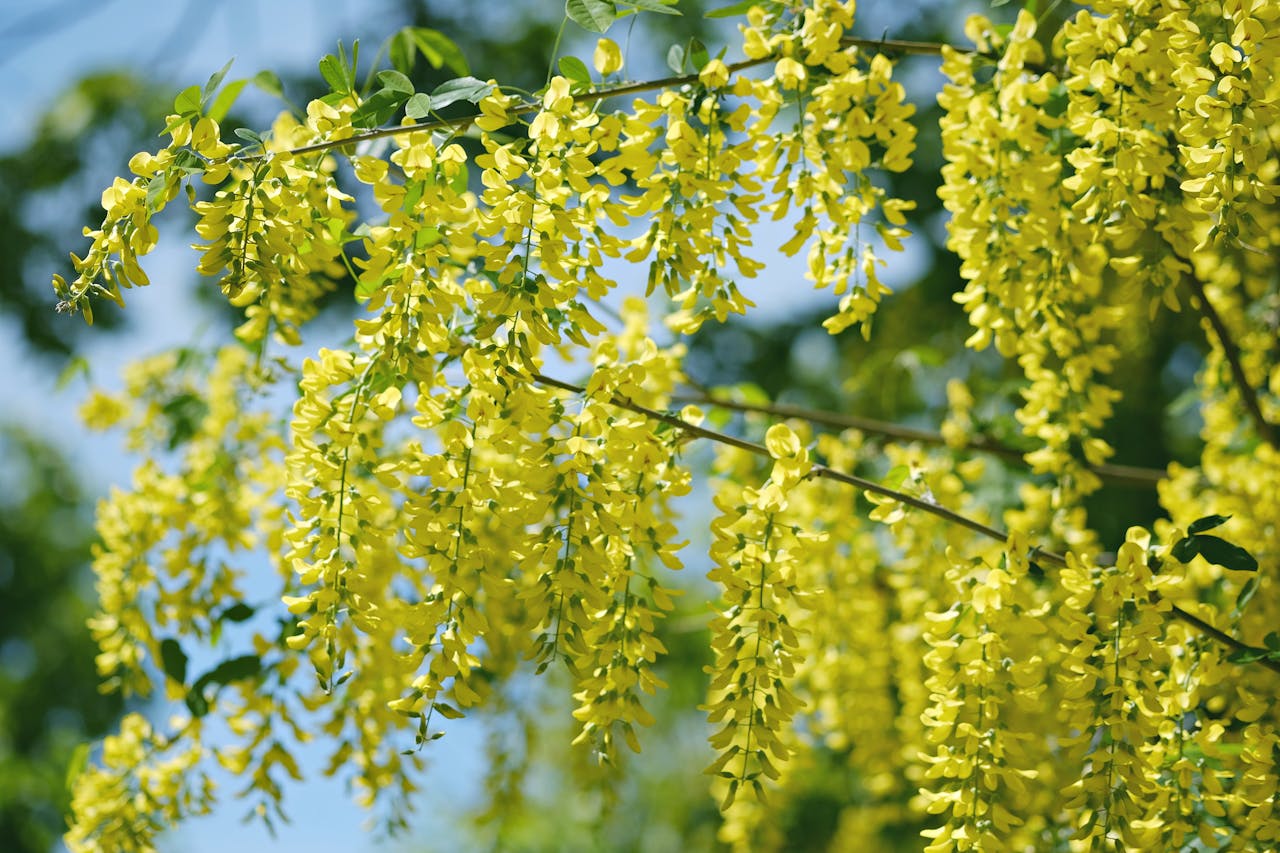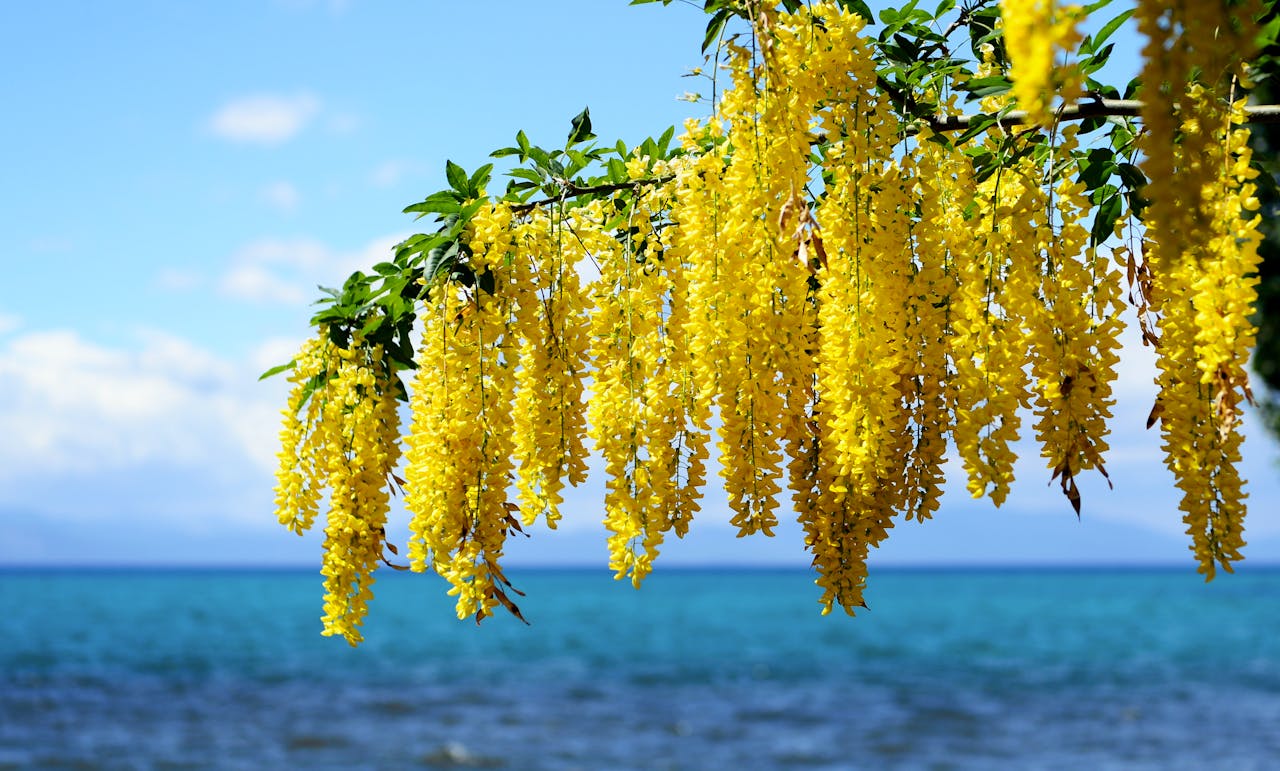

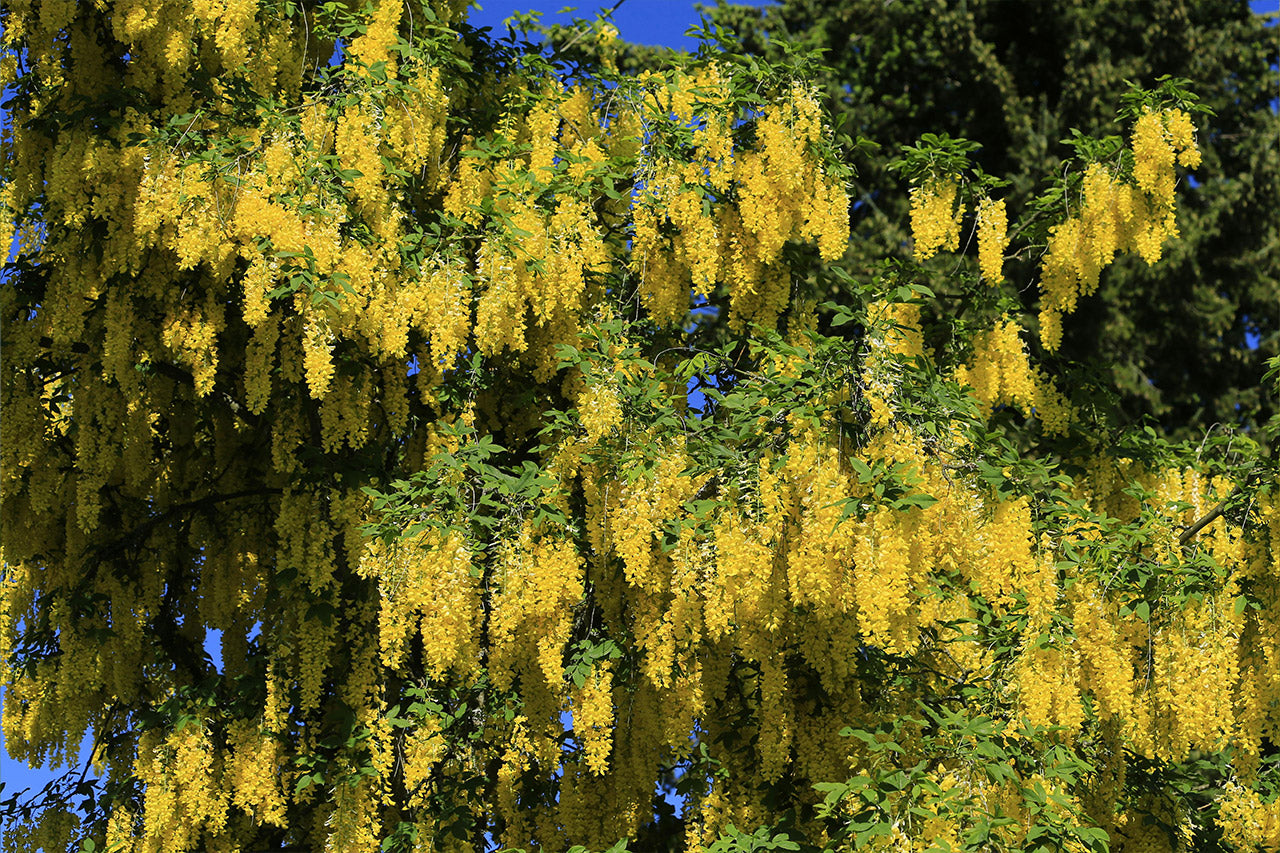
Laburnum is famed for its breathtaking display of hanging yellow racemes in late spring. For a few precious weeks, the bare framework of the tree is transformed into a cascade of golden chains, each one packed with pea‑shaped blooms. When it’s in full flower, a mature tree can look as though someone has poured sunshine over the branches. The effect is particularly striking when the flowers hang over a path, lawn or seating area, so you can walk right underneath the display. In many UK gardens, that short, intense flowering period becomes one of the real highlights of the year.
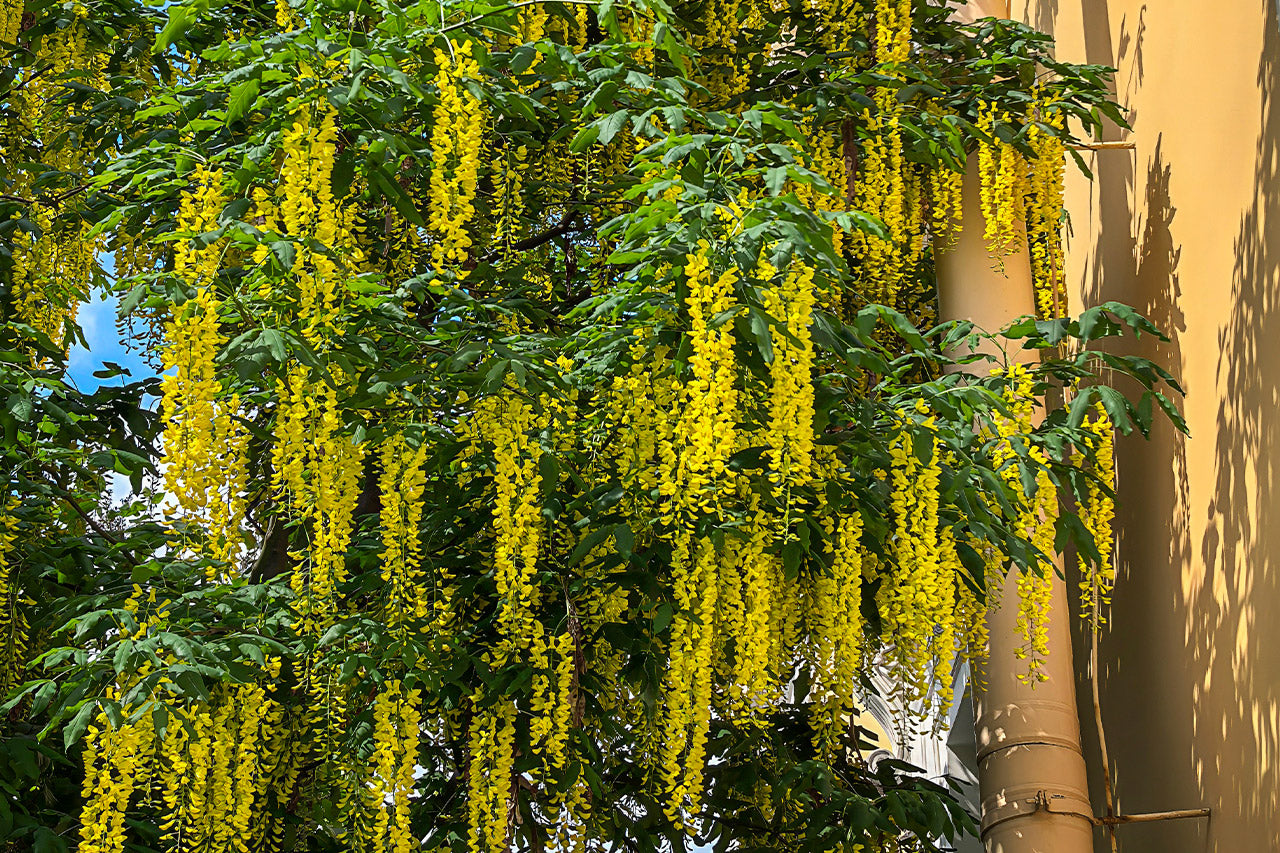
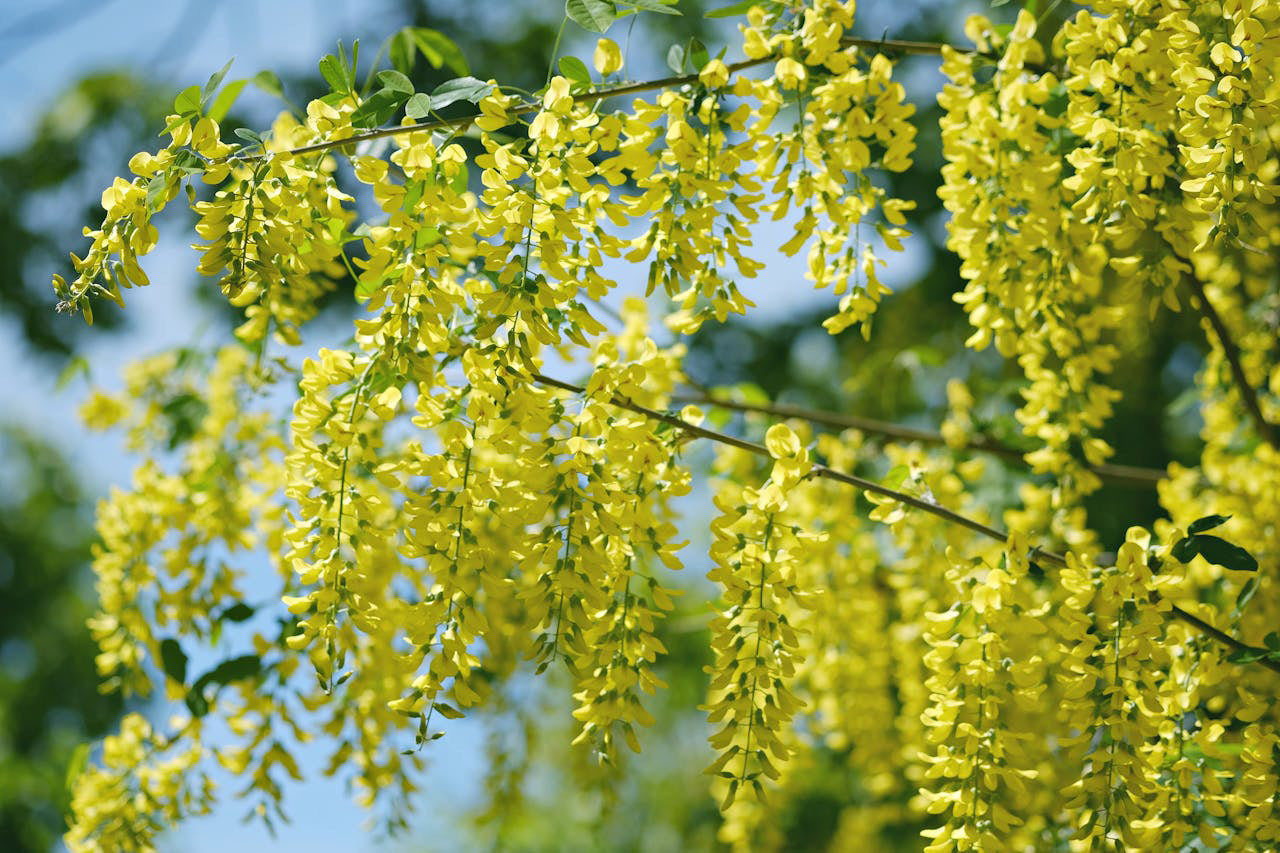
Common name: Golden Chain Tree
Latin name: Laburnum
Plant type: Small to medium deciduous tree.
Size in UK gardens: Often around 4–7m tall and 3–5m wide over time, depending on variety and pruning; some older trees can become larger in very favourable conditions.
Best position: A sunny, reasonably sheltered spot where the flower racemes can hang freely – over a lawn, path, seating area or bank.
Soil: Moderately fertile, well‑drained soil; happy on many loams and lighter clays, and tolerant of slightly alkaline conditions if drainage is good.
Flowering time: Usually late spring to early summer (often May into early June), with masses of hanging yellow racemes.
Hardiness: Generally hardy in most UK gardens once established; flowers can occasionally be checked by late frost in very cold springs.
Care level: Moderate – straightforward if planted in the right place, with occasional light pruning and a watchful eye where small children or pets are likely to chew.

The Simpson’s team raises the majority of our trees here at the nursery. For varieties outside our own production, we work with independent local growers we trust - all chosen for UK climate suitability.
Planting time: As container‑grown trees, Laburnums can be planted in most months when the ground isn’t frozen or waterlogged; autumn and early spring are usually easiest, giving roots time to settle before summer heat or winter cold.
Watering: Water regularly in the first couple of years so the rootball and surrounding soil don’t dry out completely, especially in sunny, free‑draining sites. Once established, Laburnum is reasonably drought‑tolerant but will appreciate an occasional deep soak in very long dry spells.
Feeding: In decent garden soil, Laburnum needs very little feeding. A spring mulch of compost or well‑rotted manure over the root area is usually enough. On very poor soils, a light balanced fertiliser in early spring can help support growth and flowering.
Pruning: Pruning is usually minimal – mainly removing dead, damaged or badly placed branches. Any shaping is best done lightly and thoughtfully, preserving the natural arching habit that shows off the flowers. Major restructuring is seldom needed.
Winter: Established trees generally need no special winter attention beyond their mulch and a quick safety check for damaged branches after storms. Young trees benefit from staking and a weed‑free circle around the base until they are well anchored.
Availability is always changing, so please check with us if you have a particular variety in mind.


A true curiosity: a chimera that can flower in more than one colour, often carrying golden laburnum chains alongside pinkish-purple blooms. The display is unusual, unpredictable and utterly fascinating. A brilliant talking point tree, especially when trained where the flowers can hang and be admired up close.
A graceful weeping laburnum, draping its branches so the famous golden flower chains hang like jewellery in late spring. The effect is romantic and theatrical, perfect over a lawn or near seating where you can enjoy the cascades. A superb choice for adding movement and a golden flourish.
Often considered the finest laburnum, producing exceptionally long, dense chains of golden flowers that pour from the branches in late spring. The display is breathtaking at its peak, especially when the tree is allowed to take centre stage. A classic choice for creating that unforgettable “golden waterfall” moment.