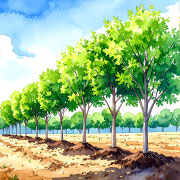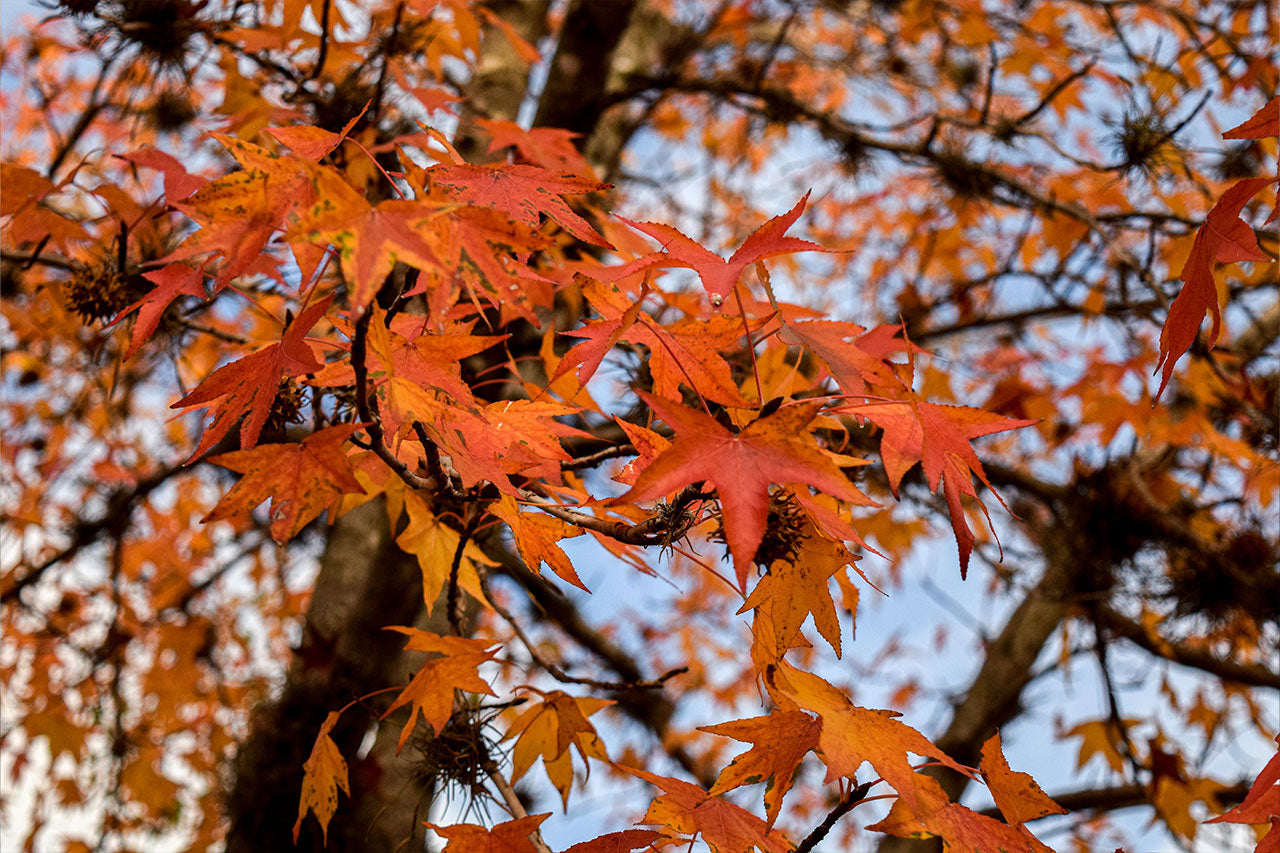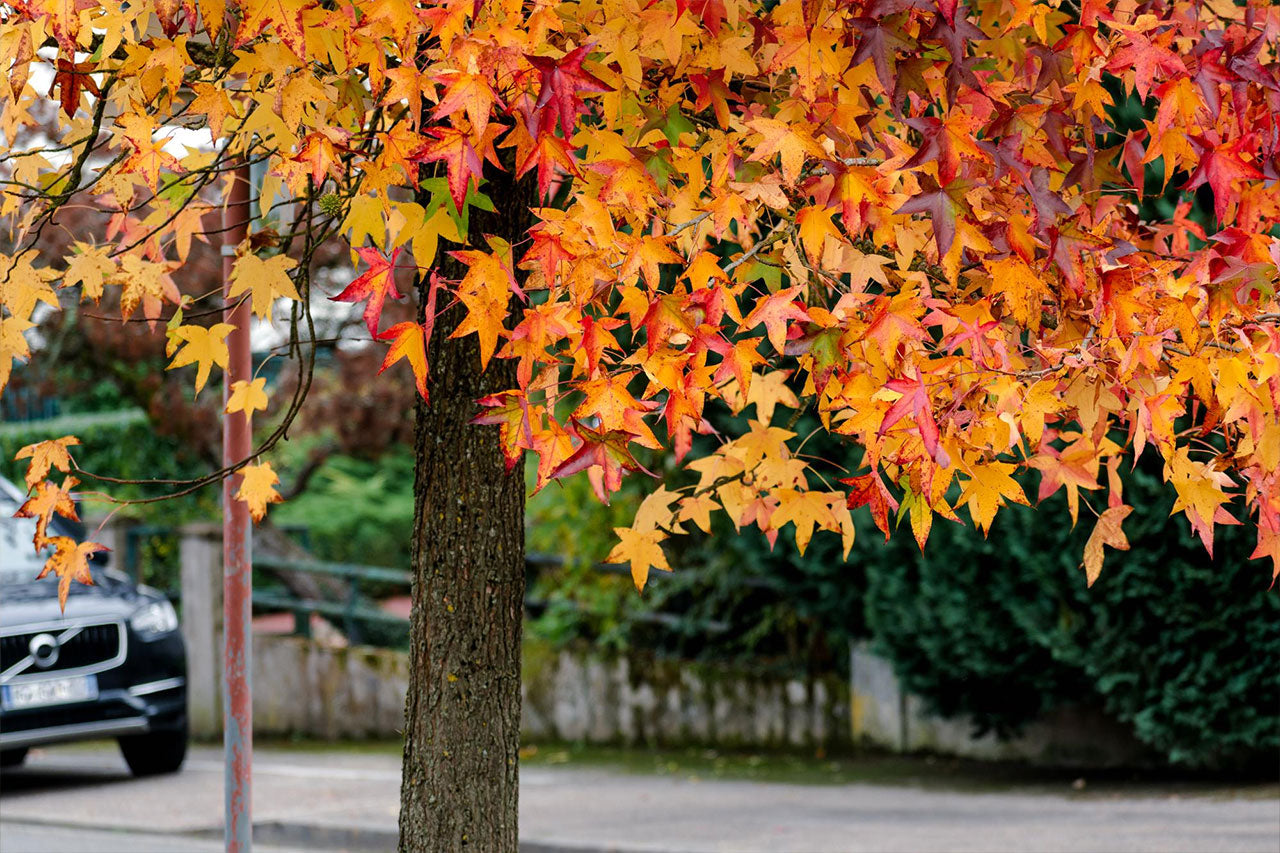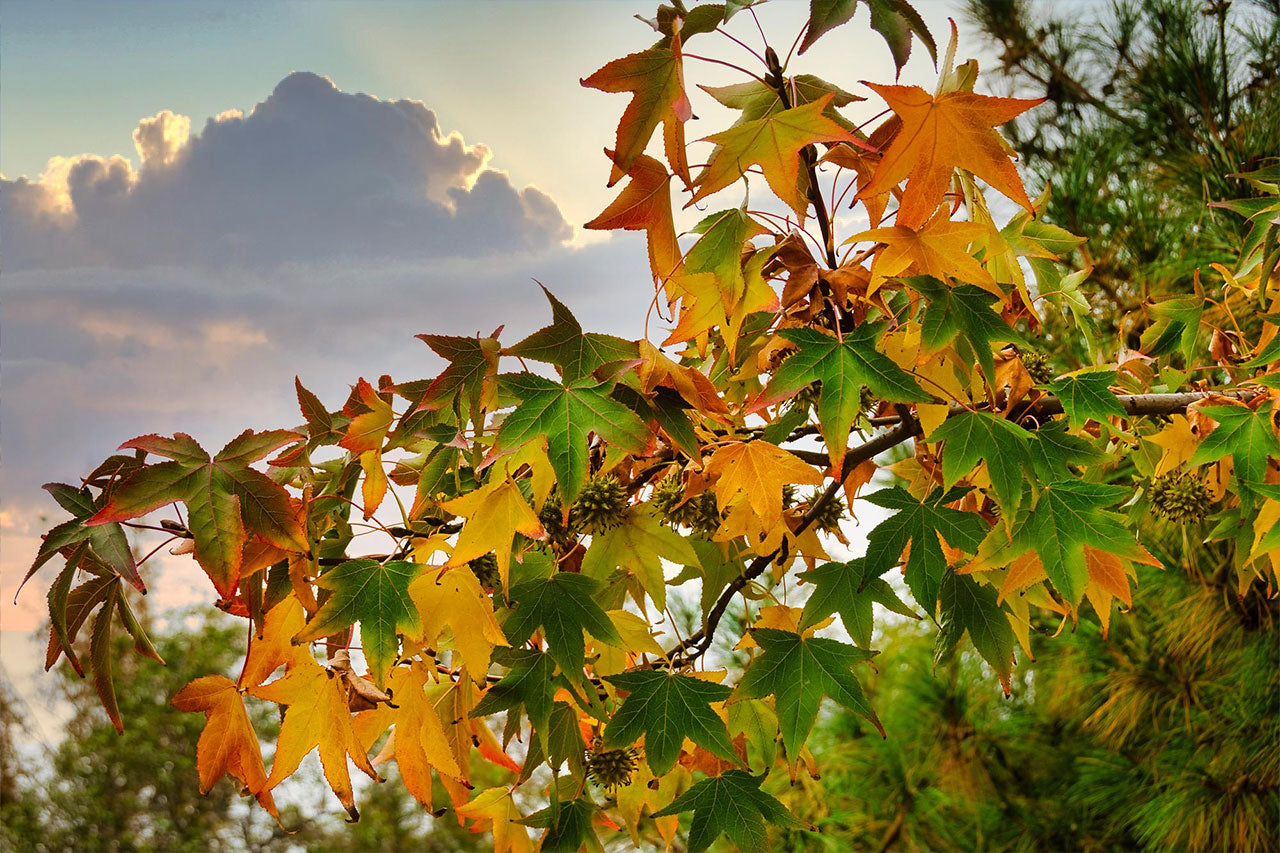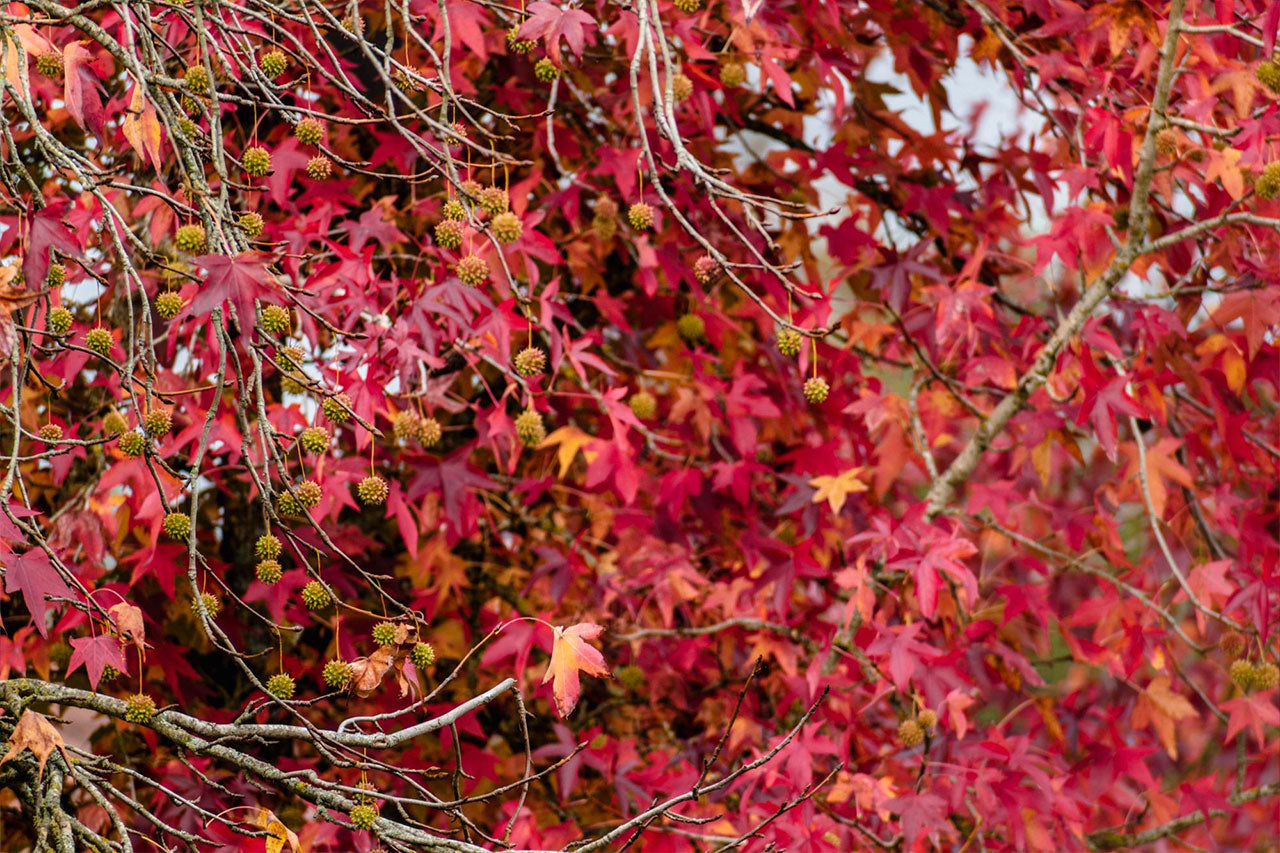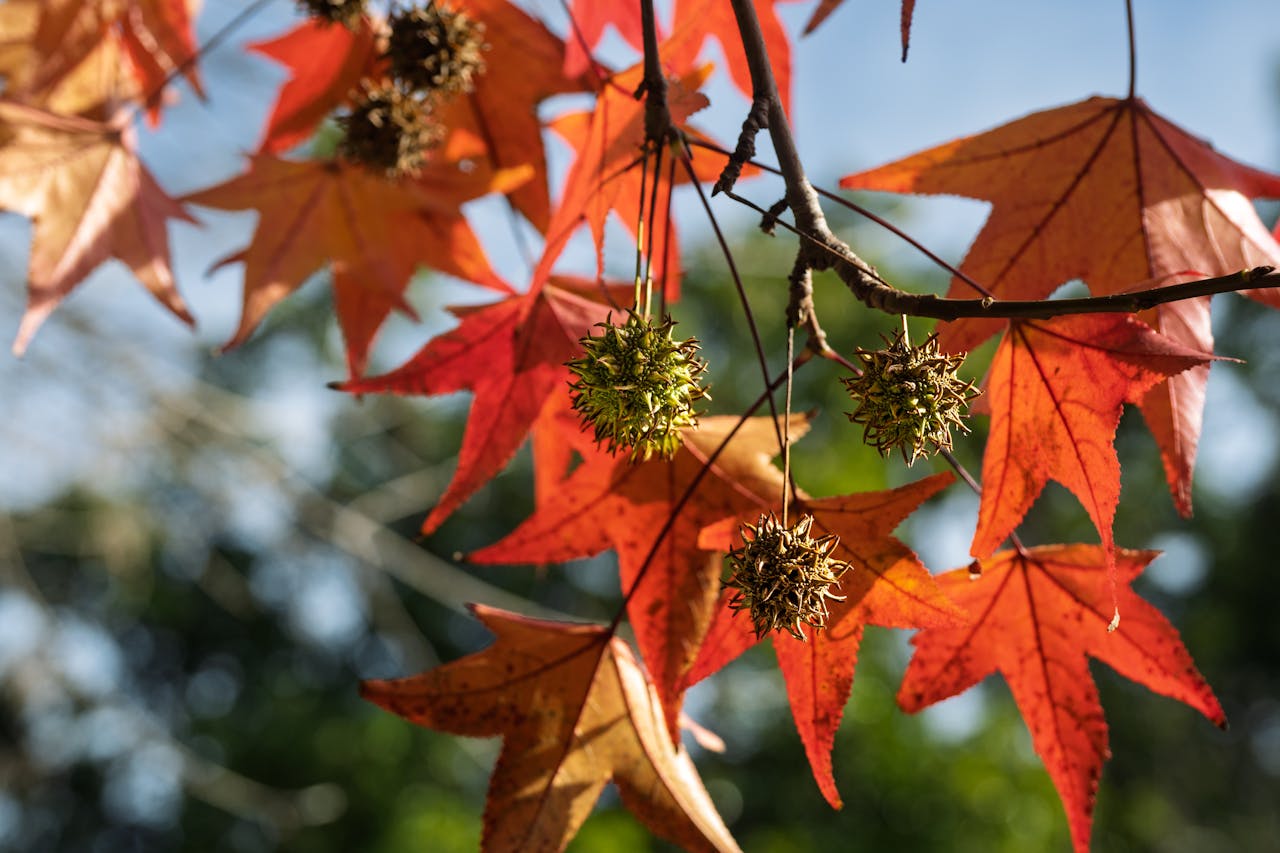

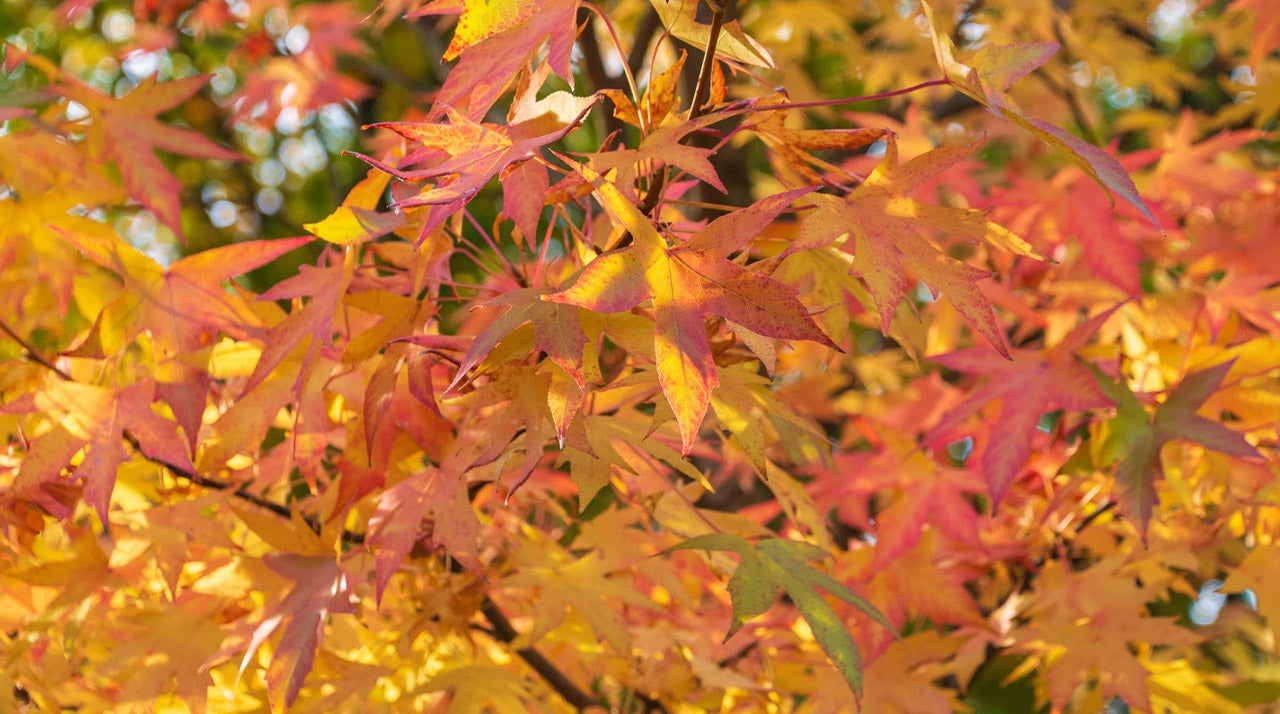
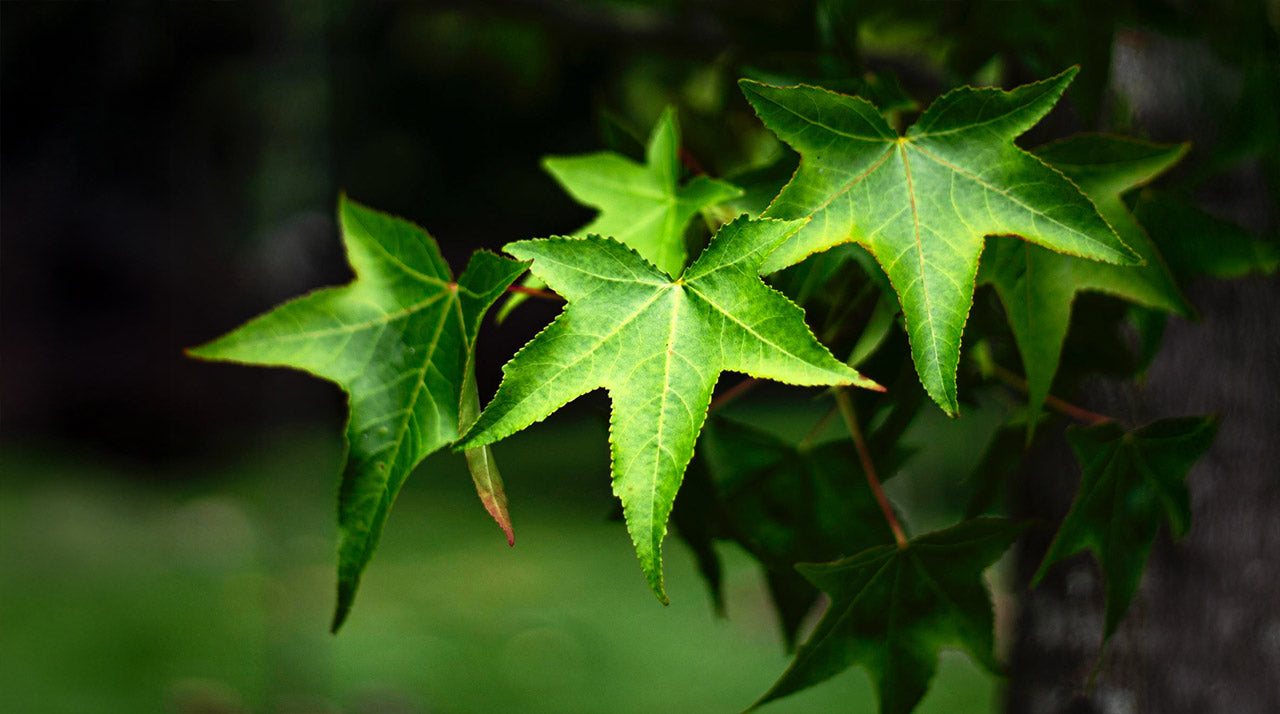
If you love autumn colour, sweet gum is one of those trees that can genuinely stop you in your tracks. The star‑shaped leaves often carry several shades at once, from clear yellow through tangerine and crimson right into deep claret, so the tree looks as if someone has hung lanterns in every branch. On bright days the light pours through the canopy, turning the whole crown into stained glass. In a good year, the show can last for weeks, making the tail‑end of the season feel just as exciting as spring.
Common name: Sweet gum
Latin name: Liquidambar
Size in UK gardens: Usually grown as a medium to large deciduous tree; many garden forms reach around 10–15m tall and 6–8m wide in UK conditions, with the species and some cultivars eventually growing larger (up to 20m+), so it’s best for medium to larger gardens or used as a single specimen.
Best position: Full sun for the very best autumn colour, in a reasonably sheltered spot with space to show off its crown and away from buildings, overhead wires and services.
Soil: Prefers a moderately fertile, moist but well‑drained soil that is neutral to slightly acidic; most cultivars tolerate clay, loam or sand if drainage is decent, but very chalky soils can reduce vigour and autumn colour.
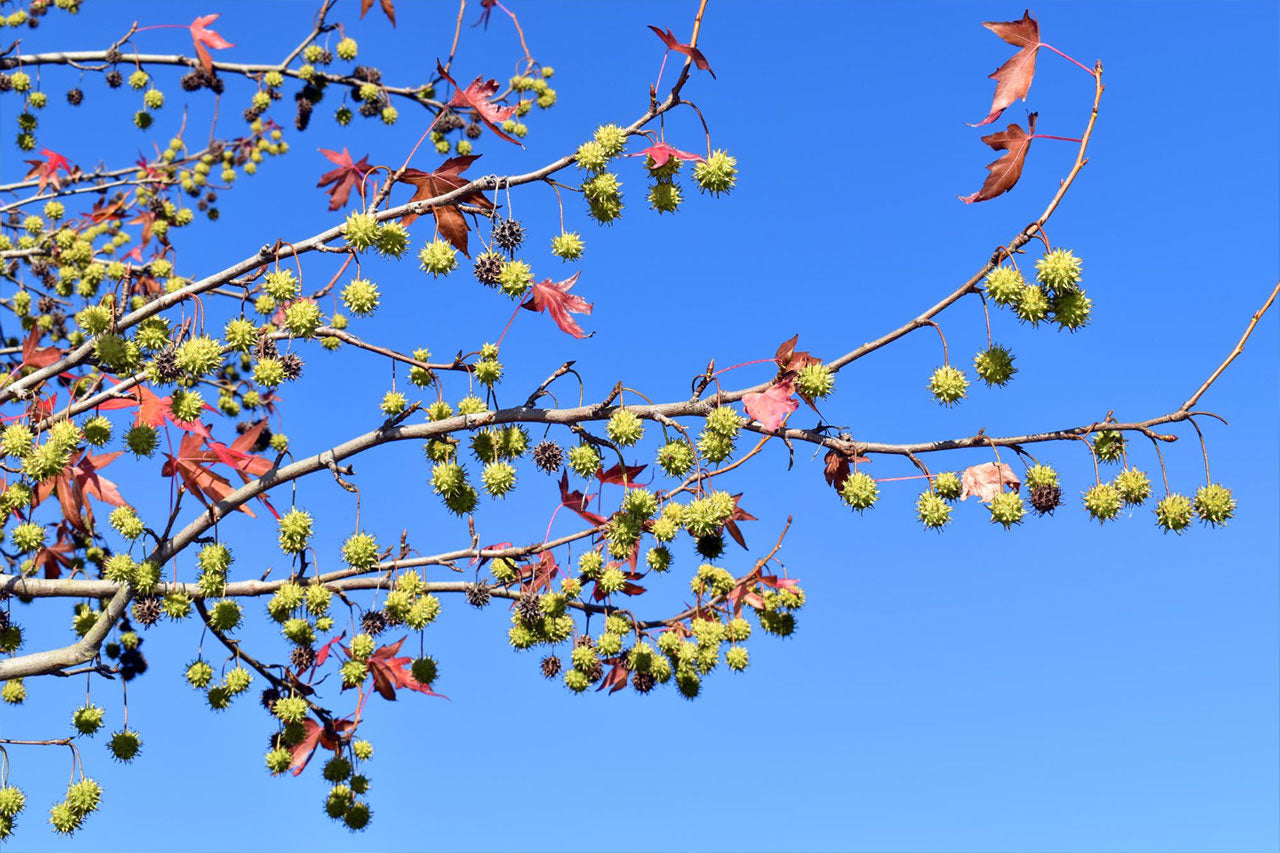
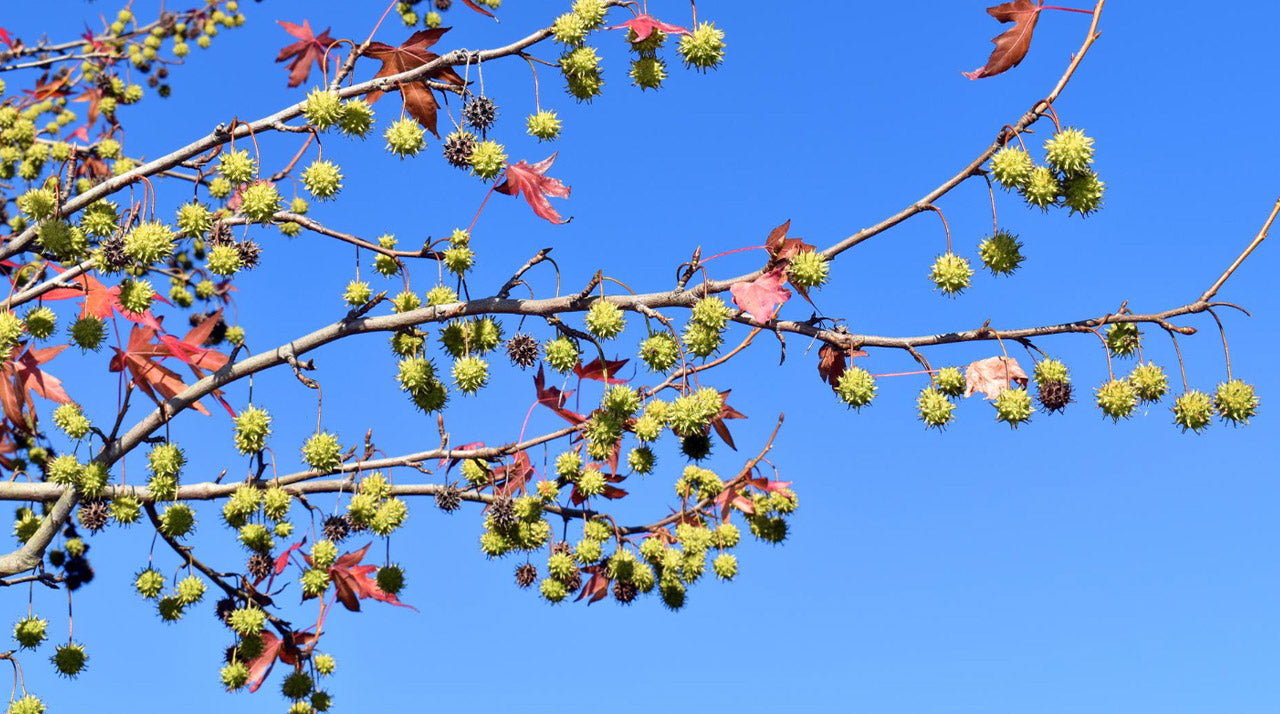
Main interest: Spectacular maple‑like leaves that colour through yellow, orange, red and purple in autumn, often showing several shades on the tree at once, with corky, characterful bark and spiky seed balls adding winter interest.
Fragrance: Usually not noticeably scented at a distance; the leaves and resin have a faint, sweet resinous aroma if crushed, which is where the name “liquid amber” comes from.
Hardiness: Fully hardy across the UK in well‑drained ground.
Care level: Moderate; needs the right spot (sun, moisture‑retentive but free‑draining soil and enough space), very little pruning once shaped, and regular watering until well established.

The Simpson’s team raises the majority of our trees here at the nursery. For varieties outside our own production, we work with independent local growers we trust - all chosen for UK climate suitability.
Planting time: As container‑grown trees, Liquidambar can be planted in most months when the soil isn’t frozen or waterlogged, with mid‑spring and early autumn usually giving the kindest conditions for new roots.
Watering: Water regularly in the first few growing seasons, especially in dry spells, so the rootball and surrounding soil stay consistently moist but not soggy. Established trees with deep roots are more tolerant of short dry periods, particularly on heavier soils.
Feeding: In decently fertile soil, a light mulch of garden compost or well‑rotted manure in spring is usually enough. On very poor or sandy ground, a modest dressing of a balanced tree fertiliser in early spring can help support steady growth, especially for younger specimens.
Pruning: Requires very little routine pruning – mainly just removing crossing, damaged or badly placed branches in late autumn or winter. Heavy reshaping is rarely needed and best avoided unless a branch is causing a particular problem.
Winter: Once established in suitable soil, sweet gum usually needs no special winter protection. Young trees benefit from a mulch over the root area and firm staking to prevent wind‑rock; in very exposed gardens, a windbreak for the first couple of winters can help them settle in.
Availability is always changing, so please check with us if you have a particular variety in mind.


A refined sweet gum with a neat, elegant outline and beautifully shaped leaves that feel crisp and polished. It comes into its own in autumn, colouring with warm reds and burgundies that give a rich, glowing finish. A superb choice for a smaller specimen with a real seasonal flourish.
A classic for autumn colour, with star-shaped leaves that shift through rich shades of amber, crimson and purple in a long, glowing finale. The canopy is light and shapely, making it a fine specimen tree that brings structure through summer, then turns into a showpiece as the season changes.
A bright, golden-leaved sweet gum that brings warmth and lift from spring onwards. The starry foliage glows chartreuse to yellow, giving a sunlit effect in the garden, and later it can take on richer autumn tones too. A superb choice for adding colour and contrast at scale.
A cheerful, golden-foliaged sweet gum with star-shaped leaves that shimmer in yellow-green through the season. It brightens planting schemes like a pool of light, and the autumn show adds extra warmth. Ideal as a specimen where you want colour that feels fresh, not heavy.


A well-regarded selection known for vivid, reliable autumn colour, often developing rich reds and purples that linger. Through summer it holds a neat, elegant canopy, then turns into a dramatic seasonal feature. A superb specimen if you want dependable late-year theatre.
A handsome sweet gum with a clean outline and superb autumn performance, often colouring in a rich blend of reds, oranges and burgundy. The star-shaped leaves give lovely texture through summer, then deliver that satisfying “wow” moment as the season turns.
A strong, shapely cultivar prized for its intense autumn colour, frequently turning deep crimson and purple. The canopy stays tidy and elegant in summer, then becomes a glowing focal point. A great choice when you want late-season colour with real depth and richness.
As the name suggests, this sweet gum is grown for a fiery autumn display, the star-shaped leaves colouring richly in reds and warm tones. It has a smart, upright habit and a crisp, architectural feel. Superb as a statement tree when you want autumn colour that reads from afar.


A striking sweet gum with a lighter, more silvery cast to the foliage, giving a softer, cooler look through summer. Come autumn, the starry leaves warm up into richer tones for a lovely contrast. A refined choice when you want liquidambar character, but with a gentler summer palette.
A narrow, columnar sweet gum made for tighter spaces, giving you that famous autumn colour without a wide spread. The tree holds a clean vertical line, then turns into a tall ribbon of reds and oranges in autumn. Ideal for avenues, boundaries, or adding height with minimal footprint.
A neat, ornamental selection with star-shaped leaves and a poised, upright habit. It offers attractive texture through summer, then develops warm, glowing autumn colour—often in reds and oranges. A lovely specimen if you want liquidambar’s seasonal drama in a more compact, tidy form.
A well-shaped sweet gum chosen for consistent performance and strong seasonal colour. The star-shaped foliage has a polished look in summer, then turns richly as autumn arrives, giving a long, glowing finale. A dependable choice for anyone who wants a classic specimen with real seasonal impact.

One of the best-known sweet gums for reliable autumn colour in the UK, often turning vivid reds, oranges and purple. The tree forms a handsome, well-balanced canopy, making it excellent as a lawn specimen. When it colours, it’s simply one of the great autumn sights.