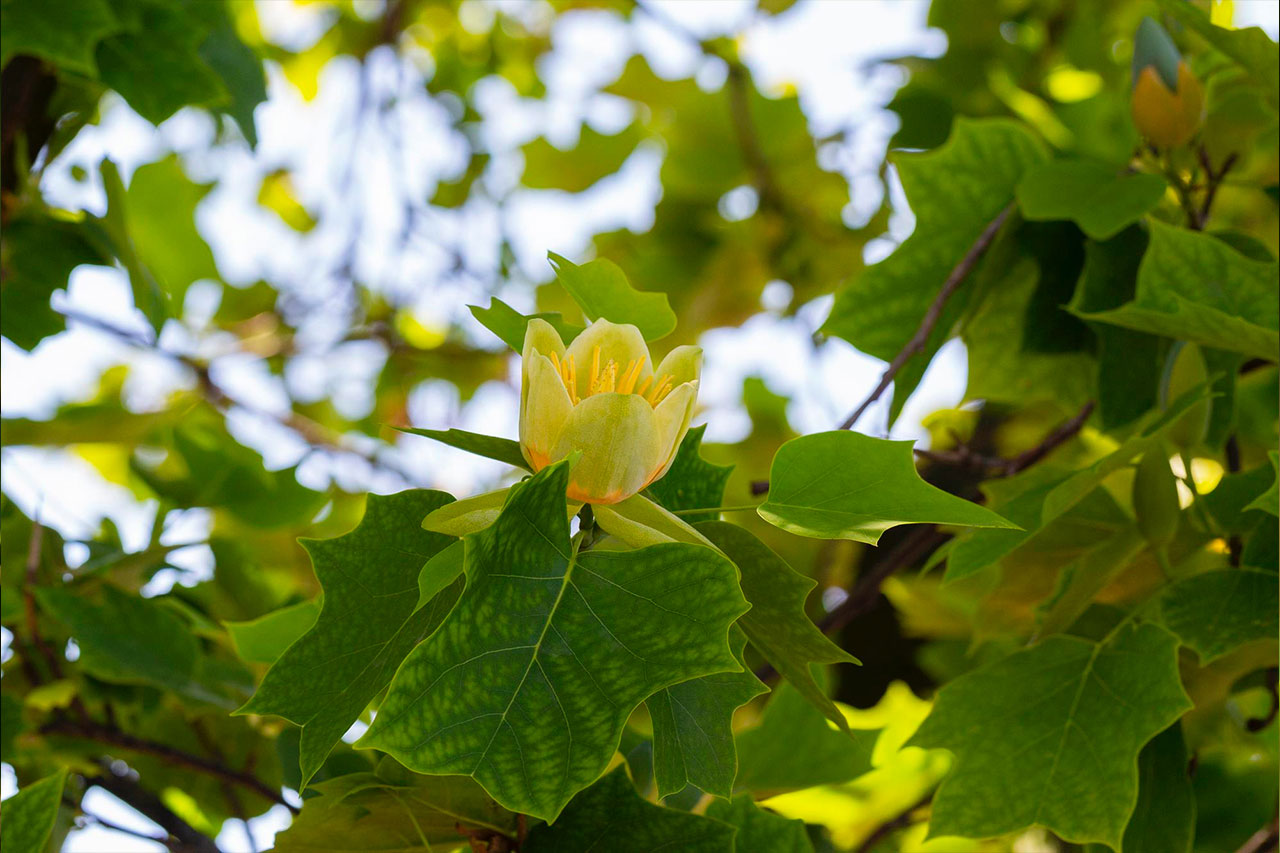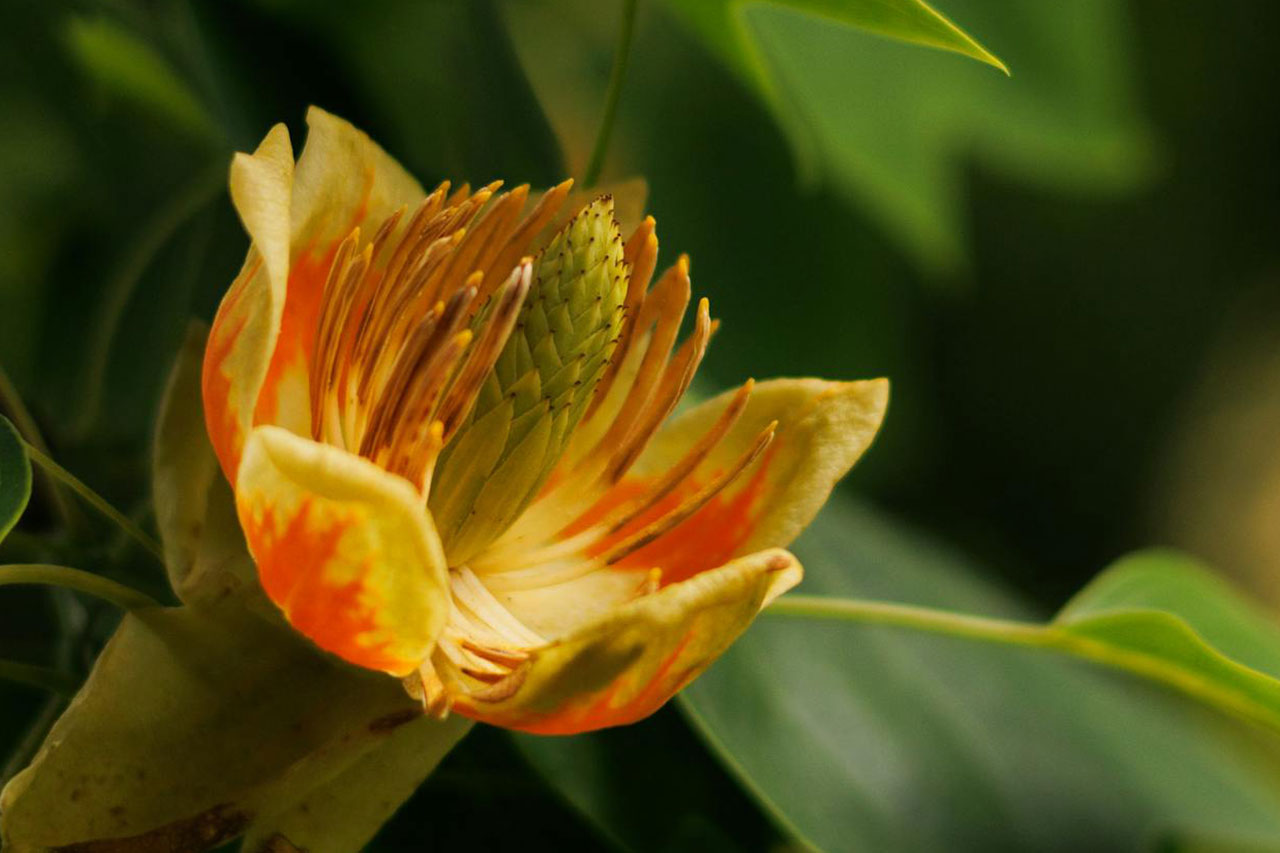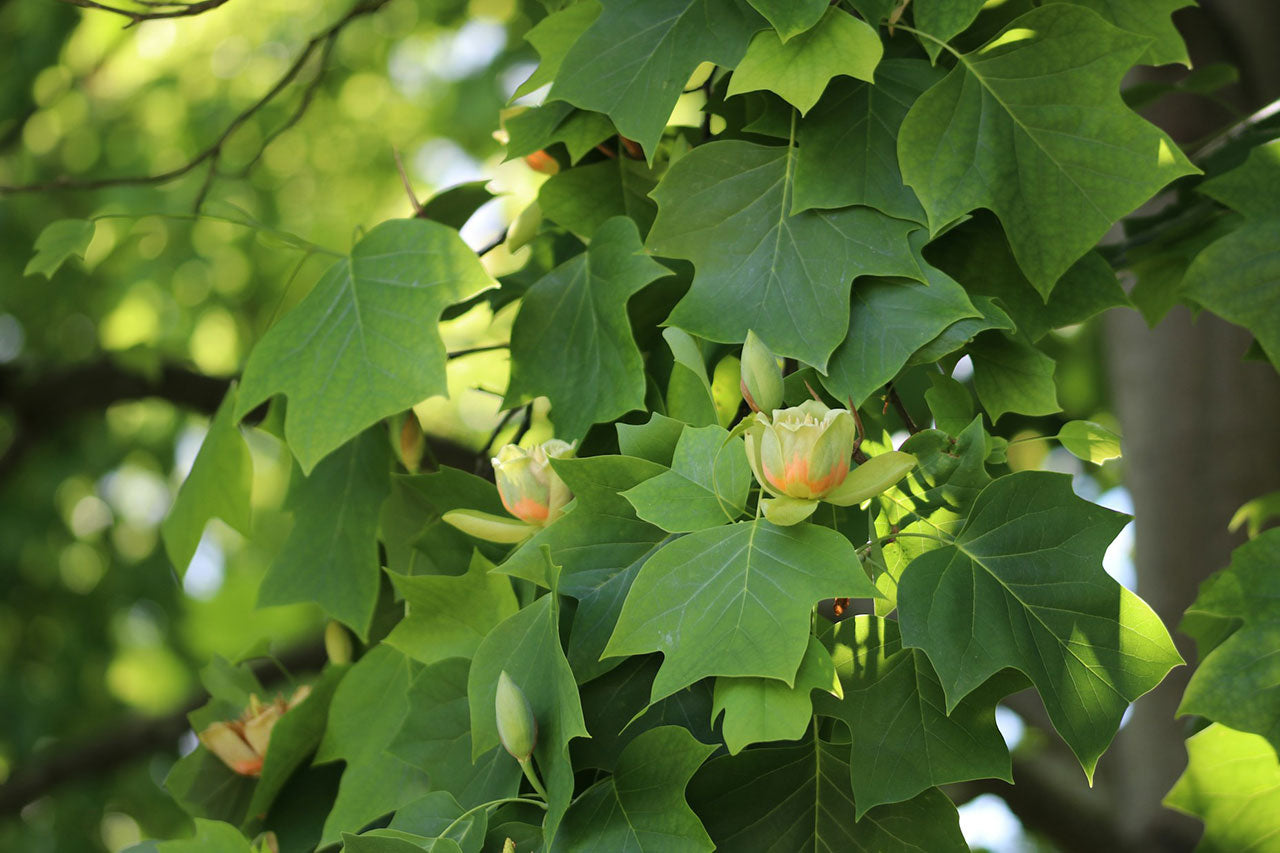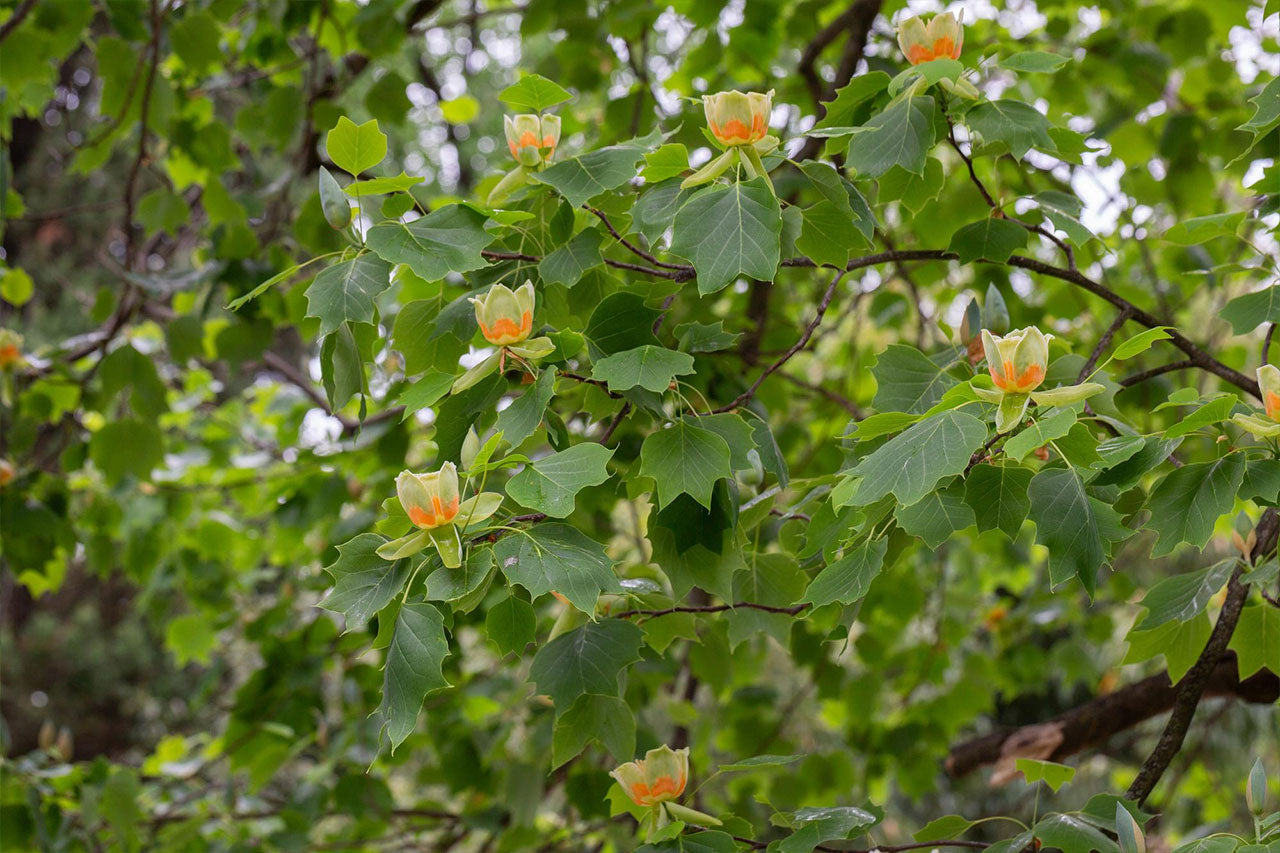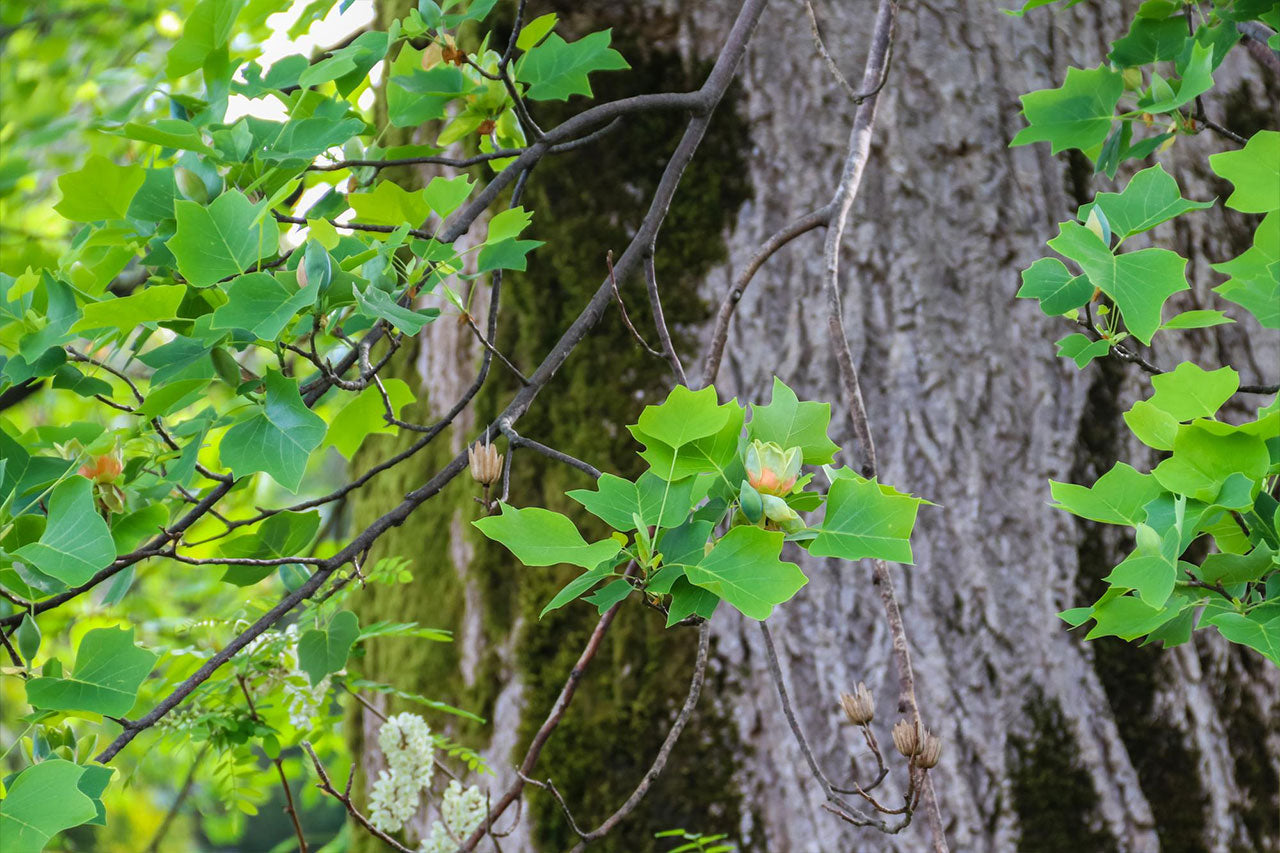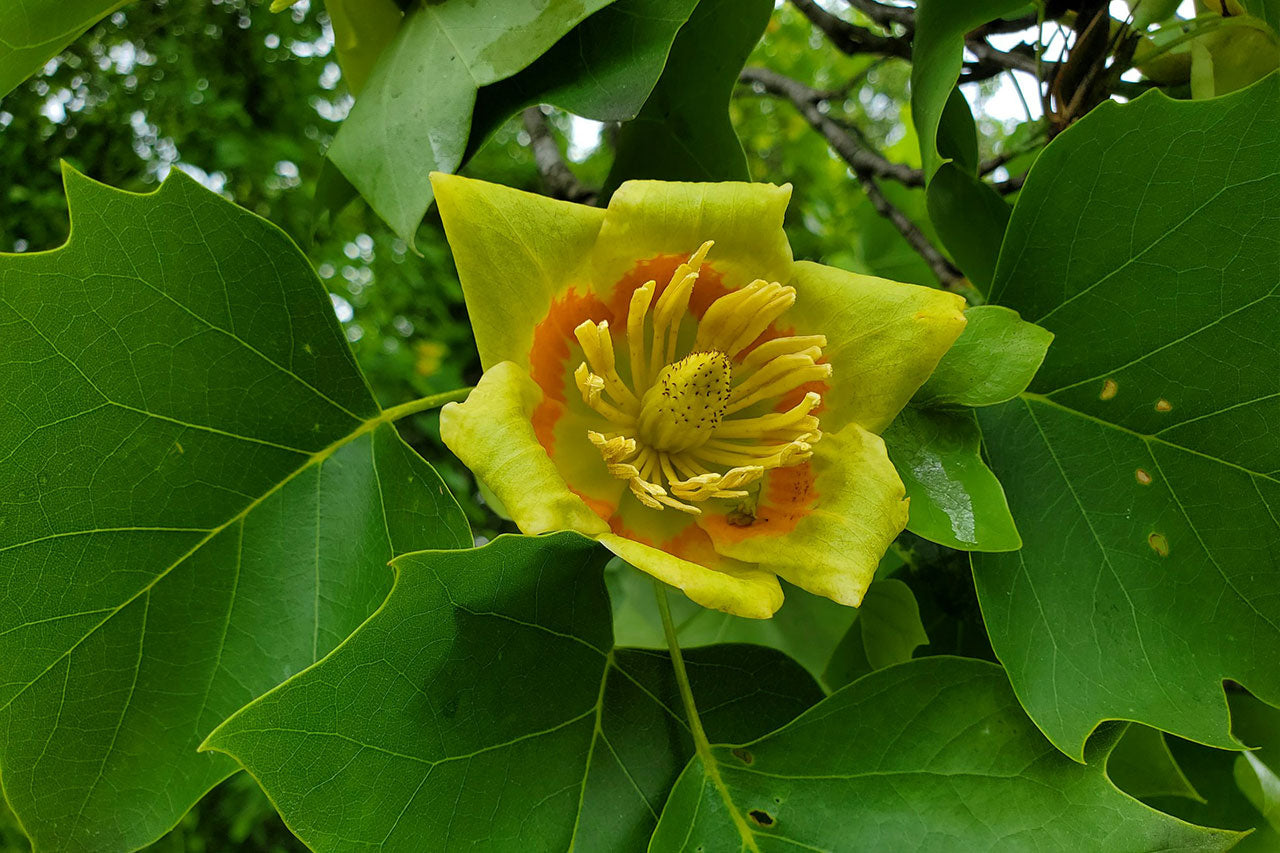

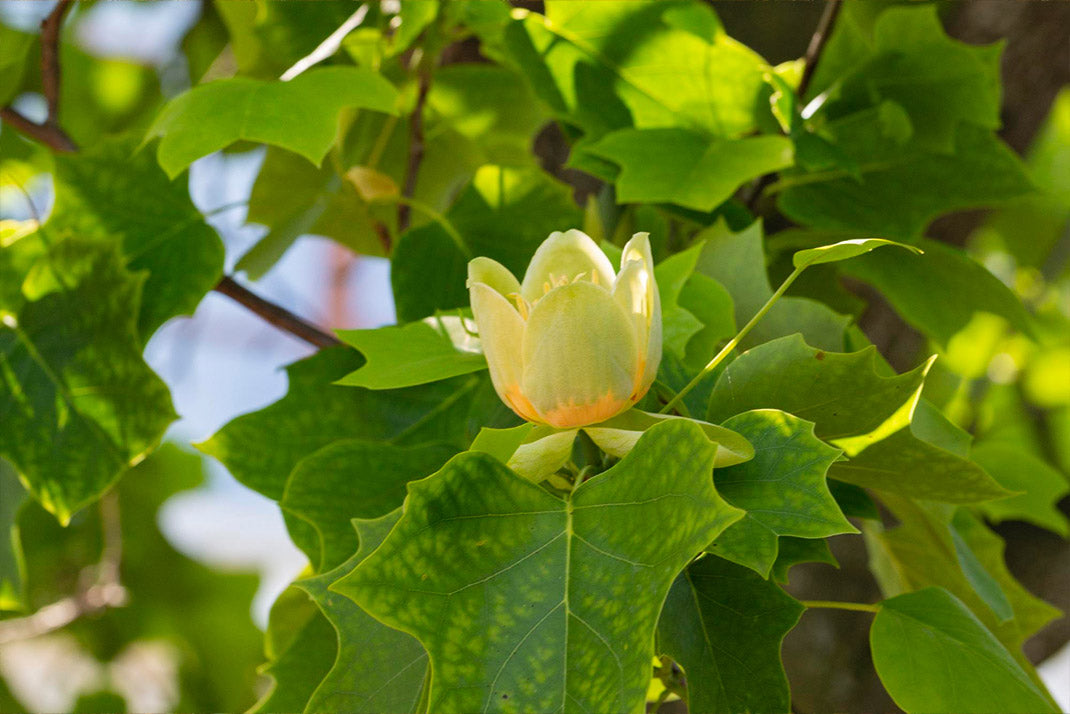
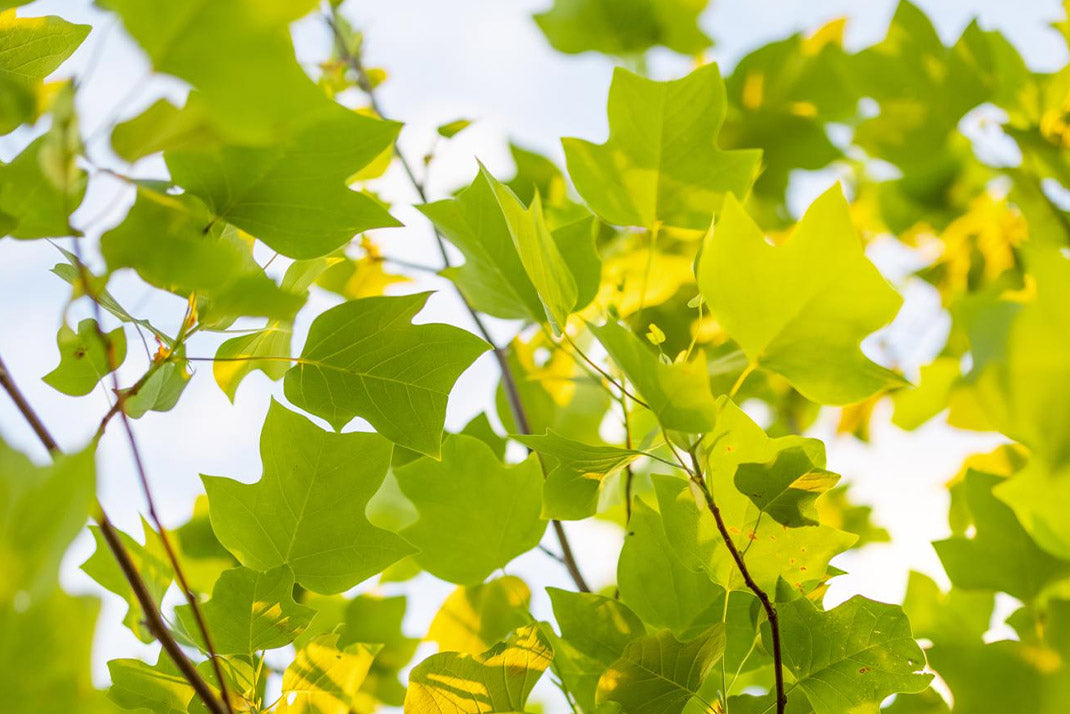
Even at a glance, the tulip tree doesn’t look like anything else in the garden. The leaves have that curious, saddle‑shaped outline with a squared‑off tip, a bit like a cartoon tulip in reverse, and they flutter beautifully in the breeze. On mature trees, the greenish‑yellow, orange‑flushed flowers appear in late spring and early summer, like little china tulips cupped along the branches. You sometimes have to look up into the canopy to spot them, but knowing they’re there adds a dash of quiet magic to the tree at flowering time.

Common name: Tulip tree
Latin name: Liriodendron
Size in UK gardens: A large deciduous tree – typically around 15–20m tall and 8–10m wide in time; in very favourable conditions and big gardens it can eventually reach 20–30m.
Best position: Full sun in an open spot with room to develop its crown; will tolerate a little light shade, but flowers and autumn leaf colour are best in good light.
Soil: Deep, fertile, moist but well‑drained soil, ideally slightly acidic to neutral; happiest on loam or clay‑loam that holds moisture without becoming waterlogged, less keen on very shallow chalk.
Flowering time: Cup‑shaped greenish‑yellow “tulip” flowers with orange markings in late spring to early summer, once the tree is mature (often 15–20 years old).
Fragrance: Flowers can have a light, sweet scent close up, but overall the tree is grown more for its majestic shape, leaves and autumn colour than for fragrance.
Hardiness: Fully hardy across the UK (around RHS H6, roughly –20 to –15°C) when planted in appropriate soil and given time to establish.
Care level: Moderate; it’s a vigorous, tough tree once settled, but does appreciate decent soil preparation, regular watering while young and enough space to grow into.

The Simpson’s team raises the majority of our trees here at the nursery. For varieties outside our own production, we work with independent local growers we trust - all chosen for UK climate suitability.
Planting time: As container‑grown trees, tulip trees can be planted in most months when the soil is not frozen or waterlogged, with late spring and early autumn usually giving the easiest conditions for the roots to get going.
Watering: Water regularly for the first three to five years, especially on lighter soils – a deep soak in dry spells is better than frequent splashes. Once established in good, moisture‑retentive soil, tulip trees cope with normal summer dry periods but dislike very long droughts.
Feeding: In decent soil, a yearly mulch of garden compost or leaf‑mould in spring is usually plenty. On poorer or sandy soils, a light application of a balanced fertiliser in early spring can help maintain steady growth and healthy foliage.
Pruning: Needs very little regular pruning – mainly just formative pruning while young to create a good framework, then occasional removal of dead, damaged or crossing branches in winter. Avoid heavy topping or repeated hard cuts.
Winter: Fully hardy in UK ground and usually requires no winter protection beyond a mulch over the root area and firm staking while young. Container‑grown trees appreciate a sheltered position and protection of the pot in very hard weather.
Availability is always changing, so please check with us if you have a particular variety in mind.


The tulip tree is a splendid, architectural specimen, with distinctive tulip-shaped leaves that give a crisp, modern texture. In summer it bears greenish-yellow, tulip-like flowers with an orange flush—subtle but fascinating up close. A superb choice for height, elegance, and a calm, parkland feel.
A beautifully variegated tulip tree, its tulip-shaped leaves edged in creamy gold so the canopy looks gently lit. The effect is bright and refined rather than brash, and the tree has a poised, upright presence. A superb specimen when you want classic tulip-tree form with extra sparkle.
A narrow, upright tulip tree with a strong vertical habit, giving you height and elegance without a broad spread. The distinctive leaf shape adds crisp texture, and the whole tree looks architectural and composed. Ideal for tighter spaces, avenues, or where you want a tall feature with a neat footprint.
A charming variegated tulip tree with leaves marked in creamy-white and soft green, giving the canopy a bright, dappled look. The tulip-shaped foliage is distinctive in itself, and the variegation adds an extra layer of interest. A lovely specimen for bringing light and pattern into planting schemes.