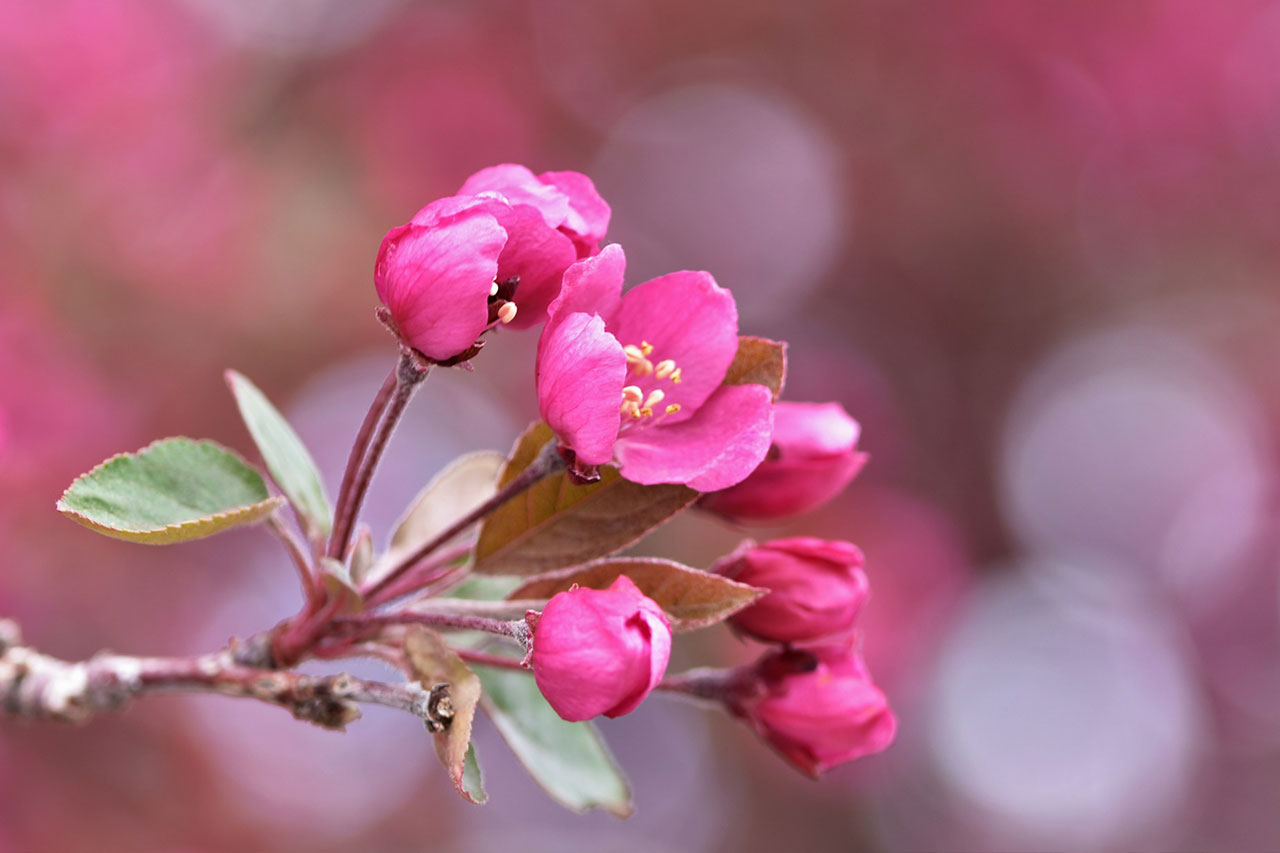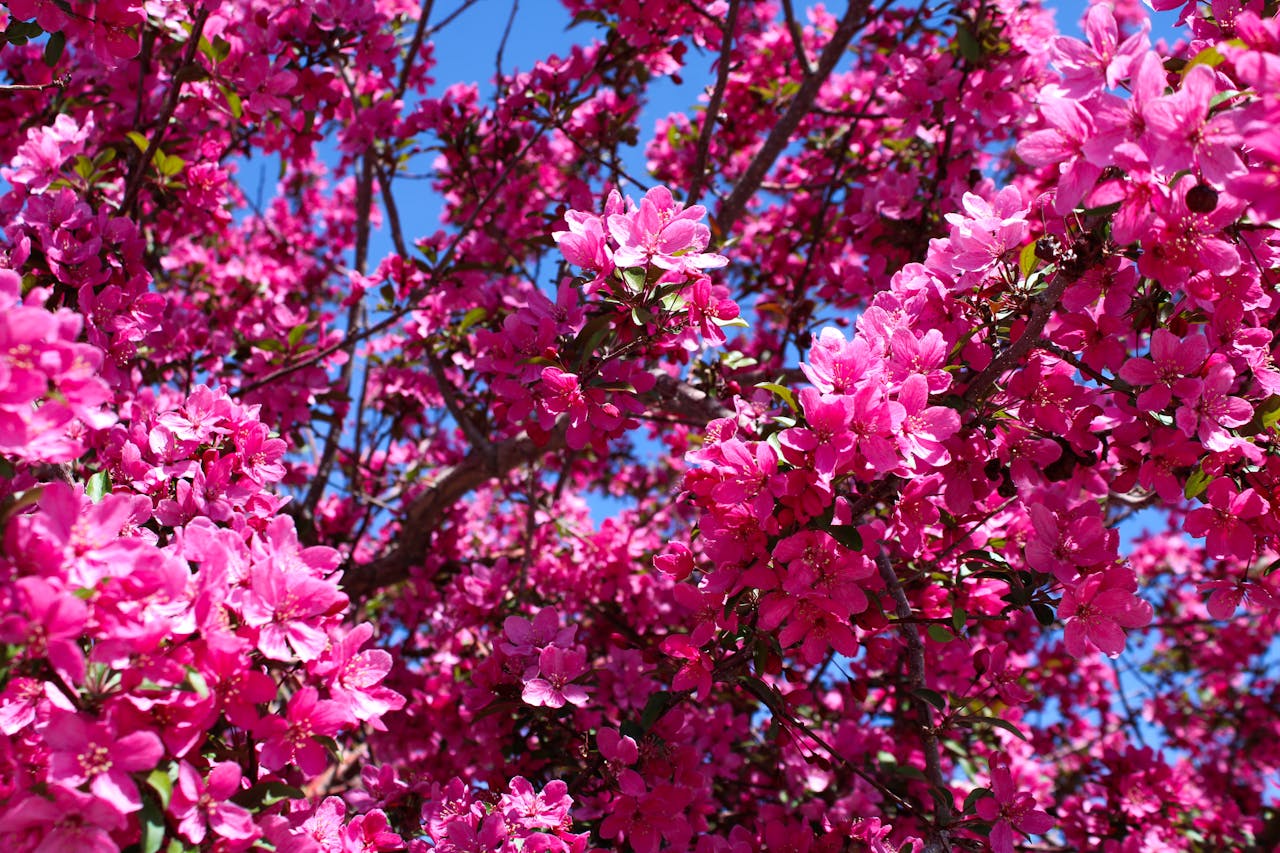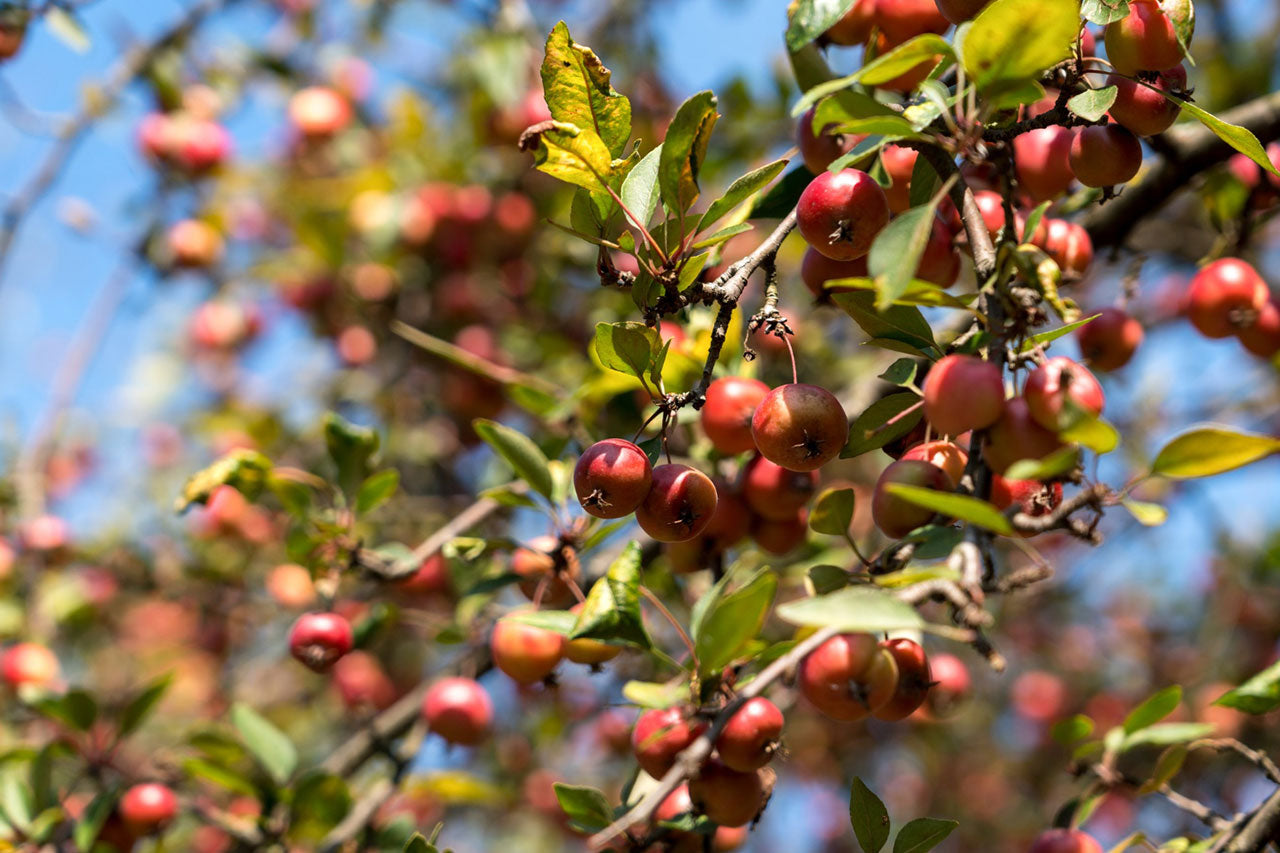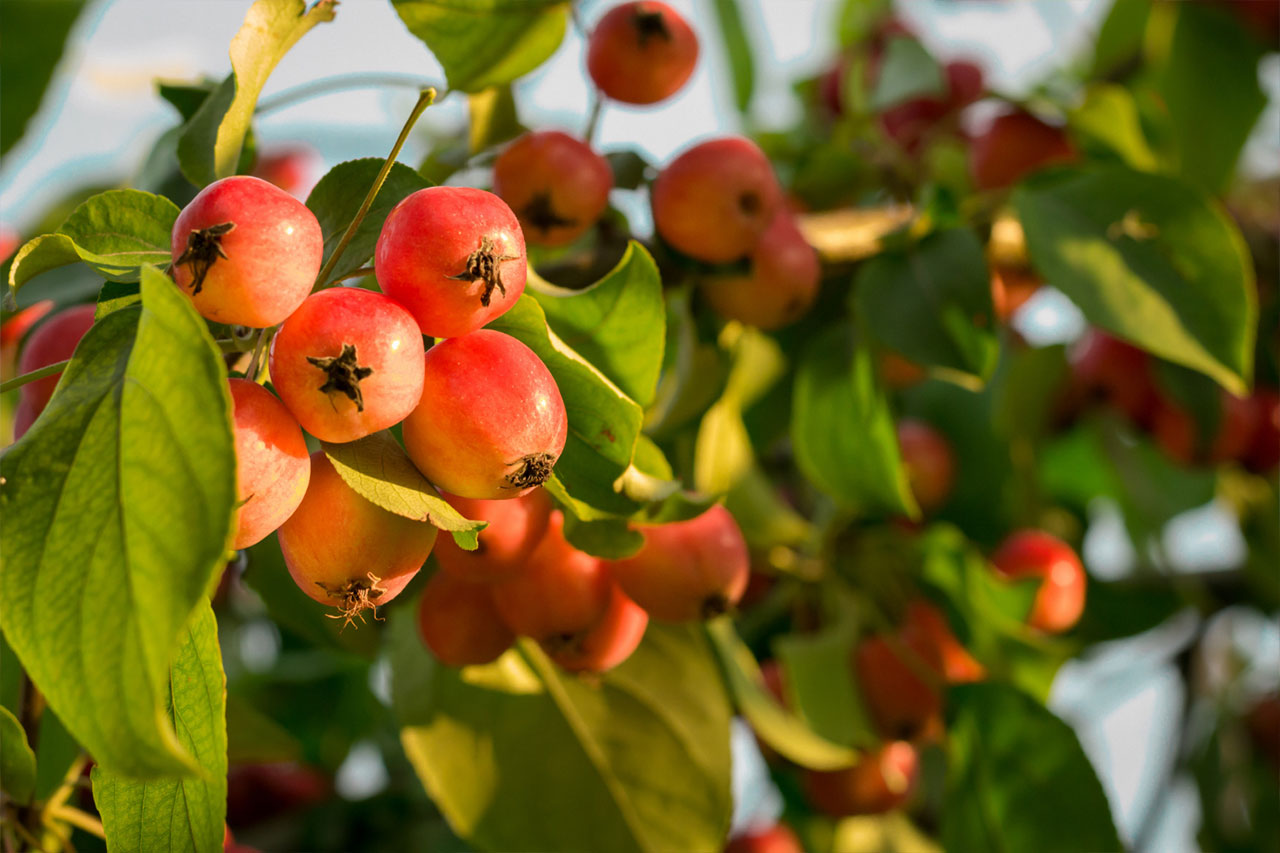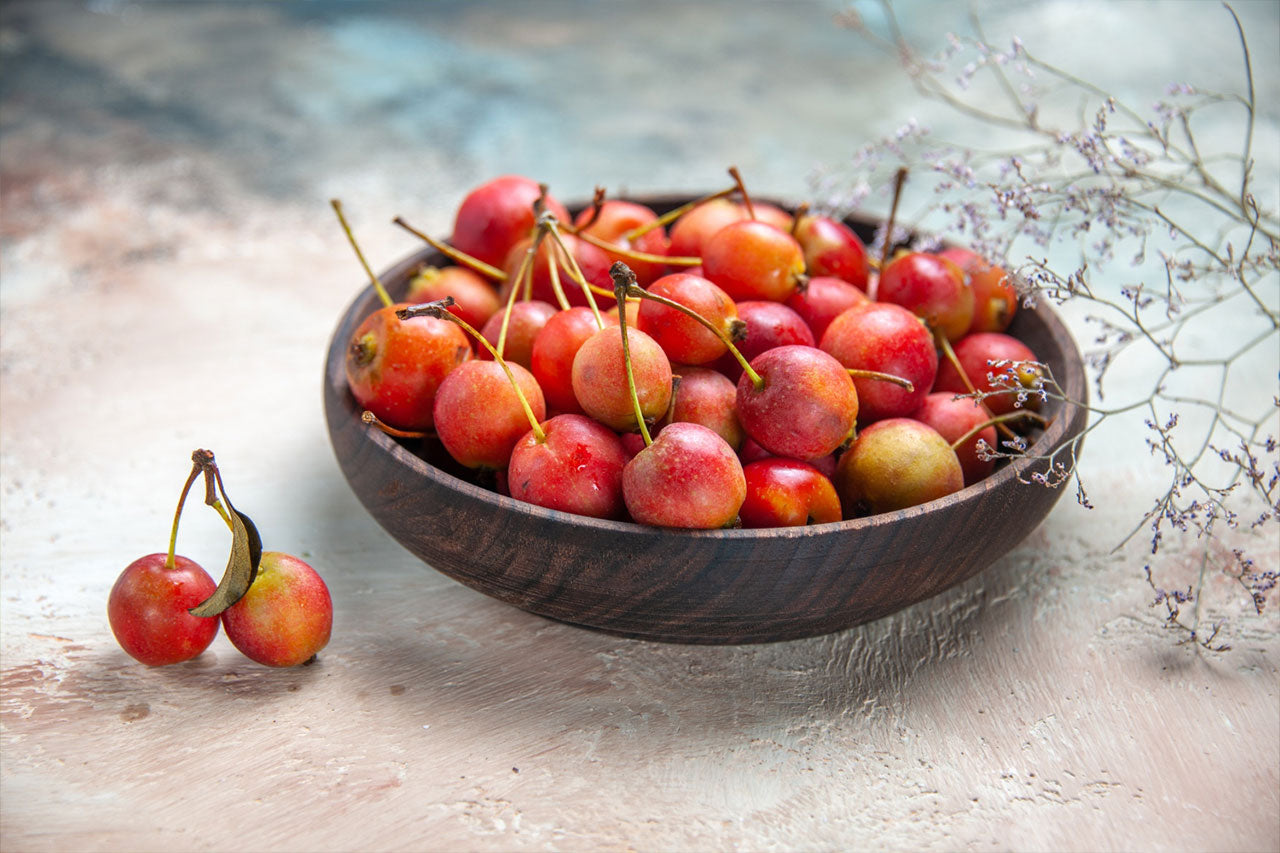

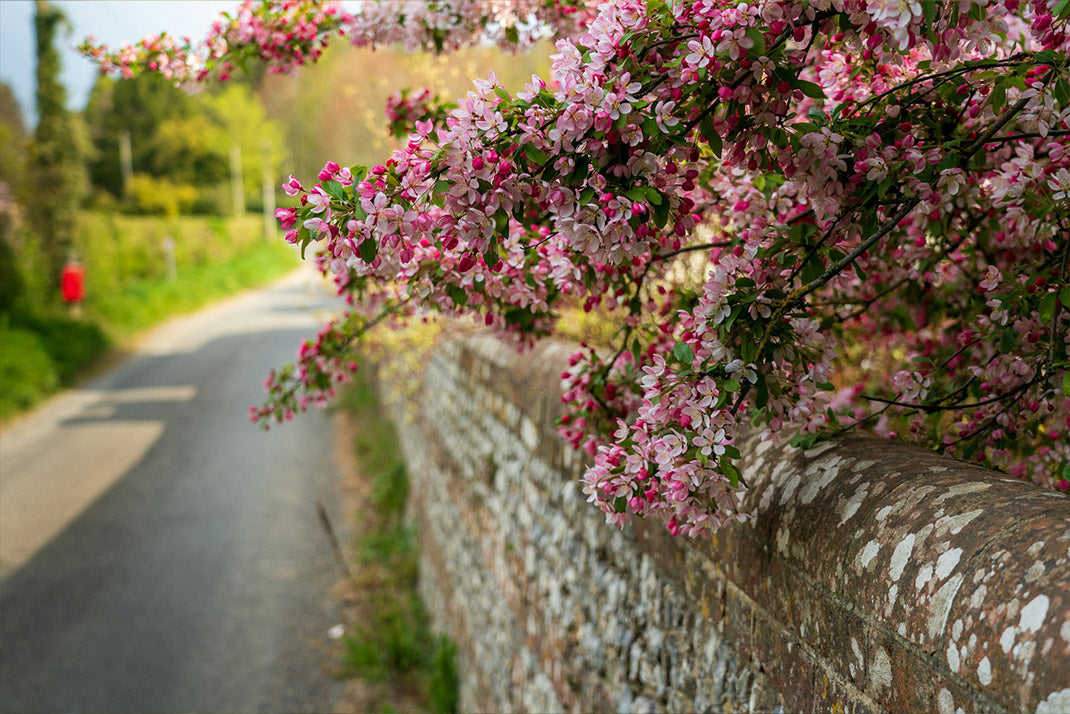
Crab apples give you the sort of spring display you might expect from a much larger tree, but in a size that sits happily in an ordinary back garden. One week the branches are bare; the next they’re covered in a froth of white or pink flowers, often with that gentle apple‑blossom scent that seems to go straight to the spirits. Because the trees are small, you can really get up close to the blossom, rather than just glimpsing it high overhead, and every year that show becomes one of the season’s little landmarks.
Common name: Crab apple
Latin name: Malus
Size in UK gardens: Most crab apples form small trees around 3–5m tall and wide over 10–20 years, with some compact patio types smaller and a few vigorous cultivars eventually reaching 7–8m if given space.
Best position: Full sun for the best blossom and fruit, though they’ll tolerate light partial shade; a reasonably open position with a little shelter from the harshest winds is ideal to protect the spring flowers.
Soil: Moderately fertile, moist but well‑drained soil suits them best; they’ll grow in most garden loams and improved clays as long as it’s not permanently waterlogged.
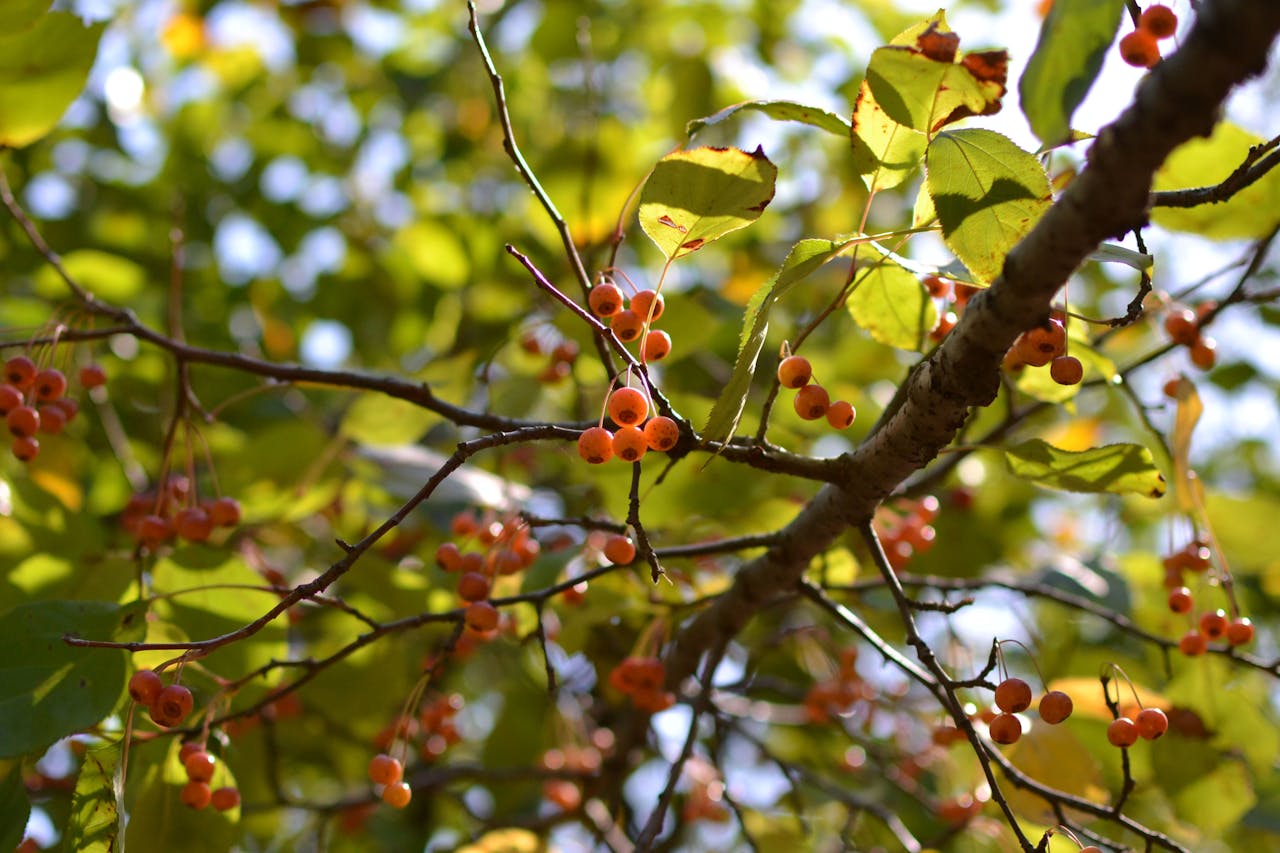
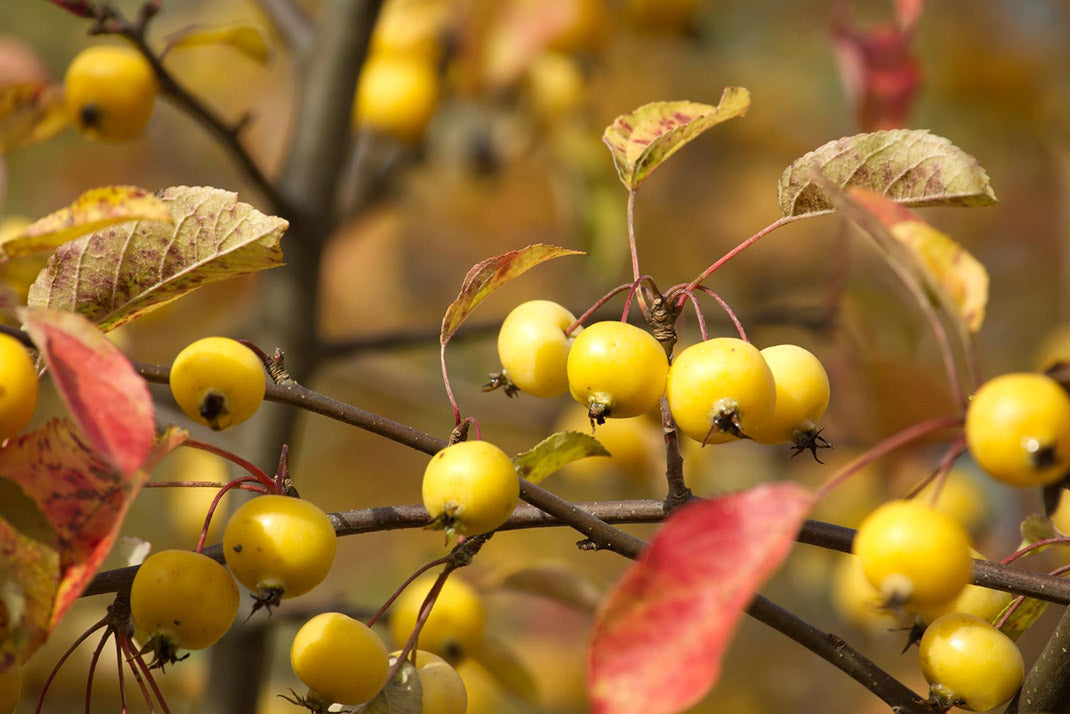
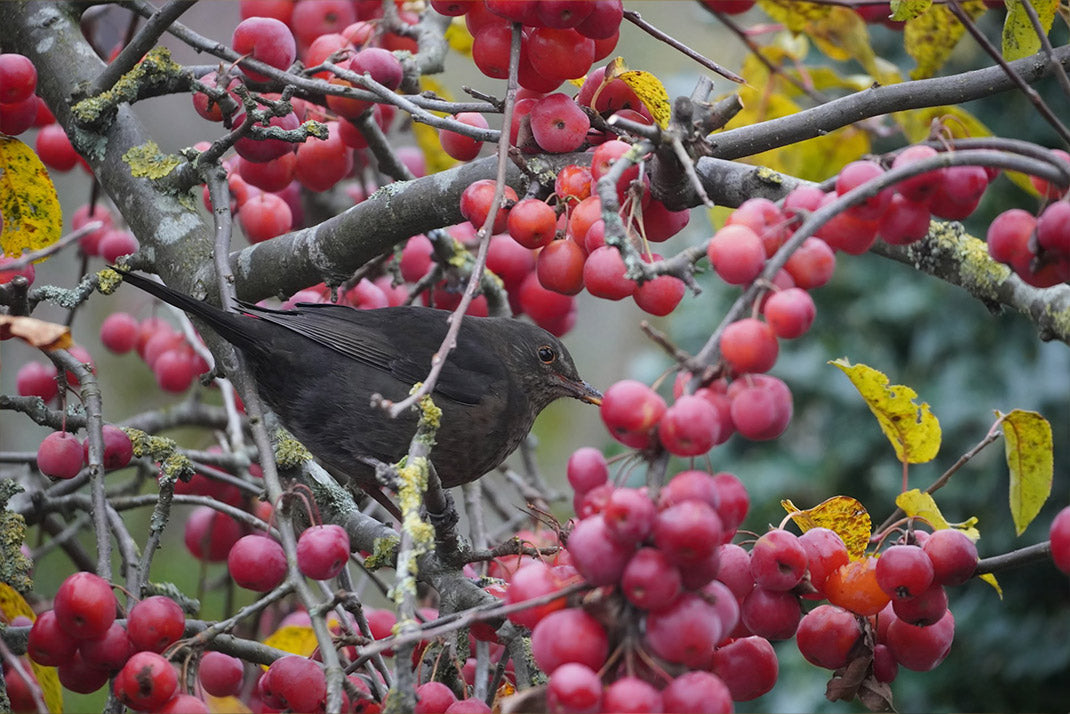
Flowering time: Usually a mass of blossom in mid‑ to late spring, often from pink buds opening to white or shades of pink, followed by small decorative apples that colour up through late summer and autumn and often hang well into winter.
Fragrance: Many crab apples carry a light apple‑blossom perfume, especially on still, mild days, though a few are grown more for colour and fruit than noticeable scent.
Hardiness: Fully hardy throughout the UK; crab apples shrug off normal winters, with blossom rather than the tree itself most at risk from a sharp late frost.
Care level: Easy to moderate – once established they’re sturdy little trees that mainly need sensible watering while young, a good mulch and light annual pruning.

The Simpson’s team raises the majority of our trees here at the nursery. For varieties outside our own production, we work with independent local growers we trust - all chosen for UK climate suitability.
Planting time: As container‑grown trees, crab apples can be planted in most months when the soil isn’t frozen or waterlogged, with early spring and early autumn usually the gentlest times for roots to get going.
Watering: Water regularly through the first couple of growing seasons, especially in lighter soils or during dry East Anglian summers, so the rootball and surrounding soil stay evenly moist. Once established, trees cope with normal dry spells, but extended drought is a good time for a slow, deep soak.
Feeding: In decent garden soil, an annual mulch of compost or well‑rotted manure around the base in spring is usually enough. On poor or very sandy ground, you can add a light dressing of a balanced fertiliser in early spring to support steady growth and good fruiting.
Pruning: Crab apples need only light pruning – mainly removing dead, damaged or crossing branches in late winter, and perhaps thinning congested growth to keep the crown open. Heavy, regular cutting back is best avoided; choose a variety that will reach a suitable size instead.
Winter: Fully hardy in the ground, with no need for wrapping or elaborate protection. A winter mulch over the root area helps on very light soils, and in exposed gardens a slightly sheltered position will protect blossom buds from the worst of late frosts and gales.
Availability is always changing, so please check with us if you have a particular variety in mind.


A lively crab apple with richly coloured buds and a bright spring show, then followed by small fruits that deepen in tone as the season turns. The overall effect is cheerful and decorative, making it a good choice for adding a little extra colour and sparkle to mixed planting.
A delightful crab apple known for generous crops of rosy-red fruits—perfectly ornamental and wonderfully characterful. Spring blossom is pretty and abundant, and the crown stays neat, making it a splendid small specimen that feels both traditional and just a little special.
A classic with a strong, orchard-like character: white spring blossom then larger orange-red fruits that look particularly handsome in clusters. It has a sturdy, tree-like frame and makes a superb feature when you want crab apple charm with fruits that feel bold and substantial.
A graceful crab apple with soft pink blossom that feels romantic rather than loud, carried on a neat, well-shaped tree. Later, small fruits add extra colour and detail. Ideal for smaller gardens where you want a gentle spring show and a tidy, composed silhouette through summer.


A richly coloured crab apple with deep pink blossom and purple-tinged foliage for extra depth through the season. Later it carries small dark fruits that extend the drama. A superb choice for bolder schemes where you want colour well beyond the flowering moment.
A modern favourite with blossom opening from pink buds to pale flowers, followed by tidy red fruits. The habit stays neat and upright, reading very ‘clean’ in the landscape—ideal for contemporary gardens where you want seasonal interest without fuss, but with real charm.
A charming, floriferous crab apple with a generous spring display and a tidy, well-balanced outline. As the season progresses, small fruits add extra colour and detail for long interest. A lovely choice when you want something classic, reliable, and quietly decorative.
A crab apple for those who love a rosy theme: pink buds and blossom in spring, then a neat canopy that carries the tree through summer with poise. Later, small fruits add extra highlights. A pretty, uplifting specimen that sits beautifully near lawns or along paths.


A delightfully weeping crab apple with a mushroom-like umbrella shape, forming a soft canopy that feels instantly ornamental. Spring brings a froth of pink-tinged blossom, then the silhouette does the rest. Perfect as a focal point where its shape can be admired.
A dramatic crab apple with deep pink spring blossom and rich bronze-purple foliage that adds depth long after flowering. It carries colourful fruits for an extended show. A superb choice for modern colour planting—bold, reliable, and full of presence in a small tree form.
A classic for sheer flower power: masses of deep pink buds opening to a brilliant spring display that can stop you in your tracks. The tree has a rounded, well-shaped habit and is often followed by small fruits. A wonderful choice when you want spring to feel truly celebratory.